Honour in All Work and the Worst Jobs

All work is honourable but some jobs are awful. The luckiest among us marry jobs and passion and often have smaller houses but broader smiles. The saddest folks labour only for money and many end up struggling to fill holes in their soul with stuff. There is something to be learned from all work and perhaps the best lessons are offered by the worst jobs.

My worst job was not the winter I laboured as an Esso gas station attendant. Besides changing oil, cleaning the bathrooms, sweeping the place, and occasionally swiping stale chocolate bars, I would have made Pavlov grin when at the ping of the ding I jumped into coat and hat to leap to the pumps outside. With the temperature often far south of zero, I became quite adept at yawning hoods and checking oil in mere seconds and at kicking the frozen pail of ostensibly un-freezable blue goop to squeegee windshields. I had a cold all that cold winter. I received one tip – fifty cents.

My worst job was not the two summers with the Peterborough parks department. I enjoyed one morning each week when I drove the golf cart to ball diamonds around town to drag the angle iron in circles and then chalk baselines. But I also pierced garbage with a broken hockey stick with a bent nail in the end. In a hard hat and steel-toed boots, I ignored my allergy to freshly cut grass while pushing a lawn mower in circles around trees and up and down hills and other places the big tractors couldn’t go. I nodded obediently when my suggestion for punctuation was ignored and then dutifully erected thirty signs that read: No Golf Playing Motorized Vehicles. They were certainly effective because after that I didn’t see a single motorized vehicle playing golf.

When it rained, the three crews of university students were gathered under the Hunter Street Bridge where we sat in a large bunker-like room on makeshift seats with traffic rumbling above and covering us with dust. Against one dank and filthy wall lay a mountain of tulip bulbs. For several chilly, soggy days, hour after excruciating hour, we peeled each bulb and placed it in the correct bushel baskets: large, medium, small, and rotten. There were bulb wars and songs and jokes and one afternoon a guy entertained us with Penthouse letters; he inserted the word blank for the nasty bits, making each depraved offering seem even nastier still.

My worst job lasted only one night. My friend Chris and I were fifteen when we saw the ad in the paper and showed up at the Towers Department store parking lot that night at 9:00. At the yelp of the crew-boss, we boarded the ancient yellow school bus, gasped at the smell, and tried not to make eye contact with any of the scary looking people around us. We bounced in silence beyond the city’s lights to a rural golf course that in the inky darkness was as creepy as our workmates. Given no instructions, we followed the others and secured miner’s lights to our foreheads. Using big elastic bands we fastened empty juice cans to our ankles and scooped a handful of sawdust into the left one. We began following the safest looking man but in a truly impressive demonstration of the manner in which the “F” bomb can be noun, verb and adjective in a single, complex sentence he suggested that we find our own spot. It took a while, but we finally wandered to an empty fairway.

We had been promised a cent a worm. Chris had calculated how much we could make in only one night and all afternoon we couldn’t wait to begin. But now that we were there, stumbling through the chill and darkness, we couldn’t wait to earn our first penny.

We couldn’t find a worm anywhere. It was nearly thirty minutes before I lunged at my first victim. I missed him. It was another thirty before we mastered the plunge and yank needed to can one, as we began calling it. We jumped and ran when the automatic sprinklers clicked to life but then smiled when worms began appearing on the wet grass that glistened black under the August moon. We learned to time the rotations. We’d run in, can a couple, and then scamper back without getting too wet. The sawdust on our fingers kept the slippery buggers from sliding away and we learned to be quick. With a slip on the wet grass I lost nearly half my catch but we kept going.

Honour in All Work

We worked hard all night and at the horn’s blast returned to the bus. We were stiff and dog tired but stood proudly in line to present our haul to the crew-boss who sat behind a long beat-up wooden table. Some of our work mates had earned the money that we had dreamed about but I had managed to pick only one full can – 250 worms. The tough looking women with the Ukrainian accent counted out two dollars and fifty cents. Chris earned just a little bit more.

We napped on the dirty bus and stumbled out bleary-eyed and filthy. The city was shaking itself awake with cars piercing the morning mist as we shuffled across the street to the neon glare of the donut shop. We bought donuts and chocolate milk until our night’s pay was gone. Later that afternoon, Chris called and we agreed that one night of worm-picking was plenty.

Over the years, I’ve written a number of resumes but I never listed worm picker. Perhaps I should have. This evening, when I slide between clean sheets, I’ll afford a thought for folks who will spend the night standing guard, serving coffee, buffing floors, dumping garbage, and yes, even hunting worms. There is honour in all work. Perhaps there is even more in work that needs to be done but most of us would rather not do and when we would rather not do it and all for wages we would rather not accept.  Maybe it is in that work, at three in morning, with folks doing the best they can for the families they love, that lies the most honour of all.

If you enjoyed this column, please send it to others. You might even check out my books such as my latest, Cold Fire: Kennedy’s Northern Front.

A Speaker’s Rules on Speaking

I’m all about words. With the proper motivation, I’ll write them, speak them, and even sing them. I have long respected the transcendent power of the spoken word and studied public speaking to become better at it. As an author, book promotions have taken me across the country and I’m always humbled by an audience’s attendance and attention and moved by invitations to return. This is what my study and experience have taught me:

  1. The Backside Dictum: As with plays, concerts, and movies, the second you become aware of your ass, the best end has passed. Speakers must respect their audiences. Rather than doing myriad other things, people have opted to devote a sliver of their lives to you and must never regret the decision. Nearly all audiences are captive but must never feel like it. It is the feeling in their end that in the end will have them wish for the end and, consequently, that they should never have come.

Hint: Before approaching the podium, take pen in hand. On your left palm write BB and on the other write the time that your talk should end. BB stands for the primary principle of public speaking: Be brief and Be seated. If you discretely observe your palms throughout your talk you’ll be fine. After all, at the bar afterward (remember I mentioned proper motivation) you want to overhear, “I could have listened all night” and not, “it went on too long.”

A Speaker's Hints on Speaking

  1. The Three Rule: Western society rests on three. Every TV show, movie, or play you have ever seen is based on three. There is the introduction of setting and characters, then the conundrum, and then the resolution. Abner Doubleday understood when he, sort of, invented baseball – three strikes and you’re out and three outs and your team’s out. The three rule applies to public speaking for just like people can only remember seven numbers (that’s why phone numbers are structured like that) they can only remember three arguments. Every good speaker makes three points, not two, and certainly not four or more.

Hint: Whatever you are talking about, boil it down to three points. Each has evidence but never cite more than three. Be blunt. Say clearly that there are three points and number them as you speak. Tell them what you will tell them, tell them, and then tell them what you told them – that’s the three hint within the three rule. Of course you know more about whatever you’re on about but always remember that you want them to remember and they will never remember more than three points.

  1. The Show: The best way to demonstrate that you have something to say worth remembering is to remember it yourself. Never read. Reading is for politicians or others whose words are written by others. They are not really speakers at all; they are readers. Recall that the last half of Martin Luther King’s I Have a Dream Speech – the whole part about the dream – was off script. Robert Kennedy’s moving speech to an African-American audience in which he reported King’s assassination, one of the best speeches in American history, was extemporaneous. Recall every TED talk.

Hint: Memorize your opening lines. Memorize a few sound bites and, of course, your three points. After that simply explain what you know so well. If you think this stuff is interesting then the chances are they will too. Always ask for a lapel mic for without ties to a script you can move around the stage or among the audience. Without reading you can make better eye contact and your moving will force them to shift in their seats a little and that goes back to the backside dictum. Smile. Always be reading the room and silently editing. Make digressions like TV commercials, little breaks before the next part begins. Remember that those who don’t understand the marriage of speaking and entertainment understand neither. Finally, never say um or ah. Any such guttural sound indicates you have forgotten where to simply be silent for a moment suggests thought.

There is more but I remember the three rule. People crave the spoken word. It’s part of who we are. The spoken word pokes memories of bedtime books and the safe murmur of adult voices as we nod asleep. Its power rests gently in the poetry of persuasion. A good speaker honours childhood memories and adult intellectual curiosity. A good speaker understands that it’s the words and ideas that matter and so becomes like a good singer who never gets in the way of the song.

I’m off doing more speeches this week and will try to remember my own rules. Hopefully our paths will cross and you can tell me how I made out. Meanwhile, if you enjoyed this column, please consider sending it to others and checking my other work at http://www.johnboyko.com

Change and the Occasional Value of Celebrity

The grocery store often surprises me. It’s not the prices or odd stuff masquerading as food but the checkout line’s celebrity gossip magazines. I’ve never understood why we should care about the personal lives of those good at hitting a ball or note or at pretending to be someone else. But I know I’ve passed a certain milestone when I don’t recognize the pretty faces or even many of the names of those blessed with good cheekbones, talent, or luck. But don’t get me wrong. There is value in some celebrity.

Let’s consider Johnny Cash. Really, stick with me. Johnny Cash is not just a celebrity but also an existential hero and as such he’s among the few celebrities who offer important lessons for us all. Think for a moment of what we can learn from his contradictions and lives, yes, plural, his lives.

Life One: Gospel. Johnny Cash walked into Memphis, Tennessee’s Sun Records and demanded to be heard. Owner and producer Sam Phillips was unimpressed by a half dozen gospel songs. “I’ve got a hundred people that sing gospel and most better than you.” he said, “What else ya’ got?” Cash glanced at his guitarist and stand-up bass player and whispered, “Follow me.” He launched into a tune he’d written in the army: Folsom Prison Blues. The gospel singer had written: “I shot a man in Reno just to watch him die.” That’s nasty.

Life Two: Rockabilly. Cash was soon on the road with a package show that included Jerry Lee Lewis, Carl Perkins, and Elvis Presley. They all sang rockabilly – a Mississippi Delta marriage of blues, bluegrass, country, and pop. Cash enjoyed a string of regional and then a few national hits with his unique rockabilly style and booming baritone. It wouldn’t last.

Life Three: Country. The uppers they were all given to keep them on the road and stage tore him down. They ripped his records from the charts. They nearly killed him. The Grand Ole Opry fired him. Falling in love with June Carter saved his life and career. She wrote him Ring of Fire and he wrote a bunch more. Cash was was reborn as a country singer.

He gathered songs he had found or written for the hurt, forgotten, and unredeemed and performed them for inmates behind the slate gray walls of Folsom Prison. The concert recording crossed him to the mainstream and won him a weekly television show. Ever the rebel, he insisted on guests like Joni Mitchell, Neil Young, and Bob Dylan. By the 1980s, though, country had become slick and corporate and Cash had become old-fashioned. He was dropped from his record company.

Life Four: Folk. Cash returned to drugs. Once again he was saved by June and Jesus and this time by an eccentric producer who challenged him to dig deeper and do better. Rick Rubin stripped Nashville from Cash’s music and tore it down to the rudimentary strumming of his big Gibson guitar – three chords and the truth. They made a series of albums called the American Recordings. Each was better than the last.

Johnny Cash At Central Park SummerStage

(Photo:Jack Vartoogian/Getty Images)

So what? Well, Johnny Cash’s lives were all about contradictions. He proves that there is enough bad in the best of us and enough good in the worst of us that it hardly suits any of us to speak ill of the rest of us.

But there is more. He didn’t mean to but he ended up proving that we are capable of re-inventing ourselves. We can be knocked down and disappointed. Unearned riches or stupid luck can embarrass us. We can suffer demoralizing failure or our lives can be radically altered by something we didn’t see coming and never deserved. But no matter what is tossed at us or whatever hurdles we create and throw before ourselves there is always a chance to invent anew.

That is existentialism. Put simply, we create our own meaning. We create ourselves. For whatever we’re not or without, we can’t blame our parents or God or the stars or anything or anyone else. The flip side, for those old enough to recall what a flip side used to be, is that we can take justifiable pride in anything at which we succeed. There is no arrogance in that. We know about accidents of birth and teamwork and flukes. Existentialism, though, says that we are the art and artist and should sign our work. Our best work is us.

So next week at the grocery store when I look at the made up, poofed up, botoxed faces about whom I am apparently supposed to care, I’ll recall Johnny Cash’s craggy mug. I’ll know that sometimes there are celebrities whose work and lives are valuable for the lessons they provide. And for that reason, sometimes, just sometimes, celebrities may matter a little after all.

(Watch this American Recording video and try not to be moved by a folk singer at work and with contradictions and reinventions on his mind.)

https://www.youtube.com/watch?v=FywSzjRq0e4

If you enjoyed this column, please share it with others and consider checking more of my columns at http://www.johnboyko.com

Most Important Rock Groups Ever

Rock is art. Rock songs toy with time. Decades after first hearing it, a song will find its way to your radio and instantly transport you to a place and people. They are three-minute symphonies. They are novels with plot, theme, and character. Because rock songs matter, the groups that create them matter and so let us ponder our most important groups.

Most Important Rock Groups EverPhoto: www.picsfair.com

  1. Crickets and the Beatles

Sex spawned Rock ‘n’ Roll. Even the name was an African-American slang for sex. The early songs were blatantly sexual. Consider Good Rockin’ Tonight, Great Balls of Fire, and anything by Little Richard including his transvestite tale in Long Tall Sally. The Crickets and then the Beatles turned rock from sex to fun. The Crickets sang Oh Boy at the thought of merely seeing a girl and the Beatles just wanted to hold her hand.

More important was that they killed the old music industry. For decades, songwriters punched the clock each morning in small offices on Nashville’s Music Row and New York’s Brill building. They wrote the songs that A & R men pitched. The Crickets and Beatles proclaimed that from that point on, groups would write their own material.

  1. The Byrds and the Band

The Byrds married the rhythms and harmonies of the Beatles with the lyrical maturity of Bob Dylan. Many of their early songs were Dylan covers. Kids were surprised to learn that with Turn! Turn! Turn! they were dancing to the Bible’s Ecclesiastes 3:1-8. They certainly knew that Eight Miles High was about drugs.

Like the Byrds, the Band taught listeners that rock songs could move beyond girl-boy angst. They focussed on deeper matters. With The Weight, they wrote of the American Civil War’s pain and the century-long yearning for redemption. With Cripple Creek and many others, they sang of the joy in anti-establishment and anti-consumerist attitudes and behaviours.

  1. The Monkees and the Eagles

That’s right, the Monkees. Of course they were a made up band but they’re on this list because of Mike Nesmith. To quell his protests, he was allowed to produce two of his compositions for the first Monkees album. Papa Jean’s Blues and Sweet Young Thing were rock but also country. Unlike today’s country, which Tom Petty has said is bad pop with a fiddle, Nesmith’s songs were outlaw country before Waylon and Willie coined the phrase. Each Monkees album contained Nesmith country-rock songs and lots of kids were hearing the new genre because, in 1967, the Monkees outsold the Beatles and the Rolling Stones.

Before winning his casting call, Nesmith had been an MC at an L. A. club where he sang and introduced local talent. Among them was Linda Ronstadt and the Stone Poneys. Their first hit was a Nesmith country-rock song: Different Drum. After touring with Ronstadt, her band left and renamed itself the Eagles. They took country-rock to new levels. Marvel at their harmonies and stellar musicianship as you hear country and rock fusing seamlessly in Already Gone, Take It Easy, and Heartache Tonight. A string of hits and sold-out concerts taught folks that the line between rock and country is as illusory as that between the beer and wine of Saturday night and Sunday morning.

  1. The Beatles and the Beach Boys

After enjoying a string of hits, Beach Boys muse Brian Wilson surrendered the road for the studio. Although deaf in one ear from a beating his father inflicted in childhood, he meticulously coached LA’s Wrecking Crew through layers of overdubs until the music on the tape matched the vision in his head. The quirky arrangements and odd instruments, such as the theremin, were like no one had ever imagined. The result was God Only Knows, Good Vibrations, Wouldn’t It Be Nice and the album Pet Sounds.

I know the Beatles are on this list twice. So what, they earned it. When Paul McCartney heard Pet Sounds he drove to Lennon’s house and they accepted the challenge. The Beatles and their genius producer George Martin locked themselves in Abbey Road for months until their masterpiece was complete – Sgt. Pepper’s Lonely Hearts Club Band. There wasn’t a single single. That was the point.

FM radio was invented to allow rock music to graduate from commercial AM formats where songs were almost incidental to ads and DJ patter, to a place where albums could be played in their entirety. The Beach Boys and Beatles and their two albums raised rock music from disposable to art.

  1. Rolling Stones and Led Zepplin

Rock ‘n’ Roll was born in the delta blues of the American south and electric blues of Chicago. A teenaged Keith Richard was at a train station when he noticed a skinny kid with an armful of American blues records. Intrigued, he introduced himself to Mick Jagger. The group they created was named after a blues song and dedicated to bringing American blues to British and then back to American kids. When in America, they insisted on meeting not movie stars but Muddy Waters, Howling Wolf and their blues idols. Listen to Honky Tonk Woman or any number of others and try not to hear the blues.

Led Zepplin was more outrageous in their clothes, behaviour, attitude, and concerts than any group before and their music more ragged, innovative, and loud. All of that distracted from the fact that they were playing little more than operatic variations of the blues. Listen to Muddy Water’s Hoochie Coochie Man then consider the direct line to Whole Lot of Love. As Elvis had, the Rolling Stones and Led Zepplin reminded listeners of rock’s black roots.

  1. The Heartbreakers and the Clash

Rock survived the early ‘60s folk music scare but was nearly defeated by ‘70s disco. It was music untouched by human hands that appealed to neither head nor heart but rather the spinal chord. Some groups manned the cultural barricades and burned the white flag. Tom Petty and the Heartbreakers played music that reminded listeners of the best of the ‘60s but brought a power either not imagined or too long forgotten. Refugee, American Girl and many others pulsed with catchy hooks but just beneath the surface lurked desperate rage.

The Clash employed classic ‘60s models in musicians and song structures. Their songs bespoke the simple beauty wrought from three chords and the truth. They were based on the notion, as Heartbreaker guitarist Mike Campbell once said: “Don’t bore us, get to the chorus.” Their lyrics decried the phoniness of celebrity culture and the pain of Thatcherism. The Heartbreakers and the Clash saved rock music from disco’s circling of the cultural sink and reminded people of rock’s potency and potential.

  1. Pearl Jam and Nirvana

Every decade asks rock music to save itself from the industry of which it’s a part. Grunge did the deed in the ‘90s. Pearl Jam’s music harkened back to classic rock writing structures but it was rougher and more adventurous. Their lyrics were decidedly dark in addressing suicide, sexual abuse, and depression. They sacrificed untold millions to fight Ticketmaster and its greedy, gouging fees. It played stadiums and forced advertising banners to be covered and even tape to be placed over the beer logos on concession workers’ shirts.

Due to the suicide of its leader and lead singer, Nirvana recorded only three albums but that was enough to contribute to the move toward songs that jumped from one rhythm to another, from quiet, gentle sections to screaming raves, and yet stuck to the verse-chorus-bridge structure. Their unplugged concert proved that while bad songs can make fun records, only quality songs stand with credibility when stripped to acoustic instrumentation. Talent always trumps show.

Picasso once took a child’s sparkler and dashed a swirl that instantly vanished. A photographer caught it. There, slashing the darkness, was art. Most rock music is equally fleeting. Some groups, though, are like Picasso. Their concerts are the artist’s sparklers creating moments immediately gone. Recordings, though, are canvasses. They speak to artistic intention, society’s gaps, and a listener’s yearnings. Songs by any of the groups on the list are exactly the same as the day they were recorded but our world has changed, we have changed, and so the songs have changed with our evolving perception of their meaning. That we can visit as old friends is the beauty of art, of all art, but perhaps especially music.

Please consider sharing this with others on Facebook or elsewhere and leaving a comment as to groups I missed and which should not have made this list. You might also be a brute for punishment and check my previous columns where, perhaps as foolishly as above, I tackled:

6 Singers Who Matter Most https://johnboykodotcom.wordpress.com/2016/01/04/popular-important-6-singers-that-matter-most/

Most Important Bands of All Time https://johnboykodotcom.wordpress.com/2016/01/18/most-important-bands-of-all-time/

Top Concerts of the Last 5 Decades https://johnboykodotcom.wordpress.com/tag/concert/

Seeking the Elusive Community

Every poet from William Shakespeare to John Lennon has tried to define love. They all failed. Good. To precisely define a concept of such profundity is to trivialize and cheapen it. Such is the also the case with other notions of importance and among them is community. Community is being tested today in countries and companies and schools. Perhaps we owe it to ourselves to walk the poet’s mile toward community’s unattainable definition with the hope that the existential journey affords wisdom, or at least grace.

Community is a feeling. It grows from shared values, interests, experiences, and goals. We are social animals and so we naturally seek community. It is the yearning or circumstances that lead some to churches and others to street gangs. It is the warmth and smiles of a book club or slow pitch ball team.

National community is dynamic. Most of us are born, live, and die in one country. We find community in implicitly accepting the power of the state, complaining about government, and in the embrace of values that link we the people – the nation. It is community that brings us to our feet for the anthem and after a trip abroad makes the flag look so damn good. It is the national community we miss when emigrating and that offers culture shock to immigrants. The kind-of-heart see the national community as a quilt and celebrate each unique square. On the other hand, the frightened and angry – and those fanning the flames for political gain – tear at community by seeing it as an exclusive tree fort and advocate throwing “the other” out while pushing down the ladder.

Seeking the Illusive Community(Photo: http://www.asantecentre.org)

Corporate community is ephemeral. With new jobs, we sweat the interview, endure our rookie mistakes, and then eventually fit in. We contribute. We finally get the history and jokes. Some colleagues become friends. We become part of the team, part of the community. However, no matter how many casual Fridays, tipsy parties, mission statements, motivational speeches, or team building retreats we enjoy and endure, the boss is always the boss.

Sometimes the boss’ decisions lead to radical policy shifts or dismissals. Unexpected, poorly communicated, or unsupported decisions are painful for those whose experience is demeaned and beliefs belittled. They are tragic for the unfairly and suddenly gone and heartrending for those suffering survival guilt. All are stunned by the realization that they are not really valuable and valued members of a community but interchangeable units of labour. They become haunted. They become hunted. They are torn by the thought that their community is really not a community at all.

National and corporate community builders would do well to read David Rieff’s In Praise of Forgetting. He decries communities that commemorate every anniversary of some riot, battle, attack, or assassination with sparks of fresh rage. Rieff is not saying we should forget our past, but rather that we should learn to learn from it, accept it, and for the good of the community and ourselves, move on.

Linked to Rieff’s idea, and equally worthy of consideration, is the crazy thought that South Africa, the country that institutionalized racist discrimination, became the world’s model as to how a community recovers from a catastrophic past. The brilliant Nelson Mandela convinced not everyone but enough that speaking the truth of what happened, and why, and by whom, and to whom, would lead to reconciliation. Mandela did not say we should forget, rather that we should explain, understand, atone, and forgive. Canada is now trying the Mandela-Rieff ideas with its own Truth and Reconciliation Commission.

All communities live on trust. In Johannesburg, as in Ottawa and Washington, and as in every broken corporate or school community, slogans and tag lines mean nothing. Promises mean nothing. Office, title, and job description mean nothing. Hierarchy is a bad and sad joke. Teams made separate are made irrelevant. Truth untold is rumours confirmed. Communities remain strong and broken communities can only be made whole again when trust is unquestioned. Trust is born only of patience, empathy, respect, honesty, loyalty, and transparency. It is seen in how we treat others, all others, when there is no one else around and nothing to gain. Only those who understand that community is not mechanical but organic can contribute to regenerating trust. Those committed to silos or levels of power or walls of exclusion can’t build bridges.

We owe it to ourselves to preserve strong communities and reconstitute those that deserve recovery. We need to understand and celebrate the strength in those that are thriving. In others, we must mourn that which was broken and help those who were hurt. Let’s shun the shouters, dividers, and serial liars. Let’s ignore the cynics, sycophants, and saboteurs. Tomorrow’s community is for those who hope and work for better, armed with lessons learned and wisdom earned.

A values-based community offers explanation and inspiration, a ladder and a net, and shelter from the storm. It’s worth the work. And maybe that’s as close to a definition as we need.

If you enjoyed this column, please send it to others and consider checking my others at http://www.johnboyko.com

Lessons From the Five and the Resignation

There were five of them. They were experienced professionals who were good at their jobs and respected by their peers. But then, what had been going so well for so long went suddenly wrong. In the end, their lives were derailed and their boss resigned. But it was not really the end. The five and the resigned offer lessons for us all.

  1. The Burglary

It was two in the morning when a Watergate Hotel security guard heard noises on the 6th floor. Plain-clothed police officers soon arrested the five for attempting to rob and bug the Democratic Party’s National Headquarters. It was soon discovered that all five had connections to the CIA and one was the security chief for the Committee to Re-elect the President.

And there, on June 17, 1972, it began. As the scandal unravelled it became clear that the burglary was a blip in a pattern. And the pattern was the point.

Nixon’s press secretary once blurted that the president would not be brought down by a “third-rate burglary.” He would not. Nixon later wrote that his presidency had been ruined by a botched burglary. It was not. Along with his supporters and apologists, Nixon never understood, or perhaps admitted, that the burglary was but a symptom of the problem, an example, and not the problem itself.

  1. The Refusal:

All presidents’ staff know the mantra: “We serve at the pleasure of the president.” It’s true but only to a point. Nixon directed his senior staff to do things they later admitted to knowing at the time were wrong. However, Nixon ordered Attorney General Richardson to fire Special Prosecutor Archibald Cox. Richardson said it was wrong, refused to do it and resigned. Nixon then ordered Deputy Attorney General Ruckleshaus to fire Cox. He too said it was wrong, refused, and resigned.

Richardson and Ruckleshaus remembered that they served at the pleasure of the president but, more importantly, that they were responsible to their conscience and that their greater service was to the country and all for which it stood.

  1. The Determined

The burglary earned a tiny mention, buried deep in local papers. A couple of intrepid reporters, Bob Woodward and Carl Bernstein, however, would not let the story die. No matter how often or vehemently the people around Nixon and Nixon himself deflected, defended, and explained, the growing few who believed something was fundamentally wrong refused to surrender to fear or intimidation or to let it go.

The tenacious group asked increasingly pointed questions, refused to be shushed, and noted demonstrable untruths in official statements. Eventually, determination trumped stonewalling.

  1. The Job

Nixon never understood that he was the temporary occupant of the office and not the office itself. He forgot or never got that his primary job was not to be a crusader for policy initiatives but a guardian of the constitution and its fundamental values. Among his biggest mistakes was seeing those reminding him of his job’s fundamental function as enemies to be fought or interests to be managed.

  1. The Power

When the pattern of questionable behaviour was slowly revealed, Congress began to investigate and the Supreme Court began to rule. Nixon appeased but resented both. He employed the same obfuscations and delaying tactics used to fight critics and reporters. He never understood that the president is not the country’s sole authority and that power is quite rightly shared with others who are equally responsible for protecting its interests.

  1. The Truth

On May 22, 1973, Nixon released a long statement that contained a litany of lies. One thing, though, rang true: “A climate of sensationalism has developed in which even second- or third-hand hearsay charges are headlined as fact and repeated as fact.” He would not allow himself to see that when the truth is shaded, masked or denied, people will make up their own. And there is always a Toto Moment when the curtain is drawn.

  1. The Resignation

Nixon appeared on television on August 8, 1974, and became the first man to resign the presidency. He had a chance to begin America’s healing. He did not take it. Instead, from the first sentence to the last, the speech was sprinkled with the word “I”. Just like all that took him down, it was all about him. He said he was resigning due to the absence of, “a strong enough political base in Congress.” He never acknowledged his responsibility for having destroyed that political base or, for that matter, for anything else.

Nixon’s inability to see beyond himself, to truly understand the presidency, acknowledge mistakes, or to offer an apology, rendered the resignation yet another a moment of profound sadness.

  1. The Helicopter

The day after his resignation, Nixon climbed the steps to the president’s helicopter. He turned, smiled, waved, and, for some reason, ironically, formed his fingers into symbols of peace. He was off to his opulent California home where he wrote books and was accorded the prestige, money, and support of any ex-president. He was pardoned for his crimes.

Meanwhile, the five were imprisoned. Many of Nixon’s staff would join them. Others suffered ruined careers. After causing such havoc, shattering institutional trust, initiating a culture of suspicion, and destroying so many lives, the helicopter’s symbol was indelible – he just flew away.

Lessons fro the Five and the Resignation(cbsnews.com)

  1. The Resilience

Fill a bucket with water. Drive your fist in, swirl it around and then yank it out. Watch how quickly the water calms. That was Nixon. The day after he resigned, fields were ploughed, classes were taught, kids climbed trees, pilots flew, fishers fished, and lovers loved. There were victims, gloomy apologists, and lost souls who had tied their wagons to the failed president but most folks just carried on.

America and all that word entails and inspires was there long before Nixon arrived and remained long after he left. The water settled. The people were warier and tougher to lead. But the place, along with and, in fact, because of the ideas, laws, and values that pumped its heart, moved on.

The whole sad affair is rife with lessons. Most important among them is that downfalls are less often about an event than a behavioural pattern. Power is divided for a reason. There are always opportunities for honourable action. A dribble of discontent can become a tsunami. Truth always wins. Failure is never an orphan and seldom absent good intentions, unintended consequences, or innocent victims. Leadership is about little else than character. Leaders lead only with the assent of the led.

And, perhaps most important of all, redemption and renewal arrive on the wings of deeply held values and that which is true to its values and visions of its founders will always endure – always.

If you enjoyed this column please link it to others. Find more at http://www.johnboyko.com and my books at bookstores, Amazon, or https://www.chapters.indigo.ca/en-ca/books/search/?keywords=john+boyko

American Rage and the Day I Was Tear Gassed

Canadians are nice. We seem to revel in our reputation as being so nice that when bumped we say sorry or when queue-jumped we say nothing. A problem, of course, is that a slight scratch beneath of the surface reveals that we are really not that nice at all. And that’s what scares me about the American election.

Fifteen years ago, in April 2001, after reading about the 1999 troubles in Seattle and with Horton Hears a Who in our minds – I swear – my dear wife and I left our little Ontario village and headed to Quebec City. We were ready to add our little yop to voices being raised in concern over cascading corporate power and shrinking concentrations of wealth at the third Summit of the Americas conference. As a historian and with my wife’s degree in political science, we were curious about being witness to the making of history and a political point.

We joined a wondrously joyful parade. Colourful banners and flags were hoisted above thousands of people singing, strumming guitars and some even dancing on stilts. There were old people and children. Most of the signs were serious and many were good natured. We walked slowly beneath a wonderfully cloudless blue sky enjoying the positive atmosphere and folks who were taking their messages but not themselves too seriously.

The world leaders discussing the possibility of creating a Free Trade Area of the Americas, of course, didn’t see the parade. They were ensconced far away and up the hill in the National Assembly building behind the 4 km fence and cordons of police. At the parade’s end, most people milled about and there were hugs and goodbyes. But I couldn’t leave. I couldn’t go home without venturing up to see the so-called red zone, the area closest to the fence, where the streets were blocked and businesses shuttered.

I walked slowly up the hill and then slower still. At red zone’s outer perimeter it was like an eclipse had blotted the sun. The world had morphed to black and white. It was eerily quiet. The parade had been a party but this was a war. The air reeked of gasoline. The streets were littered and dirty. Everything seemed wet. Everyone seemed sweaty. People wore varieties of battle fatigues and many wore bandanas and had ski-goggles dangling on their chests. No one smiled.

Down a narrow street, I watched a group of about twenty young people sitting in a circle and singing John Lennon’s Imagine. Strung behind them from building to building was the silver, gleaming 3-meter high chain-link fence. Behind the silver fence was a row of police officers. They were in black riot gear and faceless with face guards down. They looked every bit like a row of Darth Vaders. Each officer held a club and each smacked it onto their left palms to the song’s beat – ones and threes. They could not have been more intimidating. I guess that was the point.

I swallowed the metallic taste of adrenaline. Around the corner, I found another stretch of fence blocking the road before me with another row of police officers behind it but I was alone. I did what I always do when I see a police officer; I smiled and waved. None waved back. In a minute or so a man about my age joined me and we stood chatting quietly. We were about ten feet from the fence, looking at each other and not the officers off to our right. No one else was near. We discovered that curiosity had drawn us both from Ontario to the parade and then up the hill and that we were both shocked by the incredibly tense atmosphere. We traded ideas about a restaurant for dinner. We were just two middle-aged guys in shorts and golf shirts, obviously tourists not terrorists.

We were startled when a silver canister crashed behind us spewing white-gray tear gas. We instinctively pivoted away and blindly careened smack into the fence. The line of cops charged forward and smashed it with their clubs. We spun and stumbled through the noxious cloud with eyes and lungs on fire. A masked and khaki angel pulled me to a curb, sponged my eyes from a galvanized pail, secured a red kerchief over my nose and mouth, told me to run when I could, and then was gone. I have no idea what happened to my companion. I staggered dazed and bewildered as people ran past in both directions shouting that crazy Canadian jumble of English, French, and profanity.

Woozy and blinded, I wobbled down the street and happened upon a group of young people shouting through the fence at yet another line of storm troopers. I turned and yelled every ugly epithet my years of school yards and hockey dressing rooms had taught me. But then, in mid-tirade, it was like I snapped awake. Perhaps the gas had worn off. Perhaps my righteous temper had peaked. I was suddenly embarrassed that every ounce of anger I had imprisoned since childhood had been so quickly and completely un-caged. I was shocked at my rage and at the sound of my own voice and what I heard that voice shouting.

The Day I Was Tear Gassed

I stumbled back to the sidewalk and watched two groups of Canadians – protesters and police – probably much the same age, who probably grew up in similar neighbourhoods, separated only by twists of fate and a fence that I was suddenly glad was there. My youngest brother was one of the helmeted cops assembled in Quebec City that day. He may have been among those standing in silence before me now; perhaps he was the target of my flash of crazy abuse. I needed to get out of there.

The day I was tear gassed did not rob me of my optimism for Canada, pride in being Canadian, or my respect for those who legally and reasonably protest or those who reasonably and legally keep law and order. However, I am little less sanguine about the unwritten social contract that binds us and the thin veneer of civility that protects us.

Reflecting on that day and upon how that veneer has become even thinner makes me tremble a little as I watch Bernie Sanders and Donald Trump appeal to the rage that roils beneath it. How much longer can our niceness be sustained when the globalization of power and wealth in the hands of a shrinking few – the point of the Quebec protest and core of the Sanders/Trump appeal – has shrunk even further. What happens if the fraying social contract snaps? What happens when voting for change is no longer seen as enough? What happens if the police change sides?

If you enjoyed this column, please consider sharing it with others on Facebook or your social media of choice.

The $1,000 Cottage

Water delivery can be arranged for all the material needed for the 560 square foot Chemong “Readi-Cut” cottage. The Chemong offers, “…the answer to your Family Fun, a cottage that will give you many years of relaxing pleasure as well as the pride in showing the folks the job you’ve done yourself.” It’s only $1,069 or, with nothing down, $37 a month.

Time travel is fun. It’s what first attracted me to the study of history. I scour old newspapers when researching my books but time and mission are constant pressures so, usually with eye-straining microfilm, I jump to what I need then leap out. Yesterday, however, an old friend gave me an unexpected gift: a pristine copy of the Tuesday June 11, 1957 Peterborough Examiner. Its stories and ads are fun and revelatory.

The big bold headline reads: PC’S 110, LIBERALS 103. The black and white picture is of John Diefenbaker; the Progressive Conservative leader whose party had just captured what would become a minority government. The trick with the old paper was to enjoy it while knowing not the warp and woof of the day but the context and future.

Diefenbaker’s election presaged an era of contradictions. The cancelling of the Avro Arrow would hurt thousands but Canada’s new Bill of Rights would protect millions. The nationalist Diefenbaker would seek to make Canada more sovereign but a new American president, John F. Kennedy, would try to make her more obedient. Aboriginal people would be granted the right to vote but their children would still be kidnapped for residential schools.

Like now, most Canadians shrugged and accepted the changing political landscape while focussing upon more immediate concerns, distractions, and dreams. Not just cottages but suburban home ownership was an important element of those dreams. Bank and life insurance company ads offer 5.5% mortgages. Another ad presents the chance to move into Peterborough’s “Finest New Home Development” – Westmount Gardens – with a Delux Split Level home that boasted 3 bedrooms, cathedral ceilings, a fireplace, 2 bathrooms, and a 2-car garage, all for $20,900.

Another ad offers a sixteen-foot cedar strip boat, Evinrude motor, and trailer. And for men, Westminster dress shirts are only $4.95. The interesting part of all these consumer dreams, and others the paper offers is that the products were all made in Canada and sold not in national or international chains but by locally owned businesses and companies. Canadians were having Canadian dreams.

The $1000 Cottage

(Love the chrome, tailfins, and pushbutton transmission)

In sports, Terry Sawchuck is happy with his trade from Boston back to the Detroit Red Wings. The team welcomes the all-star goalie back after having won the Stanley Cup eight out of the last nine seasons. The reporter notes that Sawchuk had suffered from mononucleosis and nervous tension while in Boston. No one could guess that his health and demons would see him dead in only 13 years. In the article’s last paragraph, Red Wing general manager Jack Adams offers up for trade the team’s all-star veteran, and league’s highest scoring left-winger, Ted Lindsay. Few knew the trade was punishment for Lindsay’s trying to start a player’s union.

Local sports are generously reported with league play in golf, softball, bowling, lawn bowling, and lacrosse. The number and popularity of the leagues reveal the extent to which people were getting out of their homes to join with others. Nobody bowls alone.

The weekend and weekday leagues also showed that, in 1957, work was not just something you did but somewhere you went. Work had a beginning and end time. Clocks were punched. Overtimes were calculated and rewarded. Technology did not allow work to follow you home. As a result, there was time for sports and fun with neighbours and friends.

Hollywood offers the world to Peterborough’s working class, hockey culture. The Drive-In has Janet Leigh and Jack Lemon in My Sister Eileen and Gregory Peck in The Purple Rain. Two movies! Plus everyone knew a cartoon or two would begin as you were settling in your car with popcorn and pop and adjusting the steel speaker to your window. Downtown theatres presented three more movies, the latest from Robert Taylor, William Holden, and Bob Hope. If that were not enough, the Memorial Centre, the town’s big arena, was presenting, in person, The Lone Ranger and his horse Silver and “the world’s most beloved dog “Lassie.” The boats, houses, and shirts may have been all-Canadian but culture came with an American accent.

The Examiner’s editor was Robertson Davies. Yes, that Robertson Davies who would later write exceptional novels that would help spur a new and overdue interest in Canadian literature. It was perhaps his writer’s eye that led to the paper’s excellence. In every story of substance the vocabulary is challenging, the tone serious, the arguments cogent, and the sentences complex. The paper clearly invites readers to rise to a higher standard rather than pandering to a lower one.

Like the city and society the paper served and reflected, it is very much for and about men. Nearly all the ads are for men including two job postings for “salesmen.” The letters to the editor are all written by men. Nearly all the sports are about men except for a report on a businesswomen’s golf league that is entitled “Business Girls.” Similarly, there are photographs of three local women who graduated from the Kingston General Hospital School of Nursing. The photo’s caption begins, without irony, “Three Peterborough Girls…”

The paper is surprisingly big. The gift’s gift was bigger. It allowed a time travel adventure. It was also a reminder to ignore the muck of life and observe the horizon, to seek context amid distracting details, and, most of all, to enjoy the wonders and blessings of the moment for no one knows what tomorrow will bring. My hour with the paper reminded me that to worry about the past invites depression and to fret about the future brings anxiety so I should more gratefully and completely accept the gift of now – the present of the present.

If you enjoyed this article, please share it with others and consider checking my others at http://www.johnboyko.com or maybe even my books, like Cold Fire: Kennedy’s Northern Front, available at Chapters and Amazon and bookstores everywhere.

The Difference Between a Father and a Dad

My father is a good Dad. Every winter he created the world’s best backyard hockey rink. Well, it was the best rink in my nine-year-old world and that’s all that really mattered. It filled our large yard. It had boards and nets and benches and even lights for night games.

One frigid night my Dad was out on the rink waving the hose with that long, slow sweep that I liked to watch from my bedroom window, when suddenly, he experienced an epiphany. He went to the basement and dug out the lawn sprinkler. He carefully placed it and delicately adjusted the direction and volume of the spray. With a smile, he went in and to bed and slept with the satisfaction that by morning the rink would thicker and smoother than ever before.

I awoke the next morning to an odd banging. I stood in my pajamas with my Mom and brothers, gazing out our kitchen window with wide-eyed amazement. It was like nothing we’d ever seen. You know, it’s the little things that always get you in the end. It’s the tiny overlooked detail. It’s the ordinary and usual that you have just stopped noticing. It’s like the clothesline that had been there forever and stretched the length of the yard, diagonally across the rink. It was the clothesline that with each cascading spray, all night long, relentlessly, had dripped and dripped and froze along its twenty-foot length and then dripped and froze some more.

My Dad had woken up and turned the water off downstairs, walked up the basement steps, and stopped dead. Reflecting the dawn’s brilliant sun was a wall of ice, eight inches thick, seven feet tall, and twenty feet long. It was beautiful. It was horrible.

My brothers and I begged to go outside but my Mom was wise and held us close. We watched as my Dad wielded a shovel. At first tentatively, and then more aggressively, he whacked the wall’s base. He banged and chipped and chopped until with a mighty swing intended to crumble the thing he smacked its centre.

It started slowly at first; almost majestically. The entire wall swung up and then back and as it swung again he gave it a mighty smack. With that it all became magical. It slowly swung up and then over and then up and over again. The whole magnificent wall swung clockwise over the top and then around. Long ice shards began rocketing off in every direction. Not knowing whether it was funny or terrifying we watched my Dad throw the shovel, cover his head, and run with ice missiles soaring over and around him as the wall swung, a little quicker now, three complete times over the top and around.

It took a long while to cut up and remove the wall and even longer to get the rink back into shape. But that very night, to his ever-lasting credit, my Dad was back out there braving the cold and waving the hose with that long, slow sweep. We agreed that despite everything, the sprinkler had been a sound idea. But it stayed in the basement until spring.

Even better, though, was the idea that when he could have been warm inside, he instead devoted hours alone in the frigid dark, night after night, trading his time and toil for his kid’s fun. That’s the difference between a father and a Dad.

My Dad is 80 now and doing the best that he can. I’ve heard Alzheimer’s called a slow goodbye but I never really understood it until now. He’s fading but he’s still him. As I take care of the man who took care of me I find myself remembering the fun and funny times. The difference between a father and a Dad has never meant more.

me as Gordie Howe

The author, a Gordie Howe fan, on his rink.

If you liked this column, please consider sharing it with others or perhaps checking out my other columns or even my books at Chapters, Amazon, or sensible book stores everywhere. Even better than that, call or recall someone who means or meant to you what my Dad means to me.

10 War Words We Use Today

We are people of peace who use words of war. We can’t help it. They have entered the vernacular so completely that we don’t even realize we are doing it. Consider the following ten and listen for them as you go through your day.

  1. Deadline

American Civil War battles sometimes resulted in the gathering of hundreds or even thousands of prisoners. It was seldom possible to quickly transfer them to camps or arrange prisoner swaps so they had to walk along with victorious army. At night or during rest stops, guards would draw a line in the dirt around prisoners and warn them that if they stepped over that line they would be shot. It was the deadline.

  1. Chatting

Soldiers in First World War trenches found, among other hardships, that their hair and uniforms were infested with lice. They would sit across from each other and use fingernails or cigarettes to remove the lice and their eggs – chats – from their mate’s hair and clothing. While doing the deed they would talk and soon, soldiers referred to anytime they made small talk as chatting.

I Was There: The Great War Interviews

(Photo: http://www.dailymail.co.uk)

  1. Heard It Through the Grapevine

Samuel Morse invented the telegraph. It was a code that could click messages through wires at a speed that was a 19th century marvel. At the outbreak of the American Civil War in 1861, both sides strung wires from city to city and to the front lines. The wires reminded folks of hanging grapevines and so when asked where one had heard a particular bit of news it became common to respond, “I heard it through the grapevine.”

  1. Sniper

In the late 19th century, British soldiers seeking to amuse themselves with proof of marksmanship took birds as their targets. The most difficult to hit was the small and quick moving Snipe. Those able to accomplish the feat became known as snipers. The name stuck when in the First World War Germans began using telescope-sighted rifles to shoot individuals in enemy trenches. Soon, all armies used, and called them variants of, snipers.

  1. Bikini

In the first year of the Cold War, in 1946, the American military needed a remote spot to test atomic bombs. A group of Pacific Islands was deemed perfect and so 167 native people were moved from their homes. The women were wearing skimpy clothing that exposed their midriffs as they were removed from Bikini Island. The bikini bathing suite went on sale shortly afterwards.

  1. Lock, Stock, and Barrel

A 19th century Civil War musket had three parts: a lock, a stock, and a metal barrel. Each part was useless without the other one but deadly when working well together. Thus, when a person put everything into an action he was said to be doing it “lock, stock and barrel.”

  1. Beer

There is evidence that all ancient cultures made and enjoyed beer. However, it was not until Roman soldiers began moving north and drinking a home-made brew in what would later become Germany that the name was invented. They called the hearty ales and lagers by the Latin word for drink – biber. When Romans conquered the southern part of England they found English folks drinking the same grog and they Anglicized it to beer.

  1. Cardigan

During the Crimean War, an English military leader named James Thomas Burdenell carefully drilled his men so that they were unbeatable in battle. Their prowess led to their being called the Light Brigade. In their famous charge, he courageously led them from the front. That day, like many in which the morning dawned chilly, he wore a gift from his wife over his uniform, a knitted, buttoned sweater. Burdenell, his men, and his sweater became famous. He was the 7th Earl of Cardigan.

  1. Champion

Medieval knights trained in contests held on a large field which, in Latin, was called a campus. The contest winners were deemed the campion. For reasons unknown, English spellers simply added a letter to make it champion.

  1. D-Day

The expression came from a First World War way of explaining operations without revealing the time or day of an impending attack. The practice remained common in the Second World War. The first field order mentioning the Second World War amphibious landing at Normandy, consequently, stated that the allies would attack at “H-Hour on D-Day.” The D, rather redundantly, stands for Day. So D-Day, used now for many of our deadlines, recall that is another war word, really means Day-Day.

If you enjoyed this column, please consider sharing it with others.

Small Kids – Big Lessons

A while ago I was asked to lead a full-day program on the 1960s for the Peterborough Centennial Museum. The call caught me in a good mood and I believe museums are an essential part of our communities that deserve support and so I agreed. As the March Break date approached, I wondered what I had done to myself.

Last Friday morning, I stood before 21 kids, aged 5 to 11, with the squirming, giggling, wrestling lot of them exploding with energy. By day’s end – harried, tired, but still smiling – I was surprised by what I had learned.

Colouring: Among the best selling books right now are adult colouring books. Adults have come to understand the meditative peace derived from keeping between already drawn lines and the absence of technology. Kids have always understood.

I began the day with a brief introduction and the application of washable ‘60s tattoos. Thank goodness for the dollar store. I then noted that many people in the ‘60s chose new names. They each picked a page from the Flowers and Animals colouring books I had purchased and cut up and were soon transformed into Hibiscus, Fox, Tulip, and more. The oldest boy didn’t want to play until I assured him that the seahorse he had picked for his hippy name could be sea monster – with a grin, he was in. And then they coloured. I marvelled at their scrunched noses and furrowed brows as they silently scribbled and shaded with not a screen in sight.

Diversity: Throw a net over a random group of 21 adults and you would nab the same range of personalities as my young charges. When split into groups for various activities there were clear leaders and troublesome narcissists. I watched the gravitation toward those seeking a consensus and the rejection of the ego-driven and bossy. There was smart but shy. There was a bully. Mostly there were fun lovers – eager to risk playing and suspending belief, being goofy, and making new friends.

Kids arrive at school and to the museum that day as we arrive at work. Like us, they tote all the baggage, good or ill, from home. They bring their maladies and anxieties, fears and dreams, and ever-shifting concepts of self. Like a boss at work or teacher at school, I knew I was not one person. For the 21 of them, I was 21 people.

Fairness: Like us, kids intuitively understand power and recognize injustice. Also like us, they swallow the stress of powerlessness when unfair things that should be changed are not. Ask those in a Donald Trump crowd. Ask those repulsed by Donald Trump crowds.

I explained that in the 1960s, a lot of people protested things they thought unfair. Their brainstorming was cute and revealing. Kids shouldn’t have bedtimes, shouldn’t have to go to school, and should be able to have as much candy as they want. One girl said adults should never be mean. Another said grownups should not be allowed to yell. The ideas flew, the leaders led, and they finally determined their cause and slogan: Everything Free For Kids!

The charged up lot were quickly on the floor plying markers and stickers to create their protest signs. They practiced their chant and then marched upstairs to the museum staff area: Everything Free For Kids! Everything Free For Kids! They burst into the offices and circled desks to smiles and applause. I didn’t ask how many of them actually pay for anything.

Everything Free For Kids

Kenzie Leads the Protest (Photo: Peterborough Examiner)

Forbidden Pleasures: I wanted the kids to leave thinking that museums are cool. In the morning, I led a tour of the permanent collection but after lunch, to show that museums preserve as well as display, I’d arranged a tour of the warehouse of artefacts that are locked up and closed to the public. I gathered the kids in a tight circle, got down low, and whispered that if they really wanted, we could go to a secret place, a place nobody ever sees, a place where kids are forbidden. Who is interested, I asked. Guess.

With hands in pockets or folded “grumpy-like” over chests, we moved slowly through the aisles of towering shelves of artefacts that resembled Heaven’s Costco. Their oohs and ahs told me when to stop and tell a story. How could a family have only one telephone and turn that wheelie-thing to dial? How could people sit before those big radios and just listen to shows and not watch anything? How could people actually wear those hats? And then my question at the end: When you are old like me, do you think there will be kids looking at your toys and clothes in a museum like this?

Music: When performing with my little rock ‘n’ roll band, I always watch for people singing along with particular songs. Sweet Caroline, improbably, is a hit with everyone. Spirit in the Sky always sparks dancing. What is true at the Canoe and Paddle Pub was also true with kids at the museum. The Beatles transcend generations.

After reading a couple of stories and talking about the Canadian flag created in the 1960s, the kids designed new flags with more symbols. With guitar in hand I sang the Beatles Yellow Submarine. They all knew it! Every one of them! We used the tune and symbols we’d gathered to write a new national anthem and they were soon belting it out with such gusto it would have burst McCartney’s buttons.

The day was delightful. Maria, the Trent-Queen’s student, and Faryn, who runs the museum’s education programs, and Susan with the artefacts (even a cup and saucer from the Titantic!) were invaluable. The kids were great. They left with tie-dye t-shirts, arms full of crafts, and faces awash with peace signs, stars, and flowers. Nearly all said a smiley bye, and there were some hugs and a few thanks.

As I rubbed my eyes and stretched my back I thought that I have no idea how much elementary teachers earn but whatever it is, they deserve a raise.

If you enjoyed this column, please share it with others. For a few more pictures of the day and a brief clip of the protest march, click here: http://www.thepeterboroughexaminer.com/2016/03/19/march-break-campers-feeling-groovy

Charisma in the Capital: Trudeau or Kennedy?

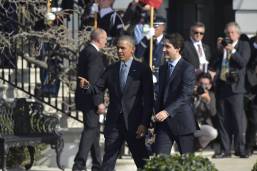
A charismatic, handsome, photogenic leader gobsmacked a capital, turned the media into cheerleaders, and left the people agog. We saw it last week and we’ve seen it before with its lessons as clear as a radiant smile.

Trudeau in Washington

Trudeau, with Obama, in Washington (Photo: blogs.wsj.com) 

On a slate gray afternoon, in May 1961, Air Force One touched down at Ottawa’s Uplands airport. Two thousand guests rose from their bleacher seats inside the massive hangar as 500 children hooted and waved little American and Canadian flags. Applause erupted as the plane’s big white door yawned open to reveal President John F. Kennedy and his wife Jacqueline.

Tanned from a recent Florida vacation, they smiled, waved, and descended the stairs. They moved slowly, shook hands with the governor general, Prime Minister John Diefenbaker, and their wives, and then strolled along the red carpet into the building. Coronation trumpets blared a royal welcome. The Honour Guard was inspected, an RCMP band played the American national anthem, and outside, a twenty-one-gun salute pierced the breeze.

In his welcoming speech, Diefenbaker said some nice things then self-deprecatingly apologized before offering a few words of what he called “fractured French.” Kennedy responded by saying of Canadian-American relations: “Together we have worked in peace, together we have worked in war and now in this long twilight era that is neither peace nor war we must stand together even more firmly than before.” All was going well but then, as he had at the White House press conference before Diefenbaker’s February trip to Washington, Kennedy mispronounced the prime minister’s name—“Deefunbawker.” Diefenbaker winced.

Jacqueline Kennedy was fluently bilingual. She had helped her husband memorize a few lines in passable French. Rather than simply say what he had practised, however, Kennedy admitted that he did not speak the language and then said, “I am somewhat encouraged to say a few words in French, having heard your Prime Minister.” The crowd laughed. The thin-skinned Diefenbaker again felt insulted.

As the Kennedys walked toward the waiting motorcade, the clouds parted as if on cue and bathed them in sunshine. Throngs of cheering people waved from the sidewalks as Kennedy approached the city. The cars were forced to slow several times as admirers surged forward with many holding children on their shoulders. Fifty thousand normally staid and steady people of Ottawa welcomed Kennedy to their city like teenage girls might greet Elvis.

The reception was not unexpected. Kennedy’s popularity was soaring as high Canada as it was in the United States. Kennedy knew policy and actions mattered but believed that his personal popularity was an important key to advancing his agenda. He understood his celebrity and took pains to enhance it with films of him playing touch football and photographs of his photogenic family. Every week viewers watched a riveting display of his prodigious memory, impressive intelligence, clear understanding of complex issues, and razor sharp wit in a live, televised news conference. He told speechwriter Ted Sorensen, “We couldn’t survive without TV.”

The next morning, after enjoying a state dinner at the governor general’s mansion the night before, Kennedy was cheered by a large crowd gathered at the Canadian War Memorial. The brief ceremony began with the American national anthem. Kennedy inspected a one-hundred-man Honour Guard, laid a wreath, and then stood for “O Canada” and “God Save the Queen.” With people waving and cheering, he and Diefenbaker walked slowly across Wellington Street toward the Parliament Buildings’ Gothic splendour.

Kennedy in Ottawa..

Kennedy, with Diefenbaker, in Ottawa (Photo: ici.radio-canada.ca)

With a massive crowd impatiently waiting on the Parliament Hill lawn for another glimpse of Kennedy, the president and prime minister repaired inside where they experienced nothing but frustration. Kennedy had arrived with a shopping list of requests for policy changes but Diefenbaker declared each contrary to Canadian interests and, over and over again, said no. They agreed on nothing except their dislike for each other. The people, however, saw none of the private machinations, only the public smiles.

President Kennedy was, and remains, a phenomenon. Born to wealth and privilege and with terrible health, he could have done anything or nothing at all. Instead, he became a war hero, a Pulitzer Prize-winning author, and then a Congressman, Senator, and President. The blinding light of Kennedy’s celebrity shone so brightly that its 100-watt brilliance overwhelmed Canadians and shaped their perception of their country and its leaders.

Like Macdonald, Lincoln, and Churchill, Kennedy is a standard against which Canadian leaders are measured. When Pierre Trudeau rode to power in 1968, he was complemented for the degree to which his intellectual cool and charisma reminded Canadians of Kennedy. A Trudeau biographer observed: “The mood was conditioned by nearly a decade of jealousy. Canadians had enviously watched the presidency of John Kennedy, and continued to wish for a leader like him.”

Now, Canada seems to have another Kennedy. Last week in Washington, Prime Minister Justin Trudeau acted the heir of Kennedy’s charisma and celebrity. When Kennedy arrived in Ottawa and Trudeau visited Washington they had both been in office for about four and a half months. However, Kennedy went on to add gravitas and a legacy of accomplishment to his celebrity. We’ll see if Trudeau can do the same. We’ll also see whether the next president will be to Trudeau as Diefenbaker was to Kennedy; a personal thorn, ideological nemesis, and challenge to every political skill he can muster.

If you enjoyed this column, please share it with others. The full story of JFK’s relations with Canada is told in Cold Fire: Kennedy’s Northern Front, available at sensible book stores everywhere and online here:

https://www.chapters.indigo.ca/en-ca/books/search/?keywords=john+boyko


The Third American Revolution

Let’s forget Donald Trump’s bragging about things better left personal and insults masquerading as debates and consider instead what is really going on. We are witnessing the third American Revolution.

The first began in the 1760s with rival Boston street gangs joining to challenge the authority of a British governor. Unrest spread and years of requests were ignored and demands snubbed until the government’s legitimacy was lost. Only a third of the colonists supported the rebels but in any revolution that’s plenty. By 1787, a new state was in place.

The second revolution was also a slow-motioned affair. It began with the constitutional compromise that allowed southerners to keep their slaves. The deal was torn asunder as every new state sparked arguments regarding slave or free. Lincoln’s election was the last straw for those fighting to protect their economic and social structure from a government that threatened both. Over 600,000 Americans died in the ensuing struggle and many old wounds are yet to heal.

The roots of the third American Revolution lay in Richard Nixon’s southern strategy. In 1968, the wily presidential candidate determined that white middle and working class southerners were angry about the Civil Rights movement that was desegregating their schools, the Women’s movement that was tempting their daughters, social policies that were increasing their taxes, and longhaired students who were insulting their beliefs. Nixon welcomed white segregationists and blue-collar workers to what he called his “silent majority” that would “win back America.”

Ronald Reagan expanded Nixon’s constituency to white, God-fearing Christians who feared the widening gulf between what they saw on their televisions and heard from their pulpits. Rights to abortionists, then gays, then immigrants, signalled the road to perdition with the government doing nothing to stop it.

The shift from all in which they had once believed became more disturbing when the fading industrial revolution closed factories and real wages stagnated or fell. Debt rose to desperately hold lifestyles that had before been assumed. Then the World Trade Centre fell with the government having failed to prevent it. Iraq became a debacle with sons and daughters arriving home in flag-draped caskets amid government lies about why. Finally, in 2008, homes were taken along with jobs and savings while people watched their tax money bail out those who caused the crisis. People recalled Reagan’s exhortation that government was not the solution but the problem itself.

Fox News and radio screamers fanned the flames of discontent and the donor elite, epitomized by the Koch Brothers, tried to convince the Nixon-Reagan folks to continue to vote against their interests. The Tea Party gave voice to the angry and cheated who increasingly rejected those claiming to speak for the little guys but once in Washington voted with and for the one percent. The Tea Party, and to a lesser extent the Occupy Movement with whom it shared enemies, was Toto who drew back the curtain to reveal the rigged game.

As in the first revolutions, the elite has lost control of the narrative. Mitt Romney’s recent speech attacking Trump showed the old oligarchy playing the old game but Trump’s supporters listened to him like the colonists heard the King or the Confederates heeded Lincoln. Equally dismissive of the DC elite are those “Feeling the Bern.” Of course Trump spouts nonsense and many of Sander’s ideas are impractical. It doesn’t matter. While Hillary Clinton offers the old world view, Tea Party favourite Ted Cruz, Sanders, and Trump speak to the same rage; to the same people with nothing to lose who gathered on Boston streets and Gettysburg fields.

The Third American Revolution

(Photo: http://www.breitbart.com)

America’s third revolution has arrived. We can look back at the slow progress of the first two and identify tipping points where power shifted and a new order was born. Let’s consider now if the current nomination races represent a new tipping point or, perhaps, if that point is already behind us.

If you enjoyed this column, please share it with others through Facebook or your social media of choice and consider checking out my other columns that I post every Monday morning.

Remembering Memory

Last fall, after recalling some obscure lyric, I said to my friend Chris, “I’ll miss my memory when it’s gone.” Chris is a witty guy. He said, “No you won’t.” Sadly, he was right. This week has led to my considering memory over and over again and it’s left me humbled.

My little band was performing its once a month gig at the local pub, the Canoe and Paddle. As I began to count in a song I realized that I didn’t have a clue as to its first line. I have cheat sheets for some songs but not for this one and, suddenly, Billy Joel’s Still Rock n Roll to Me was gone.

I began playing the thumping guitar part, moved a bit and smiled as if my playing it so long was just part of the show, and then, in a flash, the first line appeared as if in skywriting. If I can get the first line then everything else – the lyrics, chords, guitar parts, arrangement – all click into place. And it happened. But how did it happen? And what happens, I thought, when one day it fails to happen?

It occurred again with a speech I delivered this week about my new book. Like always, I never want to bore an audience with reading so I had no notes. I was fighting a cold and was feeling awful. During the introduction I shivered with sudden chills and then felt drips of sweat. As I stood, I felt dizzy and had to concentrate on smiling and not falling. No part of me was thinking of what to say as I placed a hand firmly on the table that, thank goodness, was close by. Then, from out of nowhere, came the stories, jokes, names, dates, and everything I needed for the 30-minute talk. Where is this nowhere? Again, what happens the first time that it fails to produce?

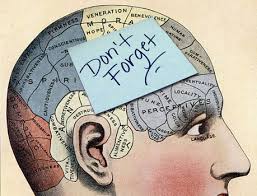
Remembering Memory

(Photo: http://www.psychologytoday.com)

Like every week, I enjoyed time with my one-year-old granddaughter. She is a beautiful marvel, but what else would you expect me to say? Her walking and talking is akin to a hopelessly charming drunken sailor. Her smiles, peak-a-boo and ball-rolling games, and warm cuddles send my heart soaring. But while crunching my knees on the hardwood and melting with her giggles I considered how much of all this she’ll remember – nothing.

My great grandparents’ Port Dover farm had a bench that encircled a big tree. The corn stalks across the road were as tall as mountains and the chickens in the dark, old barn were scarier than the wicked witch’s flying monkeys. And then there was the big kitchen, and my great grandfather’s stubble, and the big red swing. The farm was sold when I was six but the shards of memories remain. But for things that happened when I was one – nothing. I know things that happened before I can recall them affected and helped shape me as things are now shaping my granddaughter but my actual memories are, and with her will be, an empty well.

Like every week, I also spent time with my father, seventy-nine-years older than my granddaughter. We discussed the impending doctor’s appointment and what might have to happen. Then it did. He has all the coping mechanisms in place with a day timer always in his pocket, a wall calendar, and numbers written by the phone. The scaffolding is there with people cleaning the house and shovelling the snow. But this was one more blow, a devastating blow. Taking cabs from now on is not the end of the world but it is certainly another step in a journey that is proceeding far too quickly. He’s always been a good man and still is. But one important person in my life is growing toward her memory while another is growing out of his.

Scientists define memory as electrical brain impulses that encode, file, and retrieve information. Poets write and sing of misty places beyond the bounds of time and where people and places and smells and smiles are clearest when our minds are calmest. Who is right rests upon who we are, the machines or the ghosts within them. The scientists and poets are both right and both wrong.

This week I was forced to consider how much of what I love is dependent upon memory. I was forced to consider how much of who I love is dependent upon memory. I will never forget this week, but then again.

If you enjoyed this column, please consider sharing it with others on Facebook or your social media of choice.

Icarus, the Cleavage, & the Interviews

A man should never look at a woman’s breasts. Never. A man should never, ever look down a woman’s cleavage and under no circumstances for fifteen straight minutes. Never. Ever. No how. But I did. The red-faced moment occurred during one of the many interviews I have done as the author of six books supporting the rocky marriage between art and commerce.

A print journalist once began an interview for Into the Hurricane: Attacking Socialism and the CCF with the question, “What does CCF stand for?” The back jacket explained that the Cooperative Commonwealth Federation was the Canadian democratic socialist party and precursor to the NDP. I tried not to betray surprise with my realization that far from judging a book by its cover, she had read neither.

I understand that interviewers are busy folks often armed with nothing but a list of questions prepared by others. Some are so shackled to their list that I could respond, “Gee, my pants caught fire!” and hear nothing but, “I see, now my next question…” I accept those interviews as a challenge to stir interest and I sense success with the first follow up question that hints at a wandering from script.

An American print journalist once told me she had read Blood and Daring, which was about Canada’s role in the American Civil War. That, I thought, standing in my office, cradling my phone, fighting my ADD and trying to stay focussed, was a good start. She then said, “I’ve never heard of this Sir John A. Macdonald, but he seems like kind of a big deal. Perhaps for my American readers you could you sum him up in one sentence?”

With apologies to my high school English teachers, this was my one sentence stab: “Macdonald is like your Thomas Jefferson because he provided much of the philosophical underpinnings of our democracy; he is like America’s James Madison because he was the main architect and author of our constitution; he is also like your George Washington because he was our first chief executive and fully cognisant of the fact that everything he said and did would be precedent to his successors – so, Canada’s Sir John A. Macdonald is like America’s Jefferson, Madison, and Washington rolled into one man.” Damn, I was proud of myself. The article based on the interview was a well-written piece but the run-on Macdonald explanation was absent. Rats.

In-studio radio interviews are fun because many studios are cramped and chaotic. The interviewer is often hidden behind microphones and equipment or glass, making eye contact impossible. Assistants and producers are often scurrying about. During one interview the news and weather person was scribbling madly away beside me, tapping an I-Phone, and leaving and returning. It was a challenge to focus. Other studios offer Zen-like calm. Like Forrest Gump’s chocolates, you never know what you’re going to get.

Icarus, the Cleavage & the Interviews

(Photo: http://www.mxlmics.com)

Live radio over the phone is often interesting. I recently attended a good friend’s retirement party in Chatham, Ontario and expected to be back at his house in time for the 8:00 pm interview with a gentleman broadcasting from Montreal to affiliates across Canada. The party ran longer than I had expected. So, at 8:00 I was shivering in my dark, cold car, beside a parking lot dumpster, answering questions about John F. Kennedy and John Diefenbaker, while hoping beyond hope that a police officer or ne’er-do-well would not rap on my frosted window.

Live radio hates dead air. You must talk without time for thought. The funniest live radio question came at the end of a long interview about my biography of R. B. Bennett. The gentleman said, “Now you have read a lot about Canadian prime ministers so tell me, which one would have made the best NHL hockey player and why?” Later, my wife Sue, who is much smarter than me, said that Lester Pearson was a great hockey player or maybe I should have said Jean Chrétien because of the Shawinigan handshake. The best I could muster was, “Sir John A. because in the Gordie Howe tradition he was the best of his era and not above throwing an elbow.”

Television is fun. I once did a live interview for the East Coast CBC from a studio in Toronto. I was made up, wired up, placed on a swivel chair but told not to move, and then instructed to look at the screen six feet before me. I heard the producer count down and the interviewer’s voice through my ear-piece but the screen remained dark. I had expected to see him as he and viewers were seeing me. I know I was thrown for the first question or two wondering if there was a malfunction. I carried on and tried, as always, not to say anything too stupid.

One of the best in the business is TVO’s Steve Paikin. He has interviewed me three times and in each instance he has carefully read the book and prepared questions but then the interview becomes a conversation. For those interested, here is my most recent interview with Steve Paikin so you can see how very good he is.

http://tvo.org/video/programs/the-agenda-with-steve-paikin/kennedys-northern-front

TVO Feb 17

Steve Paikin and me on February 17

And then there was the cleavage. It was an interview for my Bennett biography. For some reason, it was decided that the taped radio interview would be done outside. The interviewer was an attractive woman about eight inches shorter than me clad in a red, low-cut top. I had begun to respond to her first question when the sound person stopped us and said that because of the height difference she would lower the wind-socked microphone and I would need to look down and keep looking down throughout the interview. “OK,” I whispered, realizing straight away that I was being asked to break the cardinal rule and look where a man should never look. Never. A cleavage is like the sun, I’ve been warned, more than a glance can hurt you. Yet, for fifteen long minutes, I was Icarus.

Interviews are all fun and nearly all interviewers are well read, intelligent, articulate, interested and interesting. Like the folks I get to meet at speeches and festivals, I feel honoured to share ideas with them. I never forget that I am lucky to have written and published books and, through them, to have met so many great people and seen the places I’ve seen and done the things I’ve done. Even when the interviews get a little funny, crazy, or embarrassing, I never take for granted how truly blessed I am.

If you enjoyed this column, please share it with others on Facebook or your social media of choice. You can check out the books I was talking about at your local bookstore or here http://www.amazon.ca/John-Boyko-Books/s?ie=UTF8&page=1&rh=n%3A916520%2Cp_27%3AJohn%20Boyko