Honour in All Work and the Worst Jobs

All work is honourable but some jobs are awful. The luckiest among us marry jobs and passion and often have smaller houses but broader smiles. The saddest folks labour only for money and many end up struggling to fill holes in their soul with stuff. There is something to be learned from all work and perhaps the best lessons are offered by the worst jobs.

My worst job was not the winter I laboured as an Esso gas station attendant. Besides changing oil, cleaning the bathrooms, sweeping the place, and occasionally swiping stale chocolate bars, I would have made Pavlov grin when at the ping of the ding I jumped into coat and hat to leap to the pumps outside. With the temperature often far south of zero, I became quite adept at yawning hoods and checking oil in mere seconds and at kicking the frozen pail of ostensibly un-freezable blue goop to squeegee windshields. I had a cold all that cold winter. I received one tip – fifty cents.

My worst job was not the two summers with the Peterborough parks department. I enjoyed one morning each week when I drove the golf cart to ball diamonds around town to drag the angle iron in circles and then chalk baselines. But I also pierced garbage with a broken hockey stick with a bent nail in the end. In a hard hat and steel-toed boots, I ignored my allergy to freshly cut grass while pushing a lawn mower in circles around trees and up and down hills and other places the big tractors couldn’t go. I nodded obediently when my suggestion for punctuation was ignored and then dutifully erected thirty signs that read: No Golf Playing Motorized Vehicles. They were certainly effective because after that I didn’t see a single motorized vehicle playing golf.

When it rained, the three crews of university students were gathered under the Hunter Street Bridge where we sat in a large bunker-like room on makeshift seats with traffic rumbling above and covering us with dust. Against one dank and filthy wall lay a mountain of tulip bulbs. For several chilly, soggy days, hour after excruciating hour, we peeled each bulb and placed it in the correct bushel baskets: large, medium, small, and rotten. There were bulb wars and songs and jokes and one afternoon a guy entertained us with Penthouse letters; he inserted the word blank for the nasty bits, making each depraved offering seem even nastier still.

My worst job lasted only one night. My friend Chris and I were fifteen when we saw the ad in the paper and showed up at the Towers Department store parking lot that night at 9:00. At the yelp of the crew-boss, we boarded the ancient yellow school bus, gasped at the smell, and tried not to make eye contact with any of the scary looking people around us. We bounced in silence beyond the city’s lights to a rural golf course that in the inky darkness was as creepy as our workmates. Given no instructions, we followed the others and secured miner’s lights to our foreheads. Using big elastic bands we fastened empty juice cans to our ankles and scooped a handful of sawdust into the left one. We began following the safest looking man but in a truly impressive demonstration of the manner in which the “F” bomb can be noun, verb and adjective in a single, complex sentence he suggested that we find our own spot. It took a while, but we finally wandered to an empty fairway.

We had been promised a cent a worm. Chris had calculated how much we could make in only one night and all afternoon we couldn’t wait to begin. But now that we were there, stumbling through the chill and darkness, we couldn’t wait to earn our first penny.

We couldn’t find a worm anywhere. It was nearly thirty minutes before I lunged at my first victim. I missed him. It was another thirty before we mastered the plunge and yank needed to can one, as we began calling it. We jumped and ran when the automatic sprinklers clicked to life but then smiled when worms began appearing on the wet grass that glistened black under the August moon. We learned to time the rotations. We’d run in, can a couple, and then scamper back without getting too wet. The sawdust on our fingers kept the slippery buggers from sliding away and we learned to be quick. With a slip on the wet grass I lost nearly half my catch but we kept going.

Honour in All Work

We worked hard all night and at the horn’s blast returned to the bus. We were stiff and dog tired but stood proudly in line to present our haul to the crew-boss who sat behind a long beat-up wooden table. Some of our work mates had earned the money that we had dreamed about but I had managed to pick only one full can – 250 worms. The tough looking women with the Ukrainian accent counted out two dollars and fifty cents. Chris earned just a little bit more.

We napped on the dirty bus and stumbled out bleary-eyed and filthy. The city was shaking itself awake with cars piercing the morning mist as we shuffled across the street to the neon glare of the donut shop. We bought donuts and chocolate milk until our night’s pay was gone. Later that afternoon, Chris called and we agreed that one night of worm-picking was plenty.

Over the years, I’ve written a number of resumes but I never listed worm picker. Perhaps I should have. This evening, when I slide between clean sheets, I’ll afford a thought for folks who will spend the night standing guard, serving coffee, buffing floors, dumping garbage, and yes, even hunting worms. There is honour in all work. Perhaps there is even more in work that needs to be done but most of us would rather not do and when we would rather not do it and all for wages we would rather not accept.  Maybe it is in that work, at three in morning, with folks doing the best they can for the families they love, that lies the most honour of all.

If you enjoyed this column, please send it to others. You might even check out my books such as my latest, Cold Fire: Kennedy’s Northern Front.
Remembering Memory

Last fall, after recalling some obscure lyric, I said to my friend Chris, “I’ll miss my memory when it’s gone.” Chris is a witty guy. He said, “No you won’t.” Sadly, he was right. This week has led to my considering memory over and over again and it’s left me humbled.

My little band was performing its once a month gig at the local pub, the Canoe and Paddle. As I began to count in a song I realized that I didn’t have a clue as to its first line. I have cheat sheets for some songs but not for this one and, suddenly, Billy Joel’s Still Rock n Roll to Me was gone.

I began playing the thumping guitar part, moved a bit and smiled as if my playing it so long was just part of the show, and then, in a flash, the first line appeared as if in skywriting. If I can get the first line then everything else – the lyrics, chords, guitar parts, arrangement – all click into place. And it happened. But how did it happen? And what happens, I thought, when one day it fails to happen?

It occurred again with a speech I delivered this week about my new book. Like always, I never want to bore an audience with reading so I had no notes. I was fighting a cold and was feeling awful. During the introduction I shivered with sudden chills and then felt drips of sweat. As I stood, I felt dizzy and had to concentrate on smiling and not falling. No part of me was thinking of what to say as I placed a hand firmly on the table that, thank goodness, was close by. Then, from out of nowhere, came the stories, jokes, names, dates, and everything I needed for the 30-minute talk. Where is this nowhere? Again, what happens the first time that it fails to produce?

Remembering Memory

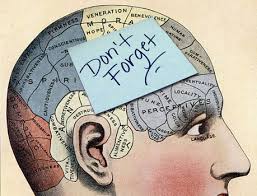
(Photo: http://www.psychologytoday.com)

Like every week, I enjoyed time with my one-year-old granddaughter. She is a beautiful marvel, but what else would you expect me to say? Her walking and talking is akin to a hopelessly charming drunken sailor. Her smiles, peak-a-boo and ball-rolling games, and warm cuddles send my heart soaring. But while crunching my knees on the hardwood and melting with her giggles I considered how much of all this she’ll remember – nothing.

My great grandparents’ Port Dover farm had a bench that encircled a big tree. The corn stalks across the road were as tall as mountains and the chickens in the dark, old barn were scarier than the wicked witch’s flying monkeys. And then there was the big kitchen, and my great grandfather’s stubble, and the big red swing. The farm was sold when I was six but the shards of memories remain. But for things that happened when I was one – nothing. I know things that happened before I can recall them affected and helped shape me as things are now shaping my granddaughter but my actual memories are, and with her will be, an empty well.

Like every week, I also spent time with my father, seventy-nine-years older than my granddaughter. We discussed the impending doctor’s appointment and what might have to happen. Then it did. He has all the coping mechanisms in place with a day timer always in his pocket, a wall calendar, and numbers written by the phone. The scaffolding is there with people cleaning the house and shovelling the snow. But this was one more blow, a devastating blow. Taking cabs from now on is not the end of the world but it is certainly another step in a journey that is proceeding far too quickly. He’s always been a good man and still is. But one important person in my life is growing toward her memory while another is growing out of his.

Scientists define memory as electrical brain impulses that encode, file, and retrieve information. Poets write and sing of misty places beyond the bounds of time and where people and places and smells and smiles are clearest when our minds are calmest. Who is right rests upon who we are, the machines or the ghosts within them. The scientists and poets are both right and both wrong.

This week I was forced to consider how much of what I love is dependent upon memory. I was forced to consider how much of who I love is dependent upon memory. I will never forget this week, but then again.

If you enjoyed this column, please consider sharing it with others on Facebook or your social media of choice.

Lessons from the Snowman & 7-Year-Old

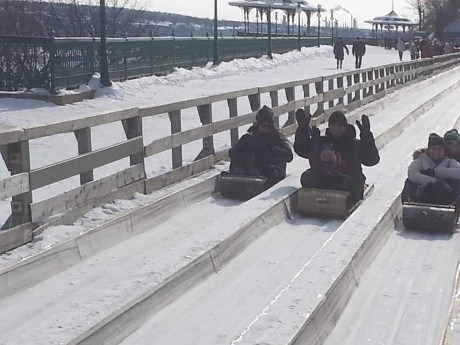
If warp speed is real, then we hit it. A thousand freezing needles stung our cheeks as tears swamped our eyes. The screams grew louder until we realized it was us. When finally crunching to a sudden stop on the sand-strewn rubber mat we sat frozen in place for a second or so until I groaned, rolled, and pulled myself to my knees. I wiped my face and stretched to realign tingling vertebrae. She, on the other hand, bounded up, leapt before me, and with wide-eyed, adrenaline fuelled, fist-clenched, unbridled joy squealed, “Let’s go again!”

“Sure,” I said. What else could I say? Quebec City’s toboggan slide, on the boardwalk – the Dufferin Terrace – adjacent to the majestic Château Frontenac, has been thrilling riders for over 100 years. Speeds have been reportedly clocked at over 70 miles an hour. I believe it.

She flopped atop the 10-foot solid-as-a-rock wooden toboggan with the thin red padding and we began the long haul back to the top. At the wooden ascending ramp, she moved in front and we trudged up and up and up. With the toboggan’s red rope around my waist, I measured each footfall on the cross pieces that resembled hockey sticks and presented no guarantee of a Wile E. Coyote slip and tumble back to the bottom, taking all those behind with me.

The summit offered a 10-by-10 wooden platform and spectacular view. The gigantic sky was cloudless and brilliantly blue and yet the St. Lawrence so far below morphed the sight to black and white. Only the Lévis ferry, gleaming white in the bright sun, broke the grey, pulsating river choked with chunks of gliding ice floes all disappearing at the horizon’s vanishing point.

The blissful moment ended with a French instruction grunted and tickets taken. We assembled ourselves on the long toboggan in the narrow centre lane. A thin metal bar blocked the bow while I adjusted my legs to flank hers, propped my boots upfront, and settled my arms over her shoulders to hold her in place. There would be no flopping about with possible injury on rough barriers that demarked the lanes, nearly touched us, and would soon be whirring by. A word in French, a dropped bar, and we were off. Warp speed.

20160206_121402 (1)

Canadian winters are not for the meek. Quebec City winters are especially harsh with mountains of snow and biting winds that whistle relentlessly up the river valley. Rather than deny winter, however, long ago the good folks of the fine city decided to welcome its challenge and revel in its glory. Observed every few years since 1894 but annually since 1955, the Quebec Winter Carnival is a three-week marvel.

A multi-room ice castle is built across the street from the magnificent, gothic National Assembly building. Nearby, the Plains of Abraham, where in 1759 the British defeated the French in a battle that still shapes Canada, hosts a festival of activities. What is best of all is that except for one crazy ride and a Ferris wheel, nothing is passive. There is no sitting down or strapping in and no watching others or screens. Instead, there is human foosball that had us playing, kicking, and cheering, dog sledding that had me leaning into turns behind the scurrying, yelping team, and hills where we dragged inner tubes and sleds back to the top to slide down again.

Forget other cities with subterranean sidewalks and malls and the hatless, silly-shod fashionable but freezing. Quebec City lives life outside with big boots, bigger coats, and even bigger toques. Forget delicate lunches in elegant settings. There are crepes, poutine, tourtiere, and stew, and then a line of maple syrup poured on a snow wall to be twirled around a tongue depressor for the sweetest and most Canadian of snacks. This is a place for practical people, enjoying unpretentious fare, and active, participatory fun. In Quebec City, low temperatures spark high spirits.

Our travelling companion was our energetic, witty, and always in the moment granddaughter who enabled us to see it all through the eyes and at the pace of a seven-year-old. Beyond the gift of her company and warm certainty of memories being forged and bonds being strengthened, she reminded us of the beauty of wonder. Her grade two French immersion allowed her to befriend a little girl in the hotel pool in a meeting of gentle sincerity. Absent were the false dichotomies of region, language, and religion, and in their place the essence of innocence.

The casual but intrepid way in which she tested her blood sugar level several times a day and accepted the insulin needle in restaurants, the hotel, and other places around town including a big police vehicle that an officer kindly offered, reminded us of her quiet courage. Type One diabetes is part of who she is. It does not and will never define her.

And then there is Bonhomme. The 7-foot tall snowman is not a mascot but an ambassador. He moves throughout the city in his traditional red hat and voyageur arrow sash welcoming guests and attracting crowds who swarm for pictures. Seldom is anyone alone with Bonhomme. Our granddaughter, however, watched, figured it out, devised a plan, and at just the right second, slid quickly from behind. His red-coated handler bellowed laughter at her cleverness and temerity. The snowman and 7-year-old exchanged a few thoughts in French and posed, just the two of them.

20160205_145237

And at that special moment, a second in time, there was the symbol of the Quebec Winter Carnival: traditional and corny, fun and funny, retro-cool and cold, and as Canadian as you can get. And smiling with him, the little girl who remains our most profound teacher, reminding us to be in the moment, accept difference without judgement, be courageous in adversity, remember what matters, to seek fun, love goofiness, eat when hungry, sleep when tired, and to unconditionally love and be loved.

If you enjoyed this column, please share it with others.

Hockey, Trump & Happy in the Hurricane’s Eye

Sometimes I feel a need to apologize. Like everyone, I harbour a few regrets, wish some things were a little different and others a trifle easier. Mostly though, I feel like I’m in a hurricane’s eye. Things are calm here, they’re nice, and yet all around me seems awhirl in furious thunder. While so many are so angry, I’m happy. Sorry.

Am I missing something? I’ve recently seen two sources of curious anger that gave me pause.

Hockey

Hockey is a great sport. Unlike football and baseball, offense and defence flip with no time for pauses or plans. Its beauty is the patterns in the chaos. Hockey culture, on the other hand, is another thing altogether. I’m not talking about the billionaire’s business posing as sport, but children’s hockey.

Hockey, Trump, Happy & the Eye of the Hurricane

It’s not the kids’ fault. Nearly all of them are there for the fun but too many parents see games as invitations to display their character’s worst colours. They yell at referees, coaches, their kids and other peoples’, and sometimes even each other. Those yelling loudest are always those who understand the game least.

How many of those shouting for their kids to do this or that or about someone denying their kid opportunity are revealing personal rage regarding chances they didn’t take or doors slammed on their ambitions? How many parents are pushing kids and attacking others in blatant attempts to chase unrequited dreams through imposing them on their children?

My seven-year-old granddaughter plays on two hockey teams and I love to watch her. The score is kept on the big board but tallying stops whenever the spread grows to more than three goals. Teams shake hands after every game. Afterwards, we ask only if she had fun. She never knows who won and never cares. Parents and grandparents laugh and cheer and shout nothing but encouragement. It’s great.

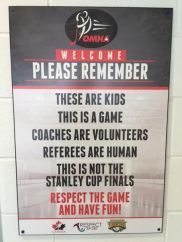
Folks at other games are apparently different because the arena found it necessary to erect the sign below. I hope it helps those unable to park their regrets, fears, and vicarious dreams that manifest as ugly anger. I wonder, though, if those who need the sign ever read it, heed it, or even understand it’s for them.

Why I'm Not Angry Enough

Trump

Last week I also watched a Donald Trump speech on YouTube. Trump is fascinating but it’s not the first time we’ve seen his ilk. In 1968, Alabama Governor George Wallace ran for president and attracted much the same people. Perhaps it is more accurate to say that he attracted the same emotion.

In the late 1960s, like today, a great many people were afraid that their world was changing in ways they didn’t like or understand. They were mad. Women and African Americans were demanding equality, the economy was shifting from its long post-war prosperity, and America was losing a war in Vietnam. Now, gays, lesbians, and transgendered people are demanding equality, the industrial revolution is over with nothing to replace avenues for middle-class prosperity and working-class mobility, and America seems to be losing the war on terror.

Why I Love Donald Trump and the Rhinoceros

What can be done? One could delve into nuanced and complex causes and effects and accept that economic and social shifts take time and demand concessions from all sides. Forget that! There is no time for that nonsense when one’s life is happening now, children need their futures to start now, and a living must be made and debts paid right now.

It is much easier to get mad at those deemed responsible for the disconnect between how life is and how it was expected to be. Wallace knew it then and Trump knows it now. Therefore, blame the desegregationists or the immigrants. Blame the other, whether it’s the other race, religion, ethnicity, lifestyle, region, party, and, of course, blame the government. Get mad at those who are causing the changes or not stopping them or refusing to acknowledge that the way things were before was better.

U1583804

George Wallace, February 1968.  (www.eurweb.com)

Trump rides the difference between nostalgia and history. It’s why facts don’t matter and lies are accepted. His followers, like Wallace’s, yearn for a misty-eyed past that never really existed; when rules were certain, dreams assured, and everyone knew their place.

It’s a fretful yearning that fuels anger, fills stadiums, makes signs, and fills lungs with desperate rage. It’s the same yearning that sparks screaming at little hockey loving kids.

Decision

I don’t yell at hockey games. I don’t support Mr. Trump. I just can’t muster the necessary anger. This makes me neither better nor smarter than anyone – far from it. But I choose to be informed rather than bamboozled. I choose to be calm around children, knowing that they’re watching and learning how to behave and how to be an adult.

Emotions are decisions. I choose to go outside, run, be with family, enjoy friends, play music, be childlike but not childish with children, set and celebrate achievable measurable goals, enjoy goofiness, and when I encounter one, to say right out loud, “This is a good moment.” In short, I choose not to be angry but happy.

Happy is not a surrender of personal sovereignty, a rejection of values, or naive. Anger, on the other hand, is all three. Anger’s adrenaline is cheap tequila while happy’s endorphins is a fine wine. No one’s happiness led them to become a bully in the stands or to follow one behind a lectern. I’ll leave those yelling at Mr. Trump’s rallies and in hockey arenas to their rage.

For me, happy is a better decision and the eye of the hurricane is a pretty nice place. I think I’ll stay.

If you enjoyed this column, please consider sending it to others and checking out more of my work at http://www.johnboyko.com.

New Year’s and the Redemptive Power of the Do-Over

Kids love do-overs. Golfers love mulligans. What’s not to love about getting another go at something missed or muffed? There are few among us who have not wished for a do-over after a botched job interview, thoughtless remark, or mistakenly sent ‘reply to all.’ Perhaps that’s the magic of New Year’s Eve. It reflects our faith in the do-over and the power of redemption.

New Year’s and the Redemptive Power of the Do-Over

(Photo: eilanhotel.com)

The Pagans understood. They proposed explanations for the unexplainable in ancient Egypt, Greece, and Rome. Renewal and redemption, for instance, informed the Pagan observance of the spring equinox. Winter had crippled the sun but April brought resurrection with days longer than nights. Celebrations involved Eostre, a northern goddess, who offered rabbits and eggs as symbols of fertility and rebirth.

The Catholic Church understands. The ritual of confession is based on our being weak and inclined to evil and thus apt to sin. However, all is forgiven if an adherent is truly contrite, fesses up, and then carries out the prescribed penance. The Sacrament of Reconciliation offers the washing of sin, a road back to God’s grace, and a new start on a more virtuous life.

Existentialists understand too. They reject the beliefs of pagans and most religions in their insistence that people control themselves. Kierkegaard, Nietzsche, Sartre, and more, essentially said forget God or gods having a grand plan or ability to forgive or influence our lives. Forget both nature and nurture for neither determines who or what we are. Everything, they said, is up to us. Existentialism’s power and freedom offered a double-edged sword for our ability to create our own meaning, being, and opportunities comes with a responsibility to do so. It insists that no one but us is to blame – neither parents nor God – for our confusion or shortcomings.

So while Pagans, Catholics, and Existentialists disagree about a host of matters, they link arms on the twin powers of reflection and redemption. They agree with Shakespeare who gave these words to Julius Caesar: “The fault, dear Brutus, is not in our stars, but in ourselves.” If they are all right, then New Year’s Eve offers a unique and powerful gift.

My band will be playing on New Year’s Eve and at midnight we’ll pause for the countdown and kisses. I will silently repeat the resolution that I will have decided upon. I’ll pledge to correct not a silly behaviour but a character flaw. I have plenty from which to choose. Perhaps I’ll resolve to listen more and talk less or buy less and give more. I might vow to see neighbours more and to see more as neighbours. The simpler my resolution, the more profound will be its impact, difficult its execution, and, therefore, essential to my ever evolving being and life’s nuanced meaning.

I will then plunge into 2016, confident in the power of restoration and redemption. I’ll try to do better by being better because on January 1, like you, I’ll get a new chance at new. Isn’t that what a do-over is all about?

Thank you for reading this column. If you liked it, please consider posting it for others to see and seeing my other work at http://www.johnboyko.com

Santa, Trudeau, and the Acceptable Lie

We lie to our children. The biggest lie, of course, is that we adults know what we’re doing. Right up there with our major league whoppers is Santa Claus.

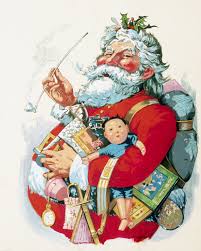
We know that Santa began as a 3rd century Turkish monk named St. Nicholas who gave his inherited wealth to the poor. The Dutch perpetuated the legend but called him Sinter Klaas. We also know that in 1823 American Professor of Oriental and Greek Literature Clement Clark Moore wrote a poem for his daughters that invented the notion of a fat man, chimneys, sleighs, and reindeer. Only much later was it entitled “T’was the Night Before Christmas.” In 1881, Harper’s Weekly political cartoonist Thomas Nast gave pictures to the poem and Santa got his red suit. We also know that in 1931, the Coca Cola Company hired illustrator Haddon Sundblom who, stealing from Moore and Nast, initiated a decades-long ad campaign based on Santa as a jolly, wholesome, kid-loving, and Coke-drinking Christmas mainstay. Cue the malls and parades.

Santa, Trudeau and the Acceptable Lie..

The Nast Santa

We know all that. But we lie anyway. And maybe that’s OK. Santa is the flimsy link between the magic of Christmas and parenthood’s delicate dance. He is among the gifts we offer our children to balance our warnings about holding hands crossing the street, not talking to strangers, secret code words, and practicing fire drills at home and lock downs at school. We scare the hell out of them to keep them safe so maybe it’s alright if we temper fear with fun through a few years of Santa, the Tooth Fairy, Easter Bunny, and our invincibility.

Canada’s Prime Minister Justin Trudeau is now enrapturing the country and many others around the world with his sunny disposition and deft ability to humanize the office that seems designed to suck the humanity from any who enter. Good on him. Canadians have known him from his birth – on Christmas day by the way – because his father was Prime Minister from the late ‘60s to early ‘80s. Canadians were reintroduced to Justin on September 28, 2000, when he delivered a touching eulogy at his father’s funeral. Consider a story he told:

“I was about six years old when I went on my first official trip. I was going with my father and my grandpa Sinclair up to the North Pole. It was a very glamorous destination. But the best thing about it is that I was going to be spending lots of time with my dad because in Ottawa he just worked so hard. One day, we were in Alert, Canada’s northernmost point, a scientific military installation that seemed to consist entirely of low shed-like buildings and warehouses.

Let’s be honest. I was six. There were no brothers around to play with and I was getting a little bored because dad still somehow had a lot of work to do. I remember a frozen, windswept Arctic afternoon when I was bundled up into a Jeep and hustled out on a special top-secret mission. I figured I was finally going to be let in on the reason of this high-security Arctic base. I was exactly right.

We drove slowly through and past the buildings, all of them very grey and windy. We rounded a corner and came upon a red one. We stopped. I got out of the Jeep and started to crunch across towards the front door. I was told, no, to the window.

So I clamboured over the snow bank, was boosted up to the window, rubbed my sleeve against the frosty glass to see inside and as my eyes adjusted to the gloom, I saw a figure, hunched over one of many worktables that seemed very cluttered. He was wearing a red suit with furry white trim.

And that’s when I understood just how powerful and wonderful my father was.”

Santa, Trudeau and the Acceptable Lie

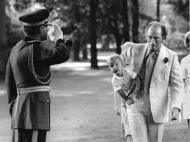
Justin and his Dad (Ottawa Citizen Photo)

Let our leader be our guide. While we can, let’s enjoy the lie. This Friday my granddaughter will open presents that came all the way from the North Pole. Her eyes will sparkle. And that’s just fine.

If you enjoyed this column, please share it with others and check more of my Monday blogs at http://www.johnboyko.com but, please, not on Christmas Day. Instead, let’s darken our screens to devote undivided time with those we love.

Learning to Shut Up

I’ve never met the brilliant Canadian comic Ron James but we share a childhood memory. When we were kids, doctors did not diagnose ADHD – attention deficit hyperactivity disorder. James explains that his father instead called it, “What the hell’s wrong with that boy?”

Like Mr. James, I was always flitting from one thing to another and wanting to do more, read more, and know more. While I did all right in elementary school, I recall wanting lessons to be faster and to explore not what the teacher was pointing at but whatever was around the next corner. I was the kid staring out the window or asking so many questions and offering so many comments that I was deemed a disruptive dreamer. Now, I guess, I would be drugged into submissiveness.

Through high school I applied coping mechanisms. I’d doodle and day dream and ask to go to the washroom in order to walk a bit. I’d snatch what I needed from classes and then read the rest on my own. In the fourth class of a university course I asked the professor if she would be basing the rest of her lectures on the reading packages. When told she would, I skipped the next four months, submitted the assignments, wrote the exam, and earned an A. It was my all time favourite course. Basically, I’d been taught and effectively learned to shut up.

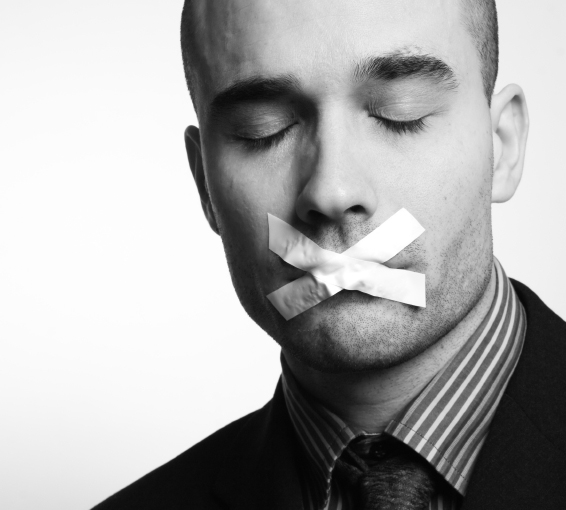
The silence is not a solution for your problems.

I got better at it but like many people, even those without so many thoughts competing for attention and itching to volcano, I’m still learning. Here’s what I’ve figured out so far and, with mixed success, am still practicing:

  1. We need to shut up about other people. Surely the joys and challenges of our own lives are plenty without concerning ourselves with the minutia of others. Besides, it’s none of our business. Privacy is good and gossip is the devil’s radio.
  1. We need to shut up about other people’s motives. We never have all the information and there is no such thing as mind reading. Our guesses will never be more than projections of our own values, needs, or reactions.
  1. We need to shut up about things we’re unwilling to do anything about. If that dog down the street is barking again or the boss has just done something infuriating, or myriad other irritants that test our mettle, we need to either directly address the person or issue or stop complaining.
  1. We need to shut up when someone is talking. When we blurt out our guess regarding what someone is about to say we’re often wrong and always annoying.
  1. We need to shut up when someone tells a joke or story. Even if we know a better one, no one likes the one-upper who competes with a funnier anecdote or broader tale. Let the other enjoy the spotlight.
  1. We need to shut up when someone is dealing with a difficult situation and wants only to work it out by talking it out. We can feel all mushy that we’re being trusted with the unburdening but must resist the urge to offer advice or solutions.
  1. We need to shut up in meetings. Meetings are often too long because of airtime hogged to re-word points already made or to impress the boss. Meetings should be held standing up or walking and rewards bestowed for value added rather than word count.
  1. We need to shut up in the presence of dead air. A little silence is okay. Reflection and thought is okay. We should appreciate the tranquil moments, especially in a car.

Consider the value of occasionally shutting up altogether. In 2013, Imke Kirste of Duke University found that when we stop talking and enjoy silence, the hippocampus portion of the brain explodes with new cell growth. It is the seahorse shaped bit at the brain’s centre that is responsible for the categorization and storage of long-term memory.

Kirste quantified what monks have, through their example, been gently arguing for centuries. Based on monastic notions of spiritual sojourning, silent retreats now exist throughout the world. They offer idyllic settings and experiences such as hiking, yoga, or spa treatments, all linked by their sanctuaries of silence. No radio. No TVs, i-things, or music and, most importantly, no talking. People pay big money to shut up. The Esalen Institute in Big Sur California, for instance, charges $5,000 to spend a week with them in silence.

Some folks can’t do it. The toughest part, apparently, is that a week of silence demands hours alone with oneself and some find they don’t like the company. Try it. For just one day, switch everything off and shut up. Let your mind flow. Ponder why it’s so hard or marvel at your personal mystery tour as your brain rewires itself.

There’s work left for me to do. I still slip up and don’t shut up when asked my opinion of an emotionally controversial matter or when happily amid friends. Ron James learned to make a living by harnessing his bucking bronco thoughts. Speaking, writing, and even singing torrents of words have similarly enabled me to ply my trade and pursue my passions. I get the irony of saying this through a blog post shot-gunned into the universe, but I’m getting better at silence.

If you enjoyed this column, please share it with others and consider checking my others at http://www.johnboyko.com or even following my Monday blog posts.(Photo: http://www.texasenterprise.utexas.edu566)

The Importance of Ignoring Your Rabbits

Journalists, detectives, and hiring teams love hypothetical questions. Those in their sights are asked to imagine situations and predict reactions. Politicians dismiss them. Suspects leap behind lawyers. Pity the sweaty-palmed job applicant spinning an internal Rolodex of possible responses while balancing honesty with guessing the right answer

As an author, I have been interviewed countless times in TV and radio studios, over the phone and over coffee, and before audiences. Speaking engagements always end with a Q and A. In most cases, I am asked about whatever book has just been published and my answers come relatively easily. After all, by the time a book leaves the nest to make its perilous way in the world, it has been re-written so many times that an author nearly has it memorized. Further, after a while, an author hears the same dozen or so questions and it becomes a little like Neil Diamond singing Sweet Caroline – the performance is still heart-felt, enjoyable, and hopefully entertaining, but seldom challenging.

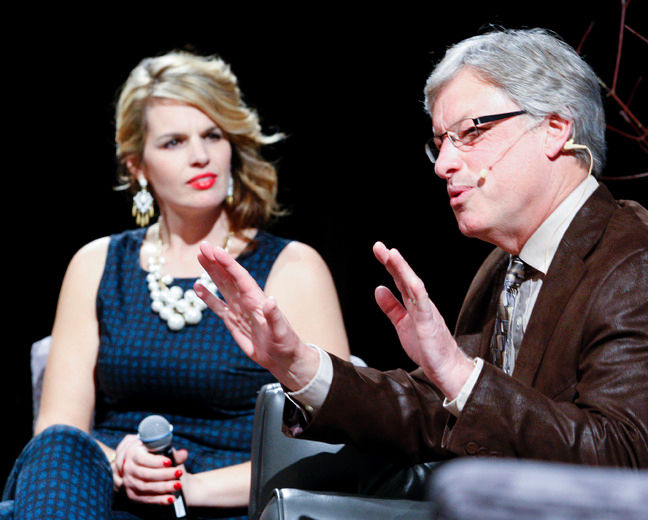
But then, once in a while, down the queue comes the query – the hypothetical. It just happened to me again. I am proud and was humbled to have been invited to be one of six artists, authors, business people, and community leaders to participate in the annual fundraiser for the Greater Peterborough Health Services called Peterborough Speaks.

Last Wednesday evening, each of us took a turn on a chat show-like setting at the Market Hall theatre. We were interviewed for about 15 minutes before an audience of 250 and those who will watch later on television. Media personality Michelle Ferreri began my session with a question about my upcoming book and all was going well enough, I thought, until the end. She concluded with, “What advice would the current you give to your 20-year-old self?”

Ignoring Rabbits (photo: Peterborough Examiner)

Wow! Up in the Green Room, I had heard BrandHealth president Paul Hickey asked that question and so I didn’t think the same bullet would be fired again. I was reminded of the same gulping feeling I experienced when asked by a Calgary CBC journalist during a live radio broadcast: “Of all the Canadian prime ministers, which would have been the best NHL hockey player and why?”

That time, I was on the phone with radio’s cruel absence of the communication crutches of expressions or gestures and the terror of dead air. Now I was on stage before all those people and cameras. I was suddenly like one of the hundreds of job applicants who, in another part of my life, I had interviewed with similarly tough, hypothetical questions. It was my turn to spin the Rolodex.

I said, “I would tell my 20 year-old self to ignore the rabbits and tend the tree.” Michelle looked incredulous and there were smatters of nervous laughter from the audience. I explained;

“When I was 20, I was like a frenetic young man alone in a large field teeming with rabbits. I was armed with a tiny net called ambition. I scurried from one to the next, finding that with every rabbit I snared, two more got away. I wish I could convince that guy to leave the field and seek a sanctuary of silence to contemplate what is truly important. I would implore him to imagine shaping his life less as a hunter and more as a gardener before a young bonsai tree. I would suggest that he slowly nurture its growth by picturing its ideal shape and then, over time, mold it into that shape by snipping off certain people, places, activities, and habits and all else that is destructive and distracting. I’m not sure he would have had the capacity to hear me for winter can seldom warn the spring, but I would advise my 20-year-old self to ignore the rabbits and tend the tree.”

I had considered the metaphor of the bonsai before but never constructed the thought as I expressed it that evening. Now that I have, and because I did it in such a public way and with this writing I am doing it again, I am pressing myself to a new challenge. I will soon be making a couple more snips.

As for the fellow in Calgary, I said, “Sir John A. Macdonald would have been the best NHL hockey player for in the Gordie Howe tradition he had the broadest skill set of anyone at the time and was not above throwing a few elbows.” I hope Sir John and Mr. Howe would have liked that. I suspect that as young men they had learned to ignore the rabbits.

If you enjoyed this column, please consider sharing it with others through your social media of choice and to subscribing to follow my Monday morning blog: http://www.johnboyko.com

Happy is a Decision

Happy is not a goal. It’s not a destination. Happy is not a dream or some Hallmark card hokum. Happy is a decision. I once enjoyed a lecture by a Tibetan monk. He said a great deal that rang of declarative knowledge, that is, he dragged things I already knew into the light where, for the first time, I could see them clearly. Of all that he said that day, the one thing that resonated most was, “If you want to be happy, go ahead.”

It sounds easy, but it’s not. Many people struggle with depression or other ailments that make happiness frustratingly illusive. Thankfully, I am not among them. But, for a long time, I might as well have been. I simply refused to see that if happiness is indeed a decision, then it implies responsibility. I had work to do. I had to differentiate between those things that make me happy from those that do not. Like changing one’s diet rather than going on a diet, the challenge suggested a long-term life-style change. The idea that happiness is a decision forced me to redefine happy.

I have, for instance, taught myself to avoid what Germans call schadenfreude; taking pleasure in the misfortune of others. Shameful joy is too easy. It’s what makes slapstick comedy fun, from Charlie Chaplin to Jim Carrey. But in real life, it’s a sad and shabby pleasure. Shameful joy’s price is shame and its reward is not joy. Like the emptiness of envy or materialist consumption, it is an abdication of responsibility; it is the outsourcing of one’s happiness.

Like an alcoholic summoning the strength to avoid a sip of that rich double malt, I sometimes still struggle to avoid drinking from the sour nectar of shameful joy. But I force myself to keep that old habit locked in the cage with other happiness-draining habits such as succumbing to the media’s fear du jour, or the tug of an advertiser’s appeal, or the succulence of the latest celebrity, neighbourhood, or office gossip. I guard the cage’s frail and fragile bars. I heed the monk.

trail

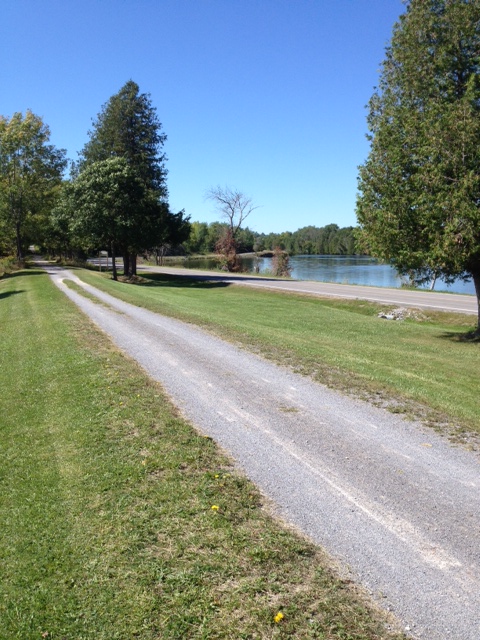
Last week I was running along the trail near my home. It is a beautiful place. There are fields and woods along one side and a river along the other. On this particular afternoon, the sun was striking the river so that it shone as diamonds. The sky was a deep and vivid blue. I had just passed the 6K-mark where the endorphins kick in and my mind begins to float and even my Clydesdale-like gait feels graceful. I said, out loud and to no one, “This is a good moment.” And it was.

My practice of quietly announcing good moments has helped me to see life as a bonsai tree. I snip off the parts that ruin its symmetry; the situations, people, and places that bring me no happiness. After all, consider how many people lie on their death bed and whisper, “I wish I had spent more time at the office, or in lineups, or in traffic, or buying stuff, or with people whose insecurities or inner demons poisoned rooms.” How many, on the other hand, say with their last breaths, “I wish I had filled my life with more moments that filled my heart?”

Try it. Wait for a moment that offers true tranquility, pure enjoyment, heart-skipping joy, or tear-inducing warmth. Then say it: “This is a good moment.” It won’t count unless you mean it and it won’t count unless you say it out loud. Say it although others may hear it. Say it because others may hear it. Say it because you have decided to be happy.

If you enjoyed this column, please share it with others, consider leaving a comment, following my weekly blog, or checking out one of my five books at Chapters, Amazon or even a book store if you can still find one.

Honour in the Worst Jobs

All work is honourable but some jobs are awful. The luckiest among us marry jobs and passion and often have smaller houses but broader smiles. The saddest folks labour only for money and many end up struggling to fill holes in their soul with stuff. There is something to be learned from all work and perhaps the best lessons are offered by the worst jobs.

My worst job was not the winter I laboured as an Esso gas station attendant. Besides cleaning the bathrooms, sweeping the place and occasionally swiping stale chocolate bars, I would have made Pavlov grin when at the ping of the ding I jumped into coat and hat to leap to the pumps outside. With the temperature often far south of zero, I became quite adept at yawning hoods and checking oil in mere seconds and at kicking the frozen pail of ostensibly un-freezable blue goop to squeegee windshields. I had a cold all that cold winter. I received one tip – fifty cents.

My worst job was not the two summers with the Peterborough parks department. I enjoyed one morning each week when I drove the golf cart to ball diamonds around town to drag the angle iron in circles and then chalk baselines. But I also pierced garbage with a broken hockey stick with a bent nail in the end. In a hard hat and steel-toed boots, I ignored my allergy to freshly cut grass while pushing a lawn mower in circles around trees and up and down hills and other places the big tractors couldn’t go. I nodded obediently when my suggestion for punctuation was ignored and then dutifully erected thirty signs that read: No Golf Playing Motorized Vehicles. They were certainly effective because after that I didn’t see a single motorized vehicle playing golf.

When it rained, the three crews of university students were gathered under the Hunter Street Bridge where we sat in a large bunker-like room on makeshift seats with traffic rumbling above and covering us with dust. Against one dank and filthy wall lay a mountain of tulip bulbs. For several chilly, soggy days, hour after excruciating hour, we peeled each bulb and placed it in the correct bushel baskets: large, medium, small, and rotten. There were bulb wars and songs and jokes and one afternoon a guy entertained us with Penthouse letters; he inserted the word blank for the nasty bits, making each depraved offering seem even nastier still.

My worst job lasted only one night. My friend Chris and I were fifteen when we saw the ad in the paper and showed up at the Towers Department store parking lot that night at 9:00. At the yelp of the crew-boss, we boarded the ancient yellow school bus, gasped at the smell, and tried not to make eye contact with any of the scary looking people around us. We bounced in silence beyond the city’s lights to a rural golf course that in the inky darkness was as creepy as our workmates. Given no instructions, we followed the others and secured miner’s lights to our foreheads. Using big elastic bands we fastened empty juice cans to our ankles and scooped a handful of sawdust into the left one. We began following the safest looking man but in a truly impressive demonstration of the manner in which the “F” bomb can be noun, verb and adjective in a single, complex sentence he suggested that we find our own spot. It took a while, but we finally wandered to an empty fairway.

We had been promised a cent a worm. Chris had calculated how much we could make in only one night and all afternoon we couldn’t wait to begin. But now that we were there, stumbling through the chill and darkness, we couldn’t wait to earn our first penny.

We couldn’t find a worm anywhere. It was nearly thirty minutes before I lunged at my first victim. I missed him. It was another thirty before we mastered the plunge and yank needed to can one, as we began calling it. We jumped and ran when the automatic sprinklers clicked to life but then smiled when worms began appearing on the wet grass that glistened black under the August moon. We learned to time the rotations. We’d run in, can a couple, and then scamper back without getting too wet. The sawdust on our fingers kept the slippery buggers from sliding away and we learned to be quick. With a slip on the wet grass I lost nearly half my catch but we kept going.

Honour in the Worst Jobs

(Photo: www.oregonlive.com)

We worked hard all night and at the horn’s blast returned to the bus. We were stiff and dog tired but stood proudly in line to present our haul to the crew-boss who sat behind a long beat-up wooden table. Some of our work mates had earned the money that we had dreamed about but I had managed to pick only one full can – 250 worms. The tough looking women with the Ukrainian accent counted out two dollars and fifty cents. Chris earned just a little bit more.

We napped on the dirty bus and stumbled out bleary-eyed and filthy. The city was shaking itself awake with cars piercing the morning mist as we shuffled across the street to the neon glare of the donut shop. We bought donuts and chocolate milk until our night’s pay was gone. Later that afternoon, Chris called and we agreed that one night of worm-picking was plenty.

Over the years, I’ve written a number of resumes but I never listed worm picker. Perhaps I should have. This evening, when I slide between clean sheets, I’ll afford a thought for folks who will spend the night standing guard, serving coffee, buffing floors, dumping garbage, and yes, even hunting worms. There is honour in all work. Perhaps there is even more in work that needs to be done but most of us would rather not do and when we would rather not do it and all for wages we would rather not accept.  Maybe it is in that work, at three in morning, with folks doing the best they can for the families they love, that lies the most honour of all.

If you enjoyed this column, please send it to others and consider seeing more at http://www.johnboyko.com