Teachers, the Taught, and F*#k Week

Fuck Week taught me well. You see, the first school at which I taught was for teenagers troubled by significant difficulties with learning, families, or the law. Many others were newly arrived immigrants suffering the effects of bad education systems or culture shock. Most kids were great but fights, gangs, weapons, and threats were commonplace. And there I was, fresh from teacher’s college and only about five years older than my charges.

By the end of the first month I had grown weary of the word fuck being used as verb, noun, adjective, and, most commonly, punctuation. I made a deal with a grade 12 class that if they could erase the word from our classroom for four days straight there would be pizza and music on Friday. It took several weeks, but a Friday finally celebrated booming bass, greasy hands, and wide smiles. While cleaning up I suggested that next week we could try eliminating the word shit. An earnest boy asked, “Sir, does that mean we can say fuck again?”

Teacher, the Taught and F#*k Week..

(Photo: www.uni.edu)

The question taught me the power of humility and importance of small victories. Reflecting upon that lesson brings to mind two men who played significant roles in my career. A sage and inspirational leader named David Hadden once told the story of a father urging a lost son to find his way home. The son confessed that he lacked the strength to make the whole journey. Don’t worry, assured the father, go as far as you can, I will meet you there, and we’ll complete the journey together. Another of my mentors, John Potts, once observed: “The most important thing to remember when you’re working with kids is that you’re working with kids.”

Beyond those important ideas, my years have also taught me this:

  1. Essence

New technology and pedagogy that enhance teaching and learning should be sought and welcomed. However, a group of teenagers in a room with an adult in 1980 is, at its core, the same as a group of teenagers in a room with an adult today. Blackboards to smart boards, encyclopaedias to Google, and binders to laptops don’t matter. Never confuse the art with the tools. Relationships and reciprocal respect are what counts. In fact, they are all that counts. True, valuable learning only happens when they are present and is never possible when they’re not.

  1. Fads

Early in my career I had Grade 11 students learn to write, research, and create persuasive arguments by learning to write an essay. After a few years the education ministry in our province determined that all students needed to complete an independent study. I had my kids write an essay. Then, it was decided that students needed to complete a cumulative assignment. I had them write an essay. Then teachers were told to flip their classrooms so students would learn certain tasks at home while allowing for in-class support and collaboration. I had them write an essay. Teachers need to embrace positive change and base their pedagogy on established and current research. However, they must also trust and be allowed to trust their professionalism to avoid surrendering to transient fads, authors, or obfuscating vocabulary.

  1. Fun

Anyone who believes that teaching does not involve entertainment understands neither. Teachers must always allow kid’s voices to be heard more than theirs. However, teachers still call the shots and set the tone so while curiosity and questions must be the two-lane road down which every lesson travels, fun should be the vehicle. Without fun, kids may memorize but not really learn. They will attend but not engage. Teachers must always take their jobs seriously but never themselves. Their training should involve comedy and improv workshops.

  1. Partnership

Teachers are an essential part of the education of a young person but only one part. Parents are a crucial part of the team. Further, in every good school, everyone, whether typing letters, mopping floors, keeping accounts, or providing administrative leadership know they are serving students. Students win only where we/they and leaders/led are absent from language and perspective, where characters and character are celebrated, and where all adults respect the hard work done by all others while sincerely seeing themselves as members of one team.

My career has taken me from that tough inner-city vocational school to what is widely accepted as among Canada’s finest independent boarding schools. I am proud to have contributed to one and of my continuing contribution, albeit outside the classroom now, to the other. Along the way I have reinforced my conviction that all lives are better in a society of readers, critical thinkers, and life-long learners. We all benefit through sharing a basic understanding of our culture, geography, and history. A country is better and democracy stronger when young people are instilled with an intellectual curiosity that burns insatiably throughout their lives.

If any of this rings true, then this is equally true: teaching is a honourable profession. It is an invaluable profession. Teachers are honourable people. Let us celebrate the best and encourage the rest because all children are our children.

If you enjoyed this column, please share it with others and perhaps check some of my others at http://www.johnboyko.com


Shut Up Boomers: Every ‘60s Decade Booms

Even Baby Boomers are weary of TV specials celebrating ’60s singers and bands, most of which, let’s face it, look and sound excruciatingly sexist and corny. And my first reaction to hearing that The Beatles One has been re-reissued was to question whether after owning vinyl, eight-track, cassette, CD, and then downloading, that Paul McCartney really wants me to buy Hey Jude yet again. Poor Sir Paul must need the money.

Shut Up Boomers- The 60's Always Matter.

Sir Paul (http://www.dailymail.co.uk)

The greater point is that the ‘60s matter and, sorry Paul and boomers everywhere, not just the 1960s. No matter the millennium, the ’60s decade always offers remarkable up, down, sideways, and significant change. For some reason, the ‘60s is when old assumptions and rules are thrown asunder and Canada rockets ahead in a new direction.

1660s

France’s Sun King, Louis XIV, declared Canada a French province. Later in the decade, French explorers Radisson and Groseilliers followed Native guides all the way to Lake Superior and Hudson’s Bay. Because of a spat with officious French officials, they claimed it all for England. Their adventures led to the creation of the Hudson’s Bay Company, the world’s first multi-national corporation. The chess pieces were thus set for a bloody two hundred year French-English grudge match; a struggle that many Quebecois insist is still on.

1760s

In 1760, in the shadow of the Conquest, where a small British army defeated an even smaller French one outside Quebec City, Montreal fell. With the broader world war finally over, in 1763 French negotiators traded cold and troublesome Quebec for the warm and prosperous island of Guadeloupe. Canada became a British colony with a French people. Native nations who had allied themselves with one side or the other were promised that their land would remain theirs. It was a lie. Shortly afterwards, gifts were made of smallpox-infested blankets in a brutal act of biological warfare.

1860s

The United States was butchering itself in a Civil War that would see over 600,000 dead and 40,000 Canadians serve. Partly as a result of all that death, and fear of what would happen when the killing ended, Canada was born. John A. Macdonald and others from the broke and dysfunctional Canadian province loaded a ship with great food and better booze and crashed a Charlottetown conference to urge Maritime delegates to think bigger. Nova Scotia and New Brunswick signed on. Canada was more dream than fact but the dreamers emerged from their ’60s decade with a vision as grand as the land.

1960s

The decade saw the dream reimagined. A new Bill of Rights said citizenship was based not on blood but law. Native people were afforded the right to vote as a tentative step toward righting centuries of wrong. The establishment of official bilingualism expressed a desire to descend the Tower of Babel. A distinctive new flag and Montreal’s Expo ’67 World’s Fair unleashed a patriotic tsunami. In 1967, Canada’s 100th birthday, the Toronto Maple Leafs did what they have not managed since and won the Stanley Cup. Canadians decided that everyone’s health was everyone’s concern and created a national system whereby we each pay a little to help those who need a lot – it’s a family thing.

New programs sought to end the sorry fact that generations of children could graduate without ever having read a Canadian book, seen a Canadian movie, or heard a Canadian song – and oh the songs. We could duck into seedy bars and pretentious coffee houses to hear kids like Joni Mitchell, Neil Young, Randy Bachman, Ian and Sylvia Tyson, Robbie Robertson, Gordon Lightfoot, and more and more. Canadian kids could hear a top ten song on the radio all week and then dance to that very band in their high school gym on Friday night. The songs, along with the words of Margaret Atwood, Irving Layton, Margret Laurence, and more invited us to more deeply consider eternal bonds.

Shut Up Boomers- The ‘60s Always Matter

Joni Mitchell (www.biography.com)

The 1960s west reverberated a hundred-year-old echo. It was in 1869 that Metis leader Louis Riel demanded respect and a recognition that the people of the west owned the west. Prime Minister Macdonald agreed to nearly all Riel’s demands and a new province was born. Sir John then set out to sweep Native nations from the plains and we still feel the pain and shame of that attempted cultural genocide.

By the end of the 1960s, thousands of Canadians were, as Gordon Lightfoot would sing, Alberta bound. Oil was gold and the rush was on. Cornerbrook accents filled Edmonton bars and cheques were mailed home to Halifax and St. John’s from wildcatting rigs and Wild West barracks. Politicians scrapped, fat cats plundered, and Canadians did as always – the best they could.

In the end, it doesn’t really matter if we were in buckskins or bell bottoms, starched collars or tie dye shirts. It was another turbulent ‘60s – the decade that always seems to matter. Maybe before the next ‘60s arrives we’ll be like Canadian Alex Trebic and have all the answers or at least be like Montreal’s Leonard Cohen and know the right questions. By the next ‘60s we may have learned how to live more peacefully with each other and gently on the land.

 If you enjoyed this column, please share it with others and consider checking my other columns as http://www.johnboyko.com

When It’s Time To Burn Your House and Go

Sometimes it’s not your fault. Sometimes the business cycle’s spin, the greed or stupidity of folks with big wallets and little hearts, a microscopic bug, or tiny shift in weather patterns can change everything. No matter how hard you work or how well you raise your children, respect your neighbours, love your spouse, or live by your God’s rules and land’s laws, things slip away. Cyril Oxford understands that. Today he is considering burning his house down.

When It's Time to Burn Your House and Go..

(Photo: www.fireengineering.com)

You see, Cyril lives in Little Bay Islands, Newfoundland. He was born there. For his seventy-two years, Cyril forged a life and living as a cod-fishing boat captain. Now, though, with his wife gone and children moved away, he has a decision to make.

Little Bay Islands is a group of five islands just off Newfoundland’s northeast coast. The abundant fish attracted Europeans over 200 years ago. The story goes that in 1825, a summer resident named Budgell shot the last Beothuck, thus ending the indigenous nation that had once thrived. But, of course, like many stories on and about the rock, legends and facts are seldom on speaking terms.

The Little Bay Island community grew with the bounty of the sea and indomitable spirit of people toughened and united by perpetual wind, ruthless winters, and the songs, jokes, and tales that fill dark nights and ease tough times. By the 1920s, 116 men on 14 boats fished and trapped cod, crab, and shrimp, a ship building company created three fine schooners a year, and determined farmers coaxed vegetables from thin soil. The Wesleyan church pews were full every Sunday and children learned at the little school. By the 1940s, nearly 800 people proudly called the place home.

Things changed after the war. Newfoundland joined Canada in 1949. In 1957, its premier, Joey Smallwood, the mercurial little man to whom so much is owed and on whom so much is blamed, undertook an aggressive program of relocation. More than 300 outport communities, accessible only by boat, that had been around for one or two hundred years were deemed financially unfeasible. People were given money to leave. Many fought. Many pocketed the cash. Black and white photographs of big wooden houses lashed to bigger barges and steaming through the waves were either sad signs of defeat or sparkling signals of courageous resilience. Through it all, Little Bay Island survived.

There was a crab processing plant, a cooperage, a shipyard, a fish plant, and eleven stores. Along with the new road came electricity, telephones, and a water system. A shiny, new ferry connected the islands to the mainland. A gym was added to the school. History books and old men’s tales boasted of days when you could drop a bucket over a dory’s side and pull up fish, over and over, stopping only when arms ached. Such abundance, it was believed, could never end.

But foreign trawlers and profligate habits meant that by the late 1980s, there were fewer crab, and then shrimp, and then cod. In a feeble and far too late attempt to save what remained, a moratorium was declared. And then there was none. One at a time the businesses closed. One at a time the young people left, and then families. Boats were sold and houses were shuttered. Today, only two students attend the school. The gym’s hardwood floor gleams in silence. There are no stores. There are no jobs. Only about 70, mostly gray-haired people remain.

When It's Time to Burn Your House and Go

(photo: www.lanephotography.com)

Three years ago a town counsellor approached the Newfoundland and Labrador government. He proposed the assisted suicide of his town. If it were killed, or allowed to finally die, then money could be saved with the end of government services. A deal was made whereby each resident would be offered $270,000 to leave. To ensure that death was truly the community’s will, it was insisted that a secret vote must be held and that 90% must agree.

The impending referendum split families. It divided friends. Summer residents had no vote but exerted pressure to vote no. There were arguments and threats as some wanted the cash and others spoke of tradition, home, and ancestor’s bones.

When the vote was tallied, all but ten had opted to go. It meant only an 89.47%, plurality, just shy of the necessary 90%. The government would not round up. The money stayed in St. John’s and the acidic atmosphere remained in Little Bay Island.

In 2014, acclaimed Newfoundland novelist Michael Crummey published a superb novel entitled Sweetland. It tells the story of a small, remote, and declining island town whose people are offered resettlement packages with the proviso that all must leave. Moses Sweetland says no. He then watches the community torn asunder by those seeking to change his mind and others changing theirs. The novel is exceptionally well written and the characters quirky and expertly drawn. It suggests the thin and wavering line between fact and fiction and Oscar Wilde’s wisdom in observing the imitative nature of art and life. I highly recommend the book.

A provincial election held on November 30 threw out the Tories and created a Liberal majority government. When the dust clears, the new government will need new answers to Little Bay Island’s old questions. For now, like Moses Sweetland, Cyril Oxford sits alone in his house. Outside and around town, the warmth of emotion fights the chill of logic as what’s fair battles what’s possible and proof is once again rendered that money does not really talk; it swears. Cyril told a reporter, “Things just can’t go on like this around here. When I go, my dear, it will be the last of the Oxfords on Little Bay Islands.”

If he goes, if they all go, it will be the last of a lot of things. It will represent the inevitable turning of the wheels of progress and the tragic consequence of bad decisions and lost opportunities. It will be a victory of the head and failure of the heart. It will be the sad end of two hundred years of hard work and dreams. If Mr. Oxford and the others go, the wind will still blow, the waves will still crash, and Little Bay Island ghosts will stand in silent reverence with Beothuck spirits.

If you enjoyed this column, please share it with others on Facebook or your social media of choice and consider checking my other columns at http://www.johnboyko.com


The Value of Values

Values matter. Values inform our character and offer touchstone and compass for our lives. If values are sacrificed for expediency, opportunity, or fear, we become blind wayfarers, adrift beneath a starless sky.

Values are as essential to us as individuals as to our collective selves: the nation. That is why we write them in the documents we cherish. They ring from the American constitution’s amendments, reflecting sacrifices made and victories won, as well as from the defiant, aspirational Declaration of Independence. Similarly, Canada’s constitution and Charter of Rights and Freedoms express values ingrained from lessons learned.

Sometimes, and seldom when seas are calm and skies blue, we are tested. The tests are not of the values themselves but of our fidelity to them.

Canadians were tested in 1914 when a ship called the Komagata Maru arrived in Vancouver’s harbour. Aboard were Indian families seeking to trade the corruption, poverty, and violence of their homeland for Canadian sanctuary. Officials discovered that the ship had passed through Hong Kong and so cited a 1908 law called the Continuous Passage Act which barred entrance to anyone arriving through a third country. It was a ruse. There were no direct routes from India to Canada. Canadians simply did not want Indians and certainly did not want the Komagata Maru’s 352 Sikh migrants. They were forced to steam away.

A generation later, in May 1939, the German ship St. Louis left Hamburg for Cuba. 937 Jewish refugees were fleeing Hitler’s madness. Nearly all had applied for American visas and saw Cuba as their stepping stone to freedom. Everyone knew of the Holocaust. Western newspapers had been reporting on the theft of Jewish dignity and rights and of Kristallnacht, the two horrifying nights the previous November in which synagogues and Jewish businesses were smashed. Everyone knew.

And yet, the Cuban government refused to allow the St. Louis’ passengers to disembark. The ship was forced to leave. It steamed north and when close enough to see Miami’s lights, American warships turned it away. President Roosevelt was told of the people’s plight and of their certain death if forced back to Germany, but he said nothing. A State Department telegram explained that the refugees must “await their turns on the waiting list and qualify for and obtain immigration visas before they may be admissible into the United States.” At that time, the waiting list was several years long.

The St. Louis was forced up the coast until it finally reached Halifax. Its reception was the same. The passengers were not allowed landfall. Canadian prime minister Mackenzie King was travelling in the United States at the time and referred the matter to his Immigration Branch director Frederick Charles Blair. Blair ordered the ship gone. When asked how many Jews would be allowed into Canada he retorted, “None is too many.”

The St. Louis arrived back in Europe and Belgium, Great Britain, France and the Netherlands accepted some of the passengers but not all. With options exhausted, 532 returned to Germany and 254 perished in the Holocaust’s ovens.

The Komagata Maru and St. Louis are, in essence, again at our door. This time it is Syrian refugees fleeing the horrors of a complex and brutal war. As in 1914 and 1939, many Canadians and Americans are arguing that we should bar that door. We should, it is said, ignore the fact that unless we are indigenous people that we are all from somewhere else and, more significantly, that we should ignore our values.

One argument for saying no to the refugees is that Islamic terrorists could slip in with legitimate refugees. However, we should note that recent terrorist attacks in neither Mali nor Paris were conducted by Syrians or refugees. Should we trust our screening systems and our police and security organization or should we surrender our values to the fear that of the thousands of people who could be saved that one might be dangerous? Are not domestic terrorists such as those who have blown up buildings, or crowds such as in Boston, or shot up schools, and theaters not a greater threat?

America’s Homeland Security and Canada’s RCMP and Canadian Security Intelligence Service agree that Syrian refugees present no threat to Canada or the United States. Time Magazine reported Pentagon sources as stating that the Syrian refugees are being carefully screened and that nearly all are, “survivors of torture, victims of sexual violence, targets of political persecution, the medically needy, families with multiple children and a female head of household.”

A second argument is more disturbing. The racism that sent the Komagata Maru and St. Louis away is with us still, it’s just become more cleverly hidden. The embers of racism are kept alive not just by the obscene beliefs and actions the KKK that we seldom see but by the little racist jokes at coffee shops that we too often hear. A number of pundits, politicians, and even some who wish to be president have been fanning those embers into flames. Canadian cities have seen Muslim women harassed and a mosque in Peterborough, Ontario was burned. Donald Trump has called for a registry of Muslim Americans. Jeb Bush said that only Christian Syrians should be admitted.

Do these fears, attitudes, actions, and proposals reflect the values inherent in our founding documents? Do they reflect the lessons learned from the Komagata Maru and St. Louis, or the Holocaust, by the treatment of indigenous people, or our Second World War Japanese internment camps? What would Lincoln, Kennedy, Diefenbaker, or Pearson say? Or, if you rather, and if you believe, in the Bible’s Matthew 25:35, Jesus taught that showing love for Him was done by caring for the most needy: “For I was hungry, and you gave Me something to eat; I was thirsty, and you gave Me something to drink; I was a stranger, and you invited Me in.” And you invited me in.

The question of the Syrian refugees, like all questions, whether at home, at work, or on the national stage, circle back to values. We believe in our values or we do not. Talking about them doesn’t count. We should measure ourselves, our leaders, and our nation according to the congruency of words and actions. If we do not act according to our values then we really don’t believe in them. If community doesn’t really matter then let’s stop pretending it does. If we really don’t believe in multiculturalism or tolerance or diversity or the separation of Church and State then let’s say so. Let’s concede that all men are not really created equal after all. Let’s take a chisel to the Statue of Liberty so that it no longer proclaims:

“Give me your tired, your poor,
Your huddled masses yearning to breathe free,
The wretched refuse of your teeming shore.
Send these, the homeless, tempest-tost to me,
I lift my lamp beside the golden door!”

Daily Life in Domiz refugee camp, Kurdistan Region of Iraq

(Photo: http://www.resettlement.eu)

We have a choice. We can listen to our values. Let us insist that the Komagata Maru and St. Louis incidents were aberrations from which we learned. Let us celebrate our values by living them. Let us reject those who sully established values for personal, professional, or political gains no matter how cleverly disguised as for the greater good.

We should welcome Syrian refugees because our values say that we should. And if all that is not enough, there is one more reason that we should save them – because we can.

 Please consider sharing this post with others through Facebook or other social media and checking my archive of Monday columns at http://www.johnboyko.com

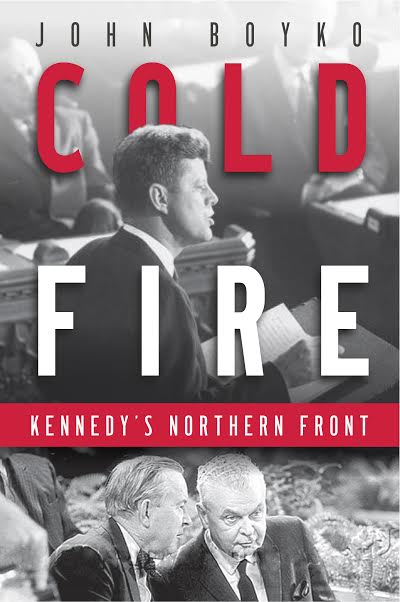
Cold Fire: Kennedy’s Northern Front

jacket

Cold Fire: Kennedy’s Northern Front will be published in Canada and the United States on February 2, 2016.

The United States and Canada had reached a crossroads and three leaders were trying to pull their countries in wildly different directions.

President John F. Kennedy pledged to pay any price to advance America’s homeland defense and strategic goals and he needed Canada to step smartly in line. Canada lay between the United States and the Soviet Union and so was a vital part of America’s security. Kennedy demanded that it house nuclear weapons and change its economic and foreign policies to support his. Frustrating Kennedy at every turn was Conservative Prime Minister John Diefenbaker, an unapologetic nationalist seeking to end the trend toward greater continental integration by bolstering Canadian autonomy and developing an independent identity. Meanwhile, Liberal leader Lester Pearson, the Nobel Prize–winning diplomat, saw value in continuing the slide toward integration.

While battling communism around the world, Kennedy never forgot his northern front. He adroitly exploited his enormous popularity among Canadians to seduce its people and pressure its government to bend to his will. He ruthlessly attacked Diefenbaker and shamelessly supported Pearson.

Newly released documents present shocking revelations about these crucial years. During the Cuban Missile Crisis, Canadian ships and planes guarded America’s Atlantic coast, while Canada suffered a silent coup d’état. Kennedy pushed a nuclear weapons system on Canada while knowing full well that it was merely a decoy to draw Soviet fire. Kennedy carefully influenced and monitored the overthrow of a Canadian government and the election of another. While Canada helped Kennedy tumble into the Vietnam War he did nothing to stop American inspired violence on the Great Lakes border. Perhaps most startlingly, if not for Diefenbaker, Kennedy may have survived the assassin’s bullets in Dallas.

The movie-television rights have already been optioned for this non-fiction book that reads like an adventure novel, brimming with sparkling stories, fascinating characters, and fresh insights into this critical moment. Cold Fire will astonish readers with the intriguing ways in which the struggles of these three resolute leaders determined the course of the next half-century.

The book can be pre-ordered at Chapters: https://www.chapters.indigo.ca/en-ca/books/search/?keywords=john+boyko

or at Amazon: http://www.amazon.ca/Cold-Fire-Kennedys-Northern-Front/dp/0345808932/ref=sr_1_4?s=books&ie=UTF8&qid=1446165612&sr=1-4

Love Letter to Canada on her Birthday

Dear Canada,

Birthdays are great. The friends, family, and food are marvelous as another marker is placed on the road to wisdom and understanding; the destination we seek and hope to recognize upon arrival. Of course, the fewer candles on the cake increase the chances of bouncy castles and donkey-pinning and the normally banned junk-food.

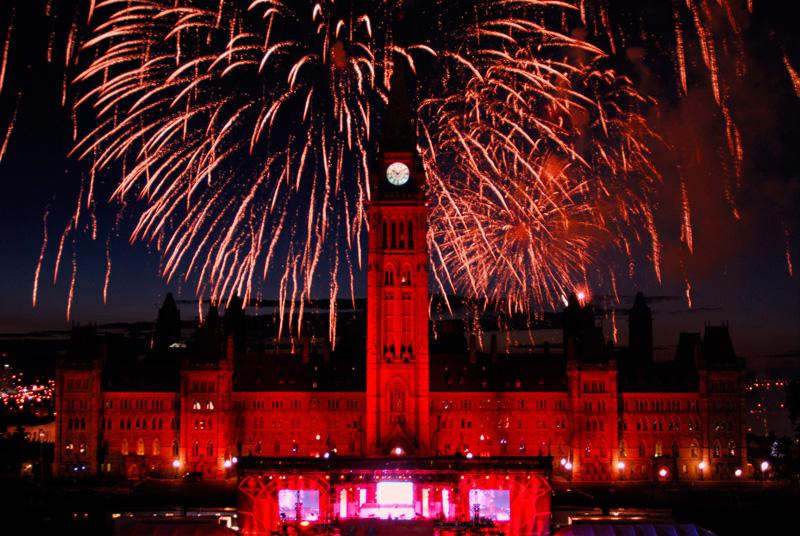
Your birthday is always special. What’s not to love about fireworks, music, and a day off in the middle of summer? For some reason we attach special significance to anniversaries ending in fives and zeroes so your biggest birthday bash was in 1967. The Centennial parks, fountains, buildings, and bridges from coast to coast are testament to your 100th birthday having been celebrated everywhere. The biggest bash was in Montreal. Expo ’67 invited the world and the world came. Magnificent national pavilions wove facts and myths in what other countries chose to display of themselves and how we cheered ourselves.

Dear Canada on her Birthday

(Photo: nmmc-co.com)

Your most powerful myth is your birthday itself. You became an independent state on July 1, 1867. But your independence was an act of the British parliament. Britain still controlled your constitution. A British committee could over rule your Supreme Court. A British company controlled what is now northern Ontario, Quebec, Manitoba, and the North West Territories. Britain still negotiated and co-signed treaties and trade deals. So you were independent but only like a teenager who moves out but only as far as Mom’s basement.

For a long while, we pouted and slammed doors from time to time but didn’t do much about it. After all, we still considered ourselves British. Our census form had nowhere to proclaim we were Canadian. We carried British passports. We voted for Sir John A. and his slogan: “A British subject I was born and a British subject I will die.”

It all changed when a European family spat led cousins with big navies and bigger egos and more pride than brains to trip the world into war. We called it the Great War because not until the next phase in what became a decades long European civil war would we begin to number them. Britain was in and all we could yell up the stairs was “Ready Aye Ready”. Boys who had never traveled more than fifty miles from home were stirred by a pull of patriotism, a yearning for adventure, and the hope that girls really do love a man in uniform. They were soon on trains to Val Cartier, Quebec, and then aboard crowded ships to Britain and then, the front.

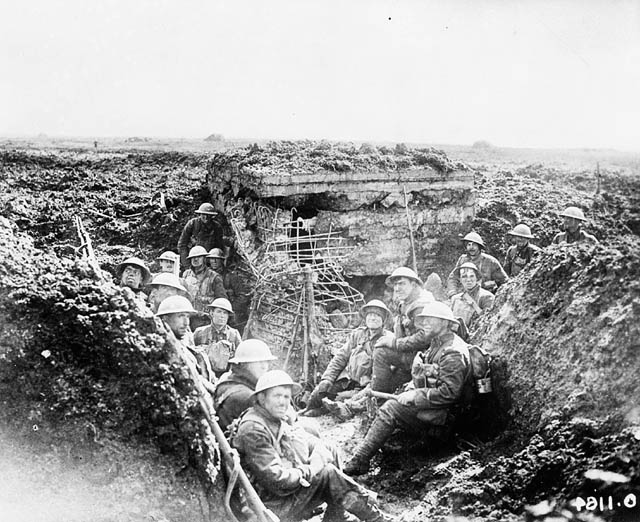
They had no idea what they were in for. Picture digging a hole in your yard and living there for a year. Eat there, sleep there, and relieve yourself there, day after day and season after season. Watch for rats the size of spaniels, killing coughs, lice, maggot-infested food, and after standing for days in the open sewer, toes fall away when sodden boots were finally removed. It was a war against conditions and, too often, stupid officers more than the enemy.

Dear Canada on her Birthday.

(Photo: http://www.collectionscanada.gc.ca)

After years of using Canadians as shock-troop cannon fodder, our four divisions were joined and told to capture a ridge that the French and British had found impossible to take. We dug and planned. We ignored the British way and told every man his job. And men the boys had indeed become. Many still bore pimples but too much boredom punctuated by terror and too many trips on leave for bad booze and horizontal recreation made them older than their ages; older than anyone deserved to be. On Easter Sunday, a barrage that shook the earth and shattered the sky announced the attack and the Canadians soon had Vimy Ridge..

Back home, for the first time, we had not an allied, not even a British, but a Canadian victory. For the first time, Canadians considered themselves Canadians. When the war finally ended, Britain said it would take care of the peace. With a pat on the head we were to go back downstairs and wait quietly. No. Too many of our children, sent to kill their children, had died. Too many were home but broken. We had earned a place at the grown-up’s table. It took a while but we increasingly considered ourselves Canadian and one but one by one the vestiges of colonialism fell away, forgotten like other childish things.

So while a person’s birthday is easy to peg, a country’s is more a decision than fact. Perhaps, Canada, your birthday is really April 12, 1917; the day we made it to the top of that damned hill. But is it better to plant our patriotism at a Charlottetown conference table, in the British House of Commons, or on a blood-spattered Belgian ridge? Or is according too much significance to the tragic blunder of a crazy war affording too much recognition to the boneheads who started it, the profiteers who exploited it, and mankind’s predilection to slaughter rather than build?

Perhaps it’s better to stick with July 1, 1867. I guess, like Jimmy Stewart was told in The Man Who Shot Liberty Valance, when facts get in the way of the legend, print the legend. So this July, let’s enjoy the day off and with the sun’s surrender, let’s ooh and ahh at the fireworks. But this year, with these thoughts in mind, let’s offer ourselves a dare. Let’s see if any of us now can watch the colourful explosions over the park or lake and not think of the sky over Vimy.

Sincerely,

A Friend.

This is a few days late to stick with my Monday posting schedule but hopefully still invites consideration. If you enjoyed it, please send it along to others through Facebook or your social media of choice.

Three Things You Want Said at Your Professional Eulogy

Departure speeches are often painful, especially when it’s the boss. Those trying to be funny are the worst. Next are the maudlin moaners or snidely sycophants, sadly unaware that their gig is up. The best are by those who understand that it’s a funeral, professional not personal, but a funeral nonetheless. The boss is going and he’s not coming back.

A professional eulogy offers an opportunity to sum up all that was best about the person and his contributions. That being said, consider that your professional eulogy is now being composed because, let’s face it, we all have one coming whether we are eventually retired, fired, or alternatively hired.

Here are the three best things a boss could hear in his or her professional eulogy.

  1. You Made Us Feel Good.

Recall your favourite teacher. We all have one. Few were the smartest, funniest, most technically savvy or academically astute teacher in the school. It’s never the one who slavishly obeyed the educational bureaucrat’s dictates, knew the latest edu-babble, or even the one who doled out the best marks. Your favourite teacher was the one who gently guided and inspired while making you feel better about yourself, your potential, and your abilities.

Nothing changes as adults. The best boss is like the best teacher because how talented, powerful, gregarious, well informed or well connected he may be matters not one whit if he makes you and others feel unappreciated, lazy, or stupid. His job is not to make you feel good. But when he does, through respectful, transparent interactions, honesty, and modesty, his job becomes easier because his staff feels better and works better.

Empathy, humility, compassion, and caring can’t be faked. When they are genuine, they trump tough situations, mistakes, and shortcomings. When they are absent, a boss will be obeyed but not respected. Jobs will be done but without passion. Then, nobody wins.

You made us feel good.

  1. You Absorbed and Deflected.

Sometimes things go well. Sometimes, no matter how well planned and executed or how many signed off, things go horribly wrong. Consider President Kennedy’s approving the 1961 Cuban Bay of Pigs invasion. It had been planned by the previous administration and carried out by Cuban refugees. It was a disaster. Kennedy appeared on TV the next day and said, “Success has many fathers but failure is an orphan.” He then personally accepted full responsibility for the entire debacle. His approval rating soared.

Kennedy’s lesson is clear. When things go well, deflect all credit. When things go badly, absorb all blame.

You absorbed and deflected.

  1. You Were a Conductor:

Some bosses lead like slave galley captains. They demand everyone row the same way at the same time and they publicly punish those who slip out of rhythm. Only the captain faces forward and shares nothing of the ship’s progress or destination with those who row not in the pursuit of a shared goal but in fear of the lash.

Some bosses lead like cowboys. They are at the back, nudging and cajoling the herd as it stumbles blindly forward with no say and little hay. The herd only ever sees the boss’s minions and then only when roped back to the shuffling wanderers after having demonstrated the temerity of forging a unique trail – the crime of independent thought.

The best bosses are conductors. They celebrate that each member of the orchestra is the master of his own instrument and plays a different portion of the score. This boss champions individual expertise and initiative, knowing that the elegance of the whole derives from trusting each member to play unique notes at unique times. The conductor understands that he chooses the music, but when in performance, his work is less important than the skill and passion brought by talented individuals. He is comfortable with the fact that only those he leads can see the audience and so can really judge reaction. He knows that without them and their dedication to excellence, he would just be a guy waving a stick.

You were a conductor.

Three Things You Want Said at Your Professional Eulogy

(Photo: abcoautomation.us)

So, if you are a boss or hope someday to be one, imagine what you would like said when, for whatever reason, you leave your position and hear your professional eulogy. Let’s bet that if these three pillars of praise can be sincerely said about you then your leaving will be pleasant. Further, if all three are really true, then not only will you be missed but when and how you leave will probably be up to you.

If you enjoyed this column, please consider sharing it with others and maybe even following my blog where I post a new column every Monday morning.


The Year of Whispered Warnings

In Manhattan’s Times Square, over half a million revelers cheered as the twelve-hundred-pound illuminated silver ball perched high above them began its flirtatiously slow, seventy-foot descent marking the final seconds of 1957. When it finally it came, there were screams, kisses, toasts, and Guy Lombardo’s Auld Lang Syne. Few noted that the ball had flickered off before the bottom and that the 1958 sign had sparked on a trifle too early. The glitch reflected warnings offered by the year just passed about many things that were no longer as they had been.

The Economy. After the Second World War there were more than enough new jobs for skilled and unskilled workers. Luck, timing, progressive governments, hard work, unionized labour, and the burgeoning manufacturing sector had helped create a thriving, urban middle class and economy that had never been so good for so long.

In 1957, however, growth fell from a decade of 6% per year to an anaemic 1%. Paramount among its causes was that Europe and Asia had rebuilt and needed less of our stuff. Our monetary policy was being clumsily adjusted to meet the new reality. The good times that many had come to believe would never end were ending. A recession was only months away.

Popular Culture. In 1957, for only the second year, rock ‘n’ roll gave voice to the young or young at heart who, perhaps unconsciously, rejected the white, Christian, male attitudes that reflected post-Depression and post-war cravings for calm, safety, and stability. Elvis Presley was rock ‘n’ roll’s most popular star. His concerts were always sold out and one Presley record or another was atop Billboard’s 1957 charts for 25 weeks. He epitomized everything that rock ‘n’ roll offered and threatened: a heterosexual in a gold lamé suit, a poor kid in a Cadillac, a white man singing black, and a mama’s boy who suggested all that mamas warned their daughters about.

The Year of Wispered Warnings

Elvis in Toronto, 1957

The flip side of rock ‘n’ roll was the Beat movement. The existential yearning at Beat’s core was expressed in Jack Kerouac’s scorching novel On The Road, published in September 1957. It followed Sal and Dean’s futile search for meaning in an America they found suffering from the emptiness of middle class consumerism.

Beat met rock ‘n’ roll in July 1957 when, at a Liverpool church fête, sixteen-year-old John Lennon met fourteen-year-old Paul McCartney. The name of the band they formed – the Beatles – was a pun that poked fun at their music while nodding to the Beats.

When times get tougher, pop culture always gets fluffier. When rebellions begin the grown ups fight back. Presley’s January 1957 TV performance showed him from the waist up to spare audiences the outrage of his gyrations. October saw the premiere of Leave It To Beaver. It joined similar TV fare legitimizing values that so many of the white, urban, middle class had internalized and assumed to be natural and perennial. They could be excused for not noticing so many of their children reading Kerouac, listening to Elvis, and that not everyone thought like Ward Cleaver or them.

Race. For decades, Jim Crow’s unwritten rules separated Black and White in American and Canadian cities and towns. In January 1957, Martin Luther King became the founding president of the Southern Christian Leadership Conference. It drew legitimacy from the Bible, Declaration of Independence, and Constitution, and its non-violent tactics from Mahatma Ghandi. In September, inspired by Dr. King’s message, nine African American children attempted to enter Little Rock’s all-white Central High School. They were stopped by a screaming white mob. President Eisenhower sent federal troops. Every morning, armed paratroopers escorted the kids to class. Eisenhower introduced the first federal civil rights legislation in 82 years.

The Year of Whispered Warnings.

One of Little Rock Nine wading through racists to go to school.

While slavery is America’s original sin, Canada’s is her treatment of aboriginal people. In 1957, the government and churches continued to ignore the protests of aboriginal parents by dispatching police and priests to steal their children. Native kids were forced into Residential Schools where many were beaten, sexually abused, and subjected to quasi-scientific experiments while taught to reject their heritage and themselves. Six thousand children would eventually die at the schools.

In June 1957, Canadians elected Prime Minister John Diefenbaker. He championed civil rights and cultural diversity within a unified Canada. He would enact legislation granting Native adults the right to vote and then a Bill of Rights declaring all citizens equal under the law.

Gender. Girls were taught in school and indoctrinated through movies, television, and advertising that their only responsible option and reasonable ambition was to marry and raise children. In 1957, Senator John F. Kennedy participated in a debate at Hart House, the University of Toronto’s academic and cultural hub. He was escorted past twenty young women protesting that only men were allowed in Hart House. When asked his opinion, Kennedy said, “I personally rather approve of keeping women out of these places…It’s a pleasure to be in a country where women cannot mix in everywhere.”

However, also in 1957, Betty Friedan was asked to undertake a survey among her Smith College classmates who were preparing for their 15th reunion. She found complaints of having a family but not happiness and household gadgets but not fulfillment. Friedan identified the problem without a name and was inspired to dig deeper. Her research became The Feminine Mystique. The book would unleash the second and most powerful wave of the women’s movement.

In June 1957, Prime Minister Diefenbaker appointed Ellen Fairclough to his cabinet. She was first woman to enjoy such a position.

Cold War. In October 1957, the Soviet Union launched Sputnik, the world’s first artificial satellite. Every orbital beep was a braggart’s boast; Soviet scientists had bested Americans who, for two years, had been working on their own satellite. Sputnik threatened that nuclear weapons could be delivered not just by bombers that could be shot down but also by rockets against which there was no defense.

Air raid siren tests pierced quiet afternoons. Emergency network drills interrupting television shows. People were taught to fear reds under their beds and over their heads. From now on, wars would have us all on the front line.

Some years are portentous for what occurred and others for the warnings they whispered. The Times Square New Year’s Eve glitches were metaphors for 1957’s cautioning us that change was coming and a great deal that had been perceived as right or permanent were neither. In many ways, we continue to rewrite the rules and retest the assumptions that 1957 told us no longer applied.

If you enjoyed this column, please share it with others through your social media of choice or even consider checking out one of my books: http://www.chapters.indigo.ca/en-ca/home/search/?keywords=john%20boyko

Love Letter to a Nation – Winter

Dear Canada,

Summer is easy. What’s not to love about you in summer? Character, however, is only built and revealed in adversity. So anyone wanting to know you, anyone wanting to know us, has to know winter.

The leaves and temperature fall and everyone knows it’s on its way. Summer stuff gets stored, the outside water is shut off, and the sky goes purple-gray and silent as the last of the cowardly birds betray us and go. And then comes the day, snow’s first day, when we stand at the window and watch with a child’s eyes; as for the first time. We marvel as snow too white to be real sparkles diamonds in the sun. It blankets leafless trees standing defiantly brittle amid sagging spruce and pines. And the yard becomes art.

Winter slows us down. There is no such thing as rushing out when having to first don boots and coat and hat and scarf and mitts. Thank goodness for Velcro, but a child’s snow suit still demands patience and time and then more of both when disassembled for the pee that is somehow, again, forgotten. And then there is the path to be shovelled to the car that then needs to be unburied, de-iced, and warmed.

Speed limits are for summer. All but main roads are snow-packed for months and the occasional melts turn them to pock-marked Passchendaele. Streets scoff at the oceans of salt and Sierras of sand so we bounce and creep, especially around corners with their paint-smeared telephone poles reminding us to be patient. The days shrivel. We make our way to and from work in inky darkness smudged with ghostly plumes of exhaust. Snowflakes that would be pretty were we home with a fire and a glass of hearty red are instead headlight-engorged rockets that fire mercilessly into windshields with a hideous hypnosis.

Things do not speed up upon arrival. Three feet inside every public doorway stands a momentary community holding fogged-up glasses and exchanging knowing, blurry glances. Then it’s the slow, walking strip-tease, because everywhere inside in winter is warmer than outside in summer. Work places resemble used shoe stores with wet boots on soppy mats. Everyone’s hair is the shape of their hats. We approach door knobs with dread and sometimes actually see sparks. After a while, every place smells the same – wet wool and cough drops. It isn’t exactly bad and it doesn’t really matter because with the cold we’ve all been fighting for weeks it’s hard to smell anything anyway.

Winter can sometimes stop you altogether. What is more glorious than a snow day? We hear it on the radio and we’re suddenly all children. The radio also brings reports from the city’s “Thank God it’s Monday” crowd who slide and smash into one another to get to the vertical ice cube trays where they are apparently indispensable; unaware that no one’s keeping score. The wind howls hurricanes down concrete canyons that are empty of all of but the intrepid as the city-below-the-city bustles in its high-heeled obviousness. Just a few miles away it’s all quite different.

Township and county plows tend to the main roads but it’s always a long while before they get to most streets, so there’s time for another coffee. Kids who usually fight to stay under covers burst outside with wide smiles and bright eyes and without a screen in sight. Folks are soon in driveways, leaning on shovels and speaking with neighbours who lean on theirs. Why not? Everyone knows the game. We scrape and shovel and throw it high onto piles that seem taller than last year. The plow waits until it senses we’re done and then, only then, it thunders by with three feet of plowcrete. The shovelling army mobilizes again; there’s nothing like a good minus ten-degree sweat.

Climate change’s thaws and freezes have euchred all but the most dedicated backyard rink masters, but the little bay still goes stiff. Nothing’s ever organized but somehow it always gets scraped and there is skating for all. Windswept days between snowfalls sometimes provide the magic of pick-up hockey with nets a ridiculous distance apart. It seems fittingly patriotic to finish a hundred yard breakaway on a frigid sunny afternoon in the world’s only country with a hockey player on its Bill of Rights.

Gravity games rule. What’s not to love about skiing, tobogganing, and sledding. Kids love the snow-mountains that grow beside the school parking lot. Look up every big or little hill and see somebody in a primary-coloured snowsuit sliding down. Evening walks offer the joy of the crisp boot-fall crunch and the smell of woodstoves that stir a deep and primal yearning that’s lovely in its mystery. The stars seem closer and clearer. Lungs burn, breath freezes, cheeks redden, and there is nothing more romantic than holding hands through down-filled mitts.

Muddy April is marvelous but brings fixing and raking and cleaning. The gifts left by months-worth of wandering dogs present themselves along with the recycle stuff that cycloned from blue boxes Tuesday after Tuesday. Purple crocuses pierce the last bits of crystalline snow. The magical, riotous tulips remind us that the world is not black and white after all. There is always that one last storm with snow as pretty as the first but we damn it this time and steal its power by steadfastly refusing to shovel it; there, that will teach it. We convince ourselves that it will melt soon enough, and sure enough, it does. And then there is green, oh green, glorious green.

Winter defines. Winter slows, and winter stops. Winter reminds us that we are not the boss. It ignites a humble admiration for the power and majestic beauty of the true boss. It invites community. Winter says that work can wait and time with family is the only wealth, recognition, or reward we need; everything else is by the by. Winter reminds us that, like those dark nights with gently falling snow or those bold, defiant tulips, nothing lasts forever – nothing. But it’s all good right now, and right now, that’s good enough.

Sincerely,

A friend.

Song For A Winter’s Night ©by Gordon Lightfoot

The lamp is burning low upon my table top
The snow is softly falling
The air is still in the silence of my room
I hear your voice softly calling
If I could only have you near
To breathe a sigh or two
I would be happy just to hold the hands I love
On this winter night with you

The smoke is rising in the shadows overhead
My glass is almost empty
I read again between the lines upon the page
The words of love you sent me
If I could know within my heart
That you were lonely too
I would be happy just to hold the hands I love
On this winter night with you

The fire is dying now, my lamp is growing dim
The shades of night are lifting
The morning light steals across my window pane
Where webs of snow are drifting
If I could only have you near
To breathe a sigh or two
I would be happy just to hold the hands I love
And to be once again with you
To be once again with you

Changing Democracy 140 Characters at a Time

Twitter is our Athenian agora. It is reshaping our democracy. A president, prime minister, pope, or peasant like me can stand and proclaim whatever they wish. Within seconds, they will be applauded by some while others, wearing the technological robes of Socrates, will tear their pronouncement asunder. In commemoration of my second anniversary on Twitter, I offer six things I have learned.

Twitter

It teaches. The most popular tweets make a short statement or pose an interesting question and then link to a related article; usually in a respected newspaper, magazine, or professional journal. People are thereby exposed to ideas and facts they might never otherwise consider. An informed electorate is the harbinger of a thriving democracy and the bane of those who wish to distract, mislead, or divide.

It mocks. Twitter is where negative ads and pomposity go to die. Pity the politician who makes a speech or posts an ad or tweet that is in any way disingenuous or contradicts something previously said or claimed. You know that Stephen Colbert, and Jon Stewart in the United States and Rick Mercer in Canada rub their hands and praise comedy’s Gods for making their work so simple. It is like the days when they wrote their best bits by quoting Sarah Palin verbatim. Twitter doesn’t wait. The fact checking and rebuttal is done in an instant. The truth is posted, an old film clip or article is linked, and the mocking begins. And we all know – well, everyone except Ms. Palin, I guess – that once they start laughing at you, you’re done.

It attacks. I once posed what I thought was a reasonable question about the American gun control debate – something about how a few those supporting the second amendment were having trouble with the first. Wow! It can get ugly out there and fast. NRA trolls are as lightning quick and wolverine vicious as political party trolls. They are as fair and accurate as those I picture in their parent’s window-less basement without access to their meds or spell check. But in a way, that’s OK. Democracy is messy. Even with unfair and unreasonable attacks thrashing in from the sides there is debate. I’ve witnessed debates tumble from vitriol to reason and, except for trolls with an ugly job to do, a softening of positions and a glimmering of tolerance and understanding. There is very often acknowledgment that a different opinion, when based on evidence, is not wrong, just different.

It scorns. I almost felt sorry for CNN when, in its latest effort to profit from tragedy, reported things that were quickly discovered to be false. As I had seen before, tweets began announcing that CNN was reporting on the Confederacy having won the Civil War, that John Lennon had shot someone in New York, and more. The respect most of those on Twitter still feel for newspapers and peer-reviewed journals is matched by the disdain with which they hold television news – all television news. It’s no wonder. Follow Twitter for a day and then watch the evening network news. See if you can find one thing that is new or addressed in adequate depth. See how much that truly matters is ignored while fluff is disguised as news. It becomes clear why more and more people are getting news analysis on the Comedy network and how Twitter is creating its own fourth estate.

It earns. Many confuse Twitter for a confessional, diary, or billboard. Some think it’s a porn site. Those folks are generally blocked and ignored. Few on Twitter care to see what you’re having for dinner and nearly all want you to keep your clothes on, thank you very much. However, as candidate Barack Obama proved in America and Justin Trudeau is proving in Canada, Twitter is a powerful political tool. It is tremendously effective in fundraising to earn money and friend-raising to earn adherents. It allows a party to throw ideas up a technological flag pole and instantly see who and how many salute, jeer, or gather a Twitter flash-mob to tear it down.

It inspires. Bill Cosby and Canada’s Jian Ghomeshi have been heartbreaking and bile-raising reminders of how far we have to go in addressing the treatment of and respect for women. A year ago, long before the stars fell, a group of women on Twitter used a hashtag to begin noting incidents of having suffered sexual harassment. And then came more and then more. As the numbers grew into the thousands and then millions, so did the outrage and desire to act. Then, just as that campaign was catching fire, Canadian astronaut Chris Hadfield began Tweeting awe-inspiring images from the real stars. While commanding the American space station he sent stunning pictures that moved millions of Twitter users to silent reflection. The images reminded us, as did the women, that we are all brothers and sisters on this tiny planet and maybe we should treat each other a little better.

Unless one is careful, Twitter can murder time. But so can any social media, or TV, or even books for that matter. But time can’t be wasted, it can only be spent, and a few minutes on Twitter each day is a compelling experience. Like TV and, yes, even books, you learn quickly to wade through the junk and find what matters. Social media will continue to evolve. Political leaders who fail to understand its power will remain its victims. We owe it to ourselves to consider the ways in which it is changing the nature of our public discourse and how through those changes, the manner in which we govern ourselves. Like it or not, our democracy is being changed, 140 characters at a time.

 If you enjoyed this please share it with others and consider checking out more of my posts at johnboyko.com

The Difference Between a Father and a Dad

My father is a good Dad. Every winter he created the world’s best backyard hockey rink. Well, it was the best rink in my nine-year-old world and that’s all that really mattered. It filled our large yard. It had boards and nets and benches and even lights for night games.

One frigid night my Dad was out on the rink waving the hose with that long, slow sweep that I liked to watch from my bedroom window, when suddenly, he experienced an epiphany. He went to the basement and dug out the lawn sprinkler. He carefully placed it and delicately adjusted the direction and volume of the spray. With a smile he went in to bed and slept with the satisfaction that by morning the rink would thicker and smoother than ever before.

I awoke the next morning to an odd banging. I stood in my pajamas with my Mom and brothers gazing out our kitchen window with wide-eyed amazement. It was like nothing we’d ever seen. You know, it’s the little things that always get you in the end. It’s the tiny overlooked detail. It’s the ordinary and usual that you have just stopped noticing. It’s like the clothesline that had been there forever and stretched the length of the yard and diagonally across the rink. It was the clothesline that with each cascading spray, all night long, relentlessly, had dripped and dripped and as each drip froze along it’s twenty-foot length, dripped and froze some more.

My Dad had woken up and turned the water off downstairs, walked up the basement steps, and stopped dead. Reflecting the dawn’s brilliant sun was a wall of ice, eight inches thick, seven feet tall, and twenty feet long. It was beautiful. It was horrible.

My brothers and I begged to go outside but my Mom was wise and held us close. We watched as my Dad wielded a shovel. At first tentatively, and then more aggressively, he attacked the wall’s base. He banged and chipped and chopped until with a mighty swing intended to crumble the thing he smacked its centre.

It started slowly at first; almost majestically. The entire wall swung back and forth and so he hit it again. It then became magical. It slowly swang up and then over and then up and over again. It swung clockwise over the top and around three times and each time quicker than the last. Long ice shards began rocketing off in every direction. Not knowing whether it was funny or terrifying we watched my Dad throw the shovel, cover his head, and run with ice missiles soaring over and around him.

It took a long while to cut up and remove the wall and even longer to get the rink back into shape. But that very night, to his ever-lasting credit, my Dad was back out there braving the cold and waving the hose with that long, slow sweep. We agreed that despite everything, the sprinkler had been a good idea. Even better, though, was the idea that when he could have been warm inside, he instead devoted hours alone in the frigid dark, night after night, trading his time and toil for his kid’s fun. That’s the difference between a father and a Dad.

me as Gordie Howe

The author, a Gordie Howe fan, on his rink.

If you liked this column, please consider clicking a button below to share it with friends or checking out more at johnboyko.com

Five Lessons from the First Day on the Job

The first day on the job is always hard. It offers equal scoops of excitement and fear. Two first day experiences helped shape the five lessons that I learned and now humbly share.

first day on the job

I was hired to teach History at what was then called a vocational school. It was designed for teenagers who had learning disabilities, had recently arrived in Canada from schools that left them woefully unprepared, and others who were waiting to go to jail or just out, and more who were too bored, angry, or damaged to fit in elsewhere.

On the day before classes began, I was told that I would not be teaching History but Grades 10 and 12 Mathematics. I protested that I had not studied Math in university and was awful at it in high school. I was told I’d be fine. My classroom contained two big stacks of text books; one blue, one yellow. The yellow one had stuff that looked harder so I made it the grade 12 book. I noticed that all my class lists had around 30 kids each but the room only had 26 desks. I was told not to worry, they would never all show up.

On my first day I was told to fuck off twice. The second time was in a marvelous Jamaican accent so it was actually, fuck off, mon. No matter what I did or said in one class, they just ignored me. Bob Hope and Jimmy Carter, I swear, were in another class. I had them sit together, it only seemed right. After lunch another teacher and I broke up a hallway fight. The boy I pulled off another spun and tried to kick me between the pockets – I jumped, he ran.

That evening I told my wife that I had made a terrible mistake in accepting the job and moving us to this city where we knew not a soul. We discussed options. But the next morning, I affixed another of my brand new ties, and went back into the lion’s den.

Several years and three schools later I walked into my first day at one of Canada’s premier independent boarding schools. It’s a school for kids of the upper middle class and rich who can buy their children’s peers and an education and environment that all schools, if properly funded, led, and staffed, could and should provide.

We gathered for the first morning chapel, held in the theatre because the chapel was under reconstruction. I was stopped by the athletic director and told I was the senior soccer coach. I confessed that I had never coached soccer. In fact, I had never played soccer. “Don’t worry”, I heard him say, as if it was a sixteen-year old echo, “You’ll be fine.” The first practice was that afternoon.

The school’s new academic building was also under construction and so I was among several teachers in rented, old and smelly portables. Wex and Alasdair were the first students to arrive for the first period class. They both shook my hand and welcomed me. Wow, I thought, they’re adults. Because each boy weighed well over 200 pounds, they laughed at the tiny desks. They wedged, wiggled and stuffed themselves between the chair and the tiny affixed table. As if on cue, they hopped – all four desk legs left the floor. Wow, I thought, they’re children.

The rest of the students arrived, saw the two hopping about and, of course, joined in. I soon had us lined up for a race. That did it. We were one. The chemistry was among the best of the hundreds of classes I have taught in my career.

That afternoon I was given a mesh bag of soccer balls and met my team. We began practice with a run. I stretched it out as long possible while deciding what I could possibly do next to kill the hour. I put them through a number of hockey drills until it was mercifully over. That evening I took notes as my daughter taught me how many players are on the field, the names of the positions, and the basics of the game. The next practices were marginally better. There were six teams in our league and that season we came second – second in every game we played.

Top Five First Day Lessons I Learned:

  1. It Gets Better: The most underpaid worker is the one struggling through their first day, or week, or month. Things will never get easy but they get easier. I learned to note the good moments and accept the bad as rude instruction.
  2. Character Matters: A good boss hires not a resume but a person. That person’s most important asset is character. I learned to have faith. You will pick up what you need to know soon enough but until then your character is your guide.
  3. Laughter Matters: It is important to always take the job seriously but never yourself. I learned that even the most titanic of stressful, embarrassing situations quickly shrivel to funny little stories.
  4. Client Service: Concentrate on the clients; in my case the students. Overwhelm them with your dedication to their needs. I learned that it is only by impressing clients that anyone ever impresses the boss.
  5. Don’t Water the Rocks: Every workplace has folks eager to sink a sabre into a colleague’s back for some perceived advantage. Ignore them. They trade their souls for ephemeral victories and realize too late that real grown-ups left school yard intrigues long ago and that, in the end, there’s no one keeping score. I learned to waste no time on sycophants or saboteurs.

It all sounds easy. The toughest things always do. I wish I understood the lessons on my first day back at the vocational school. It was my toughest day. I’m glad I had learned them by my first day at the independent school. It was among my best days. While I still dedicate myself and whatever talents I possess to doing the best I can, I have never let my job, title, or employer define me. Work is not life. Work is what I do to have a life. That alone makes any first day, or any day after that for that matter, what it should be, just another day at work.

“If you liked this column, please share it with others. Please consider following my blog where I post every Monday morning at johnboyko.com”

A Country Worth Fighting For

Being Canadian is tough. It takes work. Since long before Confederation, Canadians have experienced periods of existential re-examination in which we have struggled to determine just what it is about being Canadian that is worth proclaiming and protecting. Strong leaders do not shrink from those moments. In fact, they seek them, shape them, and have us learn from them.

The first such moment emerged from the First World War’s muck of Flanders and the ridge at Vimy. Before the war, most Canadians considered themselves British. Afterwards, we were Canadian. Prime Minister Borden insisted that Canada sign the Treaty of Versailles and have its own seat in the ill-fated League of Nations. It was the beginning of Canada’s shift from, as noted historian A. R. M. Lower entitled his seminal 1953 book, Colony to Nation.

Vimy Ridge Memorial Vimy Ridge Memorial

It was a nice thought. But nothing is as simple as it seems. The First World War also saw the middle of the end of Britain’s reign as the world’s paramount power and the passing of that torch to the initially reluctant Americans. Canada was forced to accept that change when, in 1917, Britain told a surprised Borden that it could no longer help finance Canada’s war effort. He was forced to turn to the United States for help in order to keep helping Britain. In the two decades after the war, American investment in Canada’s economy surpassed Britain’s. Canada bought and sold more stuff over the border than across the Atlantic.

Another moment came in the awful spring and early summer of 1940. France and most of Western Europe had fallen to Hitler’s blitzkrieg. It looked like Britain would be next. Prime Minister Mackenzie King met with President Roosevelt near the border at Ogdensburg, New York and agreed upon a continental defence strategy. A Permanent Joint Board on Defence was created. A year later they met again, this time at Roosevelt’s posh Hyde Park estate. The Hyde Park Agreement further linked Canada’s economy to America’s with pledges of wartime purchasing and financing.

With Canada’s economy already dominated by the United States, and its culture being swamped by American books, magazines, radio, and movies, Canadian nationalists were infuriated. It appeared that Canada was selling out to a new master in order to shell out to the old one. With the Cold War’s legitimate fear of communism, Soviet aggression, and nuclear destruction, and Canada’s old parents enfeebled, it was good to have a friendly neighbour who just happened to have the biggest, meanest dog in town.

Maybe Lower was wrong. Perhaps Canada had not moved from colony to nation but from colony to nation and then to colony again. An important Canadian leader challenged the trend and forced a new existential moment of self-examination: John Diefenbaker. Like Canada’s founding fathers, he was not anti-American, but pro-Canadian. Canada, he argued, was in danger of losing all that Canadians held dear unless action was taken to establish a greater pride in being Canadian and more independence. Diefenbaker argued that Canadians needed to determine if they had a country worth fighting for and were up for the scrap. Canada, he said, must stand up for its sovereignty and declare itself a colony no more.

Diefenbaker was prime minister from 1957 to 1963. His nationalist vision led him to stand up to Eisenhower and then Kennedy in ways that frustrated both. President Kennedy wanted Canada to join the Organization of American States, stop trading with Cuba and China, back Britain’s joining the European Common Market, and accept American nuclear weapons for its weapon systems in Canada and Europe. Diefenbaker said no, no, no, and no. Despite having ignored Diefenbaker while deliberating options during the early days of the Cuban Missile Crisis, Kennedy demanded an immediate and obedient response to his order regarding the alert level of Canadian troops. Diefenbaker said no.

kennedy and diefenbaker  Kennedy and Diefenbaker

The highly respected George Grant noted in his influential book Lament for a Nation, that Diefenbaker’s standing up to the Americans represented the “last gasp of Canadian nationalism.” After Diefenbaker’s defeat, his nationalist vision was shunted to one side for Lester Pearson’s economic integration and the fluffy patriotism of his flag and fair.

Sparks of patriotism always flare and fizzle. Patriotism is about celebration. Nationalism is about identity. Patriotism can dance merrily along without autonomy, but nationalism demands it. Unlike the bread and circuses of patriotism, or jingoist chest-thumping, or empty-headed chauvinist aggression, nationalism reflects a quiet, self-assured confidence in what is unique, valued, and valuable. It is inspirational and aspirational in defining what deserves to be cherished. It’s what is worth fighting for long after the “We’re Number One” chants are forgotten. That was the pro-Canadian, historically and ideologically-based nationalism that Diefenbaker proposed.

John Diefenbaker was a flawed Prime Minister and, in many ways, a flawed man. However, we cannot allow those flaws to blind us the importance of the existential moment he offered. Perhaps, as we pause to consider the sacrifices of those who fought in long ago wars and the battles of yesterday, we can reflect on the Diefenbaker moment. Maybe we can ponder the questions he asked and the vision he proposed. Do we have a country worth fighting for?

This column was originally published on the site Leaders and Legacies. If you liked it, please share it with others through the social media of your choice and consider checking out Leaders and Legacies.

Inventing Home

Where are you from? Where do you live? They are the two most popular questions to ask travellers, party guests, and game show contestants. The answer allows a stereotyped categorization. It can spur a conversation or, perhaps, the decision to not bother starting one. It’s odd though, because while often seen as the same question they are two totally different inquiries. Ask yourself the two questions. Do you get two answers?

I am from Hamilton. It is known as Canada’s steel town although with the slow death of the industrial revolution the nickname means less all the time. Home to Huron, then French, and then British settlers, it is named for Robert Hamilton, a War of 1812 veteran, who built his estate at the west end of Lake Ontario. The place grew quickly as railways passed through on their way from the American border to Toronto. The pig iron plant arrived first. Then came the Steel Company of Canada (Stelco) and then, the smaller Dominion Foundry and Steel Company (Dofasco).

Dofasco Dofasco

My great grandfather was among Dofasco’s first employees. He got my grandfather into the foundry and he worked there for over 40 years. He never said a bad word about Dofasco. He always spoke of the bosses as Mr. This and Mr. That. My father worked there too. He tells stories of playing in the Dofasco baseball league and bowling league and hockey league. I recall as a child going to the Dofasco Christmas party. It was a massive affair where an entire building was emptied and then opened for the thousands of employee families. There were treats and games and Santa Claus and a wrapped present for every kid.

Stelco is gone now. Dofasco is all but gone too. Their shadows remain but they were bought and sold a couple of times and are now just cogs in transnational corporations with no ties to Canada let alone the city. Corporations may be constitutionally people but they neither have a home nor care much about those who do. With the steel plants went the others. Hamilton is not the same.

Go to any city. Go downtown near the river or the harbour at the lake. You know the places I mean in whatever city has entered your mind. The big old buildings are nearly all empty. Or they have been turned into fancy boutiques, offices, or condominiums. The places to shop and eat are elsewhere and everywhere the same as everywhere else. You can picture that street too can’t you? Walmart, Costco, McDonalds, and the Tims have taken care of it. Online shopping took care of what remained.

So that is where I am from – a ghost. I still have family there, I’m a proud McMaster University alum, and a great deal remains that I find invigorating and beautiful. But it’s a city re-inventing itself as surely as when Robert Hamilton created it in the first place. It will succeed. There are too many good people for it to fail. No one is sure how just yet, but a consensus will grow. It will enable enough people to recognize that a city, like a well-lived life, is not about money and stuff.

A community rests on shared values and the places where people from up and down and across town meet to enjoy the same things at the same time. Hamilton, and for that matter every city that is going through the same period of existential angst, will come out the other side when enough people say enough to driving out of town to have fun and to driving past boarded up shops once owned by folks they knew to stores the size of football fields to save fifty cents on toilet paper. The city will begin to move when people move by getting out of their cars and walking. When people start to walk they will need some place close to walk to and some version of Walmart won’t put a store there, or a book shop, or a pub – but a neighbour might, in an actual neighbourhood. In walking, neighbours will start talking and the rest will take care of itself. It won’t be easy, but then Robert Hamilton didn’t have it easy either.

Where I live is different. I live in a village of 2500 people called Lakefield. Lakefield was created on Ojibwa land just a few years later than Hamilton. It became known not for stinky steel but silent canoes. It was home to several canoe manufacturers including Walter Walker who made canoes and paddles for ordinary folks and royalty with the same dedication to excellence. It has always been an artistic place. Catherine Parr Traill and Susanna Moodie lived and wrote in Lakefield as did Margaret Laurence. The Leahy band lives nearby as does Rompin’ Ronnie Hawkins. First-rate painters, children’s book authors and illustrators, and sculptors call Lakefield home as do highly respected architects and film makers. The Lakefield Literary Festival and world-renowned Lakefield College School are here.

A river runs through the centre of my Village and it is only right that it does. It is a metaphor that speaks of perpetual movement and things that never change. Margaret Laurence wrote The Diviners here and, if you recall, the novel begins by speaking of a river that runs both ways. It does you know. It really does.

Canoe-and-Paddle-e1413940425220

Last week a new pub opened in Lakefield called the Canoe and Paddle. It is fashioned to reflect the look and feel of a pub one might wander into on an English afternoon or Halifax night. It is owned and run by folks from the village. Last Thursday my little rock band played the pub’s first night of music. It was music for neighbours by neighbours. Last night I walked across the bridge to stand with a pint and enjoy a Celtic band play one lively reel after another. The place was packed. As I looked around the room I realized that I knew nearly every face. Everyone glowed with the happiness of a Saturday night among friends, with neighbours, and in a community that understands the meaning of the word. The pub will do well. The Canoe and Paddle has reminded us that we understand what doing well means.

Hamilton is where I am from. Lakefield is where I live. It’s good to be home.

If you enjoyed this, please share it through social media with others and consider following my blog where I post every Monday morning at johnboyko.com.

Why We Should Not Go To Iraq

Every American president in the last twenty-five years has appeared on television to announce he was bombing Iraq. It was recently President Obama’s turn. It was immediately clear that he needed foreign flags in the air more than foreign soldiers on the line and Canada obliged. Prime Minister Harper signed on and sent 69 advisors. Two weeks ago in New York, according to Mr. Harper, the United States asked Canada for more help. He should have said no.

There are Canadian bones in war cemeteries around the world. Canada also played major roles in creating and sustaining the United Nations and NATO; both designed to prevent the digging of more graves. We should be proud that Canada has done its bit. However, we should be equally proud that Canada has often said yes to its national self-interest by saying no.

In 1775, Boston’s rebellion was morphing into a larger revolution. The rebel Continental Congress dispatched Benjamin Franklin to Montreal to woo Quebecers to its cause. Rebels had convinced thirteen British colonies to join and wanted another. They failed. Quebec’s leaders said no.

The Québécois had little interest in joining a rag-tag group of rebellious fellow colonies, only two of which allowed the practice of their religion, and whose army mistreated civilians, stole property, and spread a worthless currency. The Canadians – and they were already called that – would not fight. In saying no they stayed Canadians.

This year we are commemorating the hundredth anniversary of the First World War. Canadians were changed by the sacrifices of too many young men in Flanders’s mud and on Vimy’s ridge. Before the war we were British. Afterwards we were Canadian. At the conclusion of the peace negotiations, Britain insisted that it would sign the Versailles Treaty on behalf of its dominions. At that point Canada’s economy was dependent on Britain and for all intents and purposes its foreign and defense policies were one. And yet, Canada’s Prime Minister Borden said no. He insisted that Canada sign as an independent country.

Shortly afterwards, in 1922, bungled communications led Turkey to threaten war with Britain at Chanak. Britain had committed itself to protecting access to the Black Sea and asked Canada and others to send soldiers to help. Prime Minister Mackenzie King said no. The Chanak crisis, after all, was as removed from Canada as was its outcome from Canada’s interests. As befits a sovereign country, we refused to respond as we had in 1914 – with a hearty, “Ready, Aye, Ready”.

In May 1961, President Kennedy met with Prime Minister Diefenbaker in Ottawa. Kennedy said he wanted Canada to join the Organization of American States, stop trading with Cuba and China, become more involved in Vietnam, and to station American nuclear weapons in Canada and with its NATO troops in Europe. Diefenbaker was committed to fighting the Cold War but he was also a nationalist who believed that Canada’s contributions to that struggle had to be consistent with its values and interests. Diefenbaker told Kennedy no, no, no, and no. It was perhaps the first time in Kennedy’s life that anyone had told him no.

kennedy and diefenbaker

Kennedy and Diefenbaker

In 2003, President Bush sold his country and much of the world on the necessity to attack Iraq and asked Canada to join his coalition of the willing. Prime Minister Chrétien said no. He did not accept Mr. Bush’s evidence regarding weapons of mass destruction. Parliament had already approved sending Canadian troops to Afghanistan but Chrétien would not commit more to Iraq without solid evidence, a UN Security Council resolution, or clear links to Canadian interests. He later explained, “We’re an independent country, and in fact it was a very good occasion to show our independence.”

Chretien says no to Iraq

Mr. Harper looks on as PM Chrétien says no to sending troops to Iraq.

Now, Prime Minister Harper has stated his belief that young Canadians should offer themselves to slay and be slayed in Iraq because it is in Canada’s best interests to fight one of many terrorist organizations at work in the Middle East. More tellingly, he said in the House on October 3, “If Canada wants to keep its voice in the world, and we should since so many of our challenges are global, being a free rider means one is not taken seriously…When our allies recognize and respond to a threat that would also harm us, we Canadians do not stand on the sidelines. We do our part.” His words did not have the same ring as “Ready, Aye, Ready” – but the point was the same.

We owe it to ourselves to participate in our national conversation and to carefully consider the prime minister’s argument. In doing so we should consider Canada’s history of responding to allied invitations to send our young people into harm’s way – to send our children to kill theirs. Perhaps in our contemplation we will recall that the word that, more than any other, that has always indicated Canada’s taking of another step toward sovereignty has been no.

An edited version of this column appeared last week in the Ottawa Citizen. If you like this column, please consider sharing it with others using the buttons below and following this blog where I post new thoughts every Monday morning. I enjoy comments too, even from those who disagree – respectful debate is good.