How to Steal Power from the Dark Side of the Moon

Only 15 human beings, American astronauts all, have ever seen the dark side of the moon. For the rest of us, we see only the moon’s bright face as reflected by the sun’s light but the dark side is hidden; its fascination is in its mystery. It’s the same with celebrity icons. We are the sun, throwing forth our needs and dreams and marveling in all that is reflected back as talent, charisma, and inspiration. But what of the dark side? When mysteries are revealed, does brightness become garish and accomplishments tainted?

Consider John Lennon. He is the cultural icon who, as a member of the Beatles, wrote alone or with Paul McCartney the sound track of a generation that sincerely believed love could conquer all. As a solo artist, he wrote of peace with songs such as Imagine, and Give Peace a Chance. And yet, he was candid in admitting that as a young man he was engaged in numerous fights and physically assaulted women, including his first wife, Cynthia. He was an absentee father who all but ignored his son, Julian. His remarks to friends often crossed the line between witty and cruel. In an interview near the end of his life, he said that violent people are often those who most eagerly seek love and peace.

Do Lennon’s character flaws mean that we should dismiss his artistry and social activism? Can we appreciate the genius of his songs and respect his personal growth while knowing the dark side or can we never again really enjoy All You Need Is Love?

Martin Luther King was only 26 years old when he became the pastor of a Montgomery church. Within months he was the leader of a bus boycott that riveted the world in its brilliant use of non-violence to bring attention and change to the racial segregation that was unjust, illegal, and in violation of the ideals for which his country stood. King’s inspiring words and action led countless courageous people to risk physical beatings and arrest to stand for what was right in terms of racial equality, social justice, and the end of the war in Vietnam. But it was discovered that he had plagiarized his Ph.D. thesis. FBI wiretaps indicated that he associated with communists and that he regularly cheated on his wife.

Do King’s character flaws mean that we should dismiss his courage, goals, achievements, and the manner in which he inspired millions then and continues to inspire today?

And what of today’s celebrity icons? Do we need to know, or should we care, about Brad Pitt’s marriage or his relationship with his children or should we only concern ourselves with his acting talent and movies? Is the professional slice of Mr. Pitt’s life the only part about which we have a right to stand in judgment or, really, should know anything about? Should we care that Beyoncé recently had twins and displayed them in a tasteless photograph or do we only have a right to express an opinion about her music?

Those who fight for years to become famous are often blind to the irony of their wearing sunglasses in public while dodging photographers in a struggle for privacy. That, as John Lennon once said, seems as silly as trying to get famous in the first place. At the same time, the media, politicians, celebrities, and their handlers all profit from our voyeurism in our rampant violation of the privacy of people we only pretend to know. This is a carefully calculated, sad, and sordid game.

Perhaps we should refuse to play. We could steal the power of show business celebrities and the show business from politics by judging politicians only by their policies and artists only by their art. We could grow up a little. We could use our critical thinking to assess art we like and policies we support without poisoning our opinions with factors about which we have neither a right to know nor capacity to properly judge. We could stop seeking the dark side of the moon.

Take the one-month challenge. Shut off shows and ignore clicks and posts offering nothing but gossip. Ignore the show business of politicians and consider, for example, what policies President Trump or Prime Minister Trudeau have enacted or propose and whether they will make lives better or worse. Re-listen to Lennon and Beyoncé and like or don’t like them for the songs alone. Re-watch a Brad Pitt movie and listen to an old King speech on YouTube and then judge them by the performance and message alone.

The media and publicists will hate it. They lose money and influence when we refuse to play. The politicians will hate it. They lose the power to sway and distract when we concentrate only on legislative action. Some of us may hate it. We may cringe when recalling that the same morality that keeps us from sneaking a peek into our neighbour’s bedroom window at night should keep us from electronically peeking into the private lives of others. That’s okay. Sometimes what we hate at first is what makes us better.

Let’s surrender our desire to be the 16th astronaut. See you on the bright side. 

If you enjoyed this column, please send it along to others and consider checking my other work at http://www.johnboyko.com.  I will be taking a break from blogging for a spell in order to concentrate more fully on the writing of my next book. See you here again in the fall.

Lessons from the Moon and the Bridge

The Globe and Mail’s July 21, 1969, front page was intoxicating. Bold, green, three-inch high print announced MAN ON MOON. It reported 35,000 people breathlessly glued to a big TV screen in Toronto’s Nathan Phillips Square who cheered at 10:56 pm when Neil Armstrong stepped from the lunar module. Mayor Dennison delivered a brief speech calling it, “the greatest day in human history.” He may have been right. What he couldn’t know, and the Globe missed, were the important lessons contained in the paper that day, lessons that resonate today.

Leadership Lessons from the Moon

(Photo: thedailydigi.com)

The moon adventure was the culmination of an effort begun by President John F. Kennedy on May 25, 1961. He had just returned from meetings with Soviet premier Nikita Khrushchev. While Kennedy negotiated, Khrushchev had hectored. Kennedy became convinced that the Cold War was about to turn hot.

Upon his return, he called a special meeting of Congress and asked for a whopping $1.6 billion increase in military aid for allies and $60 million to restructure the American military. He called for a tripling of civil defense spending to help Americans build bomb shelters for a nuclear holocaust that, he warned, was a real possibility. The president also said: “I believe that this nation should commit itself to achieving the goal, before this decade is out, of landing a man on the moon and returning him safely to the earth.” His popularity surged.

It was daring and presumptuous. The Soviets were far ahead of the United States in space exploration. But that day, and later, Kennedy expressed the courageous new effort in soaring rhetoric that appealed to America’s inspiring exceptionality and Cold War fears. When cheers arose from public squares and living rooms only seven years later and that night everyone instinctively looked up, it was the culmination of Kennedy’s dream for the world and challenge to America.

Kennedy did not micro-manage the NASA project. He set the vision and got out of the way. He did not badger the agency regarding tactics or berate it over temporary failures. He didn’t question the intelligence or patriotism of those who politically opposed his ambitious goal. Rather, he met with them, listened, and tried to convince them of the value of ambition. He gave NASA the money it needed then trusted the scientists and engineers to act as the professionals they were. His vision and leadership spurred the team and survived his death.

Leadership Lessons from the Moon.

(Photo: karmadecay.com)

The Globe and Mail’s July 21 front page declaring his vision’s realization did not mention President Kennedy. However, a smaller headline at the bottom noted, “Woman dies in crash, police seek to charge Kennedy.” The story explained that Senator Edward Kennedy, the president’s brother, would be prosecuted for leaving the scene of an accident.

On July 18, with the Apollo astronauts approaching the moon and their rendezvous with infamy, Senator Kennedy had attended a party on Chappaquiddick Island for six women and two men who had worked on his brother Bobby’s doomed 1968 presidential campaign. While driving 28-year-old Mary Jo Kopechne back to her hotel, he took a wrong turn, then missed a slight curve on an unlit road and drove over a bridge and into eight feet of water.

Kennedy managed to escape the submerged car and later spoke of diving “seven or eight times” but failing to free Kopechne. He walked back to the party and was driven home. That night he consulted with advisors and then, eight hours after the accident, called the police. A coroner reported that an air pocket probably allowed Kopechne to survive for three or four hours before drowning. A quicker call for help, he concluded, would have saved her life.

Leadership Lessons from the Moon..

Car being pulled from river. Photo: www. www.latimes.com

In the 1990s, Edward Kennedy would become the “Lion of the Senate,” guardian of the Democratic Party’s progressive wing, and model for bi-partisanship. However, when he ran for his party’s nomination for president against the incumbent Jimmy Carter in 1980, many saw not a lion but liar and not a politician but playboy. Chappaquiddick appeared to reflect a belief that ethics, morality, and the rule of law applied only to others. Voters punished his conceit by withholding support.

It was all there in the Globe and Mail, nearly 50 years ago this week. We have the legacy of one brother who, despite his personal flaws, understood the nature, power, and potential of leadership. He knew what it took to be an effective president. And we have the other brother who seemed, at that point, to understand only the arrogance of privilege, the hubris to believe that he was above the law, ethics, morality, and decency. They are lessons of the moon and the bridge.

And now, as we cringe through our inability to tear ourselves from the tragedy unfolding in Washington, as we watch political leaders displaying the characteristics of one Kennedy brother or the other, we wonder if the lessons of the moon and bridge have been learned.


If you enjoyed this column, please send it to others on Facebook, twitter or your social media of choice and consider leaving a comment.

Are We Consumers, Taxpayers, or Citizens?

From time to time, thoughtful people reflect on whether there is a difference between how we see ourselves and how others see us. Introspection is important for ourselves and our relationships with family, friends, and work colleagues. It is important for the health of our democracy to also occasionally consider how we see ourselves in our relationship with our elected representatives and how they see us. Are we consumers, taxpayers, or citizens?

Are we consumers?  Consumer capitalism developed over many years and became the bulwark of our economic system by the 1920s. The prosperity of our nation became dependent on stuff being made and services being provided for us to buy. We, in turn, were paid for making all the stuff and providing all the services. It was a nice, symbiotic circle. We were in trouble when things stopped being made, or became too expensive, or when we stopped buying. That’s what happened in the Great Depression of the 1930s and the Great Recession of 2008-’09. Our leaders understand. That is why after the tragedy of 9-11, the first advice President Bush had for Americans yearning to demonstrate resilience was to take a trip to Disney World and to go shopping.

When our buying stuff became an economic imperative and patriotic duty, then it is unsurprising that some of our leaders began to think of us as nothing more than consumers. We consume Corn Flakes and health care. We consume I-Phones and education. Everything is a commodity and so government exists only to provide things to be consumed that private capitalists don’t or won’t. Our leaders, therefore, promote themselves as providers and we look at ourselves simply as consumers of what they have on offer. We complain only when price does not match quality.

Consumers, Taxpayers, or Citizens?

(Image: UGA Career Centre)

Are we taxpayers? American Supreme Court justice Oliver Wendell Holmes once said, “Taxes are what we pay for living in a civilized society.” I don’t much like paying taxes but I get his point. I pay for things from which I benefit and I benefit from living in a society in which there are assumed and enforced modes of behaviour. For example, I can go to a restaurant knowing the food is safe and the kitchen has been inspected and my card or currency will be accepted. I have never left a restaurant without paying. After all,  I benefitted from the meal and service and all the government regulations behind the scenes. In the same way, I believe that I benefit from living in society in which people are educated and healthy and so I may grumble from time to time but I pay my taxes that support public education and health care even though I don’t have a child in school and my last operation was when I had my tonsils out at age 4. I benefit so I pay.

In his victory speech after winning the leadership of the Canadian Conservative Party, Andrew Scheer said, “We are and always will be the party of prosperity not envy, the party that always represents taxpayers not connected Ottawa insiders.” With respect to a recent controversy he said, “As prime minister, I would have fought against this payout in court and made absolutely clear that taxpayers won’t be rewarding an admitted terrorist.” Are they mistakes, sloppy syntax, or a confession as to how Mr. Scheer sees us? Is that all we are to him: taxpayers? Are we not more than that? This has nothing to do with party, but perspective.

Are we citizens? Anyone can be a consumer because anyone can wander into a market and buy stuff. Anyone can be a taxpayer because anybody can be made to pay for stuff. Citizenship is more than both. It is a more noble concept. It derives from ideas born in ancient Greece. Citizenship suggests membership in something akin to belonging to a club or even, at its best, a family. It’s why we carry a membership card – a passport – sing the anthem, take pride in the flag, and celebrate our founding each July. Some of us are born into the family and others, after passing the muster of the gate keepers’ requirements, can join and become equal members. We can leave and live elswhere. In this way, citizenship is not about birth and blood but choice.

As with clubs and families, citizenship involves rights and responsibilities. The American Bill of Rights and the Canadian Charter of Rights and Freedoms spell them out. They suggest that we not cherry pick but, as citizens, respect and live according to them all. Americans, for instance can’t stomp on the first amendment in their advocacy of the second. The American and Canadian Supreme Courts exist to remind us of that fact even if, occasionally, we and our governments are infuriated by their decisions. Even when we disagree, in fact, especially when we disagree, citizenship means that we are in this together with responsibilities to and for each other.

Buying stuff and paying taxes are only slivers of what it means to be a citizen. Rallying us as consumers and calling us taxpayers cheapens the concept of citizenship. It tears at the fabric of who we are and places in jeopardy the core of our democracy.

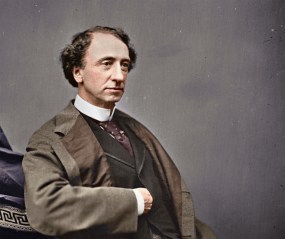
It matters whether we see ourselves as visitors to a mall, the government’s ATM machine, or members of a national family. Our founders believed it was important and created a system based on our considering ourselves, and our leaders treating us, as citizens. Perhaps we should reflect the wisdom of those founders whether Sir John A. Macdonald or Thomas Jefferson and whether there is a difference between how we see ourselves and how others see us by listening carefully to how those who lead or aspire to lead, speak of us. Let’s be aware of how others within our national family speak of themselves and the rest of us. If among the greatest gifts the ages have bestowed upon us is the concept of citizenship, then let us respect and protect it. I would rather live in a country than a mall.

If you enjoyed this column please send it to others and even if you did not, please consider leaving a comment.

Lessons of the Bonsai

Ancient cultures are not dead. They are around and within us and offering lessons for those willing to listen. Indigenous cultures, for instance, are teaching us the power of community, environmental responsibility, circles, cultural approbation, collective responsibility, and resilience in the face of tragedy and overwhelming odds. Let us consider the lessons of the ancient Japanese culture: patience and simplification. The lessons lie in the bonsai.

The Japanese tradition of tending a bonsai tree has its origins in China and can be traced to around the year 1200. Buddhist monks began the practice of tending tiny trees as a reflection of their lives devoted to quiet, slow, gentleness, and spiritual contemplation. A seed was planted in a small container. As it grew, the sapling would be supported by string. The monk would imagine the shape of the tree that he wished to create and then nurture that part to grow while carefully pruning leaves and branches. The process would take years but slowly, as it was lovingly tended, the tree would develop into the shape imagined. The monk’s job would then be to maintain the shape by continuing to trim superfluous bits.

By the end of the 1300s, monks had taught the practice to Japanese rulers. By the 1800s, it had become a proud traditional among all Japanese people. Ironically, considering what was about to happen, just before the Second World War there was a burst of interest in Japanese culture, and the bonsai in particular, in Europe and North America. The World Bonsai Friendship Federation was inaugurated in 1980. It convenes enormously popular conventions every four years at cities around the world.

Lessons of the Bonsai

(Photo: Bonsai Tree Gardener)

As in the beginning, it’s really not about the tree. It’s about life. To create a fine one, one that brings joy and about which happiness and satisfaction can be felt, recall what you must do: imagine how you want it to be, nurture it, trim the superfluous bits.

Consider those parts of our lives that are merely habit – the superfluous bits – those that add no value, that distort it. They are misshaping our bonsai. Imagine the merit in trimming a few people, places, and experiences that really bring no joy. Picture living with fewer things that are really just clutter or stressful responsibilities. What happiness would come from reading a book, listening to or playing music, or spending time with a loved one rather than scanning a screen to perchance see and unconsciously judge or compare what someone else is up to.

I wish I had more wisdom to envision the shape and the courage to trim. Perhaps I am getting better at it. But then again, another essential aspect of the Japanese culture, and one shared with Indigenous cultures, is reverence for elders. Maybe, if I continue to work hard at remembering and recognizing what truly matters and trim all that does not, I will, someday, with the gift years allow, have the bonsai I’ve imagined. Someday. Good luck with your bonsai.

If you enjoyed this column, please share it with others and consider checking my others at http://www.johnboyko.com


Viagra, Frankenstein, and Us

In June 1816, Mary Shelley and her husband were enjoying a dinner party with a group of friends. They talked of books and poetry and swapped German ghost stories. The dinner led Shelley to write a short story that she later turned into her 1818 novel, Frankenstein. The book was a cautionary tale of a research scientist who successfully assembled a living being from corpses, only to have his creation turn on him and wreak havoc on the community. The book asks us to be aware of the Frankensteins of unintended consequences all around us. Let’s consider one.

Viagara and Frankenstein

One day in 1991, researchers working in England for the pharmaceutical giant, Pfizer, were taken by surprise. They had been toiling away to develop a chemical compound to treat heart problems. They had come up with Sildenafil. It looked promising but then, during clinical trials, older men who had been taking the compound reported rock-hard erections lasting more than an hour. Those in the placebo-taking control groups reported no such effects. The Pfizer heart research project took a quick turn. More tests were done, the discovery was deemed sound, and so a method of mass producing the compound as a pill in the proper dosage was quickly established. The research team had inadvertently invented Viagra.

Patents were obtained. Observers wryly noted the unusual lightning speed with which the predominately middle-aged men in charge of so many of the world’s government approval processes allowed the little blue pill to machete its way through red tape. Within six months of its American approval, in March 1998, 7 million prescriptions were written, rendering it the country’s most popular medication.

Viagara and Frankenstein2

Pfizer’s future changed and its stock and profits rose dramatically. Commercials changed acceptable public conversations by dragging discussions of impotence, or erectile dysfunction, as it was renamed, from the shadows. The research changed the lives of millions of men and couples for whom impotence had been a problem. All was well.

But then, retirement homes and senior-dominated communities began reporting skyrocketing numbers of cases of sexually transmitted diseases. Arizona’s Pima and Maricopa counties, for instance, have unusually large senior populations. From 2005 to 2009 the number of people older than 55 who contracted syphilis and chlamydia for the first time in their lives rose by 87%. As is the case with most corporate, applied research, Pfizer never released the names of those who created Viagra so we don’t know their reaction to the good and bad changes their work brought about. But Mary Shelley would have smiled.

What other research and inventions bring about Frankenstein change? What small decisions have we made in our lives, that ended up big ones in disguise, put us on roads we had hoped to never travel? How many political decisions made for expedient or partisan reasons have helped some but hurt many? Can we rise up as the torch-bearing villagers did in Shelly’s novel and defeat our Frankensteins? Let’s first identify them in our lives and our communities. Then, let’s light the torches.

If you enjoyed this column, consider sharing it with others by reposting on Facebook or your social media of choice or checking my other work at http://www.johnboyko.com

What I’ve Learned About Being an Author

My first book was published a number of years ago and I am now working on what will be my eighth. I’ve seen a lot of changes in the publishing industry over that time but the most essential element remains the same as it’s been since Gutenberg invented the printing press. An author sits alone with the seed of an idea and a reader sits alone enjoying the fruit of that idea. It’s only the middle bit between those solitary acts that has changed. Here’s what I have learned.

  1. Write

If you want to write, then go ahead. It’s like Yoda said, “No try, do. Do or don’t do. No try.” There are many ways to get started and the easiest is to set up a free WordPress webpage and begin blogging. Write about what you know. Develop a theme. Forget how many people click to read it, that’s not what it’s about.

You are writing not as a sprinter on race day but a marathoner in training. Build writing muscles and skills by using them. Read authors you admire. Then read those you don’t. Treat them as teachers. Then write more. Someone who is not writing is not a writer. They are someone who either has written or someone with a dream but no plan.
All I've Learned About Being an Author

(Iconix Brand Group Inc)

  1. Printing and Self-Publishing

Printing is often all many people want. For example, if you want to write a history of your family that no one but your family will probably read then find yourself a printer. They will help design, and then print and bind as many copies as you wish of whatever you give them. Be sure you have at least five people proof-read your work or even hire a professional editor to save yourself the embarrassment of errors that will live longer than you.

Self-publishing is becoming increasingly prevalent. It’s tough as you must essentially become your own publishing company. It demands a lot of work which means hours away from your writing. However, if willing and able to take the risk and do the work, the reward could be your book appearing on Amazon and other online sites and generating sales.

  1. Publishing Houses

Publishing houses understand that they are making art and making money but if they don’t do both then they can’t do either. Accept that. Many small houses will accept unsolicited manuscripts – over the transom, as the saying goes. Larger houses, and there are fewer of them as they have been shuttering or swallowing each other, will only accept manuscripts from agents. Agents and houses will not be interested in a whole book, just a proposal.

  1. Proposal

If you want to write a book, then don’t write a book. That is, develop your idea for a book into a proposal for a book. It is a two-page sales pitch. Be succinct in explaining why anyone would want to read your book and why a publisher will make money by publishing it. A novel’s proposal is more straight forward but a non-fiction proposal’s subtitles could be: Elevator Pitch, Argument, Market, Author, Table of Contents. If you are a first-time author you will probably also need a sample chapter. Have a couple of people read and edit your proposal. Be sure it is not someone who loves you or will not be harshly critical for you want unburnished opinions now, not later. Then find yourself an agent.

  1. Get an Agent

Scan the web and you will find lots of agents. Or, go to a bookstore, if you can still find one, and look at the acknowledgement pages of books like yours and see which agents are being thanked. You only want to approach an agent who specializes in your kind of book. An agent is the liaison between you and the publisher. If your proposal is any good, an agent may take you on as a client. A contract will be signed in which the agent will get around 15% of everything you make.

She will then be like your best friend, supporting you or kicking your backside depending on which you need most at the moment. She will help to hone your proposal and make it better than you thought it could be. She will then approach publishers attempting to have them take it on. She will negotiate an advance on royalties and contract with them. Meanwhile, you concentrate on your writing.

  1. The Publishing Contract

Famous people sell a lot of books and so they get huge advances that can sometimes be in the millions of dollars. First-time authors, however, can expect between $5,000 and $20,000. You should not get too excited, though, because the money is there to pay for expenses incurred while writing the book and it is later deducted from royalties earned from sales. Most authors will earn from 8% to 12% of the book’s sale price. The contract will establish when the finished draft manuscript must be submitted. Now you must actually write the thing.

  1. Writing

There is always time. I am up and writing each day at 5:00 am. The sane world is still asleep so there are no emails or calls, just me, tea, and the muse. Even if the muse doesn’t show up some mornings, I am there doing what feels like a punch-the-clock effort but at least I’m there. I run and take long walks without music and it is there the real writing takes place. When in my office, I am usually just typing what I have already written in my head. The best secret as to how to get words on a page is to get your ass in a chair.

  1. Editing

Kurt Vonnegut once told students that anyone can write. To be a writer, though, is to write something then rewrite it, and then rewrite it, and then re-write it again. Then, when it is absolutely perfect, re-write it three more times. You should do this before submitting the manuscript. When you do, you will be assigned an editor. This is your other best friend or perhaps like your best high school teacher. He will take your manuscript and mark it up noting where the structure should be improved or grammar fixed. You will go back and forth a number of times until finally, you are on the phone or in an office going through the entire manuscript one sentence at a time. It will then be sent to a proofreader who will, hopefully, find all the little mistakes left for you to fix.

  1. The Box

It’s a glorious feeling. A box will arrive at your front door and inside are the dozen or so books that your publisher sends you for free. There it is. After two or three years of solitary work and then months of editing it is finally a tangible thing. The verb has become a noun as your writing is a book.

  1. Marketing

Your publisher will assign a publicist. She will do all she can to sell you and the book. You may be interviewed on radio or TV, do speeches, or appear at literary festivals. You must be ready to explain your book in twenty seconds, or ten minutes, or an hour. You must never be ashamed by shameless promotion. You are no longer in the business of writing. You are now in sales. This will involve your engagement in social media for you must take on a lot of the marketing work yourself.

You will need to grow the hide of a rhinoceros because there will be those who will not like your book. You may get trashed in a review. You may have no one show up for an event. Your book may be ignored altogether. All you can do is your best and keep smiling.

  1. Dividing Your Brain and Time

Usually, several months or even a year may go by between your having submitted the final draft manuscript and the publication date. While editing that one, you will be writing your next one, beginning with the idea and proposal. You will then be in the odd position of talking about your first book while all your brain really wants to focus on is your next one because your first one, to you, is already two or more years old. It’s an interesting dance.

  1. Sales

About five to ten years ago, it was predicted that book sales would plummet. They did not. There are actually more people buying and reading books today than ever before. Even the sales of physical books have become relatively stable year to year. Even if physical and e-book sales are combined, the sales of nearly all books are relatively low. There are only a few Harry Potter like hits each year. They allow publishing houses to publish all the others. One can have a Canadian best seller at 6,000 – 8,000 copies. That is why nearly all writers have other jobs. Most teach or are journalists but there are a lot of writing waiters.

Like in the music business, there are a lot of people doing it but only a few making a good living. That said, if all you are interested in is the money then forget it. You probably won’t make much and you will probably not be much good because you are in it for entirely the wrong reason.

And so….

Writers understand and live for the warmth of a well-written sentence and cogently constructed argument. Margaret Atwood once observed that you know you are a writer when you are writing in July about a winter scene and then after an hour lost in creative thought you look out the window and wonder what happened to all the snow. Good luck. I’m pulling for you.

If you enjoyed this column, please send it others. Consider leaving a comment, I’d love to hear from you.


The People Will Always Be Heard – Luddite Lessons For Today

People affected by change need a way to express their concerns. Even if those concerns are not significantly addressed, they at least need to know they’ve been heard. The results of being ignored can be unpredictable when change beyond their control, led by complex forces outside their comprehension, alters all they once thought was certain. A people scorned by change will bring about even more change.

In 2016, we saw the connection between change and people’s response to being ignored when British voters chose to leave Europe and, in electing Donald Trump, Americans chose to leave the world. Those bringing change about and benefitting from it had become the enemy. The silenced and disparaged, who had been negatively affected by change, reacted in the most positive way they could. We are all now reaping the effects of the great unheard’s determination to be heard. It is not the first time.

English workers in the 18th century felt as mistreated and ignored as did the 21st century American and British working class. They didn’t have the ballot to express their rage against change and so, like people always do, they found another means.

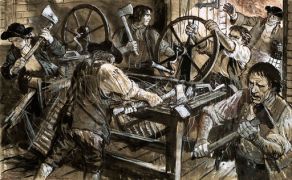
In the Nottinghamshire village of Arnold, a group of framework knitters took pride in their work. The artisans complained to their overseers that their skills were being debased by the company’s use of substandard material and by “colts”, young workers who had not completed the seven-year apprenticeship. Further, the big, loom machines were producing more product but it was of an inferior quality. The machines also meant that because their skills were less important, their wages had been cut. Things had been made worse when the war with France led to the issuing of the Prince Regent’s Orders in Council. It effected jobs and production by cutting textile exports with France and its allies. There had been layoffs and slow downs. Each time the workers raised complaints, they were told to get back to work. On March 11, 1811, the unheard and frustrated workers destroyed their machines.

Workmen take out their anger on the machines

(Image: Look and Learn Picture Library)

This was not the first time that English workers had protested in this way. In fact, in 1727, the British parliament had passed legislation that rendered wrecking the tools of work a capital felony offense. But the old law had been ignored. News of the Nottinghamshire violence spread. It presented other disgruntled workers with a hero. Ned Ludd was applauded as the apprentice who began it all by having snapped his needles in defiance of his strict boss. Those who followed his lead were called Luddites. Ludd was a myth. There was no such man. But it didn’t matter. The Luddite movement was born.

Over the next two months, textile loom-frame machines were smashed in a number of surrounding villages. There were no arrests. How do you arrest a whole village? But there were also no negotiations between mill owners and workers. Violence erupted again in November and the winter saw sporadic attacks on mills and machines in Nottinghamshire, Derbyshire, and Leicestershire. The military was dispatched to a number of towns to help police. Mill owners hired armed guards. The Luddite movement nonetheless spread, first to the cotton-weaving industry in and around Manchester.

In April, a number of protesters turned their violence directly against mill owners and many were beaten up. Grand homes were burned. Elected officials were threatened. Rawfolds Mill owner William Horsfall was murdered. Some Luddite agitators were arrested but the workers stuck together and refused to give up friends who had been responsible for specific acts of sabotage or violence.

In an 1812 speech to the House of Lords regarding the proposed Frame Breaking Act, Lord Byron demonstrated his understanding of the situation. He knew that responsible leaders don’t react to the symptoms of problems but rather, address a problem’s root cause. Bryon said, “had the grievances of these men and their masters (for they also have had their grievances) been fairly weighed and justly examined, I do think that means might have been devised to restore these workmen to their avocations, and tranquility to the country…These men never destroyed their looms till they were become useless, worse than useless; till they were become actual impediments to their exertions in obtaining their daily bread.”

Byron went on to speak of the danger inherent in dismissing the protesters as a mob to be arrested and tamed. The mob, he said, was the people. The people served in the military and mills and made the country work. It is the people, he told the Lords, to whom they were responsible. It is the people being dismissed as a mob who are responsible for Britain’s growing power and wealth. Byron understood that in commodifying people and valuing them less than the machines they ran, the people were in danger of becoming not partners in the country’s progress but its victims, and thus, its enemies. It is a shame that, over the last decade, the United States and Britain did not have more Lord Byrons.

The government and mill owners eventually responded. Wages were raised a little and work conditions were slightly improved. Food was subsidized and prices dropped. Napoleon’s defeat reopened European markets. The machines remained and continued to change how people lived and worked but the workers most directly affected by change had, at least, been heard. By 1816, the Luddite movement had subsided.

The Luddites were never a unified group advocating a package of political reforms or even, as the word has been passed down through the generations, just about resistance to new technology. The movement represented people’s reaction to change. It reflected a new class consciousness among a group that the invention of steam power and the industrial revolution had helped to create. They were the class that the invention of the assembly line would help to build and the invention of robots would help to destroy.

The Luddites offer lessons regarding the importance of seeing the role that technology plays in spurring change but also in looking past immediate economic benefits to acknowledge and manage change’s costs. I’m betting that even Donald Trump knows that technology and not immigrants or Mexicans or Muslims is responsible for today’s job losses and economic dislocation. I’m hoping that responsible leaders will act responsibly to manage current changes for the benefit of the many and not just the few. I hope those leaders understand that one way or another, people affected by change will always be heard. Always.

If you enjoyed this column, please share it with others and consider leaving a comment.

Are We The 5-Year-Old Us?

I am currently reading Bobby Kennedy: The Making of a Liberal Icon by Larry Tye. It’s the latest of many I have read about the man who was a childhood hero of mine and for whom I still have a great deal of respect. Among the things Kennedy taught me, when my Mom used to say was too young to be thinking about such things, was existentialism. He spoke of being one and so I looked it up and thought it was a tremendous philosophy. I told myself that I was one too. An essential notion is that we are in control of our own destiny and able to create and recreate ourselves regardless of both nature and nurture. This new book, which is very good by the way, had me thinking about that notion again. But it also reminded me of an event whose anniversary is approaching that made me wonder if I should throw existentialism into the ditch. It involved a report card.

You see, about this time last year, my three younger brothers and I were cleaning out my father’s house. My Mom had been gone for some time and it was time for my Dad to be where he could be happier, healthier, and safer. So there were with a dumpster in the driveway, in what had been our home but had suddenly become just a house. What had been family treasures was bothersome stuff. “Why take this,” my one brother said, “only to have my son throw it out thirty years from now?” He was right. Furniture and kitchenware went to a Syrian refugee family and more went to local charity re-use centre, but a lot was going straight into the steel bin of sin. But then we were stopped cold.

My Mom had saved a box full of our old report cards. We stood together, laughing as we read comments from the days when teachers were allowed to be honest and communicate in English. I found my kindergarten final report card which said, “Johnny likes to sing songs and write stories.” Well, so much for Bobby Kennedy and existentialism.

I still like to sing songs. I learned to play guitar when I was nine and sang in a band in high school, then in coffee houses and bars with a friend and later alone. I recorded three songs that I had written as singles and still write a song every month or so to prove to myself that I still can. I play in a little band. We love working out new songs and playing the occasional gig. It is a rare day that I do not pick up the guitar and enjoy time singing and playing; it slows me down and slow is good.

I still like to write stories. I am writing one now. I also write newspaper editorials, magazine articles, book reviews, entries in the Canadian Encyclopedia, and am now writing my eighth book. There is a warm satisfaction earned by composing a well-constructed sentence or in weaving a lucid argument. The muse can occasionally be kind.

So the report card led me to wonder if I have really been living the existential life that I thought I had been living for all these years. Have I really been rediscovering and reinventing myself or was I set at kindergarten?

Consider yourself at age 5 and whether you are significantly different now. How have you changed, or not changed, since high school? When together with old friends, is everyone looking a little older but essentially the same? I wonder if despite the buffeting winds of change, the moments of celebration and chagrin, and the years that colour our hair and idealism, whether we are really that different than the five-year-old us?

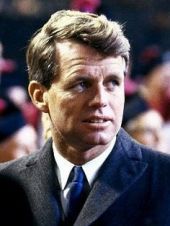
Bobby Kennedy was assassinated 49 years ago last week at age 49. It was just weeks before he would have won the Democratic Party’s nomination and gone on to defeat Richard Nixon to become president in January 1969. Think about that. Vietnam would have ended earlier with thousands of lives spared. There would have been no Watergate. He most likely would have been president until 1976. God, he may have even stopped disco – ok, perhaps I’m stretching it.

Robert Kennedy

The point is, that if Kennedy had lived then policies would have been different, the media would have been different, America and the world would have been different and, perhaps most significantly of all, we may have been spared the cynicism born of his having been killed so shortly after his brother and Martin Luther King. The existentialism in which he believed would have been writ large through his example and legacy.

Of course, last year I would have still found the old report card that inspired both a smile and furrowed brow. Even Bobby Kennedy could not have changed that.

If you enjoyed this column, please consider sharing with others and perhaps leaving a comment.

Power Where it Belongs

Canada is a conversation. When confronting troubles visited upon us, or of our own making, Canadians reach not for a gun but a gavel. We talk it out. Every leadership race and election, every new bill, public initiative or staggering crisis, and every table pounding in the House of Commons or at the local Tim Hortons is another element of that conversation. And when we’re talking, we’re always talking about power. So, let’s talk.

Political power touches us all. Positively expressed, it offers a vehicle through which we are collectively encouraged and enabled to act for the common good. Power matters, and so it matters who has it.

Our founders understood. In 1864, they met in Charlottetown and Quebec City and talked their way into the creation of a country. From Britain came the concepts of a limited monarchy and parliamentary democracy. From the United States, they took the ideas of a written constitution and a federal state, in Canada’s case one composed of a central government and provinces. This is where the real talking about power began.

Power and Sir John's Echo

Sir John A. Macdonald led the way in arguing that while the American Constitution was brilliant in its conception, the fact that the United States was, at that moment, butchering itself in the Civil War demonstrated its appalling failure in practice. Seeing this, the Canadian Confederation delegates decided to stand the American system on its head. Macdonald explained that Canada would reverse the “primary error” of the United States “by strengthening the general government and conferring on the provincial bodies only such powers as may be required for local purposes.”

The provinces were given only municipal-like areas of responsibility and a limited ability to raise revenue. The federal government, on the other hand, was afforded the major powers relating to sovereignty, including trade, the military, the post office, criminal law, currency and banking. Unlike in the United States, where, until 1913, the states appointed senators, in Canada the prime minister was given the power to populate the country’s Senate. The prime minister would also appoint the lieutenant-governors, who approved provincial bills while sending questionable ones to the federal cabinet, which could disallow them. It was decided that responsibility for anything the Constitution left out or that came up later, such as airports, would go automatically to the federal government.

Throughout Canada’s 150-year conversation, provinces have worked to overturn our founders’ vision and shift power to themselves. An example is the decades-long provincial demand for greater power that sabotaged repeated federal efforts to earn greater independence for the country by gaining control of our Constitution. In standing up for what they believed was best for their province, too many premiers betrayed and undermined the very concept of Canada while dividing Canadians against themselves.

This is not to say that premiers are not patriots and provinces don’t matter. Of course they are and of course they do. But it was successive federal governments that fought to maintain our founders’ vision. Provinces were cajoled and dragged along as the federal government led the building of Canada through projects such as the transcontinental railway, St. Lawrence Seaway and the Trans-Canada Highway. The federal government needled, nudged and negotiated for Canadians in creating national policies such as pensions and health care. Federal governments rallied our response to emergencies such as global wars, the Great Depression and the FLQ crisis. The federal government spoke for Canadian values whether reflected as peacekeepers or climate-change leaders.

Some federal leaders have made boneheaded mistakes and some perpetrated tragic policies. Macdonald himself can never be forgiven for the crimes he committed with respect to indigenous people. Those actions condemn the men not the structure from which they worked.

Let us move to the present. Ignore whether you like or dislike our current Prime Minister or his policies, but grant that his Canadian tour last spring indicated his understanding that this country is indeed a conversation. He is also demonstrating that he is the personification of Sir John’s vision. He gathered the premiers and then led the revamping of pensions, unemployment insurance and health care. He told the provinces that we will combat climate change as a country and that they will step in line. His government organized a national emergency response to the Fort McMurray wildfires.

We have been at our best when the power that our founders afforded the federal government was effectively employed. We have gone off the rails when firewall letters, referendums and power squabbles have attempted to distort that vision. We are better when we consider ourselves not as of a particular province but, more broadly, as Canadians first, stronger in the complexity of our citizenship.

Every time you hear our Prime Minister speak, listen carefully for a hint of a Scottish burr, for you’re hearing Sir John’s echo.

If you liked this column or disagree with it, please send it to others and consider leaving a comment. You see, the Globe and Mail posted it last week as an opinion piece and it sparked debate then. It is a summary of my latest book, Sir John’s Echo, which Dundurn Press asked me to write, urging me to stir debate as part of Canada 150. It has been doing so. The book is available at book stores or online through Chapters, Amazon, and elsewhere. Polite, informed debate is good, it’s our conversaion.

https://www.chapters.indigo.ca/en-ca/books/sir-johns-echo-speaking-for/9781459738157-item.html


Imagine a Man Like John F. Kennedy

Today would be John F. Kennedy’s 100th birthday. Those of a certain age remember him for the hope that he inspired. For many, just the idea that he was in the White House meant that things would get better. His horrible, public murder gashed a generation. JFK’s assassination defined the precise moment between then and now, between what could have been and what was. Kennedy visited Canada four times. Let us consider one that helped change our history and helps define the man.

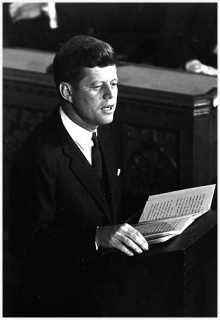
Imagine a Man Like John F. Kennedy

JFK Addressing Canadian Parliament (CBC photo)

In late 1953, Kennedy was the junior Senator from Massachusetts and forced to consider Canada for the first time. After decades of debate regarding whether the United States and Canada should cooperate in the building the St. Lawrence Seaway, Canada had decided to go it alone. The decision put the thirty-six-year-old Kennedy in a tricky spot. During his Senate campaign, he had listened to Boston longshoremen, businessmen, and lobbyists, and opposed the seaway based on the old worry that it would divert significant traffic from New England ports to the St. Lawrence. To support it would jeopardize his re-election and stymie his presidential aspirations. But he had his staff complete a careful study of the matter and had become convinced that to oppose the seaway would hurt the United States. So, would he vote for himself and his constituency or for his country? Was the book he had written, Profiles in Courage, was just a cute title or a definition of his character?

With pressure building, Kennedy accepted an invitation to speak at the Université de Montréal. It was his first trip to Canada. The senator and his wife of three months, the twenty-four-year-old Jacqueline, arrived on a cold December 4, 1953, at Montreal’s Windsor train station. Only two men met them: an American consulate representative and a Canadian Pacific Railway photographer who quickly snapped two pictures and went home. The glamorous young couple were guests of honour that evening at the annual St. Mary’s Ball, where the city’s who’s who mingled, dined, and raised money for the local hospital.

Before donning his tuxedo, Kennedy addressed the students and faculty of the university’s Literary Society. He said that Canada and the United States were fighting communism together. He explained that 20 percent of American exports went to Canada and that America was Canada’s best customer. Kennedy then explained the difficulty the American Congress was having in coming to a decision regarding the seaway. He detailed the American system of checks and balances and quoted Sir John A. Macdonald, albeit somewhat out of context, who once called the American system a “skilful work.” He quoted eighteenth-century Irish nationalist and conservative political philosopher Edmund Burke. Burke had said in his 1774 “Speech to the Electors of Bristol” that political representatives should be free to vote their conscience. Kennedy’s reference to Burke was a strong hint that he was preparing to do just that.

A few weeks later, on January 14, 1954, Kennedy rose in the Senate chamber and delivered a courageous speech. He began by noting his state’s current and long history of opposition to the seaway. His vote, he said, would rest on the answers to two fundamental questions. The first was whether the seaway would be built regardless of American partnership. “I have studied the Act passed by the Canadian parliament authorizing the construction of the St. Lawrence Seaway by Canada . . . and the official statements of the Canadian government make it clear that Canada will build the Seaway alone and cooperate on the power project with New York, although the door is left open for American participation if we should so decide at this session of Congress.” A solely Canadian project, Kennedy continued, would inflict enormous costs on America, as Canada could dictate tolls, traffic, and admission of foreign shipping.

The second determining question, he argued, was whether the seaway would make America safer. Kennedy explained the degree to which American participation in the project would be part of the continued development of an integrated North American defence strategy. He concluded: “Both nations now need the St. Lawrence Seaway for security as well as for economic reasons.

He concluded, “I urge the Congress promptly to approve our participation in its construction.”

Finally, after decades of opposition, the Senate approved the daring measure. A number of Boston and Massachusetts papers attacked the young senator. Two months later he was warned by a member of Boston’s city council not to march in the city’s large and boisterous annual St. Patrick’s Day parade lest he be abused by dockworkers angry that the seaway would kill their jobs. Kennedy ignored the advice and marched without incident.

Imagine a politician with the political courage to put country over party and principle over popularity, risking re-election for what is right. Imagine a politician who bases decisions on facts rather than gut reactions, polls, or a blind adherence to ideology. Imagine a politician with an ability to speak that is clear, almost poetic, and that demands that we rise to meet him rather than pandering to the least articulate and educated among us. Imagine. And then take a moment today to celebrate John Kennedy’s life and grieve his loss.

If you enjoyed this column, please share it with other. For more on the many ways that Canada was effected by JFK and that we affected him, consider reading Cold Fire: Kennedy’s Northern Front. It is available at bookstores and online through Chapters Indigo and Amazon.

Lessons From a 2-Year-Old

There are few things more humbling than time with a 2-year-old. I am one of the lucky ones who is privileged to be able to do so every day when my dear wife and I pick her up from daycare and then tend her and her older sister until Mom arrives home from work. We even enjoy occasional evenings. Some times are challenging but all are special and many, many moments are diamonds. The bright, cheerful, and sweet little girl is the most profound teacher I know.

Food

Food is not merely something that sustains us but a pleasure to be experienced. Sometimes that means dispensing with utensils and digging fingers deeply into our meal. Manners matter and please and thank you are necessary, of course, but the visceral joy of some meals must involve all the senses with gratitude measured by the colour of one’s cheeks. The rituals we adults attach to food are reduced to silly, cultural affectations.

Wonder

Walks offer startling moments of discovery. The spectacle of the sight and sound of breeze through the fresh, green leaves of a spring maple is something to stop and contemplate. “The tree is dancing!” “Yes, yes, it is.” The soft marvel of moss on forest rocks deserves a furrowed brow, gentle touch, and quiet contemplation. The fallen tree is a detective’s challenge. There is nothing better to awaken the soul than to have one’s eyes opened to sparkling detail.

Puddles

Rain is great because rain brings puddles. There is nothing in the world like marching with knees high and giggling with glee as puddles explode. Big, long ones demand several marches with each better than the last. Imagine if we could all relax and get over ourselves sufficiently to derive such unrestrained joy from such tiny pleasures.

Lessons from a 2-Year-Old

Hiding

Nothing beats hiding. If I can’t see you, of course, means that you can’t see me, so I vanish if covered by a blanket on the couch. Even covering one’s eyes will do. It never gets old. It is kind of like avoiding eye contact at meetings when a volunteer is being sought.

Determination

Sometimes words won’t do. There are some situations where only a foot-stomping, arm-waving, tear-pouring, high-decibel meltdown is equal to the rage of a prize denied, the unfair barrier, slight, or unmet goal. Each red-hot episode is followed by a period of reflection and contemplation, a settling of the soul, a hug, and the realization that life goes on. How many of us face similar situations of frustration and unfairness that leave us raging in silence, swallowing mind and body ripping stress, and longing for the hug.

Bath time

Bath time is fun. Stripping down, getting soapy and blowing bubbles while surrounded by colourful toys that float, toot, and sing is great.  And there is nothing like the security of a big warm blanket and clean pyjamas. Imagine if every day ended with a long, hot bath.

Books

Books are adventures. The world comes alive with possibilities as animals talk, kids explore, nature is kind, adults are safe, fun happens, and even in the face of danger and heartache, the ending is always happy. What a pleasure to watch cynicism on vacation.

Sleep

Sleep when tired. Awake when refreshed. How simple. Routine but no schedule. And the last thing you hear before heavy eyes whisk you to dreams, whether for a mid-day nap or ten hours at night, is “I love you.” May we all be so blessed.

The best hoax adults perpetrate on children is that we have it all figured out and know what we’re doing. Far from it. We are doing the best we can, making it up as we go along, and we are always learning. The best teachers I have in my life-long quest for wisdom are nine and two years old. There is nothing like the often gentle and sometimes stark and sudden lessons of a two-year-old to stand you up, cock your head, and remind you of how much is left to be learned.

If you enjoyed this column, please share it others and consider leaving a comment. My other columns rest at http://www.johnboyko.com and my books, all addressing History and Politics, are available through Chapters, Amazon, and, as Stuart Mclean used to used to say, at reasonable books stores everywhere.

The World’s Worst Housemate

I would like to interest you in someone to share your home, a housemate. He often smells like old cheese and rotting leaves and seldom bathes. His breath would stagger a rutting moose. He will demand that you prepare his meals. He’ll scream gibberish at guests and then do rude things that embarrass them. He will have you drive him to medical appointments and leave you with the bill. He’ll shamelessly use your yard as a toilet and never pay rent. Are you interested?

Funny you said no because 35% of Canadian homes have at least one of the country’s 5.9 million dogs. In the United States, it’s a similar 36%, meaning that there are 68 million hairy, gnarly American housemates.

Why? Why do so many people endure from a dog what they would never accept from a human? Surely it can’t be because they’re so damned cute. After all, there are a lot of adorable-looking, sad-eyed people from whom such behaviour would never be tolerated. And they even have the decency to wear clothes. Let’s think about it. Why own a dog?

Chemistry

According to psychologists who study this kind of thing, playing with a dog floods your brain with dopamine and serotonin. They are natural neurotransmitters that reward us with feelings of peace and happiness. It’s why therapy dogs are such a big hit at retirement residences.

But what about another chemical? Adrenaline. A jolt of adrenaline races your heart, tenses your muscles, and tightens your innards, causing a gastroesophageal reflux that drops a metallic taste in your mouth. You are ready to fight or flee, say because you’re being chased by a grizzly. Or, maybe it’s the sight of your dog with one of your new, expensive shoes in its slobbering gob or perhaps he’s sitting proudly, with tongue a-dangle and eyes wide, before a table leg that he’s just chewed into impressionist art. Again, it’s chemical.

Loyalty

Dogs were our first domesticated pets. Archaeologists suggest that people began living with dogs about 32,000 years ago. Dogs descended from wolves and wolves run in packs. So when you bring a dog into your home you are inviting him to join your pack. A well-trained dog recognizes you as the pack’s alpha male and so he obeys orders.

It’s a nice idea but a 2010 Psychology Today article called it bollocks. Studies of dog’s memories show that despite their ability to act on command, dogs have quite limited long and short-term memories. It’s been proven that when you leave, you’re forgotten. Reunions are always nice but dogs don’t pine away in our absence. Scientists dismiss the idea that dogs feel loyalty as a “modern invention”, sappy sentimentality, or our sad habit of anthropomorphization, where we Disneyfy animals by attributing them with human characteristics.

Health

It has been demonstrated that owning a dog increases people’s physical fitness by getting them off the couch, even in the worst weather, to walk around the block. Anything that gets people moving is a good thing.

One has to wonder, however, about our self-discipline and dedication to health if it takes a jumpy dog’s pee dance to drag us out the door. Further, even in the absolute worst cases of slavery, when people were robbed of their very humanity and forced to live in unspeakable conditions and do appalling things, there are no examples of slaves being forced to trail their masters, wait for them to poop, and then scoop it into a bag and carry it home. Kurt Vonnegut once wrote that if aliens hovered over the earth and observed this practice they would conclude that dogs are the planet’s master species, feel sorry for human beings, and cite the relationship as the universe’s cruelest example of slavery. Perhaps going for a walk every day without toting a little bag might be okay.

Welcome

There is no one, no one in the world, who is happier to see you than your dog. Arrive home from work, stressed and tired, and watch your mood suddenly change when he explodes with the simple joy of your being. What can be more affirming?

Do we keep a dog partly for this welcome; this non-judgmental, boundless affection that we reward with a demand for absolute obedience? Is it that we like the idea that no matter what in our lives spins beyond our control and how many people determine what we do, and when and we’ll do it, that there is at least one thing, one living thing, over which we have dominance? Is our secret embrace of that shameful feeling at the core of our enjoying our joyous welcome? Or, is a hole in our soul so deep that our ache to be loved is so mightily profound? Or, on the other hand, are dogs just goofy, good company and fun to have around?

The World's Worst Housemate

(Photo: Saved By Dogs)

As you may have guessed, I don’t have a dog. I don’t want one. But I had one as a teenager. He was a big, floppy, black and white, mutt-face of a guy who was born on February 10. From then to now there is not a February 10th goes by that I am not warmed by a kind thought of my old friend. I know. Dogs are hard to explain.

If you found this column interesting, please share it with others and consider checking my other work at http://www.johnboyko.com

The Princess and the Tulips

As the tulips are finding our gardens again I thought it apt to re-post this story from a couple of years ago. I hope you enjoy it.

Princess Juliana was in trouble. The country over which she would someday reign was in crisis and her life was in peril. The Nazi blitzkrieg was pushing its way north and west and her beloved Netherlands was certain to fall to Hitler’s mad ambitions.

Just three years before, with the encouragement of her mother, the powerful and extraordinarily wealthy Queen Wilhelmina, she had married a young German aristocrat named Prince Bernard of Lippe-Biesterfeld. They soon fulfilled the most important part of their royal duties by producing heirs. Princess Beatrix was born in 1938 and then, a year later, Princess Irene.

Despite suspicions of all things German, the Dutch people accepted Prince Bernard. He changed the spelling of his name to be less German and became a Dutch citizen. Now they worried about their future, the future of their country, and that of the Royal bloodline if the Princess and her family were captured by the Nazi horde about which astounding stories of unspeakable horror were being told.

The Royal family was evacuated to London. Queen Wilhelmina oversaw the creation of a Dutch government in exile. A month later, in June 1940, Princess Juliana and her family were sent to an even safer sanctuary in Ottawa, Canada. A spacious house was found in the tony neighbourhood of Rockcliffe Park, home to ambassadors and the city’s elite. The house was called Stornoway. It would later become the residence of the leader of Canada’s Official Opposition.

Juliana followed the tragic news of her country having fallen under the Nazi yoke as she worried about her mother enduring the London blitz. The shy princess led a quiet life and remained aloof from Ottawa society events to which she would have been welcomed. Problems arose in late 1942 when she found herself pregnant. If she gave birth in Canada, the child would have dual citizenship and so be robbed of a spot in the Royal line of succession.

The Canadian government came to the rescue. It declared her rooms in Ottawa’s Civic Hospital to be temporarily extraterritorial. In other words, for the moment, Juliana was in the Netherlands. Princess Margriet was born on January 19, 1943. The child became the first and remains the only, royal personage to be born in North America.

Princess and the Tulips Royal Family

Home from the Ottawa Hospital (Photo: cbc.ca)

Canadians were as pleased as the people of the besieged Netherlands. The news led Canadian radio broadcasts and adorned newspaper front pages. The Dutch flag fluttered atop the Parliament Building’s Peace Tower and its bells chimed out the Dutch national anthem and folk tunes.

Meanwhile, the war raged on. Successful D-Day landings by British, American, and Canadian troops initiated a slow and bloody push toward Berlin. Canadians were assigned the left flank and, in September 1944, they began the liberation of the Netherlands. It was tough. The Nazi army had flooded land, mined ports, and dug itself into intractable defensive positions. The Dutch people did what they could to offer fifth column help. So many were so hungry that they had been surviving by eating tulip bulbs. Many were saved when Royal Canadian Airforce planes dropped food for the starving.

Canadian troops fought gallantly. The Battle of the Scheldt was the most excruciating engagement. Between October and November 1944, the Canadian First Army suffered nearly 13,000 casualties. When it succeeded and Nazi forces retreated, Canadian soldiers were hailed as heroes. As they entered Dutch towns, the tired but smiling young men were showered with flowers and gifts.

On May 2, 1945, after five years in Canada, Princess Juliana and her children were able to return first to London and then, along with Queen Wilhelmina, to a freed and free Netherlands. To demonstrate their gratitude for all that Canada had done for the country and her family, the Princess arranged that 100,000 tulip bulbs were sent to Ottawa. The next year, 20,000 more arrived with the request that they be planted on the hospital grounds.

In 1948, as result of her mother’s long illness, Juliana, became Queen. She ensured that more tulip bulbs were sent to Canada every year. Every spring saw Ottawa resplendent in a riot of colour. In 1952, at the suggestion of noted Canadian photographer Malak Karsh, Ottawa began an annual Tulip Festival. The city hosted a celebration that grew to include concerts, buskers, plays, fireworks, and more. Every year the city’s tulip beds grew even more spectacular.

Princess and the Tulips Photo: magpiejewellery.com

In Canada’s centennial year, 1967, Queen Juliana was enthusiastically cheered as she enjoyed the festival. In 2002, Princess Margriet was the special guest commemorating the festival’s 50th anniversary.

The fragile flowers last only a short while but are annual reminders of a friendship within a tragedy and of our common humanity. They remind us of what can be lost to the insanity of war and blind adherence to a hateful ideology. And, standing boldly in their primary colours, they symbolize the assurance that after every winter, man-made or otherwise, lives a determined hope that there is always spring, and that someday we may be sufficiently mature to live in peace.

If you enjoyed this column, please consider sending it to others and perhaps leaving a comment.

Statler and Waldorf and the Gift of Now

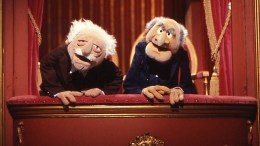
This is a confession. I have become Statler and Waldorf. Those of a certain age will recall that Statler and Waldorf were Muppets. Watching the show on stage from their private box in the Muppet theatre, they were constantly critical, harumphing and grumping away. I felt like that last Saturday, but with a twist. My band was playing a gig and I was channelling my Muppet friends, an old fart observing, but this time from the stage watching the audience. I’d seen it before, of course, as we all have, but this time, right in the middle of singing and playing Peaceful Easy Feeling, and with only half my brain on the lyrics, melody, and guitar lines, it struck me.

You see, the crowd was good and with a line up at the door. Everyone looked like they were enjoying a good time. The band sounded tight and, like usual, we were having more fun than should be legal for grown men in public. The Canoe and Paddle pub is a gift to our community, run by great folks; it’s a gathering place for neighbours and friends and those who soon will be. But then, near the end of the first set, I noticed it.

Statler and Waldorf

At one table were two couples and all four were staring into phones, swiping the screens. I scanned the room. There was another young couple ignoring each other and the fun of the room, tip-tapping away. At a table with six obvious male and female friends, four were staring at phones. I counted four other people ignoring friends or spouses, intently concentrating on Steve Jobs’ gift to us all.

Why?

Are we information addicts? Is it not interesting that we can be out with friends or family, with good food and drink before us and engulfed in music and laughter, and yet be distracted by a vibration, buzz, or ding? When we tap the button to investigate are we not saying, “I have no idea who or what this is, perhaps a friend who just posted a picture of her dinner, or maybe a bomb blew up in Caraccas, but whoever or whatever it is, and I have no idea, I already find it more interesting than you and so I am going to ignore you now and check this out.” It seems to me that unless there is a babysitter back home or teenage children on the town, what can possibly be more important than the people with whom you have chosen to share this sliver of time?

Are we public diarists? Diaries used to have locks. Now they have megaphones. Psychologists often recommend that people keep diaries, or journals, to slow the pace and allow the rich rewards of reflection. Facebook, Instagram, and the rest, on the other hand, invite us to reflect by reflecting a mirror on our lives outward. We post what used to be private to the whole world. We then keep track of how many noticed and liked our latest entry and, indirectly, how many people like us. Psychologists agree that those who regularly post and read Facebook are more likely to experience angst and depression for they compare the ordinary of their lives with highlights of others. And there at the pub on Saturday were all those good folks more concerned with recording and sharing what was happening rather than truly immersing themselves in what was happening.

Do we need a witness? American soldiers moving through Italy and Europe often stopped to paint a crude cartoon of a man peering over a fence and wrote, “Kilroy Was Here”. A drive just north of our community takes you through the stunning Canadian Shield with tremendous sheered rock faces. It is tough to drive long without seeing that someone has spray painted their name, usually along with that of their true love. When our life ends, we have our name more permanently recorded, this time carved in stone. All three practices seem to be about the same thing: we have a need to let others know we are here. Our phones allow us to instantly summon witnesses to our existence without fighting a war, climbing a cliff, or dying. All those people on their phones last Saturday, while I was singing an Eagles song, were like the Whos on the clover held aloft by Horton the elephant yelling, “We are here! We are here! We are here!”

The song ended. Lots of fine folks applauded. I said thank you and glanced at those on phones. Three had put them down and were smiling and laughing with others. Good. But I noticed three new victims of our times ignoring the now. The now is a gift. That’s why it’s called the present. I may be a Statler and Waldorf grump from the wrong generation but it seems to me that the present is something that won’t last and so it’s worth savouring, for just a moment, without distraction.

If you enjoyed this column, please share it with others and consider checking my others at http://www.johnboyko.com

The Queen and the Problem with Problems

The village was grumpy. Everyone seemed to be complaining about something. Marriages and friendships were fraying, folks were miserable with each other at work, children were grouchy at school and teachers were frowning too much. Old men met for coffee and biscuits each morning to gripe that things were better before. But the Queen was wise.

She gathered everyone for a meeting on the grand lawn of the village square. She announced an edict. Everyone, even the kids, was to take from the great, long table a black marker and a clear plastic bag that contained five white balls. The Queen said that everyone was to find a spot on the square to be alone, sit down, and contemplate their five biggest problems. They were then to write them on the five balls, put the balls back in the bag, retie it with the gold ribbon, and bring it back to the circle.

The Quenn & Problem with Problems

The people were quizzical. There were harrumphs from a few and a couple of teenagers threatened to leave. Soon, though, everyone was on their own, pondering, and writing. It took a while, but finally, everyone was back in the large circle with inscribed balls in the bag before them. The long, gold ribbons gleamed in the sun.

The Queen then instructed that at the count of three they were to toss their bag high in the air and into the centre of the circle. And for a moment, it was magical. All the bags were aloft at once, all the problems of all the people floated, weightless, for just a second, beneath the cloudless blue sky. Kids laughed as the bags landed and bounced and settled in chaotic heaps. The Queen then said something startling.

“No one’s life,” she said, “is without challenges. Everyone has troubles, regrets, and things they wish were different. Everyone has said and done things they wish they hadn’t and didn’t say or do things they wish they had. But I have good news. All of your problems are now over. You just threw them away. Now, please, wander the green, take your time, and read the balls within the bags. Then, choose any bag you wish and return to the circle.”

The people were stunned.

“Really?” asked an 8-year old girl, glancing at the mean girl who had been teasing her lately.

“It will never work.” grumbled the fat old doctor whose foot ached with gout.

“I promise,” said the Queen, “choose whatever bag you wish in exchange for your own.”

The people moved slowly, gingerly, at first. Soon though, they were walking about the square lifting bags, reading carefully, dropping them, and moving to another. There were a few gasps. The librarian began to cry at one point and needed to rest for a bit. It took a while, but finally, everyone was back in the large circle with a bag at their feet.

“Now,” said the Queen, “Take up your bag of chosen problems, return to your homes, contemplate what just happened here, and choose to be happy.”

There were broad smiles around the circle. There were more than a few hugs and even a tear or two. They all knew, as did the Queen, that after having been offered the choice, everyone, every last one of them, had chosen their own bag of problems. They all walked home, many hand-in-hand.

And they all chose to be happy.

If you enjoyed this story, please share it with others.