Is Every Child Your Child? A Tale of Courage and Determination

Is every child my child? Does ideology end at the bedside of a sick child? I ponder those questions every day when I watch the bravest person I know – my granddaughter. Consider this:

A healthy, happy little boy was suddenly insatiably thirsty. He began urinating a lot and often and feeling increasingly tired. His skin became thin and dry. No matter how much he ate, he continued to lose weight. A few months later he was weak, gray, and skeletal. His eyesight weakened and then his retinas detached rendering him blind. Within nine months, the now bedridden child gasped for air. Less than a year after falling sick, he slipped into a coma and, mercifully, died.

The sad part to this tragic tale is that it was not rare. Ancient Egyptians, Greeks, Chinese, and Indians saw children and adults die in this horrible, mysterious fashion. A first-century Greek researcher, Arataeus of Cappadocia, described the disease as “the melting down of flesh and limbs into urine.” He used the Greek word for “passing through” or “siphon” to name it: diabetes.

For hundreds of years, researchers were stymied. It was suggested that diabetics eat things that the body would have to fight to turn to urine such as almonds and broken bits of coral. It didn’t work. Seventeenth-century Scottish researchers developed a diet treatment in which patients ate nothing but blood puddings, fat, and rancid meat. It didn’t work. In the 1800s, doctors bled diabetics; every day for a week or so, a vein would be opened and pints of supposedly bad blood was drained. It didn’t work. In the early 1900s, diabetic children were hospitalized and fed only 450 calories a day. They were starved to death. German scientists found that eating carbohydrates was linked to symptoms and so they locked up diabetic children and force fed them oatmeal. Nothing worked.

An import step came when German researchers used autopsy studies to link diabetes to the pancreas. The pancreas is a small seahorse-shaped gland that lies between the stomach and spine. You can locate it by pressing your right thumb and little finger together, keeping your other fingers straight and together, and then placing your thumb at the centre of your stomach, even with your lowest rib. Your three extended fingers now approximate the location and size of your pancreas.

German researcher Paul Langerhans advanced learning by postulating that the pancreas produces two types of cells. One is secreted into the small intestine and aids with digestion. He called them external cells. The other is secreted into the bloodstream to regulate glucose levels. He dubbed them internal (later the islets of Langerhans).  It was postulated that without the internal clusters of cells, sugars could not be metabolized from food and so suger entered the blood stream and gathered in increasingly high levels as the body could no longer clean and flush it out. Then the awful symptoms began.

It was a breakthrough but for decades afterward, researchers tried but failed to find a way to utilize the new understanding by artificially doing what a dead pancreas could not – extracting cells from a healthy a pancreas and injecting them into a diabetic patient. People continued to die.

blood-sugar-research-and-hope

Photo: Queen’s University

Frederick Banting grew up on a small Ontario farm. He undertook medical training at the University of Toronto. After service as part of Canada’s First World War Army Medical Corps, and becoming both wounded and decorated, he became a surgeon in Toronto. He later opened a small practice in London, Ontario. The 29-year-old was barely eking out a living.

In the middle of a sleepless night, he was reading a medical journal about diabetes research when he experienced a eureka moment. It appeared clear to him that when extracting secretions from the pancreas, researchers were missing the possibility that external secretions were damaging the internal secretions. The two had to be separated, he thought, and then a serum could be developed using only the internal secretions.

The next weekend, he arrived without an appointment at the office of the University of Toronto’s professor of physiology, J. J. R. Macleod, who was famous for his work on the metabolism of carbohydrates. McLeod listened patiently but was unimpressed by the young man with little knowledge of current diabetes research, without a Ph.D., and with no clinical research experience. After several more visits, Banting was about to give up when he saw the professor lean back and close his eyes. But then, McLeod leaned forward, smiled, and said the idea just might work.

In April 1921, Banting arrived at McLeod’s small lab. He met fourth-year student Charles Best who would assist. They used dogs. Banting removed the pancreas of some to induce diabetes. He removed part of the panaceas from others and then, with blood vessels still in place, sewed the severed portion just below the skin of the abdomen. He then tied off, ligated, the grafted portion and waited for the external cells to die. Internal cell clusters were then extracted, purified and processed using water at first and, as they learned more, alcohol. They then injected the extraction into depancreatized dogs. Some showed slightly positive reactions but most didn’t. Many died. The determined Banting and Best slaved away in the smelly, sweltering lab, painstakingly honing the process of removing impurities from the extracts.

In July, after a number of revisions and failed experiments, they injected a depancreatized white terrier with duct-ligated extract. Blood sugar levels dropped from dangerous highs to near normal levels. With their extract in its body, the dog was metabolizing sugar as if its pancreas was still there. Unable to estimate the amount of extract necessary, the dog died. They learned. They injected another dog that had fallen into a diabetic coma with new extract and marveled as the dog awoke, wobbled to its feet, and then walked about the room. Banting and Best were ecstatic. They called their extract Isletin.

A month later, shortly after MacLeod’s return from an extended absence overseas, Banting stormed into the professor’s office with a list of demands including a salary, more assistance, and changes to the lab. A young man was hired to tend to the dogs, biochemistry professor James Bertram Collip joined the research team, a bigger lab was found, back pay for Banting and Best was paid, and a university lecturing job was found for Banting who at that point was just a few dollars from destitution.

Research moved more quickly when Banting began using the pancreas of unborn calves that he procured from local abattoirs. The diabetic dogs began responding better and living longer. Finally, it was time

His name was Leonard Thompson. He was 14 years old. He was from a poor family and so was a public ward patient at the Toronto General Hospital. His diabetes had been diagnosed nearly two years before. He was emaciated and near death. He weighed only 65 pounds. His skin was gray, he could no longer walk, and had trouble focussing and even staying conscious. Banting explained the extract trial to Thompson’s father who quickly consented.

On January 11, 1922, two doses of isletin extract were injected into young Thompson’s backside. Thompson was too ill to even flinch. The sugar in his blood and urine dropped by 25%. It was good but not great. The disappointing results were deemed the result of impurities in the extract and so they went back to work with Collip whipping up batches like a chef trying new recipes.

Two weeks later they walked back across the street to Toronto General Hospital’s H Ward. Leonard’s condition had worsened. He was now fading in and out of a coma. The boy was given two injections that afternoon and one the next morning. It worked. Miraculously, he sat up. He smiled. The fog that had haunted his eyes for so long suddenly cleared. He asked for food. Leonard was Lazareth.

Banting opposed patenting what they were now calling insulin. He insisted that medical advances belonged to all and were for the good of mankind. A patent was eventually applied for in the names of Best and Collip and with the direction that it would be assigned to the University of Toronto. It was written so anyone could use their process to manufacture insulin but that no one else could patent the process. It thereby deprived anyone from stopping anyone else from manufacturing insulin. American legalities later led to Banting’s name being added to the patent.

True to Banting’s principles, the Indiana-based Eli Lilly and Company was afforded an exclusive deal to manufacture insulin in the United States but for the first year it had to be distributed free of charge. Toronto’s Connaught Laboratories manufactured and distributed free insulin in Canada. It was also agreed that the university would happily send the formula to any researcher in the world for free, in return for a promise that insulin would not be produced for sale.

By the end of 1923, diabetes patients in Canada, the United States, and parts of Europe were receiving insulin injections. Each represented an inspiring and heartrending story of recovery as they stepped back from death’s door. The 1923 Nobel Prize for Physiology or Medicine was awarded to Banting and McLeod. McLeod shared his prize money with Collip and Banting shared his with Best.

Among the millions of lives that have been saved by the work of Banting and his Toronto colleagues, and those upon whose shoulders they stood, is my granddaughter. She’s eight years old. For three years now she has pricked her thumb to draw then test blood six to ten times a day. It hurts every time. Trust me, I’ve done it, and it hurts. She now injects herself with insulin six or more times a day. She watches what she eats and her Mom counts every carbohydrate consumed to adjust insulin dosages. It’s an awful disease but it doesn’t define her. Before the work of Banting, Best, and the others, though, it would have killed her.

We know now that type two diabetes is mostly contracted by adults and mostly due to lifestyle choices. But type one attacks children. No one knows why. For some reason, a virus that gives some kids a cold kills the pancreas of others. Today, over 420 million people around the world and about 10% of Canadians have diabetes. Most have type two. About 26,000 Canadian children have type one.

And so we are back to our initial question. God bless the determined researchers who are working in labs every day, uncelebrated, and often underfunded and underpaid. And God bless those who support the idea that our circle of community involves devoting charitable giving and a sliver of our tax money for research. We are helping people we’ll never meet. We are making all children ours. We are saying where ideological arguments should die so that fewer children will; at the bedside of a sick child.

Someday the cure for type one diabetes will be found. Banting and Best will be remembered. And on that day, I will stand with my granddaughter, and we will cheer.

If you enjoyed this column, please share it with others, consider leaving a comment, and checking out my other columns at http://www.johnboyko.com


The Power of No

The most powerful word I know is no. I have determined to embrace its elegance to urge the bright and positive from its deceptive negative.

No to My Phone

My phone is a tool that has too often made me act like one. I shake my head at couples in restaurants tapping phones while ignoring each other and at teenagers huddled as pet shop puppies but engaged with others elsewhere that they probably don’t even know. But then I feel that drip of dopamine when the thing dings. No more.

When in a restaurant it will remain in the car. When with friends and family it will remain in my room. When in a meeting it will remain in my office. I will still use it to read news in the morning and tweet things I find funny, interesting, or infuriating, to bank, and, like now, check Facebook once every other day or so. But I will stage my coup d’état and conquer my phone by saying no to its addictive lure.

No to Coffee and Wine

 This one hurts. I sing in a little pop band and about a year ago I noticed that some notes were getting harder to sustain and some actually hurt. I was dreadfully hoarse the day after rehearsals and gigs. I felt like there was always something in the back of my throat. The doctor said, as doctors often do, that it could be nothing or it could be cancer. Great. Three months later (living with those options made days interesting) a specialist said that I had laryngopharyngeal reflux. Great again. I’ll live but can’t pronounce my ailment.

It means that stomach acid has been heading up the esophagus and, without causing the usual heartburn, damaging tissue by my vocal chords. After a discussion of my lifestyle and habits, he recommended that I continue running (that’s good), cut songs at the top of my range (rats), and say no to things that cause the acid reflux (good God!).

For four weeks now I have said no to snacks after 7:00 pm, no to red wine, and no to coffee. The snacks and wine were easy. Cold turkey on coffee rewarded me with three days of booming headaches. I had been an addict. Every morning I still have a dreadful yearning for that old jolt which is, I guess, like an alcoholic passing a bar. But I’m proud of my no.

the-power-of-no

No to Stuff

Last summer my brothers and I emptied my Dad’s house. He had lived there for over 40 years and we had been children there. It was hard. Most fascinating was the four of us transitioning from smiles over sentimental keepsakes to throwing junk in the dumpster. We gave a lot to a committee supporting two Syrian refugee families and more to charity. We took a few things and sold others but most went into the big steel box in the driveway.

I have always believed, as minimalists do, that you should love people and use stuff and not the other way around. The summer experience reinforced that notion and led me to attack the relatively small amount of stuff I have. There were trips to the dump and to the charity drop off. Old records, dozens of books, old clothes, and much more went out the door. Dumping stuff was made easier by my wondering what was in the back of my throat.

Last summer reminded me of time’s ruthlessness, life’s frailty, and what truly matters in the end. It confirmed the belief that the last thing I ever want anyone to say about me when I’m gone is that the guy sure had a lot of nice stuff.

No to Negative

The Enlightenment tricked us into thinking that progress is linear and things will always get better. Last year reminded us that time moves not in lines but circles. Recall that Germany gave us Beethoven and then the Holocaust. Trump and Brexit and those now selling the same anger, fear, and misinformation and flat out lies remain distressing. But all tyrannies, whether of people or ideas, all of them, fall. Always. Think about that. Always.

It is better to celebrate the best of us than despair the worst of us. I will say no to impugning motives and being enraged by the dopy and dangerous incuriosity of others. I will do it secure in the belief that the pendulum will swing as it always does. Darkness, after all, is defenseless against light.

No to Gremlins

We all have them. They are the negative thoughts that haunt us; the little voices in our heads that remind us of mistakes and say we’re just lucky or not good enough. I have another book coming out in April. The gremlins will be shouting. Like every author I have read good reviews that make the gremlins laugh in disbelief and bad reviews that have them waggle their crooked little “I told you so” fingers. When I hear them whispering about my book and other aspects of my life I will steal their power by saying no. I will do so by acknowledging their existence and then telling them to bugger off.

So, I’m off for another trip around the sun in a year I will need to play by ear. I’ll travel confident that the power of no will bring the rewards of yes to the happiness I seek for myself and those I love.

If you enjoyed this column, please share it with others and consider leaving a comment.

Dear Canada: Winter

Dear Canada,

Summer is easy. What’s not to love about you in summer? Character, however, is only built and revealed in adversity. So anyone wanting to know you, anyone wanting to know us, has to know winter.

The leaves and temperature fall and everyone knows it’s on its way. Summer stuff gets stored, the outside water is shut off, and the sky goes purple-gray and silent as the last of the cowardly birds betray us and go. And then comes the day, snow’s first day, when we stand at the window and watch with a child’s eyes; as if for the first time. We marvel as snow too white to be real sparkles diamonds in the sun. It blankets leafless trees standing defiantly brittle amid sagging spruce and pines. And the yard becomes art.

Winter slows us down. There is no such thing as rushing out when having to first don boots and coat and hat and scarf and mitts. Thank goodness for Velcro, but a child’s snow suit still demands patience and time and then more of both when disassembled for the pee that is somehow, again, forgotten. And then there is the path to be shoveled to the car that then needs to be unburied, de-iced, and warmed.

Speed limits are for summer. All but main roads are snow-packed for months and the occasional melts turn them to pock-marked Passchendaele. Streets scoff at the oceans of salt and Sierras of sand so we bounce and creep, especially around corners with their paint-smeared telephone poles reminding us to be patient. The days shrivel. We make our way to and from work in inky darkness smudged with ghostly plumes of exhaust. Snowflakes that would be pretty if we were home with a fire and a glass of hearty red are instead headlight-engorged rockets that fire mercilessly into windshields inducing a hideous hypnosis.

Things do not speed up upon arrival. Three feet inside every public doorway stands a momentary community with their fogged-up glasses all exchanging knowing, blurry glances. Then it’s the slow, walking strip-tease, because everywhere inside in winter is warmer than outside in summer. Work places resemble used shoe stores with wet boots on soppy mats. Everyone’s hair is the shape of their hats. We approach door knobs with dread and sometimes actually see sparks. After a while, every place smells the same – wet wool and cough drops. It isn’t exactly bad and it doesn’t really matter because with the cold we’ve all been fighting for weeks it’s hard to smell anything anyway.

Winter can sometimes stop you altogether. What is more glorious than a snow day? We hear it on the radio and we’re suddenly all children. The radio also brings reports from the city’s “Thank God it’s Monday” crowd who slide and smash into one another to get to the vertical ice cube trays where they are apparently indispensable; unaware that no one’s keeping score. The wind howls hurricanes down concrete canyons that are empty of all of but the intrepid as the city-below-the-city bustles in its high-heeled obliviousness. Just a few miles away it’s all quite different.

dear-canada-winter

My yard, last snow day

Township and county plows tend to the main roads but it’s always a long while before they get to most streets, so there’s time for another coffee. Kids who usually fight to stay under covers burst outside with wide smiles and bright eyes and without a screen in sight. Folks are soon in driveways, leaning on shovels and speaking with neighbours who lean on theirs. Why not? Everyone knows the game. We scrape and shovel and throw it high onto piles that seem taller than last year. The plow waits until it senses we’re done and then, only then, it thunders by with three feet of plowcrete. The shoveling army mobilizes again; there’s nothing like a good minus-ten-degree sweat.

Climate change’s thaws and freezes have euchred all but the most dedicated backyard rink masters, but the little bay still goes stiff. Nothing’s ever organized but somehow it always gets scraped and there is skating for all. Windswept days between snowfalls sometimes provide the magic of pick-up hockey with nets a ridiculous distance apart. It seems fittingly patriotic to finish a hundred yard breakaway on a frigid sunny afternoon in the world’s only country with a hockey player on its Bill of Rights.

Gravity games rule. What’s not to love about skiing, tobogganing, and sledding. Kids love the snow-mountains that grow beside the school parking lot. Look up every big or little hill and see somebody in a primary-coloured snowsuit sliding down. Evening walks offer the joy of the crisp boot-fall crunch and the smell of woodstoves that stir a deep and primal yearning that’s lovely in its mystery. The stars seem closer and clearer. Lungs burn, breath freezes, cheeks redden, and there is nothing more romantic than holding hands through down-filled mitts.

Muddy April is marvelous but brings fixing and raking and cleaning. The gifts left by months-worth of wandering dogs present themselves along with the recycle stuff that cycloned from blue boxes Tuesday after Tuesday. Purple crocuses pierce the last bits of crystalline snow. The magical, riotous tulips remind us that the world is not black and white after all. There is always that one last storm with snow as pretty as the first but we damn it this time and steal its power by steadfastly refusing to shovel it; there, that will teach it. We convince ourselves that it will melt soon enough, and sure enough, it does. And then there is green, oh green, glorious green.

Winter defines. Winter slows, and winter stops. Winter reminds us that we are not the boss. It ignites a humble admiration for the power and majestic beauty of the true boss. It invites community. Winter says that work can wait and time with family is the only wealth, recognition, or reward we need; everything else is by the by. Winter reminds us that, like those dark nights with gently falling snow or those bold, defiant tulips, nothing lasts forever – nothing. But it’s all good right now, and right now, that’s good enough.

Sincerely,

A friend.

Song For A Winter’s Night  by Gordon Lightfoot

The lamp is burning low upon my table top

The snow is softly falling

The air is still in the silence of my room

I hear your voice softly calling

If I could only have you near

To breathe a sigh or two

I would be happy just to hold the hands I love

On this winter night with you


The smoke is rising in the shadows overhead

My glass is almost empty

I read again between the lines upon the page

The words of love you sent me

If I could know within my heart

That you were lonely too

I would be happy just to hold the hands I love

On this winter night with you


The fire is dying now, my lamp is growing dim

The shades of night are lifting

The morning light steals across my window pane

Where webs of snow are drifting

If I could only have you near

To breathe a sigh or two

I would be happy just to hold the hands I love

And to be once again with you

To be once again with you

Inventing Change: Why We Do the Things We Do

Consider when you showed up at work this morning and the consequences if you were late. How do you measure the power of your car and the light bulbs in your home? Consider your notions of a healthy environment, how your children are educated, and why most of us live where we do.

In that consideration, pay mind to the fact that at the Crofton Pump Station in Wiltshire, south of Birmingham, England, a steam-driven pump is pushing about twelve tons of water a minute to operate the locks along the Kennet and Avon canal. The same pump has been operating efficiently since it was installed in 1812. More than that, the pump’s core technology, and the notion that led to its invention, changed your world and is affecting you today in ways you seldom stop to think about. Change, you see, is sneaky.

inventing-changePhoto: feelgrafix.com

In 17th century Britain, coal had replaced wood as a source of energy. The need for more coal led to deeper mines which had a tendency to flood. At first, horses walked in endless circles to power the pumps that drained the mines. Then, using technology first developed by Hero in ancient Greece, Newcomen engines were developed. They burned coal to heat water to create steam which, when injected through big cylinders, caused a piston to move up and down to pump the water. In 1763, an enterprising young Scottish craftsman named James Watt was asked by the University of Glasgow to fix a broken Newcomen steam engine. He did more than that. He undertook a ten-year journey to solve the pump’s inadequacies. He even learned to read Italian and German to study current research.

Watt eventually invented a separate condenser that allowed cylinders to maintain a constant temperature and the pump to become enormously more efficient. He then formed a partnership with businessman Matthew Boulton. With Boulton’s financial backing and the use of his company’s precision tools and machinery, Watt invented an entirely new steam engine based on a rotary engine with separate gears and his separate condenser. It was powerful, efficient, reliable, and allowed an operator to control its heat and speed.

(For CBC TV fans, Watt’s brilliant assistant who ingeniously developed new tools and ways of doing things was named William Murdoch.)

To sell his engines, Watt calculated that a mill horse could pull about 33,000 pounds of grain one foot per minute. His engine, however, could push 200 times that amount of grain per minute. He boasted, therefore, that his engine had the equivalent power of 200 horses. A unit of measure was invented that could be easily understood. Watt’s company could barely meet the demand for his 200 horsepower engines.

Bouton-Watt steam engines were soon pumping water from every mine in the country. More coal was extracted than ever before. Brewers used the engine to grind ingredients. Steam engines were soon powering cotton-spinning textile factories and flint mills. Giant steam-powered bellows allowed manufacturers to smelt more refined iron than had been previously imaginable. Steam-powered rolling mills produced better quality steel which was used to make better machinery, tools, and buildings. Every industry that switched from water and horses to steam saw their productivity explode.

It was not long before another English inventor, Robert Trevithick, adapted the steam engine to move wheels and, in so doing, created the first locomotive. In 1830, George Stephenson announced the Rocket. The Rocket was the world’s fastest and most powerful locomotive and was soon moving what had been previously considered unbelievable amounts of freight at unfathomable speeds, up to 36 miles per hour. The world’s first railway linked Manchester mills to Liverpool’s docks. From there, newly developed steam -powered ocean going ships made with steel from steam-powered foundries linked those docks to the world.

Britain’s economy boomed. In the first fifty years of the nineteenth century, it became the world’s leading manufacturer and exporter of steel, iron, textiles, and coal. Iron alone increased its production by an astounding 2,500%. A circle was created where colonies provided raw materials and then the markets for finished products. With its far-flung colonies and secure trade routes all protected by its enormous navy, the steam engine and the industrial revolution it had unleashed saw Britain become the richest and most powerful empire of all time.

Like in all revolutions, the industrial revolution had winners and losers. The few, the less than one percent, grew enormously wealthy through controlling the import of sugar, cotton, and more from the colonies. Others owned or invested in the railways and shipping lines. A few owned or controlled the mills or as Marx would call them, the means of production.

And those growing mills, factories, ports, trains, and ships needed workers. Thousands left farms and obsolete village cottage industries. Former farm workers made more of the tractors that replaced them in the first place. Rapid urbanization saw many cities grow. London became the economic and cultural capital of the world with its population doubling in only fifty years to 2.7 million. People left relatively independent self-sufficient lives to live in deplorable conditions and, at work, act like the cogs in the machines they serviced. Author Charlotte Bronte wrote in Shirley: A Tale, “Misery generates hate: these sufferers hated the machines which they believed took their bread from them: they hated the buildings which contained those machines; they hated the manufacturers who owned those buildings.”

People living in Africa, Asia, and the middle east, often against their own will, became under paid or sometimes unpaid workers that fed British wealth. The need for more textile material led southern American cotton plantation owners to buy more slaves and become so wealthy that, eventually, they thought they could split from the northern powers they never liked and create their own country. The ensuing Civil War killed 600,000 Americans.

Back in England, and in every other country that followed its lead into the industrial era, and for the first time, people cared about time. Farmers followed the sun and seasons. But factories didn’t obey nature, they conquered it. Nature’s time was defeated as workers had to show up at a particular time and were paid by the hour. There were regulated times for breaks, lunch, and going home. Trains had to run on time too and so schedules were created. The tallest feature in many cities and towns ceased to be church spires but the town clocks. For a long while, cities set clocks according to the sun, making schedules impossible to maintain until a Canadian, Sir Sanford Fleming, reworked the most fundamental part of our existence so that the new society that steam had created would work – he mapped out time zones and standardized time.

An education system was created to mimic factory hours and rules. The schools taught the factory mentality of rote learning and obedience to the boss. School was considered practical only if it rendered one better able to work. It was industrial revolution teaching for a determined purpose and not, as the Greeks had envisioned, learning to become a wiser person.

But most kids didn’t attend. Children had worked before but with the massive movement of people and the new, insatiable need for labour, more children than ever came to know 16 hours shifts in the harshest of conditions. The 1832 Sadler Committee Report described parents often being separated from their kids for months or even years at a time and children being denied education, suffering workplace physical and sexual abuse, and sustaining more injuries than adult colleagues due to chronic fatigue. The report said that it was impossible to accurately state the number of children under 10 who died every year on the job.

The burning of so much coal to operate the factories and heat the new homes in the growing cities blackened the sky. It filled lungs with soot and brought disease and death. The rich escaped to big estates outside the cities and far from what radical Christian William Blake called in his poem Jerusalem, “dark satanic mills.” Ironically, many schools, those relics of industrial age educational organization, still maintain Jerusalem as their school song.

The world’s first seismic change, the agrarian revolution, began about four thousand years ago when it was discovered that one could grow food instead of chasing it. Farming made land the world’s most valuable resource and so the world’s richest people were those with the most of the stuff. They were called different things in different societies but in Britain, Lords controlled the land and the King, who owned the most land, controlled the Lords. The industrial revolution meant that the richest people were suddenly those who didn’t own the land but controlled the factories. American steel magnate Andrew Carnegie, one of the richest people of the industrial age, in fact, one of the richest people ever, understood the change and how it had happened. He tipped his hat to James Watt by writing a biography of the Scottish inventor.

The world’s scientists understood too. Watt’s enduring influence in having created a new form of power is remembered each time you turn on a light or power-up nearly anything. A unit of power equal to one joule per second is called a watt.

A number of factors cause change and one of the most significant can be a single invention. Inventions are not discoveries. To discover something is impressive but is essentially noticing what already existed. To have noticed black holes in space was not to invent them. James Watt invented the steam engine and what that invention wrought changed the world. Although the industrial revolution is over, given way to the new information age, sparked by a new invention, its effects remain with us today in ways we seldom even think about.

I bet you showed up on time this morning. And meanwhile, in Compton, the pump keeps right on pumping.

If you enjoyed this column, please send it to others and consider checking my others at http://www.johnboyko.com

Concussion: Out Cold but Now I See

I woke up with Maple the golden lab licking my cheek. I blinked, squinted, and he drew back a little with his sad, brown eyes appearing to ask, “Are you OK?” I wasn’t. I started to get up but sank back onto the long soft grass. I have no idea how long I was out cold but there was no doubt that I had been out and even less that I needed to gather myself before standing.

My granddaughter wanted a fort and like a good grandfather I purchased the wood, gathered the tools, and got to work. I was proud of the thing as it came together. I built two levels inside linked with a secure ladder. There are window openings with shutter-doors that latch from the outside and one allowing a view of the house.

Nearing the end of construction, I was kneeling over the last piece of particle board needed to complete the back wall when I stood to double check a measurement and wham. My forehead struck the two-by-four roof truss. Like in a Road Runner cartoon I saw stars. I felt myself crumble and fall backward. After Maple had done his recovery work and I had finally struggled to my feet, I marvelled at my luck. One foot to the left of where I fell was a tangle of sharp cedar branches I had trimmed to make room for the fort. One foot to the left of where I fell was a pile of concrete sidewalk slabs. It was as if a higher being or maybe sheer dumb luck had gently laid me on the sweet spot between where I would have been impaled or suffered a skull fracture.

When I was beginning to feel somewhat like myself again, I cleaned up the site and carefully drove the five-minutes home. I went to bed quite early that night and except for a few shuffles to the bathroom, I slept for 36 hours. The doctor examined me thoroughly the next day and declared that I had suffered a concussion, but that my body had done the best thing possible in shutting off my injured brain. After being knocked out it had knocked me out. She advised me to avoid screens of any kind, rest, and allow my brain time to heal.

It’s been three weeks and the doctor was right about everything. I felt nauseous, fatigued, and unable to focus. While my vision was not blurred, I found reading for even short periods of time quite difficult. The symptoms slowly subsided although my dear wife might say that during my recovery I was about narcoleptic and unfocussed as before I hit my head.

The experience made me consider more seriously the recent initiatives to have sports organizations take concussions more seriously. Most hockey fans recall when Eric Lindros was touted as the next generation’s Wayne Gretsky and the series of concussions that ended it all. Now 43, Mr. Lindros recently appeared at a press conference organized by Governor-General David Johnston, another former hockey player. Mr. Lindros confessed to having little faith that professional sports leagues will do anything substantive to reduce the risk of player concussions or help those who suffer them.

The event’s keynote speaker was Hall of Fame NHL goalie and former federal cabinet minister Ken Dryden. He equated doing something about concussions to doing something about climate change in that we all know the problem is real and must be addressed but we must somehow summon the will to do so. Like with climate change, he said, “It’s time for the decision-makers to catch up to the scientists.”

Some of the former athletes among the 80 guests spoke of hiding their injuries due to a fear of losing their jobs. But they also spoke of the long-term effects of multiple concussions such as memory loss, mood swings, loss of balance, and chronic pain. Everyone knew that NHL commissioner Gary Bettman has taken the climate change denier stance of stating that the science on concussions is “nascent” and so there is nothing the league should do. Canadian Football League commissioner, Jeffrey Orridge, has taken a similar stand and recently seemed to miss the sad irony of appearing pleased that last season’s number of reported concussions had dipped from 50 to a still unacceptable 40. No one, of course, has any idea how many were unreported.

Too many professional athletes are suffering permanent damage to their brains despite the protective headgear they wear. Too many of our children and grandchildren are also suffering permanent damage to their brains as they traverse through our fascinating insistence on always having them signed up and suited up to play organized sports rather than simply going outside to play.

Something must be done. With professional leagues stuck in the dinosaur-thinking that has them worried more about their bottom lines than player safety, Mr. Lindros is right in saying we should begin with a national concussion strategy focusing first on children. Governor-General Johnston used a sports metaphor to explain: “When it comes to concussions, let’s skate to where the puck is going.”

Let us take a serious matter seriously and do something about, if for nothing else, for the good of our children. And by the way, my grandchildren love their fort.

out-cold-but-now-i-see

If you enjoyed this column, please send it to others.

Place and Change: Memphis Changes the World

A shy, skinny, eighteen-year-old truck driver walked into a tiny recording studio and asked to make a record for his mother’s birthday. The receptionist, Marion Keisker, asked if he was a singer. He looked down and mumbled that he was. She asked who he sounded like and he glanced up, grinned, and said, “I don’t sound like nobody.” And he was right. The world was about to change.

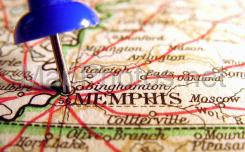
The ramshackle recording studio was in Memphis, Tennessee and that mattered. It mattered because place matters. Place has always been a catalyst of change. Memphis had become the continent’s largest inland port a hundred years before because it lay at the intersection of the mighty Mississippi that flowed from Minnesota, past Memphis, to the Gulf of Mexico and the Illinois Central Railway that tied the city to Chicago and New Orleans. Its serving as a vortex for people chasing a buck and a dream was rendered even more significant with the building of Highway 61 from New Orleans through Memphis to Canada. The river, rail, and road both fed and consumed post-WWII prosperity with a vibrancy that could be felt and, even more, heard. A new, angry, joyful, scary music raged as if the place inhaled surrounding sound then exhaled a hurricane.

place-and-change

The cotton fields that had ringed Memphis ensured that generations knew of the music African-American slaves sang to pass their sunup to sundown work days. Their songs were mournful melodies, chants, or call and response rousers that bled spirituality while expressing justifiable despair and inexplicable hope. From slave songs, field hollers, negro spirituals, and country-gospel, came the blues. In 1912, Memphis songwriter W. C. Handy was commissioned to pen a tune for a corrupt Memphis mayor and he called it Memphis Blues. He wrote a number of similar songs and, despite others claiming the title, became the father of the blues.

African American Memphis businessman, Robert Church, Sr., purchased land and supported the building of clubs, bars, and the Church Park and Auditorium along what became Beale Street. It offered every known vice and a few it made up. Beale Street became home to a number of African-American owned businesses and where bands and singers played the blues. It attracted performers from Chicago, St. Louis, and New Orleans and every time they came they taught, learned, and went home to spread the news.

The music industry was as segregated as the city. White record shops would not stock “race” music and white radio stations wouldn’t play it. By 1949, Billboard magazine writer Jerry Wexler had developed an appreciation for the new African American music and decided that instead of “race’ music, he would call it rhythm and blues (R&B). It worked. The new name seemed to make it less offensive to white audiences and some white radio stations began to play it. In popularizing the new sounds, Memphis radio stations joined Beale Street clubs where laws were broken and highway 61 honky tonks and juke joints where it was ignored altogether.

White society could segregate everything but radio proved that the air didn’t care. White and black folks in Memphis could hear the Grand Ole Opry out of Nashville, with its lively bluegrass, Appalachian folk ballads, and proud and corny country and western based on three chords and the truth. On other stations, they could hear blaring big bands playing quick-tempo jump and swing along with smooth pop epitomized by Frank Sinatra and Dean Martin. But at the same time, Memphis radio station WDIA was among America’s first to risk R&B records and it even hired African American disc jockeys to play them, including young blues singer Rufus Thomas and Riley King, an exceptional blues guitarist who everyone called B.B. Dewey Phillips at WHBQ was the city’s most popular disc jockey. While he was white, his nine to midnight Red, Hot, and Blue show played black and white music to a black and white audience. The air over Memphis was desegregating sensibilities below.

Among the R & B records played were 1948’s Good Rockin’ Tonight by Wynonie Harris and Rockin’ At Midnight by Roy Brown. Everyone understood that rock and rockin’ were thinly veiled euphemisms for sex. Sex was absolutely taboo in a society where pregnant teenagers were exiled, sex education was unthinkable, and birth control could not even be purchased by married women. Pile atop that the racist terror of oversexed black men with designs on white women, then the sexed-up “race” music, no matter what it was called, and all the radio stations, clubs, and honky tonks popularizing it, meant that something was both degenerate and dangerous. But it was as unstoppable as the Mississippi.

Among those attracted to the growing Memphis music scene was Alabama disc jockey Sam Phillips. Phillips moved to Memphis in June 1945. His Saturday afternoon WREC radio show became as daring as Dewey Phillips (no relation) in mixing black and white records. While working for the radio station at big band shows at the swanky Peabody Hotel, he spoke with white musicians who claimed to play differently when they came to Memphis and having to convert back when they left. He was told of black musicians who played Beale Street bars as well as Highway 61 juke joints and honky tonks who also played and sang differently when in or near Memphis.

Phillips saw that the supply of R&B records was unable to meet demand and recognized an opportunity. He rented an old radiator shop in downtown Memphis at 706 Union Street and had it renovated. In January 1950, he opened the Memphis Recording Studio. With primitive equipment, he recorded anyone with the money to rent time. Most left with nothing but their wax souvenir. Those with a unique song or style, though, found themselves signed to a deal that had Phillips license recordings to established companies that manufactured and distributed them. Through Phillips, independent companies along the rail, road and river lines in St. Louis, New Orleans, and, most importantly, Chicago’s Chess Records, began spreading the Memphis sound.

Among those Phillips recorded was B. B. King. King played a version of the blues that wrenched emotion from lyrics and, while still developing his style, defined songs with crisp guitar runs and riffs. Following King into the Memphis studio were bluesmen who honed their talents on Beale Street and whose music bled the amalgam of styles for which the city was becoming known: James Cotton, Rufus Thomas, Junior Parker, Walter Horton, and the man who would become as legendary as B. B. King, Howlin’ Wolf.

A Clarksdale, Tennessee disc jockey heard that Phillips was recording black singers. Ike Turner gathered his band and headed north. At first hearing, Phillips knew he had something special. Saxophonist Jackie Brenston sang the lead on a Turner composition called Rocket 88. The lyrics reveled in double entendre in equating a fast car to faster sex. The drums were relentless and the sax inventive. An amp had fallen off the car’s roof on the trip to Memphis and the resulting damage distorted the guitar, making it growl menacingly.

The 8-bar blues with the driving back beat sat perfectly at the core of the Venn diagram linking the pop, R&B, country, and the blues that Memphis musicians inhabited and traveling bands imitated. Phillips licensed the record to Chess Records and within weeks it was number one on the nation’s R&B charts with many pop stations and even country stations daring to play it. Rocket 88 was the world’s first rock ‘n’ roll record.

The success of Rocket 88 and other licensed recordings encouraged Phillips to launch his own record company. He called it Sun Records. Starting in February 1952, Sun enjoyed moderate success but Phillips grew increasingly frustrated by the persistent, racist resistance to R&B and blues records. He said to Marion Keisker, “If I could find a white man who had the Negro sound and the Negro feel, I could make a million dollars.” A little while later, on Saturday, June 26, 1954, the shy, skinny Memphis truck driver walked through his door to make his mama’s record. His name was Elvis Presley.

Phillips did not hear Elvis that day or a few months later when he returned to pay another four dollars to record again. When Phillips was again complaining about not being able to find the right singer to blend black and white, Keisker suggested the kid with the sideburns. Elvis was called and he ran to the studio, arriving panting for breath while Keisker was still on the line. Phillips had a couple of talented session players, guitarist Scotty Moore and stand-up bass player Bill Black, work with the kid. But that rehearsal and then a recording session revealed nothing particularly impressive. They were on a break when Presley spontaneously launched into an Arthur “Big Boy” Crudup R&B song called That’s Alright Mama. Black and Moore jumped in, all three laughing at the loose-limbed, ragged sound they were making. But Phillips heard what he’d been searching for.

That’s Alright Mama was quickly pressed and a copy taken to Dewey Phillips at WHBQ. A couple of spins brought phones calls to hear it again and again. The record was played on Memphis radio stations and its local then regional success put Presley on the road. He bought his clothes from Lansky Brothers, a black shop on Beale Street. His on-stage gyrations were variations of the black performers he had seen in Beale Street clubs. He sang, and then soon would record, more black, R&B songs. But with equal conviction, he wore his hair and sideburns in a defiant, white-trash truck driver style and also sang white ballads, gospel, pop, and the country numbers he loved. He was, in short, the embodiment of Memphis, the meeting place, with its new music absorbing influences from the lines that connected it to the world, synthesizing them, and sending them back with the challenge to question the barriers of class, race, age, and gender, and concepts of right and wrong, and fun and indecent.

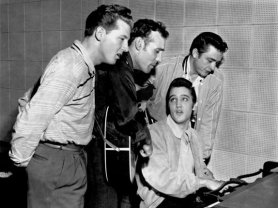
Presley’s growing success afforded even more allure to Memphis. Carl Perkins grew up in grinding, rural Tennessee poverty. He took his guitar and dream to Memphis where he consummated the marriage of country and rock ‘n’ roll in a new variant called rockabilly. His second Sun Records release, Blue Suede Shoes, became a national hit for him and then Elvis. Hoping to become a gospel singer, Johnny Cash, moved from Arkansas to Memphis where Sam Phillips encouraged him to sing his own compositions including his second Sun release, Folsom Prison Blues. It contains music’s nastiest line: “I shot a man in Reno, just to watch him die.” Roy Orbison was enjoying little success in his native Texas but knew of the musical mecca that Memphis had become. He impressed Sam Philips with his three-octave range, was signed to Sun, and soon Ooby Dooby was a national hit. Jerry Lee Lewis attacked more than played a piano. He was drawn to Memphis from Louisiana and after a stint as a Sun Records session player, recorded Crazy Arms and then the blatantly sexual Whole Lotta Shakin’ Going On and Great Balls of Fire.

MILLION DOLLAR QUARTET

Lewis, Perkins, Cash, and Presley, Sun Records, December 1956. (Photo: The Commercial Appeal)

By 1956-’57, the new music that Memphis had been central to creating was topping national charts, being heard on TV, and filling juke boxes, theatres, and arenas. Parents were yelling upstairs to turn that noise down. Rock ‘n’ roll had become a central element in the transformation of first America and then the western world from old to new. It provided an impetus and soundtrack for the move from the white, patriarchal, sexually repressed world of segregated people and ideas to what would become the more liberal, modern era. Rock ‘n’ roll was the voice of the baby boom, the gigantic demographic whose power was its numbers and a determination to be heard its creed. Rock ‘n’ roll was the notification that the generation that had survived the Depression and war and now yearned for things to be calm, controlled, and predictable, was losing its existential battle for cultural supremacy. It was the bridge from the composed assurance of Eisenhower to the audacious vibrancy of Kennedy.

Memphis was the place of change and the change could not be contained. Up Highway 61, in Hibbing Minnesota, Bob Zimmerman heard the news and would soon change his name to Dylan and immortalize the highway in song. Across the Atlantic, sailors smuggled American records into Liverpool and Manchester where kids named John, Paul, Mick, and Keith studied them and then helped England lead rock ‘n’ roll’s second wave and, with it, inaugurate a new phase in the generational revolution. Place would matter again in causing change. And the change began in Memphis.

If you enjoyed this, please send it to others on your social media platform of choice and consider checking my other columns at http://www.johnboyko.com

JFK and the Myths We Need Now

Myths matter. They are important in all societies. They help create, define, and preserve the values and institutions we deem important. They provide structure and stability. Myths present themselves in many forms and sometimes as people who were once politicians but somehow became much, much more. The Americans are quite good at myth-making. Abraham Lincoln became a myth; his deeds and character recalled in hushed, reverent tones as a model for citizenship and a reflection of all that is good about an entire people. The most recent of American politician-myth is President John F. Kennedy. His youth, looks, vigour, promise, and the degree to which he inspired hope and optimism, coupled with the Shakespearean tragedy of his bloody and public death, rendered his elevation from man to myth almost inevitable. That transition is instructive and important for us today.

jfk-myth

The public murder of a man who represented so much to so many, and by such a puny little assassin, was incomprehensible and overwhelming. People who had never met or even seen him wept as if a family member had passed away. I’m old enough to recall arriving home from Grade Two to find my mother weeping before the television. It was the first time I had ever seen her cry. French president Charles De Galle said, “I am stunned. They are crying all over France. It is as if he were a Frenchman, a member of their own family.” In London, famed actor Sir Laurence Olivier interrupted a performance and had the audience stand as the orchestra played the American national anthem. Other Londoners stood in the multi-coloured glow of Piccadilly Circus neon and openly sobbed.

Canada declared November 23 to 29 an official period of mourning. Polish churches were crowded on its national day of mourning, and the Nicaraguan government declared a week of mourning. Flags were dropped to half-staff in Ottawa and other world capitals, including Moscow. In the United States and around the globe, airports, schools, streets, libraries, public squares, and more were renamed after him. In the Canadian Yukon, a 14,000-foot snow-peaked mountain became Mount Kennedy.

Kennedy’s wife, Jacqueline, was shattered by the murder of her husband, killed just inches from her side, but at the moment of the unspeakable violence, she understood what would happen and what she wanted to shape. She took charge. She arranged for the state funeral to reflect Lincoln’s. She insisted on an eternal flame at his grave and that he be buried at Arlington National Cemetery just across the Potomac River from Washington which, since the Civil War, had become a revered burial place for veterans. She chose a hilltop location overlooking the city that the president had actually visited and declared a fine spot to be placed at rest.

From a popular play addressing the legend of King Arthur, she coined the name Camelot – that mystical place of missed opportunity, to describe her husband’s thousand-day presidency. Kennedy’s brother Robert also moved quickly. He ordered files to be removed from the White House and Oval Office and Cabinet Room tape recordings were taken and squirreled away. The myth could only grow properly if the legacy was carefully sculpted.

The myth grew quickly. Kennedy transcended politics and entered popular culture. A movie based on his Second World War military exploits had already been made. In March 1960, Senator Kennedy had met the former British intelligence officer Ian Fleming, who wrote the James Bond adventure novels. A year later, Life Magazine listed Fleming’s From Russia with Love as among the president’s favourite books. The endorsement led Fleming’s American publisher to push the previously underperforming titles and to Sean Connery taking the British rogue to the big screen. The favour was returned when a character in The Spy Who Loved Me said, “We need some more Jack Kennedy…They ought to hand the world over to young people who haven’t got the idea of war stuck in their subconscious.”

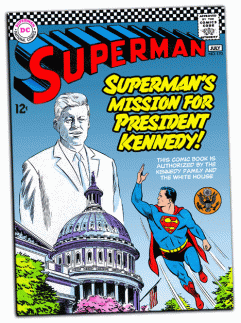
Kennedy had created the President’s Council on Physical Fitness. In the summer of 1963, DC Comics had written a story based on Kennedy asking for Superman’s help to urge Americans to take better care of themselves through diet and exercise. The project was shelved after the assassination but Kennedy’s successor, President Johnson, leant his support and so the comic book was published in July 1964. Its cover showed a ghostly JFK towering over the Capitol Building and Superman in mid-flight, glancing sadly back, one mythical hero in awe of another.

myth-makingCBR.com

The Beatles second album was released on the day Kennedy died. Three months later, they arrived for their first American tour and 50,000 kids screamed their welcome at the newly named JFK airport. While Elvis had offered sex and daring, the Beatles offered love and fun. On a subsequent tour, in September, they toured Dallas. They smiled nervously and waved from an open limousine as they passed through Dealey Plaza, the very spot where Kennedy had been killed. Many of those trying to understand the band’s unprecedented popularity claimed that their songs and wit personified the same youthful enthusiasm as the Kennedy promise. They renewed that promise while providing a welcome tonic to America’s grief. The Beatles, it was argued, allowed the black bunting to be removed and the country to smile again.

John F. Kennedy was an imperfect man and an imperfect president but the perfect stuff of myth. His assassination tore time. For millions of people, the assassination was an irreparable rending that forever split before and after. The violence in Dallas was visited not just upon the man but also on the very idea that everything was possible and all problems solvable. For in the final analysis, Kennedy’s gift was not his programs and policies, but himself. His most important contribution was the courageous, audacious determination that idealism is not naïve, hope is not foolish, hardship and challenge is incentive, and that community can extend beyond one’s family, city, or even country. His violent death, like Lincoln’s, challenged those ideas and asked if they were worth preserving, celebrating, and fighting for.

So let’s ask the question. Are those ideas of clear-eyed idealism, unifying confidence, hope, and ambition, and the notion of a broader, deeper community, worth the fight? If so, let us embrace the myths, whether they be people like Kennedy or, in Canada, the myth of the rich, giving, but untameable land, and ask what they say about those ideas and about us. Then, let’s pick our fight. In these foreboding days of Trump, Brexit, and racist, intolerant notions disguised as political programs among leadership aspirants in France and Canada, the fight has never been more urgent. And so, more than 50 years after his death, perhaps we need John F. Kennedy more than ever. 

If you enjoyed this column, please share it with others. There is more on JFK and his relationship with Canada in Cold Fire: Kennedy’s Northern Front, available  in bookstores and online through Amazon and Chapters https://www.chapters.indigo.ca/en-ca/books/cold-fire-kennedys-northern-front/9780345808936-item.html


Embers: Warnings Offered by Our Anti-Semitic Past

On a cool April 16, 1933, ball players warmed up at Toronto’s Willowdale Park. Like nearly everything else in the city, the teams were ethnically segregated and so a Jewish team faced an Anglo-Saxon opponent. A Nazi flag was unfurled and anti-Semitic abuse was screamed. The chanting young men left, pausing only to paint a swastika on a park building. Two nights later the Jewish team was back and so were the angry young men. As the flag returned and taunts began, a scuffle ensued. Cars filled with supporters of both sides screamed to the scene. Pipes and bats were swung. Bones and teeth were smashed. Blood flowed as an hours-long riot spilled into the streets.

Newspapers suggested that the Jewish community was to blame for what they dubbed the Christie Pitts Riot. Editorials insisted it was an aberration and that anti-Semitism did not exist. City council promised to address Toronto’s many Swastika Clubs. But nothing was done. To deny a cancer is to allow its growth or a lanced tumour to return.

canadas-anti-semitism-and-warnings-for-today

Canadian anti-Semitism is a long, sad tale. It began with Esther Brandeau. She had disguised herself as a man to secure passage on a ship but her identity was revealed in 1738 upon her arrival in Quebec. The deception was fine but her Jewishness was not. According to the French and Quebec law, she was banished. The British Conquest changed the laws but not mindsets. A Jewish man named Ezekiel Hart was elected to represent Trois-Rivières in Lower Canada’s legislative assembly. He was ejected with a resolution stating, “Anyone professing the Jewish religion cannot take a seat nor sit nor vote in the House.”

Canada’s prime minister, Sir John A. Macdonald, perhaps believing he was being liberal in his attitude rather than perpetuating a stereotype, said, “A sprinkling of Jews in the North-West would be good. They would at once go in for peddling and politiciking, and he is of as much use in the new country as cheap jacks and chapman.” Goldwin Smith, the influential public intellectual who was among the founders of Canadian liberalism, wrote a number of anti-Semitic articles advocating the deportation of Jews. He wrote, “Few greater calamities perhaps have ever befallen mankind than the transportation of the negro and the dispersion of the Jew.” Clifford Douglas advocated a Jewish-free Canada in Social Credit, the book that led to the creation of the Social Credit Party that formed Alberta’s government. Henri Bourassa, the father of Quebec nationalism, stated, “The Jews are the most undesirable class of people a country can have…they are vampires on a community instead of being contributors to the general welfare of the people.” While he later renounced racism, Quebec’s powerful Abbé Lionel Adolphe Groulx never did. The widely-read periodicals he edited and sermons he influenced were virulently anti-Semitic and bathed a generation of Quebec Catholics in a racist cauldron.

With the sanctioning of Canada’s elites, it is hardly surprising that anti-Semitism weaved itself into society’s fabric. Many universities restricted Jewish enrollment or banned Jewish entry into certain programs. A Quebec program called achat chez nous promoted the boycotting of Jewish businesses. Golf and other private clubs banned Jewish membership. Signs proclaiming “No Jews Allowed” were seen at many beaches, hotels, parks, and restaurants across Canada.

In July 1939, 917 German Jews aboard St. Louis sought refuge in Canada after being denied sanctuary elsewhere. In cabinet and House debates, it was explained that if turned away they would end up back at Hitler’s mercy. They were turned away. Deputy Minister of Immigration Frederick Blair was asked how many Jewish people Canada should accept. He replied, “None is too many.” The ship left. Over two hundred people that we could have saved perished in the gas chambers. Hitler’s Holocaust was the shrinking of the sentence: You cannot live among us as Jews. You cannot live among us. You cannot live. We were participants in the shrinking sentence and withering humanity.

Canadians should feel proud of promoting not just tolerance but the acceptance and celebration of differences. But we need vigilance. Those who fan hatred’s embers are among us now, speaking of immigration restrictions and Canadian values tests. They are speaking in code at the moment but as Mr. Trump has demonstrated, it is a short step from code to clarity and far too easy to spark racist embers to flames.

Let us beware of the future by being aware of the past. Let it serve as warning and invitation to reject those who promote a return to a dark version of ourselves that deserves to remain in the past and never, ever return.

If you found this column of value, please share it with others. I tell a fuller story of Canadian anti-Semitism in Last Step to Freedom: The Evolution of Canadian Racism, available online through Chapters-Indigo and Amazon. https://www.chapters.indigo.ca/en-ca/books/last-steps-to-freedom-the/9781896239408-item.html?ikwid=john+boyko&ikwsec=Books&ikwidx=5

An Election Really Rigged – Part Two

American presidents have ways of getting rid of governments they don’t like. Ask Iran (1953), GuatemalaAmerican presidents have ways of getting rid of foreign governments they don’t like. (1954), Congo (1960), Dominican Republic (1961), South Vietnam (1963), Brazil (1964), and Chile (1973). Or, as explained in my November 7th blog, part one of this story, ask Canada (1963). President John F. Kennedy played a direct role in helping to topple the teetering government of Prime Minister John Diefenbaker.

Now for part two. Kennedy’s efforts would be wasted if Lester Pearson’s Liberals, his preference to form Canada’s government, did not win the ensuing election. Kennedy set out to put Pearson in power.

The Pollster:

Pearson’s team had all read Theodore White’s brilliant The Making of the President 1960. It outlined factors that determined Kennedy’s success, including the use of frequent and targeted polling. Kennedy had hired former marketing executive Lou Harris. For the first time in electoral politics, a pollster worked exclusively for a campaign and employed daily random sampling to correlate and analyse massive amounts of data then suggest changes that shaped the candidate and message.

The Liberals had asked Harris for help in the 1962 election. He had previously been asked to assist the British Labour Party but the president wanted the Conservatives re-elected and so asked him to decline the job. After the call from the Canadian Liberals, Harris again asked Kennedy’s permission. He was soon on a plane to Ottawa. Now, a year later, he heading north again.

Like before, the Liberals sought to hide Kennedy’s man so Harris again assumed his wife’s maiden name and used the phony passport forged by the State Department. He avoided Parliament Hill where he might be recognized and attended weekly meetings at Pearson’s home. Harris hired 500 women who made daily calls across the country. The polling determined, for example, how Pearson would dress – in a straight and not bow tie – which cities he would visit, the policies he would emphasize, phrases he would use, and that the campaign would sell the team and not the leader.

Harris later said that Kennedy was, “…all but shouting from the sidelines. He hated Diefenbaker…He obviously couldn’t say anything publicly. But every day or two he would want to know how the election was going.”

The Reporter:

One of Kennedy’s closest friends was Newsweek magazine’s Washington bureau chief Benjamin Bradlee. Several times the two had discussed the need to get rid of Diefenbaker. In the campaign’s first week, Newsweek arrived in mailboxes and on newsstands across Canada with an arresting cover showing a disturbingly close-up and alarmingly unpleasant photograph of Diefenbaker over the title: Canada’s Diefenbaker: Decline and Fall. The accompanying article embarrassed even the prime minister’s staunchest critics: “It would be too flattering to dismiss him just as a superficial fellow – he’s really much dimmer than that.” The article claimed that that Diefenbaker lacked leadership skills, was unable to make decisions, and had been bad for Canada, NATO, America, and the world.

At a news conference the morning after the magazine’s release, Diefenbaker was greeted by reporters holding its cover up over their smiles. He laughed but burned inside. The Newsweek issue allowed him to openly add Kennedy to those he said were out to unseat him.

The Editorialist:

Among the newspapers clearly against Diefenbaker was the widely read Toronto Star. It published over a dozen articles by Sam Lubell that were crammed with quotes gathered from Canadians. None supported Diefenbaker. Typical were these from an April 2 article: “He’s so irresponsible he makes me ashamed I am a Canadian.” “I can’t stand to look at him on TV.” “He’s out on a limb sawing off our relations with the United States.”

Lubell was an American journalist, pollster, and political strategist. Among his closest friends was Kennedy’s national security advisor McGeorge Bundy. After the election, Lubell left for Europe carrying a letter of introduction from Bundy that stated, “He has been very helpful to the Government on more than one occasion, and he is a very able and disinterested reporter.”

The Ambassador:

The American ambassador to Canada was an old friend of the Kennedy family, Walter Butterworth. As all ambassadors do, Butterworth sent home regular reports that summarized the editorial stands of a host of Canadian newspapers. He went further, though, and held regular, secret briefings with a select group of Canadian journalists who were known to be critical of Diefenbaker. Throughout the campaign, he fed them information to augment their pro-Pearson, anti-Diefenbaker articles and editorials. In communications to Washington he boasted of the degree to which he was shaping Canadian public opinion.

The Direction:

The Kennedy administration’s interference became so blatant that Pearson was forced to deny that he and the president were in direct contact. He was repeatedly heckled as an American stooge. As he approached the podium to address a large Vancouver rally, an American flag was unfurled before the stage and burned. Hecklers shouted “American Slave” and “Yankee Lover” as a group of young men in the balcony loaded long straws and pelted him with frozen peas. He shouted his speech while his wife, Maryon, sat stoically on the platform with tears streaming down her cheeks.

A couple of days later, Pearson was about to speak in Edmonton when he was told that he and Kennedy’s mutual friend,Washington-based Canadian journalist Max Freedman, was on the phone from the White House press room. Pearson was rushed to a janitor’s room to take the call. He was told that Freedman and Kennedy had been having dinner and discussing the election and that the president wanted to speak with him. A tired and frustrated Pearson explained how Kennedy’s actions were backfiring and finally shouted, “For God’s sake, tell the president not to say anything. I don’t want any help from him. This would be awful.”

Lou Harris reported to Kennedy that all the American interference in the Canadian campaign was actually hurting Pearson and pleaded with the president to “call off his dogs”. “And for God’s sake,” he said, “keep quiet about Pearson no matter what you’re thinking.” The chastened president directed Bundy to order staff not to necessarily stop interfering in the election, just stop getting caught. A memo read: “The President wishes to avoid any appearance of interference, even by responding to what may appear to be untruthful, distorted, or unethical statements or actions. Will you, therefore, please ensure that no one in your Departments, in Washington or in the field, says anything publicly about Canada until after the election without first clearing with the White House.”

Memo:

When Kennedy had visited Ottawa in 1961, he had mistakenly dropped a briefing memo written by his deputy national security assistant Walt Rostow. It was given to Diefenbaker who was incensed that it listed policies Kennedy would “push” Canada to adopt. Near the end of the 1963 campaign, Canadian journalists learned of the memo and wrote of the degree to which Kennedy was indeed “pushing” Canada.

The next morning, Kennedy saw an AP news story about the Rostow memo and immediately called Assistant Secretary of State Tyler. Kennedy read him excerpts and noted parts that he said were false. “Now it seems to me,” he said, “that he may have leaked this – Diefenbaker. It makes him look good and us look lousy…he’s a liar.” Kennedy asked Tyler to see what reaction the story was sparking in Canada and said, “If it is helping Diefenbaker we ought to knock it down. The question is how.”

A new Montreal Gazette article suggested that the memo contained a margin note, scribbled by the president, in which he referred to Diefenbaker using a “derogatory term” that was quickly purported to be “SOB”. Kennedy and Bundy discussed how they could handle the latest bad press without lending credibility to Diefenbaker’s claim that they were involved in the campaign. They decided that Kennedy’s press secretary would call the Gazette reporter and deny the SOB rumour. Minutes later, Time magazine’s Hugh Sidey was ushered into the White House for a previously arranged meeting. Still upset, Kennedy declared, “Now I want you to get this damn thing about Diefenbaker correct. I’ve been in this damn business long enough to know better than that. There are a lot of stupid mistakes I make but that isn’t one of them.” He added with a smile, “Besides, at the time I didn’t know what kind of guy Diefenbaker was.” Ben Bradlee later reported that Kennedy confided with him that he did not think Diefenbaker was a son of a bitch, he thought he was a prick.

Kennedy’s press secretary privately briefed selected reporters on the Rostow memo. From that meeting came an article by New York Times syndicated columnist James “Scotty” Reston, a mutual friend of Kennedy and Pearson. It appeared in the Montreal Star on the morning of April 8 – Election Day. It blamed Diefenbaker for the whole kerfuffle saying he had been wrong to have kept the memo, probably leaked news of its existence, had lied about it, and was wrong in using it for political advantage. As Canadians went to the polls, they pondered whether their prime minister was a liar or political rapscallion, and perhaps whether the president they admired so much thought he was a son of a bitch.

Voting Day:

Canadians did as Kennedy had hoped and elected a Liberals government. Lester Pearson became Canada’s prime minister. What had just happened was not secret. Washington Daily News columnist Richard Starnes noted, “It is an irony of history that President Kennedy’s Administration while properly charged with failures in Cuba, Laos and Europe is prevented by the rules of the game from claiming credit for a skilfully executed triumph elsewhere. The victory occurred in Canada where adroit statecraft by the American State Department brought down the bumbling crypto anti-Yankee government of Prime Minister John Diefenbaker and replaced it with a regime which promises to be faithful to the concept of Canadian-American interdependence…the Kennedy Administration must congratulate itself in private for its coup.” The Starnes column was passed around the State Department and White House with readers adding smug handwritten notes to its cover page. Assistant Secretary of State Tyler wrote to McGeorge Bundy: “Mac, You see how smart we, I mean you, are!”

Canadians knew too. In a column that appeared in papers across Canada, syndicated columnist Charles Lynch  wrote, “Diefenbaker was defeated by Kennedy.” His observation was echoed even in France where the Paris-Presse headline was succinct: “Canada has voted American.”

This question that comes first to mind is how this could have happened. The second, and more important given the Donald Trump victory, is could it happen again.

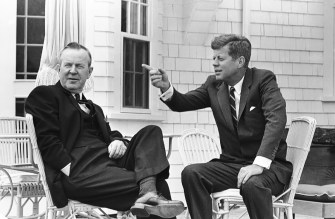
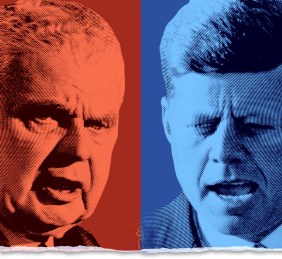
John F. Kennedy,  Lester Pearson Photo Toronto Star

If you enjoyed this column, please share it with others and consider checking part one of this story at https://atomic-temporary-67632770.wpcomstaging.com/2016/11/07/an-election-really-rigged-part-one/.

To learn more about Kennedy and Canada please consider Cold Fire: Kennedy’s Northern Front, available online and in sensible bookstores in Canada and the United States.


An Election Really Rigged – Part One

We Canadians are a smug lot. For the last while, we’ve pressed our noses to the window on our southern border and been shocked and chagrined by the gong show masquerading as a presidential election. We’ve been stunned by, among other things, all the talk of rigged elections and secret shenanigans. Let’s get over ourselves. Let’s consider a Canadian election that was truly rigged. First, let’s see how the Americans helped topple the Canadian government.

President John F. Kennedy hated Canadian Prime Minister John Diefenbaker. Their political difference would have put them at odds even if they had gotten along famously. The final straw in the feisty fight was Kennedy’s rage over Diefenbaker’s failure to offer enthusiastic and unreserved support during the October 1962 Cuban Missile Crisis. Kennedy needed the Canadian government changed. He usually got what he wanted.

Raffi final

Photo:Toronto Star

Strike One: Two and a half months after the Cuban crisis ended and the world returned to the gritted-teeth peace, NATO’s Supreme Allied Commander General Norstad ended his career with a tour of alliance capitals. On January 3, 1963, he arrived in Ottawa. Resplendent in his medal-bedecked uniform, Norstad made a brief statement and then, in response to reporters’ questions, suggested that Canada’s prime minister was a liar. He had been lying, the general said, about a number of things including the need for Canadian troops in Europe to have American nuclear weapons.

Many newspapers and people had already turned on Diefenbaker but Norstad’s stunning declaration turned more. A few days after igniting the firestorm, Kennedy welcomed Norstad to the White House, pinned a Distinguished Service Medal on his chest, and praised him for displaying “great skill” and “sensitivity” in his diplomacy and especially for having, “…in a unique way held the confidence of our allies in Europe and, of course, our partner to the north, Canada.”

Strike Two: Amid withering attacks from all sides, Diefenbaker rose in the House of Commons to explain and defend his government’s nuclear policy. He concluded that his government’s policies would always reflect Canadian interests and not those of “people from outside the country” who cared only for their own national interests.

The speech was a grand performance but confused more than clarified. It intensified questions about Diefenbaker’s leadership in the media and among his cabinet and caucus. The Americans then poured oil on the gathering flames. The American ambassador sped a message to the State Department in which he took specific exception to nearly every point Diefenbaker had made. The letter was reworked by National Security Advisor McGeorge Bundy and then Secretary of State Dean Rusk took it to the president. Kennedy agreed to the letter’s release saying, “We can’t let these fellows get away with this.”

Late in the afternoon of January 30, the State Department press release was given to Canadian reporters in Washington. It was astonishing. Point by point, it explained how Diefenbaker had misrepresented a range of issues and facts. Only three weeks after General Norstad had told the Canadian people that Diefenbaker was being disingenuous regarding nuclear weapons, Kennedy’s State Department, even more bluntly, had called their prime minister a liar.

In the House of Commons Diefenbaker thundered: “[Canada] will not be pushed around or accept external domination or interference in the making of its decisions. Canada is determined to remain a firm ally, but that does not mean she should be a satellite.” The fury of indignation led by media on both sides of the border forced Secretary of State Rusk to respond. Far from apologizing, he said that after hearing Diefenbaker’s speech the Kennedy administration was justified in laying out the facts. News of Rusk’s statement appeared on the front page of the New York Times and was reprinted in papers across Canada. Yet another high-ranking American, the third in three weeks, had called the Canadian prime minister a liar.

Kennedy called his special advisor George Ball twice that night to say that he understood the effects of his government’s action in Canada but that Diefenbaker deserved it. Ball confirmed that as a result of their interventions the Diefenbaker government could fall. Kennedy doubled down saying, “We should feed some…up there that Diefenbaker’s in trouble. We knew that he has always been running against us so that it’s very important.”

 Strike Three:  The growing tension brought all that had been tearing the Diefenbaker cabinet asunder to the fore. In an unprecedented shouting match meeting at the prime minister’s residence, the cabinet split and the defense minister resigned. Shortly afterward, Rusk appeared before the Senate Subcommittee on Canadian Affairs that had been called to investigate the State Department’s intervention into Canadian domestic political. Revealing that he obviously had an Ottawa mole, Rusk said that six or seven Canadian cabinet ministers were splitting from the prime minister. He then bluntly reiterated everything the State Department memo had said. For those keeping score, it was the fourth time a senior Kennedy administration official had publicly called Diefenbaker a liar.

Ottawa fell into chaos. There were bizarre late night meetings, hushed hallway conversations, private deal making, and public back stabbings. On the evening of Tuesday, February 5, for only the second time in Canadian history, a government was defeated on a vote on non-confidence. Diefenbaker visited the Governor General and the election was set for April 8.

The news sparked laughter and celebration at the White House. The American ambassador telegrammed the State Department to gloat about America’s role in having brought down Diefenbaker: “In effect, we have now forced the issue and the outcome depends on [the] basic common sense of Canadian electorate… we see grounds for optimism that over the long run this exercise will prove to have been highly beneficial and will substantially advance our interests.” Kennedy said nothing publicly about his administration’s role in the Canadian government’s fall. However, McGeorge Bundy later admitted to President Johnson, “I might add that I myself have been sensitive to the need for being extra polite to the Canadians ever since George Ball and I knocked over the Diefenbaker Government by one incautious press release.”

Let us not be naive. Politics is tough. Politicians will do things to advance their careers, political appointees will do things to support their bosses, and political leaders will do things to advance their agendas. Occasionally that leads one government to overthrow another with a violent revolution or coup. Sometimes, such as in Canada in 1963, it leads to a nudge through shaping perceptions and changing course.

Kennedy’s efforts in helping to overthrow the Canadian government would not have been worth it, of course, unless Lester Pearson and his Liberals won the ensuing election. The president would not leave that to chance. But that is for part two.

I have been away from my Monday blog for a while to complete my next book but I’m back. Part two of this story will appear next week with more in the weeks that follow. For more on Kennedy and Canada you could check out Cold Fire: Kennedy’s Northern Front which is available online and at bookstores throughout Canada and the United States.


Why Laughter Matters

It was Red Skelton’s fault. From ‘30s vaudeville then radio, movies, and on to television, Skelton’s gentle humour always induced howls of laughter. In 1950, broadcast engineer Charles Rolland Douglass taped Skelton audiences. He then played snippets during a Hank McCune TV show. It worked. Folks at home were prompted to laugh along with the supposed studio audience. When it was reported that people found shows with laugh tracks funnier than those without, the “Laugh Box” was soon employed by all comedies. Without knowing it, generations of people perched before radios and televisions were laughing along with Skelton audiences. We laughed. And that’s no laughing matter because laughter matters.

Public speakers know. Regardless of the weightiness of the address, every good speech begins with levity. An audience becomes connected with each other and the speaker and so more willing to consider messages that come through the simple act of a shared laugh. Teachers know. Any educator who fails to see the link between entertainment and teaching knows nothing of either. Humour makes even the most mundane material more accessible and so learning, rather than just teaching becomes more likely. Preachers know. Witness the erasing of the wafer thin line between laughter and tears at every funeral when funny stories are told about the deceased. Permission to laugh offers permission to grieve.

All laughter is not good. Too many YouTube videos and cheap Comedy Channel programs rest upon enjoying the misfortunes of others. Leave it to the Germans to have named that sad brand of humour. They called it schadenfrude. A Leiden University study confirmed that we are embarrassed when laughing at others tripping, failing, or being humiliated. While we know it’s wrong, though, we just can’t help ourselves. The study also showed that narcissists, and folks with low self-esteem or mean streaks find schadenfrude particularly pleasurable. Picture Hitler laughing.

The Navajo people understand laughter’s mystical value. Their rich and complex culture portends that when a baby is born it is of two worlds – the spiritual and the earth. Adults await the child’s first chuckle. The first belly laugh, that bursting of pleasure that all parents treasure, signals that the child has completed the birth process and fully joined the family and community. The first laugh brings the A’wee Chi’deedloh or Baby Laughed ceremony. People gather and pass by the baby with plates brimming with food and exchange gifts of salt. The symbols of health and rejuvenation not only welcome the child fully to earth but also imbue the notion that a good life is one of generosity. Whoever induces the first laugh pays for the party so it is not uncommon for Navajo people to ask nervously when presented with a newborn, “Has this child laughed?”

Human beings are not alone in laughter. Chimpanzees, gorillas, apes, and rats also laugh. Chimps love magic tricks and literally roll with laughter when surprised. Rats laugh when tickled and will move toward a hand or feather to enjoy it again. Koko the sign language expert gorilla surrenders to schadenfrude as she laughs when her handlers perform pratfalls. Humans are unique, though, in spending so much time and money, the equivalent of animals surrendering food, just to laugh.

Laughter Matters

(Photo: http://www.sciencenews.org)

So wait for it. Wait for it at the coffee shop or office. No matter how heavy the baggage lugged along, wait for it at family gatherings. The bursts of laughter are the shattering of barriers and linking of hearts. If only for that moment we become one. For that moment, we make gentle the harshness of the world and remember that we are here not to soil our souls with ambition or the gathering of stuff but simply to be happy; to be happy simply.

A young John Lennon once angered a teacher for when his class was asked to compose something on what they wanted to be in life he wrote, “Be happy.” The teacher said, “You did not understand the assignment.” Lennon replied, “You don’t understand life.” Red Skelton would have laughed.

If you enjoyed this column, please consider sharing it with others through Facebook or your social media of choice. Please also consider offering a comment.


Don’t Be Smug: Canada’s Racist Legacy

The recent gunshots in Dallas and echoing on many other American streets have reignited debates about state power and racism. It’s a 350-year-old argument with no sign of resolution. Canadians can learn a good deal from America’s twisting itself through its pain and search for solutions and redemption but should not feel smug. No one is clean. The history of systemic Canadian racism is too complex, long, and sad to consider here but let’s look briefly at one example to illustrate a point. Let’s look at Africville.

The bulldozers came in the morning. For days they roared like monsters demolishing houses and streets and even the church. They tore down what remained of Canada’s moral authority to say anything about race other than, “We were wrong.”

Africville was created in 1842 with land grants to African American families escaping slavery and discrimination with little more than the dream of better lives. The original sixteen single-acre lots overlooked the Bedford Basin and were separated from Halifax, Nova Scotia by a thick woods and impassable road. The community was called Campbell Road. As other Black families left the racism of Halifax and elsewhere seeking solace among friends it was dubbed ‘Africville’. The name stuck.

Links between Halifax and Africville grew over the years as kids were bussed to school and most of their parents worked in the city. Throughout the 1940s and 1950s, a number of famous people visited, including retired boxing champion Joe Louis and Duke Ellington, who married an Africville woman named Mildred Dixon. Folks were thrilled with the celebrities but understood that their hospitality was essential because while Louis and Ellington were feted in Halifax during the day they were unable to find lodging in the segregated city at night.

In that way, Halifax was no different than most other Canadian cities and towns. The Queen may have been Canada’s head of state but Jim Crow was boss. African Canadians grew used to restaurants where they could not eat, churches in which they could not pray, houses they could not buy, business licenses for which they could not apply, and schools their children could not attend.

Africvillephoto: Halifax.com

By the 1950s, Halifax had grown to nearly encircle Africville. City council embarked on a determined campaign to rid itself of the Black community that had become part of their city. Despite the fact that Africville’s people were Halifax citizens and paid municipal taxes, the road to and through the community was unpaved and in the winter it seldom saw a plow. There were no streetlights. There were no sewers. Families drew water from a central well that the city had dug as a “temporary measure” in 1852.

Police seldom patrolled and ignored most calls. In 1947, seven houses had been destroyed by fire because, although the fire department had been alerted, like usual, it had not responded. Insurance companies refused to sell home and property policies, so banks issued neither mortgages or home improvement loans.

Africville churchphoto: Halifax.com

Everything distasteful and dirty went to Africville. With no consultation with Africville’s citizens, and in defiance of petitions and presentations, Halifax council located in or adjacent to the community a pungent slaughterhouse, an oil refinery, and tar factory, a deafeningly loud stone crushing plant, and a hospital for infectious diseases. A railway company was allowed to build a line through the community and landowners were only partially compensated for expropriated land. The city dump was relocated 350 yards from west end Africville homes and then a smoke-belching incinerator was constructed nearby.

The disgraceful treatment of the community and the racism faced by those working in Halifax took its toll. Africville got tough. The “Mainline” portion of town was home to middle-class people who worked hard and did their best. The “Big Town” area, however, knew every crime and vice imaginable. The only white people who saw Africville came to Big Town for dirty old times after Halifax bars closed.

University of Toronto’s Gordon Stephenson wrote a report reflecting 1950s urban renewal practices. He recommended relocating Africville’s people and razing their homes. A 1962 Halifax Development Department report stated that the majority of Africville’s people did not want to leave; they just wanted the services that other Halifax citizens – White Halifax citizens – had enjoyed for decades. The report concluded, however, that the people should be ignored and the professor obeyed.

Concerned Africville citizens met at the heart of their community, the Seaview Church. Over a hundred people vowed to save their homes. Peter Edwards made an impassioned plea to city council on October 24, 1962. He spoke of Africville’s history and spirit. He spoke of the racist policies and treatment endured over the years and in the current process. “If they were a majority group,” he said, “you would have heard their impressions first.”

City council responded by hiring University of Toronto’s Albert Rose to again study the situation. No one was fooled. Rose had written Regent Park: A Study for Slum Clearance. They knew what he would say. In no time at all he said it. Africville was doomed.

Residents received an average of $500 for their homes. It was later discovered that additional assistance had been available but only 30% of the people were told about it and then only 15% of applicants were approved. People who had been self-sufficient homeowners were forced into a subsidized housing project and then forced to move again when told that even before they had been crammed into the ramshackle apartments, the complex had been scheduled for demolition.

By 1969, Africville was gone. The city had said it needed the land for industrial expansion but it never happened. It said it needed the land to construct a bridge but ended up using a sliver of the property.

In 1985, a monument was erected to the people of Africville in what had become the Seaview Memorial Park. The names of the original families were engraved in a stone. Family reunions began finding their way home with grandchildren being told the old stories. A former resident recalls, “Out home, we didn’t have a lot of money but we had each other. After the relocation, we didn’t have a lot of money – but we didn’t have each other.”

Africville lives. It lives as a symbol of the more than three hundred years of systemic racism that African Canadians endured and against which they struggled. In 2010, the Halifax City Council apologized to the people of Africville for all they did and did not do for the community. It apologized for Africville’s destruction.

A hectare of land was set aside and money allocated to rebuild the Seaview United Baptist Church. It will serve as a historical interpretive centre in a park renamed Africville. There, stories will be told of a time when racism coursed through Canadian veins and of a hope that someday, racism will be relegated to the dustbin of history. Someday.

If you enjoyed this column, please share it with others even buying my book entitled Last Steps to Freedom: The Evolution of Canadian Racism, that addresses the h. (Find it at Amazon or here at Chapters online: http://www.chapters.indigo.ca/en-ca/home/contributor/author/john-boyko/

A Nation of Festivals Making Us Better

We are a nation of festivals. There are film festivals, poetry festivals, rib festivals, art festivals, and every conceivable genre of music festivals. They are fascinating in like a conch blowing silently but convincingly through the ether they gather those of similar interests to form a temporary community. Festivals offer revelry in the acknowledgement that our particular passion is shared. My favourite are literary festivals. They intrigue me because they shouldn’t work.

Canadians read. Canadians read more books per capita than nearly anyone. A lot of folks enjoy books on tablets but most are sticking with the physical kind, the kind you can hold, smell, feel the joy of cracking for the first time, hold in bed without hurting your eyes, drop without breaking, and then shelve as a friend to share your home. Ok, I’m biased.

Canadians write. A generalization that is generally true is that all novels ask the question, “Who am I?” and all non-fiction asks “Who are we?” That Canada is blessed with so many talented writers asking both questions and so many readers reading all that stuff it is little wonder that we always seem to be in a state of existential angst and renewal. That’s a good thing. A reactive society is one of division and anger but a reflective society enjoys more consideration and compassion. Is this Trump versus Trudeau? Maybe that we read so much leads to our fighting so little.

The thing is, though, and the source of my fascination with writing festivals is that both writing and reading are solitary pursuits. Margaret Atwood once observed that you know you are a writer when you are typing away in your office in July about a winter scene and look up and out the window and wonder where the snow went. As an author, I know that feeling. Writing my history books often transports me back to the era that I am investigating and I quite honestly sometimes have trouble getting all the way back. I’m alone in my research. I’m alone in my writing.

But then, whatever I have written is released to the world. It is like I watch a young bird leave the nest. I wish it well. I always know some will like it. I always know some will attack it. I always hope the world will not just ignore it. It is up to the readers. Readers, of course, then buy what writers have spent so many hours silent and alone creating and devote more hours silent and alone to absorbing. Watch someone reading. They are not really there. They’ve been transported. Books are conduits of ideas from one solitary person to another.

The notion of two solitary experiences coming together for a community group hug is the source of my fascination with writing festivals. Writers blinkingly emerge from their writing dens with their pallid skin and reeking of coffee and wine and are suddenly before large groups and asked to talk about what they wrote, how they wrote it, and why they wrote it. For many, it’s like asking a fish to describe water. Readers emerge from their solitary reading spots to quiz the authors and each other about books and ideas. The isolation ends.

A Nation of Festivals

(Photo: Lakefield Literary Festival)

Festivals, like book clubs, lay out ideas to be examined as a community exercise. They remind us that books are like paintings and songs and any other art. Their meaning is only partially controlled by the artist. The rest is up to the experience and mood of the beholder. At festivals, the readers and writers both learn more about the books and ideas in question and about themselves. I am always intrigued when asked questions about my book that I never considered.

I have attended many but my favourite is the Lakefield Literary Festival. I am biased, of course, because I live in the Village of Lakefield. It is the Ontario community in what city people call “cottage country” consisting of only 2,400 people. Lakefield was once home to sisters Catherine Parr Trail and Susanna Moodie who were among Canada’s first writers and much later to Margaret Laurence who was among Canada’s best.

The Lakefield Literary Festival began in 1995 as a one-off banquet to celebrate Margaret Laurence but it became an annual event. It is now among Canada’s premier literary festivals, this year to take place over the weekend of July 15. It draws writers and readers from across the country to enjoy the campus of Lakefield College School and ideas and books and each other.

I will be at the Lakefield Literary Festival in a couple of weeks both speaking and teaching a writing class. I’ll be at Saskatoon’s Word on the Street Festival in September. I know I will enjoy both. I know I will enjoy meeting people who share a passion for writing, reading, books, and ideas. All those writers and readers at these and all the other literary festivals will emerge from their isolation. They’ll contribute to our national conversation by reflecting upon who we are as people and as a broader community. Perhaps all that isolated writing and reading and then all those festival conversations will play a role in making Canada a better place for us all.

If you enjoyed this column, please send it along to others. I hope to meet you in Lakefield in July or Saskatoon in September.

Lies to Divide

Adolf Hitler did not begin by building gas chambers. He began by telling lies to divide. We are now engulfed by too many more.

Brexit campaign buses, billboards, and commercials said that Britain sent £350 million a week to Brussels and it would be available for health care if she left the European Union. Mexicans are mostly rapists and drug dealers who steal jobs and so, once a wall is built and illegals deported, the jobs will return.

The day after winning the referendum, Leave campaign leader Nigel Farage confessed that the 350 million was a lie and the NHS should expect no bonus. We should not expect a similar admission from Mr. Trump for the multiple falsehoods tangled in his Mexican lie. Narcissists never explain, apologize, or admit error. The Trump and Farage lies are not the problem. The problem is that they are accepted by a big enough minority as to become powerful political forces.

Lies That Divide

(Photo: http://www.mirror.co.uk)

We have always been lied to. Tobacco companies said they didn’t know cigarettes were murderous and addictive but they knew for years. Oil companies said climate change was a hoax, years after their own scientists told CEOs the truth. These and similar corporate lies divide us from our money and health. Political lies divide us from each other.

Richard Nixon won office in 1968 based largely on his southern strategy. He said he wanted a return to law and order. Southern whites heard that he would take care of hippies, feminists, and Blacks. Nixon declared a war on drugs. Those responsible for its implementation later admitted that the war was just dog whistle racism understood to mean jailing African Americans.

More recently, Canada’s former Prime Minister Stephen Harper pledged to ban Muslim women from wearing face-covering niqabs during citizenship ceremonies. The problem was that there was no problem. All Muslim women had always needed to show their faces several times through the long, multi-step process. The only time the niqab could be worn was during the swearing-in ceremony that was completely ceremonial after all the paperwork was done. But the Nixonian dog whistle was heard and understood by anti-Muslim nativists, xenophobes, and anti-immigrant racists.

The lies told during Trump’s nomination fight and the Brexit campaign were easily googled and revealed. But like with Nixon and Harper, those to whom the lies were directed didn’t care. Some were just racists and bigots ready to hear their shameful beliefs legitimized. Many others who believed or dismissed the lies were not racist or dumb. They were desperate. They had been dealt awful hands. The forces stacked against them are too big and faceless to fully comprehend. But the physical embodiments of change were in their towns and on their TVs. They are the others. The others are from different countries, ethnicities, races, religions, or classes. The end of Britain’s industrial era is as tough to understand and accept as the end of post-war prosperity where America was number one with no competition. But it’s sure easy to see the guy with the odd accent running the convenience store or fume at the assembly in Brussels dictating the curvature of bananas ( another Leave lie by the way.)

My faith in Canadians was restored when nearly 70% voted against the divisiveness being sold by Mr. Harper. My faith remains with British and European leaders who will navigate into a new era with compassion rather than bitterness and reprisal. My faith rests with the American people who are even now leaving Trump and the Vichy Republicans to hand Hillary Clinton a landslide.

I believe the truth matters. If those perpetrating demonstrable lies are allowed to lead, then I will need to admit that I’m wrong. The British vote certainly says I am. But my faith abides.

Please leave a comment in the space below to identify a clear lie that you see currently being told by a public figure or institution. Let’s see how large the list becomes with the hope that by laying them in the sun they shrivel. Let us inoculate ourselves with the truth. 

I am looking forward to your list. If you enjoyed this column and would like others to add to the list, please forward it using Facebook or other means. You might also consider checking my other columns at http://www.johnboyko.com


Teenagers: Tears, Fears and Warnings

Young people cry at funerals. Old people cry at weddings. The tears reflect fears. We know too much. Everyone cries at graduations because we know too little. No one knows what’s around the bend for the young grads anxious for the next chapters in their lives. Last Saturday presented a perfect bright and warm morning with the sky a brilliant, cloudless blue. Although my responsibilities are such now that I didn’t need to be there, I watched a hundred young people graduate from a prestigious Ontario private school. I watched tears and at one moment felt the welling of my own. But I knew the question that had me wiping my eye.

All schools do graduations well. They are worth the pomp. This one takes place every June on a massive lawn under a big, sparkling white tent. Parents are seated to the left of the front long tables with graduates and next year’s grads to the right and staff and faculty at the back. As speakers speak it is always fun to watch the three groups react differently. I listened, sort of, but my mind wandered and as I scanned faces I wondered.

I wondered how many of the seventeen-year-olds sitting in their sharp jackets and striped ties realized just how proud the group behind and beside them were of their efforts and of them. They were all more beautiful and healthy than they will ever be, shining in their youth and bursting with potential. Yet they sat largely oblivious to the fact that by graduating from this place, with their families, in this country, at this time in history, they were already on second base without even having swung the bat. But that’s okay. The dumb luck circumstances of their births had nothing to do with them but neither was it their fault.

The parents and teachers knew that and more. They understood that the young people had earned a right to be a little self-satisfied today for, after all, teenage years are tough.

Teenagers- Tears, Fears and Warnings

Here they are still searching for identity while their bodies continue to change and often betray them. Here they are with brains still not fully wired and therefore unable to fully and accurately read people and situations but being held to adult standards. Here they are stuck in our society’s drawn-out childhood when for thousands of years and in other places they would be an adult with adult decisions and responsibilities. Here they are being forced to pick university courses that will determine their futures when they really tell us what they want to be when they grow up only so we’ll stop asking.

It’s amazing that with all of that, and for many of them much more, they keep going, smiling and trying. They made it all the way to this moment. For many of them, after all, and especially for far too many girls, high school is not a sanctuary but a battlefield. Too many people put teenagers down for the actions and attitudes of a few. It doesn’t matter where the teenagers attend school or who their parents are, hormones don’t care and society’s dangerous messages and temptations don’t discriminate.

I would rather accept that there are a few unfortunate teenagers just as there are many unfortunate adults and instead consider the many. I am in awe of the vast majority of teenagers for their generosity, energy, intellectual curiosity, and goofiness. I admire the resilience they muster in the face of so much and so many stacked against them.

Resilience, in fact, was the theme of one of the speeches that I found particularly poignant. The headmaster spoke of failing forward. The notion, he explained, is that we learn more from failure than success. We learn what works and what doesn’t. We learn of our own character as it deepens through our growing ability to adapt to circumstances without sacrificing values. Anyone, the headmaster said, can experience a failure. Only if you refuse to learn, accept responsibility, or try again do you become a failure.

It was an excellent point to make and especially to those gathered that day beside parents with the financial ability to have constructed a net beneath them of sufficient strength that any failure or fall would be recoverable. I wondered how many of the young people really absorbed the message. I guess I wondered, as I do when I see wedding day tears staining wrinkled cheeks if winter can ever warn the spring.

If you enjoyed this, please share it with others and even seeing my other columns at http://www.johnboyko.com