Canadian Slavery

It’s time for Canadians to grow up. Whether living in a big city or a one-Tim’s town, too many Canadians seem to share a warped vision of our past that allows us to press our noses against the shop window that is the United States and tsk, tsk away with smug condescension. Forget it. Let’s take one of many points that could wipe the smirks from our faces – slavery.
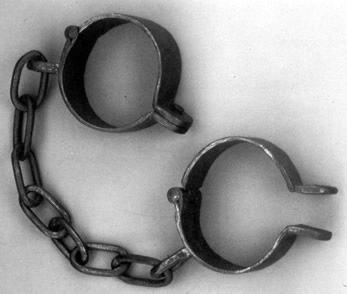
chains

photo from http://www.bccns.com

Slavery is as old as humanity itself. Slaves built the pyramids. The ancient Greeks, who gave birth to our western civilization, owned slaves. The idea of enslaving Africans is credited to a Catholic priest who accompanied Columbus on his second voyage to the New World. The priest was sickened by Columbus’ ongoing slaughter of Haitians who had been enslaved to search for gold. He believed that Africans would be better able to do the job.

The first Africans arrived in the West Indies on Portuguese ships in 1518. They had been ripped from their homes and stripped of their families, religion, names, and humanity. Fifteen million followed. The Portuguese word for black is negro.

European notions of inhumanity soon found their way to what would become Canada. The first slaves were Native people. Explorer Jacques Cartier even kidnapped Iroquois chief Donnaconna and several of his people and toured them through France like a circus act. Most died of European diseases and none saw their homes or families again.

The first African slave to be settled in Canada was a six-year-old from Madagascar. He arrived in 1628 as a cabin boy on a pirate ship captained by the ruthless English rogue David Kirke. Kirke captured Quebec City in a violent raid, and then sold it back to France four years later with the boy part of the bargain. He was purchased by a French clerk and then a Jesuit priest who renamed him Olivier Le Jeune.

Despite the fact that slavery had been abolished in France, Quebec governor Jean Talon pressured King Louis XIV to continue the practice of slavery in Quebec. Slaves were purchased in Africa, the West Indies, and the United States, and were owned by nearly all of the business and political elite as well as the leaders of the colony’s Jesuit, Franciscan, and Dominican Orders.

The Seven Years War – French Indian War if you are American – led to the fall of Quebec to Britain in 1759. The articles of capitulation guaranteed the continuation of slavery in the colony. With the world war finally over and Britain stuck with Quebec – it had unsuccessfully tried to swap it for Guadeloupe but that’s another story – the newly appointed British governor James Murray sent a message to New York asking for more slaves to become fieldworkers and domestic servants.

Slavery was also common in the Maritime colonies. They were used to build Halifax in 1749. The growing city became a centre for the Maritime slave trade, with public auctions turning tidy profits. The only known opposition to slavery came from Halifax’s small Quaker community, but it was ignored.

The American Revolution brought thousands of Loyalists northward. The British government offered them and war veterans land, assistance, and permission to bring their slaves. About 10% the Loyalists fleeing to Nova Scotia were slaves or free Blacks. Slaves also moved with their owners to what would become Quebec, New Brunswick, and Ontario.

The powerful Mohawk leader Thayendanegea (Joseph Brant) had fought for the British. He was rewarded with 30 African slaves. He brought them when settling his people on a huge land grant along Ontario’s Grand River. Slaves helped build the settlement that is now Brantford and then a handsome home near what is now Joseph Brant Hospital in Burlington. Other slaves constructed many of the fine stone buildings that still stand in Belleville, Kingston, Montreal, and elsewhere.

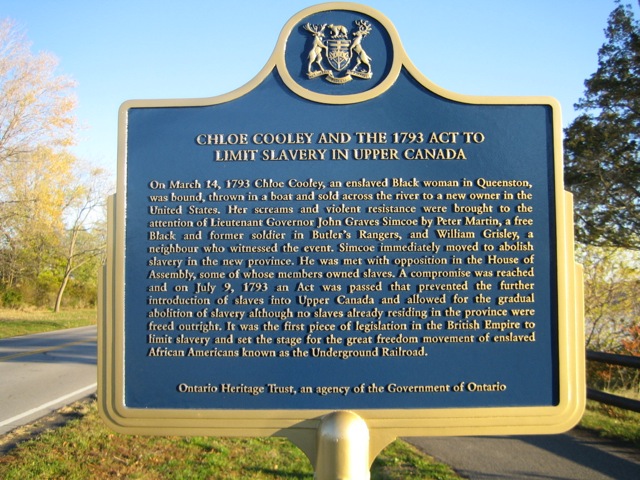
The War of 1812 saw the United States, as it had during the Revolution attempt to take British North America. Towns were burnt and civilians murdered in what became a brutal war. To disrupt American invasion plans, Upper Canadian Attorney General John Beverley Robinson declared that any slave arriving from the United States to Canada would be freed. An all-Black regiment was formed and Black soldiers joined a number of other British regiments. About 50 Black soldiers served at the decisive battle at Queenston Heights. About 2,000 escaped slaves fought their way to Canada during and in the years following the war.

The British government banned slavery in 1833. Nearly all British North American slaves had already been freed. However, racist laws and segregation practices remained. Segregated churches, schools, restaurants and public services were commonplace in Canada until the 1960s. Segregation laws died in Canada at about the same time as in the American South with racist attitudes, of course, more difficult to kill.
Image_Niagara74

Canadians deserve to feel proud of their history that, despite the despicable way in which too many of us learned it teems with fascinating stories and colourful characters. However, in looking at how the United States and other countries are still dealing with race and being shocked when a disturbingly racist event occurs in our backyard, it would serve us well to remember that while we have come a long way, there’s a long road before us. On our journey toward becoming the type of people we like to think we have always been, we would be well served to recall that our hands are not clean.

If you enjoyed this, please share it with others. You might also be interested in my book Last Steps to Freedom: The Evolution of Canadian Racism – find it at Amazon or Chapters or at http://www.johnboyko.com

The Power of Reinvention

When I was a young Dad, my favourite books to read with our daughter were from the create your own adventures series. Even as a child she had a rapier wit and daring sense of wonder. We would arrive at the parts where the protagonist was presented with options and she would pick one but often we would invent more until we were legless with giggling. Later, I explained that the books were existentialism instruction manuals.

You see, my brow has always furrowed at the notion of Christian providence. After all, if God has a master plan for the universe, and even for me, then is prayer not presumptuous? Why should my puny, clasped-hand demand throw Him off his game? Is His plan that negotiable?

Similarly, I’ve never understood science’s determinist ideas of nature and nurture. If one the other or both are so powerful then why am I the only one of four brothers to attend university, write a book, play an instrument, sing, and live where we grew up. Those things don’t by a long shot make me one whit better than any of them, after all, one brother is tougher, another handier, and the other smarter than I will ever be. But do our differences, and we are all quite different, not dispute the determinism?

Religion says things occur because God makes them happen. Science says things occur because natural laws make them happen. Existentialism says shit happens. I kind of like that. It invites us to write our own adventures. I find that a bold and empowering notion.

I was the first of my extended family who did not work in one of Hamilton’s two steel mills. That decision, again making me no better and in many ways dumber and affording a life less secure, was at its least a declaration of reinvention. In university I thought I’d invent myself as a lawyer. After some research revealed that lawyers spend most of their days doing things far removed from the exciting stuff I’d seen on TV, I scotched that idea and became a teacher.

Teaching was challenging and fun. There is nothing in the world like working with a student and suddenly seeing the light flicker on; not to whatever subject is at hand, subjects are just vehicles, but to suddenly cotton on to the idea that she is smart, and can learn, and that learning is fun.

I was being groomed to become a principal in one county before we moved home and then it happened again. I took neither the bait nor the necessary course. I said no to bosses who encouraged me. I saw some principals doing good work but too many forced to be clerks pushing paper and firefighters addressing the conflagration de jour. Besides, it’s an odd system that increases pay with every step taken away from the reason we’re there – interacting with kids. Reinvention, I guess, demands sincere commitment or its just change.

Instead, I continued to do the best job I possibly could but began reinventing myself as an author. I had written a textbook and had it published by Oxford University Press but that was a fluke. I had no idea what I was doing. So I wrote another. This one dealt with the history of Canadian racism and I was thrilled when Winnipeg’s Shillingford Press published it. It’s ironic that Winnipeg has just been tagged as Canada’s most racist city.

Boyko

Shillingford published my next book too, the one that looked at the right wing attacks on Tommy Douglas and the CCF. For the next one I upped my game. I secured a literary agent; the hard working and marvelous Daphne Hart. She secured my next book, a biography of the misunderstood and under-appreciated Prime Minister R. B. Bennett, with a much bigger publisher – Key Porter Books. I felt like I’d arrived.

However, just as Bennett was building, Key Porter was caught in a whirlwind of reinvention itself and, like many other publishers, went bust. The good people at Goose Lane picked up the paperback edition. My next book was about Canada and the American Civil War and Daphne had it placed with Canada’s biggest house – Random House. I could not have been happier. It did well in Canada and the US and has even been translated into French – I’ve now written a book I can’t read! My next book will be with them too and film rights have already been secured.

I’m out of the classroom now but not really. The shameless book promotion that is now essential for all authors has taken me from coast to coast speaking at events and doing radio and TV. After speaking engagements I am often asked how I can talk for 40 minutes, wandering the room with my lapel mic, and all without a note. I confess that after dealing with a room full of thirty 16 year olds, that being with two hundred adults is easy. It calls for the same skills and tricks: know your stuff, make it fun, tell stories, and sneak learning in the back door when they’re not looking.

The craziest question I’ve ever been asked was by a Calgary interviewer on live radio. “Of all Canada’s prime ministers,” he said, “which would have been the best NHL hockey player and why?” No dead air allowed. No time to think. What would you say? Again, the dancing I’d learned in the classroom made it easy.

boyko-at-commemoration-of-death-of-sir-john-a

So my latest reinvention is now complete; I am an author. I write books, this Monday blog, book reviews, op. ed. columns in newspapers and magazines, and enjoy speaking engagements. I have created my own adventure. I once read that our greatest fear is not that we have no power but that we have all the power we need to do what we wish. For me, and for those who believe in existentialism’s liberation, that is no fear at all. I wonder what I’ll do next?

If you enjoyed this, please share it with others or even consider checking out one of my books at http://www.chapters.indigo.ca/home/search/?keywords=john%20boyko

The Ancient Understanding of Water

Dear Canada,

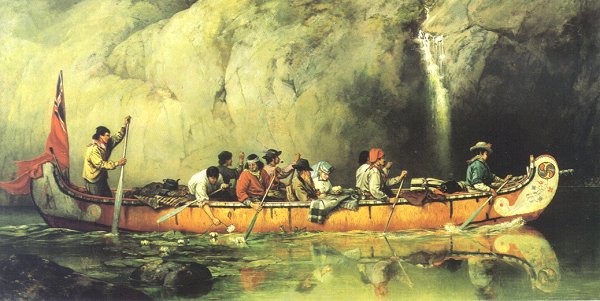
The intrepid explorers who left Quebec’s relative comfort for God and gold did not scar the land. They didn’t bang and clang along in wagons breaking trees and cutting tracks. No, they slipped through in canoes, in silence, leaving not a trace of their passing.

Voyageur_canoe

It’s perhaps this collective memory, this ancient understanding down deep in our souls that urges us to water. We are born of water. Many of us are baptized with water. Water is our playground where we seek sanctuary and salvation in splashing and skiing and paddling and floating. Blessed is the contentment of long, gentle afternoons in hypnotic contemplation of sparkling waves. We bob at dusk in little tin boats with smelly worms and silly hats and silently wish that a splashing bass will not spoil the tranquility. We work fifty weeks to afford a clean and tidy house and then leave it for two to paddle a canoe and haul it over treacherous rocks and roots, and all to live from a sack, sleep on rocks, and eat food we’d send back in the dingiest diner. And we love it all, because we’re on water.

The Atlantic was your welcome mat and the St. Lawrence your doorway. It invited us in. It was your superhighway to your inland seas – the mighty Great Lakes. Settlements grew to towns and then cities along their shores. Without the lakes there would be no Kingston, Toronto, Hamilton, Thunder Bay, and the rest.

The lakes are a line. We’re here and the Americans are over there. They always coveted more and once they crossed the lakes to get it. As blood-soaked armies showed neither mercy nor shame, battleship artillery boomed. It drowned out the cries of the poor drowning men. We burned their capital. They returned the favour and burned ours, but we beat them in the end; we beat them 18 to 12. We then agreed to ban the guns on the lakes and try, one more time, to live a hard and bitter peace.

Another war’s end, a couple of wars later, offered its own kind of boom – prosperity and babies. The navy sold out at garage sale prices and shipping companies soon had plenty to ship in their ships. Supply could not meet demand to fill new houses in new neighbourhoods with new stuff. Europe was still bleeding and Canadian wheat, iron, and wood steamed through the lakes to help with the healing.

The big freighters lumbered like slow-moving monsters. They chugged from plants and mills and lake to great lake and on up the St. Lawrence to the sea. Their choking smoke, like the belching factory stacks, were a sign of good times. The depression and war were over and we yearned for order. There was an old man on parliament hill and a young Elvis on TV, well, from the waist up anyway, and the smoke stacks meant there were jobs for everyone. For most of us, it was a Leave it to Beaver world and folks along the lakes were lulled in their beds each night by the freighters’ mournful horns echoing over still and foggy water.

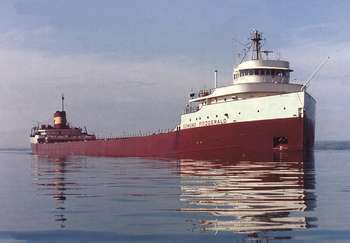
Edmund Fitzgerald

Edmund Fitzgerald

But just like life was not so serene everywhere, the ships were romantic only to those elsewhere. Life was tough and the men tougher. Ships were too often floating sweatshops. Company men and the politicians they bought winked and nodded as captains ignored the imaginary border drawn somewhere on the waves and rival union goons broke skulls and laws.

There were moments of calm amid the chaos. Peaceful nights on watch with no shore in sight allowed a man to imagine himself at sea. The lake’s gentle roll offered time to recall what drew him to that life in the first place. Then, sudden gales could whip up mountainous waves and transform freighters big as towns to bathtub toys. Everyone knew their jobs but when the running lights and radio went out as another wave crashed over the deck there was nothing to do but pray. Like in a battlefield foxhole, there are no atheists aboard freighters locked in the cold embrace of a Superior storm.

The Great Lakes’ beds are rusting, ramshackle naval museums and holy unmarked graves. Canada, your lakes and the rivers both mighty and small are the blood in your veins. Their waves are the rhythm of your soul.

Sincerely,

A Friend.

This is one of a collection entitled Love Letters to a Nation, inspired by the songs of Gordon Lightfoot. If you liked it, please share it through social media and see some of the others at johnboyko.com

The Wreck Of The Edmund Fitzgerald               © Gordon Lightfoot

The legend lives on from the Chippewa on down
Of the big lake they call Gitche Gumee
The lake, it is said, never gives up her dead
When the skies of November turn gloomy
With a load of iron ore twenty-six thousand tons more
Than the Edmund Fitzgerald weighed empty
That good ship and true was a bone to be chewed
When the gales of November came early
The ship was the pride of the American side
Coming back from some mill in Wisconsin
As the big freighters go, it was bigger than most
With a crew and good captain well seasoned
Concluding some terms with a couple of steel firms
When they left fully loaded for Cleveland
Then later that night when the ship’s bell rang
Could it be the north wind they’d been feelin’?

The wind in the wires made a tattle-tale sound
When the wave broke over the railing
And every man knew, as the captain did too
‘Twas the witch of November come stealin’
The dawn came late and the breakfast had to wait
When the gales of November came slashin’
When afternoon came it was freezing rain
In the face of a hurricane west wind
When suppertime came, the old cook came on deck
Sayin’ “Fellas, it’s too rough to feed ya”
At seven PM a main hatchway caved in
He said, “Fellas, it’s been good to know ya”
The captain wired in he had water comin’ in
And the good ship and crew was in peril
And later that night when his lights went out of sight
Came the wreck of the Edmund Fitzgerald

Does anyone know where the love of God goes
When the waves turn the minutes to hours?
The searchers all say they’d have made Whitefish Bay
If they’d put fifteen more miles behind her
They might have split up or they might have capsized
They may have broke deep and took water
And all that remains is the faces and the names
Of the wives and the sons and the daughters

Lake Huron rolls, Superior sings
In the rooms of her ice-water mansion
Old Michigan steams like a young man’s dreams
The islands and bays are for sportsmen
And farther below, Lake Ontario
Takes in what Lake Erie can send her
And the iron boats go as the mariners all know
With the gales of November remembered

In a musty old hall in Detroit they prayed
In the Maritime Sailors’ Cathedral
The church bell chimed ’til it rang twenty-nine times
For each man on the Edmund Fitzgerald
The legend lives on from the Chippewa on down
Of the big lake they call Gitche Gumee
Superior, they said, never gives up her dead
When the gales of November come early

Eight Ways To Look At Sir John A. Macdonald

January 11th was Sir John A. Macdonald’s 200th birthday. As Canada’s first prime minister and key founding father, he deserves to be remembered. Across the country there were cakes, candles, songs, and speeches. Many Canadians will enjoy celebrations of one sort or another all year. Others, however, will not celebrate but castigate. The attacks have begun and some have been viscous.

The spirited debates remind us of history’s importance and of its terrific habit of never shutting up. History is not a warm bath of nostalgia but a mean teacher that forces us to think of things we have not before and, even more importantly, consider things we thought we knew for sure. The conflicted commemoration of our first prime minister is as it should be for there are at least eight ways to see Sir John.

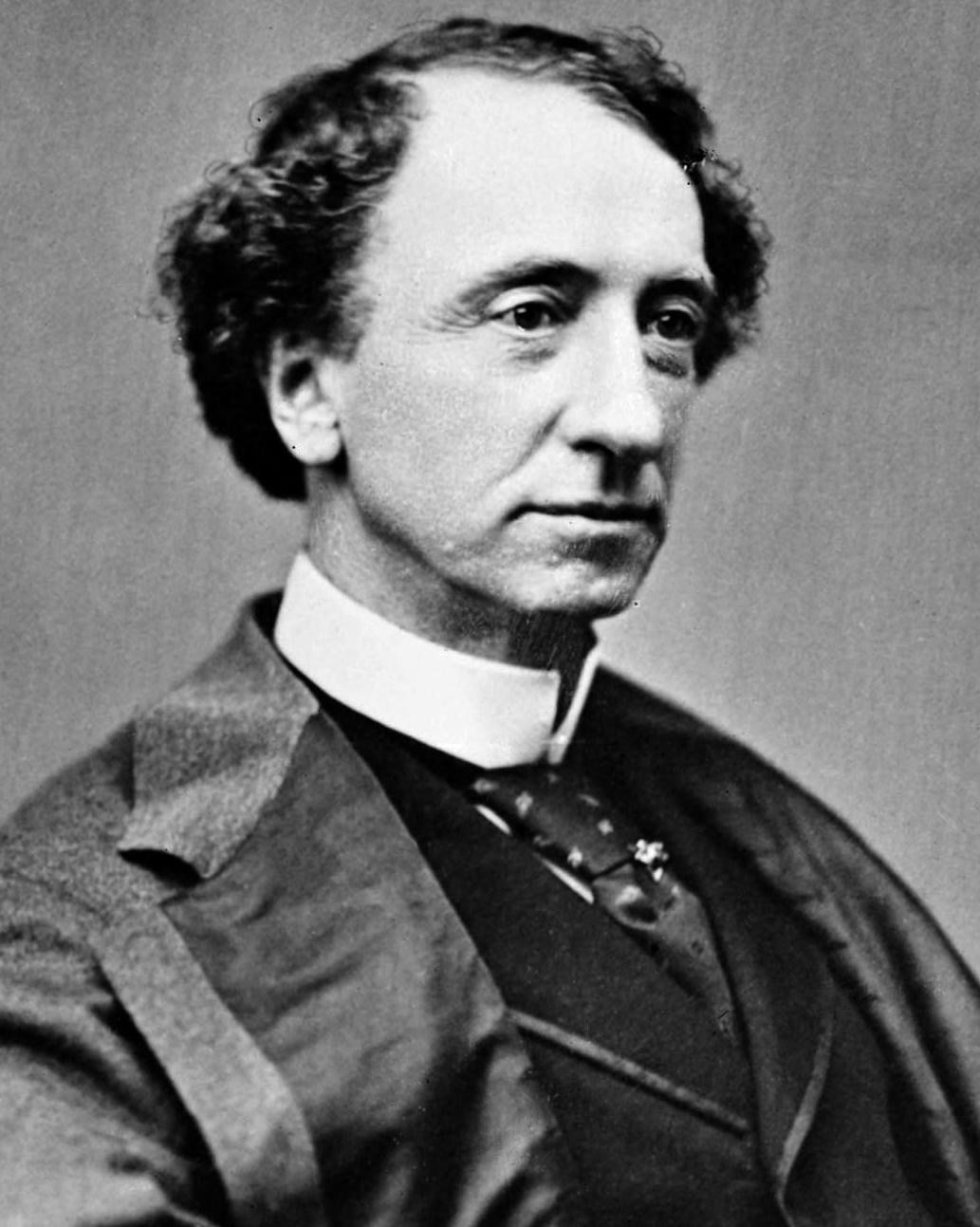
Brady-Handy_John_A_Macdonald_-_cropped

Creator: In the 1860s, Americans were butchering each other over whether to enslave each other and threatening an invasion of the British colonies on their northern border. The bitty Brits with their dysfunctional governments and a mother country more interested in abandoning than embracing them, needed to save themselves by creating themselves. Canada’s birth had many midwives, but the conferences and subsequent debates that brought it into the world would have failed without Sir John’s charm and political acumen. The Constitution creating the state to house the nation was written largely in his hand.

Saviour: With the Civil War’s end, the United States demanded astronomical reparations from Britain for its role in prolonging the conflict. The Americans offered to trade the cash for Canada. As part of the British delegation in Washington, to negotiate what was called the Alabama claims, Macdonald deftly controlled the agenda. He refused to be bribed by the Brits or bullied by the Americans. He left with generous concessions and the swap swept from the table.

Visionary: Macdonald knew Canada must grow or be gone and the only way was west on rails. Without the railway, British Columbia could join the United States and the United States could, as its Manifest Destiny decreed, take the prairies. The railway idea was ludicrous. It would be the world’s longest railway through the world’s most inhospitable land. The rocks and impenetrable forests of the Precambrian shield would be hard, the muskeg that could swallow men and machines would be harder, and the snow-peaked Rockies would be impossible. Macdonald told British Columbians they’d have the steel line to the Pacific in ten years and the money flowed and hammers rang. His will and conniving saw the impossible done and Canada linked from sea to sea.

Centralist: Macdonald put power in parliament. He saw the prime minister as the servant of the House and provinces like municipalities. Parliament could overturn provincial laws deemed to contradict the national interest and he disallowed many. He interpreted parliament’s purchase of what is now most of the west as its ownership of the land and resources. When premiers met to complain, he refused to attend.

Charlatan: He was not above political trickery to get or keep power. Globe editor and Reform Party leader George Brown learned the hard way when Macdonald tricked him into office and then two days later tricked him right back out again. He used patronage jobs to openly and unapologetically reward friends and punish enemies. He was once scandalized out of power when caught linking political donations to railway contracts.

Rogue: No one knew more stories and jokes than Sir John. No one remembered more names or slapped more backs. He never met a voter with whom he disagreed or an opponent he did not try to woo. He once entered his occupation in a hotel ledger as “cabinet maker”. A hard drinker, he once threw up during a campaign speech but then won the election. He told another audience that Canadians preferred him drunk to George Brown sober – he was right. He was a scoundrel but he was their scoundrel.

Racist: He imported Chinese workers for the worst and most dangerous railway construction jobs. With the task done, Macdonald acted to have them kicked out and the door barred. He did not want Canadians to become what he called a “mongrel race”. Native nations were in the way. Macdonald swept the plains by emptying bellies and filling schools in a slow-motioned cultural genocide.

Founding Father: To our American friends, consider this: Sir John was like your Thomas Jefferson in that he provided the philosophical foundation upon which the country was based; he was like your James Madison as he was primary among those who wrote the constitution; he was like your George Washington in that he was Canada’s first chief executive and fully cognizant that everything he said or did set a precedent that would affect the behaviour of every prime minister that followed – so Sir John was your Jefferson, Madison, and Washington rolled into one man.

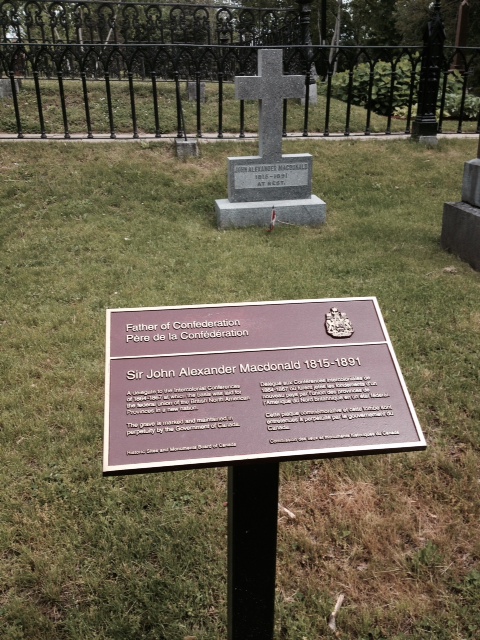
Sir John's Grave

Sir John’s humble grave site

Sir Christopher Wren, the man who designed St Paul’s Cathedral, one of the most spectacularly graceful and awe-inspiring buildings on the planet, once said that if you wished to see his monument you should look around. Canada is not as perfect as St. Paul’s but no country is. However, while flawed, it is safer, richer, and more democratic than most. Its long and fascinating history bursts with sources of pride and shame as well as progress and redemption. So as the key figure in creating, building, and saving the country, it is fitting and proper that we commemorate Sir John. Without him there would be no Canada. Perhaps we honour him best by acknowledging that he was as complex a man as is the country he left in our care. Perhaps we understand him as we understand Wren, by looking around.

 An edited version of this column appeared as part of Globe and Mail debates in which I was asked to be one of four historians to consider whether Sir John was a “Visionary or Hateful Embarrassment”. You can see what the others wrote and vote for who you think should win at http://www.theglobeandmail.com/globe-debate/sir-john/article22362438/

Five Things I Know About Music

I blame Mike Nesmith. Also at fault are John Lennon, my Godmother, my cousin, and I suppose my grandmother. You see, my grandmother was the glue that kept our large, extended Ukrainian family together. Among my fondest childhood memories are Christmas parties in the big room downstairs that she had built for such occasions. After a meal set for three times the large number assembled, the tables and chairs were pushed aside for everyone to dance. But it was not records for us for my cousin had a band. And that’s where it began.

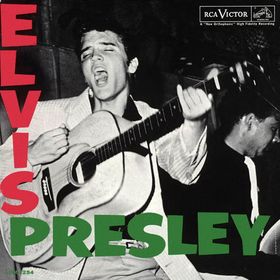
My cousin played a big red Guild guitar and it was about the most beautiful thing I had ever seen. Like every year, I sat close and watched his every move. When I was eight I was intently watching like usual when my Godmother, resting briefly from the dance floor she loved so much, sat beside me and said she had a special gift. If I loved music so much, she said, then I should study the best. She handed me a copy of Elvis Presley’s first album. Blue Suede Shoes was good but Trying to Get to You was art. I had no idea a singer was allowed to do things like that. The notes and words were putty; they were toys.

album_Elvis-Presley-Elvis-Presley

Just as I was wearing the album to dust, The Monkees debuted on television. Yes, they were a made-up band but there they were alongside the TV fluff of the day with their long hair and music and living on their own in a funky beach house and there was Mike Nesmith playing, and looking a lot like my cousin’s Guild, a great big Gretsch. That did it.

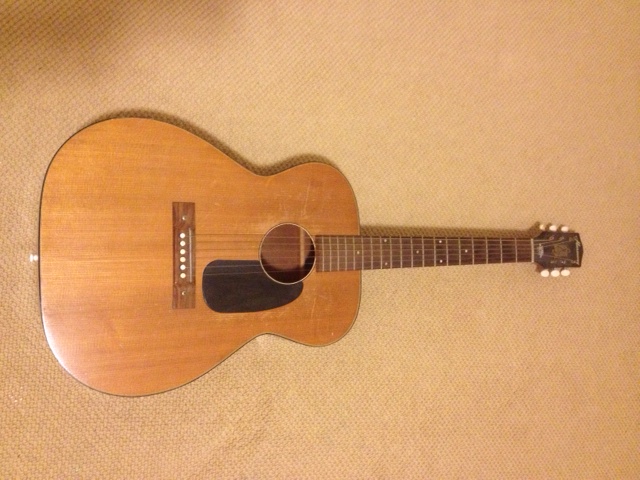
I told my father that I had to have a guitar. He promised to pay half if I saved the rest – a good Dad. I stopped buying Hardy Boys books and salted paper route earnings and cut lawns to make more and soon had what I needed. It was not a Gretsch. It was not even close. It was a cheap, guaranteed-not-to-crack Harmony acoustic. I still have it. I walked eight blocks for lessons every Saturday morning but grew frustrated that the teacher had me plunking away at the Mel Bay Guitar Method when all I wanted was to learn Beatle songs. Yes, I had graduated from Monkees to Beatles and from Mike to John. After three months, I quit and set out to learn on my own.

Harmony guitar The Harmony Guitar

My first gig was in Grade 8 when another skinny boy and I stood stiffly on the big school stage and nervously plucked out Rudolf the Red Nosed Reindeer. In high school I partnered with a friend and we played coffee houses and pubs. While dangerously under age we did a month-long gig at a scruffy bar that was a motorcycle gang hang out. Arguments and fights regularly interrupted our country-rock tunes and earnest originals.

Later, an independent record label heard me in a little bar where I was making some extra cash to support my young family and signed to me a contract. We recorded three 45s (Google it if you have to) and they did OK. The second one did best and even made it to #2 in Sweden – damn Willie Nelson and Always on My Mind!

I still play every day. I still play Nesmith, Lennon, and Presley songs and still write new ones that few ever hear. I now even sing and play in a little band with two friends. We enjoy a gig a month at a local pub – music by neighbours for neighbours for nothing at stake but the fun old tunes provide for all.

From my grandmother’s Burlington party room to Lakefield’s Canoe and Paddle Pub I have learned five things about music:

  1. Genres are junk. There is so much commonality between what critics, radio stations, music companies, I-Tunes, and the rest say are categories of music that the categories are meaningless. There is good music and bad music. Which is which? It’s up to you – enjoy the power to decide for yourself.
  2. The Best is Not Opinion but Math – Nearly every kind of music was available in every era. Which era was best is a mathematics question. Do the math and determine the years in which you were thirteen to seventeen years old. That era produced the best music ever made.
  3. Commitment Matters – Chickens are involved in breakfast but pigs are committed. It’s the same sliding scale with music. To be involved is to listen and to deepen your involvement is to see music played live. To be committed is to play music yourself and to be fully committed is to play with others where you need to not only play but listen. Watch any band that hits a groove and see the endorphins flow. You will know when it happens by their eye contact and at the end they will laugh. Playing music is fun. That’s why they call it playing.
  4. It’s in the Wires – Our brains are wired to learn, remember, and enjoy. Neuroscientist Daniel J. Levitin, has done extensive research and found that music hits all three. Music literally re-wires our neural pathways, enabling us to learn more, remember more, and enjoy more in our lives than if music were absent.
  5. It Never Goes – Those studying Alzheimer’s patients have found that long after sufferers forget everything, they remember music. Know that right now there are old people who cannot recall their names but can still play the piano and sing Sinatra songs. I shudder to think that someday there may be an addled old man in a home somewhere strumming a guitar and warbling I’m a Believer.

With this now written I will turn from my desk, pick up my Martin and we’ll enjoy an hour or so together. Maybe I’ll sing that old Elvis song and remember my Godmother. She’s doing the best she can these days but I bet that despite all that’s been forgotten, she remembers the words better than I do.

If you liked this, please share it with others and consider a comment and seeing more of my columns at johnboyko.com.

The Power of Coming Home

Dear Canada,

A young soldier had died and was coming home. It was cold. Standing in the kind of wind that mocks wool hats and down coats, our pant legs flapped and eyes narrowed as we affected the Canadian hunch; shoulders up, chins down, and arms crossed. And we waited. Some had flags and the school kids held a small banner. There were more of us atop every highway 401 overpass from Trenton to Toronto; more flags, more kids, and firefighters at attention on their trucks and police officers beside their cars.

highway of heroes

And then he came. We saw the line of vehicles wavering like black teardrops in the distance. As the motorcade neared, we saw vehicles in front and even some approaching in the other lanes, way over the wide median, pull over and stop. It was there but gone so quickly, like the life we had gathered to honour. We turned to see the cars disappear down the Highway of Heroes. Some cried, some waved, and some saluted, but there were no cheers. Nobody clapped. It was solemn. There was nothing said. There was nothing to say. Finally, the teacher mumbled something and the silent teenagers were shuffled away. The rest of us went home.

highway_of_heroes sign

That day, like every day, millions of us went home. Parents came home from workplaces that were as much a mystery to the kids as how the refrigerator magically filled itself with food or their dresser drawers with warm socks. And from Nanaimo to Bonavista, parents sat at dinner tables and asked, as they are obliged to, what the kids did in school that day. And they all received the same one word response; the answer every parent knows: “Nothing”.

But that evening not everyone came home. There are Labrador men in northern Alberta driving trucks bigger than the boats they left high and dry under big gray tarps. The women now run the town. The young men left first. Then it was their fathers who found more money offered for a six-month stint out there than they could make here in five years. The men with less hair and more belly who had earned their wise eyes and sore backs were soon heading west with the rest.

There is a Fredericton nurse in a ramshackle African hospital where medical supplies are currency. The money flows in from the well-meaning West but the young men with guns and old men with Mercedes decide where it goes and it’s mostly to them. And so the young woman with blonde hair tucked under the old blue kerchief, barters for bandages and penicillin. She gets a little bit tougher each time a new grave finds a child who could have been saved.

There is a Saskatoon teacher opening a big box in Haiti. Her parents ran the collection and packed it with love and concern and a long, aching letter. The pencils and notebooks are cheap and common back home, but here they move barely adequate to good. And good is measured in smiles that transcend race, gender, religion, and class and all the other phony lines that divide. The kids are like all kids and hungry to learn. Most here, though, are also just hungry.

Tonight, the nurse and the teacher and men in the fields are not the only ones not coming home. There are also those with no homes. How many bad decisions in a row did it take to put that man in the holey coat and Rough Riders cap on the Regina sidewalk? How many of the bad decisions were his? How many were made by parents who should not have been parents and social workers with hearts gone cold? How many were made by bosses with eyes on bottom lines urging emasculated men to avoid taking it personally. How many of the bad decisions were made by politicians, whose focus groups smiled at “balance the budget”, “tighten our belts”, and “cut the fat”. And now we scurry by and try not to make eye contact. We try not to think that he has a mother somewhere, and that one night was the first night and first time that he sat on the sidewalk and cried.

hi-homeless-852

You are a country of love. Love is easy to find. Go to the park in mid-morning and watch parents watch kids. Go to any airport and see families say bye. Walk down a ways and watch welcomes. There is love.

You are a country of hope. It’s hope that sends teachers and nurses abroad. It’s hope that sends fishermen to oilfields and has grandmothers pursing their lips and stepping up. And there is hope in the baby, powdered and new and safe in her mother’s arms, coming home for the first time to a young family doing its best and doing all right.

You are a country of redemption. There is no shame in trying and failing. Opportunity knocks over and over again for those who see stumbles as lessons well learned. Like a five year old’s band-aids that steal pain and dry tears, “I’m Sorry” hugs and faith from the loved are the power of salvation and the strength to get up and try again.

As it is for us, it is for you. Like you we have scars and memories of bad choices but like you we’re still here and still trying. We understood as we stood on that over pass, shivering but not leaving, and waiting to deliver our silent salute. We understood that you are the home to which we return and that love, hope, and redemption are the gifts you have ready and wrapped and there by the door.

Sincerely,

A Friend.

Home From The Forest   by Gordon Lightfoot

Oh the neon lights were flashin’
And the icy wind did blow
The water seeped into his shoes
And the drizzle turned to snow
His eyes were red, his hopes were dead
And the wine was runnin’ low
And the old man came home
From the forest

His tears fell on the sidewalk
As he stumbled in the street
A dozen faces stopped to stare
But no one stopped to speak
For his castle was a hallway
And the bottle was his friend
And the old man stumbled in
From the forest

Up a dark and dingy staircase
The old man made his way
His ragged coat around him
As upon his cot he lay
And he wondered how it happened
That he ended up this way
Getting lost like a fool
In the forest

And as he lay there sleeping
A vision did appear
Upon his mantle shining
A face of one so dear
Who had loved him in the springtime
Of a long-forgotten year
When the wildflowers did bloom
In the forest

She touched his grizzled fingers
And she called him by his name
And then he heard the joyful sound
Of children at their games
In an old house on a hillside
In some forgotten town
Where the river runs down
From the forest

With a mighty roar the big jets soar
Above the canyon streets
And the con men con but life goes on
For the city never sleeps
And to an old forgotten soldier
The dawn will come no more
For the old man has come home
From the forest

This is the latest in a series entitled Dear Canada: Love Letters to a Nation, inspired by the song of Gordon Lightfoot. If you like it, please share through your social media of choice and check out the others at johnboyko.com

The Land of Water – Dear Canada

Dear Canada,

You are a land of water. It’s right there in your motto: A Mari Usque Ad Mare (From Sea to Sea). It’s from the Bible: “He shall have dominion also from sea to sea, and from the river unto the ends of the earth”. In your case, of course, it should read from sea to sea to sea, because your rivers rush to die in not two oceans but three.

The Arctic Ocean is furthest from most Canadians and for decades it never crossed their minds. It was just as well. Its beauty is more than southerners can fathom. At the sight of a 360-degree horizon beneath a sky bigger than wonder itself, folks used to living in concrete, seeing the world through a windshield or screen, or whose vista ends at the backyard fence, would risk having their heads explode.

sunset arctic

Then came oil; black gold, Alaskan tea. The problem was not how to get the gunky goo out of the rock but how to ship it south through water with the irksome habit of turning to ice. The problem changed when the climate changed. The big melt came quicker than anyone expected, especially those who claimed there was no such thing as climate change but now rushed to exploit its effects. Your northern ocean was suddenly everyone’s friend. Men in silk ties beneath brand new parkas lined up with candy, flowers, and dewy-eyed concern for sovereignty.

The Pacific is Canada’s gateway to Asia. Back when Vancouver was nothing but a fort and a dream, people plied the vast blue water east from the East and helped shape your west. They came for the gold that created the province and then the railway jobs that built the nation. Then, sadly, came the disgrace of discriminatory laws and race riots and the shame of wartime internments. Sometimes apologies are not enough.

Pacific Ocean coastline, Morseby Island, British Columbia, Canada

The Pacific invites jealousy. The North Pacific Current flows through the Hawaiian Islands and turns to kiss the coast before sluicing on to California. It is the ocean, therefore, that offers TV pictures of Victoria daffodils to those suffering another 20 below Edmonton morning. But then, later, when folks at Portage and Main are swatting mosquitoes the size of Buicks, they try not to be smug when the radio reports rain in Vancouver. It’s said that British Columbians don’t age; they rust.

The Atlantic invited adventurous Europeans. They came for the fish, oil, and wood. Pines too straight and tall to be real became masts on British ships that built an empire. The oil was not drilled but was whale blubber boiled and barrelled. It was poured into lamps on sitting-room tables and poles along cobblestone streets. Canadian whales lit up Europe.

Then there were the fish. Cartier wrote of his men dangling buckets into the sea and seconds later withdrawing them to marvel at their flapping bounty. The fish brought rugged people to rough and tumble outports and little towns hugging the rocky coast. Men braved morning’s chill to beat dawn to their boats and then vanish into haunting mists. Everything from canning factories to shipyards depended on the fish and the fish never let them down. There was enough for everyone and forever. To believe something deeply enough and long enough is to erase the thin line between opinion and truth. Meanwhile, even Lunenburg’s mighty Bluenose, immortalized on the dime, when not beating all comers with its lightening speed and daring crew, was a fishing boat.

Like the men working Cape Breton coal mines, those on the tiny boats that disappeared each day into the ocean’s enormity traded risk for livelihood. Their fathers and grandfathers understood as well as them that at any moment, and without reason, the earth or ocean could shrug and swallow them whole. There are too many stones over empty graves.

Fisherman’s wives were as hearty and brave. They raised the kids who seemed to keep coming, and the kept the house, and watched laundry on the line flap hard and horizontal. They sang their party pieces with gusto around kitchen tables where hot fiddles and cold beer linked all in tears, fears, and dreams of better days.

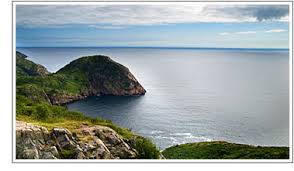
And there was the woman, like so many before, who when the boat was late, put the kids to bed, pulled on a thin cardigan, and walked to the hill atop the town. Pulling the sweater tight around her waist she gazed out into the icy, purple world, out to the point where the sky melts to sea. Walking along the green, moss-covered silver stone she hummed the tune they sang together and loved so well. She was there the next night too, and the next, and the next after that. And then, finally, came a night when the sweater stayed on the hook.

hill top atlantic images

Yes, Canada, you are a land of water. Like all of nature’s magic, your oceans are powerful beyond measure. What we see is a fraction of what they are and more than our meager minds can comprehend. They teem with life and can snatch it away without comment, remorse, or judgement. Like you, the oceans were there long before we arrived and their waves will pound your shores long after we’re gone. And that reality, when allowed to rise to our consciousness for a startling moment, like a great blue off the bow, is a humbling reminder of our responsibility to you and each other.

Sincerely,

A Friend.

 This is the third of a series Dear Canada: Love Letters to a Nation, inspired by the songs of Gordon Lightfoot. If you enjoyed this, please share it with others and consider checking out the first two at johnboyko.com

Bitter Green   by Gordon Lightfoot

Upon the Bitter Green she walked the hills above the town, echoed to her footsteps as soft as eiderdown
Waiting for her master to kiss away her tears, waiting through the years

Bitter Green they called her walking in the sun loving everyone that she met. Bitter Green they called her waiting in the sun, waiting for someone to take her home

Some say he was a sailor who died away at sea, some say he was a prisoner who never was set free
Lost upon the ocean he died there in the mist, dreaming of a kiss

But now the Bitter Green is gone the hills have turned to rust, there comes a weary stranger whose tears fall in the dust
Kneeling by the churchyard in the autumn mist, dreaming of a kiss

Heroes Flawed and Fake

Dear Canada,

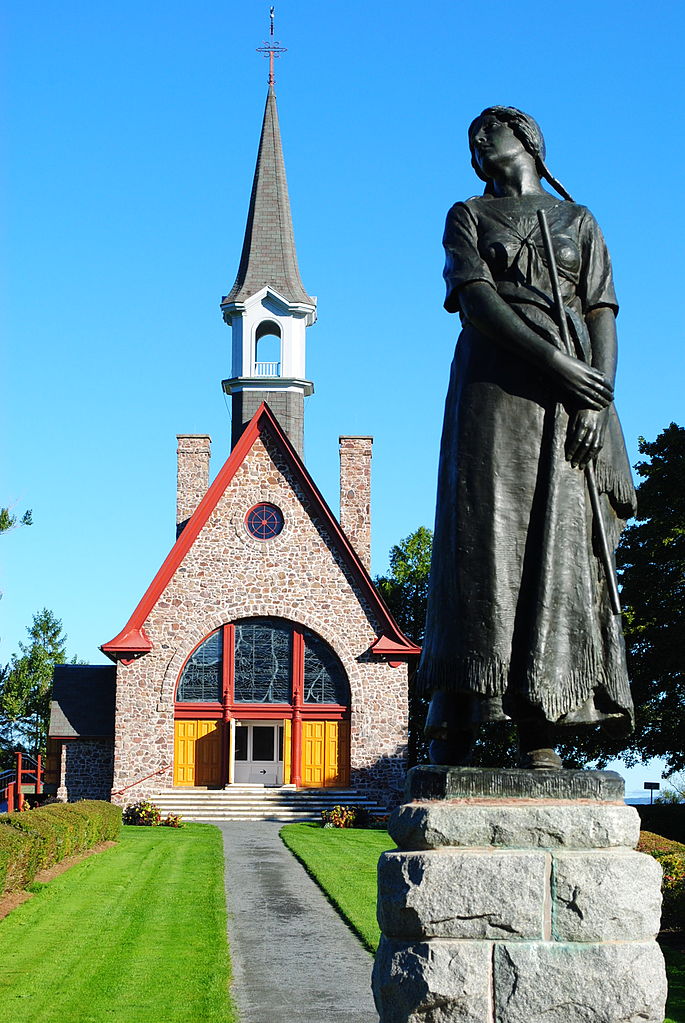
She stands alone in her Grand Prė garden. With a look of sad longing, Evangeline gazes over her shoulder toward heaven. She has her back to the church, the Church that turned its back on her. The tragic news arrived on her wedding day and tore her from her one true love. Her people were victims of a war that saw you become British, and her people uprooted because they were French. Their homes and villages were burned.

The deported Acadians fluttered as maple keys, some lighting as far away as Louisiana. It’s why New Orleans has Cajun music and a French Quarter. Evangeline devoted the rest of her life to searching for her beloved Gabriel, finding him years later, and only in time to have him die in her arms. Today, hundreds of years later, there stands Evangeline in her national park – a UNESCO World Heritage site, no less – a vision in bronze. She is a symbol of loss and for all that’s unfair. She expresses the power of love amid the hatred of war.

Evangeline_Grand_Pre

Meanwhile, over in Prince Edward Island, a long line is snaking its way from a rambling white farmhouse with stunning green gables. It’s Anne’s house. We know Anne Shirley through books, movies, and TV. She’s loved around the world and, since being placed on their school curriculum in the 1950s, a Japanese icon. Anne is what many of us first learn about us. She is honest, loyal, feisty, fun-loving and adventurous, with unbreakable bonds to the land and people she loves.

The tourists tour with reverence. Grownups steal a moment to peer at the rolling Cavendish countryside out Anne’s bedroom window. It’s the view that inspired her thoughts, and that the ten-year old then understood with the certainty of a ten-year old’s truth. They treasure the moment. They are warmed by embers of memory sunk deep in their hearts but now flickering from down where a child’s dreams are kept safe from adulthood’s flimsy facade. Then, as is always the case with such things, everyone exits through the gift shop. Japanese parents buy Chinese trinkets to celebrate a Canadian girl. Smiling children emerge beneath straw skimmer hats with long red pigtails, just like Anne’s.

Anne of Green Gables1

Anne and Evangeline share a secret. They never existed. Evangeline was the protagonist in a Longfellow poem, written nearly a century after the Acadian diaspora. The lines are lyrical but many of its facts are wrong. Anne Shirley sprang from the imagination of Canadian novelist Lucy Maud Montgomery. Visiting Anne’s actual green-gabled house is akin to visiting Batman’s actual cave.

But these facts rob neither Evangeline nor Anne of their importance. That is the nature, gift, and mystery of heroes and icons.

Consider the very real Emily Murphy. She was enraged that women were regularly and nonchalantly denied justice within the bastion of our male-dominated society. From her home in Edmonton, she organized a movement that pressured the Alberta government to enact a law allowing women to inherit their husband’s estates. Then, upset that women were unfairly treated in the courts, she exerted pressure until earning an appointment as Canada’s first female police magistrate; the first, in fact, in the whole British Empire.

When told by an uppity male lawyer that her gender disqualified her from the bench, she and four friends, later dubbed the Famous Five, fought back. They fought rusty old beliefs disguised as facts, politicians with their eyes on polls and feet in clay, and, finally, they fought the courts all the way over the pond to Westminster. Their efforts led to women being declared Persons; no longer just the property of Dads then husbands, but Persons with rights equal to men. Women could now be judges and senators and, well, anything they wanted to be. It was a spectacular achievement. Murphy had demonstrated intelligence, determination, and a burning sense of what should be.

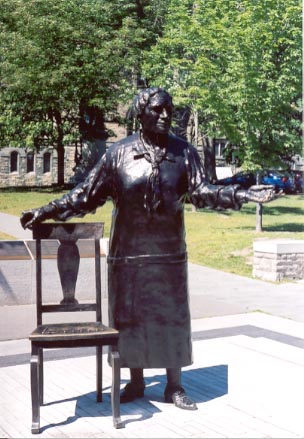
murphystatue

However, under the guise of Janey Canuck, Murphy also wrote magazine articles and a novel espousing beliefs that we now recognize as racist. She was clearly on both the right and wrong side of rights. Does the racist rant erase the feminist achievement and so should Murphy’s statue be taken from parliament hill?

The heroes we venerate are players in a grand story we tell to ourselves about ourselves. Their triumphs and characters represent the best of us for the rest of us and the complexity within all of us. They challenge us to look beyond ourselves to become our best possible selves. Flawed or even fake, they inspire us to improve ourselves, our families, communities and, ultimately, to be worthy of you.

Sincerely,

A Friend.

Don Quixote   by © Gordon Lightfoot

Through the woodland, through the valley
Comes a horseman wild and free
Tilting at the windmills passing
Who can the brave young horseman be
He is wild but he is mellow
He is strong but he is weak
He is cruel but he is gentle
He is wise but he is meek
Reaching for his saddlebag
He takes a battered book into his hand
Standing like a prophet bold
He shouts across the ocean to the shore
Till he can shout no more

I have come o’er moor and mountain
Like the hawk upon the wing
I was once a shining knight
Who was the guardian of a king
I have searched the whole world over
Looking for a place to sleep
I have seen the strong survive
And I have seen the lean grown weak

See the children of the earth
Who wake to find the table bare
See the gentry in the country
Riding off to take the air

Reaching for his saddlebag
He takes a rusty sword into his hand
Then striking up a knightly pose
He shouts across the ocean to the shore
Till he can shout no more

See the jailor with his key
Who locks away all trace of sin
See the judge upon the bench
Who tries the case as best he can
See the wise and wicked ones
Who feed upon life’s sacred fire
See the soldier with his gun
Who must be dead to be admired

See the man who tips the needle
See the man who buys and sells
See the man who puts the collar
On the ones who dare not tell
See the drunkard in the tavern
Stemming gold to make ends meet
See the youth in ghetto black
Condemned to life upon the street

Reaching for his saddlebag
He takes a tarnished cross into his hand
Then standing like a preacher now
He shouts across the ocean to the shore
Then in a blaze of tangled hooves
He gallops off across the dusty plain
In vain to search again
Where no one will hear
Through the woodland, through the valley
Comes a horseman wild and free
Tilting at the windmills passing
Who can the brave young horseman be
He is wild but he is mellow
He is strong but he is weak
He is cruel but he is gentle
He is wise but he is meek

 This is the second of a series of Letter to Canada, inspired by the songs of Gordon Lightfoot. If you like it, please share it on your social media of choice and see the first one, and more of my weekly columns, at johnboyko.c

Love Letter to a Nation – Winter

Dear Canada,

Summer is easy. What’s not to love about you in summer? Character, however, is only built and revealed in adversity. So anyone wanting to know you, anyone wanting to know us, has to know winter.

The leaves and temperature fall and everyone knows it’s on its way. Summer stuff gets stored, the outside water is shut off, and the sky goes purple-gray and silent as the last of the cowardly birds betray us and go. And then comes the day, snow’s first day, when we stand at the window and watch with a child’s eyes; as for the first time. We marvel as snow too white to be real sparkles diamonds in the sun. It blankets leafless trees standing defiantly brittle amid sagging spruce and pines. And the yard becomes art.

Winter slows us down. There is no such thing as rushing out when having to first don boots and coat and hat and scarf and mitts. Thank goodness for Velcro, but a child’s snow suit still demands patience and time and then more of both when disassembled for the pee that is somehow, again, forgotten. And then there is the path to be shovelled to the car that then needs to be unburied, de-iced, and warmed.

Speed limits are for summer. All but main roads are snow-packed for months and the occasional melts turn them to pock-marked Passchendaele. Streets scoff at the oceans of salt and Sierras of sand so we bounce and creep, especially around corners with their paint-smeared telephone poles reminding us to be patient. The days shrivel. We make our way to and from work in inky darkness smudged with ghostly plumes of exhaust. Snowflakes that would be pretty were we home with a fire and a glass of hearty red are instead headlight-engorged rockets that fire mercilessly into windshields with a hideous hypnosis.

Things do not speed up upon arrival. Three feet inside every public doorway stands a momentary community holding fogged-up glasses and exchanging knowing, blurry glances. Then it’s the slow, walking strip-tease, because everywhere inside in winter is warmer than outside in summer. Work places resemble used shoe stores with wet boots on soppy mats. Everyone’s hair is the shape of their hats. We approach door knobs with dread and sometimes actually see sparks. After a while, every place smells the same – wet wool and cough drops. It isn’t exactly bad and it doesn’t really matter because with the cold we’ve all been fighting for weeks it’s hard to smell anything anyway.

Winter can sometimes stop you altogether. What is more glorious than a snow day? We hear it on the radio and we’re suddenly all children. The radio also brings reports from the city’s “Thank God it’s Monday” crowd who slide and smash into one another to get to the vertical ice cube trays where they are apparently indispensable; unaware that no one’s keeping score. The wind howls hurricanes down concrete canyons that are empty of all of but the intrepid as the city-below-the-city bustles in its high-heeled obviousness. Just a few miles away it’s all quite different.

Township and county plows tend to the main roads but it’s always a long while before they get to most streets, so there’s time for another coffee. Kids who usually fight to stay under covers burst outside with wide smiles and bright eyes and without a screen in sight. Folks are soon in driveways, leaning on shovels and speaking with neighbours who lean on theirs. Why not? Everyone knows the game. We scrape and shovel and throw it high onto piles that seem taller than last year. The plow waits until it senses we’re done and then, only then, it thunders by with three feet of plowcrete. The shovelling army mobilizes again; there’s nothing like a good minus ten-degree sweat.

Climate change’s thaws and freezes have euchred all but the most dedicated backyard rink masters, but the little bay still goes stiff. Nothing’s ever organized but somehow it always gets scraped and there is skating for all. Windswept days between snowfalls sometimes provide the magic of pick-up hockey with nets a ridiculous distance apart. It seems fittingly patriotic to finish a hundred yard breakaway on a frigid sunny afternoon in the world’s only country with a hockey player on its Bill of Rights.

Gravity games rule. What’s not to love about skiing, tobogganing, and sledding. Kids love the snow-mountains that grow beside the school parking lot. Look up every big or little hill and see somebody in a primary-coloured snowsuit sliding down. Evening walks offer the joy of the crisp boot-fall crunch and the smell of woodstoves that stir a deep and primal yearning that’s lovely in its mystery. The stars seem closer and clearer. Lungs burn, breath freezes, cheeks redden, and there is nothing more romantic than holding hands through down-filled mitts.

Muddy April is marvelous but brings fixing and raking and cleaning. The gifts left by months-worth of wandering dogs present themselves along with the recycle stuff that cycloned from blue boxes Tuesday after Tuesday. Purple crocuses pierce the last bits of crystalline snow. The magical, riotous tulips remind us that the world is not black and white after all. There is always that one last storm with snow as pretty as the first but we damn it this time and steal its power by steadfastly refusing to shovel it; there, that will teach it. We convince ourselves that it will melt soon enough, and sure enough, it does. And then there is green, oh green, glorious green.

Winter defines. Winter slows, and winter stops. Winter reminds us that we are not the boss. It ignites a humble admiration for the power and majestic beauty of the true boss. It invites community. Winter says that work can wait and time with family is the only wealth, recognition, or reward we need; everything else is by the by. Winter reminds us that, like those dark nights with gently falling snow or those bold, defiant tulips, nothing lasts forever – nothing. But it’s all good right now, and right now, that’s good enough.

Sincerely,

A friend.

Song For A Winter’s Night ©by Gordon Lightfoot

The lamp is burning low upon my table top
The snow is softly falling
The air is still in the silence of my room
I hear your voice softly calling
If I could only have you near
To breathe a sigh or two
I would be happy just to hold the hands I love
On this winter night with you

The smoke is rising in the shadows overhead
My glass is almost empty
I read again between the lines upon the page
The words of love you sent me
If I could know within my heart
That you were lonely too
I would be happy just to hold the hands I love
On this winter night with you

The fire is dying now, my lamp is growing dim
The shades of night are lifting
The morning light steals across my window pane
Where webs of snow are drifting
If I could only have you near
To breathe a sigh or two
I would be happy just to hold the hands I love
And to be once again with you
To be once again with you

Changing Democracy 140 Characters at a Time

Twitter is our Athenian agora. It is reshaping our democracy. A president, prime minister, pope, or peasant like me can stand and proclaim whatever they wish. Within seconds, they will be applauded by some while others, wearing the technological robes of Socrates, will tear their pronouncement asunder. In commemoration of my second anniversary on Twitter, I offer six things I have learned.

Twitter

It teaches. The most popular tweets make a short statement or pose an interesting question and then link to a related article; usually in a respected newspaper, magazine, or professional journal. People are thereby exposed to ideas and facts they might never otherwise consider. An informed electorate is the harbinger of a thriving democracy and the bane of those who wish to distract, mislead, or divide.

It mocks. Twitter is where negative ads and pomposity go to die. Pity the politician who makes a speech or posts an ad or tweet that is in any way disingenuous or contradicts something previously said or claimed. You know that Stephen Colbert, and Jon Stewart in the United States and Rick Mercer in Canada rub their hands and praise comedy’s Gods for making their work so simple. It is like the days when they wrote their best bits by quoting Sarah Palin verbatim. Twitter doesn’t wait. The fact checking and rebuttal is done in an instant. The truth is posted, an old film clip or article is linked, and the mocking begins. And we all know – well, everyone except Ms. Palin, I guess – that once they start laughing at you, you’re done.

It attacks. I once posed what I thought was a reasonable question about the American gun control debate – something about how a few those supporting the second amendment were having trouble with the first. Wow! It can get ugly out there and fast. NRA trolls are as lightning quick and wolverine vicious as political party trolls. They are as fair and accurate as those I picture in their parent’s window-less basement without access to their meds or spell check. But in a way, that’s OK. Democracy is messy. Even with unfair and unreasonable attacks thrashing in from the sides there is debate. I’ve witnessed debates tumble from vitriol to reason and, except for trolls with an ugly job to do, a softening of positions and a glimmering of tolerance and understanding. There is very often acknowledgment that a different opinion, when based on evidence, is not wrong, just different.

It scorns. I almost felt sorry for CNN when, in its latest effort to profit from tragedy, reported things that were quickly discovered to be false. As I had seen before, tweets began announcing that CNN was reporting on the Confederacy having won the Civil War, that John Lennon had shot someone in New York, and more. The respect most of those on Twitter still feel for newspapers and peer-reviewed journals is matched by the disdain with which they hold television news – all television news. It’s no wonder. Follow Twitter for a day and then watch the evening network news. See if you can find one thing that is new or addressed in adequate depth. See how much that truly matters is ignored while fluff is disguised as news. It becomes clear why more and more people are getting news analysis on the Comedy network and how Twitter is creating its own fourth estate.

It earns. Many confuse Twitter for a confessional, diary, or billboard. Some think it’s a porn site. Those folks are generally blocked and ignored. Few on Twitter care to see what you’re having for dinner and nearly all want you to keep your clothes on, thank you very much. However, as candidate Barack Obama proved in America and Justin Trudeau is proving in Canada, Twitter is a powerful political tool. It is tremendously effective in fundraising to earn money and friend-raising to earn adherents. It allows a party to throw ideas up a technological flag pole and instantly see who and how many salute, jeer, or gather a Twitter flash-mob to tear it down.

It inspires. Bill Cosby and Canada’s Jian Ghomeshi have been heartbreaking and bile-raising reminders of how far we have to go in addressing the treatment of and respect for women. A year ago, long before the stars fell, a group of women on Twitter used a hashtag to begin noting incidents of having suffered sexual harassment. And then came more and then more. As the numbers grew into the thousands and then millions, so did the outrage and desire to act. Then, just as that campaign was catching fire, Canadian astronaut Chris Hadfield began Tweeting awe-inspiring images from the real stars. While commanding the American space station he sent stunning pictures that moved millions of Twitter users to silent reflection. The images reminded us, as did the women, that we are all brothers and sisters on this tiny planet and maybe we should treat each other a little better.

Unless one is careful, Twitter can murder time. But so can any social media, or TV, or even books for that matter. But time can’t be wasted, it can only be spent, and a few minutes on Twitter each day is a compelling experience. Like TV and, yes, even books, you learn quickly to wade through the junk and find what matters. Social media will continue to evolve. Political leaders who fail to understand its power will remain its victims. We owe it to ourselves to consider the ways in which it is changing the nature of our public discourse and how through those changes, the manner in which we govern ourselves. Like it or not, our democracy is being changed, 140 characters at a time.

 If you enjoyed this please share it with others and consider checking out more of my posts at johnboyko.com

The Difference Between a Father and a Dad

My father is a good Dad. Every winter he created the world’s best backyard hockey rink. Well, it was the best rink in my nine-year-old world and that’s all that really mattered. It filled our large yard. It had boards and nets and benches and even lights for night games.

One frigid night my Dad was out on the rink waving the hose with that long, slow sweep that I liked to watch from my bedroom window, when suddenly, he experienced an epiphany. He went to the basement and dug out the lawn sprinkler. He carefully placed it and delicately adjusted the direction and volume of the spray. With a smile he went in to bed and slept with the satisfaction that by morning the rink would thicker and smoother than ever before.

I awoke the next morning to an odd banging. I stood in my pajamas with my Mom and brothers gazing out our kitchen window with wide-eyed amazement. It was like nothing we’d ever seen. You know, it’s the little things that always get you in the end. It’s the tiny overlooked detail. It’s the ordinary and usual that you have just stopped noticing. It’s like the clothesline that had been there forever and stretched the length of the yard and diagonally across the rink. It was the clothesline that with each cascading spray, all night long, relentlessly, had dripped and dripped and as each drip froze along it’s twenty-foot length, dripped and froze some more.

My Dad had woken up and turned the water off downstairs, walked up the basement steps, and stopped dead. Reflecting the dawn’s brilliant sun was a wall of ice, eight inches thick, seven feet tall, and twenty feet long. It was beautiful. It was horrible.

My brothers and I begged to go outside but my Mom was wise and held us close. We watched as my Dad wielded a shovel. At first tentatively, and then more aggressively, he attacked the wall’s base. He banged and chipped and chopped until with a mighty swing intended to crumble the thing he smacked its centre.

It started slowly at first; almost majestically. The entire wall swung back and forth and so he hit it again. It then became magical. It slowly swang up and then over and then up and over again. It swung clockwise over the top and around three times and each time quicker than the last. Long ice shards began rocketing off in every direction. Not knowing whether it was funny or terrifying we watched my Dad throw the shovel, cover his head, and run with ice missiles soaring over and around him.

It took a long while to cut up and remove the wall and even longer to get the rink back into shape. But that very night, to his ever-lasting credit, my Dad was back out there braving the cold and waving the hose with that long, slow sweep. We agreed that despite everything, the sprinkler had been a good idea. Even better, though, was the idea that when he could have been warm inside, he instead devoted hours alone in the frigid dark, night after night, trading his time and toil for his kid’s fun. That’s the difference between a father and a Dad.

me as Gordie Howe

The author, a Gordie Howe fan, on his rink.

If you liked this column, please consider clicking a button below to share it with friends or checking out more at johnboyko.com

Five Lessons from the First Day on the Job

The first day on the job is always hard. It offers equal scoops of excitement and fear. Two first day experiences helped shape the five lessons that I learned and now humbly share.

first day on the job

I was hired to teach History at what was then called a vocational school. It was designed for teenagers who had learning disabilities, had recently arrived in Canada from schools that left them woefully unprepared, and others who were waiting to go to jail or just out, and more who were too bored, angry, or damaged to fit in elsewhere.

On the day before classes began, I was told that I would not be teaching History but Grades 10 and 12 Mathematics. I protested that I had not studied Math in university and was awful at it in high school. I was told I’d be fine. My classroom contained two big stacks of text books; one blue, one yellow. The yellow one had stuff that looked harder so I made it the grade 12 book. I noticed that all my class lists had around 30 kids each but the room only had 26 desks. I was told not to worry, they would never all show up.

On my first day I was told to fuck off twice. The second time was in a marvelous Jamaican accent so it was actually, fuck off, mon. No matter what I did or said in one class, they just ignored me. Bob Hope and Jimmy Carter, I swear, were in another class. I had them sit together, it only seemed right. After lunch another teacher and I broke up a hallway fight. The boy I pulled off another spun and tried to kick me between the pockets – I jumped, he ran.

That evening I told my wife that I had made a terrible mistake in accepting the job and moving us to this city where we knew not a soul. We discussed options. But the next morning, I affixed another of my brand new ties, and went back into the lion’s den.

Several years and three schools later I walked into my first day at one of Canada’s premier independent boarding schools. It’s a school for kids of the upper middle class and rich who can buy their children’s peers and an education and environment that all schools, if properly funded, led, and staffed, could and should provide.

We gathered for the first morning chapel, held in the theatre because the chapel was under reconstruction. I was stopped by the athletic director and told I was the senior soccer coach. I confessed that I had never coached soccer. In fact, I had never played soccer. “Don’t worry”, I heard him say, as if it was a sixteen-year old echo, “You’ll be fine.” The first practice was that afternoon.

The school’s new academic building was also under construction and so I was among several teachers in rented, old and smelly portables. Wex and Alasdair were the first students to arrive for the first period class. They both shook my hand and welcomed me. Wow, I thought, they’re adults. Because each boy weighed well over 200 pounds, they laughed at the tiny desks. They wedged, wiggled and stuffed themselves between the chair and the tiny affixed table. As if on cue, they hopped – all four desk legs left the floor. Wow, I thought, they’re children.

The rest of the students arrived, saw the two hopping about and, of course, joined in. I soon had us lined up for a race. That did it. We were one. The chemistry was among the best of the hundreds of classes I have taught in my career.

That afternoon I was given a mesh bag of soccer balls and met my team. We began practice with a run. I stretched it out as long possible while deciding what I could possibly do next to kill the hour. I put them through a number of hockey drills until it was mercifully over. That evening I took notes as my daughter taught me how many players are on the field, the names of the positions, and the basics of the game. The next practices were marginally better. There were six teams in our league and that season we came second – second in every game we played.

Top Five First Day Lessons I Learned:

  1. It Gets Better: The most underpaid worker is the one struggling through their first day, or week, or month. Things will never get easy but they get easier. I learned to note the good moments and accept the bad as rude instruction.
  2. Character Matters: A good boss hires not a resume but a person. That person’s most important asset is character. I learned to have faith. You will pick up what you need to know soon enough but until then your character is your guide.
  3. Laughter Matters: It is important to always take the job seriously but never yourself. I learned that even the most titanic of stressful, embarrassing situations quickly shrivel to funny little stories.
  4. Client Service: Concentrate on the clients; in my case the students. Overwhelm them with your dedication to their needs. I learned that it is only by impressing clients that anyone ever impresses the boss.
  5. Don’t Water the Rocks: Every workplace has folks eager to sink a sabre into a colleague’s back for some perceived advantage. Ignore them. They trade their souls for ephemeral victories and realize too late that real grown-ups left school yard intrigues long ago and that, in the end, there’s no one keeping score. I learned to waste no time on sycophants or saboteurs.

It all sounds easy. The toughest things always do. I wish I understood the lessons on my first day back at the vocational school. It was my toughest day. I’m glad I had learned them by my first day at the independent school. It was among my best days. While I still dedicate myself and whatever talents I possess to doing the best I can, I have never let my job, title, or employer define me. Work is not life. Work is what I do to have a life. That alone makes any first day, or any day after that for that matter, what it should be, just another day at work.

“If you liked this column, please share it with others. Please consider following my blog where I post every Monday morning at johnboyko.com”

A Time For Heroes

We have always yearned for heroes.  A hero personifies, in character and deed, traits that inspire admiration and imitation. A society’s values are revealed and reinforced by those deemed heroic. In the same way, your heroes say a lot about you.

In his first inaugural address, Ronald Reagan observed, “Those who say that we are in a time when there are no heroes just don’t know where to look. You can see heroes every day.”  The president understood that we need not seek a hero in history or myth or among the famous and powerful. They are all around us. It was an important thought, but it was wasted on me. I already knew where to look.

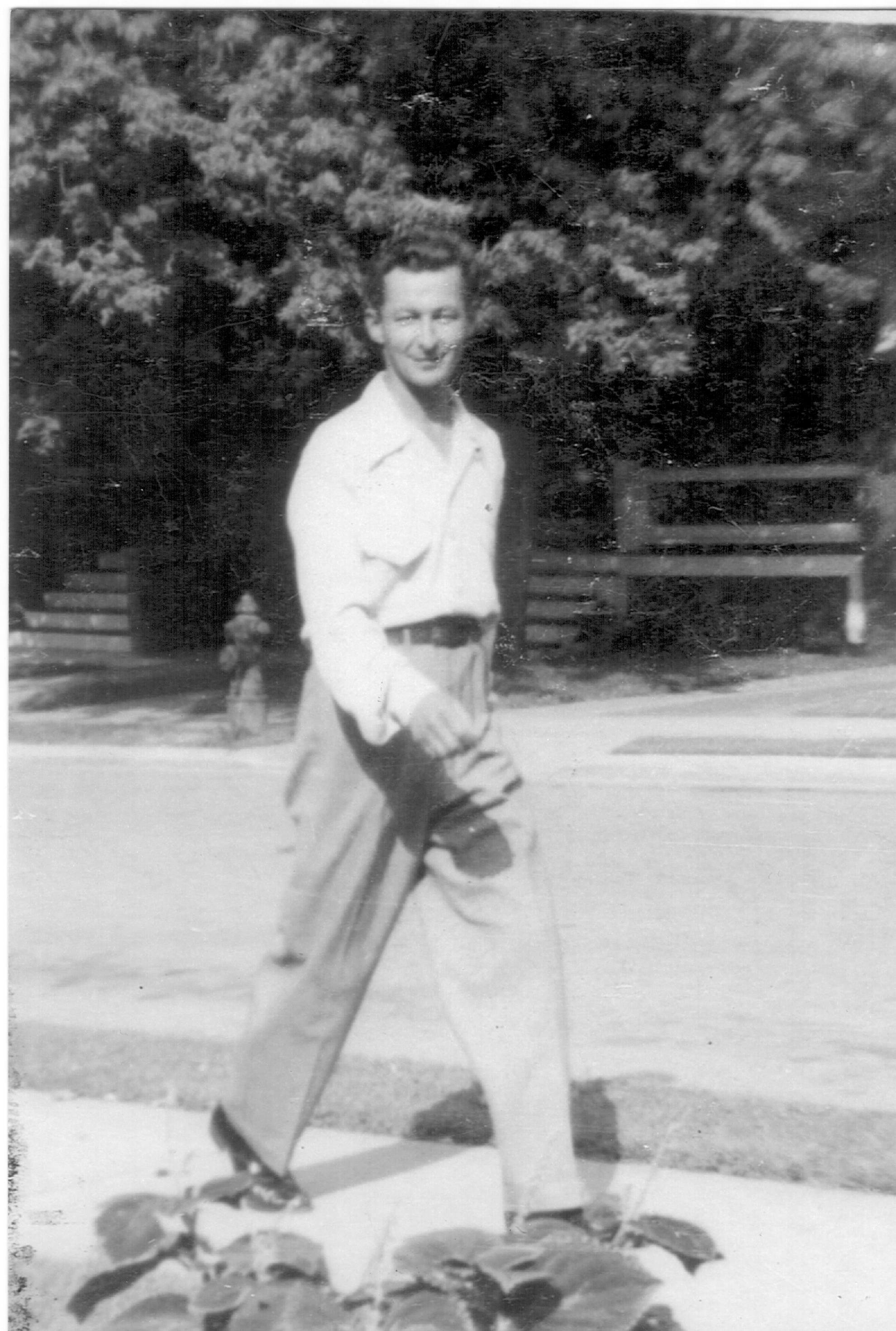
Among my heroes is a man you have never heard of. He never got his name in the paper. He won neither medals nor laurels. There will never be a statue erected or movie made about him. But he was heroic. His character and the manner in which he lived render him as worthy of admiration and imitation as any whose names are known around the globe. He was a gentle, humble, dignified hero. He was my grandfather.

John Boyko 001

John W. Boyko

He believed in moderation. My Dad told me of golfing with him.  Dad would blast drives out 275 yards or so and then watch as his father did as he always did: 150 yards, straight down the middle. Then, as the others hit those marvellous iron shots that fade magnificently and, when they work, bounce and bite on the green, his father would strike a little bump and run. Without the awe of the masterful shot, most would roll closer than the others.

At the end of nearly every round, my grandfather would stroll from the eighteenth green with the same ball he struck from the first tee, and almost always with fewer strokes than his flashier opponents and partner. The metaphor is apt. Moderation informed his decisions about friends, family, fun, and every other aspect of his long life. Moderation matters, it’s heroic.

He believed in loyalty. Last summer, a colleague launched into a highly-charged rant detailing all that was wrong with our place of employment. I was nodding at the litany of things apparently wrong when I unexpectedly thought of my grandfather. While pretending to listen, I reflected on the 42 years he gave to Dofasco, the mammoth Hamilton steel plant. I never once heard him utter a critical word.

This man who lived through a depression and world war taught me to be grateful for a safe place and fair wage and to always give more than expected. If one’s employer does not reciprocate loyalty with loyalty, then don’t become disloyal, find another employer. Loyalty in all aspects of life and, ultimately, to one’s dignity, matters. Loyalty is heroic.

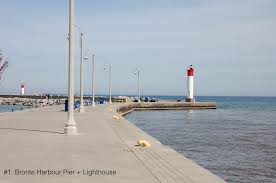
He believed in patience. On a great number of misty mornings and sunny afternoons I accompanied him to Oakville’s Bronte pier. He loved fishing. I hate fishing. But I loved being with him and so along I’d go, secretly cheering for the fish. One warm afternoon, I pointed to a string of boats about three hundred yards out into Lake Ontario. He said they all had fish finders and guessed that the Coho salmon were out there. A few moments passed before I ventured, “So, does that mean that we haven’t a chance of catching anything here?” He shook his head and said, “No, but it’s a nice day, and you never know.”  We practiced our casting for another two hours, had great chats, and headed home. Patience matters – it’s heroic.

Bronte pier

He believed in generosity. We are captains of our own ships, embarked on journeys of our own design, but family is the beacon that always guides us home; home to the sanctuary where we are reminded of whom we truly are. My grandfather celebrated my triumphs and, from time to time, commiserated with my despair. He always offered compassion without judgment. He knew that the most generous gifts are time and attention. And those gifts, bestowed with gentle grace and twinkling eyes were the essence of the man. He seldom gave advice, even when asked; winter can’t warn the spring. His advice was in his example. Generosity matters – it’s heroic.

We have known heroes from Achilles to Kennedy and from Louis Riel to Eleanor Roosevelt. They matter for what they offer and reflect about the societies and individuals who revere them. I have my own hero. I share his name. I share his values. Every day he instructs me. Every day, I strive to be worthy of his memory.

If you enjoyed this column, please consider sharing it through the social media of your choice.

A Country Worth Fighting For

Being Canadian is tough. It takes work. Since long before Confederation, Canadians have experienced periods of existential re-examination in which we have struggled to determine just what it is about being Canadian that is worth proclaiming and protecting. Strong leaders do not shrink from those moments. In fact, they seek them, shape them, and have us learn from them.

The first such moment emerged from the First World War’s muck of Flanders and the ridge at Vimy. Before the war, most Canadians considered themselves British. Afterwards, we were Canadian. Prime Minister Borden insisted that Canada sign the Treaty of Versailles and have its own seat in the ill-fated League of Nations. It was the beginning of Canada’s shift from, as noted historian A. R. M. Lower entitled his seminal 1953 book, Colony to Nation.

Vimy Ridge Memorial Vimy Ridge Memorial

It was a nice thought. But nothing is as simple as it seems. The First World War also saw the middle of the end of Britain’s reign as the world’s paramount power and the passing of that torch to the initially reluctant Americans. Canada was forced to accept that change when, in 1917, Britain told a surprised Borden that it could no longer help finance Canada’s war effort. He was forced to turn to the United States for help in order to keep helping Britain. In the two decades after the war, American investment in Canada’s economy surpassed Britain’s. Canada bought and sold more stuff over the border than across the Atlantic.

Another moment came in the awful spring and early summer of 1940. France and most of Western Europe had fallen to Hitler’s blitzkrieg. It looked like Britain would be next. Prime Minister Mackenzie King met with President Roosevelt near the border at Ogdensburg, New York and agreed upon a continental defence strategy. A Permanent Joint Board on Defence was created. A year later they met again, this time at Roosevelt’s posh Hyde Park estate. The Hyde Park Agreement further linked Canada’s economy to America’s with pledges of wartime purchasing and financing.

With Canada’s economy already dominated by the United States, and its culture being swamped by American books, magazines, radio, and movies, Canadian nationalists were infuriated. It appeared that Canada was selling out to a new master in order to shell out to the old one. With the Cold War’s legitimate fear of communism, Soviet aggression, and nuclear destruction, and Canada’s old parents enfeebled, it was good to have a friendly neighbour who just happened to have the biggest, meanest dog in town.

Maybe Lower was wrong. Perhaps Canada had not moved from colony to nation but from colony to nation and then to colony again. An important Canadian leader challenged the trend and forced a new existential moment of self-examination: John Diefenbaker. Like Canada’s founding fathers, he was not anti-American, but pro-Canadian. Canada, he argued, was in danger of losing all that Canadians held dear unless action was taken to establish a greater pride in being Canadian and more independence. Diefenbaker argued that Canadians needed to determine if they had a country worth fighting for and were up for the scrap. Canada, he said, must stand up for its sovereignty and declare itself a colony no more.

Diefenbaker was prime minister from 1957 to 1963. His nationalist vision led him to stand up to Eisenhower and then Kennedy in ways that frustrated both. President Kennedy wanted Canada to join the Organization of American States, stop trading with Cuba and China, back Britain’s joining the European Common Market, and accept American nuclear weapons for its weapon systems in Canada and Europe. Diefenbaker said no, no, no, and no. Despite having ignored Diefenbaker while deliberating options during the early days of the Cuban Missile Crisis, Kennedy demanded an immediate and obedient response to his order regarding the alert level of Canadian troops. Diefenbaker said no.

kennedy and diefenbaker  Kennedy and Diefenbaker

The highly respected George Grant noted in his influential book Lament for a Nation, that Diefenbaker’s standing up to the Americans represented the “last gasp of Canadian nationalism.” After Diefenbaker’s defeat, his nationalist vision was shunted to one side for Lester Pearson’s economic integration and the fluffy patriotism of his flag and fair.

Sparks of patriotism always flare and fizzle. Patriotism is about celebration. Nationalism is about identity. Patriotism can dance merrily along without autonomy, but nationalism demands it. Unlike the bread and circuses of patriotism, or jingoist chest-thumping, or empty-headed chauvinist aggression, nationalism reflects a quiet, self-assured confidence in what is unique, valued, and valuable. It is inspirational and aspirational in defining what deserves to be cherished. It’s what is worth fighting for long after the “We’re Number One” chants are forgotten. That was the pro-Canadian, historically and ideologically-based nationalism that Diefenbaker proposed.

John Diefenbaker was a flawed Prime Minister and, in many ways, a flawed man. However, we cannot allow those flaws to blind us the importance of the existential moment he offered. Perhaps, as we pause to consider the sacrifices of those who fought in long ago wars and the battles of yesterday, we can reflect on the Diefenbaker moment. Maybe we can ponder the questions he asked and the vision he proposed. Do we have a country worth fighting for?

This column was originally published on the site Leaders and Legacies. If you liked it, please share it with others through the social media of your choice and consider checking out Leaders and Legacies.

Happy is a Decision

Happy is not a goal. It’s not a destination. Happy is not a dream or some Hallmark card hokum. Happy is a decision. I once enjoyed a lecture by a Tibetan monk. He said a great deal that rang of declarative knowledge, that is, he dragged things I already knew into the light where, for the first time, I could see them clearly. Of all that he said that day, the one thing that resonated most was, “If you want to be happy, go ahead.”

It sounds easy, but it’s not. Many people struggle with depression or other ailments that make happiness frustratingly illusive. Thankfully, I am not among them. But, for a long time, I might as well have been. I simply refused to see that if happiness is indeed a decision, then it implies responsibility. I had work to do. I had to differentiate between those things that make me happy from those that do not. Like changing one’s diet rather than going on a diet, the challenge suggested a long-term life-style change. The idea that happiness is a decision forced me to redefine happy.

I have, for instance, taught myself to avoid what Germans call schadenfreude; taking pleasure in the misfortune of others. Shameful joy is too easy. It’s what makes slapstick comedy fun, from Charlie Chaplin to Jim Carrey. But in real life, it’s a sad and shabby pleasure. Shameful joy’s price is shame and its reward is not joy. Like the emptiness of envy or materialist consumption, it is an abdication of responsibility; it is the outsourcing of one’s happiness.

Like an alcoholic summoning the strength to avoid a sip of that rich double malt, I sometimes still struggle to avoid drinking from the sour nectar of shameful joy. But I force myself to keep that old habit locked in the cage with other happiness-draining habits such as succumbing to the media’s fear du jour, or the tug of an advertiser’s appeal, or the succulence of the latest celebrity, neighbourhood, or office gossip. I guard the cage’s frail and fragile bars. I heed the monk.

trail

Last week I was running along the trail near my home. It is a beautiful place. There are fields and woods along one side and a river along the other. On this particular afternoon, the sun was striking the river so that it shone as diamonds. The sky was a deep and vivid blue. I had just passed the 6K-mark where the endorphins kick in and my mind begins to float and even my Clydesdale-like gait feels graceful. I said, out loud and to no one, “This is a good moment.” And it was.

My practice of quietly announcing good moments has helped me to see life as a bonsai tree. I snip off the parts that ruin its symmetry; the situations, people, and places that bring me no happiness. After all, consider how many people lie on their death bed and whisper, “I wish I had spent more time at the office, or in lineups, or in traffic, or buying stuff, or with people whose insecurities or inner demons poisoned rooms.” How many, on the other hand, say with their last breaths, “I wish I had filled my life with more moments that filled my heart?”

Try it. Wait for a moment that offers true tranquility, pure enjoyment, heart-skipping joy, or tear-inducing warmth. Then say it: “This is a good moment.” It won’t count unless you mean it and it won’t count unless you say it out loud. Say it although others may hear it. Say it because others may hear it. Say it because you have decided to be happy.

If you enjoyed this column, please share it with others, consider leaving a comment, following my weekly blog, or checking out one of my five books at Chapters, Amazon or even a book store if you can still find one.