Loyalty Tarnished, Tested, and True

Abraham Lincoln knew there would be a war and wanted America’s best officer to lead his army. He wanted Robert E. Lee. Lee was offered the post but demurred. He packed up his family, left his beloved Arlington, on a Virginia hillside overlooking Washington D.C., and rode south to offer himself to the newly formed Confederate States of America. He had decided that although he despised slavery, the issue that spurred the founding of the Confederacy in the first place, and that he had sworn an oath to the United States, his loyalty lay more with his state than his country. Lee’s decision should give us pause.

Loyalty is perhaps an old fashioned and certainly a tarnished concept. Consider that Liverpool soccer player Mario Balotelli was just awarded a six-figure Loyalty Bonus to remain with his team for the rest of the season. It is interesting because he is being paid £80,000 a week and is in the middle of his contract. Loyalty Bonuses are becoming increasingly common in professional sport.

Customer loyalty is big business. Ten years ago, a ground-breaking study done by Earl Sasser, of the Harvard Business School, determined that acquiring new customers cost a great deal but is worth the effort and expense if followed by strategies to keep them. Sasser concluded that if only 5% of new customers stay customers – remain loyal – then net profits can increase from 25% to an astounding 95%. His conclusions led to waves of ploys to win customer loyalty. They became more intense with the growth of e-commerce. His conclusions were proven valid when company after company reported the value of swallowing early losses for the long-term profits of loyal online customers.

Schools know Sasser. I graduated from McMaster University a long time ago and they have been sending me magazines, letters, push-page newsletters, and emails ever since. In a moment of generosity, or soft surrender, I once sent them a $100 cheque to help with a library renovation project – a piddling amount, but no matter. They upped their game and sent me mountains of appeals and even phone calls from earnest young folks who always start by encouraging me to reminisce and end with a request for money. They’ve spent way more than I gave them!

All colleges, universities, and private schools are part of the Sasser game. They all have Sasser loyalty departments flimsily disguised as alumni affairs, constituent relations, parent councils, trustee boards, or whatever other euphemisms they contrive. Good on them.
Loyalty

(Photo: http://www.linkedin.com)

My grandfather was loyal to the steel plant in which he worked for 42 years and it was loyal to him. Those days of reciprocal loyalty appear to be over. In just about any workplace, be it an office, factory, or school, Robert E. Lee’s conundrum of divided loyalty is played out every day. What happens when a decision tests a CEO’s loyalty to the Board to which she reports, those she employs, customers she serves, and shareholder’s dividends? Can she muster the ethical fortitude to take a stand on where her loyalty should rest? What happens to middle managers when a CEO’s decisions violate established policies or threaten an organization’s values, culture, and customer loyalty? Will their loyalty rest with the leader or company? Will they summon the courage to fight for right or demonstrate character and walk away?

According to the Journal of Psychology, loyalty among today’s workers no longer depends on the old motivators of money, office, or title. Workers will walk, wilt, or revolt if loyalty is not shown through the trust of genuine autonomy, professional development they design or find, and an environment in which their voices are actually heard and sincerely respected without fear of reprisal or pandering.

An organization that fails to understand and live loyalty will flounder. Loyalty dies because one-way loyalty cannot live. People will only be loyal to someone whose loyalty to them is always demonstrated and never questioned. If loyalty is sacrificed for a quick buck, quick fix, or even the best of intentions it becomes a burned bridge that is tough to rebuild, especially by those found holding the matches.

Perhaps loyalty is old fashioned. It is certainly tarnished and it is tested every day. Maybe things have become so bad that loyalty is now a commodity that can be bought, wheedled, or ignored. I hope not. Maybe we would be well served to pause and consider where our loyalties truly lay. The exercise might reveal that loyalty is not so hard or old fashioned after all.

My loyalty rests with leaders who earn it, ideas that stand scrutiny, friends who offer compassion, companies that provide value, and institutions that live their stated values. The loyalty I feel most deeply is to loved ones who gently but constantly remind me that, in the end, they are all that truly matters.

If you enjoyed this column, please send it to others and consider subscribing to my blog where I post a new musing every Monday morning.

Ten Rules for a Campaign Worthy of Canadians

In TV’s political drama West Wing, C. J. once bemoaned a trivial incident being reported as news and said, “Everybody’s stupid in an election year.” Charlie replied, “No, everybody gets treated stupid in an election year.” With the first debate in Canada’s long electoral slog heading toward the October vote now over and the campaign gathering steam, sadly, it appears that C. J. was correct. But there remains time to change. Canadians can enjoy the campaign they deserve if party leaders obeyed the following rules:

10 Rules for a Campaign Worthy of Canadians

(Photo: kelownalakecountry.liberal.ca)

  1. Don’t call us voters or taxpayers. We are citizens. Citizenship is a profound concept that informs our collective identity, individual rights, and responsibilities to others. Don’t cheapen citizenship’s nobility by confusing it with voting and paying taxes. They are merely two of its duties.
  1. Don’t tell us we’re choosing a prime minister. We’re not Americans picking a president or Human Resource directors involved in a hiring. Rather, we’re architects designing a House. The 338-member House we create will decide which party enjoys its confidence and that party’s leader will become ours.
  1. Don’t deride coalitions. Canada fought the First World War with Borden’s coalition government. In 2010, Britain’s Conservative and Liberal Democrat party leaders negotiated a coalition that successfully and responsibly governed Britain for five years. Coalitions are a legitimate option in any parliamentary democracy.
  1. Don’t offer false choices. The most obvious example is the old chestnut of picking either a thriving economy or sustainable development. Respected scientists and economists have argued for years that we can have both or neither.
  1. Don’t employ terms without definitions. Promising tax changes for the rich and middle class without defining either invites cynicism. Promises to help families are similarly shallow when the concept of family is so broad.
  1. Don’t try to scare us. We know that foreign policy discussions must involve Canada’s support for aid, international justice, environmental stewardship, and fair trade. We know we must sometimes go to war. Please don’t pretend that foreign policy is about nothing more than tempering liberty to battle terrorism that, after all, is not an enemy but a tactic.
  1. Don’t bribe us with our money. Monthly cheques for this program or that are just dribbles of our cash that you held for awhile. Come tax time, you’ll get part of it back again anyway. We are not children and our money is not your candy.
  1. Don’t devalue social media. If you shade the truth or outright lie, change your message in various regions, or contradict a previously stated principle, we’ll know instantly. We’ll know before you can react or spin. Your TV ads won’t save you because fewer of us watch them than follow Twitter and Facebook.
  1. Don’t underestimate us. Kim Campbell once said that campaigns are not a time to discuss complicated issues. The unusual length of this campaign offers a unique opportunity to prove her wrong. Trust our intelligence and attention spans by engaging us with complex ideas and grand visions. We just may surprise you.
  1. Don’t forget character. Impress us by your ability to rise above empty slogans, staged events, sophomoric behaviour, and bully tactics. Speak not at us but with us. Speak with journalists who inform us. We all suffer slips of the tongue so if you commit a verbal gaffe, apologize and move on. Relax. A leader’s most important attribute is not a bursting war chest, lists of promises, strict adherence to a script, or even, forgive me, nice hair. Leadership is about character. In fact, that’s all it’s about. Show it. We’ll recognize it. We’ll reward it.

West Wing’s Leo McGarry once said, “We’re going to raise the level of public debate in this country and let that be our legacy.” We respect all those working to earn a seat in our House. Just imagine if party leaders, in turn, respected us by obeying the ten rules and adopting McGarry’s goal as their guide. We could then engage in a campaign worthy of Canadians.

If you liked this, please send it to others through Facebook or your social media of choice. This column appeared as an op. ed. in the Montreal Gazette, Ottawa Citizen, and Maclean’s online.

Recency Illusion, Leadership, and the Ladder from Cute to Scary

My favourite teacher of all time is a seven year old. I am absolutely gobsmacked when she adopts her serious, slightly condescending tone to tell me the proper way to toboggan, dive, catch a ball, or to inform me of the stars, animals, or myriad other things. She is so cute because of her assumption that because she has just learned something then it must be brand new. In 2005, linguist Arnold Zwicky developed a term for this assumption: Recency Illusion. He was talking about words but it can be applied more broadly.

While recency illusion is fun in children, it ascends the ladder to frustrating in teenagers. After all, those in their teens right now are the first to ever sneak a drink, skip class, have sex, experience heartbreak, love loud music, and write bad poetry expressing inescapable angst. Right?

Recency illusion escalates to interesting when dealing with things that don’t matter. We might think, for instance, that we have invented words. Consider the word “high”. It comes not from your son’s party last weekend or even 1967’s Summer of Love. It’s been traced to author Thomas May who wrote in 1627, “He’s high with wine”.

The phenomenon is also interesting when dealing with culture. I recall a young person asking in the 1980s, “Did you know that Paul McCartney was in a band before Wings?” Last week I switched off the radio when a young woman with an effected vocal rasp (strike one) who seemed to anticipate question marks when approaching the end of sentences (strike two) was rhapsodizing about the history of the Civil Rights movement based on nothing more than just having seen the movie Selma. (strike three)

Recency illusion moves up the ladder from interesting to scary when demonstrated by adults with power. Marketers depend on recency illusion. Consider the phrase “new and improved”. Forget for a moment that if something is new then it cannot possibly be an improvement and only that we are saps for the word new.

Marketing guru Jamie Turner argues that the word new triggers emotions that lie in the sub-cortical and limbic parts of our brain. These parts respond not to reason but primal, instinctive impulses. We want the new product because it must be better. No matter how hard the more highly developed parts of our brain try to warn us, we are fooled anyway. Marketers know this and count on it.

Recency Illusion

(Photo: www.thewritingreader.com)

Even scarier and certainly more dangerous are leaders who believe that history begins the day they slide behind the big desk. Sometimes it is quite intentional such as the during French Revolution and Cambodia’s Khmer Rouge coup when new leaders threw out the old calendar and declared it Year Zero.

Far more often, recency illusion is subtler. It’s revealed in a leader’s unconscious or unspoken Year Zero when words, behaviour, and decisions reflect a belief that every problem is brand new and unique, every flitting trend or fancy buzzword an exciting idea and essential option, and every constructive critic an enemy of progress. Consider the echoes of recency illusion in Tojo ordering the bombing of Pearl Harbour or George W. Bush being persuaded that American troops would be welcomed into Baghdad with cheers and flowers. Consider recency illusion on parade with last week’s no-brainer business decision that morphed into this week’s unintended consequences.

Leaders suffering from recency illusion are bereft of a sense of history and so are like amnesiacs acting as tour guides – constantly surprised, easily duped, and blind to sycophants. They are deaf to advice from those without selfish agendas but rich with genuine corporate memory. Even when lost in the dark woods of their own making, those imbued with recency illusion’s arrogance often refuse to learn because lessons come only to those with the humility to admit that, as George Harrison once sang, life goes on within you and without you. As always, it is the led and not the leader who pay recency illusion’s dearest price.

Seven year olds will always be cute, teenagers infuriating, marketers manipulative, and “experts” will always use new words to sell old ideas. That’s fine. But maybe all those in leadership positions should pause and wonder whether their actions reflect recency illusion.

Plus, as both Canada and the United States swirl toward choosing new leaders, perhaps our democracies would be well served if we were aware and wary of candidates using recency illusion to sell themselves and their ideas. Maybe that awareness will invite us to more carefully consider the past as prelude, test an offered premise, ask the next question, and ultimately, to make a better choice. And wouldn’t that benefit us all?

 If you enjoyed this column, please share it with others through Facebook or other social media and consider checking my other columns at http://www.johnboyko.com

A Mother’s Lesson: Experiences or Stuff

The greatest hoax perpetrated upon young people is that adults have it all figured out. In fact, in any examined life, which according to Socrates is the only life worth living, existential angst is an old friend who regularly returns to visit. I recently experienced such a call and, as is always refreshingly the case, re-examined what truly matters.

I was led back to the belief that money can be spent on only two things: stuff or experiences. Stuff, no matter what it is, always wears out or is thrown out and always demands more in money, time, or distraction. Experience, on the other hand, enriches rather than costs and endures rather than indentures with pleasure that is profound rather than superficial. I bounced from the depths of my angst back to the gentle guidance of that belief by recalling one experience and a particular moment.

My mother was a tough woman. While only those truly close knew the gentle heart within, her upbringing and then the raising of four rambunctious boys made her tougher than she sometimes needed to be. Rheumatoid arthritis led to one fused ankle, a brace on the other, 24-hour pain that would drop me to my knees, and then mood-altering medication that all made her tougher still.

While visiting my parents after I had just returned from two weeks in France and Belgium, she declared, in her way that often ended conversations, that every city in the world was the same. The next day, acting on an idea from my dear wife, I returned and told my Mom that I would like to pay for a week for the two of us in London to test her assumption. Three weeks later I had her in a Heathrow Airport wheel chair, then the London tube, on the top level of a bus, and then, for our first evening, in Covent Garden.

I noticed that there were more police about than I had seen in my previous visits. I inquired of a Bobby and then, without telling her why, we walked to the nearby Opera House. A large crowd was gathered around the grand entrance but I noticed the media further down the block. I asked a cameraman and was told exactly where to stand. Within five minutes the big black car arrived and out stepped Prince Phillip and the Queen. Her Majesty turned, not twenty feet away, and waved.

When my Mom called home, my Dad asked with a joking tone if we had seen the Queen yet. “Well,” giggled my Mom, who, for a sliver of a moment allowed me to see her as a ten-year-old, “As a matter of fact we did.”

The next day we toured more and I left her at the Victoria Fountain before Buckingham Castle while I cabbed to the Canadian embassy to pick up my pre-arranged tickets. We then walked past an enormous line, presented our tickets, and were led to the public gallery to watch Tony Blair masterfully handle the Prime Minister’s Questions.

There were plays, galleries, museums, the Crown Jewels at the Tower of London, pints in pubs, and long dinners. One afternoon I positioned her with my camera in the middle of the street and told her exactly how to frame the shot. She worried about being hit but I assured her that no one would run over an old lady plus, at this spot, everyone knows what we’re up to. I then went to the cross walk and she snapped a perfect picture of me, the unrepentant Beatles fan, strolling across Abbey Road.

On our last afternoon she took a deep breath and with me holding much of her weight with her left arm as she pressed the cane with her right, we very, very slowly made our way up the steps of St. Paul’s Cathedral. About half way up, I saw tears streaming down her cheeks. I said that we should stop and rest or, if it hurt too much, we could turn around.

“No, Johnny.” she said, “It’s not that. I just never in my wildest dreams thought that it was so beautiful or that I would ever, ever be here.”

A Mother's Lesson- Experiences or Stuff

(Photo: http://www.stpauls.co.uk)

Last week, when deciding whether to buy some stuff, actually a great big piece of stuff, my angst was relieved when in the midst of a long run down my Village’s riverside trail, I revisited how blessed I am to be surrounded by stunning physical beauty and a community of friends and family. Even more than that, though, was the St. Paul steps. The memory brought my run to a walk. I was reminded of what cannot be bought at a store or negotiated with a real estate agent. It reminded me too that mothers never stop teaching. Even when they’re gone, they are not really gone.

If you liked this column, please share it with others on Facebook or your social media of choice.

Leadership Lessons from the Moon

The Globe and Mail’s July 21, 1969 front page was intoxicating. Bold, green, three inch high print announced MAN ON MOON. It reported 35,000 people breathlessly glued to a big TV screen in Toronto’s Nathan Phillips Square who cheered at 10:56 pm when Neil Armstrong stepped from the lunar module. Mayor Dennison delivered a brief speech calling it, “the greatest day in human history.” He may have been right. What he couldn’t know, and the Globe missed, were the important lessons contained on that front page.

Leadership Lessons from the Moon

(Photo: thedailydigi.com)

The moon adventure was the culmination of an effort begun by President John F. Kennedy on May 25, 1961. He had just returned from meetings with Soviet premier Nikita Khrushchev. While Kennedy negotiated, Khrushchev had hectored. Kennedy became convinced that the Cold War was about to turn hot.

Upon his return he called for a special meeting of Congress and asked for a whopping $1.6 billion increase for military aid for allies and $60 million to restructure his military. He called for a tripling of civil defence spending to help Americans build bomb shelters for a nuclear holocaust that, he warned, was a real possibility. The president also said: “I believe that this nation should commit itself to achieving the goal, before this decade is out, of landing a man on the moon and returning him safely to the earth.” His popularity surged.

It was daring and presumptuous. The Soviets were far ahead of the United States in space exploration. But that day and later Kennedy couched the courageous new effort in soaring rhetoric that appealed to America’s inspiring exceptionality and Cold War fears. When cheers arose from public squares and living rooms only seven years later and everyone instinctively looked up, it was the culmination of Kennedy’s dream for the world and challenge to America.

Kennedy had not micromanaged his NASA team. He set the vision and got out of the way. He did not badger them regarding tactics or berate them over temporary failures. He gave them the money they needed then trusted them to act as the professionals they were. His vision and leadership spurred the team and survived his death.

Leadership Lessons from the Moon.

(Photo: karmadecay.com)

The Globe and Mail’s July 21 front page declaring his vision’s realization did not mention President Kennedy. However, a smaller headline at the bottom noted, “Woman dies in crash, police seek to charge Kennedy.” The story explained that Senator Edward Kennedy, the president’s brother, would be prosecuted for leaving the scene of an accident.

On July 18, with the Apollo astronauts approaching the moon and their rendezvous with infamy, Kennedy had attended a party on Chappaquiddick Island for six women and two men who had worked on his brother Bobby’s doomed 1968 presidential campaign. While driving 28-year-old Mary Jo Kopechne back to her hotel, he took a wrong turn, then missed a slight curve on an unlit road and drove over a bridge and into eight feet of water.

Kennedy managed to escape the submerged car and later spoke of diving “seven or eight times” but failing to free Kopechne. He walked back to the party and was driven home. That night he consulted with advisors and then, eight hours after the accident, called police. A coroner reported that an air pocket probably allowed Kopenchne to survive for three or four hours before drowning. A quicker call for help, he concluded, would have saved her life.

Leadership Lessons from the Moon..

Car being pulled from river. Photo: www. www.latimes.com

In the 1990s, Edward Kennedy would become the “Lion of the Senate,” guardian of the Democratic Party’s progressive wing, and model for bi-partisanship. However, when he ran for his party’s nomination for president against the incumbent Jimmy Carter in 1980, many saw not a lion but liar and not a politician but playboy. Chappaquiddick appeared to reflect a belief that ethics, morality, and the law applied only to others. Voters punished his conceit by withholding support.

It was all there on the Globe and Mail’s front page, 46 years ago: the legacy of intrepid leadership by one brother and the price of hubris by another. They are leadership lessons of the moon. On this anniversary we are left to ponder questions inadvertently posed by the Globe that day regarding the difference between bold audacity and stupid risk, daring vision and manipulative reaction, planning and plotting, and between big decisions that positively affect millions and big decisions disguised as little ones that are always pregnant with unintended consequences. The front page’s historical coincidence urges us to wonder if, in their wisdom, people still reward leaders of selfless vision or selfish arrogance.

President Kennedy’s leadership lessons from the moon offer even more profound lessons for those willing to learn.

If you enjoyed this column, please send it to others on Facebook or your social media of choice.

The River’s Spirit for Those Who Can Hear It

It’s moving. It will be moving all day, all night, and for a billion tomorrows. The Otonabee River is a block from my home and on quiet nights we hear it relentlessly cascading over the dam. We smile at a loon’s mournful echo, nature’s saddest and most magnificent cry. The blue heron has his favourite spot near the Lakefield bridge and sometimes the osprey leaves his giant nest by the power station to perch in the tree above him. Both stare with infinite patience, waiting for the right moment to pounce into the gurgling water.

I walk home from work along the river and run the trail that hugs its banks. In the summer, when the city folks invade, canoes glide by and rented houseboats boom their music as they tack haphazardly along amid the mammoth floating mansions, always, it seems, with flapping American flags. The river splits our little Village in two and yet its bounty makes us whole and, in fact, possible.

The River's Spirit for Those Who Can Hear It..

Deeply respected Canadian novelist Margaret Laurence lived in Lakefield. Her most stunning book, The Diviners, begins by observing that the river runs both ways. It does you know, it really does – all rivers do. They run as natural facts but also as spirits and metaphors through our history, literature, music, and souls.

Science meets religion at the intersection of the Tigris and Euphrates. Between the two powerful rivers is the fertile valley where archaeologists insist human civilization first developed. Those ascribing to a literal translation of the Christian Bible agree, in a sideways sort of fashion, by claiming the junction housed the Garden of Eden.

Homer gave us one of our first stories. He told of the filthy waters of the Xanthus. Polluted by bodies killed in the Trojan War, the river rose up and nearly swallowed the hero Achilles. The river became a metaphor for war, a scourge so horrible that even the unworldly strength and courage of the greatest among us can neither defeat nor tame it.

War has too often soiled rivers with its evil. Battles have been won by fording armies, a bridge’s destruction, or an enemy trapped against a riverbank. During the American Civil War, the South named its armies after states but the North after rivers, hence the Army of Virginia fought the Army of the Potomac. Early battles had two names because the South considered the nearest town and the North the nearest river, so we have Sharpsburg or Antietam and Manassas or Bull Run.

Many civilizations developed along rivers from the Yangtze in China, the Amazon in Brazil, and the Nile in Africa. A predominant historian dubbed Canada the “Empire of the St. Lawrence,” arguing that without the natural highway to the interior, the country could not have developed when or how it did. Consider also the cities built upon rivers: Montreal, Calgary, Ottawa, New York, Washington, St. Louis, London, Paris, Moscow, Berlin, and…well…you can think of many more. Rivers are the veins through which so many cities’ lifeblood flows.

The Tennessee is the Singing River. To hear it you have to believe it. For thousands of years the Whana-le people heard the creator sing through the river’s sparkling waves. In the 1830s, the Whana-le were uprooted and banished to the barren Oklahoma Indian Territory. They starved beside tiny and silent rivers. One winter, an old woman named Te-lah-nay had enough. To save her family and people, she sought the wisdom of the river’s song and so walked from Oklahoma to her ancestral home, now called Alabama, on the banks of the Tennessee. Today, in northwest Alabama stands a long, winding, outrageously magnificent stonewall that her great-great-grandson Tom Hendrix created to commemorate the walk, his people, and the river that still sings for those with the spiritual faith to hear.

On the banks of the Tennessee is a town called Muscle Shoals. In the late 1950s, Rick Hall built the FAME recording studio and it soon produced hit records that reintroduced gospel, R & B, and soul to the pop charts. Percy Sledge, Aretha Franklin, Etta James, and Wilson Pickett recorded there. When Hall’s studio band, the Swampers, formed their own studio, the Muscle Shoals sound was heard in records by the Rolling Stones, Paul Simon, John Prine, Jerry Reed, Lynyrd Skynyrd, Alicia Keys, and on and on.

The Muscle Shoals feel was black but the studio musicians were white so the music was as colour blind as it was glorious. The singing Tennessee must have approved and maybe, just maybe, played a role in inspiring the magical sounds. Maybe it was the same enchantment that flowed from the mighty, muddy Mississippi that gave birth to rock ‘n’ roll in Memphis when, within blocks of the roiling river, Roy Orbison, Johnny Cash, B.B. King, Jerry Lee Lewis, Carl Perkins, and Elvis Presley all did their best work in the same little Union Avenue Sun studio. Maybe the same spirit sang from Liverpool’s Mersey River that created what the world came to know as the Mersey Beat of the Beatles and British invasion.

In his terrific novel that was turned into a fine movie, A River Runs Through It, author Norman Maclean wrote: “Eventually, all things merge into one, and a river runs through it. The river was cut by the world’s great flood and runs over rocks from the basement of time. On some of the rocks are timeless raindrops. Under the rocks are the words, and some of the words are theirs. I am haunted by waters.”

In Siddharta, Hermann Hess observed, “Have you also learned that secret from the river; that there is no such thing as time? That the river is everywhere at the same time, at the source and at the mouth, at the waterfall, at the ferry, at the current, in the ocean and in the mountains, everywhere and that the present only exists for it, not the shadow of the past nor the shadow of the future.”

The River's Spirit For Those Who Can Hear It.

I am both haunted and comforted by those thoughts as I prepare for my run along the banks of my river, the Otonabee River. The heron may be at the bridge and perhaps the osprey, and down near the Sawyer Creek lock the turtles will be sunning themselves. The bald eagle may be about, soaring without a care above it all and swooping with breathtaking majesty to steal his lunch from the river that he, like me, knows will always be here: powerful, relentless, with soul but without judgement. And through it all I am happy that in my Village, and my life, a river runs through it.

If you enjoyed this column please share it with others through Facebook or your social media of choice and consider returning for my regular Monday morning postings. Thank you.

Love Letter to Canada on her Birthday

Dear Canada,

Birthdays are great. The friends, family, and food are marvelous as another marker is placed on the road to wisdom and understanding; the destination we seek and hope to recognize upon arrival. Of course, the fewer candles on the cake increase the chances of bouncy castles and donkey-pinning and the normally banned junk-food.

Your birthday is always special. What’s not to love about fireworks, music, and a day off in the middle of summer? For some reason we attach special significance to anniversaries ending in fives and zeroes so your biggest birthday bash was in 1967. The Centennial parks, fountains, buildings, and bridges from coast to coast are testament to your 100th birthday having been celebrated everywhere. The biggest bash was in Montreal. Expo ’67 invited the world and the world came. Magnificent national pavilions wove facts and myths in what other countries chose to display of themselves and how we cheered ourselves.

Dear Canada on her Birthday

(Photo: nmmc-co.com)

Your most powerful myth is your birthday itself. You became an independent state on July 1, 1867. But your independence was an act of the British parliament. Britain still controlled your constitution. A British committee could over rule your Supreme Court. A British company controlled what is now northern Ontario, Quebec, Manitoba, and the North West Territories. Britain still negotiated and co-signed treaties and trade deals. So you were independent but only like a teenager who moves out but only as far as Mom’s basement.

For a long while, we pouted and slammed doors from time to time but didn’t do much about it. After all, we still considered ourselves British. Our census form had nowhere to proclaim we were Canadian. We carried British passports. We voted for Sir John A. and his slogan: “A British subject I was born and a British subject I will die.”

It all changed when a European family spat led cousins with big navies and bigger egos and more pride than brains to trip the world into war. We called it the Great War because not until the next phase in what became a decades long European civil war would we begin to number them. Britain was in and all we could yell up the stairs was “Ready Aye Ready”. Boys who had never traveled more than fifty miles from home were stirred by a pull of patriotism, a yearning for adventure, and the hope that girls really do love a man in uniform. They were soon on trains to Val Cartier, Quebec, and then aboard crowded ships to Britain and then, the front.

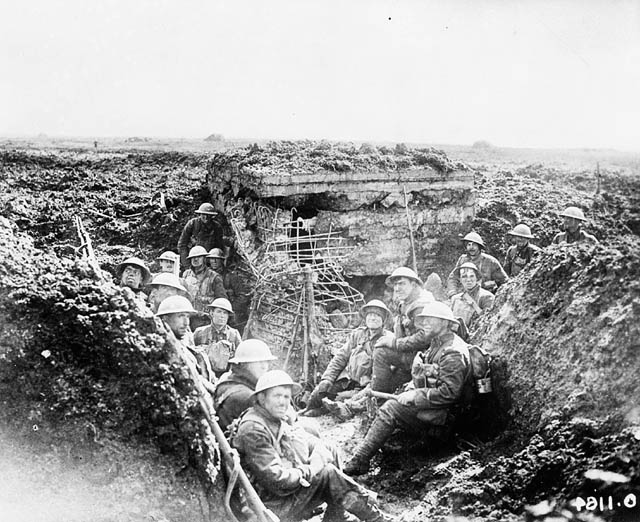
They had no idea what they were in for. Picture digging a hole in your yard and living there for a year. Eat there, sleep there, and relieve yourself there, day after day and season after season. Watch for rats the size of spaniels, killing coughs, lice, maggot-infested food, and after standing for days in the open sewer, toes fall away when sodden boots were finally removed. It was a war against conditions and, too often, stupid officers more than the enemy.

Dear Canada on her Birthday.

(Photo: http://www.collectionscanada.gc.ca)

After years of using Canadians as shock-troop cannon fodder, our four divisions were joined and told to capture a ridge that the French and British had found impossible to take. We dug and planned. We ignored the British way and told every man his job. And men the boys had indeed become. Many still bore pimples but too much boredom punctuated by terror and too many trips on leave for bad booze and horizontal recreation made them older than their ages; older than anyone deserved to be. On Easter Sunday, a barrage that shook the earth and shattered the sky announced the attack and the Canadians soon had Vimy Ridge..

Back home, for the first time, we had not an allied, not even a British, but a Canadian victory. For the first time, Canadians considered themselves Canadians. When the war finally ended, Britain said it would take care of the peace. With a pat on the head we were to go back downstairs and wait quietly. No. Too many of our children, sent to kill their children, had died. Too many were home but broken. We had earned a place at the grown-up’s table. It took a while but we increasingly considered ourselves Canadian and one but one by one the vestiges of colonialism fell away, forgotten like other childish things.

So while a person’s birthday is easy to peg, a country’s is more a decision than fact. Perhaps, Canada, your birthday is really April 12, 1917; the day we made it to the top of that damned hill. But is it better to plant our patriotism at a Charlottetown conference table, in the British House of Commons, or on a blood-spattered Belgian ridge? Or is according too much significance to the tragic blunder of a crazy war affording too much recognition to the boneheads who started it, the profiteers who exploited it, and mankind’s predilection to slaughter rather than build?

Perhaps it’s better to stick with July 1, 1867. I guess, like Jimmy Stewart was told in The Man Who Shot Liberty Valance, when facts get in the way of the legend, print the legend. So this July, let’s enjoy the day off and with the sun’s surrender, let’s ooh and ahh at the fireworks. But this year, with these thoughts in mind, let’s offer ourselves a dare. Let’s see if any of us now can watch the colourful explosions over the park or lake and not think of the sky over Vimy.

Sincerely,

A Friend.

This is a few days late to stick with my Monday posting schedule but hopefully still invites consideration. If you enjoyed it, please send it along to others through Facebook or your social media of choice.

Job Losses and Bean Sprouts

Kindergarten teachers have children plant beans in little cups. The exercise is simple but the lesson profound: everything is born, everything constantly changes, and everything dies. One of the smartest people I’ve known once reminded me of that lesson.

Job Losses and Bean Sprouts

(Photo: http://www.lessthanperfectparents.com)

For 42 years, my grandfather worked in a Hamilton, Ontario steel plant called Dofasco. Years after his retirement, he read of a new round of layoffs that were shrinking the place to a skeleton of what it had once been. He shared nostalgic stories of the post-war years when Dofasco thrived. He spoke of how the company president, whom he always respectfully called Mr. Sherman, would often mingle on plant floors speaking with the workers, asking opinions, slapping backs, and shaking hands.

The Dofasco golf, bowling, hockey, and baseball leagues for workers and their families contributed to the sense of community and created a feeling of family. At the huge annual Christmas party, Santa had a gift for every child. When union organizers came to Dofasco every few years they were run out of the place because the trust that existed between management and labour rendered unionization unnecessary.

My grandfather retired in 1975. The OPEC oil shock had just happened. The western world’s industrial revolution that, for a century, had built manufacturing plants like Dofasco was ending. A right wing movement that would alter government’s role in protecting workers and regulating corporations was beginning. The beanstalk in the little cup was wilting.

Dofasco’s big shrink began in the ‘80s. By the ‘90s, whole departments were shuttered, equipment was sold or scrapped, and buildings were torn down. My grandfather called one day and invited me to a Dofasco open house. It was great. There were old guys who remembered him and I was proud of the reception he received. He marvelled at the computers in a control room that had once been manually operated. He was shocked by the cleanliness of the pickle line and by how few people were making it all work.

More than the technical changes, however, on the drive home he spoke of his old buddies confirming what he had already surmised. With the new challenges and changes had come new managers and management systems. Mr. Sherman, and all he had represented, was gone. Globalization and domestic economic and political changes were not the fault of the current CEO but when old ways began to die he was none the less accused of murder and his middle managers deemed accomplices. First trust, then loyalty, and finally community disappeared. There was talk of union.

But my grandfather was smart. He said, “Johnny, nothing ever stays the same forever.” The Dofasco he had known was gone and would never be back. Its tag line remained Our Product is Steel Our Strength is People, but no one believed it any more; it had become a cynical punchline. He spoke of how young people working there now would never understand how the place used to be and even less of how it felt. A few years later there was another open house. He didn’t want to go. There was nothing for him to visit. The bean in the cup had died.

Deaths are always hard. We all know that fundamental change in any organization effects most is what can be empirically measured least. We all know that stages of grief are suffered by those asked to leave and by those left to mourn what and who were lost. We all know that decisions made at one level always have consequences on others. We also know that losing money is seldom a job dismissal’s highest price. The theft of identity, dignity, community, and faith in what was once sincerely believed are much deeper wounds that, for some, even in those left behind, never heal. That was my grandfather. Dofasco had afforded him a living and source of pride, right up until it broke his heart.

Next September, Kindergarten teachers will have children plant beans in little cups. The kids will proudly bring them home and parents will share in the watering and excitement of growth. Then, inevitably, they will dry tears when the little sprout, once so healthy and lovingly tended, dies and never comes back.

If you enjoyed this column, please share it with others through your social media of choice and consider checking others at http://www.johnboyko.com

The Urge to Scream “I Am Here!”

This morning I noticed that a hydro box across from the East City restaurant where I meet my father for breakfast every Sunday had been spray-painted. Large, blue, drippy letters screamed: MAX. I don’t know Max but he certainly wants us to know him, or at least, know of him. Maybe Max is the kid on the corner with the hair, clothes, and piercings that beg to be noticed or the quiet kid in the back of the class or maybe even the ambitious young man slaving away in the cubicle that the boss never seems to visit.

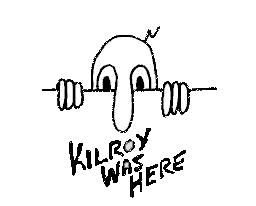
Max’s urge is ancient. We have always wanted to immortalize ourselves. In the Second World War, the first American soldiers to arrive anywhere drew on buildings, bridges, and abandoned vehicles a rough figure of a man looking over a wall with the caption, “Kilroy Was Here.” At the Potsdam conference where postwar Europe was planned, Americans built a special washroom for Stalin, Truman, and Churchill. Stalin was the first to use it and upon returning asked, “Who is Kilroy?”

Broadcast or Live Your Life. (Photo: qwsim.flight1.net)

Most of us want something more personal. Hospitals, schools, galleries, and more boast names on brass plaques and atop buildings so we know who donated the cash to construct them. The philanthropy is good but the naming instructive. The urge’s obscene extreme lies in Donald Trump’s outlandish monuments to himself, each with his name glaringly displayed.

Are Trump and the philanthropists merely peacetime Kilroys or Max with money? Is publicly recording our name a primal or spiritual desire to make sense of our brief lives through recognition and remembrance?

Maybe it’s the same urge that leads to our wanting pictures of ourselves. Consider our walls and old-fashioned photo albums, rich with family pictures of good times and travels. But these are private records, unlike Greek and Roman emperors who posed for statues and Renaissance Lords for paintings as public demonstrations of wealth and power. They were slow-motioned selfies.

In 1839, Philadelphia’s Robert Cornelius set up his camera, rushed before it, and created the world’s first photographic selfie. Selfies were encouraged in 2009 when Facebook asked for profile pictures and democratized in 2010 when Apple’s I-Phone 4 produced the first forward-facing camera. Private became public. Diary entries formerly protected by tiny locks were suddenly blasted through global megaphones.

In January 2015, Psychology Today summarized studies concluding that those who take and post lots of selfies are narcissistic and guilty of self-objectification. That is, in an apparent contradiction, they have an inflated view of their self worth while simultaneously associating that worth with their physical appearance. American doctors noted a startling number of young people asking to be surgically altered for the sole reason of looking better in selfies. Another study suggested that those who post a lot of selfies may not be narcissistic or self-objective when they begin, but repeatedly posting the images turns them that way.

Numerous studies have concluded that while harming ourselves we are also tearing society’s fabric which is based on humility and mutual accommodation. Too many of us have become more concerned with reporting on our lives than living them. We rob ourselves of fully enjoying an experience by stepping outside of special moments to instead fashion images of us appearing to have fun. We have become more concerned with online followers and “friends” than real friends, often turning away from real friends to interact with faux online ones. As a comedian once observed, “Do you want to test your online friend list? Post that you’re moving on Saturday and see whose there to help lift your fridge.”

We’ll survive. The teenage girls now duck-facing and gape-mouth smiling into their cameras will grow up and so will Max. Plus, like always, as soon as enough adults start posting selfies, it will cease to be cool and kids will move on. But we will adopt whatever new technology allows us to deal with the old urge some feel to scream “We are Here!” as did the Whos to Horton. Meanwhile, according to psychologists, the happiest among us will spend less time recording our lives or caring about people we barely know in order to more fully enjoy those lives and the ones we love.

Broadcast or Live Your Life (Photo: http://www.teachpeace.com)

If you enjoyed this column, please, despite the possibly irony, share it with others through your social media of choice.

Three Things You Want Said at Your Professional Eulogy

Departure speeches are often painful, especially when it’s the boss. Those trying to be funny are the worst. Next are the maudlin moaners or snidely sycophants, sadly unaware that their gig is up. The best are by those who understand that it’s a funeral, professional not personal, but a funeral nonetheless. The boss is going and he’s not coming back.

A professional eulogy offers an opportunity to sum up all that was best about the person and his contributions. That being said, consider that your professional eulogy is now being composed because, let’s face it, we all have one coming whether we are eventually retired, fired, or alternatively hired.

Here are the three best things a boss could hear in his or her professional eulogy.

  1. You Made Us Feel Good.

Recall your favourite teacher. We all have one. Few were the smartest, funniest, most technically savvy or academically astute teacher in the school. It’s never the one who slavishly obeyed the educational bureaucrat’s dictates, knew the latest edu-babble, or even the one who doled out the best marks. Your favourite teacher was the one who gently guided and inspired while making you feel better about yourself, your potential, and your abilities.

Nothing changes as adults. The best boss is like the best teacher because how talented, powerful, gregarious, well informed or well connected he may be matters not one whit if he makes you and others feel unappreciated, lazy, or stupid. His job is not to make you feel good. But when he does, through respectful, transparent interactions, honesty, and modesty, his job becomes easier because his staff feels better and works better.

Empathy, humility, compassion, and caring can’t be faked. When they are genuine, they trump tough situations, mistakes, and shortcomings. When they are absent, a boss will be obeyed but not respected. Jobs will be done but without passion. Then, nobody wins.

You made us feel good.

  1. You Absorbed and Deflected.

Sometimes things go well. Sometimes, no matter how well planned and executed or how many signed off, things go horribly wrong. Consider President Kennedy’s approving the 1961 Cuban Bay of Pigs invasion. It had been planned by the previous administration and carried out by Cuban refugees. It was a disaster. Kennedy appeared on TV the next day and said, “Success has many fathers but failure is an orphan.” He then personally accepted full responsibility for the entire debacle. His approval rating soared.

Kennedy’s lesson is clear. When things go well, deflect all credit. When things go badly, absorb all blame.

You absorbed and deflected.

  1. You Were a Conductor:

Some bosses lead like slave galley captains. They demand everyone row the same way at the same time and they publicly punish those who slip out of rhythm. Only the captain faces forward and shares nothing of the ship’s progress or destination with those who row not in the pursuit of a shared goal but in fear of the lash.

Some bosses lead like cowboys. They are at the back, nudging and cajoling the herd as it stumbles blindly forward with no say and little hay. The herd only ever sees the boss’s minions and then only when roped back to the shuffling wanderers after having demonstrated the temerity of forging a unique trail – the crime of independent thought.

The best bosses are conductors. They celebrate that each member of the orchestra is the master of his own instrument and plays a different portion of the score. This boss champions individual expertise and initiative, knowing that the elegance of the whole derives from trusting each member to play unique notes at unique times. The conductor understands that he chooses the music, but when in performance, his work is less important than the skill and passion brought by talented individuals. He is comfortable with the fact that only those he leads can see the audience and so can really judge reaction. He knows that without them and their dedication to excellence, he would just be a guy waving a stick.

You were a conductor.

Three Things You Want Said at Your Professional Eulogy

(Photo: abcoautomation.us)

So, if you are a boss or hope someday to be one, imagine what you would like said when, for whatever reason, you leave your position and hear your professional eulogy. Let’s bet that if these three pillars of praise can be sincerely said about you then your leaving will be pleasant. Further, if all three are really true, then not only will you be missed but when and how you leave will probably be up to you.

If you enjoyed this column, please consider sharing it with others and maybe even following my blog where I post a new column every Monday morning.


The Year of Whispered Warnings

In Manhattan’s Times Square, over half a million revelers cheered as the twelve-hundred-pound illuminated silver ball perched high above them began its flirtatiously slow, seventy-foot descent marking the final seconds of 1957. When it finally it came, there were screams, kisses, toasts, and Guy Lombardo’s Auld Lang Syne. Few noted that the ball had flickered off before the bottom and that the 1958 sign had sparked on a trifle too early. The glitch reflected warnings offered by the year just passed about many things that were no longer as they had been.

The Economy. After the Second World War there were more than enough new jobs for skilled and unskilled workers. Luck, timing, progressive governments, hard work, unionized labour, and the burgeoning manufacturing sector had helped create a thriving, urban middle class and economy that had never been so good for so long.

In 1957, however, growth fell from a decade of 6% per year to an anaemic 1%. Paramount among its causes was that Europe and Asia had rebuilt and needed less of our stuff. Our monetary policy was being clumsily adjusted to meet the new reality. The good times that many had come to believe would never end were ending. A recession was only months away.

Popular Culture. In 1957, for only the second year, rock ‘n’ roll gave voice to the young or young at heart who, perhaps unconsciously, rejected the white, Christian, male attitudes that reflected post-Depression and post-war cravings for calm, safety, and stability. Elvis Presley was rock ‘n’ roll’s most popular star. His concerts were always sold out and one Presley record or another was atop Billboard’s 1957 charts for 25 weeks. He epitomized everything that rock ‘n’ roll offered and threatened: a heterosexual in a gold lamé suit, a poor kid in a Cadillac, a white man singing black, and a mama’s boy who suggested all that mamas warned their daughters about.

The Year of Wispered Warnings

Elvis in Toronto, 1957

The flip side of rock ‘n’ roll was the Beat movement. The existential yearning at Beat’s core was expressed in Jack Kerouac’s scorching novel On The Road, published in September 1957. It followed Sal and Dean’s futile search for meaning in an America they found suffering from the emptiness of middle class consumerism.

Beat met rock ‘n’ roll in July 1957 when, at a Liverpool church fête, sixteen-year-old John Lennon met fourteen-year-old Paul McCartney. The name of the band they formed – the Beatles – was a pun that poked fun at their music while nodding to the Beats.

When times get tougher, pop culture always gets fluffier. When rebellions begin the grown ups fight back. Presley’s January 1957 TV performance showed him from the waist up to spare audiences the outrage of his gyrations. October saw the premiere of Leave It To Beaver. It joined similar TV fare legitimizing values that so many of the white, urban, middle class had internalized and assumed to be natural and perennial. They could be excused for not noticing so many of their children reading Kerouac, listening to Elvis, and that not everyone thought like Ward Cleaver or them.

Race. For decades, Jim Crow’s unwritten rules separated Black and White in American and Canadian cities and towns. In January 1957, Martin Luther King became the founding president of the Southern Christian Leadership Conference. It drew legitimacy from the Bible, Declaration of Independence, and Constitution, and its non-violent tactics from Mahatma Ghandi. In September, inspired by Dr. King’s message, nine African American children attempted to enter Little Rock’s all-white Central High School. They were stopped by a screaming white mob. President Eisenhower sent federal troops. Every morning, armed paratroopers escorted the kids to class. Eisenhower introduced the first federal civil rights legislation in 82 years.

The Year of Whispered Warnings.

One of Little Rock Nine wading through racists to go to school.

While slavery is America’s original sin, Canada’s is her treatment of aboriginal people. In 1957, the government and churches continued to ignore the protests of aboriginal parents by dispatching police and priests to steal their children. Native kids were forced into Residential Schools where many were beaten, sexually abused, and subjected to quasi-scientific experiments while taught to reject their heritage and themselves. Six thousand children would eventually die at the schools.

In June 1957, Canadians elected Prime Minister John Diefenbaker. He championed civil rights and cultural diversity within a unified Canada. He would enact legislation granting Native adults the right to vote and then a Bill of Rights declaring all citizens equal under the law.

Gender. Girls were taught in school and indoctrinated through movies, television, and advertising that their only responsible option and reasonable ambition was to marry and raise children. In 1957, Senator John F. Kennedy participated in a debate at Hart House, the University of Toronto’s academic and cultural hub. He was escorted past twenty young women protesting that only men were allowed in Hart House. When asked his opinion, Kennedy said, “I personally rather approve of keeping women out of these places…It’s a pleasure to be in a country where women cannot mix in everywhere.”

However, also in 1957, Betty Friedan was asked to undertake a survey among her Smith College classmates who were preparing for their 15th reunion. She found complaints of having a family but not happiness and household gadgets but not fulfillment. Friedan identified the problem without a name and was inspired to dig deeper. Her research became The Feminine Mystique. The book would unleash the second and most powerful wave of the women’s movement.

In June 1957, Prime Minister Diefenbaker appointed Ellen Fairclough to his cabinet. She was first woman to enjoy such a position.

Cold War. In October 1957, the Soviet Union launched Sputnik, the world’s first artificial satellite. Every orbital beep was a braggart’s boast; Soviet scientists had bested Americans who, for two years, had been working on their own satellite. Sputnik threatened that nuclear weapons could be delivered not just by bombers that could be shot down but also by rockets against which there was no defense.

Air raid siren tests pierced quiet afternoons. Emergency network drills interrupting television shows. People were taught to fear reds under their beds and over their heads. From now on, wars would have us all on the front line.

Some years are portentous for what occurred and others for the warnings they whispered. The Times Square New Year’s Eve glitches were metaphors for 1957’s cautioning us that change was coming and a great deal that had been perceived as right or permanent were neither. In many ways, we continue to rewrite the rules and retest the assumptions that 1957 told us no longer applied.

If you enjoyed this column, please share it with others through your social media of choice or even consider checking out one of my books: http://www.chapters.indigo.ca/en-ca/home/search/?keywords=john%20boyko

Book Review: Three Weeks in Quebec

Christopher Moore’s latest work, at its core, is about long meetings. In the hands of a lesser writer, it could be as frightfully boring as most meetings themselves. Instead, the book crackles with wit, intrigue and, despite knowing how it all ends, genuine tension. Three Weeks in Quebec City is an entertaining, informative and gracefully written must-read for every Canadian concerned about the state of our country’s democracy. The story begins in the fall of 1864. British North America is comprised of the poor and poorly governed colonies of Newfoundland, Prince Edward Island, New Brunswick, Nova Scotia and Canada that was united in the forced marriage of what are now the southern portions of Quebec and Ontario. The Charlottetown Conference had taken place the month before. Delegates had agreed to form a new federal state. The goal of the 33 men assembled in Quebec was to forge a constitutional framework for their bold and improbable idea.

A harsh critic might note that Three Weeks in Quebec City is merely a rewrite of Moore’s 1867: How The Fathers Made a Deal. Let’s concede that Moore’s hugely successful 1997 book is at least his newest work’s father. Both hang their narratives on mini-biographies and invite us to the dinners and balls where alliances were made. Both take Sir John A. Macdonald down a peg. They note his being reluctantly dragged to the idea of Confederation, drinking too much and even fiddling with the minutes to balloon his actual importance.

The main point of both books is also the same. Moore believes, as did our founders, that the complex Canadian nation is best served by a state with power located not in the provinces but the federal government and not in the Prime Minister’s Office but Parliament.

The founders’ dedication to parliamentary democracy was demonstrated when each of the five delegations arrived with both government and opposition members. Important initiatives and decisions, they believed, are not the sole purview of the executive. Once assembled, they comfortably ignored public opinion. After all, parliamentary democracy empowers representatives to act responsibly on the citizenry’s behalf. They never discussed the creation of a Bill of Rights. A properly constituted and operating parliamentary democracy, they thought, is all the protection from the state a citizen needs.

The constitutional framework they forged reflected their fundamental beliefs. The longest debate, for example, involved the Senate. They wanted appointed senators to ensure the undemocratic body would enjoy nothing but dignified, advisory, ceremonial power. A neutered Senate met their goal of aping Britain’s bicameral parliament while locating real power where it belonged – in the elected House.

They afforded the central government a long list of powers to ensure its dominance. Important among them was the ability to disallow provincial laws and that any new areas of jurisdiction would become federal responsibilities. This division of power was fine with Quebec that needed to protect its French culture and tradition, the Maritimes that sought to avoid being swamped by the central Canadians and Macdonald, who didn’t want provinces in the first place.

The Conference did not, as the book unfortunately hints, occur in a vacuum. Moore merely mentions at various points that the American Civil War was happening at the time. In fact, Canadian and British actions, including a well-financed Canadian-based Confederate spy ring, led to real and perceived threats of American reprisals that focused minds on the urgency of getting Confederation done. Moore mentions the Irish American Fenians but ignores how their threats influenced Maritime support for Confederation. Similarly, Moore affords scant attention to the growing power of Britain’s Little Englander movement. Its advocating an end to colonialism rendered the old idea of Confederation a new and urgent necessity. The impatient Brits and angry Americans were the twin elephants in Quebec City conference rooms where Confederation was born and in the pubs, papers and Parliaments where it was later debated.

Much of what the founders created during their three weeks in Quebec remains in force. However, shortly after Confederation, court cases began handing more power to provinces. Beginning in the 1960s the executive began hoarding more power to itself. Macdonald, Cartier, Tilley, Tupper and the others would not recognize and would rage against today’s Americanized balances of power.

Three Weeks in Quebec invites readers to mourn Canada’s slow drift away from its centralist, parliamentary democratic founding principles. As recent events and trends have led many of us to consider the state of our state, the book’s greatest gift is its glimpse at original intentions. Moore’s insightful and valuable work encourages Canadians to ponder what has been lost and perhaps what needs to be won again.

This review appeared in the Globe and Mail on Saturday June 7, 2015.

Love Letter to a Country

Dear Canada,

It’s been said that you have too little history and too much geography. It’s a nice quip but the first part just speaks of too many bad history teachers convincing generations of kids that your past is short, boring, and without inspiring heroes and snidely villains. None of it is true, of course, but once a myth takes hold, it’s hard to shake.

The geography bit is interesting and a trifle more accurate because Canada, you are indeed massive. While old, thankfully gone history classes were having us memorize dates and the deeds of dead white guys, geography teachers were bragging that only the Soviet Union was bigger than you. Since, no matter what anyone says, size does indeed matter, it was exciting when Mr. Gorbachev let the ailing Soviet giant fall. The sparkle of elation was followed, however, as often happens, by the snuffed candle of disappointment. Even when shorn of its satellites, Russia remained biggest. But that’s alright. Famously modest Canadians would have been embarrassed to chant “We’re Number One”, so perhaps it’s for the best. But you’re still big.

A fun exercise is to have a friend close her eyes and then place her index fingers on an imaginary map, starting at the western tip of Lake Superior. Then, slowly move east and west to St. John’s and Vancouver Island, and then turn north with both fingers, angling in by the Yukon and Labrador to finally meet at the North Pole. If she squints just the right way, she has just drawn homeland as a home plate. That’s kind of nice.

Like in baseball, home is where we start. And during the frantic efforts of love and loss and jobs and kids and moving and moving again and through the trails and trials and travails of constructing our scrapbooks of madness along the base paths of our own design, home remains the constant, home remains the goal. After all, through it all, through the problems we invent for ourselves or have visited upon us, all we really want is to get home, and to be safe. Plus, its kind of nice that Santa Claus is Canadian.

But your geography is deceiving, because while you’re big, you’re relatively empty. Of course there are people everywhere but the vast majority of Canadians live along a two hundred mile swath hugging the American border. It makes sense. It’s warmer there. Crops grow there. But not every country is organized according to those considerations. This is where geography meets history.

The land has been here forever and aboriginal peoples almost as long, but you are not even 150 years old. That fact, by the way, makes you among the world’s oldest countries; but I digress. In the 1860s, the Americans were butchering each other over whether to enslave each other and also threatening, for a host of reasons, to invade and take the British colonies on their northern border. They’d tried before and were ready to give it another go. The bitty, broke Brits with their dysfunctional governments and a mother country more interested in abandoning than embracing them needed to save themselves by creating themselves.

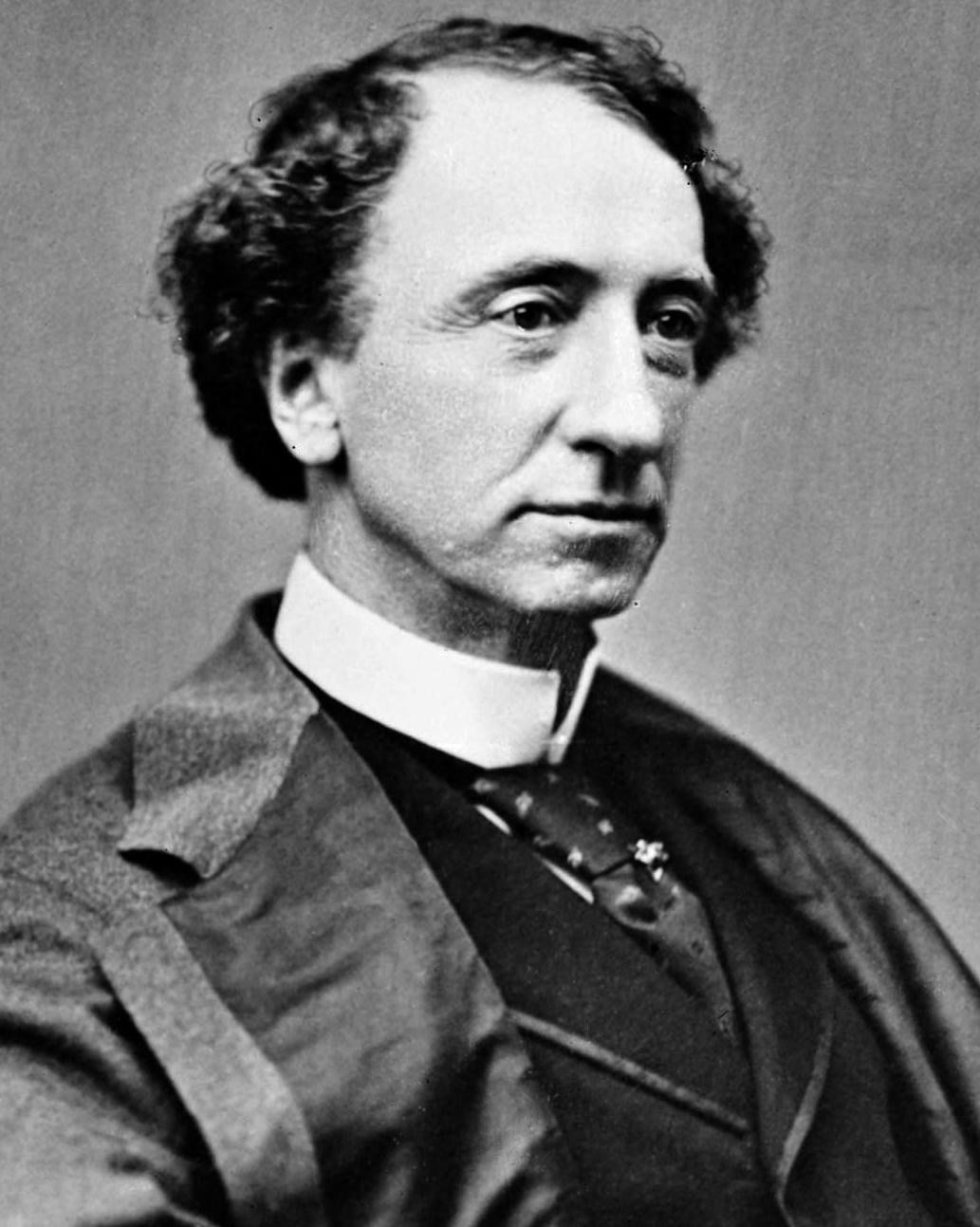
Your birth had many midwives, but primary among them was John A. Macdonald. He linked his ambition to that of the country he envisioned. The conferences that cobbled you together would have failed without him. Much of the constitution is written in his hand. As the first prime minister, he knew two things for sure. First, the Americans still yearned for more land. Second, if the infant country did not grow, the Americans would soon have it surrounded and suffocated. It was grow or be gone and the only way was north and west. And the only way to do that, was with a railway.

Brady-Handy_John_A_Macdonald_-_cropped

The idea was ludicrous. If completed, and experts lined up to say it could not be done; it would be the longest railway in the world. Not only that, it would be built over the world’s most inhospitable terrain. The rocks and thick forests of the Precambrian shield would be hard, the muskeg that could swallow men and machines whole would be harder, and the snow-peaked Rocky Mountains, well, they were impossible. Macdonald told the people of British Columbia that he would have the steel line to them in ten years and, based on that audacious pledge, they joined Canada rather than the United States which was bigger, richer and just next door. Now, the impossible had to be done.

There is a great deal about Macdonald that deserves admiration. There’s a lot that makes our twenty-first century selves squirm. To build his railway he exploited Chinese workers – the navvies. They were imported to build the line, given the worst and most dangerous jobs and, when finished, Macdonald acted to have them kicked out and the door barred. Native nations were in the way. Macdonald swept the plains by emptying bellies and filling schools in a slow-motioned cultural genocide. He was slapped into the opposition penalty box when caught swapping railway contracts for political donations, but was soon back.

Canadians preferred Macdonald drunk to the sobor alternative and him a little crooked than the less bold a little straighter. Beyond that, the building of the railway and the building of the country had become synonymous. It was both or neither. Without him, it looked like it would never get done.

When the railway was done the country was one. Try the imaginary map again. Start at Lake Superior and draw a straight line west and see if it touches nearly every major prairie city. That’s the line Sir John built. He built it on the backs of the forgotten and dispossessed, but all for the glory of the rest.

Too much Geography? No. you has just enough to hold your bursting potential. Too little History? No again. No one understands where they are unless they know where they’ve been. It is the marriage of geography and history that makes you and makes us. And together, our iron will to continue, to remain whole and strong and on guard for thee remains reflected in the unlikely but ultimately indestructible and now largely metaphorical long steel rail.

Sincerely,

A Friend.

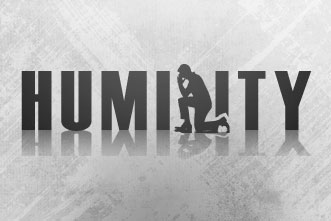
The Power of Humility

If the universe is infinite then you are at its very centre. The notion is momentarily intoxicating until you realize that so is everywhere and everyone else. Twin that thought with the three or four score we’ll be here while the universe celebrates its 13.8 billionth birthday. Both facts invite humility just as we need more of the stuff.

Humility is not the surrender of self-confidence or the abandonment of ambition. Rather, it is the conquering of the self-defeating twin demons of ego and narcissism. Humility offers the road to happiness and ticket to redemption.

With humility, accomplishment can be celebrated as the team effort it always is; the immediate team with which you attained the goal and the accident of your birth that put you at the right time in history, the right place on Earth, and with the right genes and health and doses of luck and ability to work in the first place. No team can thrive without humility. Without humility, a boss can only be a bully and a parent only a boss.

The Power of Humility

(Photo: postjesusonline.wordpress.com)

These, I believe, are humility’s three most important lessons:

1. Cool is a Myth: I recall the day it happened. I was with colleagues on a Friday afternoon when it was whispered, “Look over there. All the young people are deciding what they’re going to do tonight.” My eyes widened. How did that happen? I thought I was one of the young people.

Most people in their twenties think they’re cool. Most in their thirties worry that they are no longer cool. In their forties, many swear they don’t care about no longer being cool. Most folks in their fifties realize they were never really cool at all.

Test yourself at the next wedding or party. Try to find that person on the dance floor that made you giggle as a teenager. Can’t find him? Then it’s probably you.

Rather than standing as King Canute on the thundering, relentless shore, humility offers the option of laughter, the tranquility of acceptance, and comfort in one’s inevitably aging skin.

2. There’s Always Someone Better: I have played guitar since I was nine years old. I’ve played and sung in bars, clubs, and coffee houses and my band still plays a monthly gig at Lakefield’s Canoe and Paddle pub.

Last Sunday I was plugged in and enjoying a loping run along the river when Brian Setzer’s version of Mystery Train stopped me in my sweaty tracks. His guitar work was stunning, masterful, and unearthly. I clicked over to YouTube to hear more of his work of which I had always been sort of aware but never paid adequate attention to. He makes the guitar sing.

Back home, my trusty Gretsch felt like a fence post in my arms. I resisted the urge to put it on eBay. Only slowly did I regain my composure and re-dedicate myself to the instrument.

Humility allows the realization that not being the best, or even in the same ballpark as the best, is never a reason to quit or stop trying to improve. Humility invites us to imagine the tragic silence of a forest where only birds with the best voices sing and then find our song.

3. Some Things Can’t Be Fixed: Last Wednesday I held my three and a half month old granddaughter. I know how lucky I am that she and her sister live so close and that I see them nearly every day. On this morning, however, she was screaming. Tears flooded her squinting eyes as she launched into the vibrating cry that shakes parent’s and grandparent’s souls.

Her first tooth was poking through with the pain that, I am told, would drop any adult to their knees. Worse, is that infants live in the moment and so, in their minds, the agony will never go away. Worse still, for me at least, was that beyond the gel, teething toy, and cooing comfort of the gentle sway, there was nothing I could do, nothing.

Sometimes there is, indeed, nothing you can do. Sometimes, no matter who we are or who in our society to whom we turn, it can be neither avoided nor fixed. Pain will be suffered, disease will strike, an accident will happen, and a loss so devastating as to urge quitting it all will occur. Character is not made in those moments, it is revealed. Humility is character’s handmaiden.

The Power of Humility..

(Photo: http://www.discoveryplace.info)

So let’s praise the examined life, the charm of folly, the seeking of goals rather than credit, the experience rather than the picture, and the humble acceptance that we are what we are for the speck of time we’re here. With humility as our guide, our brief journey will be a whole lot happier for ourselves, for those with whom we work and play, and especially for those we love and love us back and make the trip worth taking.

 If you enjoyed this column, please share it with others using your social media of choice and consider following my Monday morning blog found at http:www.johnboyko.com

Corporate Coup: Where Have You Gone Teddy Roosevelt?

Does this sound familiar?

  • The gulf was widening between a tiny elite that was growing richer while the vast majority was seeing the evaporation of economic security and social mobility.
  • Political leaders were largely voices of the powerful who backed campaigns and swayed votes with gargantuan political donations.
  • Cities were witnessing growing violence, as people grew helpless and hopeless with police apparently more interested in cracking heads to maintain order than enforcing laws to promote justice.
  • Rapaciously ambitious business interests that government seemed unwilling or unable to regulate for a common good or sustainable future were befouling the air, water, and forests.
  • The media pandered to the lowest common denominator with stories of the latest crime, tragedy, or scandal while ignoring what truly mattered.

It was the United States. It was 1895. Everything seemed to be circling the porcelain facility with gathering speed. But then, something happened.

Theodore Roosevelt was born to a affluent family in 1858. He could have taken his wealth and Columbia law degree and chased women or money or both but instead chose public service. As a New York assemblyman he was aghast at the working and living conditions of the poor to which his privileged upbringing had blinded him. He fought the deep pools of wealth and swirling eddies of political power that sought only to maintain the status quo or enhance its inequity.

A string of family crises took him to the west but he was soon back and with a burning desire to bring right to so much wrong. As New York City’s police commissioner he often took a reporter in tow and toured the city’s mean streets at midnight. He fired cops who were found asleep, corrupt, or unworthy of the badge. He shone light into dark tenements where unfair advantage, unenforced laws, and accepted practice worked against the working poor.

He continued these efforts as New York’s governor. With each demand for reform, he was threatened by those who believed him a traitor to his class and a danger to bosses who ignored laws, rules, ethics, and morality. Roosevelt’s Republican Party, seen as the party of the rich, white, elite, began to move against him.

Many Republicans applauded his being moved out of the way with his appointment as President McKinley’s Assistant Navy Secretary. They were even happier when, after his daring military exploits in Cuba made him nationally famous, he became McKinley’s Vice President. At that time the old joke rang true: One man went to sea and the other to the Vice Presidency and neither was heard from again.

However, McKinley was assassinated in 1901. At age 42, Roosevelt became America’s youngest president. Upon moving in, by the way, it was he who changed the name from the President’s Mansion to the White House.

Where Have You Gone Teddy Roosevelt

Roosevelt moved slowly toward implementing his Progressive agenda and was helped immensely by a growth in investigative journalism. McClure’s Magazine began it all with the publication of a number of fact-filled articles detailing corruption in government, unions, and business. Its greatest writer was Ida Tarbell. She wrote a series that exposed the Standard Oil Company as the worst of the huge trusts that were enriching a very few while exploiting workers, destroying the environment, and making a mockery of democracy and capitalism.

The McClure’s articles, and others that followed their lead, afforded Roosevelt the public support he needed to take on the trusts and their powerful mouthpieces in Congress and the mainstream press. He used the largely toothless Sherman Anti-Trust Act to launch a lawsuit that ended up smashing the trusts and their corporatist Congressional power. Despite what critics had warned, the economy did not collapse, in fact, it thrived as never before as millions were now participants and contributors rather than its minions and victims.

From this effort came what Roosevelt called his Square Deal. It was a program of government action that regulated business to make food and products safer, workplaces more humane, living conditions more human, and, through it all, the American dream more aspirational and obtainable. Hope replaced despair. Again, despite the warnings, the government activity did not end ambition; rather, it allowed it a more fertile field in which to blossom.

The Square Deal attacked the notion that the rich can’t be taxed and poor can’t be helped. This idea was the corollary of the maxim that the rich won’t work because they don’t have enough money and poor won’t work because they have too much. Roosevelt showed both were bosh.

Roosevelt was the first environmentalist president. His National Monuments Act created parks, bird sanctuaries, national forests, and game preserves. Against the baying lobbyists demanding the right to drain profits from untapped resources, Roosevelt protected national treasures such as the Grand Canyon.

Upon leaving the presidency, Roosevelt took pride in the fact that Robber Barons who had been despoiling capitalism and democracy were chastised. A movement for the responsible stewardship of the environment had begun. The role of government as the arbiter for the people rather than apologist for the little elite was established. The practice of socializing risk while privatizing profit was put at bay.

Now, though, it is 1895 again. The slow motion corporate coup d’état that began in the early 1980s in the United States, Canada, and Britain is nearly complete. Those noting the trend and offering solution are, like before, ignored, belittled, or attacked as enemies of the democratic, capitalist ideals they are trying to save from those who sing their praises while violating their principles.

Is that OK? Or is it time to wonder: “Where have you gone Teddy Roosevelt, our nation turns its lonely eyes to you.”

I guess its up to those of us who believe in real democracy and capitalism and not what they have become. It is for us to see through the negative ads, scandal de jour, screeching pundits, twitter trolls, ideologically warped cable news, and bread and circus on offer.

Perhaps those eager for change will not take to the streets but, rather, there will be a quiet but popular rejection of those who are bought and paid for. Maybe a lot of folks – it never takes a majority, just a lot – will call out those who use our money to bribe us and insult us by ignoring us or by hissing “obviously” through smirks. Maybe enough people will make it clear that we actually see through the contradictions between their words and actions and see their irony on parade and the cynicism of their papier-mâché faux patriotism.

Perhaps there is another Roosevelt out there and who know which party he or she is in? Teddy? Are you there?

Postscript: The story is true. Roosevelt was an avid hunter who once refused to shoot a small bear that his guides had leashed to a tree lest he go home without a kill. A toy company heard the tale and produced stuffed bears that it named after the president, hence, Teddy Bears.

If you enjoyed this column, please share it with others and consider checking my other columns and even following my weekly blog.