The Value of Values

Values matter. Values inform our character and offer touchstone and compass for our lives. If values are sacrificed for expediency, opportunity, or fear, we become blind wayfarers, adrift beneath a starless sky.

Values are as essential to us as individuals as to our collective selves: the nation. That is why we write them in the documents we cherish. They ring from the American constitution’s amendments, reflecting sacrifices made and victories won, as well as from the defiant, aspirational Declaration of Independence. Similarly, Canada’s constitution and Charter of Rights and Freedoms express values ingrained from lessons learned.

Sometimes, and seldom when seas are calm and skies blue, we are tested. The tests are not of the values themselves but of our fidelity to them.

Canadians were tested in 1914 when a ship called the Komagata Maru arrived in Vancouver’s harbour. Aboard were Indian families seeking to trade the corruption, poverty, and violence of their homeland for Canadian sanctuary. Officials discovered that the ship had passed through Hong Kong and so cited a 1908 law called the Continuous Passage Act which barred entrance to anyone arriving through a third country. It was a ruse. There were no direct routes from India to Canada. Canadians simply did not want Indians and certainly did not want the Komagata Maru’s 352 Sikh migrants. They were forced to steam away.

A generation later, in May 1939, the German ship St. Louis left Hamburg for Cuba. 937 Jewish refugees were fleeing Hitler’s madness. Nearly all had applied for American visas and saw Cuba as their stepping stone to freedom. Everyone knew of the Holocaust. Western newspapers had been reporting on the theft of Jewish dignity and rights and of Kristallnacht, the two horrifying nights the previous November in which synagogues and Jewish businesses were smashed. Everyone knew.

And yet, the Cuban government refused to allow the St. Louis’ passengers to disembark. The ship was forced to leave. It steamed north and when close enough to see Miami’s lights, American warships turned it away. President Roosevelt was told of the people’s plight and of their certain death if forced back to Germany, but he said nothing. A State Department telegram explained that the refugees must “await their turns on the waiting list and qualify for and obtain immigration visas before they may be admissible into the United States.” At that time, the waiting list was several years long.

The St. Louis was forced up the coast until it finally reached Halifax. Its reception was the same. The passengers were not allowed landfall. Canadian prime minister Mackenzie King was travelling in the United States at the time and referred the matter to his Immigration Branch director Frederick Charles Blair. Blair ordered the ship gone. When asked how many Jews would be allowed into Canada he retorted, “None is too many.”

The St. Louis arrived back in Europe and Belgium, Great Britain, France and the Netherlands accepted some of the passengers but not all. With options exhausted, 532 returned to Germany and 254 perished in the Holocaust’s ovens.

The Komagata Maru and St. Louis are, in essence, again at our door. This time it is Syrian refugees fleeing the horrors of a complex and brutal war. As in 1914 and 1939, many Canadians and Americans are arguing that we should bar that door. We should, it is said, ignore the fact that unless we are indigenous people that we are all from somewhere else and, more significantly, that we should ignore our values.

One argument for saying no to the refugees is that Islamic terrorists could slip in with legitimate refugees. However, we should note that recent terrorist attacks in neither Mali nor Paris were conducted by Syrians or refugees. Should we trust our screening systems and our police and security organization or should we surrender our values to the fear that of the thousands of people who could be saved that one might be dangerous? Are not domestic terrorists such as those who have blown up buildings, or crowds such as in Boston, or shot up schools, and theaters not a greater threat?

America’s Homeland Security and Canada’s RCMP and Canadian Security Intelligence Service agree that Syrian refugees present no threat to Canada or the United States. Time Magazine reported Pentagon sources as stating that the Syrian refugees are being carefully screened and that nearly all are, “survivors of torture, victims of sexual violence, targets of political persecution, the medically needy, families with multiple children and a female head of household.”

A second argument is more disturbing. The racism that sent the Komagata Maru and St. Louis away is with us still, it’s just become more cleverly hidden. The embers of racism are kept alive not just by the obscene beliefs and actions the KKK that we seldom see but by the little racist jokes at coffee shops that we too often hear. A number of pundits, politicians, and even some who wish to be president have been fanning those embers into flames. Canadian cities have seen Muslim women harassed and a mosque in Peterborough, Ontario was burned. Donald Trump has called for a registry of Muslim Americans. Jeb Bush said that only Christian Syrians should be admitted.

Do these fears, attitudes, actions, and proposals reflect the values inherent in our founding documents? Do they reflect the lessons learned from the Komagata Maru and St. Louis, or the Holocaust, by the treatment of indigenous people, or our Second World War Japanese internment camps? What would Lincoln, Kennedy, Diefenbaker, or Pearson say? Or, if you rather, and if you believe, in the Bible’s Matthew 25:35, Jesus taught that showing love for Him was done by caring for the most needy: “For I was hungry, and you gave Me something to eat; I was thirsty, and you gave Me something to drink; I was a stranger, and you invited Me in.” And you invited me in.

The question of the Syrian refugees, like all questions, whether at home, at work, or on the national stage, circle back to values. We believe in our values or we do not. Talking about them doesn’t count. We should measure ourselves, our leaders, and our nation according to the congruency of words and actions. If we do not act according to our values then we really don’t believe in them. If community doesn’t really matter then let’s stop pretending it does. If we really don’t believe in multiculturalism or tolerance or diversity or the separation of Church and State then let’s say so. Let’s concede that all men are not really created equal after all. Let’s take a chisel to the Statue of Liberty so that it no longer proclaims:

“Give me your tired, your poor,
Your huddled masses yearning to breathe free,
The wretched refuse of your teeming shore.
Send these, the homeless, tempest-tost to me,
I lift my lamp beside the golden door!”

Daily Life in Domiz refugee camp, Kurdistan Region of Iraq

(Photo: http://www.resettlement.eu)

We have a choice. We can listen to our values. Let us insist that the Komagata Maru and St. Louis incidents were aberrations from which we learned. Let us celebrate our values by living them. Let us reject those who sully established values for personal, professional, or political gains no matter how cleverly disguised as for the greater good.

We should welcome Syrian refugees because our values say that we should. And if all that is not enough, there is one more reason that we should save them – because we can.

 Please consider sharing this post with others through Facebook or other social media and checking my archive of Monday columns at http://www.johnboyko.com
The Rich Man’s Riot and Democracy’s Dawn

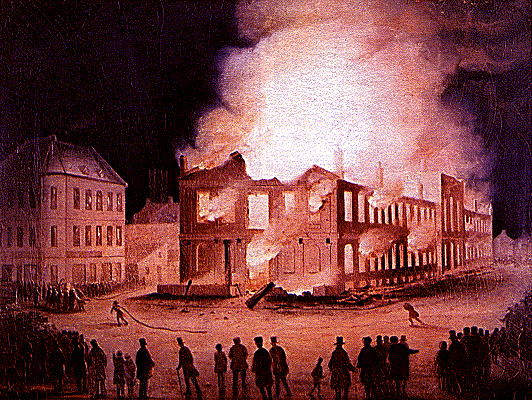
Like each of us, a nation’s character is forged by triumphs recalled and tragedies we choose to forget. On an April evening in 1849, a Montreal mob burned Parliament to the ground. The fire and ensuing riots are among many largely forgotten incidents suggesting that Canadians are not what we like to think we are.

Canada is not the meek and peaceable kingdom of our collective mythology. It’s more complicated than that. We are more complicated than that. If we wish to understand who we are as Canadians, who we truly are, then we must understand and acknowledge the ugly but transformative power of riots whose fires, blood, and mad destruction dot our past and colour our character.

The flint that lit the 1849 flames lay in the muskets and determination of farmers who, twelve years before, marched down Toronto’s Yonge Street and up the road to St. Denis. They understood power. They knew they had none. A small, rich, urban elite – we would call them the one percent – was making all the rules and ruling only for themselves. A British governor held executive authority and he appointed only rich business and clerical leaders to his cabinet then heard only the advice of London and those well-heeled friends. The people and its elected assembly were routinely ignored.

William Lyon Mackenzie, in what is now Ontario, and Louis Joseph Papineau, in what is now Quebec, harnessed the people’s righteous indignation and led armed rebellions. The Toronto fight ended quickly with gunfire where Maple Leaf Gardens would later stand. Papineau’s rebellion was longer and bloodier but it too was crushed. Three hundred and thirty died, 2,000 were arrested, 151 were banished to Australia, and 12 were hung. The leaders fled to the United States.

The foppish Lord Durham was dispatched to find out what happened. He grumbled through five months of high living and then wrote a report revealing that he had learned little. Thinking the rebellions were inspired wholly by religious and ethnic tensions, he recommended joining the two colonies under one administration to overwhelm the pesky French Catholics. However, he also recommended that the new colony’s governor rule according to advice from Canadians rather than London.

The old conservative elite rigged the new game to keep their old power. People like Toronto’s Bishop John Strachan and Montreal brewer John Molson still called the shots. Reform politicians Robert Baldwin and Louis-Hippolyte LaFontaine, however, forged an unlikely alliance. They insisted that members of the executive council – the cabinet – be appointed not from among the rich and clerics but, rather, from among those elected by the people.

After two violent elections that were corrupt even by 19th century standards, and then shifting priorities in Britain, a new Governor arrived. Lord Elgin allowed democratic reforms that farmers and urban merchants were demanding. The 1848 election afforded Reformers a parliamentary majority and Elgin asked Baldwin and LaFontaine to become co-premiers and form a cabinet. The 99% had won. The 1% were out – and they were mad.

Among the new government’s first legislation was the Rebellion Losses Bill. It pledged to compensate all those whose property had been damaged in the 1837 rebellions, including the rebels themselves. The old conservative elite was outraged. Their petition to the governor was dismissed. Although Elgin disagreed with the bill, he said that the people’s government had legally passed it and so he must sign it. At five o’clock on April 25, in the presence of the members of both houses of parliament, he affixed his signature.

As Elgin left the legislature, elegantly dressed business people and Conservative (Tory) MPs pelted his carriage with rocks. An egg smashed his face. With horses at a gallop Elgin escaped the melee. Drunk with indignation, 1,500 angry Tories and their supporters gathered at Champ-de-Mars. Holding torches aloft they marched, shattered windows, and chanted their way to the opulent St. Anne’s Market building that housed parliament.

The legislature was in session but members scattered as rocks smashed through windows. Sandford Fleming, who would later plot the railway route through the Rockies and invent standard time, grabbed a portrait of Queen Victoria and ran it out a back door. Several legislators, including John Sandford Macdonald, who would later be Ontario’s first premier, blockaded the large front entrance. Led by a well-known lawyer, the mob stole a 35-foot ladder and used it to crash their way inside. Legislators were knocked down and kicked. A fat man in an expensive waistcoat jumped atop the speaker’s chair and yelled, “I dissolve parliament!” Furniture was smashed. Gas pipes were broken and then torches thrown. Bankers, lawyers, and clerics cheered the collapse of the roof as the screaming, leaping flames licked the sky. The fire quickly engulfed a neighbouring house, two warehouses, and a hospital. And the cheering went on.

Rich Man's Riot.

(Photo: history.lbpsb.qc.ca)

The next night, men left their fine homes, expensive sherry, and imported cigars to reassemble downtown. There were more speeches about race, religion, class, and the natural order of things and power lost. This time their spitting anger was focused on the homes of political enemies whom they blamed for stealing what was considered rightfully theirs. LaFontaine’s house on rue de l’Aqueduc and Baldwin’s boarding house were among those attacked with torches and rocks.

As the mad violence threatened to fill a third night, the military assembled. General Gore warned of the arming of police constables and that the 71st regiment had rifles and cannon ready. There were scattered incidents of violence but a tense and eerie calm gripped the city.

Everyone knew the riot’s instigators. Everyone knew who had thrown stones and set flames. But Baldwin and LaFontaine restrained their reaction. They did not meet violence with violence. They ensured that some arrests were made but also that all were freed. They carefully enhanced security and for weeks there were flares of politically inspired violence but a bitter peace eventually prevailed. The army retired to base and the police locked up their guns.

Over the next weeks, Parliament was moved to Toronto. A Tory petition to London demanding an overturning of the Rebellion Losses Bill was denied. The payments were made. A Conservative movement demanding Canada’s annexation to the United States was initiated by new voices of the old Tory elite, including some who would later be fathers of confederation. It was allowed a natural death.

Most importantly of all, those still raging at the shift of power from the one to the ninety-nine percent fought not on the street but through committees, editorials, and speeches. The government remained in office with executive power, then and forever afterward, held not by the privileged, handpicked few but determined by the votes of the many.

The 1849 rich man’s riots did not signal Canada’s independence from Britain, but it was a crucial step. They did not give birth to true democracy, but parliament’s flames illuminated its dawn. Perhaps we are well served to recall incidents such as the Montreal riot to better understand ourselves and who we truly are. Further, perhaps we should ponder if the old fights regarding whose voices should be heard and interests served will be, or maybe even should be, re-fought. If so, let us listen for the voices of this generation’s Baldwin and LaFontaine, lest torches be lit again.

If you enjoyed this column please share it with others and considered checking our more from my Monday blog archive at http://www.johnboyko.com

Percy, Poppies, and a Pledge

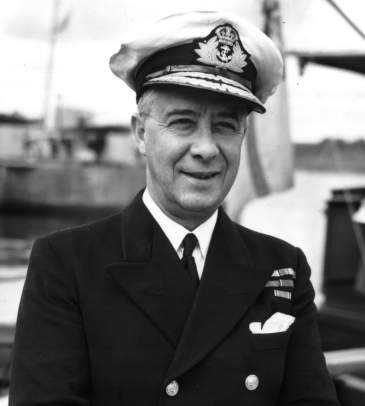
He wasn’t a movie star. He wasn’t a famous athlete or the latest singer whose catchy ditty momentarily captured a spot in the charts and teens’ hearts. And yet, there it was. At Lakefield College School, tucked in the woods by the lake about halfway between Toronto and Ottawa and, in the 1940s, also halfway between 19th century British elitism and 20th century Canadian ruggedness, a boy took a knife in hand. In the windowsill of the little library he carved the name Percy Nelles.

The other boys, and at that point the school was all boys, understood. Nelles awed. He inspired. Nelles had been one of them but now belonged to the world. Teachers turned a blind eye to the vandalism for they understood too. And so as they passed the window each day the boys glanced down, some whispered the name, and in silent reverence many drew fingers over the defiant tribute.

Nelles had been a Lakefield student when the school was young but the values upon which it would thrive were already firmly established. He was a skilled cricket player and an enthusiastic member of its army cadet corps. Upon graduation in 1908, he joined the Fisheries Protection Service. With the creation of the Canadian Navy in 1910, Nelles became a midshipman in HMCS Niobe. Promotions came quickly. He enjoyed service in many ships and during the First World War at the navy’s Nova Scotia Head Quarters as flag lieutenant and director of the Naval Service.

Peacetime saw the navy shrink but his career flourish. Nelles was captain or commander in a number of ships and served at the Imperial Defence College. In 1934 he became Canada’s chief of naval staff – the first Canadian-born and trained to do so. Four years later, with Hitler’s mad ambitions about to plunge the world back into war, Nelles was promoted to rear admiral.

Nelles had not forgotten his old school. He played an instrumental role in an initiative that in 1939 saw the Canadian Navy officially recognize the newly formed Lakefield Royal Canadian Sea Cadet Corps (RCSCC) St. George – Canada’s only school-based sea cadet corps. Boys were divided into four platoons and a band. In crisp blue uniforms they trained for a half hour or more each day, learning skills needed to become naval officers. For five years they also enjoyed sessions on Georgian Bay’s Beausoleil Island. They knew that Nelles had helped establish the Sea Cadet Camp facilities and its fun but rigorous program.

Meanwhile, Nelles was reassigned to Britain where, as the senior Canadian flag officer overseas and head of the Canadian Naval Mission, he oversaw the Canadian Navy’s preparations for the June 1944 D-Day invasion of France. He coordinated 110 ships, 10,000 sailors, and 15 air force squadrons for the successful landing of 14,000 Canadians on the heavily fortified Juno beach. D-Day was the turning point in the war that reminded all that evil is sometimes incarnate in a man or movement. Evil’s enemy can sometimes be a kid from a Saskatchewan farm, or Calgary street corner, or even a little school in Lakefield.

Percy, Poppies and a Pledge

(Photo: http://www.navy-marine.forces.gc.ca)

The library is gone now. The space became a classroom, then staff room, and is now a slick new Admissions office. But the windowsill is still there and so may also be the boy’s carving that was so simple and yet represented so much.

It is the same simplicity represented by the little poppies we wear each November. They express our devotion to those who offered their full measure of devotion for causes perhaps forgotten but in support of values that endure. They proclaim our insistence that the sacrifice and service of those who died, of those who returned whole or broken, and of those still in uniform, shall not be forgotten. Our remembering is as simple as the little felt poppy, or the windowsill carving, but as complex as citizenship itself.

For a few days each year we are asked to transcend our lives’ minutia and the exhortations of some politicians and all corporations and become more than voters, taxpayers, and consumers. We become citizens. And as citizens we bear the burden of remembrance.

To remember all who served is overwhelming and so this year I will offer respect for all by remembering one. This year I will remember Percy Nelles. In my moment of silence on the 11th at 11, I will curse war but revere the warrior. I will hate the hypocrisy, greed, and stupidity of wars of choice but honour the value of service-above-self.

But even this is too easy. Perhaps his memory is better honoured not by a forgotten carving or soon discarded poppy. Maybe this year we can summon the courage to act as Nelles did, as they all did, and let the values that inspired their service more fully inform our lives. These are the values, the essence of informed, engaged citizenship, that we saw on vivid display in Canada’s recent election. We see it every day in the acts of selfless volunteers. We see it in those whose courage and convictions broaden the circle of community. We see it through actions that demonstrate not just tolerance but acceptance and by acts and attitudes that show a willingness to trust a little more and take a little less.

Engaged citizenship is hard. It is a hell of a lot harder than wearing a poppy for a few days or standing silent for a minute a year. But let us compare the challenges of engaged, values-based citizenship to the difficulties and sacrifices of those for whom we don poppies.

Rear Admiral Nelles, this year, I pledge to do my best.

If you liked this column please share it with others through Facebook or other social media and consider my other columns at http://www.johnboyko.com
Leadership and Narcissism

Leadership and Narcissism

The Canadian election is over and the American presidential campaign is heating up. Justin Bieber’s adolescent petulance has again made headlines and pictures of celebrities in Halloween costumes have been spamming my Twitter account. CEOs at Volkswagen, a couple of banks, an oil company, and those running Soccer’s FIFA World Cup have been behaving badly. Perhaps it is an appropriate moment to consider narcissism.

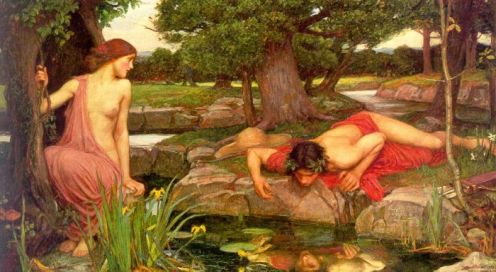
The word derives from the Greek legend of a handsome young man named Narcissus who fell so head over heels in love with himself that he devoted days to gazing longingly at his reflection in a pool. He eventually died and was transformed into the flower called narcissus.

Narcissism

(Photo: http://www.barrett.com.au)

In 1914, Sigmund Freud used the legend to discuss the problem of excessive self-love. In the 1970s, University of Chicago’s Heinz Kohut deepened our understanding by writing that all children have a grandiose sense of self and see others as merely pawns. Due to a trauma they may not recall, and may not have even been a negative experience, some people never move past that stage. Kohut dubbed the result a narcissistic personality disorder.

Those suffering from the disorder, he wrote, do not suffer at all. They thrive. They revel. They strut. They succeed and they celebrate. They are aware of their inflated sense of self while carefully calculating their interactions with others to advance careers that they see as their due. A narcissist is completely and sincerely convinced that their opinions are superior to all and so their world – be it a particular organization or company or even the broader arts, business, or politics – will be improved if others just got out of their way. A 2004 Harvard Business Review article noted that executives at Oracle described CEO Larry Ellison like this: “The difference between God and Larry is that God does not believe he is Larry.”

A narcissist always makes a good first impression because he is irresistibly charming, witty, and confident. It’s an easy act because his life is a performance. He is often a loving spouse and parent, for example, as it allows yet another demonstration of his ability to master difficult tasks. He often gets things done at work because he swiftly clears aside obstacles whether they are people or established practices. If caught doing something unwise or illegal, critics are dismissed as jealous or mindless ‘haters’ and rules or laws as merely misguided impediments. Narcissistic leaders are capable of shoe shuffling mea culpas but privately smile at critics and criticism as bothersome bumps on the road constructed by poor souls who will eventually understand that all will be better when they are allowed back on the bridge with only their hands on the tiller. Consider Richard Nixon or Bill Clinton.

Washington University’s Erica Carlson writes that it is this combination of self-awareness and refusal to accept criticism or consequence that results in narcissists never believing that they need to change. Narcissists are incapable of change. The world must change to suit them and not the other way around. Consider Kanye West even before he announced that he would run for president.

Not all leaders are narcissists and not all narcissists are leaders. But, according to Dr. Thomas Paine, narcissists are overwhelmingly represented in leadership positions in sports, entertainment, politics, and business. Paine warns us to watch for a leader who is a charming conversationalist but always brings talk back to himself or his preferred topic. Watch for a leader who surrounds himself with sycophants and banishes those with long corporate memories and others who challenge his views or goals. Look out for the leader who can feign empathy but whose goal-driven actions aggrandize himself and his personal metrics of success while revealing no genuine concern for the feelings or even the lives of others. Watch for the leader who smiles at adversity with the confidence that he will weather all storms and emerge triumphant. Most importantly, he warns, watch for leaders who value their success more than that of the organization they lead. Consider Donald Trump.

Narcissism is more important than the Beibs or Kardashians. It is more important than measuring your personal rate of selfies per hour. Our intersecting worlds of culture, business, and politics matter a great deal and so the slippery slope from confidence to arrogance to narcissism among some of our leaders in each world matters. In fact, it is crucial.

If you enjoyed this column, please share it with others through Facebook or your social media of choice.

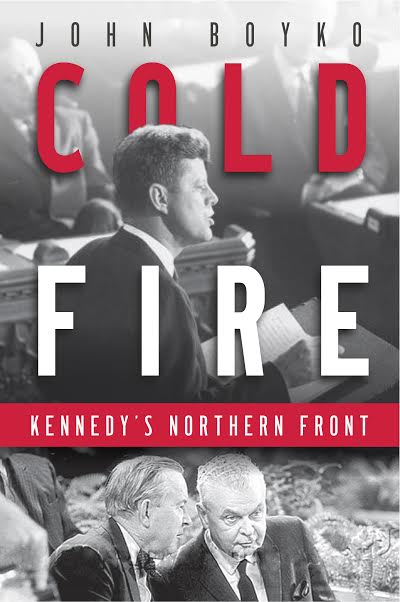
Cold Fire: Kennedy’s Northern Front

jacket

Cold Fire: Kennedy’s Northern Front will be published in Canada and the United States on February 2, 2016.

The United States and Canada had reached a crossroads and three leaders were trying to pull their countries in wildly different directions.

President John F. Kennedy pledged to pay any price to advance America’s homeland defense and strategic goals and he needed Canada to step smartly in line. Canada lay between the United States and the Soviet Union and so was a vital part of America’s security. Kennedy demanded that it house nuclear weapons and change its economic and foreign policies to support his. Frustrating Kennedy at every turn was Conservative Prime Minister John Diefenbaker, an unapologetic nationalist seeking to end the trend toward greater continental integration by bolstering Canadian autonomy and developing an independent identity. Meanwhile, Liberal leader Lester Pearson, the Nobel Prize–winning diplomat, saw value in continuing the slide toward integration.

While battling communism around the world, Kennedy never forgot his northern front. He adroitly exploited his enormous popularity among Canadians to seduce its people and pressure its government to bend to his will. He ruthlessly attacked Diefenbaker and shamelessly supported Pearson.

Newly released documents present shocking revelations about these crucial years. During the Cuban Missile Crisis, Canadian ships and planes guarded America’s Atlantic coast, while Canada suffered a silent coup d’état. Kennedy pushed a nuclear weapons system on Canada while knowing full well that it was merely a decoy to draw Soviet fire. Kennedy carefully influenced and monitored the overthrow of a Canadian government and the election of another. While Canada helped Kennedy tumble into the Vietnam War he did nothing to stop American inspired violence on the Great Lakes border. Perhaps most startlingly, if not for Diefenbaker, Kennedy may have survived the assassin’s bullets in Dallas.

The movie-television rights have already been optioned for this non-fiction book that reads like an adventure novel, brimming with sparkling stories, fascinating characters, and fresh insights into this critical moment. Cold Fire will astonish readers with the intriguing ways in which the struggles of these three resolute leaders determined the course of the next half-century.

The book can be pre-ordered at Chapters: https://www.chapters.indigo.ca/en-ca/books/search/?keywords=john+boyko

or at Amazon: http://www.amazon.ca/Cold-Fire-Kennedys-Northern-Front/dp/0345808932/ref=sr_1_4?s=books&ie=UTF8&qid=1446165612&sr=1-4

Hundred Days and Honeymoons

In the fifth century, a northern European marriage tradition encouraged newlyweds to enjoy a daily dose of mead, a fermented liquid honey. It was believed to be an aphrodisiac. Using the only calendar available, the sipping stopped when the moon returned to the wedding day’s phase – about a month. From this custom came the honeymoon.

The concept has grown. We experience honeymoons at work. The new person is allowed silly questions and rookie mistakes. New business leaders are similarly excused if questions reflect a genuine desire to understand and not veiled threats, and mistakes are forgiven if blame is accepted and apologies are quick. Often, however, honeymoons end when a business leader’s personality flair reveals a character flaw; intelligence becomes arrogance, or the pace and nature of change threatens profits or values.

Such is also the case in political leadership. Political honeymoons are Franklin Delano Roosevelt’s fault. He became president in March 1934, in the depths of the Great Depression. Within 100 days of inauguration he presented, and Congress passed, 15 major bills. He began by closing and stabilizing banks and then quickly touched nearly every sector of America’s sputtering economy. Some New Deal legislation worked and some failed but within those frenetic 100 days confidence and investment were rekindled and lives and capitalism itself were saved. Soon, however, even FDR’s honeymoon ended. Critics appeared from the left and right and the Supreme Court overturned his most ambitious initiatives.

Every leader, whether in business or politics, is warned that a honeymoon is as real as it is transitory and so it must be as productive as possible. Since FDR, every newly elected political leader has also been measured according to his or her First 100 Days.

Few leaders have demonstrated those twin realities as clearly as Barack Obama in 2009 and Pierre Trudeau in 1968. Both were propelled to office by charm, charisma, and positive campaigns. Both undertook ambitious agendas supported by the public and enabled by their party’s legislative majorities. Then, inevitably, both saw popularity plummet as their 100 days involved more talk than achievement and performance that couldn’t match promise. Obama watched Republicans take the House of Representatives. In his next election, Trudeau formed a frail, two-seat minority government.

Justin Trudeau has yet to be sworn in but the clock is already ticking on his honeymoon. Like all honeymoons, it offers novelty and excitement. The United States has seen two father and son presidents – Adams and Bush – but this will be a Canadian first. Never have Canadians welcomed a new leader not through the lens of TV news or at the behest of newspaper endorsements but, rather, primarily through the citizenship levellers and engagement enablers of YouTube videos, tweets, selfies, and blogs. Not since Pierre Trudeau, have Canadians embraced a celebrity politician as they would a movie or rock star.

Hundred Days and Honeymoons

(Photo: beaconnews.ca)

Our prime minister designate followed a masterful campaign with a positive election night speech, a fun meet and greet with surprised Montreal subway commuters, and an articulate, confident press conference. Even those who did not vote Liberal seem invigorated by his promise of change in policy and tone; shown most blatantly in his inviting premiers and opposition leaders to the climate conference in Paris. Much of the country, in fact, much of the world appears giddy with expectation. A Canadian journalist has, only partly in jest, asked the international media to stop ogling our prime minister.

The Liberal parliamentary majority could guarantee a productive 100 Days with actions and bills addressing the environment, murdered and missing indigenous women, tax reform, infrastructure spending, an end to Canadian military action in Syria and Iraq, and more. We should enjoy the ride but remember our history. The 100 Days will end and the honeymoon won’t last. Soon enough, Canadians will stop sipping their honey and Mr. Trudeau may not seem quite so sunny.

If you enjoyed this column please share it with others on Facebook or your social media of choice and consider checking my other columns at http://www.johnboyko.com (This column appeared as an op. ed. in the Ottawa Citizen on October 29, 2015)

Rocks, Guns, and Unicorns: Today’s Campaigns Are Child’s Play

The longest Canadian federal election since 1872 is finally over. Thank goodness. The attacks on Liberal leader Justin Trudeau began before the writ was dropped with TV ads declaring him not ready and others showing wildly out of context quotes and clips. The New Democratic Party and Liberals launched their own ads and assertions that were equally nauseous in tone and questionable in accuracy.

The long Canadian campaign was nothing, of course, compared to the American four-year presidential marathon that became real fully two years before party nominations. Canadian negative campaigning also pales in comparison. Consider the House Benghazi Committee that was ostensibly created to investigate the deaths of four Americans in Libya in September 2012. Republican House leader Kevin McCarthy recently bragged that the committee’s sole purpose is to destroy Hillary Clinton’s presidential bid.

Today's Negative Campaigns Are Child's Play.

(www.faircitynews.com)

Negative ads and practices are used because they work. They have always been with us. In many ways, they are tamer now than before.

Consider Burr and Hamilton. Alexander Hamilton was the primary force behind the Constitution’s ratification and as the country’s first treasury secretary he saved the United States from bankruptcy. Aaron Burr was a senator and then Thomas Jefferson’s vice president. In 1804, Jefferson made it clear that he would drop Burr from the ticket in the upcoming election and so Burr ran for governor of New York. He lost by a wide margin; due mostly to vicious negative attacks launched against his character and lies told about his record. He blamed a number of people including Hamilton.

Burr challenged Hamilton to a duel. In a New Jersey field they paced it off, turned, fired, and Hamilton fell. One of America’s most respected founding fathers died the next day. Burr returned to Washington and, with Jefferson’s blessing, served out his term as Vice President.

Canada’s history is less violent. In 1861, Conservative John A. Macdonald was running for re-election. Former friend and Reform Party candidate Oliver Mowat arranged to run in Toronto and, as was legal at the time, against Macdonald in his Kingston riding. Mowat had a number of scandalous allegations made against Macdonald and printed in newspapers owned by members of his party. (The Reform Party became the Liberals.) Included among those blatantly and unapologetically partisan papers was the Globe. It was owned and edited by Reform party leader George Brown.

Macdonald arranged his first public meeting. Mowat hired a group of young men who spread themselves around the back of the hall. When the meeting began, they instigated fights. They threw rocks at those on the stage. Macdonald jumped into the fray and threw punches along with the rest. Macdonald won the fight and election and later become Canada’s first Prime Minister. Mowat was later elected Ontario’s premier.

In the twentieth century, newspapers and money continued to wield enormous power. In 1950, young Massachusetts congressman John F. Kennedy was running for the Senate. His multi-millionaire father, Joe Kennedy, used various committees to quasi-legally funnel several million dollars to his son’s Quixote effort. Joe saved the Boston Post from bankruptcy with a $500,000 loan and then, two weeks before the election, saw the influential paper flip from supporting the Republicans to endorse his son. Kennedy defeated the far more experienced Henry Cabot Lodge by a narrow 52% to 49% margin.

Democratic presidential candidate Adlai Stevenson used one of the first negative TV ads in 1952. A carnival barker fields questions for a Republican candidate who, because he has two heads, offers two contradictory answers. The ad was clever but the Republican’s Eisenhower won the election.

http://www.livingroomcandidate.org/commercials/1952/platform-double-talk

Things have become increasingly worse. It was believed that forcing candidates to say that they endorsed a particular ad would help. It didn’t. Some thought the backfiring of certain ads, such as the Conservatives making fun of Liberal Prime Minister Jean Chrétien’s face in 1993 would help. It didn’t.

Today we seem to be stuck with campaigns that demean democracy rather than elevate it. Canada’s prime minister, for instance, based much of his 2015 re-election bid on trying to divide and frighten Canadians. In the campaign’s dying days he spoke only of taxes and used a sophomoric game show gag to make his point while saying things about his opponents that were obviously untrue. It was embarrassing.

Meanwhile, the United States has Donald Trump saying demonstrably false and ludicrous things while firing shot gun blasts of negativity and yet polling far above his opponents. America also has the Supreme Court’s Citizen’s United v. FEC ruling that declared money is free speech. It allows folks like the Koch brothers to buy Congressional seats in ways that would make 19th Century Robber Barons blush.

A glance back suggests that parties, candidates, and the wealthy are not about to change. Maybe it’s up to us. Maybe we need to become a little more discerning and ask the next question of candidates who insult us by reducing complex issues to simplistic sound bites and slogans. Maybe we need to reject those who use negative smears in ads, speeches, and debates by using social media to fact check and fight back. Truth may beat trolls. Maybe we need more journalists with the courage of comedians such as John Oliver to take on issues that corporate-owned media or ideological mouthpieces avoid. Maybe we need to respect our citizenship by more intentionally exercising it. We could begin by insisting that candidates and politicians address more than just boutique tax cuts meant to buy us and, rather, tackle substantive issues that challenge and improve us; all of us. We can do it with our tweets and blogs and donations and attention and attendance and, most importantly, we can do it with our votes.

I may be naive. But that’s okay. Hope is never a waste of time. I sincerely believe we can have an uprising without a coup. We can have a revolution without guns. All we have to do to be better is want better. All we have to do is demand better. In this way, history’s lessons will not be that resistance is futile but that better is necessary and change is possible. We’ll see.

If you liked this column, please share it with others on Facebook or your social media of choice. You can see my other columns at http://www.johnboyko.com
The Wolves Within You

A Cherokee legend has a grandfather telling his troubled grandson that there are two wolves fighting within him. One wolf is pride, sorrow, regret, anger, self-pity, and ego. The other is humility, serenity, acceptance, generosity, empathy, and compassion. The boy asks, “Which wolf will win the fight?” The grandfather replies, “The one you feed.”

I know the wolves.

For a long while now, a place I love has been in trouble. It continues to do exceptional work for its clients. But while details and some of the people change from time to time the problem persists. It is existential. The place is trying to remember who and what it is. A number of good people have become the extended period of angst’s victims, others its apologists, while too many are now hiding to avoid becoming either. It’s sad on too many levels. But it is recoverable if those with good hearts and sound wisdom speak to the right people, hear the right things, and then, in turn, are heard.

I still love the place and continue to work hard for its success and redemption. But sometimes, usually deep into long runs, despite conscious efforts, I find myself replaying conversations and situations. It is then I feel the wolves. Their fight is vicious.

The Wolves Within You

(Photo: http://www.whitewolfpack.com)

Two people I love are fighting disease. There is no cure for either. The only weapons available are their knowledge that they are loved and the depths of their characters. They are doing the best they can. They are fighters. The only option for those around them is to offer support, love, and good cheer.

I know all that. But it’s just not fair. Sometimes, and it’s usually when three in the morning shadows wash across my ceiling and haunt a sleepless night that I feel the wolves. I can almost hear them.

The wolf fight rages within me as it does in different ways and to different degrees in us all. The legend is wise. The advice is sound. May I someday garner the sagacity and strength to live its lesson and starve the beast.

If you enjoyed this column, please use Facebook or your social media of choice to share it with others.

A Man of Many Nations at the Intersection of Time

He stood at the intersection of time, a man of many nations, and a man whose leadership lessons resonate through the ages. His name was Thayendanegea but we know him better as Joseph Brant.

Thayendanegea was born the son of a Mohawk chief in present day Ohio in the 1740s when his people where still seen by the French, British, and American colonists as allies and trading partners. However, those days were ending. The Seven Years War, called the French Indian War in the United States, was a world war. It swept across the Atlantic and saw aboriginal nations choose between the French and British. Thayendanegea was in the thick of it all.

His family had moved to what is now upper New York state. Powerful and wealthy British diplomat William Johnson had married his sister Molly. Johnson had taken note of Thayendanegea’s intellect and leadership qualities. After assuming the English name Joseph Brant, he enrolled in a Connecticut school where he perfected English and learned Latin, Mathematics, History, and more.

With growing talk of war, Johnson arranged for Brant to join the British army. At age 15, he fought in the 1758 expedition that ended with the horrific Battle of Carillon. He was promoted to captain after leading men at the 1759 Battle of Fort Niagara. In 1760, he led Mohawk men in the 1760 siege of Montreal that saw the city fall to British and Mohawk forces and, with that defeat, the French empire leave North America.

Brant was one of 181 Native American soldiers honoured with Britain’s Silver Medal. Britain had won but demanded that its American colonists help pay for the war with a series of taxes and that they remain east of a line drawn to protect Native land. As tensions grew, Brant was again that the center of it all.

He had become an influential leader in the six-member Iroquois League, formed to present a united aboriginal front. With growing violence demonstrating that the British and colonists were headed for war, the League convened in August 1775. The League was broken. Four of the six nations decided to back Britain, including the Mohawks, now led by Chief Joseph Brant.

With the revolutionary war causing more intrusions into Mohawk land and Britain asking for more aboriginal help, in 1777 Brant and Johnson’s successor Guy Johnson traveled to London. Brant met with political leaders, members of the artistic and academic community, and twice with King George III. He spoke articulately and in his perfect English of the advantage to Britain of a full alliance with the Mohawk nation. He left with the promise that his efforts in the war would be rewarded with protection and land grants.

Joseph Brant

(Photo: http://www.nativecanadian.ca)

Brant was good to his word. He rallied a substantial force of Mohawk soldiers and for the next two years led them in a number of operations and battles. He and his men fought with the British at Fort Oswego, at the Siege of Fort Stanwix, and the Battle of Oriskany. The war became vicious with both sides destroying livestock, poisoning wells, burning farms, homes and towns, and slaughtering civilians. In November 1778, Brant led 300 Mohawks on a raid along with 150 British Rangers led by Captain Walter Butler that resulted 30 civilian deaths in Cherry Valley. General George Washington reacted by ordering an expedition that resulted in the destruction of over 40 Iroquois villages and the murder of countless women, children, and old people.

Brant gathered his people and soldiers and, after consultation with British generals, moved in April 1781 to Fort Detroit. He was victorious in a number of battles against American troops but conditions grew harsh, British provisions stopped, and on the Atlantic coast, Britain suffered its final defeats.

With the Revolutionary War’s conclusion, Brant and his Mohawk people were left without land, economy, or friends. The 1784 Treaty of Fort Stanwix saw the new American government take control of what had been aboriginal land. Meanwhile, newspapers branded a number of Native leaders who had fought with the British as war criminals. Brant was personally cursed as a monster with actions he and his men had taken exaggerated while similar actions by American armies were swept from official accounts and popular memory.

Brant returned to England where he again met with King George III. He was promised a personal pension with vague pledges of land. With a new American war against aboriginal people spilling more blood and more burning towns, Brant met with Quebec Governor Lord Dorchester and then with President Washington. Despite his efforts he could not negotiate an end to the American – Indian war or secure land for his people. The 1794 Battle of Fallen Timbers led to a number of aboriginal nations signing a treaty that ceded scraps of land for a tenuous peace. Like Shawnee war leader Tecumseh, Brant refused to surrender and sign.

Brant gave up on the Americans. He dealt with the British and, with the assistance of Upper Canada Governor John Graves Simcoe, secured a large land grant along the Grand River that flowed north from Lake Erie in what is now Ontario. Brant moved the remnants of his Six Nations people to the fertile valley and together they developed the area while affording protection against a possible American invasion across the border at Niagara. Roads and towns were built and farms thrived.

Brant bought an additional 3,500 acres from the Mississauga nation at the western tip of Lake Ontario at Burlington Bay. He built a fine house on a cliff that afforded him a stunning vista over the lake. He lived in peace and until his death in November 1807.

Today, memory of Brant has been washed from America but Ontario has the city of Brantford, Burlington’s main street is Brant Street and its hospital is Joseph Brant Memorial. He is remembered as a diplomat, military leader, and a fierce defender of the dignity and rights of his people. The Iroquois confederation he helped form is remembered as an inspiration not only for Tecumseh but also for American and, later, Canadian leaders who admired its democratic nature and federal political structure. Brant and his struggles should be recalled when those living along the Grand River and elsewhere in Canada and the United States are reminded from time to time that their homes may well rest on Native land.

If you enjoyed this column please share it with others through Facebook or your social media of choice and consider checking out my other columns at http://www.johnboyko.com

Why Do We Watch Sports or Why Am I Here?

You have to understand that there are only about twenty five hundred of us in our Village. This time of year, when the city folks go home and we get our Village back, it’s impossible to walk downtown to pick up the mail or drop into a shop without enjoying two or three warm conversations. Even those we don’t know are recognized and acknowledged with a greeting or wave. Consider that when picturing me wedged into a folding chair that was a little too small within a concrete bowl that was altogether too big. Last Saturday I attended a Toronto Blue Jay’s game.

After two or three innings I found myself pondering the existential: “Why am I here?” In fact, why were any of the 47,093 other people there? That crazy number meant that you could shoehorn my entire Village into the little blue seats 20 times and still have room for the rich folks in the plush boxes up top. What could possibly attract so many people?

Why Am I Here

(Photo: jaysjournal.com)

Part of it is the sport itself. Like the others, I assume, I love baseball. I love that unlike every other sport the defense has the ball. I love that there is no standard size park, no standard game time, and no sudden death. I love the metaphor of each pitch where every player determines what will happen next and that nearly everyone is always wrong. I love baseball’s long history and that Jackie Robinson’s number is retired in every park in the league. I love the arcane statistics. I love baseball so much that it is the only sport, other than solitary running, that I still play. I am the worst player on what this season was the worst team in my league but I still love it so.

What I don’t like is watching baseball. I read about the games the next morning and occasionally listen on the radio but last Saturday was the first game I’ve watched all year. I find sports on TV boring beyond belief. The commercials make me mad. The mindless chatter is infuriating. I don’t watch any sports. I don’t watch the Olympics. So, again, last Saturday, in the ugly, sterile old Roger’s Centre, which I still call the Sky Dome thank you very much, I pondered what in hell I was doing there.

A couple of years ago Eric Simons attempted to answer my question with a book entitled The Secret Lives of Sports Fans: The Science of Sports Obsession. Simons goes immediately to what I felt last Saturday: gathering in great numbers at great expense and becoming emotionally charged while watching grown people play a child’s game is irrational. And yet, it’s not.

Simon’s found that when even a nominally conversant spectator watches a game that the motor cortex of his brain – the part that sparks movement – fires with the same rapidity and intensity as a player’s. So when the ball is hit, we actually live the experience of tearing off to first or diving to catch it. He found that watching a sport increases hormone levels. The men fist bumping each other as if they had just hit the home run feel a measurable and significant testosterone and adrenaline rush. People love those feelings. They are more intense, Simons concludes, when at the park and so folks return like drunks to the bottle to feel them again.

Sociologist Stephen Rosslyn takes my question further by arguing that cheering for a particular team allows us to locate a part of our identity. We feel a little better about ourselves because we are a part of a group. It’s what the folks who really sing their anthem or chant USA USA are feeling. It’s why a guy I know tattooed the Detroit Red Wings symbol on his chest or why so many license plates sport team logos.

The need to feel part of a group is related to something called a social prosthetic system. That is, we voluntarily invest ourselves in an outcome over which we have no control and become addicted to the risks and rewards. The investment is fun because unlike in love or at work it has no real costs.

Finally, there is the primal urge, down deep in our brains where reason goes to die, to gather in tribal celebration. Last Saturday I looked around and pictured folks at Rome’s Coliseum watching lions devour Christians. Add ridiculously overpriced beer and the spectacle, emotions, cheers, separation of privileged and cheap seats, and the slow going home to the ordinary concerns of every day lives when it all ended would have been the same.

So there I was last Saturday telling my dumb old brain to stop pondering such thoughts and just shut up and enjoy the game and its attendant craziness. It was great. I loved it. My granddaughter loved it. She ate way too much junk food but that’s OK. She giggled as we watched the sneaky guys on first trying to steal second. She jumped and cheered long fly balls and danced so heartily at a Bautista home run that she was shown on the giant Jumbotron. After the game she waited with her Mom in a Disneyesque long line and ran the bases. She slept all the way home, another warm memory secured deep in her being.

Okay. I know why I was there.

If you enjoyed this column, please share it with others on Facebook or your social media of choice.

Your Circle of Loyalty and Responsibility

We are the enlightenment’s willing slaves. It began when a number of 17th century European philosophers upset mankind’s apple cart. They independently and with variations on a theme argued that progress is not determined by God but by us. Progress, they said, is natural, relentless, and linear. We need to think of life, they contended, in terms of straight lines.

The notion was perfectly fine until the trenches of the First World War, extermination camps of the Second, and then, more recently, climate change’s dreadful reality suggested that perhaps positive progress is not so inevitable after all. Maybe progress does not follow a straight line. Perhaps Aboriginal philosophy, the spiritualism that existed long before religions demanded they were right and Locke, Hobbes, and his cohorts insisted they were wrong, were on to a more fundamental and enduring truth. Maybe it’s all about circles.

Consider the talking circle. It is a traditional way for Native North Americans to solve problems. In a traditional talking circle, men sit at the north and the women south. A conductor, who is nearly always silent, sits to the east. A token of some sort – a feather in Native circles – is passed and, like the old camp game, only those with the token can speak. It removes barriers and allows people to freely express themselves as equals with equally valuable experiences and views.

The talking circle is appearing more regularly in corporate boardrooms and team dressing rooms around the world for the simple reason it works remarkably well. Teachers call it a Harkness Table.

The healing circle is the talking circle’s most powerful iteration. Participants speak of whatever is bothering them with others listening without interruption. As parents and psychologists know, the act of speaking allows the first steps toward healing. The act of listening encourages empathy and support and invites not judgement, punishment, or revenge but justice and redemption. Alcoholics Anonymous employs this ancient technique.

It's All About Circles

(Photo: http://www.dreamstime.com)

The spiritual among us get it. Hermes Trismegistus once said, “God is a circle whose center is everywhere and whose circumference is nowhere.” The poet T. S. Eliot wrote:

We shall not cease from exploration
And the end of all our exploring
Will be to arrive where we started
And know the place for the first time.

Americans and Canadians are now embroiled in political decision-making. The air is smudged with attacks and promises and the media is focused on tiny, distracting issues while portraying the elections as horse races. The options being presented by the various candidates and parties are really asking voters to consider circles of loyalty and responsibility.

Some are saying we should be loyal only to our immediate families and ourselves. Everyone of a different class, race, region, or nationality be damned. Others are arguing that we should feel loyal to and responsible for those of our own country with those outside its borders on their own. We’ve made it into the tree house, they say, and should happily kicked down the ladder. Still others go further. They argue that we are human beings who share the planet and so should feel loyalty to and responsibility for all, including Earth itself.

When boiled to its essence, the American and Canadian elections are proving that the enlightenment philosophers were wrong and that aboriginal spirituality is right because it is really all about circles. It is about the size, the volume if you will, of our personal circles. So where do you draw your circle of loyalty and responsibility?

Consider that question when you hear a candidate speak of building a fence or helping to save Syrian refugees, supporting those who deny gay or women’s rights or those trying to extend them, propose we all pay a little so we can all be healthier or pay for only ourselves. Think of those using dog whistle code words such as “True Americans” or “Old Stock Canadians.” Where is their circle? Where is yours?

If you enjoyed this column, please share it with others and consider checking out my other columns at http://www.johnboyko.com

When Fight nor Flight are Options

It’s not fair. In fact, fair is the last thing it is. A happy, witty, intelligent, empathetic seven-year-old child bursts with life. She is fun and funny. She is gentle and caring. She loves the roughness of hockey and the sweetness of a frilly new dress. She loves catching bullfrogs and reeling in bass and yet trembles at the sight of a spider. She loves corny jokes and bouncing on her trampoline and quietly contemplating books beneath a blanket-fort. She is perfect. But then, she is not. Last year her pancreas died.

No one knows what causes type one diabetes. It is not like type two, which is caused by genetics or a bad diet or lifestyle. Doctors guess that a virus may be the culprit. The virus leads the body’s immune system to attack the pancreas, leaving it unable to produce insulin. Insulin is the hormone that regulates the sugars we eat and allows them to enter our cells and produce energy. But without the pancreas working as it should there is no insulin and so sugar levels in our cells go wild with the transformation not happening.

Until the 1920s, children around the world with type one diabetes were dying by the millions. A Canadian surgeon named Dr. Frederick Banting read German research and came to suspect what we now know. He convinced University of Toronto professor John Macleod, a leading diabetes researcher, to give him money and a laboratory. Working with a medical student named Charles Best, Banting began experiments first with dogs and then with cows. They found that extracting insulin from a healthy pancreas and injecting it into animals that had their pancreas removed controlled the animal’s sugar level. It was an astounding discovery.

Imagine the Pain Stopping

Banting (right) and Best. Photo: U. of T. Archives

Leonard Thompson was a 14-year-old old boy. He was skeletal thin and unable to stand or concentrate. He was near death. Leonard and his parents agreed that he would be Banting and Best’s first human test subject. He was injected with insulin. Within a few minutes he smiled for the first time in days, sat up, and wanted to eat. It was nothing short of a miracle. Other test subjects saw similar results. Child after child was invited back from heaven’s gate.

The 1923 Nobel Committee awarded Banting and Macleod the Nobel Prize in Physiology or Medicine. Banting shared his prize money with Best. Banting was told to patent his discovery. He said no. He did not want to profit from something that he wanted only to help children. Companies rushed in and soon insulin was being injected into young arms and saving lives.

It would be nice if the Banting and Best discovery was a Hollywood happy ending but it is still too early to cue the violins. Insulin injections manage the disease but still do not cure it. The management is tough. Picture yourself having to use a small instrument that jabs a sewing needle into your thumb, then squeezing to bring forth blood. I’ve done it. It hurts. Now picture doing that five to eight times a day. It hurts every time. Now picture your Mom or Dad waking you up in the middle of the night to do it again. Now picture yourself being injected with a needle, akin an epi pen, twice before breakfast, once at lunch, once at dinner, once before bed, and then more times depending upon what all the blood tests suggest. Imagine doing that every day for the rest of your life. How do you do that as a child at school, at summer camp, on camping trips, at sports tournaments, at restaurants, at birthday parties, at slumber parties, and at all the other times and places where you just want to be a regular kid eating kid stuff and doing kid things?

Being a parent is hard enough. Now picture a situation where you do everything perfectly. That is, through steely, relentless diligence your child eats perfectly, carbohydrates are counted, exercise is monitored, blood tests are taken and dutifully recorded, urination is tracked, headaches, dizziness, and fatigue are noted, the insulin levels in all the needles are carefully measured and administered, and yet, despite all that and more, in the middle of the night, your child’s sugar level crashes so low that she falls into diabetic seizure. It looks like epilepsy. If not discovered, discovered while you are asleep yourself remember, and then quickly addressed, it could lead to a coma and – it is too horrifying to contemplate – death.

There are diabetic associations in countries around the world. They help young parents to help their children. In cities and towns throughout Canada the Telus company generously supports the Junior Diabetes Research Foundation Walks for the Cure. Money and awareness is raised along with the hope that someday a cure may be found. Someday.

Meanwhile, my granddaughter carries on because that is her only option. She is fun, witty, clever, kind, creative, fearless, and quite simply the bravest person I know. I am in awe of her. Last Saturday I donned a purple tee shirt emblazoned “Team Kenzie Mac”. She and her family walked at our local Telus Walk for the Cure. We are her team. Everything else can wait. Everybody else can wait. Nothing else matters. We were there for her for the walk in the rain, we are here for her now, and we will be here for her always.

May I live to see that day that the work begun so long ago by Banting and Best is completed so that no child need suffer, that no parent need suffer, and that type one diabetes is cured, once and, I pray, for all.

To learn more about diabetes please check the Canadian Diabetes Association: https://www.diabetes.ca/ or the Junior Diabetes Research Foundation: http://www.jdrf.ca/

If you liked this column, please send it to others using Facebook or your social media platform of choice.

Redemption Earned and Denied

Every novel, play, movie, and TV episode is the same. From Gilgamesh to Game of Thrones they all have three parts. The first act introduces the protagonist and the major conflict he needs to address. The second finds him torn down by difficulties he either creates himself or has visited upon him. The protagonist digs deep into his psyche, revisits what truly matters, recommits to that in which he once believed, and reinvents himself. If the work is done sincerely and well, the third act finds him stronger than ever, at one with his true self, and with redemption earned. The cowboy rides into the sunset, lovers gaze into each other’s eyes, and the mother and child hug as the last page is turned, the curtain falls, or the screen fades to black.

American novelist F. Scott Fitzgerald wrote in The Last Tycoon, “There are no second acts in American lives.” He was suggesting that Americans want to avoid the hard work of existential angst and introspection. Instead, they seek short cuts from the first to third acts. Fitzgerald observed, “The tragedy of these men was that nothing in their lives had really bitten deep at all.” They want rewards without cost, rights without responsibilities, and redemption without reflection.

Sadly, too many examples afford credence to Fitzgerald’s observation. Consider Richard Nixon. He used dirty tricks to win the presidency in 1968 and again 1972. He then illegally spied upon and attacked enemies whom he considered anyone who disagreed with him or his worldview. He treated questions as disloyalty, senior staff as attack dogs, the constitution as an annoyance, and those he was there to serve as saps. Watergate was unique only because he got caught.

After resigning in disgrace, he tried to ignite his third act by writing a number of books but it didn’t work. In interviews and his memoirs, he admitted mistakes and regret for having let Americans down but insisted that Watergate was simply a low rent burglary that should never have destroyed a presidency. He could never admit that it was never really about the break in. Rather, the scandal centred upon the clumsy attempts to cover up and manage mistakes, his reckless disrespect for political culture and proper process, and his flaunting of the spirit as much as the letter of the law.

Americans instinctively recognized that Nixon was attempting to pull a Fitzgerald and skip from acts one to three. They had none of it. They have still not forgiven him. For Richard Nixon, there has been no redemption.

Redemption has no shortcuts. This is a tough truth. We have all done something for which we feel regret and perhaps shame. To move forward there is simply no option save entering the dark and difficult second act and then demonstrating, not just talking about, fundamental change. In January 2011, Dr. Alex Lickerman wrote in Psychology Today, “We must fully recognize that we’ve done wrong; fully accept responsibility for having done it; determine never to do it again; apologize to those we’ve done it to (if appropriate); and resolve to aim at improving ourselves in the general direction of good.”

We can’t say we’re sorry if we don’t really mean it and it won’t matter anyway if we can’t or won’t change. We can’t fool others and, in the end, we can’t fool ourselves. After all, if a faulty steering wheel put us in the ditch, then saying sorry without fixing the wheel will have us off the road again in no time. We become childhood’s refugees, blaming colleagues, bosses, staff, parents, spouses, the stars, an interfering or absent God, and anything and anyone but ourselves. Our families, organizations, or companies, unfortunately and unfairly, pay the highest price for our obstinacy. In such circumstances we deserve to be removed from the driver’s seat through dismissal, divorce, social exile, or, in Nixon’s case, resignation.

For what it’s worth, I think Fitzgerald was wrong. I sincerely believe that most of us are willing and capable of undertaking a second act journey. Right now there are many among us struggling to rescue relationships, marriages, leadership positions, and ultimately themselves. Celebrate them. But watch warily. Those willing to do the work with humility and sincerity, and who are of sufficiently sound moral rectitude, will find old enablers and habits gone but ultimately see second act efforts rewarded with forgiveness earned and redemption deserved.

May we live and work with these people. May we be these people.

If this column resonated with you please share it with others through Facebook or your social media of choice and consider leaving a comment or even checking out my other columns at http://www.johnboyko.com

Learning to Shut Up

I’ve never met the brilliant Canadian comic Ron James but we share a childhood memory. When we were kids, doctors did not diagnose ADHD – attention deficit hyperactivity disorder. James explains that his father instead called it, “What the hell’s wrong with that boy?”

Like Mr. James, I was always flitting from one thing to another and wanting to do more, read more, and know more. While I did all right in elementary school, I recall wanting lessons to be faster and to explore not what the teacher was pointing at but whatever was around the next corner. I was the kid staring out the window or asking so many questions and offering so many comments that I was deemed a disruptive dreamer. Now, I guess, I would be drugged into submissiveness.

Through high school I applied coping mechanisms. I’d doodle and day dream and ask to go to the washroom in order to walk a bit. I’d snatch what I needed from classes and then read the rest on my own. In the fourth class of a university course I asked the professor if she would be basing the rest of her lectures on the reading packages. When told she would, I skipped the next four months, submitted the assignments, wrote the exam, and earned an A. It was my all time favourite course. Basically, I’d been taught and effectively learned to shut up.

The silence is not a solution for your problems.

I got better at it but like many people, even those without so many thoughts competing for attention and itching to volcano, I’m still learning. Here’s what I’ve figured out so far and, with mixed success, am still practicing:

  1. We need to shut up about other people. Surely the joys and challenges of our own lives are plenty without concerning ourselves with the minutia of others. Besides, it’s none of our business. Privacy is good and gossip is the devil’s radio.
  1. We need to shut up about other people’s motives. We never have all the information and there is no such thing as mind reading. Our guesses will never be more than projections of our own values, needs, or reactions.
  1. We need to shut up about things we’re unwilling to do anything about. If that dog down the street is barking again or the boss has just done something infuriating, or myriad other irritants that test our mettle, we need to either directly address the person or issue or stop complaining.
  1. We need to shut up when someone is talking. When we blurt out our guess regarding what someone is about to say we’re often wrong and always annoying.
  1. We need to shut up when someone tells a joke or story. Even if we know a better one, no one likes the one-upper who competes with a funnier anecdote or broader tale. Let the other enjoy the spotlight.
  1. We need to shut up when someone is dealing with a difficult situation and wants only to work it out by talking it out. We can feel all mushy that we’re being trusted with the unburdening but must resist the urge to offer advice or solutions.
  1. We need to shut up in meetings. Meetings are often too long because of airtime hogged to re-word points already made or to impress the boss. Meetings should be held standing up or walking and rewards bestowed for value added rather than word count.
  1. We need to shut up in the presence of dead air. A little silence is okay. Reflection and thought is okay. We should appreciate the tranquil moments, especially in a car.

Consider the value of occasionally shutting up altogether. In 2013, Imke Kirste of Duke University found that when we stop talking and enjoy silence, the hippocampus portion of the brain explodes with new cell growth. It is the seahorse shaped bit at the brain’s centre that is responsible for the categorization and storage of long-term memory.

Kirste quantified what monks have, through their example, been gently arguing for centuries. Based on monastic notions of spiritual sojourning, silent retreats now exist throughout the world. They offer idyllic settings and experiences such as hiking, yoga, or spa treatments, all linked by their sanctuaries of silence. No radio. No TVs, i-things, or music and, most importantly, no talking. People pay big money to shut up. The Esalen Institute in Big Sur California, for instance, charges $5,000 to spend a week with them in silence.

Some folks can’t do it. The toughest part, apparently, is that a week of silence demands hours alone with oneself and some find they don’t like the company. Try it. For just one day, switch everything off and shut up. Let your mind flow. Ponder why it’s so hard or marvel at your personal mystery tour as your brain rewires itself.

There’s work left for me to do. I still slip up and don’t shut up when asked my opinion of an emotionally controversial matter or when happily amid friends. Ron James learned to make a living by harnessing his bucking bronco thoughts. Speaking, writing, and even singing torrents of words have similarly enabled me to ply my trade and pursue my passions. I get the irony of saying this through a blog post shot-gunned into the universe, but I’m getting better at silence.

If you enjoyed this column, please share it with others and consider checking my others at http://www.johnboyko.com or even following my Monday blog posts.(Photo: http://www.texasenterprise.utexas.edu566)

Why I Love Donald Trump and the Rhinoceros

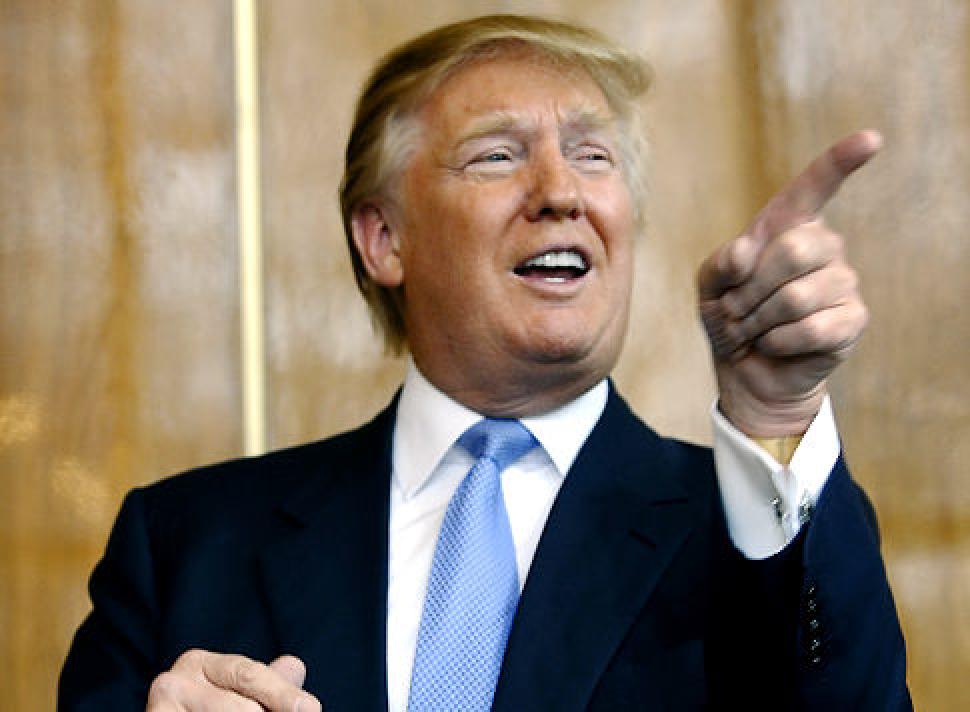
I am Donald Trump’s biggest fan. I follow politics like other folks follow sports and Mr. Trump to me is like NASCAR to my brothers. He’s loud, draws crowds, there’s too much money, and a tumbling wreck is not just inevitable but the main attraction.

Like all comedians, Mr. Trump knows a joke’s three step structure. First he establishes the premise. Mexicans are terrible people, rapists even, and the Mexican government that can’t seem to do much of anything else has its act sufficiently together to gather its worst people and ship them over the border to steal jobs, commit crimes, and take welfare money from Washington. It’s a great premise because everyone knows that Mr. Trump built his wealth upon buying up companies and laying off people and a TV show where he fires people, has been to court several times for skirting the law, and has not just avoided repaying loans by declaring bankruptcy three times but also accepted more money in government tax breaks and hand outs than the Mexican family picking oranges in California’s blistering heat could ever imagine. It’s his absolute blindness to irony that renders the joke’s premise so brilliant.

Then comes the punch line. When he becomes president of the United States, that thought alone turns my giggles to laughter – but wait for it – he will build a giant wall from the Pacific to the Gulf of Mexico. Hilarious! But there’s more. He will leave a door in the middle; perhaps some place in Texas, for the “good Mexicans” to enter. Now I’m laughing out loud.

But then, like in all the best jokes, comes the tag. All great comedians use tags. It’s the line that comes when the laughter begins to subside and everyone thinks the joke is over but then it turns back on itself like a snake eating its tail. Mr. Trump’s tag is that he will have the Mexican government pay for the wall’s construction. All right, now I’m on the floor.

Why I Love Donald Trump and the Rhinoceros

(Photo: www.nydailynews.com)

Canadian elections are too often bereft of such comedy. We are left only to marvel at the shamelessness of the attack ads or wait for some candidate to commit a career-ending gaffe by saying the same insensitive, homophobic, racist, misogynistic, or puerile thing in public that they tell core supporters in private.

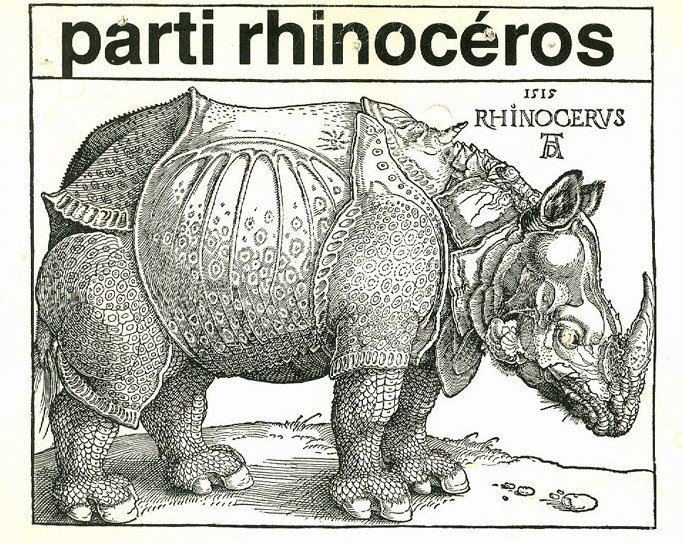
But there is good news. The Rhinoceros Party of Canada is back. Among its campaign promises is that the moment you mark your ballot for a Rhino candidate you will experience an orgasm. If elected, it promises an orgasm a month for every adult in the country. I love it. The promises are as serious as Mr. Trump’s wall and as likely to be fulfilled, but that’s the point.

The Rhinoceros Party was formed in Quebec in 1963. Its name was inspired by Cacareco who was a real Brazilian rhinoceros that in 1958 was run to demonstrate electoral corruption and, surprising those who pulled the stunt, actually won a seat on São Paulo’s city council. The Canadian party elected Cornelius as its leader. He was the rhinoceros who lived, blissfully unaware of his fame, or so I assume, at Quebec’s Granby Zoo.

The party said that Canadian unity was being compromised because the Rocky Mountains blocked our view of each other. They pledged to plow them under. The project would have the added bonus of creating jobs. They promised to pay off the national debt with their VISA card. They would then pay that bill with their Master Card and that one with their American Express, with the assumption they would be out of office before the mess was cleared up. To make Canadians more free they promised to repeal the law of gravity.

The party’s most famous candidate is Guy Pantouffe Laliberte. In 1980, he ran as the Rhino candidate in a Quebec riding and won three percent of the vote. Lalibert went on to found Cirque du Soleil.

Now that the election has been called, I am looking forward to hearing from the Rhinos. past slogan,

All comedy fails when it runs into the bright light of logic and the law. Consider Mr. Trump’s promise to end American citizenship for children born of illegal immigrants. It’s a great applause line at rallies until one considers that the American constitution’s 14th amendment says, “All persons born or naturalized in the United States, and subject to the jurisdiction thereof, are citizens of the United States and of the State wherein they reside.” Trump has never let the law, logic, or the truth for that matter ruin a good gag.

Mr. Trump ceases to be funny when he stirs emotions among those looking for someone to blame for their lot or yearning for a nostalgic past that never really existed. Those acting on Trump’s urgings to be less tolerant and more angry would be akin to those leaving a NASCAR race and driving home at 200 miles an hour. Sorry folks, but the show’s over now and it is time to again act like intelligent, responsible adults.

There is no worry about such tragic repercussions with the Rhino Party. Elections Canada eliminated the party in 1993 due to a number of financial rule changes that made its existence untenable, but it’s back. For the 2015 election they have promised to privatize Canada’s military and nationalize Tim Horton’s. It demands that Lake Ontario’s 1000 Islands be counted as it suspects that the United States has been stealing them. In order to have Canada’s capital city closer to the centre of the country they propose to move the seat of government from Ottawa to Kapuskasing. They will start a lottery where the first 105 winners receive a Senate appointment.

So let’s enjoy the American presidential campaign and the Canadian election. Donald Trump will flare out because, just like Americans saw through the funny but sad spectacle of Sarah Palin they will see through him. Trust American intelligence and appreciate the show while it lasts. And as Canada’s party leaders plod along trying more desperately to avoid mistakes than say anything inspirational, lets giggle along with the Rhinos. After all, their platform says that if they ever actually won they would demand a recount.

If you enjoyed this half as much as I enjoy Mr. Trump and the Rhinos, or even if you think I’m off my rocker for taking serious things as jokes or jokes as serious things, please offer this column up to others to see what they think.