Inaugural Council Speech 

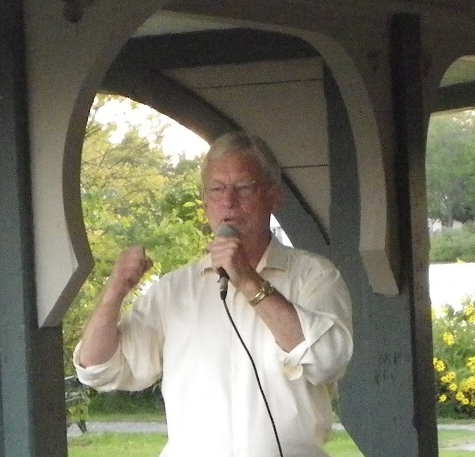
On November 22, 2022, Selwyn Township Council held its inaugural meeting. Council was sworn in and then each councillor, the deputy mayor, and the mayor were invited to make their inaugural remarks. Below is my speech.

——————————————————————————————————————-

Selwyn is a diverse community comprised of those who live on farms, in urban enclaves, in waterfront homes, and in a fully serviced urban Village. Mary, Brian, and I were elected in our wards but now, like Sherry and Ron, we must, and we will consider and represent the interests of all the people of Selwyn.

As a council and staff, we have two challenges before us. First, working as a team, we must be managers. We must manage the maintenance and enhancement of our services and infrastructure.

The second challenge is that while managing, we must also be leaders. Leadership is tougher than management because it entails dealing not with what is immediately before us, but instead, with all that lies beyond the horizon.

Leadership demands engaging in an existential conversation regarding who we are and who we wish to be. In many ways, the five of us are joining that conversation already in progress. The conversation is reflected in our official plan, in our strategic plan, and in the goals of our staff departments.

But part of that conversation should, I think, now become more intentionally focussed upon the pivot point at which we find ourselves due to the most fundamental issue that lies before us — growth. Everything else we address in the next four years will be affected, and informed, by growth.

Growth is necessary because we must play our part in addressing the nationwide housing crisis. We owe it to those in Selwyn now and those wishing to move here, to provide more and more affordable housing. Growth is necessary because we owe it to ourselves to be a vibrant community in which people can work, live, play, and invest. We must accept the responsibility to not just manage how we grow, but to lead it.

Over the next several years, growth will occur throughout the township with the creation of new lots on which new homes will be built. Our largest area of growth, though, will be Lakefield South. When completed, it will be home to 2,500 to 3,000 new neighbours – close to the current population of Lakefield. Let us begin the exercise of our leadership by considering Lakefield South a blank canvas. Let us establish a vision regarding the neighbourhood we wish to build there, within the community we wish to be.

Let us accept the leadership challenge necessary to create, through our development of Lakefield South, a process and showpiece that will inform the growth that will inevitably follow — more in and around Lakefield and Bridgenorth, and more spilling over Peterborough’s borders. Let’s do even more than that. Let’s accept the challenge to make Lakefield South a nationally recognized benchmark in how community building can and should be done. We can do this.

Let’s be clear, the Ontario government has committed to seeing 1.5 million homes built in the province over the next ten years. It has the power now to largely dictate the process through which those homes will be built. Its new Bill 23 proposes to increase that power. We must lead within those provincial parameters. Further, a lot of work has already been done to advance the development of Lakefield South and elsewhere in the Township and we must also lead while respecting that work.

But here again, is the fundamental question before us — we can manage or lead. Leading means that we do not bemoan the power that is not ours, but rather, responsibly apply that that remains. Responsible leadership, in this case, means seeing developers as partners who share our desire to create the best possible community.

We have an extraordinarily professional and skilled staff. We have an exceptionally strong council of which I am sincerely humbled to be a member. It is the strength of our council and the professionalism of our staff that affords me the confidence to propose what I have, and the assurance to know that we can do it.

I thank my wife Sue, daughter Jennifer, and granddaughters Kenzie and Anna who encouraged me to undertake this endeavour and then helped to realize the goal, the many volunteers who supported my campaign, those who engaged me in conversation when I knocked on every door in Village, twice, the staff and my fellow councillors for their dedication to community, and I thank Anita Locke for her years of public service.

I am looking forward to working with the other members of the council, staff, and others, as we critically assess the pivot point at which we find ourselves, and develop the processes and partnerships, based on transparency and trust, that will allow us, together, to lead our way forward.

All-Candidate’s Debate

Granted, it was really more of a joint press conference than a debate, but it still allows viewers to see;

a. what each of the candidates thinks about various issues,

b. their priorities as seen in their opening and closing statements,

c. how well they can express themselves and so how effective they will be in dealing with others on the council, staff, and the community

You can watch the September 29 debate at the link below. Please leave a comment regarding any part of the debate below or contact me at boykolakefield@gmail.com

I hope I can earn your support. Remember that voting begins online or by phone on October 11. You should have already received a letter from the Township with your pin number that will enable you to vote.

OPENING STATEMENT AT SEPTEMBER 29 ALL-CANDIDATE’S DEBATE

The Selwyn Township All-Candidates Debate took place on September 29 via zoom. The link to watch the debate will be available soon and I will place it here.

Below is my opening statement:

My name is John Boyko, and I am running for Selwyn Township’s Lakefield Ward Councillor. I grew up in Peterborough and have lived in and served the community for over 30 years and if you would like to learn more about me please visit my website at johnboyko.com.

The next council will address many issues and I hope we can address some of them tonight. But I believe the umbrella issue under which all others will rest, because it will shape our community going forward, is growth.

We are at a pivot point.

The Peterborough County and Selwyn Township Official Plans both state that Lakefield will grow through infilling, that is, building over 300 homes in the village by 2051. This determination begs questions regarding available property in the Village, the development off Bishop Street, and the future of Ridpath School.

The Official Plans also establish growth areas; one of which lies between the water tower and the 7th line, called Lakefield South.

If implemented under its current iteration, one preliminary development plan for Lakefield South would see the building of 966 units – houses, townhouses, and apartments. It would represent a doubling of Lakefield’s population.

We are fortunate that we have a fine Township staff who have been handling the development process for several years now and that the preliminary plan is by Triple T; a strong, local company, run by good people.

The next council must navigate this pivot point at which we find ourselves by establishing a clear vision for growth.

We cannot surrender our agency or forfeit our responsibility by saying it will be years before the developments are completed. We must instead acknowledge that we are at a pivot point and that decisions made by the next council will shape our community for generations. It is for that reason that Lakefield needs a strong voice on Selwyn Council. I hope to become that voice.

Pivot Points

We know the moments when our lives change. Sometimes we choose those moments such as when we marry, divorce, or change careers. Sometimes the moments choose us like when we suffer a life-altering accident or the death of a spouse. We recognize the moments as pivot points that split before from after.

Countries experience pivot points. They are sometimes sudden such as when 9-11 quickly changed how we swap inconvenience for security. Sometimes national pivot points arrive in slow motion like when the Great Depression led to new regulatory policies and social programs.

Communities experience pivot points too. Lakefield is at a pivot point right now. The Official Plans of Peterborough County and Selwyn Township both state that Lakefield will grow through building homes in the current Village and in the area known as Lakefield South — between the water tower and 7th Line. Plans now with the current council will, when completed, see the addition of people to our community approximately equal to Lakefield’s current population.

We are fortunate to have fine Township staff and that Triple T, a good, experienced, local company with good people, is presenting the largest of the currently proposed developments. A lot of good work has already been done.

The next council will be responsible for ensuring that growth happens in a way that is in the best interests of those now living in Lakefield — all of whom, after all, chose to live in a village and not a city or suburb. The next council must also consider the best interests of those who live in the rest of Selwyn and those who will be our new neighbours.

The next council must navigate the pivot point by ensuring that the next steps are informed by a clear vision of what Selwyn and Lakefield are and what we want our community to be. That vision must include acknowledging the climate crisis, the importance of a walkable, bikeable, community built for people and not cars, and the importance of parkland containing active elements for kids and families. The vision must include how those in the current village, on the 7th line, and in the new neighbourhood will interact as one community. The vision must include how the safety, lifestyle, and character of Lakefield will be positively enhanced and not negatively impacted by more people, traffic, and strains on already taxed infrastructure, police, fire, education, recreation, and healthcare services.

We cannot surrender our agency and forfeit our responsibility by saying that it will be years before the developments in and adjacent to Lakefield will be completed. Rather, we must acknowledge that decisions made by the next council will shape our community for generations.

Leaders recognize a pivot point when they see it. Leaders see the challenges and opportunities that pivot points represent. Leaders humbly seek to learn, understand, and consult, and then, with genuine, transparent communication, to lead.

Lakefield is at a pivot point and, consequently, needs strong leadership on Selwyn Township Council. I am doing my best to earn the support needed in the October election to become that leader as Lakefield Ward Councillor.

(I hope I can earn your vote. Please contact me with questions, suggestions, or offers of support at boykolakefield@gmail.com)

National to Local in Two Minutes

Last Thursday I was humbled by a successful launch to my campaign to become Selwyn Township’s Lakefield Ward Councillor. Seventy-one people gathered at Lakefield’s Isabel Morris Park Pavilion on a beautiful warm evening. Lakefield’s former Reeve, Bob Helsing, was MC and introduced businesswoman Susan Twist and engaged-citizen Sue Bell-Gastle. All said positive things about my candidacy. Their words and the crowd’s presence left me humbled. Then it was my turn.

Part of my remarks addressed the issue that seems top of mind for most people I am meeting at their doorsteps: the planned neighbourhood between the water tower and 7th Line known as Lakefield South. Some people have told me that it’s been talked about for years and will never happen and others that we must stop it. My response to both is the same. It’s happening. Our task is to ensure that it’s done right.

In my speech, I said that we should consider the impending Lakefield South development from a broad then narrowing perspective. To begin, all of Canada is experiencing a housing crisis. House prices and rents are too high, partly because supply is too low. We need more housing across the country, including here.

The Ontario government has designated Peterborough County as part of the Greater Toronto Area, or Golden Horseshoe, in terms of development. Part of that designation makes new housing a priority as much here as Toronto, Oshawa, or Hamilton. The province can issue ministerial orders regarding development decisions.

Peterborough County and Selwyn Township have both submitted new Official Plans to the province for approval. Both have designated two areas in Selwyn for development. One is Woodland Acres, adjacent to Peterborough, and the other is Lakefield South.

So, Lakefield South is happening. We are fortunate that a large portion of the land that will be developed has been purchased by Triple T, the Turner family business. We are fortunate because the Turners are good people, the company is strong with a track record of good work, and it is local. The people who will be on the next Selwyn council matter because to them will fall the task of partnering with Triple T to plan our community’s future.

We must begin with a vision. The vision must be informed by community. We must consider who we wish to attract to live in Lakefield South and how we can help them to interact with each other and those already here in safe and healthy ways. We must enhance and protect the character of the Selwyn-Lakefield community and not simply build a Peterborough suburb.

The vision must be future-ready with considerations that include environmental sustainability, a recognition that the climate crisis is real, and a genuine dedication to doing our part, however small, to address it. Directly linked to that imperative is that we must make the new neighbourhood for people and not cars and so consider safety, walkability, sidewalks, bike lanes, green space versus concrete, and plans for recreation, trees, and landscaping.

We must consider traffic in and around the new neighbourhood so that the tense situation where Lakefield already experiences frequent traffic snarls from the downtown traffic lights to Clementi Street is not made worse. We must consider the challenges and opportunities that welcoming 3,000 or so new neighbours will have on schools, arenas, police, fire, ambulance, and other municipal services.

There is more that can be said about establishing a comprehensive vision and some of this work has already begun but the point, I hope, is clear. That is, the decisions that the next council will make will affect the future of Selwyn and Lakefield for decades. Like the national to local perspective regarding whether the development will take place, we must begin with a vision, let that vision inform the plan, and the let the plan inform the details.

We have a once in a generation opportunity before us. We owe it to those of us living here now, our new neighbours, and to generations ahead, to get it right.

(I hope to earn your vote in the election that takes place beginning on October 11. Please contact me at boykolakefield.com with questions or comments.)

Why Would Anyone Be a Candidate?

It’s a hard slog. People running for municipal, provincial, or federal offices work for months to apply for a job that entails long and thankless hours. Inevitably, half the people think you’re wrong no matter what you do or say. When running and in office, many people insult you, lie about you, and assume the worst about you. Consider the sexist attacks endured by Peterborough mayor Diane Therrien or the invective lobbed at Prime Minister Trudeau when all he did was get a haircut.

Attacking politicians is as old as politics itself. The invention of social media, the erosion of public decorum, and the Trumpian destruction of a foundation of agreed upon facts have made a bad thing worse. So, again, why would anyone be a candidate?

I concede that some people run for the wrong reason. Some run for the money and some to feed their ego. Others run to build their brand for future opportunities. I sincerely believe, however, that they are the minority. I believe that most candidates and, consequently, most who serve, do so for noble reasons.

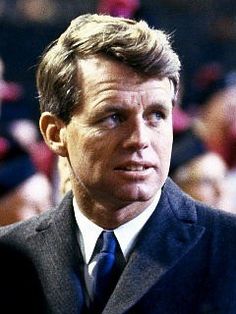
Consider what Robert Kennedy said in 1964. Months after his brother was assassinated, Kennedy resigned as Attorney General to run as a Senator for New York. He was asked during a raucous event at Columbia University why he was running. I like his answer. Kennedy said, “I don’t need the title because apparently I can be called General for the rest of my life, and I don’t need the money, and I don’t need the office space…frank as it is, I’d like to be a good United States senator, I’d like to serve.”

Robert F. Kennedy

Kennedy offers an important reminder that a public office is public service. When serious people run for the right reasons, they do not do so because they think they are smarter than others, have better vision, or are better able to make important decisions. They run because they care about their community, have thought deeply about the challenges and opportunities before it, and believe they have something to contribute to help make it a little better. The right people run because, like Kennedy, they want to serve.

I am running for Lakefield Ward councillor in my hometown. It’s certainly not as lofty an office as United States Senator and I am certainly no Robert Kennedy. But if I can paraphrase him: I don’t need the money, title, or office space. I am running because I want to serve. I know that sounds corny and perhaps even naive in our world of vicious politics and alternative facts, but it’s true.

Perhaps as we consider the municipal candidates whose signs will soon sprout on lawns around town we might temper our skepticism a little and consider that maybe most of them are running for the right reason.

(If you liked this article, please consider sharing it with others.)

A Little Festival Grows

Authors write in isolation and we read in isolation and yet books can bring us all together. Literary Festivals shatter the wall between writers and readers as they meet to explain, question, and enjoy the power of words and ideas. The Lakefield Literary Festival is widely respected for bringing writers and readers together for over twenty-five years.

It began small. Its founding spark was the acknowledgement that the Lakefield area has a thriving arts community and was once home to pioneer authors Catharine Parr Traill and Susanna Moodie and, from 1974 to her death in 1987, renowned Canadian writer Margaret Laurence.

In early 1995, Ron and Joan Ward purchased the modest Lakefield house in which Laurence had lived with the notion of creating a writers’ retreat. While that idea failed to materialize, the conversations about honouring Laurence morphed into a two-day event that July that involved a walking tour and performances, readings, and musical selections at a banquet in the dining hall of Lakefield College School. CBC Radio host Shelagh Rogers was the banquet’s master of ceremonies.

The event’s success led to the formation of a group of volunteers who created what became the Lakefield Literary Festival. The enthusiastic group was led by Shelley Ambrose and Brenda Neill. At that time, Ambrose was the personal assistant to CBC Radio personality Peter Gzowski and summered at a nearby cottage. Neill was a retired teacher and long-time Lakefield resident. They were the perfect team as Ambrose’s connections to Canada’s cultural community brought attention and noted authors to the festival and Neill’s local ties inspired a group of eager volunteers. An early sponsor was Quaker Oats, located in nearby Peterborough, with generous donations from many local businesses and individuals.

Growth

From those humble beginnings the festival grew. Its mandate became: To commemorate Catharine Parr Traill, Susanna Moodie, Margaret Laurence, and our community’s ongoing literary heritage; to showcase Canadian authors; and to promote the joy of reading among children and adults. A Board was formed and the festival was incorporated as a non-profit organization. The festival has no staff. While authors and those attending the festival come from across Canada, it remains a grassroots organization, run by dedicated volunteers.

The festival came to involve free readings for children in the downtown Cenotaph Park in what became known as the Children’s Tent. There were readings in a local church on Sunday morning, a Village walking tour, a reception, and a Young Writer’s Contest involving students from the area’s secondary schools.  

A range of noted authors entertained and challenged audiences including Margaret Atwood, Richard Wagamese, Andy Barrie, June Callwood, Michael Crummey, Michael Enright, Terry Fallis, Douglas Gibson, Graeme Gibson, Charlotte Gray, Lawrence Hill, Wayne Johnston, Thomas King, Roy MacGregor, Linden MacIntyre, Alistair MacLeod, Rohinton Mistry, Lisa Moore, Michael Ondaatje, Adam Shoaltz, Paul Quarrington, Nino Ricci, Bill Richardson, Noah Richler, Drew Hayden Taylor, Jane Urquhart, and many, many more.

Future

In 2019, the Lakefield Literary Festival celebrated its 25th Anniversary. The next year, the COVID-19 pandemic shut down the world. The Young Writers Contest continued but the festival was suspended.

The festival will return on July 14 and 15, 2023. It will celebrate its core elements with author events on Friday night, Saturday afternoon, and Saturday evening, the Children’s Tent on Saturday morning, and the Young Writers Contest. The adult author readings will take place at the United Church on Regent Street, each followed by authors signing books and a reception in the church auditorium.

In 2023, the festival will continue its dedication to commemorating the area’s literary heritage, celebrating authors, and promoting the joy of reading. The Lakefield Literary Festival’s history is still being made by those who write, those who read, and by the power of the connections between them.

A Little Something in Something So Big

The pandemic is big. We are little. But we’re doing what we can. In Lakefield, our little Ontario village, most of us wear masks when shopping at our one grocery store; picking up mail at the post office; or lining up outside our one hardware store and in the often-outrageously long LCBO queues. We wave and weave widely around each other on daily walks. We’re hunkered down. But last Saturday, for just a bit, we broke free.

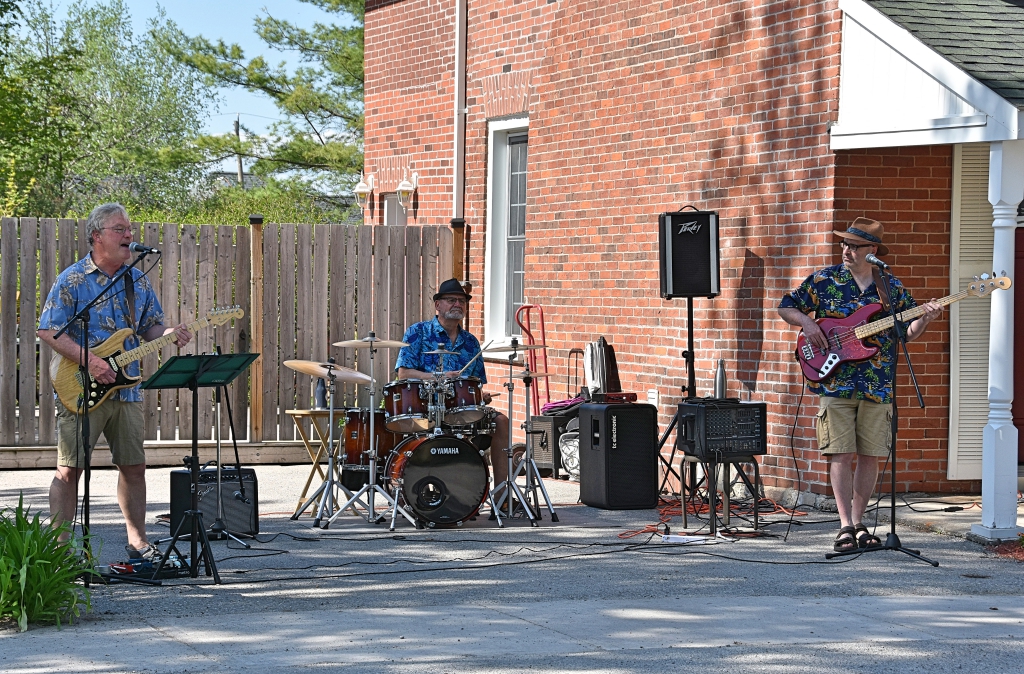
There’s not much I can do to help. I can’t make masks. Beyond staying home, I can’t help doctors and nurses. But I know how to sing and play the guitar a little. Plus, Terry lives across the street and he’s a drummer. Mike lives one street over and he plays bass. An idea was born.

Flyers were put in people’s front doors. They said that on Saturday at 4:15 there would be a William Street Concert and Sidewalk Dance. People were invited to bring lawn chairs (and stay six feet apart) or just open their windows. We had no idea if anyone would come or if the police would shut us down – there is one patrol car that commutes in from Peterborough.

William St Concert

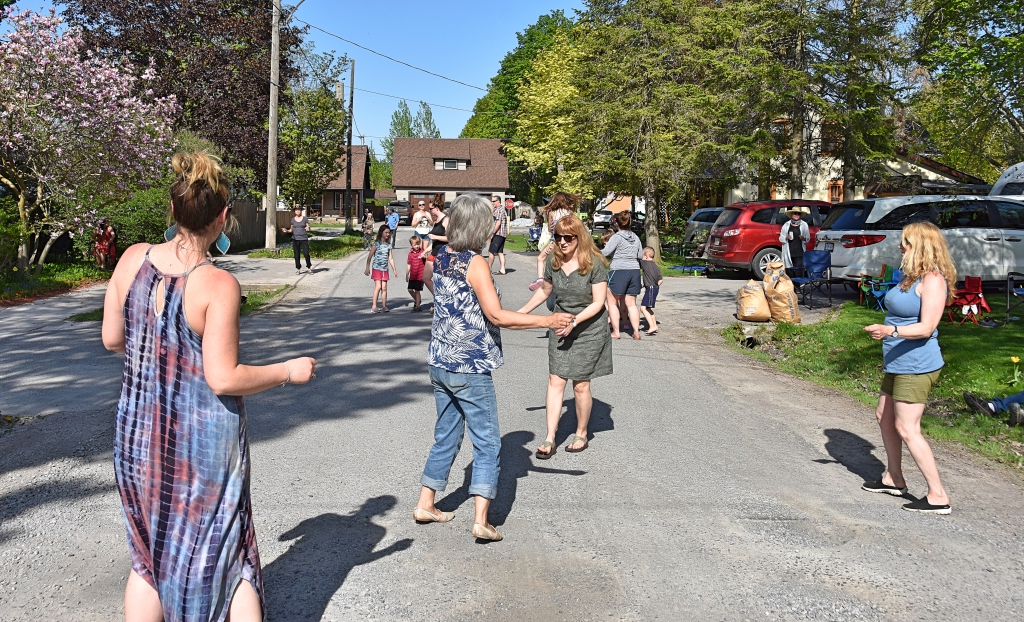
It was terrific. Families gathered close and neighbours sprawled on lawns at respectful distances. Others were on front porches and between songs we heard others clapping and hooting from back decks. Mike, Terry, and I had never played together before so we did old, no fail, rock ‘n’ roll songs. A lot of folks sang along and danced in their places but for our last two songs (I Saw Standing There and Birthday) the street filled with socially-distanced dancers.

William St 2

It was only an hour. But it was glorious. There was laughter and singing and dancing and wide smiles. We actually saw friends who for weeks were only thumbnails in Brady Bunch Zoom calls. When it ended, we all retreated to the safety of our houses and yards knowing how lucky we are to have houses and yards and to live in a little place like this even in the middle of something so big.

Inventing Home

Where are you from? Where do you live? They are the two most popular questions to ask travellers, party guests, and game show contestants. The answer allows a stereotyped categorization. It can spur a conversation or, perhaps, the decision to not bother starting one. It’s odd though, because while often seen as the same question they are two totally different inquiries. Ask yourself the two questions. Do you get two answers?

I am from Hamilton. It is known as Canada’s steel town although with the slow death of the industrial revolution the nickname means less all the time. Home to Huron, then French, and then British settlers, it is named for Robert Hamilton, a War of 1812 veteran, who built his estate at the west end of Lake Ontario. The place grew quickly as railways passed through on their way from the American border to Toronto. The pig iron plant arrived first. Then came the Steel Company of Canada (Stelco) and then, the smaller Dominion Foundry and Steel Company (Dofasco).

Dofasco Dofasco

My great grandfather was among Dofasco’s first employees. He got my grandfather into the foundry and he worked there for over 40 years. He never said a bad word about Dofasco. He always spoke of the bosses as Mr. This and Mr. That. My father worked there too. He tells stories of playing in the Dofasco baseball league and bowling league and hockey league. I recall as a child going to the Dofasco Christmas party. It was a massive affair where an entire building was emptied and then opened for the thousands of employee families. There were treats and games and Santa Claus and a wrapped present for every kid.

Stelco is gone now. Dofasco is all but gone too. Their shadows remain but they were bought and sold a couple of times and are now just cogs in transnational corporations with no ties to Canada let alone the city. Corporations may be constitutionally people but they neither have a home nor care much about those who do. With the steel plants went the others. Hamilton is not the same.

Go to any city. Go downtown near the river or the harbour at the lake. You know the places I mean in whatever city has entered your mind. The big old buildings are nearly all empty. Or they have been turned into fancy boutiques, offices, or condominiums. The places to shop and eat are elsewhere and everywhere the same as everywhere else. You can picture that street too can’t you? Walmart, Costco, McDonalds, and the Tims have taken care of it. Online shopping took care of what remained.

So that is where I am from – a ghost. I still have family there, I’m a proud McMaster University alum, and a great deal remains that I find invigorating and beautiful. But it’s a city re-inventing itself as surely as when Robert Hamilton created it in the first place. It will succeed. There are too many good people for it to fail. No one is sure how just yet, but a consensus will grow. It will enable enough people to recognize that a city, like a well-lived life, is not about money and stuff.

A community rests on shared values and the places where people from up and down and across town meet to enjoy the same things at the same time. Hamilton, and for that matter every city that is going through the same period of existential angst, will come out the other side when enough people say enough to driving out of town to have fun and to driving past boarded up shops once owned by folks they knew to stores the size of football fields to save fifty cents on toilet paper. The city will begin to move when people move by getting out of their cars and walking. When people start to walk they will need some place close to walk to and some version of Walmart won’t put a store there, or a book shop, or a pub – but a neighbour might, in an actual neighbourhood. In walking, neighbours will start talking and the rest will take care of itself. It won’t be easy, but then Robert Hamilton didn’t have it easy either.

Where I live is different. I live in a village of 2500 people called Lakefield. Lakefield was created on Ojibwa land just a few years later than Hamilton. It became known not for stinky steel but silent canoes. It was home to several canoe manufacturers including Walter Walker who made canoes and paddles for ordinary folks and royalty with the same dedication to excellence. It has always been an artistic place. Catherine Parr Traill and Susanna Moodie lived and wrote in Lakefield as did Margaret Laurence. The Leahy band lives nearby as does Rompin’ Ronnie Hawkins. First-rate painters, children’s book authors and illustrators, and sculptors call Lakefield home as do highly respected architects and film makers. The Lakefield Literary Festival and world-renowned Lakefield College School are here.

A river runs through the centre of my Village and it is only right that it does. It is a metaphor that speaks of perpetual movement and things that never change. Margaret Laurence wrote The Diviners here and, if you recall, the novel begins by speaking of a river that runs both ways. It does you know. It really does.

Canoe-and-Paddle-e1413940425220

Last week a new pub opened in Lakefield called the Canoe and Paddle. It is fashioned to reflect the look and feel of a pub one might wander into on an English afternoon or Halifax night. It is owned and run by folks from the village. Last Thursday my little rock band played the pub’s first night of music. It was music for neighbours by neighbours. Last night I walked across the bridge to stand with a pint and enjoy a Celtic band play one lively reel after another. The place was packed. As I looked around the room I realized that I knew nearly every face. Everyone glowed with the happiness of a Saturday night among friends, with neighbours, and in a community that understands the meaning of the word. The pub will do well. The Canoe and Paddle has reminded us that we understand what doing well means.

Hamilton is where I am from. Lakefield is where I live. It’s good to be home.

If you enjoyed this, please share it through social media with others and consider following my blog where I post every Monday morning at johnboyko.com.