Five Reasons Why JFK Still Matters

On a bright and frigid afternoon fifty-five years ago, John F. Kennedy became America’s 35th president. It was an exciting day. The unabating flood of articles, books, and movies suggest that his life and leadership continues to enthral. Let’s consider why he still matters by pondering questions he still poses.

5 Reasons Why JFK Still Matters

(Photo: mauialmanac.com)

Leadership and Wealth: The one percent who own and influence so much is under attack. In Canada’s recent election, Justin Trudeau’s opponents argued that his inherited wealth precluded him from understanding and helping working- and middle-class Canadians. Hillary Clinton is taking similar hits.

Kennedy grew up in mansions and was chauffeured to school in his father’s Rolls Royce. He could have done anything or nothing at all. Instead, he worked tirelessly to improve the lot of those toiling in shops, fields, and factories. He implemented a middle class tax cut, a higher minimum wage, and proposed universal health care. Does money kill compassion?

Government Power: Kennedy was more practical than liberal and more pragmatic than conservative. He decried ideological blindness that seeks victory without compromise while trying to tip the balance of power between government and business too far in one direction. He believed government was a positive societal force, essential for the collective good.

Because government cannot and should not do everything, should it do nothing? Does a government’s inability to completely solve a problem invite rejection of first steps?

Celebrity: Kennedy did not invent the celebrity politician but he was the first to exploit looks, charisma, and a photogenic family in the TV age. The 1960 campaign swung when he beat the more experienced but less-media savvy Richard Nixon in TV debates. Kennedy confessed that he would not be an effective president or possibly even have become president without television.

A journalist once wrote of Canada’s 1968 “Trudeaumania” election: “Canadians had enviously watched the presidency of John Kennedy, and continued to wish for a leader like him.” Last year, Canadians watched Trudeau’s son ride a wave of Kennedyesque celebrity while Nixon-like opponents attacked his appearance and gaps in his policies and resume, all the while forgetting Kennedy’s lesson. And now Trudeau commands, Donald Trump confounds and Kevin O’Leary considers. Must our leaders now also be celebrities?

Public Privacy: Kennedy’s legacy was later tarnished by revelations of reckless sexual liaisons. He also hid serious health problems and daily drug injections that managed symptoms. The press was complicit in the secrecy and silence.

The post-Watergate media changed the relationship between public and private. Social media shattered it. Canada’s last election saw candidates humiliated and others withdraw due to social media gaffes and attacks. Many good people now avoid public service, fearing slander and privacy’s surrender. Can a flawed person be a valid candidate or good leader? Are there limits to our right to know?

Aspiration: Many recall lines from Kennedy’s stirring inaugural address: “Ask not what your country can do for you…” or “The torch has been passed to a new generation…” In June 1963, he called for world peace based on our shared humanity. The next day he went on TV and reframed Civil Rights as a moral imperative.

We are well served by neither demagoguery nor technocratic managers masquerading as leaders. Instead, with so much and so many dividing us, Kennedy reminds us that real leaders really lead and that we need words that inspire, dreams that unite, and the positing of challenging questions and grand goals. What’s wrong with shooting for the moon?

Kennedy still matters because, in the final analysis, his enduring gift was not programs or policies but his inspirational leadership. We should consider the questions he still poses and answers he suggests. We owe it to ourselves and our children to consider his audacious exhortation that idealism is not naïve, hope is not foolish, hardship is incentive, and community can extend beyond one’s family, class, race, or even country.

This column originally appeared as an op ed in the Montreal Gazette on January 20, 2016, the 55th anniversary of JFK’s inauguration. If you enjoyed it, please consider sharing it with others.

Most Important Bands of All Time

The Beatles are not the best band of all time. Neither is U2 or Led Zeppelin. You see, a teenage John Lennon once snapped, “We’re not a band, we’re a group.” He understood. Lennon’s Quarrymen and then the Beatles were groups. So was the Clash and so are the Rolling Stones and the Eagles. In musical parlance, a group is a self-contained unit providing music and vocals while a band is a collection of musicians creating music either without or to accompany vocals. Forget boy bands. Their name is only part of what’s wrong with them.

So let’s leave groups aside and consider, in rough chronological order, the five most important bands.

  1. Tommy Dorsey Band

The 1930s brought the Depression and the 1940s the Second World War. Year after year people lost homes, loved ones, and faith in the rules they had believed would secure their families and futures. As always happens in eras of tragedy and transition, music filled the emotional void with fun. Swing music was nothing but fun.

Dance halls were everywhere and everywhere were big bands playing jumped up tunes with driving beats, mournful ballads, and goofy novelty numbers. The most influential of the big bands was led by Tommy Dorsey.

Dorsey played trombone, of all things. He reinvented the instrument so that it carried the melody. He promoted band members who stood and, in a nod to jazz, leaned into solos that were different every night. It was art as lightening, existing for the moment. Dorsey also sought the best singers around and handed careers to many including his best find of all, Frank Sinatra. Sinatra toured and recorded 80 songs with the Dorsey band. He learned his vocal styling and discipline from Dorsey’s trombone breathing techniques.

When other bands faded with changing musical tastes, Dorsey continued to evolve his sound and bring more jazz and popular music into his repertoire. His innovative ideas influenced another generation. His band placed an incredible 286 songs on the Billboard charts and he enjoyed 17 number ones. His biggest hit was I’ll Never Smile Again, which, in 1940, was number one for twelve weeks.

In the 1950s he and his brother Jimmy co-hosted a popular show on the new medium of television. He demonstrated courage when he ignored critics and insisted that a new young singer be invited to perform. It was through Dorsey, therefore, that America first saw Elvis Presley.

Tommy Dorsey died in 1956 when only 51 years of age. In 1982, his I’m Getting Sentimental Over You was inducted into the Grammy Hall of Fame and Marie was inducted in 1998. In 1996, the United States Postal Service issued a Tommy and Jimmy Dorsey stamp. His music lives on in singers and bands who believe they are inventing new ideas that Dorsey actually brought to audiences before their grandparents were born. 

  1. Wrecking Crew

Los Angeles session musicians used to arrive wearing suits and obediently read from charts to provide music for whatever commercial, movie, or singer rented their services. It was a nine to five job. That ended in the early 1960s when others began strolling in as the professionals were leaving. They dressed more casually. They played more casually. They could read charts but more often played what they felt. They made suggestions. They took chances. The grumpy old pros said the young bucks would wreck the music industry and so, according to drummer Hal Blaine, their name was coined.

You’ve heard their work if you’ve heard the Monkees, Paul Revere and the Raiders, Jan and Dean, the Partridge Family, Mamas & Papas, Association, 5th Dimension, Grass Roots, the Carpenters, the Byrds, the Turtles, Bread, Simon and Garfunkel, and on and on. Did you think the Monkees were the only group that didn’t play on their own records? You heard the Wrecking Crew if you’ve heard Dean Martin sing Everybody Loves Somebody or Frank Sinatra croon Strangers in the Night.

Sonny Bono once had a rather ordinary sounding song until the bass player, Carol Kaye, suggested a line that was simple in its complexity but riveting as a hook, and The Beat Goes On was born. She later suggested the descending bass notes in the Nancy Sinatra’s Boots. Brian Wilson employed the Wrecking Crew to create the Beach Boys’ Good Vibrations and Pet Sounds.

When Wrecking Crew guitarist Glen Campbell struck out on his own, it continued as his studio band. Other members that enjoyed solo success were Leon Russell and Mac Rebennack, who called himself Dr. John. Wrecking crew drummer Jim Keltner played on nearly all the Beatles solo albums, the Concert for Bangladesh, and, under the pseudonym Buster Sidebury, with the Travelling Wilburys. In 2007, the Wrecking Crew was inducted into the Musicians Hall of Fame.

Turn on an oldies radio station and be guaranteed that within minutes, whether you know it or not, you will hear the Wrecking Crew.

  1. The Band

Born in Arkansas and making a name for himself as a rockabilly wild man, Ronnie Hawkins toured Canada in 1958 and never went home. His music and show was like nothing seen or heard before. It was all made possible by the driving beat and incomparable sound of his band. They were kids. Arkansas native Levon Helm joined Canadians Robbie Robertson, Garth Hudson, Richard Manuel, and Rick Danko. They practiced all day and played all night. Their playing became as tight as their friendships.

Hawkins called them the Hawks. They quickly grew to be the premier band on Toronto’s Yonge Street strip that became the heart of the burgeoning Canadian music scene. Hawkins was crazy on stage. He yelled. He did back flips. He invented the moonwalk that Michael Jackson would later steal. Nearly any band can back someone who sticks to the songs but it took something all together special to hang on through the hurricane that was Rompin’ Ronnie. Through the antics, alcohol, and smoky haze was the band that never missed a beat, dropped a note, or missed a cue. Hudson’s keyboard work was majestic and rose beyond the limits of three-chord rock ‘n’ roll. Helms played masterful fills while Robertson took guitar leads to the edge of out of control.

In 1964, the band left Hawkins. They toured a little and recorded an unsuccessful album but a year later their ability to back quirky front men was recognized and rewarded when they received a call from Bob Dylan. At that point, Dylan was a tremendously successful folk singer. In July 1965, he had endured angry boos when he had plugged in a telecaster and, backed by Mike Butterfield’s band, sang an electric set at the New Port Folk Festival. Ready for more, and he hired Hawkins’ old band.

The American tour began a month later. It was like nothing anyone had heard before. Woody Guthrie had bedded the Beatles. The marriage of folk, pop, and rock is commonplace now but was then revolutionary. They toured the world and endured more negative reaction. There is film of a Manchester, England concert where someone yells that Dylan is Judas. Dylan snaps back, and then turns to the band, and shouts, “Play it fucking loud!” And they do. They play it loud and they play it well to those who were booing, those who understood, and for posterity.

The band accompanied Dylan back to Saugerties, New York, where, exhausted but exhilarated, they lived and made new music together. From Helms came southern country and from Hudson came classical. From Robertson came pop and his respect for southern history and native culture. From Manuel, and Danko came blues, gospel and traditional bluegrass. Their informal recordings became the Basement Tapes and a decades-long iconic, unheard mystery.

The eclectic talents and interests melded with their years with Hawkins and Dylan to inform their 1968 debut album, Music from Big Pink. They had been Hawkins band then Dylan’s band and now they needed a name. Helms suggested they be known as they were to many already, simply, The Band.

The group enjoyed hit songs and great success and well deserved places in the Canadian Music Hall of Fame and the Rock and Roll Hall of Fame. But it is as a band that they were midwives at the birth of rock n roll in Canada and country-rock around the world. Michael Nesmith, Linda Ronstadt, the Eagles, Jackson Browne, Lynyrd Skynyrd, and others who followed their lead owe a debt to the band called the Band.

  1. The Swampers

Speaking of Lyrnyrd Skynyrd, consider the fourth verse from their most popular song, Sweet Home Alabama:

Now Muscle Shoals has got the Swampers/And they’ve been known to pick a song or two/Lord they get me off so much/They pick me up when I’m feeling blue/Now how bout you?

The Swampers? You may have never heard of them but, like the Wrecking Crew, you’ve heard them. Entrepreneur Rick Hall built FAME recording studio in Muscle Shoals, Alabama. His very first song he recorded was by a shy, hospital orderly named Percy Sledge – the gospel-tinged power ballad When a Man Loves a Woman. The band is brilliant in its restraint. The organ creates a drone and the beat is pulled just slightly before each chorus, allowing tension to build to a climatic release. The notes are smooth, erotic, and let the singer and song do the work.

The record’s success brought attention to Muscle Shoals and more hit records to the world. People dancing to Wilson Pickett’s Mustang Sally were dancing to the Swampers. People swooning to Aretha Franklin’s Respect were loving the Swampers. Those moved by Etta James’ raucous Tell Mama were moved by the Swampers. Few knew the band. Fewer still knew that those motoring the new wave of Black R & B were all white.

None had musical training. But David Hood, Jimmy Johnson, Barry Beckett, Roger Hawkins, Pete Carr, Will McFarlane, Spooner Oldham, Clayton Ivey, Randy McCormick, and Albert S. Lowe all had soul, imagination, and a willingness to risk.

In 1969, Beckett, Hawkins, Hood, and Johnson formed their own studio called Pro Sound. The Swampers sound and feel, though, remained true to its roots. More singers came to capture its magic. They backed recordings by Rod Stewart, Joe Cocker, John Prine, Duane Allman, Boz Scaggs, and the Oak Ridge Boys. They helped the Rolling Stones record Wild Horses and Brown Sugar. Bob Dylan came to record Desire. It’s the Swampers you are enjoying when singing along with the Staple Singers I’ll Take You There, Paul Simon’s Kodachrome, and Bob Seger’s Night Moves.

God was having a particularly good day when he decided to place the intersection of Black and White music in the heart of segregated Alabama and allow its sweet sounds to offer lessons to us all.

  1. E Street Band

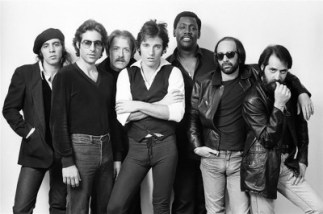
Most Important Bands of All Time(Photo: http://www.sfae.com)

New Jersey is tough and the Jersey shore is tougher. It’s Sinatra tough. It’s Sopranos tough. It was tough in the late 1960s when in and around the hardscrabble Ashbury Park a new, hard driving, working class music developed in seedy bars and seedier clubs. Like Liverpool in the early ‘60s, Ashbury Park in the early ‘70s saw bands form and fall apart. The journeymen went to factories and the best to other bands. Among the dwindling elite were Danny Federici, Vini Lopez, Garry Tellent, David Sancious and Clarence Clemons. They came to know each other and became friends with a skinny young Jersey singer named Bruce Springsteen.

Springsteen signed a recording contract in 1972 and offered a job to the best musicians on the Jersey Shore. They rehearsed at Sancious’ mother’s house on the corner of 10th Avenue and E Street. The name was born – The E Street Band. Their first album was entitled Greetings From Ashbury Park. A life of touring began. Some members left and were replaced but the sound grew tighter and even more powerful, and even tougher. The band was strengthened when ace guitarist Steven Van Zandt joined in 1975.

Springsteen became known for his working class anthems and he and the band for their working class dedication to fair play for fair pay. Concerts lasted three hours or more. There were few breaks between songs as the band kept the music or rhythm pulsating with the crowd engaged, enthralled, and enraptured. Songs people knew from the records were reinvented, made longer, more complex, and given more energy and different textures every night. Like the stadium band they became, they played to the back row. Like the bar band they had been, they played requests.

For 15 years, Springsteen recorded and performed without the band but they were reunited in 1995 and have been together ever since. Springsteen was not the same without them. He is better with them at his side and watching his back. Springsteen always affectionately introduces each member and then yells over the cheers: “It’s the heart-stopping, pants-dropping, house-rocking, earth-quaking, booty-shaking, Viagra-taking, love-making, legendary E Street Band!”

Try to imagine Born to Run without Clarence’s sax solo. Try to imagine Glory Days without Little Stephens’ guitar and crazy harmonies. They take good songs and made them better. That’s the job of any band but not a job just any band can do. Now try to imagine Bruce Springsteen without the E Street band. I’m guessing he’d be a retired steel worker living in Ashbury Park, strumming his acoustic guitar and wondering about glory days that might have been.

Please share this column with others if you liked it and leave a comment on my choices. Suggestions for most important groups would be welcomed. If you have not seen it – johnboyko.com – has my thoughts on six most important singers.

Santa, Trudeau, and the Acceptable Lie

We lie to our children. The biggest lie, of course, is that we adults know what we’re doing. Right up there with our major league whoppers is Santa Claus.

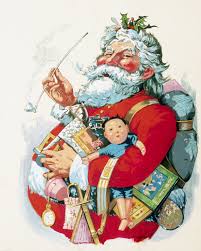
We know that Santa began as a 3rd century Turkish monk named St. Nicholas who gave his inherited wealth to the poor. The Dutch perpetuated the legend but called him Sinter Klaas. We also know that in 1823 American Professor of Oriental and Greek Literature Clement Clark Moore wrote a poem for his daughters that invented the notion of a fat man, chimneys, sleighs, and reindeer. Only much later was it entitled “T’was the Night Before Christmas.” In 1881, Harper’s Weekly political cartoonist Thomas Nast gave pictures to the poem and Santa got his red suit. We also know that in 1931, the Coca Cola Company hired illustrator Haddon Sundblom who, stealing from Moore and Nast, initiated a decades-long ad campaign based on Santa as a jolly, wholesome, kid-loving, and Coke-drinking Christmas mainstay. Cue the malls and parades.

Santa, Trudeau and the Acceptable Lie..

The Nast Santa

We know all that. But we lie anyway. And maybe that’s OK. Santa is the flimsy link between the magic of Christmas and parenthood’s delicate dance. He is among the gifts we offer our children to balance our warnings about holding hands crossing the street, not talking to strangers, secret code words, and practicing fire drills at home and lock downs at school. We scare the hell out of them to keep them safe so maybe it’s alright if we temper fear with fun through a few years of Santa, the Tooth Fairy, Easter Bunny, and our invincibility.

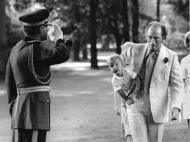
Canada’s Prime Minister Justin Trudeau is now enrapturing the country and many others around the world with his sunny disposition and deft ability to humanize the office that seems designed to suck the humanity from any who enter. Good on him. Canadians have known him from his birth – on Christmas day by the way – because his father was Prime Minister from the late ‘60s to early ‘80s. Canadians were reintroduced to Justin on September 28, 2000, when he delivered a touching eulogy at his father’s funeral. Consider a story he told:

“I was about six years old when I went on my first official trip. I was going with my father and my grandpa Sinclair up to the North Pole. It was a very glamorous destination. But the best thing about it is that I was going to be spending lots of time with my dad because in Ottawa he just worked so hard. One day, we were in Alert, Canada’s northernmost point, a scientific military installation that seemed to consist entirely of low shed-like buildings and warehouses.

Let’s be honest. I was six. There were no brothers around to play with and I was getting a little bored because dad still somehow had a lot of work to do. I remember a frozen, windswept Arctic afternoon when I was bundled up into a Jeep and hustled out on a special top-secret mission. I figured I was finally going to be let in on the reason of this high-security Arctic base. I was exactly right.

We drove slowly through and past the buildings, all of them very grey and windy. We rounded a corner and came upon a red one. We stopped. I got out of the Jeep and started to crunch across towards the front door. I was told, no, to the window.

So I clamboured over the snow bank, was boosted up to the window, rubbed my sleeve against the frosty glass to see inside and as my eyes adjusted to the gloom, I saw a figure, hunched over one of many worktables that seemed very cluttered. He was wearing a red suit with furry white trim.

And that’s when I understood just how powerful and wonderful my father was.”

Santa, Trudeau and the Acceptable Lie

Justin and his Dad (Ottawa Citizen Photo)

Let our leader be our guide. While we can, let’s enjoy the lie. This Friday my granddaughter will open presents that came all the way from the North Pole. Her eyes will sparkle. And that’s just fine.

If you enjoyed this column, please share it with others and check more of my Monday blogs at http://www.johnboyko.com but, please, not on Christmas Day. Instead, let’s darken our screens to devote undivided time with those we love.

Shut Up Boomers: Every ‘60s Decade Booms

Even Baby Boomers are weary of TV specials celebrating ’60s singers and bands, most of which, let’s face it, look and sound excruciatingly sexist and corny. And my first reaction to hearing that The Beatles One has been re-reissued was to question whether after owning vinyl, eight-track, cassette, CD, and then downloading, that Paul McCartney really wants me to buy Hey Jude yet again. Poor Sir Paul must need the money.

Shut Up Boomers- The 60's Always Matter.

Sir Paul (http://www.dailymail.co.uk)

The greater point is that the ‘60s matter and, sorry Paul and boomers everywhere, not just the 1960s. No matter the millennium, the ’60s decade always offers remarkable up, down, sideways, and significant change. For some reason, the ‘60s is when old assumptions and rules are thrown asunder and Canada rockets ahead in a new direction.

1660s

France’s Sun King, Louis XIV, declared Canada a French province. Later in the decade, French explorers Radisson and Groseilliers followed Native guides all the way to Lake Superior and Hudson’s Bay. Because of a spat with officious French officials, they claimed it all for England. Their adventures led to the creation of the Hudson’s Bay Company, the world’s first multi-national corporation. The chess pieces were thus set for a bloody two hundred year French-English grudge match; a struggle that many Quebecois insist is still on.

1760s

In 1760, in the shadow of the Conquest, where a small British army defeated an even smaller French one outside Quebec City, Montreal fell. With the broader world war finally over, in 1763 French negotiators traded cold and troublesome Quebec for the warm and prosperous island of Guadeloupe. Canada became a British colony with a French people. Native nations who had allied themselves with one side or the other were promised that their land would remain theirs. It was a lie. Shortly afterwards, gifts were made of smallpox-infested blankets in a brutal act of biological warfare.

1860s

The United States was butchering itself in a Civil War that would see over 600,000 dead and 40,000 Canadians serve. Partly as a result of all that death, and fear of what would happen when the killing ended, Canada was born. John A. Macdonald and others from the broke and dysfunctional Canadian province loaded a ship with great food and better booze and crashed a Charlottetown conference to urge Maritime delegates to think bigger. Nova Scotia and New Brunswick signed on. Canada was more dream than fact but the dreamers emerged from their ’60s decade with a vision as grand as the land.

1960s

The decade saw the dream reimagined. A new Bill of Rights said citizenship was based not on blood but law. Native people were afforded the right to vote as a tentative step toward righting centuries of wrong. The establishment of official bilingualism expressed a desire to descend the Tower of Babel. A distinctive new flag and Montreal’s Expo ’67 World’s Fair unleashed a patriotic tsunami. In 1967, Canada’s 100th birthday, the Toronto Maple Leafs did what they have not managed since and won the Stanley Cup. Canadians decided that everyone’s health was everyone’s concern and created a national system whereby we each pay a little to help those who need a lot – it’s a family thing.

New programs sought to end the sorry fact that generations of children could graduate without ever having read a Canadian book, seen a Canadian movie, or heard a Canadian song – and oh the songs. We could duck into seedy bars and pretentious coffee houses to hear kids like Joni Mitchell, Neil Young, Randy Bachman, Ian and Sylvia Tyson, Robbie Robertson, Gordon Lightfoot, and more and more. Canadian kids could hear a top ten song on the radio all week and then dance to that very band in their high school gym on Friday night. The songs, along with the words of Margaret Atwood, Irving Layton, Margret Laurence, and more invited us to more deeply consider eternal bonds.

Shut Up Boomers- The ‘60s Always Matter

Joni Mitchell (www.biography.com)

The 1960s west reverberated a hundred-year-old echo. It was in 1869 that Metis leader Louis Riel demanded respect and a recognition that the people of the west owned the west. Prime Minister Macdonald agreed to nearly all Riel’s demands and a new province was born. Sir John then set out to sweep Native nations from the plains and we still feel the pain and shame of that attempted cultural genocide.

By the end of the 1960s, thousands of Canadians were, as Gordon Lightfoot would sing, Alberta bound. Oil was gold and the rush was on. Cornerbrook accents filled Edmonton bars and cheques were mailed home to Halifax and St. John’s from wildcatting rigs and Wild West barracks. Politicians scrapped, fat cats plundered, and Canadians did as always – the best they could.

In the end, it doesn’t really matter if we were in buckskins or bell bottoms, starched collars or tie dye shirts. It was another turbulent ‘60s – the decade that always seems to matter. Maybe before the next ‘60s arrives we’ll be like Canadian Alex Trebic and have all the answers or at least be like Montreal’s Leonard Cohen and know the right questions. By the next ‘60s we may have learned how to live more peacefully with each other and gently on the land.

 If you enjoyed this column, please share it with others and consider checking my other columns as http://www.johnboyko.com

When It’s Time To Burn Your House and Go

Sometimes it’s not your fault. Sometimes the business cycle’s spin, the greed or stupidity of folks with big wallets and little hearts, a microscopic bug, or tiny shift in weather patterns can change everything. No matter how hard you work or how well you raise your children, respect your neighbours, love your spouse, or live by your God’s rules and land’s laws, things slip away. Cyril Oxford understands that. Today he is considering burning his house down.

When It's Time to Burn Your House and Go..

(Photo: www.fireengineering.com)

You see, Cyril lives in Little Bay Islands, Newfoundland. He was born there. For his seventy-two years, Cyril forged a life and living as a cod-fishing boat captain. Now, though, with his wife gone and children moved away, he has a decision to make.

Little Bay Islands is a group of five islands just off Newfoundland’s northeast coast. The abundant fish attracted Europeans over 200 years ago. The story goes that in 1825, a summer resident named Budgell shot the last Beothuck, thus ending the indigenous nation that had once thrived. But, of course, like many stories on and about the rock, legends and facts are seldom on speaking terms.

The Little Bay Island community grew with the bounty of the sea and indomitable spirit of people toughened and united by perpetual wind, ruthless winters, and the songs, jokes, and tales that fill dark nights and ease tough times. By the 1920s, 116 men on 14 boats fished and trapped cod, crab, and shrimp, a ship building company created three fine schooners a year, and determined farmers coaxed vegetables from thin soil. The Wesleyan church pews were full every Sunday and children learned at the little school. By the 1940s, nearly 800 people proudly called the place home.

Things changed after the war. Newfoundland joined Canada in 1949. In 1957, its premier, Joey Smallwood, the mercurial little man to whom so much is owed and on whom so much is blamed, undertook an aggressive program of relocation. More than 300 outport communities, accessible only by boat, that had been around for one or two hundred years were deemed financially unfeasible. People were given money to leave. Many fought. Many pocketed the cash. Black and white photographs of big wooden houses lashed to bigger barges and steaming through the waves were either sad signs of defeat or sparkling signals of courageous resilience. Through it all, Little Bay Island survived.

There was a crab processing plant, a cooperage, a shipyard, a fish plant, and eleven stores. Along with the new road came electricity, telephones, and a water system. A shiny, new ferry connected the islands to the mainland. A gym was added to the school. History books and old men’s tales boasted of days when you could drop a bucket over a dory’s side and pull up fish, over and over, stopping only when arms ached. Such abundance, it was believed, could never end.

But foreign trawlers and profligate habits meant that by the late 1980s, there were fewer crab, and then shrimp, and then cod. In a feeble and far too late attempt to save what remained, a moratorium was declared. And then there was none. One at a time the businesses closed. One at a time the young people left, and then families. Boats were sold and houses were shuttered. Today, only two students attend the school. The gym’s hardwood floor gleams in silence. There are no stores. There are no jobs. Only about 70, mostly gray-haired people remain.

When It's Time to Burn Your House and Go

(photo: www.lanephotography.com)

Three years ago a town counsellor approached the Newfoundland and Labrador government. He proposed the assisted suicide of his town. If it were killed, or allowed to finally die, then money could be saved with the end of government services. A deal was made whereby each resident would be offered $270,000 to leave. To ensure that death was truly the community’s will, it was insisted that a secret vote must be held and that 90% must agree.

The impending referendum split families. It divided friends. Summer residents had no vote but exerted pressure to vote no. There were arguments and threats as some wanted the cash and others spoke of tradition, home, and ancestor’s bones.

When the vote was tallied, all but ten had opted to go. It meant only an 89.47%, plurality, just shy of the necessary 90%. The government would not round up. The money stayed in St. John’s and the acidic atmosphere remained in Little Bay Island.

In 2014, acclaimed Newfoundland novelist Michael Crummey published a superb novel entitled Sweetland. It tells the story of a small, remote, and declining island town whose people are offered resettlement packages with the proviso that all must leave. Moses Sweetland says no. He then watches the community torn asunder by those seeking to change his mind and others changing theirs. The novel is exceptionally well written and the characters quirky and expertly drawn. It suggests the thin and wavering line between fact and fiction and Oscar Wilde’s wisdom in observing the imitative nature of art and life. I highly recommend the book.

A provincial election held on November 30 threw out the Tories and created a Liberal majority government. When the dust clears, the new government will need new answers to Little Bay Island’s old questions. For now, like Moses Sweetland, Cyril Oxford sits alone in his house. Outside and around town, the warmth of emotion fights the chill of logic as what’s fair battles what’s possible and proof is once again rendered that money does not really talk; it swears. Cyril told a reporter, “Things just can’t go on like this around here. When I go, my dear, it will be the last of the Oxfords on Little Bay Islands.”

If he goes, if they all go, it will be the last of a lot of things. It will represent the inevitable turning of the wheels of progress and the tragic consequence of bad decisions and lost opportunities. It will be a victory of the head and failure of the heart. It will be the sad end of two hundred years of hard work and dreams. If Mr. Oxford and the others go, the wind will still blow, the waves will still crash, and Little Bay Island ghosts will stand in silent reverence with Beothuck spirits.

If you enjoyed this column, please share it with others on Facebook or your social media of choice and consider checking my other columns at http://www.johnboyko.com


The Rich Man’s Riot and Democracy’s Dawn

Like each of us, a nation’s character is forged by triumphs recalled and tragedies we choose to forget. On an April evening in 1849, a Montreal mob burned Parliament to the ground. The fire and ensuing riots are among many largely forgotten incidents suggesting that Canadians are not what we like to think we are.

Canada is not the meek and peaceable kingdom of our collective mythology. It’s more complicated than that. We are more complicated than that. If we wish to understand who we are as Canadians, who we truly are, then we must understand and acknowledge the ugly but transformative power of riots whose fires, blood, and mad destruction dot our past and colour our character.

The flint that lit the 1849 flames lay in the muskets and determination of farmers who, twelve years before, marched down Toronto’s Yonge Street and up the road to St. Denis. They understood power. They knew they had none. A small, rich, urban elite – we would call them the one percent – was making all the rules and ruling only for themselves. A British governor held executive authority and he appointed only rich business and clerical leaders to his cabinet then heard only the advice of London and those well-heeled friends. The people and its elected assembly were routinely ignored.

William Lyon Mackenzie, in what is now Ontario, and Louis Joseph Papineau, in what is now Quebec, harnessed the people’s righteous indignation and led armed rebellions. The Toronto fight ended quickly with gunfire where Maple Leaf Gardens would later stand. Papineau’s rebellion was longer and bloodier but it too was crushed. Three hundred and thirty died, 2,000 were arrested, 151 were banished to Australia, and 12 were hung. The leaders fled to the United States.

The foppish Lord Durham was dispatched to find out what happened. He grumbled through five months of high living and then wrote a report revealing that he had learned little. Thinking the rebellions were inspired wholly by religious and ethnic tensions, he recommended joining the two colonies under one administration to overwhelm the pesky French Catholics. However, he also recommended that the new colony’s governor rule according to advice from Canadians rather than London.

The old conservative elite rigged the new game to keep their old power. People like Toronto’s Bishop John Strachan and Montreal brewer John Molson still called the shots. Reform politicians Robert Baldwin and Louis-Hippolyte LaFontaine, however, forged an unlikely alliance. They insisted that members of the executive council – the cabinet – be appointed not from among the rich and clerics but, rather, from among those elected by the people.

After two violent elections that were corrupt even by 19th century standards, and then shifting priorities in Britain, a new Governor arrived. Lord Elgin allowed democratic reforms that farmers and urban merchants were demanding. The 1848 election afforded Reformers a parliamentary majority and Elgin asked Baldwin and LaFontaine to become co-premiers and form a cabinet. The 99% had won. The 1% were out – and they were mad.

Among the new government’s first legislation was the Rebellion Losses Bill. It pledged to compensate all those whose property had been damaged in the 1837 rebellions, including the rebels themselves. The old conservative elite was outraged. Their petition to the governor was dismissed. Although Elgin disagreed with the bill, he said that the people’s government had legally passed it and so he must sign it. At five o’clock on April 25, in the presence of the members of both houses of parliament, he affixed his signature.

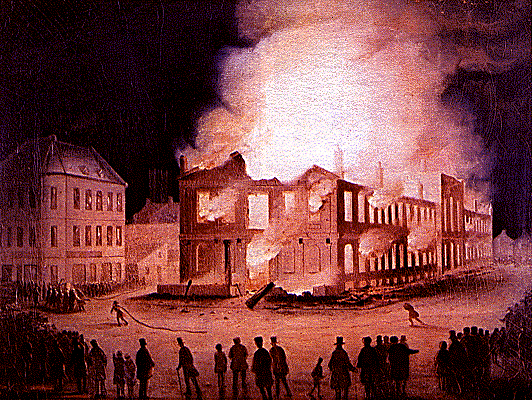
As Elgin left the legislature, elegantly dressed business people and Conservative (Tory) MPs pelted his carriage with rocks. An egg smashed his face. With horses at a gallop Elgin escaped the melee. Drunk with indignation, 1,500 angry Tories and their supporters gathered at Champ-de-Mars. Holding torches aloft they marched, shattered windows, and chanted their way to the opulent St. Anne’s Market building that housed parliament.

The legislature was in session but members scattered as rocks smashed through windows. Sandford Fleming, who would later plot the railway route through the Rockies and invent standard time, grabbed a portrait of Queen Victoria and ran it out a back door. Several legislators, including John Sandford Macdonald, who would later be Ontario’s first premier, blockaded the large front entrance. Led by a well-known lawyer, the mob stole a 35-foot ladder and used it to crash their way inside. Legislators were knocked down and kicked. A fat man in an expensive waistcoat jumped atop the speaker’s chair and yelled, “I dissolve parliament!” Furniture was smashed. Gas pipes were broken and then torches thrown. Bankers, lawyers, and clerics cheered the collapse of the roof as the screaming, leaping flames licked the sky. The fire quickly engulfed a neighbouring house, two warehouses, and a hospital. And the cheering went on.

Rich Man's Riot.

(Photo: history.lbpsb.qc.ca)

The next night, men left their fine homes, expensive sherry, and imported cigars to reassemble downtown. There were more speeches about race, religion, class, and the natural order of things and power lost. This time their spitting anger was focused on the homes of political enemies whom they blamed for stealing what was considered rightfully theirs. LaFontaine’s house on rue de l’Aqueduc and Baldwin’s boarding house were among those attacked with torches and rocks.

As the mad violence threatened to fill a third night, the military assembled. General Gore warned of the arming of police constables and that the 71st regiment had rifles and cannon ready. There were scattered incidents of violence but a tense and eerie calm gripped the city.

Everyone knew the riot’s instigators. Everyone knew who had thrown stones and set flames. But Baldwin and LaFontaine restrained their reaction. They did not meet violence with violence. They ensured that some arrests were made but also that all were freed. They carefully enhanced security and for weeks there were flares of politically inspired violence but a bitter peace eventually prevailed. The army retired to base and the police locked up their guns.

Over the next weeks, Parliament was moved to Toronto. A Tory petition to London demanding an overturning of the Rebellion Losses Bill was denied. The payments were made. A Conservative movement demanding Canada’s annexation to the United States was initiated by new voices of the old Tory elite, including some who would later be fathers of confederation. It was allowed a natural death.

Most importantly of all, those still raging at the shift of power from the one to the ninety-nine percent fought not on the street but through committees, editorials, and speeches. The government remained in office with executive power, then and forever afterward, held not by the privileged, handpicked few but determined by the votes of the many.

The 1849 rich man’s riots did not signal Canada’s independence from Britain, but it was a crucial step. They did not give birth to true democracy, but parliament’s flames illuminated its dawn. Perhaps we are well served to recall incidents such as the Montreal riot to better understand ourselves and who we truly are. Further, perhaps we should ponder if the old fights regarding whose voices should be heard and interests served will be, or maybe even should be, re-fought. If so, let us listen for the voices of this generation’s Baldwin and LaFontaine, lest torches be lit again.

If you enjoyed this column please share it with others and considered checking our more from my Monday blog archive at http://www.johnboyko.com

Percy, Poppies, and a Pledge

He wasn’t a movie star. He wasn’t a famous athlete or the latest singer whose catchy ditty momentarily captured a spot in the charts and teens’ hearts. And yet, there it was. At Lakefield College School, tucked in the woods by the lake about halfway between Toronto and Ottawa and, in the 1940s, also halfway between 19th century British elitism and 20th century Canadian ruggedness, a boy took a knife in hand. In the windowsill of the little library he carved the name Percy Nelles.

The other boys, and at that point the school was all boys, understood. Nelles awed. He inspired. Nelles had been one of them but now belonged to the world. Teachers turned a blind eye to the vandalism for they understood too. And so as they passed the window each day the boys glanced down, some whispered the name, and in silent reverence many drew fingers over the defiant tribute.

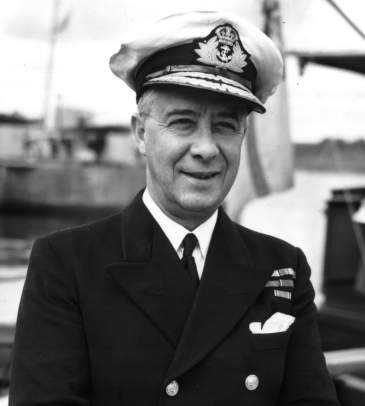
Nelles had been a Lakefield student when the school was young but the values upon which it would thrive were already firmly established. He was a skilled cricket player and an enthusiastic member of its army cadet corps. Upon graduation in 1908, he joined the Fisheries Protection Service. With the creation of the Canadian Navy in 1910, Nelles became a midshipman in HMCS Niobe. Promotions came quickly. He enjoyed service in many ships and during the First World War at the navy’s Nova Scotia Head Quarters as flag lieutenant and director of the Naval Service.

Peacetime saw the navy shrink but his career flourish. Nelles was captain or commander in a number of ships and served at the Imperial Defence College. In 1934 he became Canada’s chief of naval staff – the first Canadian-born and trained to do so. Four years later, with Hitler’s mad ambitions about to plunge the world back into war, Nelles was promoted to rear admiral.

Nelles had not forgotten his old school. He played an instrumental role in an initiative that in 1939 saw the Canadian Navy officially recognize the newly formed Lakefield Royal Canadian Sea Cadet Corps (RCSCC) St. George – Canada’s only school-based sea cadet corps. Boys were divided into four platoons and a band. In crisp blue uniforms they trained for a half hour or more each day, learning skills needed to become naval officers. For five years they also enjoyed sessions on Georgian Bay’s Beausoleil Island. They knew that Nelles had helped establish the Sea Cadet Camp facilities and its fun but rigorous program.

Meanwhile, Nelles was reassigned to Britain where, as the senior Canadian flag officer overseas and head of the Canadian Naval Mission, he oversaw the Canadian Navy’s preparations for the June 1944 D-Day invasion of France. He coordinated 110 ships, 10,000 sailors, and 15 air force squadrons for the successful landing of 14,000 Canadians on the heavily fortified Juno beach. D-Day was the turning point in the war that reminded all that evil is sometimes incarnate in a man or movement. Evil’s enemy can sometimes be a kid from a Saskatchewan farm, or Calgary street corner, or even a little school in Lakefield.

Percy, Poppies and a Pledge

(Photo: http://www.navy-marine.forces.gc.ca)

The library is gone now. The space became a classroom, then staff room, and is now a slick new Admissions office. But the windowsill is still there and so may also be the boy’s carving that was so simple and yet represented so much.

It is the same simplicity represented by the little poppies we wear each November. They express our devotion to those who offered their full measure of devotion for causes perhaps forgotten but in support of values that endure. They proclaim our insistence that the sacrifice and service of those who died, of those who returned whole or broken, and of those still in uniform, shall not be forgotten. Our remembering is as simple as the little felt poppy, or the windowsill carving, but as complex as citizenship itself.

For a few days each year we are asked to transcend our lives’ minutia and the exhortations of some politicians and all corporations and become more than voters, taxpayers, and consumers. We become citizens. And as citizens we bear the burden of remembrance.

To remember all who served is overwhelming and so this year I will offer respect for all by remembering one. This year I will remember Percy Nelles. In my moment of silence on the 11th at 11, I will curse war but revere the warrior. I will hate the hypocrisy, greed, and stupidity of wars of choice but honour the value of service-above-self.

But even this is too easy. Perhaps his memory is better honoured not by a forgotten carving or soon discarded poppy. Maybe this year we can summon the courage to act as Nelles did, as they all did, and let the values that inspired their service more fully inform our lives. These are the values, the essence of informed, engaged citizenship, that we saw on vivid display in Canada’s recent election. We see it every day in the acts of selfless volunteers. We see it in those whose courage and convictions broaden the circle of community. We see it through actions that demonstrate not just tolerance but acceptance and by acts and attitudes that show a willingness to trust a little more and take a little less.

Engaged citizenship is hard. It is a hell of a lot harder than wearing a poppy for a few days or standing silent for a minute a year. But let us compare the challenges of engaged, values-based citizenship to the difficulties and sacrifices of those for whom we don poppies.

Rear Admiral Nelles, this year, I pledge to do my best.

If you liked this column please share it with others through Facebook or other social media and consider my other columns at http://www.johnboyko.com

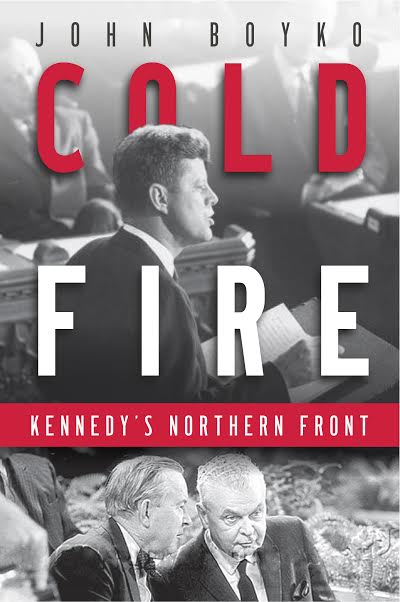
Cold Fire: Kennedy’s Northern Front

jacket

Cold Fire: Kennedy’s Northern Front will be published in Canada and the United States on February 2, 2016.

The United States and Canada had reached a crossroads and three leaders were trying to pull their countries in wildly different directions.

President John F. Kennedy pledged to pay any price to advance America’s homeland defense and strategic goals and he needed Canada to step smartly in line. Canada lay between the United States and the Soviet Union and so was a vital part of America’s security. Kennedy demanded that it house nuclear weapons and change its economic and foreign policies to support his. Frustrating Kennedy at every turn was Conservative Prime Minister John Diefenbaker, an unapologetic nationalist seeking to end the trend toward greater continental integration by bolstering Canadian autonomy and developing an independent identity. Meanwhile, Liberal leader Lester Pearson, the Nobel Prize–winning diplomat, saw value in continuing the slide toward integration.

While battling communism around the world, Kennedy never forgot his northern front. He adroitly exploited his enormous popularity among Canadians to seduce its people and pressure its government to bend to his will. He ruthlessly attacked Diefenbaker and shamelessly supported Pearson.

Newly released documents present shocking revelations about these crucial years. During the Cuban Missile Crisis, Canadian ships and planes guarded America’s Atlantic coast, while Canada suffered a silent coup d’état. Kennedy pushed a nuclear weapons system on Canada while knowing full well that it was merely a decoy to draw Soviet fire. Kennedy carefully influenced and monitored the overthrow of a Canadian government and the election of another. While Canada helped Kennedy tumble into the Vietnam War he did nothing to stop American inspired violence on the Great Lakes border. Perhaps most startlingly, if not for Diefenbaker, Kennedy may have survived the assassin’s bullets in Dallas.

The movie-television rights have already been optioned for this non-fiction book that reads like an adventure novel, brimming with sparkling stories, fascinating characters, and fresh insights into this critical moment. Cold Fire will astonish readers with the intriguing ways in which the struggles of these three resolute leaders determined the course of the next half-century.

The book can be pre-ordered at Chapters: https://www.chapters.indigo.ca/en-ca/books/search/?keywords=john+boyko

or at Amazon: http://www.amazon.ca/Cold-Fire-Kennedys-Northern-Front/dp/0345808932/ref=sr_1_4?s=books&ie=UTF8&qid=1446165612&sr=1-4

Hundred Days and Honeymoons

In the fifth century, a northern European marriage tradition encouraged newlyweds to enjoy a daily dose of mead, a fermented liquid honey. It was believed to be an aphrodisiac. Using the only calendar available, the sipping stopped when the moon returned to the wedding day’s phase – about a month. From this custom came the honeymoon.

The concept has grown. We experience honeymoons at work. The new person is allowed silly questions and rookie mistakes. New business leaders are similarly excused if questions reflect a genuine desire to understand and not veiled threats, and mistakes are forgiven if blame is accepted and apologies are quick. Often, however, honeymoons end when a business leader’s personality flair reveals a character flaw; intelligence becomes arrogance, or the pace and nature of change threatens profits or values.

Such is also the case in political leadership. Political honeymoons are Franklin Delano Roosevelt’s fault. He became president in March 1934, in the depths of the Great Depression. Within 100 days of inauguration he presented, and Congress passed, 15 major bills. He began by closing and stabilizing banks and then quickly touched nearly every sector of America’s sputtering economy. Some New Deal legislation worked and some failed but within those frenetic 100 days confidence and investment were rekindled and lives and capitalism itself were saved. Soon, however, even FDR’s honeymoon ended. Critics appeared from the left and right and the Supreme Court overturned his most ambitious initiatives.

Every leader, whether in business or politics, is warned that a honeymoon is as real as it is transitory and so it must be as productive as possible. Since FDR, every newly elected political leader has also been measured according to his or her First 100 Days.

Few leaders have demonstrated those twin realities as clearly as Barack Obama in 2009 and Pierre Trudeau in 1968. Both were propelled to office by charm, charisma, and positive campaigns. Both undertook ambitious agendas supported by the public and enabled by their party’s legislative majorities. Then, inevitably, both saw popularity plummet as their 100 days involved more talk than achievement and performance that couldn’t match promise. Obama watched Republicans take the House of Representatives. In his next election, Trudeau formed a frail, two-seat minority government.

Justin Trudeau has yet to be sworn in but the clock is already ticking on his honeymoon. Like all honeymoons, it offers novelty and excitement. The United States has seen two father and son presidents – Adams and Bush – but this will be a Canadian first. Never have Canadians welcomed a new leader not through the lens of TV news or at the behest of newspaper endorsements but, rather, primarily through the citizenship levellers and engagement enablers of YouTube videos, tweets, selfies, and blogs. Not since Pierre Trudeau, have Canadians embraced a celebrity politician as they would a movie or rock star.

Hundred Days and Honeymoons

(Photo: beaconnews.ca)

Our prime minister designate followed a masterful campaign with a positive election night speech, a fun meet and greet with surprised Montreal subway commuters, and an articulate, confident press conference. Even those who did not vote Liberal seem invigorated by his promise of change in policy and tone; shown most blatantly in his inviting premiers and opposition leaders to the climate conference in Paris. Much of the country, in fact, much of the world appears giddy with expectation. A Canadian journalist has, only partly in jest, asked the international media to stop ogling our prime minister.

The Liberal parliamentary majority could guarantee a productive 100 Days with actions and bills addressing the environment, murdered and missing indigenous women, tax reform, infrastructure spending, an end to Canadian military action in Syria and Iraq, and more. We should enjoy the ride but remember our history. The 100 Days will end and the honeymoon won’t last. Soon enough, Canadians will stop sipping their honey and Mr. Trudeau may not seem quite so sunny.

If you enjoyed this column please share it with others on Facebook or your social media of choice and consider checking my other columns at http://www.johnboyko.com (This column appeared as an op. ed. in the Ottawa Citizen on October 29, 2015)

Rocks, Guns, and Unicorns: Today’s Campaigns Are Child’s Play

The longest Canadian federal election since 1872 is finally over. Thank goodness. The attacks on Liberal leader Justin Trudeau began before the writ was dropped with TV ads declaring him not ready and others showing wildly out of context quotes and clips. The New Democratic Party and Liberals launched their own ads and assertions that were equally nauseous in tone and questionable in accuracy.

The long Canadian campaign was nothing, of course, compared to the American four-year presidential marathon that became real fully two years before party nominations. Canadian negative campaigning also pales in comparison. Consider the House Benghazi Committee that was ostensibly created to investigate the deaths of four Americans in Libya in September 2012. Republican House leader Kevin McCarthy recently bragged that the committee’s sole purpose is to destroy Hillary Clinton’s presidential bid.

Today's Negative Campaigns Are Child's Play.

(www.faircitynews.com)

Negative ads and practices are used because they work. They have always been with us. In many ways, they are tamer now than before.

Consider Burr and Hamilton. Alexander Hamilton was the primary force behind the Constitution’s ratification and as the country’s first treasury secretary he saved the United States from bankruptcy. Aaron Burr was a senator and then Thomas Jefferson’s vice president. In 1804, Jefferson made it clear that he would drop Burr from the ticket in the upcoming election and so Burr ran for governor of New York. He lost by a wide margin; due mostly to vicious negative attacks launched against his character and lies told about his record. He blamed a number of people including Hamilton.

Burr challenged Hamilton to a duel. In a New Jersey field they paced it off, turned, fired, and Hamilton fell. One of America’s most respected founding fathers died the next day. Burr returned to Washington and, with Jefferson’s blessing, served out his term as Vice President.

Canada’s history is less violent. In 1861, Conservative John A. Macdonald was running for re-election. Former friend and Reform Party candidate Oliver Mowat arranged to run in Toronto and, as was legal at the time, against Macdonald in his Kingston riding. Mowat had a number of scandalous allegations made against Macdonald and printed in newspapers owned by members of his party. (The Reform Party became the Liberals.) Included among those blatantly and unapologetically partisan papers was the Globe. It was owned and edited by Reform party leader George Brown.

Macdonald arranged his first public meeting. Mowat hired a group of young men who spread themselves around the back of the hall. When the meeting began, they instigated fights. They threw rocks at those on the stage. Macdonald jumped into the fray and threw punches along with the rest. Macdonald won the fight and election and later become Canada’s first Prime Minister. Mowat was later elected Ontario’s premier.

In the twentieth century, newspapers and money continued to wield enormous power. In 1950, young Massachusetts congressman John F. Kennedy was running for the Senate. His multi-millionaire father, Joe Kennedy, used various committees to quasi-legally funnel several million dollars to his son’s Quixote effort. Joe saved the Boston Post from bankruptcy with a $500,000 loan and then, two weeks before the election, saw the influential paper flip from supporting the Republicans to endorse his son. Kennedy defeated the far more experienced Henry Cabot Lodge by a narrow 52% to 49% margin.

Democratic presidential candidate Adlai Stevenson used one of the first negative TV ads in 1952. A carnival barker fields questions for a Republican candidate who, because he has two heads, offers two contradictory answers. The ad was clever but the Republican’s Eisenhower won the election.

http://www.livingroomcandidate.org/commercials/1952/platform-double-talk

Things have become increasingly worse. It was believed that forcing candidates to say that they endorsed a particular ad would help. It didn’t. Some thought the backfiring of certain ads, such as the Conservatives making fun of Liberal Prime Minister Jean Chrétien’s face in 1993 would help. It didn’t.

Today we seem to be stuck with campaigns that demean democracy rather than elevate it. Canada’s prime minister, for instance, based much of his 2015 re-election bid on trying to divide and frighten Canadians. In the campaign’s dying days he spoke only of taxes and used a sophomoric game show gag to make his point while saying things about his opponents that were obviously untrue. It was embarrassing.

Meanwhile, the United States has Donald Trump saying demonstrably false and ludicrous things while firing shot gun blasts of negativity and yet polling far above his opponents. America also has the Supreme Court’s Citizen’s United v. FEC ruling that declared money is free speech. It allows folks like the Koch brothers to buy Congressional seats in ways that would make 19th Century Robber Barons blush.

A glance back suggests that parties, candidates, and the wealthy are not about to change. Maybe it’s up to us. Maybe we need to become a little more discerning and ask the next question of candidates who insult us by reducing complex issues to simplistic sound bites and slogans. Maybe we need to reject those who use negative smears in ads, speeches, and debates by using social media to fact check and fight back. Truth may beat trolls. Maybe we need more journalists with the courage of comedians such as John Oliver to take on issues that corporate-owned media or ideological mouthpieces avoid. Maybe we need to respect our citizenship by more intentionally exercising it. We could begin by insisting that candidates and politicians address more than just boutique tax cuts meant to buy us and, rather, tackle substantive issues that challenge and improve us; all of us. We can do it with our tweets and blogs and donations and attention and attendance and, most importantly, we can do it with our votes.

I may be naive. But that’s okay. Hope is never a waste of time. I sincerely believe we can have an uprising without a coup. We can have a revolution without guns. All we have to do to be better is want better. All we have to do is demand better. In this way, history’s lessons will not be that resistance is futile but that better is necessary and change is possible. We’ll see.

If you liked this column, please share it with others on Facebook or your social media of choice. You can see my other columns at http://www.johnboyko.com

A Man of Many Nations at the Intersection of Time

He stood at the intersection of time, a man of many nations, and a man whose leadership lessons resonate through the ages. His name was Thayendanegea but we know him better as Joseph Brant.

Thayendanegea was born the son of a Mohawk chief in present day Ohio in the 1740s when his people where still seen by the French, British, and American colonists as allies and trading partners. However, those days were ending. The Seven Years War, called the French Indian War in the United States, was a world war. It swept across the Atlantic and saw aboriginal nations choose between the French and British. Thayendanegea was in the thick of it all.

His family had moved to what is now upper New York state. Powerful and wealthy British diplomat William Johnson had married his sister Molly. Johnson had taken note of Thayendanegea’s intellect and leadership qualities. After assuming the English name Joseph Brant, he enrolled in a Connecticut school where he perfected English and learned Latin, Mathematics, History, and more.

With growing talk of war, Johnson arranged for Brant to join the British army. At age 15, he fought in the 1758 expedition that ended with the horrific Battle of Carillon. He was promoted to captain after leading men at the 1759 Battle of Fort Niagara. In 1760, he led Mohawk men in the 1760 siege of Montreal that saw the city fall to British and Mohawk forces and, with that defeat, the French empire leave North America.

Brant was one of 181 Native American soldiers honoured with Britain’s Silver Medal. Britain had won but demanded that its American colonists help pay for the war with a series of taxes and that they remain east of a line drawn to protect Native land. As tensions grew, Brant was again that the center of it all.

He had become an influential leader in the six-member Iroquois League, formed to present a united aboriginal front. With growing violence demonstrating that the British and colonists were headed for war, the League convened in August 1775. The League was broken. Four of the six nations decided to back Britain, including the Mohawks, now led by Chief Joseph Brant.

With the revolutionary war causing more intrusions into Mohawk land and Britain asking for more aboriginal help, in 1777 Brant and Johnson’s successor Guy Johnson traveled to London. Brant met with political leaders, members of the artistic and academic community, and twice with King George III. He spoke articulately and in his perfect English of the advantage to Britain of a full alliance with the Mohawk nation. He left with the promise that his efforts in the war would be rewarded with protection and land grants.

Joseph Brant

(Photo: http://www.nativecanadian.ca)

Brant was good to his word. He rallied a substantial force of Mohawk soldiers and for the next two years led them in a number of operations and battles. He and his men fought with the British at Fort Oswego, at the Siege of Fort Stanwix, and the Battle of Oriskany. The war became vicious with both sides destroying livestock, poisoning wells, burning farms, homes and towns, and slaughtering civilians. In November 1778, Brant led 300 Mohawks on a raid along with 150 British Rangers led by Captain Walter Butler that resulted 30 civilian deaths in Cherry Valley. General George Washington reacted by ordering an expedition that resulted in the destruction of over 40 Iroquois villages and the murder of countless women, children, and old people.

Brant gathered his people and soldiers and, after consultation with British generals, moved in April 1781 to Fort Detroit. He was victorious in a number of battles against American troops but conditions grew harsh, British provisions stopped, and on the Atlantic coast, Britain suffered its final defeats.

With the Revolutionary War’s conclusion, Brant and his Mohawk people were left without land, economy, or friends. The 1784 Treaty of Fort Stanwix saw the new American government take control of what had been aboriginal land. Meanwhile, newspapers branded a number of Native leaders who had fought with the British as war criminals. Brant was personally cursed as a monster with actions he and his men had taken exaggerated while similar actions by American armies were swept from official accounts and popular memory.

Brant returned to England where he again met with King George III. He was promised a personal pension with vague pledges of land. With a new American war against aboriginal people spilling more blood and more burning towns, Brant met with Quebec Governor Lord Dorchester and then with President Washington. Despite his efforts he could not negotiate an end to the American – Indian war or secure land for his people. The 1794 Battle of Fallen Timbers led to a number of aboriginal nations signing a treaty that ceded scraps of land for a tenuous peace. Like Shawnee war leader Tecumseh, Brant refused to surrender and sign.

Brant gave up on the Americans. He dealt with the British and, with the assistance of Upper Canada Governor John Graves Simcoe, secured a large land grant along the Grand River that flowed north from Lake Erie in what is now Ontario. Brant moved the remnants of his Six Nations people to the fertile valley and together they developed the area while affording protection against a possible American invasion across the border at Niagara. Roads and towns were built and farms thrived.

Brant bought an additional 3,500 acres from the Mississauga nation at the western tip of Lake Ontario at Burlington Bay. He built a fine house on a cliff that afforded him a stunning vista over the lake. He lived in peace and until his death in November 1807.

Today, memory of Brant has been washed from America but Ontario has the city of Brantford, Burlington’s main street is Brant Street and its hospital is Joseph Brant Memorial. He is remembered as a diplomat, military leader, and a fierce defender of the dignity and rights of his people. The Iroquois confederation he helped form is remembered as an inspiration not only for Tecumseh but also for American and, later, Canadian leaders who admired its democratic nature and federal political structure. Brant and his struggles should be recalled when those living along the Grand River and elsewhere in Canada and the United States are reminded from time to time that their homes may well rest on Native land.

If you enjoyed this column please share it with others through Facebook or your social media of choice and consider checking out my other columns at http://www.johnboyko.com

When Fight nor Flight are Options

It’s not fair. In fact, fair is the last thing it is. A happy, witty, intelligent, empathetic seven-year-old child bursts with life. She is fun and funny. She is gentle and caring. She loves the roughness of hockey and the sweetness of a frilly new dress. She loves catching bullfrogs and reeling in bass and yet trembles at the sight of a spider. She loves corny jokes and bouncing on her trampoline and quietly contemplating books beneath a blanket-fort. She is perfect. But then, she is not. Last year her pancreas died.

No one knows what causes type one diabetes. It is not like type two, which is caused by genetics or a bad diet or lifestyle. Doctors guess that a virus may be the culprit. The virus leads the body’s immune system to attack the pancreas, leaving it unable to produce insulin. Insulin is the hormone that regulates the sugars we eat and allows them to enter our cells and produce energy. But without the pancreas working as it should there is no insulin and so sugar levels in our cells go wild with the transformation not happening.

Until the 1920s, children around the world with type one diabetes were dying by the millions. A Canadian surgeon named Dr. Frederick Banting read German research and came to suspect what we now know. He convinced University of Toronto professor John Macleod, a leading diabetes researcher, to give him money and a laboratory. Working with a medical student named Charles Best, Banting began experiments first with dogs and then with cows. They found that extracting insulin from a healthy pancreas and injecting it into animals that had their pancreas removed controlled the animal’s sugar level. It was an astounding discovery.

Imagine the Pain Stopping

Banting (right) and Best. Photo: U. of T. Archives

Leonard Thompson was a 14-year-old old boy. He was skeletal thin and unable to stand or concentrate. He was near death. Leonard and his parents agreed that he would be Banting and Best’s first human test subject. He was injected with insulin. Within a few minutes he smiled for the first time in days, sat up, and wanted to eat. It was nothing short of a miracle. Other test subjects saw similar results. Child after child was invited back from heaven’s gate.

The 1923 Nobel Committee awarded Banting and Macleod the Nobel Prize in Physiology or Medicine. Banting shared his prize money with Best. Banting was told to patent his discovery. He said no. He did not want to profit from something that he wanted only to help children. Companies rushed in and soon insulin was being injected into young arms and saving lives.

It would be nice if the Banting and Best discovery was a Hollywood happy ending but it is still too early to cue the violins. Insulin injections manage the disease but still do not cure it. The management is tough. Picture yourself having to use a small instrument that jabs a sewing needle into your thumb, then squeezing to bring forth blood. I’ve done it. It hurts. Now picture doing that five to eight times a day. It hurts every time. Now picture your Mom or Dad waking you up in the middle of the night to do it again. Now picture yourself being injected with a needle, akin an epi pen, twice before breakfast, once at lunch, once at dinner, once before bed, and then more times depending upon what all the blood tests suggest. Imagine doing that every day for the rest of your life. How do you do that as a child at school, at summer camp, on camping trips, at sports tournaments, at restaurants, at birthday parties, at slumber parties, and at all the other times and places where you just want to be a regular kid eating kid stuff and doing kid things?

Being a parent is hard enough. Now picture a situation where you do everything perfectly. That is, through steely, relentless diligence your child eats perfectly, carbohydrates are counted, exercise is monitored, blood tests are taken and dutifully recorded, urination is tracked, headaches, dizziness, and fatigue are noted, the insulin levels in all the needles are carefully measured and administered, and yet, despite all that and more, in the middle of the night, your child’s sugar level crashes so low that she falls into diabetic seizure. It looks like epilepsy. If not discovered, discovered while you are asleep yourself remember, and then quickly addressed, it could lead to a coma and – it is too horrifying to contemplate – death.

There are diabetic associations in countries around the world. They help young parents to help their children. In cities and towns throughout Canada the Telus company generously supports the Junior Diabetes Research Foundation Walks for the Cure. Money and awareness is raised along with the hope that someday a cure may be found. Someday.

Meanwhile, my granddaughter carries on because that is her only option. She is fun, witty, clever, kind, creative, fearless, and quite simply the bravest person I know. I am in awe of her. Last Saturday I donned a purple tee shirt emblazoned “Team Kenzie Mac”. She and her family walked at our local Telus Walk for the Cure. We are her team. Everything else can wait. Everybody else can wait. Nothing else matters. We were there for her for the walk in the rain, we are here for her now, and we will be here for her always.

May I live to see that day that the work begun so long ago by Banting and Best is completed so that no child need suffer, that no parent need suffer, and that type one diabetes is cured, once and, I pray, for all.

To learn more about diabetes please check the Canadian Diabetes Association: https://www.diabetes.ca/ or the Junior Diabetes Research Foundation: http://www.jdrf.ca/

If you liked this column, please send it to others using Facebook or your social media platform of choice.

Redemption Earned and Denied

Every novel, play, movie, and TV episode is the same. From Gilgamesh to Game of Thrones they all have three parts. The first act introduces the protagonist and the major conflict he needs to address. The second finds him torn down by difficulties he either creates himself or has visited upon him. The protagonist digs deep into his psyche, revisits what truly matters, recommits to that in which he once believed, and reinvents himself. If the work is done sincerely and well, the third act finds him stronger than ever, at one with his true self, and with redemption earned. The cowboy rides into the sunset, lovers gaze into each other’s eyes, and the mother and child hug as the last page is turned, the curtain falls, or the screen fades to black.

American novelist F. Scott Fitzgerald wrote in The Last Tycoon, “There are no second acts in American lives.” He was suggesting that Americans want to avoid the hard work of existential angst and introspection. Instead, they seek short cuts from the first to third acts. Fitzgerald observed, “The tragedy of these men was that nothing in their lives had really bitten deep at all.” They want rewards without cost, rights without responsibilities, and redemption without reflection.

Sadly, too many examples afford credence to Fitzgerald’s observation. Consider Richard Nixon. He used dirty tricks to win the presidency in 1968 and again 1972. He then illegally spied upon and attacked enemies whom he considered anyone who disagreed with him or his worldview. He treated questions as disloyalty, senior staff as attack dogs, the constitution as an annoyance, and those he was there to serve as saps. Watergate was unique only because he got caught.

After resigning in disgrace, he tried to ignite his third act by writing a number of books but it didn’t work. In interviews and his memoirs, he admitted mistakes and regret for having let Americans down but insisted that Watergate was simply a low rent burglary that should never have destroyed a presidency. He could never admit that it was never really about the break in. Rather, the scandal centred upon the clumsy attempts to cover up and manage mistakes, his reckless disrespect for political culture and proper process, and his flaunting of the spirit as much as the letter of the law.

Americans instinctively recognized that Nixon was attempting to pull a Fitzgerald and skip from acts one to three. They had none of it. They have still not forgiven him. For Richard Nixon, there has been no redemption.

Redemption has no shortcuts. This is a tough truth. We have all done something for which we feel regret and perhaps shame. To move forward there is simply no option save entering the dark and difficult second act and then demonstrating, not just talking about, fundamental change. In January 2011, Dr. Alex Lickerman wrote in Psychology Today, “We must fully recognize that we’ve done wrong; fully accept responsibility for having done it; determine never to do it again; apologize to those we’ve done it to (if appropriate); and resolve to aim at improving ourselves in the general direction of good.”

We can’t say we’re sorry if we don’t really mean it and it won’t matter anyway if we can’t or won’t change. We can’t fool others and, in the end, we can’t fool ourselves. After all, if a faulty steering wheel put us in the ditch, then saying sorry without fixing the wheel will have us off the road again in no time. We become childhood’s refugees, blaming colleagues, bosses, staff, parents, spouses, the stars, an interfering or absent God, and anything and anyone but ourselves. Our families, organizations, or companies, unfortunately and unfairly, pay the highest price for our obstinacy. In such circumstances we deserve to be removed from the driver’s seat through dismissal, divorce, social exile, or, in Nixon’s case, resignation.

For what it’s worth, I think Fitzgerald was wrong. I sincerely believe that most of us are willing and capable of undertaking a second act journey. Right now there are many among us struggling to rescue relationships, marriages, leadership positions, and ultimately themselves. Celebrate them. But watch warily. Those willing to do the work with humility and sincerity, and who are of sufficiently sound moral rectitude, will find old enablers and habits gone but ultimately see second act efforts rewarded with forgiveness earned and redemption deserved.

May we live and work with these people. May we be these people.

If this column resonated with you please share it with others through Facebook or your social media of choice and consider leaving a comment or even checking out my other columns at http://www.johnboyko.com

Love Letter to Canada on her Birthday

Dear Canada,

Birthdays are great. The friends, family, and food are marvelous as another marker is placed on the road to wisdom and understanding; the destination we seek and hope to recognize upon arrival. Of course, the fewer candles on the cake increase the chances of bouncy castles and donkey-pinning and the normally banned junk-food.

Your birthday is always special. What’s not to love about fireworks, music, and a day off in the middle of summer? For some reason we attach special significance to anniversaries ending in fives and zeroes so your biggest birthday bash was in 1967. The Centennial parks, fountains, buildings, and bridges from coast to coast are testament to your 100th birthday having been celebrated everywhere. The biggest bash was in Montreal. Expo ’67 invited the world and the world came. Magnificent national pavilions wove facts and myths in what other countries chose to display of themselves and how we cheered ourselves.

Dear Canada on her Birthday

(Photo: nmmc-co.com)

Your most powerful myth is your birthday itself. You became an independent state on July 1, 1867. But your independence was an act of the British parliament. Britain still controlled your constitution. A British committee could over rule your Supreme Court. A British company controlled what is now northern Ontario, Quebec, Manitoba, and the North West Territories. Britain still negotiated and co-signed treaties and trade deals. So you were independent but only like a teenager who moves out but only as far as Mom’s basement.

For a long while, we pouted and slammed doors from time to time but didn’t do much about it. After all, we still considered ourselves British. Our census form had nowhere to proclaim we were Canadian. We carried British passports. We voted for Sir John A. and his slogan: “A British subject I was born and a British subject I will die.”

It all changed when a European family spat led cousins with big navies and bigger egos and more pride than brains to trip the world into war. We called it the Great War because not until the next phase in what became a decades long European civil war would we begin to number them. Britain was in and all we could yell up the stairs was “Ready Aye Ready”. Boys who had never traveled more than fifty miles from home were stirred by a pull of patriotism, a yearning for adventure, and the hope that girls really do love a man in uniform. They were soon on trains to Val Cartier, Quebec, and then aboard crowded ships to Britain and then, the front.

They had no idea what they were in for. Picture digging a hole in your yard and living there for a year. Eat there, sleep there, and relieve yourself there, day after day and season after season. Watch for rats the size of spaniels, killing coughs, lice, maggot-infested food, and after standing for days in the open sewer, toes fall away when sodden boots were finally removed. It was a war against conditions and, too often, stupid officers more than the enemy.

Dear Canada on her Birthday.

(Photo: http://www.collectionscanada.gc.ca)

After years of using Canadians as shock-troop cannon fodder, our four divisions were joined and told to capture a ridge that the French and British had found impossible to take. We dug and planned. We ignored the British way and told every man his job. And men the boys had indeed become. Many still bore pimples but too much boredom punctuated by terror and too many trips on leave for bad booze and horizontal recreation made them older than their ages; older than anyone deserved to be. On Easter Sunday, a barrage that shook the earth and shattered the sky announced the attack and the Canadians soon had Vimy Ridge..

Back home, for the first time, we had not an allied, not even a British, but a Canadian victory. For the first time, Canadians considered themselves Canadians. When the war finally ended, Britain said it would take care of the peace. With a pat on the head we were to go back downstairs and wait quietly. No. Too many of our children, sent to kill their children, had died. Too many were home but broken. We had earned a place at the grown-up’s table. It took a while but we increasingly considered ourselves Canadian and one but one by one the vestiges of colonialism fell away, forgotten like other childish things.

So while a person’s birthday is easy to peg, a country’s is more a decision than fact. Perhaps, Canada, your birthday is really April 12, 1917; the day we made it to the top of that damned hill. But is it better to plant our patriotism at a Charlottetown conference table, in the British House of Commons, or on a blood-spattered Belgian ridge? Or is according too much significance to the tragic blunder of a crazy war affording too much recognition to the boneheads who started it, the profiteers who exploited it, and mankind’s predilection to slaughter rather than build?

Perhaps it’s better to stick with July 1, 1867. I guess, like Jimmy Stewart was told in The Man Who Shot Liberty Valance, when facts get in the way of the legend, print the legend. So this July, let’s enjoy the day off and with the sun’s surrender, let’s ooh and ahh at the fireworks. But this year, with these thoughts in mind, let’s offer ourselves a dare. Let’s see if any of us now can watch the colourful explosions over the park or lake and not think of the sky over Vimy.

Sincerely,

A Friend.

This is a few days late to stick with my Monday posting schedule but hopefully still invites consideration. If you enjoyed it, please send it along to others through Facebook or your social media of choice.

The Year of Whispered Warnings

In Manhattan’s Times Square, over half a million revelers cheered as the twelve-hundred-pound illuminated silver ball perched high above them began its flirtatiously slow, seventy-foot descent marking the final seconds of 1957. When it finally it came, there were screams, kisses, toasts, and Guy Lombardo’s Auld Lang Syne. Few noted that the ball had flickered off before the bottom and that the 1958 sign had sparked on a trifle too early. The glitch reflected warnings offered by the year just passed about many things that were no longer as they had been.

The Economy. After the Second World War there were more than enough new jobs for skilled and unskilled workers. Luck, timing, progressive governments, hard work, unionized labour, and the burgeoning manufacturing sector had helped create a thriving, urban middle class and economy that had never been so good for so long.

In 1957, however, growth fell from a decade of 6% per year to an anaemic 1%. Paramount among its causes was that Europe and Asia had rebuilt and needed less of our stuff. Our monetary policy was being clumsily adjusted to meet the new reality. The good times that many had come to believe would never end were ending. A recession was only months away.

Popular Culture. In 1957, for only the second year, rock ‘n’ roll gave voice to the young or young at heart who, perhaps unconsciously, rejected the white, Christian, male attitudes that reflected post-Depression and post-war cravings for calm, safety, and stability. Elvis Presley was rock ‘n’ roll’s most popular star. His concerts were always sold out and one Presley record or another was atop Billboard’s 1957 charts for 25 weeks. He epitomized everything that rock ‘n’ roll offered and threatened: a heterosexual in a gold lamé suit, a poor kid in a Cadillac, a white man singing black, and a mama’s boy who suggested all that mamas warned their daughters about.

The Year of Wispered Warnings

Elvis in Toronto, 1957

The flip side of rock ‘n’ roll was the Beat movement. The existential yearning at Beat’s core was expressed in Jack Kerouac’s scorching novel On The Road, published in September 1957. It followed Sal and Dean’s futile search for meaning in an America they found suffering from the emptiness of middle class consumerism.

Beat met rock ‘n’ roll in July 1957 when, at a Liverpool church fête, sixteen-year-old John Lennon met fourteen-year-old Paul McCartney. The name of the band they formed – the Beatles – was a pun that poked fun at their music while nodding to the Beats.

When times get tougher, pop culture always gets fluffier. When rebellions begin the grown ups fight back. Presley’s January 1957 TV performance showed him from the waist up to spare audiences the outrage of his gyrations. October saw the premiere of Leave It To Beaver. It joined similar TV fare legitimizing values that so many of the white, urban, middle class had internalized and assumed to be natural and perennial. They could be excused for not noticing so many of their children reading Kerouac, listening to Elvis, and that not everyone thought like Ward Cleaver or them.

Race. For decades, Jim Crow’s unwritten rules separated Black and White in American and Canadian cities and towns. In January 1957, Martin Luther King became the founding president of the Southern Christian Leadership Conference. It drew legitimacy from the Bible, Declaration of Independence, and Constitution, and its non-violent tactics from Mahatma Ghandi. In September, inspired by Dr. King’s message, nine African American children attempted to enter Little Rock’s all-white Central High School. They were stopped by a screaming white mob. President Eisenhower sent federal troops. Every morning, armed paratroopers escorted the kids to class. Eisenhower introduced the first federal civil rights legislation in 82 years.

The Year of Whispered Warnings.

One of Little Rock Nine wading through racists to go to school.

While slavery is America’s original sin, Canada’s is her treatment of aboriginal people. In 1957, the government and churches continued to ignore the protests of aboriginal parents by dispatching police and priests to steal their children. Native kids were forced into Residential Schools where many were beaten, sexually abused, and subjected to quasi-scientific experiments while taught to reject their heritage and themselves. Six thousand children would eventually die at the schools.

In June 1957, Canadians elected Prime Minister John Diefenbaker. He championed civil rights and cultural diversity within a unified Canada. He would enact legislation granting Native adults the right to vote and then a Bill of Rights declaring all citizens equal under the law.

Gender. Girls were taught in school and indoctrinated through movies, television, and advertising that their only responsible option and reasonable ambition was to marry and raise children. In 1957, Senator John F. Kennedy participated in a debate at Hart House, the University of Toronto’s academic and cultural hub. He was escorted past twenty young women protesting that only men were allowed in Hart House. When asked his opinion, Kennedy said, “I personally rather approve of keeping women out of these places…It’s a pleasure to be in a country where women cannot mix in everywhere.”

However, also in 1957, Betty Friedan was asked to undertake a survey among her Smith College classmates who were preparing for their 15th reunion. She found complaints of having a family but not happiness and household gadgets but not fulfillment. Friedan identified the problem without a name and was inspired to dig deeper. Her research became The Feminine Mystique. The book would unleash the second and most powerful wave of the women’s movement.

In June 1957, Prime Minister Diefenbaker appointed Ellen Fairclough to his cabinet. She was first woman to enjoy such a position.

Cold War. In October 1957, the Soviet Union launched Sputnik, the world’s first artificial satellite. Every orbital beep was a braggart’s boast; Soviet scientists had bested Americans who, for two years, had been working on their own satellite. Sputnik threatened that nuclear weapons could be delivered not just by bombers that could be shot down but also by rockets against which there was no defense.

Air raid siren tests pierced quiet afternoons. Emergency network drills interrupting television shows. People were taught to fear reds under their beds and over their heads. From now on, wars would have us all on the front line.

Some years are portentous for what occurred and others for the warnings they whispered. The Times Square New Year’s Eve glitches were metaphors for 1957’s cautioning us that change was coming and a great deal that had been perceived as right or permanent were neither. In many ways, we continue to rewrite the rules and retest the assumptions that 1957 told us no longer applied.

If you enjoyed this column, please share it with others through your social media of choice or even consider checking out one of my books: http://www.chapters.indigo.ca/en-ca/home/search/?keywords=john%20boyko