Lessons Learned from Fear, Vision and Tradition

On a cool September afternoon a group of Canadians aboard a luxury ship arrived at the picturesque Charlottetown harbour. They dressed in their best finery and awaited a grand welcome. It didn’t come. Instead, a lone man appeared in a row boat far below and shouted up an invitation to dinner. It was an unexpected beginning to a week that for many would have an unexpected end. Within nine days, most of it spent dining, drinking, and dancing, a new country would be born.

The men assembled embarked on an audacious experiment that remains underway. In the shadow of a brutal war and the demands of an unforgiving clock they attempted to improve on what the British had bequeathed and the Americans seemed intent on burning. We can better understand today by considering what they created then.

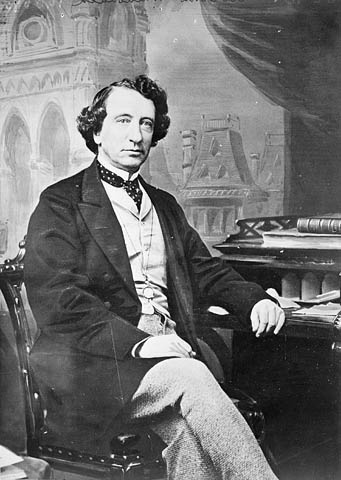
Wily politician and political survivor John A. Macdonald led the Canadian delegation. At that moment – September 1, 1864, 150 years ago – Canada was a dysfunctional amalgam of what are now the southern bits of Ontario and Quebec. They were crashing a previously arranged meeting of delegates from New Brunswick, PEI, and Nova Scotia who were gathering to discuss a possible Maritime union.
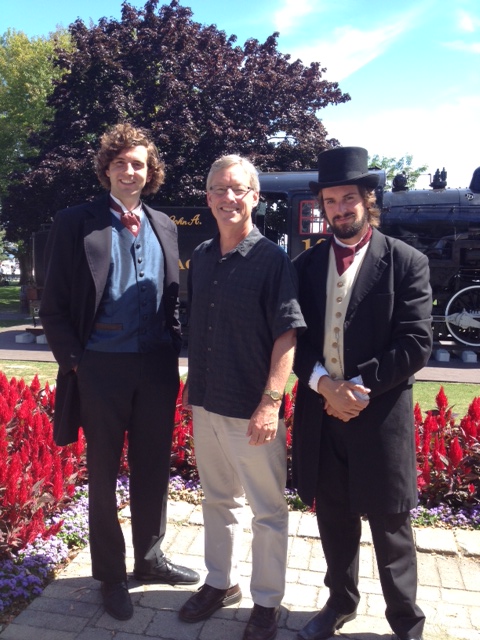
photo


Author with Sir John A. and George Brown (OK, not really)

 
Confederation had been discussed and dismissed for years. But changes in the United States and Britain meant that to save itself Canada had to create itself. America had fallen into Civil War. It left cities burned and families destroyed. If we extrapolated the population then for now it would claim the equivalent of over six million lives.

Canada and the Maritimes were officially neutral but most newspapers were pro-South, Halifax and Saint John ports sold goods to both sides, factories ran weapons to the South, an anti-Lincoln political party operated from Windsor, and a Confederate spy ring organized raids from Toronto and Montreal. American newspapers and generals threatened and Lincoln hinted that when the war ended, the Northern army would turn north.

Britain had dispatched 11,000 troops to the border but a powerful group of British politicians were questioning the cost of that defence and of imperialism itself. They wanted the expensive and troublesome British North American colonies to find their own way.

Canada resembled a teenager whose parents were kicking her out of the house. She wouldn’t move in with the neighbours because their house was on fire. She needed to build a new house. The architects met in Charlottetown. They were government and opposition members who had pledged to surrender partisanship for the greater good.

The United States was the world’s first and most successful manifestation of John Locke’s 18th century Enlightenment ideas. But the men (and they were all men) in Charlottetown believed that while the sentiments were noble, the Civil War was demonstrating that America’s attempt to create an enlightened republic was a blazing failure. They channelled Irish nationalist and British Member of Parliament Edmund Burke. He believed that governments should not be based upon temporary popularity which he equated to shouts from a mob, but on tested and respected tradition. Facts and the circumstances of the day should dictate reasonable solutions; decisions should never be based on blind adherence to an ideology. With admiration for Burke and Britain and America as their negative example they envisioned Canada.

Power, they said, should not rest with the executive – they derided the American president as a four-year dictator – but with parliament. Through free elections, they argued, the people should not pick a prime minister or even a government. Rather, voters should create a House and the House would choose the government according to which group could earn support. Members of parliament must not be delegates merely echoing the views of their constituents but thoughtful free thinkers unencumbered by the often un- or ill-informed electorate or partisan newspapers. The Senate must be appointed to keep it illegitimate so that real power remained where it belonged – in the House. The struggle for State’s rights had led to the Civil War so they insisted that the federal government alone speak for Canada. They saw provinces as municipal in nature and restricted their power to areas on a short, proscriptive list. The British monarch should oversee it all as Head of State.

Anniversaries, and a 150th is one of significance, are invitations to reflect on the past and ponder the future. Canada was born of fear, vision and tradition. What of the old fear? The Americans may not be ready to bomb us anymore but have they bought us? What of the old vision? A democratic state locates power to best serve the nation but are we happy with where power has been relocated? What of the old tradition? Should we pursue our sovereignty by eschewing the sovereign? What would Sir John say? More importantly, on our collective anniversary, what do you say?

An edited version of this article appeared last week in the Ottawa Citizen, Montreal Gazette and Vancouver Sun. To discover more about Canada’s birth in the shadow of the American Civil War and about Canada’s involvement in that war please see “Blood and Daring: How Canada Fought the American Civil War and Forged a Nation”.
http://www.amazon.ca/Blood-Daring-Canada-Fought-American/dp/0307361462/ref=sr_1_1_title_2_pap?s=books&ie=UTF8&qid=1410174613&sr=1-1

We Always Recall the First

George Washington was America’s first president but who was the second? Can’t recall? It’s a rare Canadian that couldn’t name Sir John A. Macdonald as their first prime minister but how many know their second? We seldom remember the second of anything. Because the purpose of History is to recall our past without prejudice in order to better understand our present with clarity our natural predilection to focus only on the first is a shame.

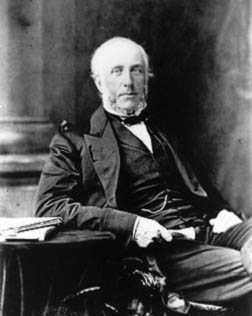
Canada’s second prime minister, like America’s second president, was a man whose character was sound, ambitions restrained, and accomplishments significant. Are those not qualities that we value in leaders and celebrate in those who helped shaped our story? It is with this perspective that we should recall and understand Canada’s second prime minister, Alexander Mackenzie.

Those who work with stone must be patient. To rush is to risk crumbling what to an untrained eye seems indestructible but to the skilled mason can be carefully shaped to stand and serve forever. Imagine a stone carver bringing that sensibility to the leadership of a nation.

Mackenzie learned to work with stone while a boy in his native Scotland. He was born in 1822 to a large and poor family. By the age of 16 he had mastered his craft and was helping with expenses. The Mackenzie family was one of thousands who fled poverty for the hope of a better life in Canada. Mackenzie’s skills acquitted him well and he soon secured contracts to build houses, churches, canals and public buildings. He eventually settled in Sarnia, Canada West.

A dour man, Mackenzie was slow to smile, joked only to jibe, drank very little for those hard-drinking days, and believed sports a waste of energy. He was none the less a popular figure in Sarnia and became active in public affairs including serving on the fire brigade and school board. He was attracted to the Reform Party (a precursor to the current Liberals) which reflected his belief in free markets and rewards based on merit and effort. He won a seat in the legislature in 1861, just as the American Civil War was seeing the butchering of brothers and the increasingly belligerent neighbour was leading Canadian political leaders to sense the urgent need to protect the country by growing the country.

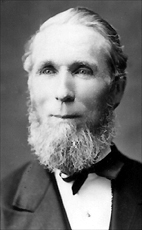
alexander mackenzie Mackenzie

At first Mackenzie opposed his party’s joining with the hated Conservatives to bring about Confederation. He was not convinced that the scheme was a good idea and he had little respect for John A. Macdonald who he considered politically duplicitous and personally unsavory. The Great Coalition government nonetheless created the skeleton that would become Canada.

The Confederation negotiations led to Reform leader George Brown’s resignation in 1865 and a party crisis. Too many men of too little talent vied to succeed him. Mackenzie watched the leadership competition with disdain while continuing to work hard at his craft and in both the provincial and federal legislatures. His talents and diligence were rewarded when in March, 1873 he won the party’s leadership. He had little time to celebrate, however, for within a month the Pacific Scandal rocked the Macdonald government. In November it fell.

Mackenzie was asked to form a government and shortly afterwards he called for an election. Few outside of south western Ontario knew him. Although disgraced, Macdonald remained a giant. To Canadians he was a rogue but he was their rogue and they had grown used to forgiving his mistakes and foibles. The scandal, however, had been too much. Canadians turned on him and handed Mackenzie a handsome 60-seat majority.

Mackenzie faced a number of problems going forward and the first was the knives in his back. The Reformers/Liberals were at war with each other and the worst of the lot was the conniving and ambitious Edward Blake. He believed he should be party leader and even had the temerity to ask Mackenzie to step aside so that he could become prime minister. Of greater importance to Canadians was that the country had slid into a deep recession. Contracts were cancelled, trade declined, and unemployment climbed. Absent today’s social programs, the suffering was devastating. Another leader may have panicked or taken rash action but the stone carver weighed options and moved slowly.

Plummeting tax revenue met demands for more funds to continue the massive railway project that Macdonald had begun. Mackenzie was forced to slow construction and even ask the people of British Columbia who had been promised the line to entice them to join Canada to wait a little longer. Railway construction continued but at a much slower, more affordable pace.

Canada was less than a decade old. While Mackenzie needed to address current issues he also recognized his responsibility to build the infant country. In 1875, he created the Supreme Court of Canada. It was designed to wrest power from Britain’s Judicial Committee of the Privy Council which at that point was Canada’s court of last resort. It would not be until 1949 that Canada’s Supreme Court would be truly supreme but Mackenzie’s action was an important step in Canada’s march toward judicial independence.

Mackenzie had been a militia major and respected the military’s role in securing Canada’s defence and establishing its sovereignty. He undertook a complete overhaul of the Department of Militia and Defence. He also established Canada’s first military training college in Kingston.

He completely revamped Canadian democracy. Mackenzie introduced the secret ballot. He passed laws that led to elections being held in all ridings on the same day. He removed property as a qualification for candidates for public office. To protect the people from unscrupulous politicians he created the office of the Auditor General and had it report not to the prime minister but to parliament.

The sprawling country was linked with three bold new laws. The Post Office Act created door-to-door delivery to cities across Canada. The Weights and Measures Act said that everyone had to begin using the same systems. The Collection of Criminal Statistics Act modernized police services across the country through the gathering, filing and sharing of information.

Mackenzie’s government had accomplished a great deal but the people cared more about the government’s addressing immediate needs and those needs had become desperate. There were even food riots in Montreal. While all of this was going on Sir John was reinventing campaigning by creating the political BBQ. He travelled the country attending outdoor picnics where he worked his inimitable charm and slowly earned forgiveness. In the election of September, 1878 Canadians returned the old chieftain to power.

Alexander Mackenzie’s service as Canada’s second prime minister was one of significant accomplishment. He acted with the stone carver’s patience and precision. He slowly did what could be done, left what should be left alone, and carefully moved the project along – the Canada project – the sculpture that to this day remains, as it should, under construction.

(And by the way, the second American president was John Adams.)

A version of this column appeared originally on the excellent site Leaders and Legacies. Find it at http://leadersandlegacies.com/2014/06/26/building-a-nation-brick-by-brick-canadas-forgotten-prime-minister/

Roman Was a Russian

Roman was Russian or maybe Ukrainian. The folks of his town went from one to the other with each shift of the restless border. From the bitter cold of the 1905 winter came a worker’s revolt. Tsar Nicholas reacted first with concessions but soldiers were soon attacking trouble-makers, including those with books deemed dangerous. Roman’s uncle imperiled his family for reading, among other things, the poetry of Ukrainian nationalist Taras Shevchenko whose words inspired the oppressed to feel power and the shamed to know pride.

With rumours of soldiers on the way Roman’s parents told him to run. The eighteen-year-old hitched rides and jumped trains until finding the coast. He snuck aboard the first lackadaisically secured ship he could find and hid beneath a lifeboat’s thick tarp. After two days at sea he emerged dirty and hungry and agreed to work for his fare.

 A long and roiling journey took him to Rio de Janeiro. For nearly two years he hacked roads to resources through the Amazonian rain forest. One steaming afternoon a workmate rhapsodized of a place with more high-paying jobs than people – Canada.

Roman bought a ticket for the first northbound ship but was tricked. Declared a stowaway, he was forced into back-breaking labour as the hulking cargo vessel steamed around the world. After nearly a year of depredation he gazed longingly at the Statue of Liberty.  Excited for his first leave in months, he and two friends signed for their meagre pay but then were grabbed, lashed, and thrown onto their bunks; they’d been duped into re-upping for another year.

Just before dawn a sympathetic crewmate cut the ropes and helped them sneak to the deck where they leapt into the cold, dark water. Three unkempt young sailors shuffled through the Battery’s morning mist. A gentleman with an expensive suit and friendly smile said they looked lost. In his best but broken English Roman explained that they were on their way to Canada. The man laughed and said they must be the luckiest boys alive because he worked at the Canadian consulate. The sorry little gang were given train tickets to Montreal.

Montreal was a French city run by the English, and all on the backs of those speaking a hundred tongues. Roman found a job in a large and dirty iron works and happiness in the city’s thriving Ukrainian community. After a particularly trying shift he was told that steel factories offered safer work and better pay and that an American had just started a new steel company in Ontario. Within days he was on a train to Ontario.

Hamilton was a tough, hard-hat town. Factories hugged Burlington Bay, shady bosses held sway in the multi-ethnic east side, and everyone called the towering Niagara escarpment that watched over it all the mountain.  The place brimmed with the power and potential of the industrial age. Roman was among the first employees at Hamilton’s Dominion Steel and Casting Company that became Dofasco.  Roman was a molder. He created castings into which molten metal was poured to make machines, the bank vault now part of the Hockey Hall of Fame, and even the Hoover Dam’s turbines. He built weapons for the First World War and in the Second his three daughters were among the women who traded dresses for overalls to defeat Hitler. 

Upon retirement, Roman purchased a farm near Port Dover. He grew corn and every year turned 11 acres of grapes into sweet wine. His grandson worked the farm each summer. He walked his great-grandson among what to the little boy were towering corn stalks and he tried but failed to reassure him that chickens were not terrifying.

Today, above my piano, is a painting of my great-grand father’s Port Dover farm. It is more ideal than real; perhaps like elements of his adventurous escape. But that’s okay. Societies need myths that define and inspire and so do families. Like the tenacious Ukraine, my family is a little dysfunctional at the edges but rock-solid at its core. In the New Year, we’ll welcome a baby. The child will embody an audacious confidence in tomorrow, 1905’s legacy, and Roman’s latest gift.

Meanwhile, Russia is back fighting for imaginary lines and Shevchenko’s poems are again on Ukrainian lips.  As we watch egos and power and money at war let’s pause to consider the people in those border towns who wake up each day and do their best. I know, as do thousands of others living in Canada today that their struggle will echo for generations and in ways we can’t imagine.

The Slave Who Helped Create Two Countries and Wreck a Third

John Anderson was born property. At 29 he was a prisoner. He was seated in Toronto’s Osgood Hall while outside on the chilly morning of December 15, 1860 stood fifty armed police officers. A company of the Royal Canadian Rifles stood with muskets ready and bayonets menacingly attached. All were prepared for the demonstration promised and the riot expected should the court decision go as the crowd of two hundred or so Anderson supporters feared. Stretchers were piled against a wall, ready to haul away the injured and killed.

His adventure had begun seven years before. He had run when life as a Missouri slave had become too much. It was too much to watch his mother being beaten and then sold. It was too much to lose his name. It was too much to be kept from living with his wife and child. It was too much to be denied opportunity; to be denied his very humanity. And so he ran. In running he had committed a crime for he robbed his owner by stealing himself.

On the third day of his flight, Anderson accidently stumbled upon a White farmer named Seneca Digges and four of his slaves. They gave chase and for thirty minutes ran through woods and fields until Anderson encountered Digges. Digges raised either a cane or a tree branch and they fell together. Anderson’s knife plunged three times into Digges’ chest and back.

Dirty, exhausted and starving, Anderson slowly snuck his way north. When he encountered a White man who offered a meal and bed for the night Anderson boarded the Underground Railroad. A few weeks later he was over the Detroit River and in Windsor, Canada West. With the help of a thriving Black community he learned to read and do sums and within a few years he had learned masonry, begun his own business and purchased a house.

Anderson confided to a friend that he had stabbed a man while fleeing. He was betrayed and arrested. A judge informed Missouri officials that Anderson was in a Brantford jail. Soon, officials from the Missouri governor to the American Secretary of State were writing to Canadian and British leaders demanding his extradition.

Anderson had moved from slave to symbol. Southerners had grown enraged with the Canadian Black communities and the abolitionists that enabled them. For generations they had insisted that slaves were unable and unwilling to work, read, or succeed on their own. And yet, up in Canada, ex-slaves were illuminating the lie that was the foundation of their economic, political and social ethos. The Underground Railroad, Northern abolitionists, and Canada had in this way become part of the Southern impetus to insist on State Rights and contemplate a divorce from the American state.

If Anderson could be extradited then the Canadian Black communities and the Underground Railroad itself could be destroyed with slave catchers able to grab prey in Canadian cities as easily and legally as if they were Boston or New York. A New Orleans attorney wrote, “We are going to have Anderson by hook or by crook; we will have him by fair means or foul; the South is determined to have that man.”

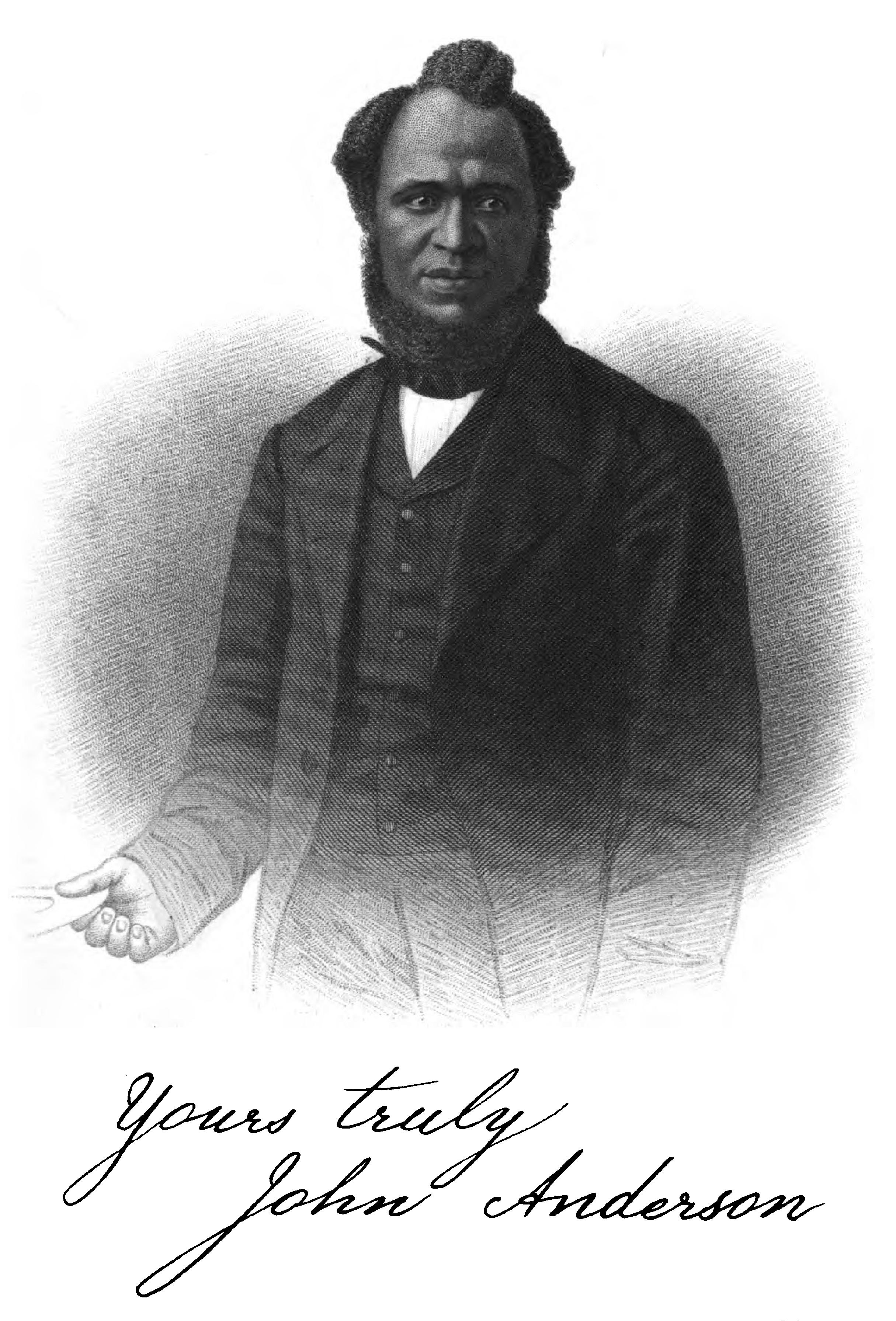
John Anderson

At that time, Canadians were debating their future as a British colony, a new country, or perhaps an American state. Meanwhile, a growing number of influential British leaders were advocating cutting ties with the increasingly expensive and bothersome Canada. The Anderson case led other Brits to argue that there was a moral issue at stake that trumped political concerns. They advocated intervening in the case even if it kept Canada colonial and threatened war with the United States.

The court decided that Anderson must be returned to Missouri but there was an appeal. American Secretary of State Lewis Cass wrote a letter insisting that Anderson be immediately sent south. British Prime Minister Palmerston demanded that Anderson be dispatched to Britain. Canada’s Attorney General summoned the temerity to say no to both. His name was John A. Macdonald, soon afterwards, an independent Canada’s first prime minister. He quietly covered all Anderson’s legal bills.

Sir John A Macdonald

John A. Macdonald

Finally, after weeks of legal wrangling and insults across the ocean, over the Canadian border and back and forth across the Mason-Dixon Line, the time had come for a final decision. British, American and Canadian reporters were huddled in the imposing courtroom as police and soldiers outside nervously held their weapons. Three justices argued that the Missouri writ had charged Anderson with killing and that there was no such crime – the only charge available was murder. On a technicality, Anderson was free to go.

Anderson rose unsteadily to his feet and beamed a huge smile. In a quiet voice he whispered, “Thank you, gentlemen—thank you, your lordships.” The gavel fell and there was a roar of shouting and applause from those in the courtroom and from the crowd shivering outside in the snow.

Canadian reaction was ecstatic for it was a three-way victory. Anderson was free. Canada had told the United States to forget its designs its Black citizens and to respect its borders. It told Britain to mind its own business. Macdonald pushed and in March 1862 the British government passed the Habeas Corpus Act rendering it illegal for Britain to issue writs in Canada. A major step toward Canadian nationhood had been taken.

Canadian and American abolitionists quickly had Anderson delivering speeches to educate and raise funds. By June, he was in England delivering more speeches. His largest audience was at Exeter Hall, where the newly formed John Anderson Society welcomed six thousand to see him.

Meanwhile, Fort Sumter had been pummelled and Bull Run bullets had screamed. By 1862, the American Civil War was grinding into its second year. Anderson was no longer needed to make a point or further a cause. Without consulting him, British abolitionists arranged for him to be given land in and passage to Liberia.

On December 22, 1862, Anderson delivered his last speech. As always, he ended with the mournful hope that he might again see his family. The next day he was aboard a steamer bound for Cape Palmas. There are no records of him in Liberia, nor of his wife Maria or their child in Missouri. They became as lost to history as they were to each other. However, John Anderson’s legacy lives on in the America that was torn in two and Confederacy and Canada he had inadvertently, with his primal desire to be free, helped to create.

To discover more about John Anderson and Canada’s role in the American Civil War please check out Blood and Daring: How Canada Fought the American Civil War and Forged a Nation, available online and, if you can still find one, book stores everywhere. http://www.amazon.ca/Blood-Daring-Canada-Fought-American/dp/0307361446


Watch for Your Crazy-Eyed Monkey

We were all nervous so I went first. The nurse walked me to a world map where I pointed to Nepal’s remote north-west and explained that the other teacher, six Lakefield College School students and I would be enjoying a two-week rafting and kayaking adventure down the Karnali River.
“Well then,” she said, “let’s not worry about the rabies shot because it’s just meant to keep you alive for a few hours until you can reach a hospital. But if you’re way out there then by the time you get to a medical facility you’ll be dead anyway. So I suggest you stay away from crazy-eyed monkeys.”
I promised to do my best. When properly stabbed I told the first of what would be several white lies; the little stories for which parents and teachers forgive themselves when protecting kids from being afraid of things they can do nothing about anyway. “Good news,” I said, “the needles are painless and we don’t need the rabies shot.”
Kathmandu’s Tribhuvan airport is the perfect introduction to Nepal. We deplaned down rusting metal stairs and as we crossed the cracking tarmac we grouped a little closer upon entering the cacophony of the small terminal. Pimple-faced kids not much older than our young charges slouched in ill-fitting army uniforms with the universal look of sullen teenaged boredom and enormous automatic weapons slung over slender shoulders.
There is always a point, a precise moment, when you realize that the carousel will not produce your bags. I stood in a long line of disgruntled tourists until finally able to tell the disinterested young woman behind the old card table about our mixed up connecting flight in Los Angeles and the promise that our bags would be properly transferred. She had me fill out a long form and then drop it into a tall, wooden box that must have contained at least two hundred others. With a glance over her John Lennon glasses she promised to call our hotel if the bags arrived. If.
Stepping into the bright sunlight, we were staggered by the line of shouting cab drivers, hucksters and sign-wavers , the sudden sting of heat and the pungent smell of diesel and cow shit. We stumbled to our bus and after swerving around a large and sickly looking cow lying casually in the middle of the road were soon on our way to the tourist district.
A jaunty guide told us of the city. The green lawn and white gleaming splendour of the Narayanhiti Palace was a jarring sight after miles of shabby brown buildings and dusty brown streets. It was March, 2001. On the day of our arrival, the long-suspended parliament reconvened only to be suspended again when members immediately fell into a bench-clearing brawl. A few months after our departure, a young prince interrupted a palace dinner by spraying gun fire and killing nine members of his family including his father the king. A few days later the prince died mysteriously which put his uncle on the throne. This would happen later, of course, but the chatty guide that day said of nothing the country’s current political chaos or of the Maoist rebellion that was sweeping the countryside.
Our hotel was a clean and pleasant three-story concrete bunker. We enjoyed dinner on the roof, awed by the spectacular view of the city bathed in the gold of the gigantic sun sinking slowly behind the mountains. We met our lead river guide who promised to loan us camping gear while delaying our departure so we could buy clothes.

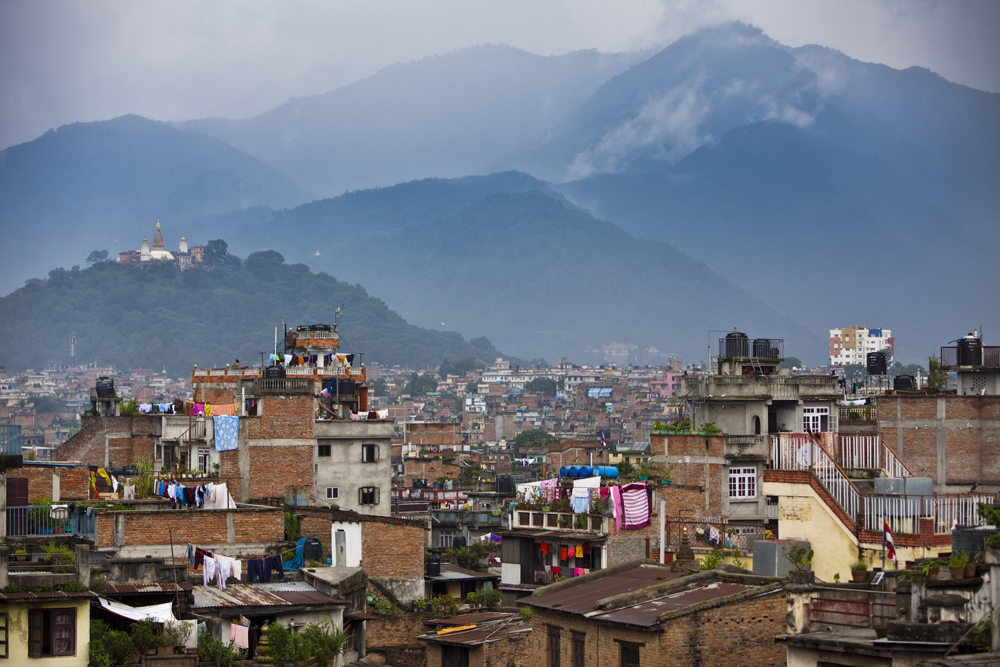
Jonah M. Kessel / China Daily

Armed with useless maps and pocketsful of rupees we navigated the district’s narrow winding streets. We found that stop signs were merely suggestions, mangy dogs were everywhere, the diesel fumes were suffocating, and the packed, tiny stores with their negotiable prices invited claustrophobia. We drank it in. We loved it all.
After leaving the group to find something a little different, one of the students and I hopped into a small, three-wheeled cab. After a minute I tapped the driver’s shoulder and suggested that he was going the wrong way. “Short cut,” he insisted. A couple of minutes later I said, in a little firmer tone, that we really needed to turn around and he then confessed that we were on our way to his uncle’s “very special” store. I whispered to my young friend and then on the count of three we leapt from the moving cab, disappeared under string of colourful saris and ran until the driver’s shouts faded. Safely back at the hotel our guide told us that we were indeed probably being kidnapped.
The next morning found us standing together in stunned silence before a small Tata bus. It was a Frankenstein of a rusty hulk, obviously cobbled together from long-gone others. The back of my cracked, vinyl seat scissored me forward at 75 degrees or so and its legs were secured by two concrete blocks. This was our home for two days.
The countryside was spectacular. The jungle was dense, the valleys deep and vast and the enormous sky was a brilliant clear blue. We had seen Everest piercing the clouds as we flew in and now the Himalayas were a backdrop to overwhelming beauty.
The villages along the way were small, poor and dusty. Around noon we stepped over an open sewer to an outdoor restaurant to enjoy our first of many plates of Bhat, Nepal’s staple diet, consisting of rice, lentils and curried vegetables that you dip into one of three fiery hot sauces. Our guide had warned that we would adjust but only after first falling ill after a day or so of Bhat. The vomiting soon began with a green and moaning girl hanging her head out the window of the rickety, bouncing bus.
We slept that night in the third floor rooms of another bunker hotel. The lone toilet was bolted to a cement porch surrounded by plywood walls, a ceiling open to the sky and a hole beneath it that allowed deposits to plop loudly into a large barrel on the ground far below. I spent most of the night alone on the roof with its cooler, fresher air and making frequent jogs to offer Bhat to the barrel.
The next day saw us on increasingly narrow roads carved into mountain sides that dropped into deep, rocky chasms. A boy of about ten years of age had joined our group and was hanging out the side of the bus and from time to time tapping on the roof. The driver explained that his tap indicated when the tires were nearing the edge of the abyss. I decided to neither distract the boy nor explain his job to the others.
We were all riding on the roof when stopped by a makeshift barricade. The driver had us climb back inside while he spoke with a small group of folks. I was a little shaken to see a man appear wearing shorts and flip flops like everyone else but also an alarmingly out of place powder-blue button-down oxford shirt. In his left hand he casually toted an automatic weapon. The driver said that he was a Maoist rebel and was demanding a fee for us to continue. I reached for my money but the driver said he could negotiate. He waved off my objection and disappeared with oxford man into a small hut. I told everyone that the driver was just paying a toll but waited to hear shots and wondered what I could possibly do if oxford man then returned for us. In five minutes that seemed like hours the driver was back. He had bargained the price of our lives and freedom down to about three Canadian dollars.
The twelve days on the river were magnificent. The guides were skilled and friendly and every night around the fire we shared songs and stories. An Australian told us of his love for the outback. An Isreali spoke of his military service and his desperate hope for peace. An American told us of the vastness of Montana and his love for horses, rivers and adventure. Each of us was far, far from home and yet when each day’s thrill of rapids and serenity of floating through the dazzling valley was over, it was thoughts of home to which each of us returned.

Karnali%20river

After our short flight back to Kathmandu the rest of our group enjoyed a tour in which they saw temples and even a little girl who was celebrated as a living God – but I was at the airport. Not surprisingly, my form was lost but after ascending several rungs of the bureaucratic ladder a man was escorting me to his office when I glanced through an open door and into a gym-sized room strewn with suitcases. I spotted my big green pack perched high on one of the piles. I eventually found all of my group’s packs and secured a cart to haul them away. The gentleman never consulted a piece of paper or had me sign a thing. I guess he either trusted me or didn’t care.
All travel is time travel and all travel is good. Few minds that travel remain small. How invigorating and instructive to allow even a brief immersion into a society where one’s rules, assumptions and expectations no longer apply. It is to be humbled with the twin reminders that people wake up every day everywhere and do the best they can and that other cultures are not failed attempts at being you.
Last night I sat on my deck and stared up at Orion glittering in the heavens. It was years ago now that I gazed up at him every night from the banks of the Karnali River. Shortly after our return, the Maoists won their revolution and swept aside Nepal’s monarchy and the planes that struck New York and Washington swept away much of the west’s blind innocence. But tonight, in my safe little Ontario village, there is Orion reminding me of how much that truly matters remains the same. And waiting for me somewhere is a crazy-eyed monkey that I will meet someday in whatever form he decides to appear – but not tonight.

If you enjoyed this column, please share it with others and consider checking out one of my six books, available at Amazon, Chapters, and sensible bookstores everywhere.

A Man Even His Friends Don’t Like: Seeking Stephen Harper

At the funeral of a colleague Stephen Harper joked that even his friends don’t like him. Few seem to know him. The public personae is apparently very different from the man. Despite his having been prime minister for nearly a decade, for many Canadians, Mr. Harper remains an enigma. As Canadians enter their longest campaign since the 19th century, it is perhaps an appropriate time to pause and consider how the country’s most public person can remain such a mystery. Maybe the best way to seek an understanding of our inscrutable prime minister and the road down which he is leading the country is to recall three former prime ministers with whom he shares policies, principles and personalities.

Image

Prime Minister Stephen Harper

Mr. Harper’s control of his cabinet, caucus and senior bureaucrats knows few bounds. All appearances, speeches and press releases are vetted to ensure that the government speaks with one voice – his voice. Even the prime minister’s own remarks are seldom extemporaneous while reporters’ questions are always limited and often ignored.

In this way, Mr. Harper reminds one of R. B. Bennett. Bennett was prime minister in the worst days of the Great Depression. Like Harper, he was an easterner who represented a Calgary riding. Like Mr. Harper, Bennett enjoyed a reputation as a skilled political strategist and nearly every member of his caucus rode to Ottawa on his coat tails. Bennett held a similar lock on his colleagues, disdain for the press and a reputation for running a one-man show. A popular joke had a Parliament Hill tourist query a guide about the well-dressed man walking alone and talking to himself and being told that it was the prime minister conducting a cabinet meeting. Bennett used to speak of “his” government like the current PMO refers not to the Canadian but the Harper government. Bennett’s iron control, like Mr. Harper’s, rendered all errors his and all opposition personal.

Image

Prime Minister R. B. Bennett

Mr. Harper also reminds one of Joe Clark. Like Mr. Harper, Clark called Alberta home and was a career politician who entered the profession quite young. They both earned reputations as astute policy wonks. While they both exude obvious intelligence and political acumen both men also often appear uncomfortable in their own skin, walk to podiums as if to gallows and read speeches like they can’t wait for them to end. Many Canadians grew uncomfortable with both, perhaps because they seemed uncomfortable with themselves. This unease could explain why so many people were surprised and bemused when Clark made self-referential jokes about his lack of charisma or when Mr. Harper performed a Beatles tune at Ottawa’s National Arts Center or was seen in a leaked YouTube clip doing clever imitations of past leaders.

The ice in Clark’s manner seemed even colder when contrasted with the fire of Pierre Trudeau for whom magnetism came as naturally as breathing. Alas, another Trudeau is now radiating heat around a man who, like Clark, appears to be an introvert in an extrovert’s game.

Image

Prime Minister Joe Clark

The Prime Minister that is most like Mr. Harper is John Diefenbaker. Like Harper, Diefenbaker was born in Ontario but became a transplanted westerner who made a name for himself by giving voice to the yearning and alienation of a region believing, with some justification, to have been underappreciated and ill-treated. Also like Harper, Diefenbaker behaved like an outsider even when he became the ultimate insider. Both seemed to perceive politics as a contest waged with enemies.

There are other similarities. One of Diefenbaker’s goals was to open the north. Mr. Harper has sought to protect Canada’s Arctic sovereignty while spurring economic development in the vast part of the country that, with climate change changing everything, holds more potential than Diefenbaker could have imagined. Diefenbaker also fought for imperial ties long after the empire was gone, including keeping the Red Ensign as our flag. He would salute Mr. Harper’s re-hanging pictures of the Queen and putting the Royal back into our military while reviving old ranks and insignia.

Image

Prime Minister John Diefenbaker

Diefenbaker spoke of nationalist unity and sought to end hyphenated Canadianism. He called his vision One Canada. Harper holds a similar view of the country. While Diefenbaker rejected and largely ignored Quebec’s ethnic-nationalism, Harper emasculated it by having a bill passed that recognized “the Québécois” as forming a nation within a united Canada. That is, Quebec is not a nation, just those French-speaking people who self-identify as Québécois. The Harper bill channelled Diefenbaker’s pan-Canadian, One Canada nationalism.

Harper’s relationship with the United States was as tricky as Diefenbaker’s but their motivating ideas were similar. Throughout the difficult 1963 campaign in which he was accused of being anti-American, Diefenbaker said that his fight was for Canada and not against the United States. He repeated the point in his memoirs: “It was simple logic that Canada could not maintain its independence if we continued existing Liberal policies. Recognition of this implied no hostility to the United States. It was a case, as it was for many of my government’s policies, of being pro-Canadian, not anti-American.”

Two generations later, on November 19, 2012, Prime Minister Harper answered questions before the Canadian-American Business Council. He echoed Diefenbaker by offering, “We are strong Canadian nationalists who value what is distinctive and unique about this country and think in our own modest way that this is actually a better country. What we’ve tried to do and tried to tell Canadians is there’s no need for true Canadian nationalism to have any sense of anti-Americanism.”

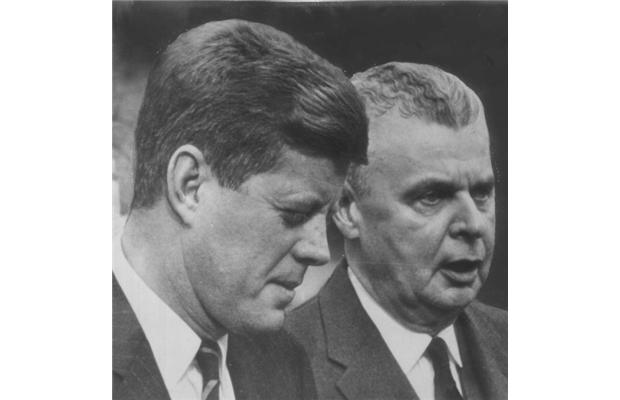
Robert Kennedy once said that of all the leaders with whom his brother interacted, Diefenbaker was the only one he hated. That sour relationship negatively affected cross border relations. President Obama surely harbours no such feelings for Mr. Harper but they are certainly not close and they disagree on many fundamental issues, most importantly, at the moment, is the environment and related issue of the Keystone XL pipeline.

Diefenbaker would not have agreed with everything Harper has done or how he is doing it. Diefenbaker was a man of the House and so would have risen in outrageous anger at the prorogations and other parliamentary parlor tricks through which Harper has bent the rules. Further, like Bennett and Clark, Diefenbaker was a Red Tory and so would have been orphaned in Harper’s party that purged the word Progressive and had the Conservatives become more conservative.

The similarities nonetheless remain. That Harper recognizes his link to Diefenbaker has been seen in the ways he has saluted him. Harper’s government has provided money to update and upscale Saskatoon’s Diefenbaker Centre. When Ottawa’s old city hall building was renovated to house government departments it was renamed the John G. Diefenbaker Building. A new Coast Guard icebreaker will be called the John G. Diefenbaker.

Considering the leaders and ideas of yesterday allows a deeper context within which we can comprehend today and, through seeking our unreadable prime minister, perhaps to better understand tomorrow. Prime Ministers Bennett, Clark and Diefenbaker continue to serve Canada by inviting us to glimpse the road ahead not by peering through the windshield but glancing in the rear view mirror.

KISS is Cute But Keeps Us Stupid: Consider an Example

The KISS principle (Keep It Simple Stupid) is cute but keeping anything simple keeps us stupid. While I contend that this idea is true in every aspect of our lives let’s test its validity by looking at one event in History that we know about, or think we know about – the Emancipation Proclamation, Lincoln’s freeing of the slaves. The document is far too often simplified beyond recognition. In so doing, in robbing it of its complexity, History itself is deprived of its ability to do what it exists to do, to act as a wise teacher invoking yesterday in an invitation to better understand today. So let’s test the idea with a consideration of the lessons offered by Lincoln’s 1863 Emancipation Proclamation.

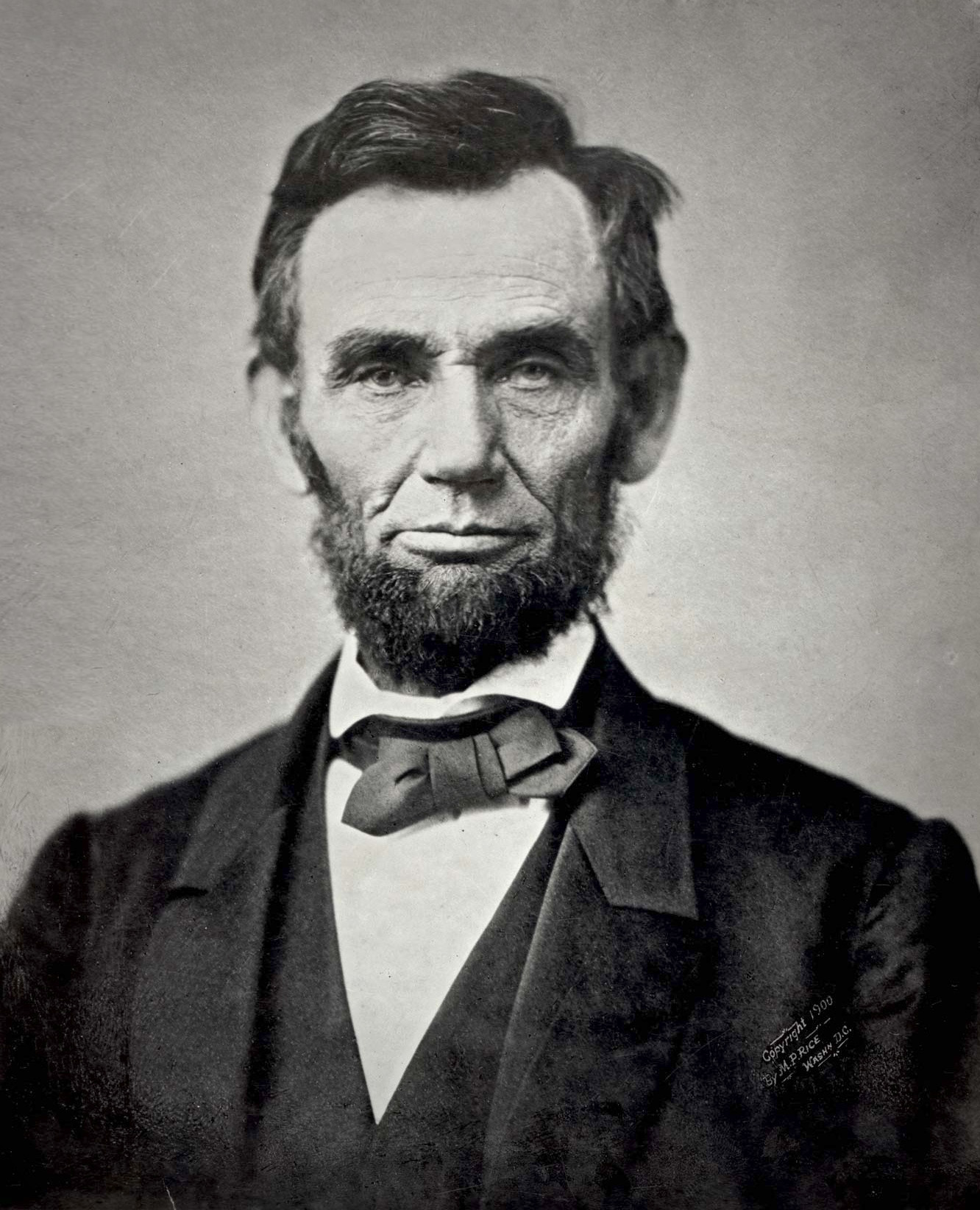
Abraham_Lincoln_November_1863

Lincoln was a visionary but he was also a pragmatist and hard-nosed realist. The American Civil War began with the shelling of Fort Sumter in April, 1861 and for a year Lincoln’s Northern armies lost nearly every major battle. With each bloody month the costs mounted, the astounding number of casualties tore families, support for Lincoln and the war waned, and Britain threatened to tip the balance by entering on the side of the Confederate South.

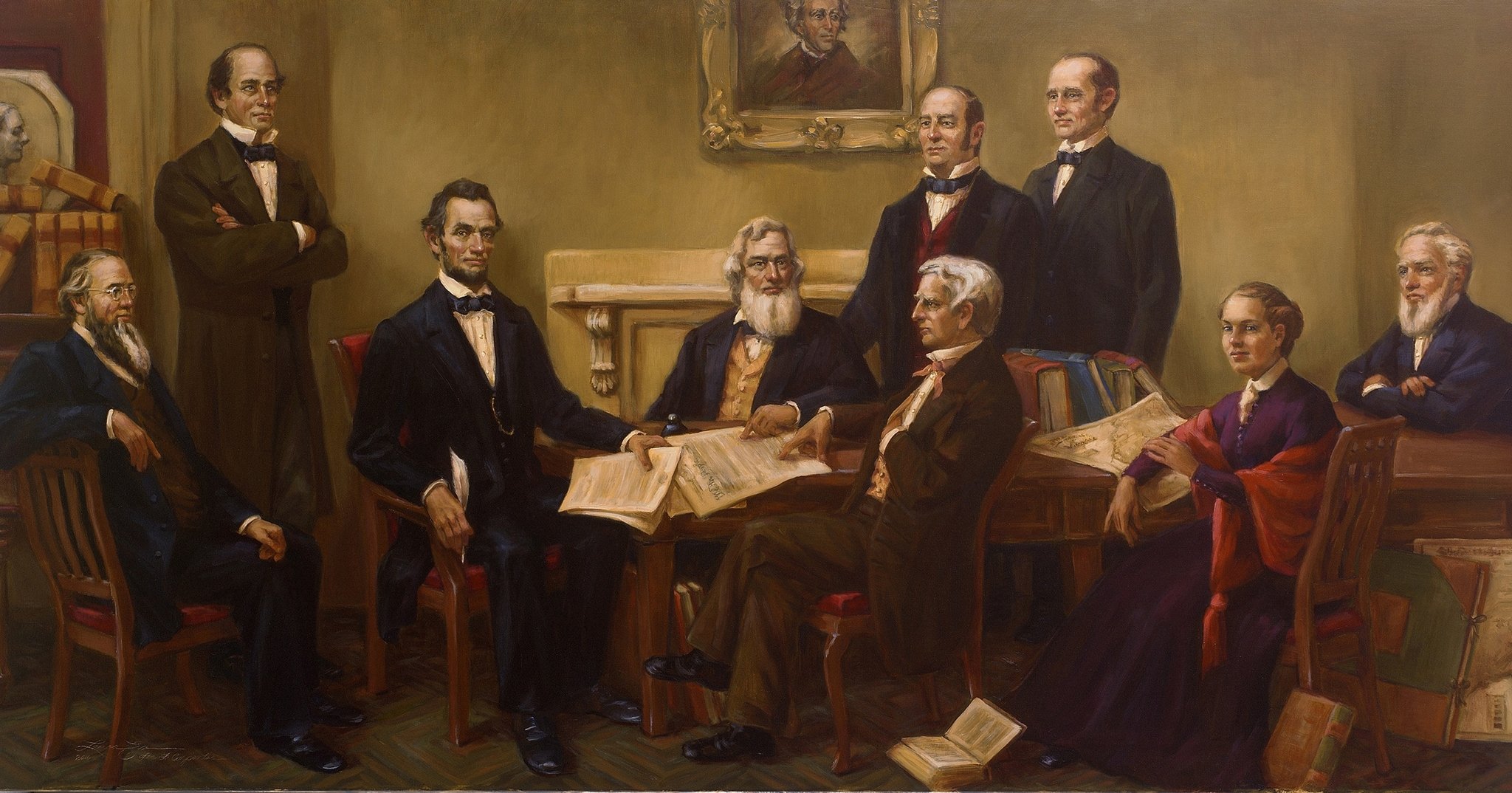
In the summer of 1862, with everything falling in tatters about him, the president told his incredulous cabinet that he wanted to free slaves in states still in rebellion. The notion met with unanimous opposition. Lincoln swayed them by arguing that he was motivated not by a moral imperative but by military expediency. His stated goal in going to war in the first place, after all, had not been to end slavery but to preserve the union. Freeing slaves now, he told his dubious cabinet, would help pursue that goal by helping to crush the South. The act would allow for the creation of so-called ‘coloured’ regiments to bolster the North’s faltering recruitment efforts. It would stir havoc in the South as even more slaves were inspired to escape. After all, the Proclamation would mean nothing if the North lost the war. Further, the Proclamation would dissuade Britain from offering aid or diplomatic recognition to the Confederacy. Having banned slavery decades before, he reasoned, Britain could hardly be seen supporting the peculiar institution in a war now redrawn as about good versus an evil.

The cabinet relented but persuaded Lincoln to postpone announcing the Emancipation Proclamation until a Union victory was won so that it would not appear to be an act of military desperation. When Lee’s Confederates were not really defeated but at least repulsed at Antietam in September 1862, Lincoln claimed the battle as the victory he needed. He publicly announced that he would sign the Emancipation Proclamation on January 1, 1863.

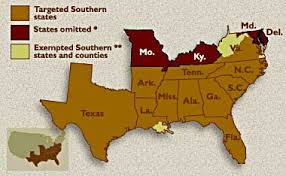
The Proclamation freed some but not all the slaves. It allowed slavery to remain in the Border States of Delaware, Maryland, Kentucky, and Missouri. To end slavery there, Lincoln believed, would possibly end their neutrality and spur them to join the South. The act also exempted parts of the South that had already come under Northern control for those areas were chaotic enough without adding the crush of runaway slaves seeking the protection of the Northern army. Also limiting Lincoln’s action was that it was not a constitutional amendment or even a law for he could not have won or waited to win those victories. It was merely a Proclamation that could be more easily ignored at the time or later.

Image

Despite its limitations, the Proclamation changed everything. It meant that with the Civil War’s costs and casualties mounting and Lincoln’s fragile alliance of Republicans, abolitionists and northern Democrats fraying, the struggle was suddenly about something greater than the preservation of a political state. From that point forward the war would be about an idea. It would be about freedom. It would be about the very concept of humanity. The Declaration of Independence had insisted that all men are created equal but the Emancipation Proclamation stated an intention to transform that aspiration to a fact. Millions of people who for over 200 years had been property could become human.

Northern abolitionists and radical Republicans applauded the Proclamation. Britain initially reacted with skepticism but then responded as Lincoln had hoped. Gone was talk of Britain entering the war on behalf of the South or of its recognizing the Confederate government. “Colored Regiments” were formed beginning with enlistment to Boston’s famous Massachusetts 54th. Eventually about 200,000 African Americans donned the blue uniform. Lincoln said their contributions and numbers represented a turning point in the war that could have been lost without them.

But all were not happy. Not surprisingly, the South was outraged. From the Southern point of view the Proclamation was useless as it was merely an act by a foreign leader with no jurisdiction in what it insisted was a newly formed and sovereign state. It was another example of what many were fighting about – a far-away federal government insulting the Southern way of life and attacking the economic foundation of their society. There was more rage when, as Lincoln had predicted, the number of slaves escaping from Southern plantations rose.

There was also consternation among many in the North. Editorials attacked Lincoln for changing the aim of the war arguing, quite rightly, that it had never been about abolition. The Copperheads, a loose amalgam of northerners who wanted peace at any price, said that even though the war was now about freeing slaves that the cost was still too high. They increased their efforts to defeat Lincoln in 1864 and to negotiate an end to the war with slavery in place. Hundreds of Union soldiers deserted. They claimed that they had not signed up to free slaves. Lincoln’s commanding General George McClellan was advised to stage a coup. McClellan refused to do so but a year later he accepted the Democratic Party’s nomination to run against Lincoln for the presidency.

Image

Signing of the Emancipation Proclamation

The Proclamation also affected Canada. Britain had declared itself neutral in the war and so Canada and the Maritime colonies were automatically neutral as well. But then as now Canadians were a cantankerous lot who considered dictates as merely suggestions. Many were disappointed when Lincoln did not immediately free the slaves upon becoming president and so supported the South. The majority of Canadian newspapers were pro-Confederate. Many Quebecers identified with Southern interests fighting a government that seemed unsympathetic to their beliefs about a threatened culture. Many Canadians and Maritimers saw business advantages and believed that Canada would be more militarily secure with a shattered United States and so supported the South. Two members of parliament who ran into the Canadian legislature shouting that the South had won the war’s first battle at Bull Run were welcomed with a loud cheer.

However, even given all of this, newspaper editorials throughout Canada and the Maritimes were unanimous in their praise for the Emancipation Proclamation. It spurred a new wave of Canadians and Maritimers to cross the border and join the thousands of their countrymen who had already enlisted. The vast majority, ironically given pro-Southern sentiment in official circles, fought with the Union. Among those heading south to fight for the North were hundreds who had escaped as slaves but were returning as men. Approximately 40,000 Canadians and Maritimers served in the Civil War. They fought in every major battle and 29 won Congressional Medals of honour.

The legitimate fear of American attack or annexation grew more acute with the Emancipation Proclamation because it was, as Lincoln expected, a boon to his cause. Six months after its enactment, the Confederacy was broke and nearly broken. Union victories at Vicksburg and Gettysburg altered the war’s trajectory as surely as the Proclamation had recalibrated its moral imperative. With the Union victory more certain than ever and many Canadian leaders sure that once the South had been dispatched that Lincoln would march his armies north, the impulse to act became acute. Confederation had been talked about for years but it was suddenly a necessity. Canada needed to invent itself to save itself. Plans were made to meet in Charlottetown in September, 1864 to forge a new country.

Abraham Lincoln understood the enormity of what he had done. Upon affixing his signature to the Emancipation Proclamation he said, “If my name ever goes into history it will be for this act.” We owe it to ourselves to pause and reflect upon the Proclamation for the milestone it represents in the evolution of mankind’s freedom. But in considering what it was we should also accept what it was not. We should consider the role it played not just in the re-imagination of America but also in the birth of Canada.

We should also consider the Emancipation Proclamation as an example of how we must invite History to teach us lessons that resonate today and that in order to properly learn those lessons we must dismiss the balm of simplicity and welcome, in fact, demand complexity. Complexity, after all, is History’s highway to the truth. In fact, complexity and truth are reliant upon each other in every sphere of our lives.

Racist Canada and the Woman You Should Know

Everyone remembers Rosa Parks. When asked to get up and move to the back of a Montgomery, Alabama bus, Parks opted to stay put. She was hauled off and arrested. Her refusal to move started a movement. In 1946, nine years before Parks’ courageous act of civil disobedience, Canada’s Viola Desmond showed similar grit in a similar act that drew attention to a similar culture of injustice.

Born in 1914, Desmond grew up in a middle class Halifax neighbourhood with her nine brothers and sisters. A bright young girl, she excelled at her studies. For a while she taught school but then fulfilled her dream to become a beautician. After training in Montreal, New York and Atlantic City she returned home to form the Desmond School of Beauty Culture for Girls. Desmond was talented at her craft and a clever entrepreneur who was soon inspiring dozens of young women every year to start their own businesses offering hair styling and other beauty services and  advice.

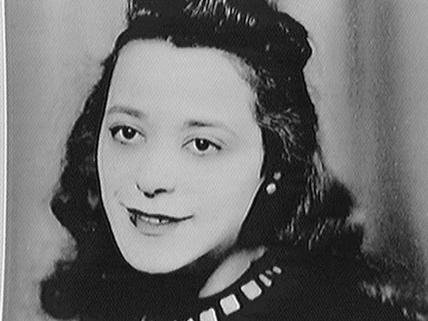
Image Viola Desmond

On a cool November evening in 1946, Desmond was on her way to a business meeting in Sydney when her car broke down in New Glasgow. After arranging for repairs, she decided to pass the time by taking in a movie at the Roseland Theatre. She purchased a ticket but was stopped from entering the main floor seating area by a huffy, young usher who said that her ticket was for her place – the place for Black people – up in the balcony. Desmond said no. She offered to pay the one cent extra for a main floor seat but the man behind the ticket booth glass refused and told her to get upstairs. Instead, she walked past the startled usher and took a seat in the all-White main floor.

This was not Rosa Parks’ deep American south but Nova Scotia. However, for Desmond that afternoon and for Black Nova Scotians for generations, the difference was only one of geography. Racism had been a part of Canada’s past since the first Black slave arrived with Champlain in 1605. Slave labour was used to build a number of Canadian towns including Halifax. The city’s port was an important link in the Atlantic slave trade. Slave auctions were a common sight. After the American Revolution, thousands of people loyal to the British crown came to Nova Scotia and about 10% were Black slaves or freedman.

By the twentieth century, slavery was long gone but racial discrimination remained. Canada saw race riots and knew racially segregated schools, churches and services as well as race-based immigration policies and hiring and business practices. In Halifax, Black families were kept in specific neighbourhoods and just outside the city the all-Black community of Africville was offered no municipal services. It was with this racist reality in mind that one better understands the courage that Viola Desmond showed when taking her ticket for the Black balcony of the Roseland Theatre and walking defiantly to a White seat.

The movie did not begin and the lights remained on. Soon, a police officer arrived. Desmond explained that she had offered to pay the extra one cent for the main floor seat but the cop did not want to hear it. She was pulled up, dragged out and slammed in jail. Her hip had been injured and her dignity abused. She spent the night sitting upright on her small, hard bed in her cold, tiny cell.

Desmond was taken to court the next morning. She was offered neither a lawyer nor legal advice. The judge informed her that she was being charged with defrauding the provincial government based on her taking a seat that cost one cent more than the ticket she had purchased. He ruled inadmissible that she had offered to purchase a main floor ticket. Desmond was fined $26.

She could have easily paid the fine and put it all behind her; but she decided to fight. A lawyer was contacted and Desmond sued the Roseland Theatre and its manager for having her ejected from the theatre and for the assault, malicious prosecution and false imprisonment that followed. The case went to the Nova Scotia Supreme Court which on a legal technicality ruled against her.

What was quickly lost in court was slowly won in the often higher court of public opinion. The incident and case had garnered headlines. The Nova Scotia National Association for the Advancement of Coloured People used the case to publicize the injustice of racial discrimination and to raise money to fight for change.

In 1954, Nova Scotia’s legislature finally put an end to state-sanctioned segregation. While the laws had changed, however, the racism that had created them in the first place remained as did many of the Jim Crow practices that had been around for generations. However, with the laws gone, progress was at least being made and those who continued discriminatory practices were supported only by their hatred and ignorance.

Viola Desmond paid a significant price for her brave stand. Her husband did not continence her fight and their marriage ended. The pressure on her and her business led to her leaving Halifax and relocating in Montreal. Desmond died in February, 1965. At that point the fight for rights had progressed but was far from over. Africville was still struggling to save itself in a battle it would lose a few years later to small minds and big bulldozers. Discrimination was gone from the law but prejudice remained in far too many hearts.

In 2010, the Nova Scotia government pardoned Viola Desmond. Later that year, Cape Breton University established the Viola Desmond Chair in Social Justice. In 2012, Canada Post issued a Viola Desmond stamp.

Canada and Canadians have come a long way. It has most often been determined groups and courageous individuals who have forced reluctant leaders to take each tentative step toward a more just society. Our job is to honestly admit our past and atone for our crimes and hateful attitudes while celebrating our progress. There must be reconciliation with truth. There must also be the recognition that national progress begins with individual beliefs and actions. Our personal and collective introspection must also include an offering of thanks to those whose acts of personal courage and conviction shine lights on the dark shadows of injustice. Let us continue to take steps toward becoming the people we deserve to be. Let us thank Viola Desmond.

To explore more about the racism in Canada’s past see Last Steps to Freedom: The Evolution of Canadian Racism.  Available here: http://www.amazon.ca/Last-Steps-Freedom-Evolution-Canadian/dp/1896239404/ref=sr_1_4?s=books&ie=UTF8&qid=1402154251&sr=1-

Our Forgotten Father

Next year will be a great party. Sir John A. Macdonald, Canada’s founder, builder and savior turns 200. Already ahead of the game, Prime Minister Harper, historians, pundits and even twitter trolls have started the celebration. A group called Sir John A 2015 has organized narrated walks in his home town of Kingston and a play and more. On June 6, I will be at his Kingston gravesite as the keynote speaker at a ceremony commemorating his passing.

It is fitting and proper that we take the time to celebrate Sir John because without him there would be no Canada. Without Sir John Canadians today would all be Americans. I am certain that part of the commemoration will note that there is a great deal of darkness in his legacy. His attitudes regarding Chinese immigrants and Native People were of his time but rightfully make us cringe. His drinking would make Toronto’s Mayor Ford look responsible and we cannot forget that he was once pushed from office by an inexcusable election spending scandal. We must remember, of course, that none of us are perfect people nor is there such a thing as perfect prime minister.

Our remembering Sir John, warts and all, will allow us recall that history’s greatest gift is a better understanding of today. To honour the gift we must fully understand the lessons offered; history, after all, is not an ideological weapon or a nostalgic crutch. History is a teacher and like any good teacher it makes you work. In this case, we must concede that Sir John had to be dragged into Confederation. The man who did that deed was George Brown – our forgotten father.

Image George Brown

Everybody knew Brown. He founded and edited the Globe. It was Canada’s most respected and widely-read newspaper at a time when papers were the sole source of news and when all were unfair and unbalanced voices of a particular party. Brown led the Reform Party; not Preston Manning’s party but a precursor of our current Liberals. As such, he and the Globe never tired of criticizing Macdonald and his Tories, at that time called the Liberal-Conservatives. (I know, it’s odd.)

Brown and Macdonald were more than opponents – they were enemies. They first clashed over an issue involving the Kingston penitentiary. Macdonald later outfoxed Brown in a dirty but legal trick called the double-shuffle. Brown became prime minister for two days only to be unseated by the wily Macdonald. They grew to despise each other.  Brown was intelligent and hard working but never seemed able to best him. Macdonald was once heckled about his drinking and quipped that Canadians seemed to prefer him drunk to Brown sober.

Like everyone else, Brown knew that the current Canadian political structure was a wreck. Pushed together into one colonial state, the largely English Canada West (Ontario) and the largely French Canada East (Quebec) was so dysfunctional that decisions could not be made, the economy was collapsing and opportunities to expand could not be exploited. Brown tried for years to reform or split the colony in two but it was rejected over and over again. Finally, he cajoled his party into a meeting at Toronto’s St. Lawrence Market. Beneath the golden glow of the gas lights and the stares of hideous gargoyles, he shook hands, slapped backs and twisted arms until the convention adopted Confederation as part of its platform. The party would support a new government based on a federal scheme where the two provinces could handle municipal matters and the central or federal government could handle larger affairs that demanded broader, more strategic thinking and legislation. He then returned to the House and tried in vain to bring the idea forward. Every attempt was blocked by Macdonald, Cartier and the Tories.

While Canadians refused to entertain change, the United States changed everything. In 1861 it fell into a Civil War that would lead to the death of over 600,000 Americans. Because of Canadian and British reactions to the war and involvement in it, a very real threat arose that when the shooting stopped the Union army would be turned north to take Canada. After the 1863 battles of Gettysburg and Vicksburg it became apparent to all that the North would win. At the same time, influential British leaders, called Little Englanders, were saying that they were through supporting Canada. Confederation had thus gone from a good idea to a necessity. If Canadians wanted to stay Canadian they would need to form a bigger, richer, and more efficient Canada. Canada had to invent itself to save itself.

Brown had left politics for a while but returned determined to put partisanship and personal enmity aside to advance the national interest. He single-handedly revived the idea of Confederation. He bullied forward a motion to form a committee to investigate Confederation. They met in a small room and they were all there – Macdonald, Cartier and many others we all know as Canada’s founders, the Fathers of Confederation. Brown stood, locked the door, and dramatically slid the key into his vest pocket. He glared at his startled colleagues and said, “Now gentleman. You must talk about this matter, as you cannot leave this room without coming to me.” He forced them to talk. He forced them to keep talking. The committee eventually developed a proposal for Confederation.

But before the committee could report, the government fell yet again. Its fall proved the point Brown was making – the system was broken. He called Cartier and Macdonald to his hotel room and a shocking deal was struck. Macdonald rose in the House the next day and surprised all when he announced not that yet another election would be held but rather that a coalition government would be formed. Brown, his well-known and well-connected enemy, would join the cabinet. There were cheers and a line formed to shake Brown’s hand. A diminutive Quebec member hugged Brown and loudly exclaimed that he had saved the country while for a moment hanging ludicrously from Brown’s neck.

The Great Coalition, as it was called, persuaded Nova Scotia, PEI and New Brunswick to invite the Canadians to a conference they had already scheduled to consider their political future. Brown and the Canadians arrived and soon the Maritimers forgot their idea for union and began discussing a broader Canada. Brown led the discussion of the intricacies of a new, federal-based constitution.  In the brilliant sunshine of tiny Charlottetown and the incessant rain of bustling Quebec City and all in the shadow of the bloody Civil War, a unique and unlikely new country was born.

Brown is important today for the example he offers. Politicians can look beyond the next election and beyond personal and political differences and the scoring of partisan points. We can accept coalition governments as valid expressions of democracy. We can see compromise as a sign of strength and not a surrender of principal. Let us celebrate Sir John but let us not forget George Brown.

Sir John the Saviour

Part of the joy of being an author is the privilege of travelling the country and meeting people who share a passion for books and ideas. Interviews are fascinating too because questions reveal the issues that are stirring interest. The questions are sometimes surprising.

Last January I was speaking with an American journalist from Louisiana about my book dealing with Canada and the American Civil War. She said, “I read your book and admit I had never heard of John Macdonald. It seems like he was quite was a big deal.” “Yes,” I offered politely, “He was and is quite a big deal.”  She continued, “So how would you explain Macdonald to our American readers in one sentence?” “Well,” I said, drawing a breath, “Macdonald is like America’s James Madison in that he led the writing of our constitution, and he is like your Thomas Jefferson in that he provided the ideological basis and political justification for the creation of our country, and he is like your George Washington in that he was our first chief executive that put flesh on the country’s skeleton while his every decision provided a precedent that resonates to this day; so our Macdonald was your Madison, Jefferson and Washington rolled into one man.”

I could have said much more. We can’t escape Macdonald. Every time we discuss the Senate, or the power of the prime minister, or the role of an MP, or government’s power we are revisiting his vision. We know that he created and built Canada. Less well known, however, is how he saved Canada.

Image Sir John A. Macdonald

In 1871, Canada was four years old. The American Civil War that had affected how and when the country had been created had been over for six years; but it was not really over. When the war began, Britain had declared itself neutral. That made Canada neutral too but still about 40,000 Canadians and Maritimers broke the law to don the blue and gray and fight. Canadians sold weapons to both sides and housed a Confederate spy ring that organized raids from Toronto and Montreal. John Wilkes Booth visited Montreal to organize Lincoln’s assassination. All of this and more led a great many Americans to call for revenge; generals, newspapers and politicians called for invasion and annexation.

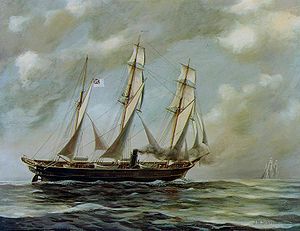
Throughout the war, Britain had ignored its neutrality law and allowed ships to be bought or built then sold to dummy companies that turned them over to the Confederate navy. One such ship was called the Enrica. The Americans knew about it even while she was under construction at the Laird Yards in Liverpool in the fall of 1861. The British government allowed it to be built and then snuck down the Mersey to the Azores where it was refitted for war and rechristened the CSS Alabama.

The Alabama roamed the seas and eventually sank 64 American commercial vessels and a warship. Lincoln ordered it destroyed and the global hunt was on. In July, 1864, the Alabama was sunk outside a French port.

Image CSS Alabama

At the war’s conclusion, the United States continued its Manifest Destiny driven desire to have Canada. Annexationist Secretary of State William Henry Seward purchased Alaska in 1867. He explained that the purchase was merely a step in driving Britain out of British Columbia and eventually all of North America. But Macdonald stopped him by persuading those in Vancouver and Victoria to join Canada. Seward negotiated with Britain to purchase Rupert’s Land from the Hudson’s Bay Company – nearly all of what is now northern Ontario and the prairies. But Macdonald stopped him again by negotiating around the United States and buying it for Canada.

Seward had one card left to play. He argued that by allowing ships such as the Alabama to be built and bought that Britain had prolonged the Civil War and cost America money and lives. He added up everything from lost ships to increased maritime insurance rates and presented Britain with a bill totalling an astronomical 125 million dollars.

Britain would not, and in fact simply could not pay. Its economy would be crushed. Plus it needed what money it had to build its defence in light of growing troubles in Europe. It reacted to what became known as the Alabama claims by playing the diplomatic game of deny and delay.

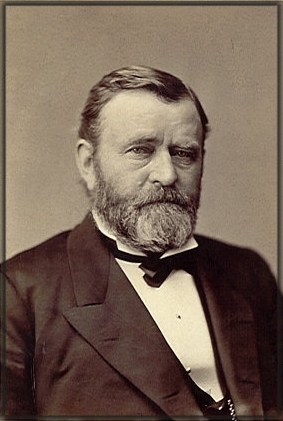
By 1871, Ulysses S. Grant had become president. Like Seward, Grant hated the roles Canada and Britain had played in the war. He told his cabinet, “If not for our debt, I wish Congress would declare war on Great Britain, then we could take Canada and wipe out her Commerce as she has done ours, then we would start fair.” Grant’s Secretary of State Hamilton Fish spoke with the British minister to Washington Edward Thornton. He said that Grant would waive the entire Alabama reparation payment if Britain would simply hand over Canada. Thornton said the Canadians would probably not like it but that he would inform his government. Shortly afterwards, a conference was convened to settle the matter. Grant was pleased and said that if Canada was annexed then the Alabama claims could be settled in five minutes.

Image President Grant

In February, 1871 five Americans, including Secretary of State Fish, welcomed five Brits to Washington. As a courtesy, the British allowed Sir John to be a part of their delegation. Macdonald knew that the future of his infant country was at stake. He took the proceedings so seriously that he even abstained from drink for the entire conference!

Macdonald maneuvered the agenda so that they began negotiating the American abuse of rules regarding inland fishing rights. It was an enormously important issue for Canada and he refused to budge an inch. But focussing on fishing was also a brilliant strategy for no matter how many other matters were raised Macdonald kept coming back to fishing. Every time anyone brought up the main question at hand – the Alabama claims – Macdonald talked to Fish about fish.

The Americans badgered him during the day. The British delegates badgered him every night. The Brits threatened him with a withdrawal of British military support. He was unmoved. They tried to bribe him with an appointment to Her Majesty’s Privy Council. He laughed them off. When cornered, Macdonald delayed by saying he needed to write home for advice. It was later discovered that his cables to the cabinet and governor general were being boomeranged back to Washington by Governor General Lisgar who had more loyalty to Britain than Canada. The backstabbing double-cross meant that British delegates knew exactly what Macdonald was doing and all of his fall back positions; but they could still not best him.

The conference ended after 9 weeks and 37 meetings. Macdonald won everything he had wanted. Fishing rights were settled in Canada’s favour. Because the Americans refused, Britain would pay Canada 4 million pounds in compensation for losses incurred in the Fenian Raids; Macdonald would use the money for railway construction. Free access to the American market for a number of Canadian products was guaranteed while Canadian tariffs could remain. Two concessions were more important than these and others. First, the Alabama claims would be settled by an international tribunal and it was agreed that the reparations for Canada swap was off the table. Second, it had been established that the ratification of the Washington Treaty would need approval by the American Congress, British parliament and by the Canadian parliament.

The Washington Treaty was the final battle of the American Civil War. It was the final episode of the American Manifest Destiny dream of Canadian annexation. Macdonald ensured that Canada could thrive because it would survive.

When he arrived back in Ottawa Macdonald delivered a four hour speech in the House. He did not strut. He did not gloat. Rather, he acted as a responsible statesman who respected Canadians sufficiently to explain what had been at stake and what had happened in all of its complex detail. He then went home and for the first time in over two months enjoyed a drink; perhaps more than one. He deserved it, he had saved his country, and that was quite a big deal.

It Was More than the Naked Women

In retrospect, I should have expected the naked women. You see, twenty years ago I was a Program Consultant at what was then the Peterborough Board of Education. I applied to the Asian Pacific Society and was shocked when chosen to be one of ten Canadian educators to join groups from 29 countries for a three-week junket to Japan. The trip changed me; and it wasn’t just the women.

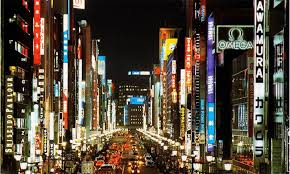
Tokyo was a marvel. The airport was packed but efficient. The bus ride was an assault on the senses with a guide chattering, horns honking, and a jungle of primary-coloured vertical neon festooning every building for mile after traffic-jammed mile. My hotel room was the smallest I’ve ever seen. Its bathroom was constructed of a single fiberglass mold with a drain in the middle. I saw my first flat screen TV, about six inches from the end of my tiny bed, and found J. R. Ewing much less menacing when speaking in high-pitched Japanese.

Tokyo

Our large contingent was split into groups of fifteen. Every morning found us at a different school. Each was large, inviting, sparkling clean, and technologically advanced. We got used to kids standing when we entered classrooms and were reminded that smiles break barriers of language, age, and culture. It was interesting though that the happy kids in marvelous schools were learning by rote, memorizing more than understanding, thinking not critically but obediently, and all feeling the enormous pressure of preparing for standardized exams that would dictate their next school and the rest of their lives. In a Math class, a teacher offered us his chalk. A Polish woman glanced for a second at the calculus problem the teacher had been demonstrating and then was applauded when she walked to the board and completed it. I thought that perhaps not music but mathematics is the true universal language.

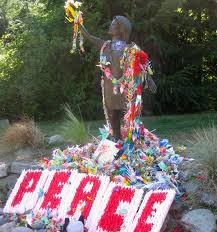
Each evening and a couple of free days were ours to explore. At Hiroshima we visited the Peace Park; ground zero for the atomic blast that obliterated the city in 1945. I wept at seeing tiny, folded paper doves. Children across the country made them and on pilgrimages to the park they hung them on every monument and tree – there were thousands of them, maybe millions. I cried again without shame at the small museum when I stood before a piece of concrete that had once been the outside wall of a bank. A guide explained that the two dark smudges, one large and one small, were the shadows of a mother and child who had turned to face the blast, and when its blinding brilliance bleached the wall, they were vaporized, leaving only their shadows as ghosts of remembrance.

Hiroshima

We took the bullet train to Kyoto and were overwhelmed by its beauty. Historians and architects had convinced the American bomber command to leave it alone and so it is Japan’s only major city that was left untouched. We saw the stable with the original wooden carving above the door of three monkeys indicating that they saw, heard and said nothing. Thousand year old gardens and temples spoke of tranquility and urged a cleansing of the mind and heart.

The highlight, however, was my home stay. I was picked up at the airport by a friendly woman who had worked as an airline stewardess and so, with the help of her always present translation book, spoke understandable English. She drove as her husband sat looking morose; my visit was obviously her idea. When Mister Grumpy grumbled, we pulled over and he slumped out and purchased two cans of beer from a vending machine that sat next to a Coke machine. Sipping my Sapporo I giggled and said that the beer machine must be very popular with local teenagers. “Well no.” she said, “You can’t drink alcohol until you are 21.” “Well sure,” I said, “But after dark do the kids not line up and empty the thing?” “No.” she repeated, “They can’t drink until they are 21.” She could not understood my question. A short exchange in Japanese led to a confused glance over his shoulder as Mr. Grumpy must have wondered what kind of country I was from where children disobeyed perfectly simple rules.

Entering their middle class neighbourhood was like driving into a maze. Each immaculate, wood and glass house with its stone yard and ornate water garden was surrounded by an elaborate eight to ten foot fence or hedge. At each intersection were hung large, round mirrors – like those in our convenience stores – for drivers to see around corners. Having learned nothing, I laughed and said, “Kids must enjoy using them for target practice.” My host said no, and asked why children would want to intentionally break something. I admitted that I did not understand, but I think I was beginning to.

Home was small and spotless. I met their eight year old son who was far more interested in his transformers than me and their gangly twelve year old daughter. It became quickly apparent that her questions were meant not so much to converse but rather to show her parents how adept she was becoming in the English lessons she was taking at her evening cram school – school after school – remember those exams.

Their home struck me as tidy but sparse. But then I saw what I had been seeing for days but had not really seen. It was not bare; it was uncluttered. It was like all the gardens I had been admiring that, unlike the riots of colours and jumbles of textures in so many of ours, instead offered the gift of order, the serenity of empty, and always the rejuvenating, tinkling of water. Perhaps the houses and gardens offered a sanctuary from the craziness of the cities and the pressure to succeed. I was suddenly embarrassed by all my stuff; by all the dusted and cleaned and treasured and boxed and stored and totally unnecessary stuff in my house back home.

I was taken to the living room and to grandfather who was sitting cross-legged on a beanbag chair watching a baseball game on TV – Hawks versus the Carp. He ignored me. When the inning ended I pointed at my chest and said, “Toronto.” “Ah,” he said, “Blue Jays.” “Yes,” I smiled, “the Toronto Blue Jays.” They had recently won their back-to-back World Series. Grandfather clasped his hands and gestured the swinging of a bat. He leaned forward and whispered, “Joe Carter.”  “Yes.” I replied, “Joe Carter.”  He looked back at the TV. He’d used up his only four words of English. He’d been a pilot in the Second World War; and now we were friends enjoying a beer and ball game.

After dinner – I was getting quite adept at sitting on the floor – I was told that Mr. Grumpy was taking me to a public bath. It looked like a three story apartment building. He paid the receptionist and we climbed the stairs. We stripped and hung our clothes and the bag of clothes we would wear home on a hook – no lockers, no locks, and no worries. I followed him into a narrow room with a wet, gray cement floor and about fifteen men, all older than me, and just as naked. When they saw me there was silence and stares. My host muttered something and they bowed. I bowed as I had learned to do.

A long counter containing ten sinks before a half-wall of mirrors was on the left. Along the right was a wide step before a trough and a row of gleaming silver taps about a foot from the step. Following my host and several others I squatted on the step and desperately tried to do as they were doing so adeptly. Many of the men pointed and grinned as I clumsily soaped up and tried to rinse with the bowl and twice lost my footing. Moving through a door I gasped to find myself outside, on the roof, overlooking the city’s lights that seemed to go on forever. I sank into a large, gurgling hot tub with about ten other men. We sat in silence. Most had their eyes closed. Gazing up at the canopy of stars I found the big dipper. It was tilted in an odd way but there it was; the same constellation that my wife and I see on summer evenings from our back deck. We really are one world.

Padding back inside, I was handed a new bowl and a shaving kit. I followed my host to the row of sinks. Now, I had heard the women on the other side. I knew they were there. The problem came when I stood before the mirror and realized that the half-wall had been built for Japanese people and not six foot tall Canadians – it came to about my nose. And there I was, wide-eyed, looking into a roomful of twenty, naked Japanese women.

I yelped “Ah!” and jolted myself down. I had reacted so quickly that I smashed my elbow on the counter and I yelled out again. As I crouched on my haunches rubbing my arm I heard laughter from both sides of the wall. A number of men gestured for me to stand for another peek. From over the wall I heard the unmistakable, language-busting sound of an inviting, “Yoo-hoo!” followed by more laughter. Even Mr. Grumpy managed a smirk.

I smiled. I nodded. And as I crouched to shave I noticed that what they say is true, when you have no clothes, you blush all over. Of all the lessons I learned in those three weeks, three weeks that led to many changes in my life and more that I am still trying to master, it was the least important.

If you enjoyed this column, please consider sharing with friends.

Civil War Hero or Villian

Civil War Hero or Villain

You may not know Jacob Thompson but he knew us. One hundred and fifty years ago this week Thompson brought the American Civil War to Canada as it hadn’t been before and helped spur Confederation. His role in our birth reminds us of the ideas that seem to be motivating us still.

The winter of 1863-64 was tough on the Confederate States of America. Its armies were losing men and battles, its cities saw food riots and its dollar was plummeting. President Jefferson Davis needed to turn things around and so he turned to Jacob Thompson.

Image

Thompson was a Mississippi lawyer, politician and former federal cabinet secretary. Davis asked him to save the South by going north. He was given one million dollars, an astronomical sum at the time, and ordered to harass and distract Lincoln’s Union from Canada.

Thompson arrived in the first week of May, 1864 and established offices in Montreal and in Toronto’s swankiest hotel, the Queen’s, located where the Royal York is today. He mobilized Confederate deserters and escaped prisoners and Canadians sympathizers.

One of his first acts was to invite America’s most influential newspaper publisher and Lincoln’s personal secretary to Niagara Falls under the pretence of negotiating a peace agreement. When Lincoln set terms the South could never meet, Thompson’s contacts pilloried him in the press for being a warmonger with no interest in peace. Lincoln’s already shaky support in the war-weary North suffered.

Union ships on Lake Erie were hijacked. Attempts were made to free Confederates from Northern prisons. Arms and ammunition were manufactured in Guelph and Toronto and shipped to the South. Thompson worked with the Copperhead movement to stop Lincoln’s re-election and split the North by creating a new, independent country. The Copperhead leader ran operations from his hotel in Windsor. Thompson and the Copperheads disrupted Lincoln’s Republican Party convention.

Thompson’s underground actions led to more Union troops being moved to the border. American ships ignored a War of 1812 agreement and rearmed. In response, more British soldiers were deployed to Canada along with more complaints from London that the colony was too expensive and should be left to its own devices. Canadian militia units were mobilized with the realization that the broke, politically dysfunctional colony could not effectively defend itself in the face of growing American threats.

John A. Macdonald knew that Thompson’s actions had enraged a United States that was already upset with Canadian war-time actions and attitudes. The likelihood of a post-war invasion seemed real and terrifying. For years, Confederation had been an interesting idea but it had become a necessity. To save itself Canada needed to create itself. It is no coincidence that five months after Thompson arrived in Toronto the Fathers of Confederation arrived in Charlottetown.

While Macdonald debated Thompson terrorized. His men simultaneously engulfed a number of Manhattan’s hotels and theatres in flames and then fled back to Toronto. Among the New Yorkers caught in the chaos on Broadway was the famous actor John Wilkes Booth. As part of his plot that killed Lincoln, he spent a week with Thompson’s men in Montreal.

Several of Thompson’s terrorists raided St. Alban’s, Vermont. They robbed its banks, killed a man and then fled with guns blazing and a posse in pursuit. They were caught by Canadian authorities but a judge freed them. American newspapers insisted that Lincoln immediately invade Canada in retribution. The American Senate reacted by ending the Canadian-American free trade agreement and taking other actions that promised to economically punish Canada. Canadians were further convinced of the threat to all they valued and yearned to preserve.

With his country dying, Jacob Thompson inadvertently aided in the birth of ours; he was our Uncle of Confederation. Considering his role in motivating change allows us to consider the degree to which our political decisions are still based upon equal parts courage, hope and fear. And, as in politics so often and war always, we are left to ponder whether Thompson was a hero or a villain.

Image

Read more about Jacob Thompson and about Canada’s role in the war in the bestselling Blood and Daring: How Canada Fought the American Civil War and Forged a Nation.

http://www.amazon.ca/John-Boyko-Books/s?ie=UTF8&page=1&rh=n%3A916520%2Cp_27%3AJohn%20Boyko

http://www.chapters.indigo.ca/home/search/?keywords=john%20boyko

It’s Time to Put R. B. Bennett on the Hill

It’s Time to Put Bennett on the Hill                                                       

History matters. It is the stories we tell ourselves and others about whom we are and who we aspire to be. Among the important ways we tell those stories are through the monuments we erect on Parliament Hill; the lawn outside our House. Sir John is there. So are Diefenbaker and Laurier, the Queen, the Famous Five, and more. But Parliament Hill’s story is incomplete for it is without a statue of Prime Minister R. B. Bennett. He deserves to be there. We need him there for visitors to ponder his life and contributions as reflections of the values we cherish as Canadians.

Bennett was a remarkable man. Born to a poor New Brunswick family, he was a school principal by age 19. Wanting more, he attended law school. Senator James Lougheed was so impressed with the young student that he offered a full partnership so that Lougheed-Bennett was born in the Wild West boomtown of Calgary. Bennett was soon president of several companies and on the boards of more. Through hard work, connections and good luck he became a multi-millionaire. But he was never inspired or impressed by wealth. He owned neither a car nor, until retirement, a house. He gave nearly all of his money to individuals, charities, schools and universities.

Bennett was an engaged citizen. He believed in the nobility of public service. He was a city counsellor, territorial representative, and then a member of Alberta’s provincial parliament. He was the first leader of the Alberta Conservative Party. He won a federal seat and served in cabinet. In 1927 he became leader of the federal Tories and then, in 1930, Canada’s prime minister – the first, but not the last from Calgary.

After suffering defeat in 1935, Bennett was an effective opposition leader for two years but then fulfilled a life-long dream and retired to England. The Second World War drew him back to public service. He led the preparation of the Royal Air Force by coordinating the building of planes and air strips. Churchill rewarded him with an appointment to the House of Lords where he worked hard to prepare for the post-war years.

Bennett was a transformational leader. He became prime minister just as the Great Depression was entering its darkest days. The Red Tory principles that he had espoused throughout his life led to policies that respected the positive power of capitalism and a constructive role for government.

Bennett’s government provided immediate relief for those in need and then restructured the economy to mitigate the impacts of future economic calamities. He modernized unemployment insurance, established a minimum wage and limits on work hours, extended federally-backed farm credit, enacted anti-monopoly legislation, and saved thousands of farms with a revamped Wheat Board. He wrestled control of monetary policy from chartered banks with the establishment of the indispensable Bank of Canada. To protect and promote Canadian culture and national unity, Bennett formed the Canadian Radio Broadcasting Commission that became the CBC.

His legacy also includes increased trade with a host of countries and a trade deal with America that was enacted weeks after he left office. He negotiated a treaty that later served as the framework for the construction of the St. Lawrence Seaway. Bennett’s bold actions led to a reinterpretation of the constitution that allowed the creation of many of the social policies which Canadians now proclaim as their birthright.

Bennett was not a perfect prime minister. There is no such thing. He was not a perfect human being – none of us are. But he was a remarkable man, a generous philanthropist, an engaged citizen and a transformational leader. His contributions, principles, and the questions his life forces us to ponder helps us understand ourselves and our country. R. B. Bennett’s story deserves to be a larger part of our collective story. We should begin our consideration of its place and lessons by placing a commemorative statue of R. B. Bennett on Parliament Hill.

(For more on R. B. Bennett see Bennett: The Rebel Who Challenged and Changed a Nation (Goose Lane Editions) available at: amazon.ca and chapters.indigo.ca

(This was published as an op. ed. column in Ottawa’s Hill Times on April 28, 2014)


What If It Had Rained in Dallas or Diefenbaker Forgot About the Tree?

What If It Had Rained in Dallas or Diefenbaker Forgot About the Tree?

Anniversary journalism is lazy but inevitable. We were bombarded with the fiftieth anniversary of President Kennedy’s assassination stories and more than once I turned away from the horrible film clip of a man being murdered. I thought it fascinating that through the mourning porn, few stopped to consider Kennedy’s impact on Canada – and it was enormous. More fun, I thought, would be to play the “what if” counter-factual game of historical inquiry and ponder the effects on Canada not of his life but if he had lived.

After all, Kennedy’s living past November 1963 could have happened if one of two things had changed. First, if it had rained in Dallas that day then his limousine would have had its roof in place and Lee Harvey Oswald (or whoever) may not have found his target. Second, on a 1961 visit to Ottawa Prime Minister John Diefenbaker had insisted on Kennedy planting a ceremonial tree at the Governor General’s residence.  While shovelling dirt he had seriously reinjured his already weak back and so was fitted for a stiff brace. He was wearing it that day in Dallas and after the first shot it had kept him erect and a sitting duck for the second and deadly shot.

So what if it had rained in Dallas or Diefenbaker had forgotten about the tree?

JFK and Dief

                 President Kennedy and Prime Minister Diefenbaker in Ottawa

JFK was a careless philanderer. He consorted with prostitutes, movie stars, and even a mobster’s girlfriend. He was once asked what he wanted for his birthday and he pointed to a young Hollywood starlet in a magazine. Guess who was with him a few days later?

In August, 1963, the F.B.I. told Attorney General Robert Kennedy that his brother was having an affair with East German communist spy Ellen Rometsch. This was different. This was serious. She was quickly deported on an Air Force plane. Days before Kennedy left for Dallas, the Senate Rules Committee was preparing to subpoena Rometsch in its investigation of Bobby Baker who was suspected of having shady financial dealings with Senators and of arranging many of the president’s dalliances.

The sex-spy scandal could have shattered Kennedy’s presidency. There would have been significant ramifications for the increasingly left-leaning Canada if the uproar and possible impeachment had led to the election of the Republican’s 1964 presidential candidate, the extreme right-wing Barry Goldwater.

But what if Kennedy was re-elected? He and Diefenbaker hated each other. The president knew and liked Liberal leader Lester Pearson and so his government helped defeat Diefenbaker in the April, 1963 election. Kennedy then ordered a resumption of positive Canadian-American interaction. The vastly improved personal relations between leaders could have earned major dividends for Canada.

Pearson had campaigned on a promise to surrender to Kennedy’s pressure and house American nuclear missiles in Canada. In the subsequent months, though, Kennedy worked to end nuclear proliferation and signed the Nuclear Test Ban Treaty. He was sending signals to the Soviet Union with hopes to create what would later be called détente. It is likely that Pearson would have reacted to the changing Cold War policies and tenor and revisited his long-held views on disarmament and used his relationship with Kennedy to get the weapons of mass destruction back out of Canada.

Kennedy invited Pearson to his home and asked for advice on Vietnam. When told he should get out, Kennedy laughed and said that any fool knew that but the question was how. After the 1964 election, Kennedy would probably have withdrawn the American military ‘advisors’ he had dispatched and there would have been no Americanized Vietnam war.

Without the Vietnam War, tensions caused by Canada’s opposition to it would not have existed. Eighty Canadians who went to the U.S. to serve would not have died. Tens of thousands of American draft dodgers would not have crossed the border. Without Vietnam, African Americans and Canadian women and youth fighting for change would not have had the link that helped unite and strengthen their movements. The young, for instance, would probably have initiated their cultural rebellion but without much of its anti-war inspired, revolutionary anger. Vancouver’s Gastown, Toronto’s Yorkville and conversations at dinner tables across the country would have been different.

After eight years of Kennedy’s growing liberal consensus, and without the war tearing America’s social fabric, the ‘silent majority’ that helped elect Richard Nixon may not have evolved. No Nixon would have meant no anti-American wave caused by Nixon’s 10% tax on Canadian trade and by his Vietnam policies. No anti-American wave could have tempered the uptick in Canadian patriotism – our negative nationalism.  No Nixon would have meant no Watergate so we might not still be suffering its sad legacy of wrathful, prying journalism and popular political cynicism.

John F. Kennedy was America’s first celebrity president. He taught all future leaders – Trudeau, Clinton, Obama and Trudeau again – the efficacy of image and television. He was a flawed man but a transformational leader with a positive vision and the courage and intellect to pursue it. Had he lived and dodged scandal, Canada would have been different then and different now.

The Day I Was Tear Gassed

THE DAY I WAS TEAR GASSED

Canadians are nice. We seem to revel in our international reputation as being so nice that when bumped we say sorry or when queue-jumped we say nothing. A problem, of course, is that a slight scratch beneath of the surface of ourselves and our history reveals that we are really not that nice at all.

I glimpsed beneath those surfaces in April, 2001. After reading about the 1999 troubles in Seattle and with Horton Hears a Who in our minds – I swear – my dear wife and I left our little Ontario village and headed to Quebec City. We were ready to add our little yop to voices being raised in concern over cascading corporate power on display at the third Summit of the Americas conference. As I am a historian and my wife’s degree is in political science, we were curious about being witness to the making of history and a political point.

We arrived in time to join a wondrously joyful parade. Colourful banners and flags were hoisted above thousands of people singing, strumming guitars and some even dancing on stilts. There were old people and children. There were families and groups who had obviously journeyed here together and other that had spontaneously come together. Most of the signs were serious and many were good natured. Many expressed self-interest and reminded me a little of the old Buffalo Springfield song as they seemed to shout “Hooray for Our Side”. We walked slowly beneath a wonderfully cloudless blue sky enjoying the positive, party atmosphere and folks who were taking their messages but not themselves too very seriously.

The world leaders discussing the possibility of creating a Free Trade Area of the Americas, of course, didn’t see the parade. They were ensconced far away and up the hill in the National Assembly building behind 4 km of fence and cordons of police. At the parade’s end most people milled about and there were hugs and goodbyes. But I couldn’t leave. I could not go home without venturing up to see the so-called red zone, the area closest to the fence, where the streets were blocked and businesses shuttered.

As I walked up the hill it was if I could hear the theme to some Clint Eastwood spaghetti western in my head. I walked slowly and then slower still. As I reached the outer limits of the red zone I was stunned. It was like an eclipse had suddenly blotted the sun and the world had morphed into black and white. It was eerily quiet. The parade had been a party but this was a war. The air smelled of gasoline. The streets were dirty. People were dressed in varieties of battle fatigues and many had bandanas and goggles dangling on their chests. No one smiled.

Down a narrow street I saw a group of about twenty young people sitting in a circle and singing John Lennon’s Imagine. Strung behind them from building to building was the silver, gleaming 3 meter high chain-link fence. Behind the fence was a row of police officers. They were in black riot gear with face guards down and hand-held shields up. They looked every bit like a row of Darth Vaders. Each officer held a club and each smacked it onto their left palms to the song’s beat – ones and threes. They could not have been more intimidating. I guess that was the point.

I moved on to find a spot where I could be alone to swallow the metallic taste of adrenaline and catch my breath for I suddenly realized that I was breathing as if in a race. Around the corner I found another stretch of fence blocking the road before me with another row of police officers behind it; but I was alone. I did what I always do when I see a police officer; I smiled and waved. None waved back. In a minute or so a man about my age joined me and we stood chatting quietly. We were about ten feet from the fence, looking at each other and not the officers off to our right. No one else was near. We discovered that curiosity had drawn us both from Ontario to the parade and then up the hill and that we were both shocked by the incredibly tense atmosphere. We traded ideas about a restaurant for dinner. We were just two middle-aged guys dressed in shorts and golf shirts, very much tourists and not terrorists.

We were suddenly startled when a silver canister crashed behind us and white-gray tear gas spewed forth. We instinctively spun away and blindly careened right into the fence. The line of cops charged forward and smashed it with their clubs. We turned and stumbled through the noxious cloud with eyes and lungs on fire. A masked and khaki angel pulled me to a curb, sponged my eyes from a galvanized pail, secured a red kerchief over my nose and mouth, told me to run when I could, and then was gone. I have no idea what happened to my companion. I staggered dazed and bewildered as people ran past in both directions shouting that crazy Canadian jumble of French, English and profanity that transcended them both.

Image

Woozy and blinded, I wobbled down the road and happened upon a group of young people shouting through the fence at yet another line of storm troopers. I turned and joined them, yelling every ugly epithet my years of school yards and hockey dressing rooms had taught me. But then, in mid-tirade, it was like I suddenly awoke. Perhaps the gas had worn off. Perhaps my righteous temper had peaked. I was suddenly embarrassed that every ounce of anger I had imprisoned since childhood had been so quickly and completely un-caged. I was shocked at my rage and the sound of my own voice and what I heard that voice shouting.

I stumbled back to the sidewalk across the street and stood watching the two groups of people – protesters and police – probably much the same age, who probably grew up in similar neighbourhoods, separated only by twists of fate and a fence that I was suddenly glad was there. My youngest brother is a police officer and I knew that he was one of the helmeted cops assembled that day. He may have been among those standing in silence before me now; perhaps he was the target of my crazy abuse. I needed to get out of there.

I walked back down the hill to meet my wife and breathlessly told her what had happened. We ventured cautiously up the hill just a little so she could glimpse the place but we then turned back and were soon in our car and heading for home.

I found out later that while my companion and I were very innocently chatting, the security system on the other side of the red zone, far from where we were, had faltered. Protesters or anarchists or whatever they were had torn down part of the fence at Boulevard René Lévesque and police had reacted around the whole perimeter with gas, water cannons and rubber bullets. In their attempt to re-establish order, police were attacking those on the fences and those singing songs. They attacked those with rocks and those with guitars. They attacked those administering first aid. And they attacked my companion and me, over a kilometer from the real trouble, who had done nothing.

On the streets of Quebec City I left a certainty about myself along with my naive conviction that Canadians are nice. I am no different than anyone else. As individuals, nearly all rational Canadians are guided by ethical and moral codes that afford us the opportunity to forge happy lives, secure in our nearly always rational society. But sometimes we find ourselves in crowds. In crowds we occasionally do things that we would never remotely consider doing on our own – like swearing at police officers, tearing down security fences, smashing store windows or overturning cars. Sometimes it’s for a political or social cause and other times it’s simply because our team lost the big game.

Riots are not nice. Neither are all the people who perpetrate them nor all the police who stop and sometimes start them. And yet, riots are as much a part of Canada’s civil society as voting and kids’ hockey and soccer leagues. We are a nation of riots. Consider the 1848 Quebec City Parliament Buildings riot, the 1907 Vancouver Race Riot, the 1929 Winnipeg General Strike riot, Regina’s 1935 On To Ottawa Trek riot, the 1955 Rocket Richard riot and many, many more. Some led to good things happening and others to nothing more than the revealing of ugliness and an undercurrent of furious indignation that we thought only existed elsewhere.  Perhaps we need to think about the riots as I thought of my reaction to being caught up in one. That’s what history for – to teach, to expose, to challenge.

The day I was tear gassed changed me. It made me a little more reflective and a whole lot more wary. It did not rob me of my optimism for Canada, pride in being Canadian or my respect for those who legally and reasonably protest or those who reasonably and legally keep law and order in our society. I still believe that Canadians are inherently nice but my being tear gassed made me put aside old comforting thoughts and ponder the degree to which our niceness is a thin and vulnerable veneer.