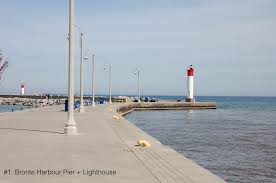
The Ancient Understanding of Water

Dear Canada,

The intrepid explorers who left Quebec’s relative comfort for God and gold did not scar the land. They didn’t bang and clang along in wagons breaking trees and cutting tracks. No, they slipped through in canoes, in silence, leaving not a trace of their passing.
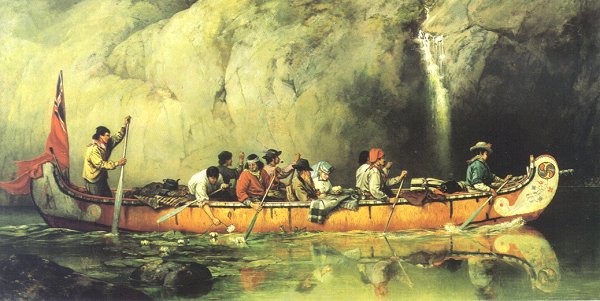
Voyageur_canoe

It’s perhaps this collective memory, this ancient understanding down deep in our souls that urges us to water. We are born of water. Many of us are baptized with water. Water is our playground where we seek sanctuary and salvation in splashing and skiing and paddling and floating. Blessed is the contentment of long, gentle afternoons in hypnotic contemplation of sparkling waves. We bob at dusk in little tin boats with smelly worms and silly hats and silently wish that a splashing bass will not spoil the tranquility. We work fifty weeks to afford a clean and tidy house and then leave it for two to paddle a canoe and haul it over treacherous rocks and roots, and all to live from a sack, sleep on rocks, and eat food we’d send back in the dingiest diner. And we love it all, because we’re on water.

The Atlantic was your welcome mat and the St. Lawrence your doorway. It invited us in. It was your superhighway to your inland seas – the mighty Great Lakes. Settlements grew to towns and then cities along their shores. Without the lakes there would be no Kingston, Toronto, Hamilton, Thunder Bay, and the rest.

The lakes are a line. We’re here and the Americans are over there. They always coveted more and once they crossed the lakes to get it. As blood-soaked armies showed neither mercy nor shame, battleship artillery boomed. It drowned out the cries of the poor drowning men. We burned their capital. They returned the favour and burned ours, but we beat them in the end; we beat them 18 to 12. We then agreed to ban the guns on the lakes and try, one more time, to live a hard and bitter peace.

Another war’s end, a couple of wars later, offered its own kind of boom – prosperity and babies. The navy sold out at garage sale prices and shipping companies soon had plenty to ship in their ships. Supply could not meet demand to fill new houses in new neighbourhoods with new stuff. Europe was still bleeding and Canadian wheat, iron, and wood steamed through the lakes to help with the healing.

The big freighters lumbered like slow-moving monsters. They chugged from plants and mills and lake to great lake and on up the St. Lawrence to the sea. Their choking smoke, like the belching factory stacks, were a sign of good times. The depression and war were over and we yearned for order. There was an old man on parliament hill and a young Elvis on TV, well, from the waist up anyway, and the smoke stacks meant there were jobs for everyone. For most of us, it was a Leave it to Beaver world and folks along the lakes were lulled in their beds each night by the freighters’ mournful horns echoing over still and foggy water.
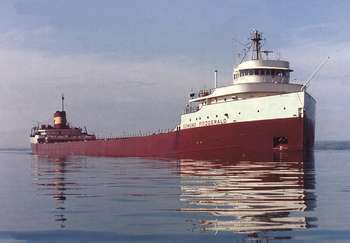
Edmund Fitzgerald

Edmund Fitzgerald

But just like life was not so serene everywhere, the ships were romantic only to those elsewhere. Life was tough and the men tougher. Ships were too often floating sweatshops. Company men and the politicians they bought winked and nodded as captains ignored the imaginary border drawn somewhere on the waves and rival union goons broke skulls and laws.

There were moments of calm amid the chaos. Peaceful nights on watch with no shore in sight allowed a man to imagine himself at sea. The lake’s gentle roll offered time to recall what drew him to that life in the first place. Then, sudden gales could whip up mountainous waves and transform freighters big as towns to bathtub toys. Everyone knew their jobs but when the running lights and radio went out as another wave crashed over the deck there was nothing to do but pray. Like in a battlefield foxhole, there are no atheists aboard freighters locked in the cold embrace of a Superior storm.

The Great Lakes’ beds are rusting, ramshackle naval museums and holy unmarked graves. Canada, your lakes and the rivers both mighty and small are the blood in your veins. Their waves are the rhythm of your soul.

Sincerely,

A Friend.

This is one of a collection entitled Love Letters to a Nation, inspired by the songs of Gordon Lightfoot. If you liked it, please share it through social media and see some of the others at johnboyko.com

The Wreck Of The Edmund Fitzgerald               © Gordon Lightfoot

The legend lives on from the Chippewa on down
Of the big lake they call Gitche Gumee
The lake, it is said, never gives up her dead
When the skies of November turn gloomy
With a load of iron ore twenty-six thousand tons more
Than the Edmund Fitzgerald weighed empty
That good ship and true was a bone to be chewed
When the gales of November came early
The ship was the pride of the American side
Coming back from some mill in Wisconsin
As the big freighters go, it was bigger than most
With a crew and good captain well seasoned
Concluding some terms with a couple of steel firms
When they left fully loaded for Cleveland
Then later that night when the ship’s bell rang
Could it be the north wind they’d been feelin’?

The wind in the wires made a tattle-tale sound
When the wave broke over the railing
And every man knew, as the captain did too
‘Twas the witch of November come stealin’
The dawn came late and the breakfast had to wait
When the gales of November came slashin’
When afternoon came it was freezing rain
In the face of a hurricane west wind
When suppertime came, the old cook came on deck
Sayin’ “Fellas, it’s too rough to feed ya”
At seven PM a main hatchway caved in
He said, “Fellas, it’s been good to know ya”
The captain wired in he had water comin’ in
And the good ship and crew was in peril
And later that night when his lights went out of sight
Came the wreck of the Edmund Fitzgerald

Does anyone know where the love of God goes
When the waves turn the minutes to hours?
The searchers all say they’d have made Whitefish Bay
If they’d put fifteen more miles behind her
They might have split up or they might have capsized
They may have broke deep and took water
And all that remains is the faces and the names
Of the wives and the sons and the daughters

Lake Huron rolls, Superior sings
In the rooms of her ice-water mansion
Old Michigan steams like a young man’s dreams
The islands and bays are for sportsmen
And farther below, Lake Ontario
Takes in what Lake Erie can send her
And the iron boats go as the mariners all know
With the gales of November remembered

In a musty old hall in Detroit they prayed
In the Maritime Sailors’ Cathedral
The church bell chimed ’til it rang twenty-nine times
For each man on the Edmund Fitzgerald
The legend lives on from the Chippewa on down
Of the big lake they call Gitche Gumee
Superior, they said, never gives up her dead
When the gales of November come early

The Land of Water – Dear Canada

Dear Canada,

You are a land of water. It’s right there in your motto: A Mari Usque Ad Mare (From Sea to Sea). It’s from the Bible: “He shall have dominion also from sea to sea, and from the river unto the ends of the earth”. In your case, of course, it should read from sea to sea to sea, because your rivers rush to die in not two oceans but three.

The Arctic Ocean is furthest from most Canadians and for decades it never crossed their minds. It was just as well. Its beauty is more than southerners can fathom. At the sight of a 360-degree horizon beneath a sky bigger than wonder itself, folks used to living in concrete, seeing the world through a windshield or screen, or whose vista ends at the backyard fence, would risk having their heads explode.

sunset arctic

Then came oil; black gold, Alaskan tea. The problem was not how to get the gunky goo out of the rock but how to ship it south through water with the irksome habit of turning to ice. The problem changed when the climate changed. The big melt came quicker than anyone expected, especially those who claimed there was no such thing as climate change but now rushed to exploit its effects. Your northern ocean was suddenly everyone’s friend. Men in silk ties beneath brand new parkas lined up with candy, flowers, and dewy-eyed concern for sovereignty.

The Pacific is Canada’s gateway to Asia. Back when Vancouver was nothing but a fort and a dream, people plied the vast blue water east from the East and helped shape your west. They came for the gold that created the province and then the railway jobs that built the nation. Then, sadly, came the disgrace of discriminatory laws and race riots and the shame of wartime internments. Sometimes apologies are not enough.

Pacific Ocean coastline, Morseby Island, British Columbia, Canada

The Pacific invites jealousy. The North Pacific Current flows through the Hawaiian Islands and turns to kiss the coast before sluicing on to California. It is the ocean, therefore, that offers TV pictures of Victoria daffodils to those suffering another 20 below Edmonton morning. But then, later, when folks at Portage and Main are swatting mosquitoes the size of Buicks, they try not to be smug when the radio reports rain in Vancouver. It’s said that British Columbians don’t age; they rust.

The Atlantic invited adventurous Europeans. They came for the fish, oil, and wood. Pines too straight and tall to be real became masts on British ships that built an empire. The oil was not drilled but was whale blubber boiled and barrelled. It was poured into lamps on sitting-room tables and poles along cobblestone streets. Canadian whales lit up Europe.

Then there were the fish. Cartier wrote of his men dangling buckets into the sea and seconds later withdrawing them to marvel at their flapping bounty. The fish brought rugged people to rough and tumble outports and little towns hugging the rocky coast. Men braved morning’s chill to beat dawn to their boats and then vanish into haunting mists. Everything from canning factories to shipyards depended on the fish and the fish never let them down. There was enough for everyone and forever. To believe something deeply enough and long enough is to erase the thin line between opinion and truth. Meanwhile, even Lunenburg’s mighty Bluenose, immortalized on the dime, when not beating all comers with its lightening speed and daring crew, was a fishing boat.

Like the men working Cape Breton coal mines, those on the tiny boats that disappeared each day into the ocean’s enormity traded risk for livelihood. Their fathers and grandfathers understood as well as them that at any moment, and without reason, the earth or ocean could shrug and swallow them whole. There are too many stones over empty graves.

Fisherman’s wives were as hearty and brave. They raised the kids who seemed to keep coming, and the kept the house, and watched laundry on the line flap hard and horizontal. They sang their party pieces with gusto around kitchen tables where hot fiddles and cold beer linked all in tears, fears, and dreams of better days.

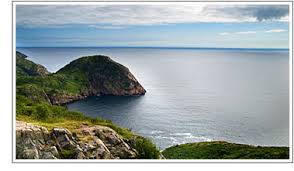
And there was the woman, like so many before, who when the boat was late, put the kids to bed, pulled on a thin cardigan, and walked to the hill atop the town. Pulling the sweater tight around her waist she gazed out into the icy, purple world, out to the point where the sky melts to sea. Walking along the green, moss-covered silver stone she hummed the tune they sang together and loved so well. She was there the next night too, and the next, and the next after that. And then, finally, came a night when the sweater stayed on the hook.

hill top atlantic images

Yes, Canada, you are a land of water. Like all of nature’s magic, your oceans are powerful beyond measure. What we see is a fraction of what they are and more than our meager minds can comprehend. They teem with life and can snatch it away without comment, remorse, or judgement. Like you, the oceans were there long before we arrived and their waves will pound your shores long after we’re gone. And that reality, when allowed to rise to our consciousness for a startling moment, like a great blue off the bow, is a humbling reminder of our responsibility to you and each other.

Sincerely,

A Friend.

 This is the third of a series Dear Canada: Love Letters to a Nation, inspired by the songs of Gordon Lightfoot. If you enjoyed this, please share it with others and consider checking out the first two at johnboyko.com

Bitter Green   by Gordon Lightfoot

Upon the Bitter Green she walked the hills above the town, echoed to her footsteps as soft as eiderdown
Waiting for her master to kiss away her tears, waiting through the years

Bitter Green they called her walking in the sun loving everyone that she met. Bitter Green they called her waiting in the sun, waiting for someone to take her home

Some say he was a sailor who died away at sea, some say he was a prisoner who never was set free
Lost upon the ocean he died there in the mist, dreaming of a kiss

But now the Bitter Green is gone the hills have turned to rust, there comes a weary stranger whose tears fall in the dust
Kneeling by the churchyard in the autumn mist, dreaming of a kiss

Heroes Flawed and Fake

Dear Canada,

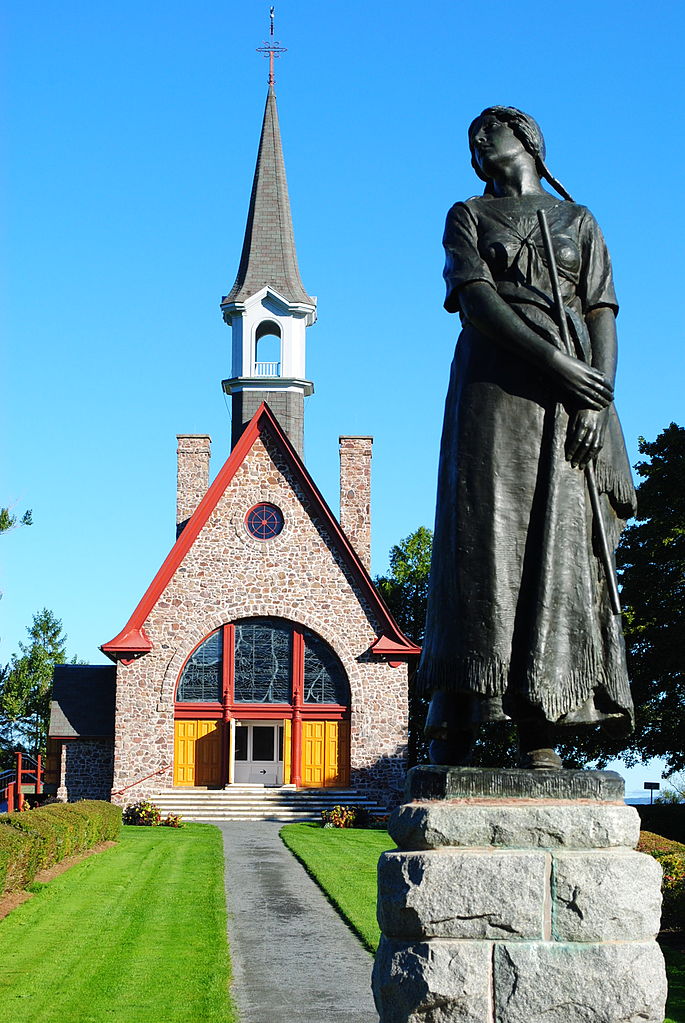
She stands alone in her Grand Prė garden. With a look of sad longing, Evangeline gazes over her shoulder toward heaven. She has her back to the church, the Church that turned its back on her. The tragic news arrived on her wedding day and tore her from her one true love. Her people were victims of a war that saw you become British, and her people uprooted because they were French. Their homes and villages were burned.

The deported Acadians fluttered as maple keys, some lighting as far away as Louisiana. It’s why New Orleans has Cajun music and a French Quarter. Evangeline devoted the rest of her life to searching for her beloved Gabriel, finding him years later, and only in time to have him die in her arms. Today, hundreds of years later, there stands Evangeline in her national park – a UNESCO World Heritage site, no less – a vision in bronze. She is a symbol of loss and for all that’s unfair. She expresses the power of love amid the hatred of war.

Evangeline_Grand_Pre

Meanwhile, over in Prince Edward Island, a long line is snaking its way from a rambling white farmhouse with stunning green gables. It’s Anne’s house. We know Anne Shirley through books, movies, and TV. She’s loved around the world and, since being placed on their school curriculum in the 1950s, a Japanese icon. Anne is what many of us first learn about us. She is honest, loyal, feisty, fun-loving and adventurous, with unbreakable bonds to the land and people she loves.

The tourists tour with reverence. Grownups steal a moment to peer at the rolling Cavendish countryside out Anne’s bedroom window. It’s the view that inspired her thoughts, and that the ten-year old then understood with the certainty of a ten-year old’s truth. They treasure the moment. They are warmed by embers of memory sunk deep in their hearts but now flickering from down where a child’s dreams are kept safe from adulthood’s flimsy facade. Then, as is always the case with such things, everyone exits through the gift shop. Japanese parents buy Chinese trinkets to celebrate a Canadian girl. Smiling children emerge beneath straw skimmer hats with long red pigtails, just like Anne’s.

Anne of Green Gables1

Anne and Evangeline share a secret. They never existed. Evangeline was the protagonist in a Longfellow poem, written nearly a century after the Acadian diaspora. The lines are lyrical but many of its facts are wrong. Anne Shirley sprang from the imagination of Canadian novelist Lucy Maud Montgomery. Visiting Anne’s actual green-gabled house is akin to visiting Batman’s actual cave.

But these facts rob neither Evangeline nor Anne of their importance. That is the nature, gift, and mystery of heroes and icons.

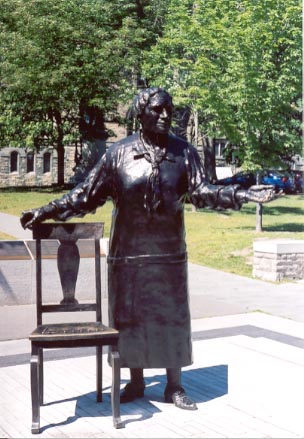
Consider the very real Emily Murphy. She was enraged that women were regularly and nonchalantly denied justice within the bastion of our male-dominated society. From her home in Edmonton, she organized a movement that pressured the Alberta government to enact a law allowing women to inherit their husband’s estates. Then, upset that women were unfairly treated in the courts, she exerted pressure until earning an appointment as Canada’s first female police magistrate; the first, in fact, in the whole British Empire.

When told by an uppity male lawyer that her gender disqualified her from the bench, she and four friends, later dubbed the Famous Five, fought back. They fought rusty old beliefs disguised as facts, politicians with their eyes on polls and feet in clay, and, finally, they fought the courts all the way over the pond to Westminster. Their efforts led to women being declared Persons; no longer just the property of Dads then husbands, but Persons with rights equal to men. Women could now be judges and senators and, well, anything they wanted to be. It was a spectacular achievement. Murphy had demonstrated intelligence, determination, and a burning sense of what should be.

murphystatue

However, under the guise of Janey Canuck, Murphy also wrote magazine articles and a novel espousing beliefs that we now recognize as racist. She was clearly on both the right and wrong side of rights. Does the racist rant erase the feminist achievement and so should Murphy’s statue be taken from parliament hill?

The heroes we venerate are players in a grand story we tell to ourselves about ourselves. Their triumphs and characters represent the best of us for the rest of us and the complexity within all of us. They challenge us to look beyond ourselves to become our best possible selves. Flawed or even fake, they inspire us to improve ourselves, our families, communities and, ultimately, to be worthy of you.

Sincerely,

A Friend.

Don Quixote   by © Gordon Lightfoot

Through the woodland, through the valley
Comes a horseman wild and free
Tilting at the windmills passing
Who can the brave young horseman be
He is wild but he is mellow
He is strong but he is weak
He is cruel but he is gentle
He is wise but he is meek
Reaching for his saddlebag
He takes a battered book into his hand
Standing like a prophet bold
He shouts across the ocean to the shore
Till he can shout no more

I have come o’er moor and mountain
Like the hawk upon the wing
I was once a shining knight
Who was the guardian of a king
I have searched the whole world over
Looking for a place to sleep
I have seen the strong survive
And I have seen the lean grown weak

See the children of the earth
Who wake to find the table bare
See the gentry in the country
Riding off to take the air

Reaching for his saddlebag
He takes a rusty sword into his hand
Then striking up a knightly pose
He shouts across the ocean to the shore
Till he can shout no more

See the jailor with his key
Who locks away all trace of sin
See the judge upon the bench
Who tries the case as best he can
See the wise and wicked ones
Who feed upon life’s sacred fire
See the soldier with his gun
Who must be dead to be admired

See the man who tips the needle
See the man who buys and sells
See the man who puts the collar
On the ones who dare not tell
See the drunkard in the tavern
Stemming gold to make ends meet
See the youth in ghetto black
Condemned to life upon the street

Reaching for his saddlebag
He takes a tarnished cross into his hand
Then standing like a preacher now
He shouts across the ocean to the shore
Then in a blaze of tangled hooves
He gallops off across the dusty plain
In vain to search again
Where no one will hear
Through the woodland, through the valley
Comes a horseman wild and free
Tilting at the windmills passing
Who can the brave young horseman be
He is wild but he is mellow
He is strong but he is weak
He is cruel but he is gentle
He is wise but he is meek

 This is the second of a series of Letter to Canada, inspired by the songs of Gordon Lightfoot. If you like it, please share it on your social media of choice and see the first one, and more of my weekly columns, at johnboyko.c

A Time For Heroes

We have always yearned for heroes.  A hero personifies, in character and deed, traits that inspire admiration and imitation. A society’s values are revealed and reinforced by those deemed heroic. In the same way, your heroes say a lot about you.

In his first inaugural address, Ronald Reagan observed, “Those who say that we are in a time when there are no heroes just don’t know where to look. You can see heroes every day.”  The president understood that we need not seek a hero in history or myth or among the famous and powerful. They are all around us. It was an important thought, but it was wasted on me. I already knew where to look.

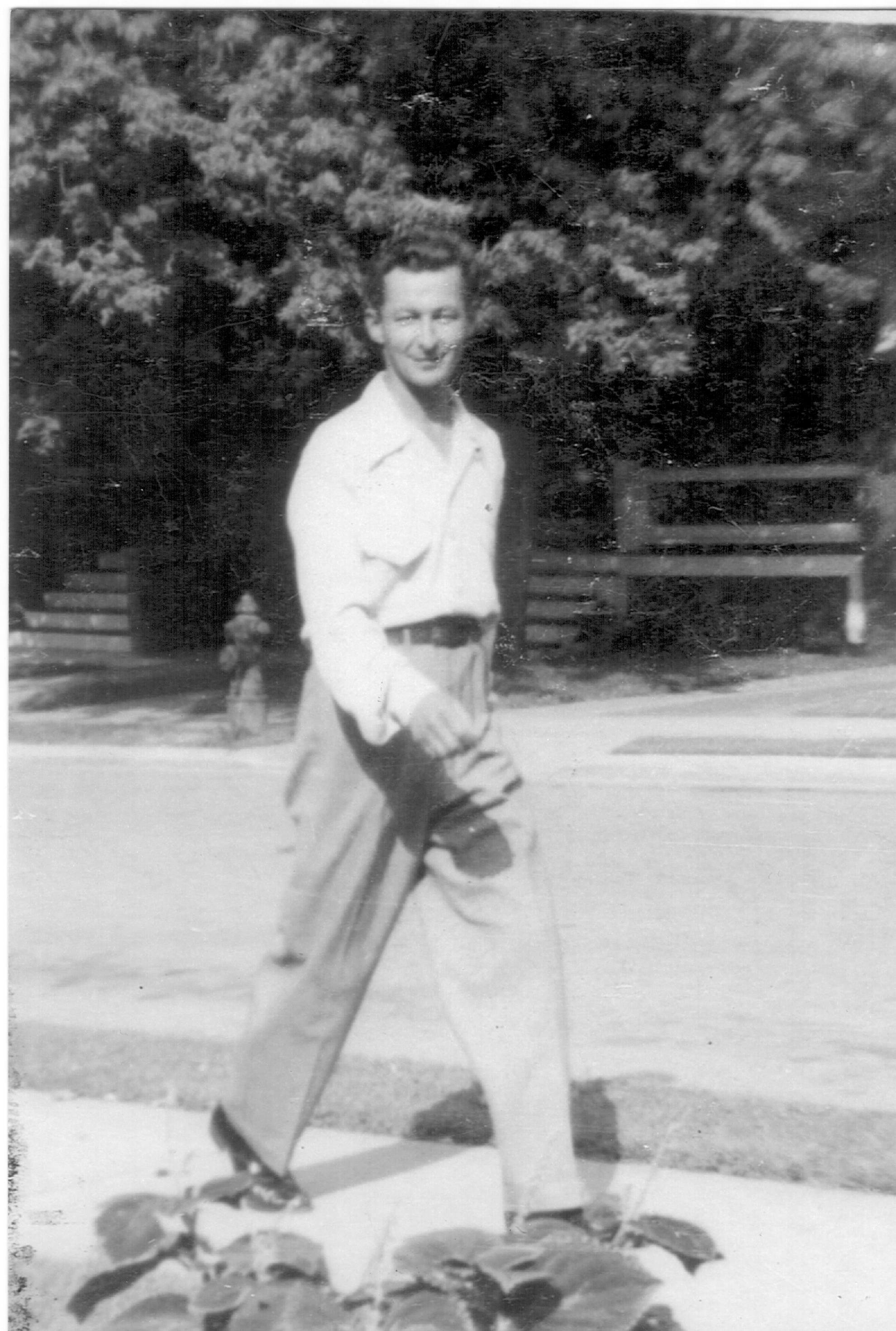
Among my heroes is a man you have never heard of. He never got his name in the paper. He won neither medals nor laurels. There will never be a statue erected or movie made about him. But he was heroic. His character and the manner in which he lived render him as worthy of admiration and imitation as any whose names are known around the globe. He was a gentle, humble, dignified hero. He was my grandfather.

John Boyko 001

John W. Boyko

He believed in moderation. My Dad told me of golfing with him.  Dad would blast drives out 275 yards or so and then watch as his father did as he always did: 150 yards, straight down the middle. Then, as the others hit those marvellous iron shots that fade magnificently and, when they work, bounce and bite on the green, his father would strike a little bump and run. Without the awe of the masterful shot, most would roll closer than the others.

At the end of nearly every round, my grandfather would stroll from the eighteenth green with the same ball he struck from the first tee, and almost always with fewer strokes than his flashier opponents and partner. The metaphor is apt. Moderation informed his decisions about friends, family, fun, and every other aspect of his long life. Moderation matters, it’s heroic.

He believed in loyalty. Last summer, a colleague launched into a highly-charged rant detailing all that was wrong with our place of employment. I was nodding at the litany of things apparently wrong when I unexpectedly thought of my grandfather. While pretending to listen, I reflected on the 42 years he gave to Dofasco, the mammoth Hamilton steel plant. I never once heard him utter a critical word.

This man who lived through a depression and world war taught me to be grateful for a safe place and fair wage and to always give more than expected. If one’s employer does not reciprocate loyalty with loyalty, then don’t become disloyal, find another employer. Loyalty in all aspects of life and, ultimately, to one’s dignity, matters. Loyalty is heroic.

He believed in patience. On a great number of misty mornings and sunny afternoons I accompanied him to Oakville’s Bronte pier. He loved fishing. I hate fishing. But I loved being with him and so along I’d go, secretly cheering for the fish. One warm afternoon, I pointed to a string of boats about three hundred yards out into Lake Ontario. He said they all had fish finders and guessed that the Coho salmon were out there. A few moments passed before I ventured, “So, does that mean that we haven’t a chance of catching anything here?” He shook his head and said, “No, but it’s a nice day, and you never know.”  We practiced our casting for another two hours, had great chats, and headed home. Patience matters – it’s heroic.

Bronte pier

He believed in generosity. We are captains of our own ships, embarked on journeys of our own design, but family is the beacon that always guides us home; home to the sanctuary where we are reminded of whom we truly are. My grandfather celebrated my triumphs and, from time to time, commiserated with my despair. He always offered compassion without judgment. He knew that the most generous gifts are time and attention. And those gifts, bestowed with gentle grace and twinkling eyes were the essence of the man. He seldom gave advice, even when asked; winter can’t warn the spring. His advice was in his example. Generosity matters – it’s heroic.

We have known heroes from Achilles to Kennedy and from Louis Riel to Eleanor Roosevelt. They matter for what they offer and reflect about the societies and individuals who revere them. I have my own hero. I share his name. I share his values. Every day he instructs me. Every day, I strive to be worthy of his memory.

If you enjoyed this column, please consider sharing it through the social media of your choice.

John F. Kennedy and My Mother’s Tears

I recall the first time I saw my mother cry. You need to understand that my mom was a tough woman, as tough as burnished leather, at least on the outside, the side she allowed most folks to see. But on this day she was sobbing. It was the afternoon of November 22, 1963. I was a middle-class Canadian kid in a brush cut just rolled home from the rigours of grade one but now standing in my living room, still and stunned at the sight of my mother, slumped into the couch, red-eyed and weeping before the flickering television.

She explained that a man had died, a good man, and that he had been shot by a crazy man. I remember that I cried too. It was not for him – I had no idea who the good man was – but for her, for her grief, and for my addled efforts to understand. Today, for the same three reasons, I cried again.

You see, the little boy grew up to be an author and this week I’m doing research at Boston’s John F. Kennedy Library and Museum. Boston is a terrific city. On my first morning I jumped the red line to Pawk Street, that’s right, that’s what the man said. Within 200 steps of the subway stop I glommed on to a walking tour of the Freedom Trail led by a gentleman in period costume who was among the best guides I have ever experienced. It was marvelous; there were great sites and greater stories. I then watched a legalize marijuana rally in the Commons and laughed out loud when at the count of three the thousand or so folks splayed on blankets on the grass lit up their grass. I told a yellow T-shirted volunteer about Justin Trudeau’s pledge up in Canada but she didn’t care.

The dawn brought work. The Kennedy Library’s enormous, white, flat tower soars like a sail into the sky and overlooks the bay that reminds visitors of Kennedy’s love of the sea. The commissionaire found my name on the list, led me to an elevator in the back and with the turn his special key I was lifted to the fourth floor archives. For the rest of the day and the next two I time travelled to the 1960s. Tapping away on my laptop I recorded notes from box after box and file after file.

Kennedy library archives

My spot on the 4th floor.

On the afternoon of the third day I declared a break to finally see the museum. I stood with a group of women enchanted by home movie clips showing the Kennedys at play in Hyannisport. Kennedy smiled as he swung a golf club, sailed, swam, and at one point drove a gaggle of laughing, bare-chested, sun-tanned children far too fast on a bouncing golf cart. They were pictures of a family and life about which only the stone-hearted could not feel warmth. It was then on to politics. Films and artifacts depicted the nomination and then the election. No wonder people watching the debate thought he wiped the floor with Nixon. No kidding, did people really wear those goofy buttons and hats?

It was all good. I wandered with the gentle acceptance that like most museums its analysis was skimming as a stone over very deep ponds with its focus on entertainment more than education. But then I arrived at the gallery dedicated to the inauguration. The large screen with seating before it invited you to suspend belief and imagine you were there. About fifteen people were doing just that. There was a clutch of teenage boys with their big caps and big feet, three or four couples about my age, and a young man and woman whose eyes and hands betrayed either a honeymoon trip or one in the offing. I stood at the side not expecting to stay for the whole thing but I became entranced. There was Kennedy, tanned on that freezing January afternoon so long ago and speaking in that Boston twang. And here were these people, generations later sitting silent, eyes wide, many mouths agape, drinking in the idealism of his message as if cool water in a steaming desert oasis. I listened to him but watched them.

Kennedy inauguration

It was then it happened; a tear found my eye. I smiled and my lip quivered. I let it hang there and then run down my cheek, closed my eyes, and nodded. My mother has been gone for years now and I had not felt so close to her in a long while. The tear was not mine – it was hers. After all this time I think I finally understood that November afternoon.

The day Kennedy was murdered tore time. For millions of people the irreparable rending forever split the before and after. The violence in Dallas was visited not just upon the man but also on the very idea that everything was possible and all problems solvable. As I watched the people watching him and smudged my cheek I realized that in the final analysis, Kennedy’s gift was not his programs and polices but himself. His contribution, and the one that brought my mother to him then and the people to his museum now, was the courageous determination that idealism is not naive, hope is not silly, that acting collectively is not surrendering liberty, and that community can extend beyond one’s family, or city, or even country.

Of course Kennedy was a flawed man. The museum is silent about his hiding crippling health issues and the cocktail of drugs with which he was injected each day to carry on. It did not mention the women. He was a flawed leader. The museum ignored his ballooning the deficit to build a mammoth military and glanced over his being late in joining the march to civil rights and his having started the march to Vietnam. But that’s okay. There is no such thing as a perfect man or leader.

Now I’m back in my hotel scrunching notes into prose. When this book is published I hope that readers will understand Kennedy’s time a little better and consider the effects that his policies and personality had on Canada. What they will not know is our secret; that in the book’s writing I came to an understanding far more profound. In a city far from home, and for just a moment, I was once again my mother’s little boy.