Most Important Bands of All Time

The Beatles are not the best band of all time. Neither is U2 or Led Zeppelin. You see, a teenage John Lennon once snapped, “We’re not a band, we’re a group.” He understood. Lennon’s Quarrymen and then the Beatles were groups. So was the Clash and so are the Rolling Stones and the Eagles. In musical parlance, a group is a self-contained unit providing music and vocals while a band is a collection of musicians creating music either without or to accompany vocals. Forget boy bands. Their name is only part of what’s wrong with them.

So let’s leave groups aside and consider, in rough chronological order, the five most important bands.

  1. Tommy Dorsey Band

The 1930s brought the Depression and the 1940s the Second World War. Year after year people lost homes, loved ones, and faith in the rules they had believed would secure their families and futures. As always happens in eras of tragedy and transition, music filled the emotional void with fun. Swing music was nothing but fun.

Dance halls were everywhere and everywhere were big bands playing jumped up tunes with driving beats, mournful ballads, and goofy novelty numbers. The most influential of the big bands was led by Tommy Dorsey.

Dorsey played trombone, of all things. He reinvented the instrument so that it carried the melody. He promoted band members who stood and, in a nod to jazz, leaned into solos that were different every night. It was art as lightening, existing for the moment. Dorsey also sought the best singers around and handed careers to many including his best find of all, Frank Sinatra. Sinatra toured and recorded 80 songs with the Dorsey band. He learned his vocal styling and discipline from Dorsey’s trombone breathing techniques.

When other bands faded with changing musical tastes, Dorsey continued to evolve his sound and bring more jazz and popular music into his repertoire. His innovative ideas influenced another generation. His band placed an incredible 286 songs on the Billboard charts and he enjoyed 17 number ones. His biggest hit was I’ll Never Smile Again, which, in 1940, was number one for twelve weeks.

In the 1950s he and his brother Jimmy co-hosted a popular show on the new medium of television. He demonstrated courage when he ignored critics and insisted that a new young singer be invited to perform. It was through Dorsey, therefore, that America first saw Elvis Presley.

Tommy Dorsey died in 1956 when only 51 years of age. In 1982, his I’m Getting Sentimental Over You was inducted into the Grammy Hall of Fame and Marie was inducted in 1998. In 1996, the United States Postal Service issued a Tommy and Jimmy Dorsey stamp. His music lives on in singers and bands who believe they are inventing new ideas that Dorsey actually brought to audiences before their grandparents were born. 

  1. Wrecking Crew

Los Angeles session musicians used to arrive wearing suits and obediently read from charts to provide music for whatever commercial, movie, or singer rented their services. It was a nine to five job. That ended in the early 1960s when others began strolling in as the professionals were leaving. They dressed more casually. They played more casually. They could read charts but more often played what they felt. They made suggestions. They took chances. The grumpy old pros said the young bucks would wreck the music industry and so, according to drummer Hal Blaine, their name was coined.

You’ve heard their work if you’ve heard the Monkees, Paul Revere and the Raiders, Jan and Dean, the Partridge Family, Mamas & Papas, Association, 5th Dimension, Grass Roots, the Carpenters, the Byrds, the Turtles, Bread, Simon and Garfunkel, and on and on. Did you think the Monkees were the only group that didn’t play on their own records? You heard the Wrecking Crew if you’ve heard Dean Martin sing Everybody Loves Somebody or Frank Sinatra croon Strangers in the Night.

Sonny Bono once had a rather ordinary sounding song until the bass player, Carol Kaye, suggested a line that was simple in its complexity but riveting as a hook, and The Beat Goes On was born. She later suggested the descending bass notes in the Nancy Sinatra’s Boots. Brian Wilson employed the Wrecking Crew to create the Beach Boys’ Good Vibrations and Pet Sounds.

When Wrecking Crew guitarist Glen Campbell struck out on his own, it continued as his studio band. Other members that enjoyed solo success were Leon Russell and Mac Rebennack, who called himself Dr. John. Wrecking crew drummer Jim Keltner played on nearly all the Beatles solo albums, the Concert for Bangladesh, and, under the pseudonym Buster Sidebury, with the Travelling Wilburys. In 2007, the Wrecking Crew was inducted into the Musicians Hall of Fame.

Turn on an oldies radio station and be guaranteed that within minutes, whether you know it or not, you will hear the Wrecking Crew.

  1. The Band

Born in Arkansas and making a name for himself as a rockabilly wild man, Ronnie Hawkins toured Canada in 1958 and never went home. His music and show was like nothing seen or heard before. It was all made possible by the driving beat and incomparable sound of his band. They were kids. Arkansas native Levon Helm joined Canadians Robbie Robertson, Garth Hudson, Richard Manuel, and Rick Danko. They practiced all day and played all night. Their playing became as tight as their friendships.

Hawkins called them the Hawks. They quickly grew to be the premier band on Toronto’s Yonge Street strip that became the heart of the burgeoning Canadian music scene. Hawkins was crazy on stage. He yelled. He did back flips. He invented the moonwalk that Michael Jackson would later steal. Nearly any band can back someone who sticks to the songs but it took something all together special to hang on through the hurricane that was Rompin’ Ronnie. Through the antics, alcohol, and smoky haze was the band that never missed a beat, dropped a note, or missed a cue. Hudson’s keyboard work was majestic and rose beyond the limits of three-chord rock ‘n’ roll. Helms played masterful fills while Robertson took guitar leads to the edge of out of control.

In 1964, the band left Hawkins. They toured a little and recorded an unsuccessful album but a year later their ability to back quirky front men was recognized and rewarded when they received a call from Bob Dylan. At that point, Dylan was a tremendously successful folk singer. In July 1965, he had endured angry boos when he had plugged in a telecaster and, backed by Mike Butterfield’s band, sang an electric set at the New Port Folk Festival. Ready for more, and he hired Hawkins’ old band.

The American tour began a month later. It was like nothing anyone had heard before. Woody Guthrie had bedded the Beatles. The marriage of folk, pop, and rock is commonplace now but was then revolutionary. They toured the world and endured more negative reaction. There is film of a Manchester, England concert where someone yells that Dylan is Judas. Dylan snaps back, and then turns to the band, and shouts, “Play it fucking loud!” And they do. They play it loud and they play it well to those who were booing, those who understood, and for posterity.

The band accompanied Dylan back to Saugerties, New York, where, exhausted but exhilarated, they lived and made new music together. From Helms came southern country and from Hudson came classical. From Robertson came pop and his respect for southern history and native culture. From Manuel, and Danko came blues, gospel and traditional bluegrass. Their informal recordings became the Basement Tapes and a decades-long iconic, unheard mystery.

The eclectic talents and interests melded with their years with Hawkins and Dylan to inform their 1968 debut album, Music from Big Pink. They had been Hawkins band then Dylan’s band and now they needed a name. Helms suggested they be known as they were to many already, simply, The Band.

The group enjoyed hit songs and great success and well deserved places in the Canadian Music Hall of Fame and the Rock and Roll Hall of Fame. But it is as a band that they were midwives at the birth of rock n roll in Canada and country-rock around the world. Michael Nesmith, Linda Ronstadt, the Eagles, Jackson Browne, Lynyrd Skynyrd, and others who followed their lead owe a debt to the band called the Band.

  1. The Swampers

Speaking of Lyrnyrd Skynyrd, consider the fourth verse from their most popular song, Sweet Home Alabama:

Now Muscle Shoals has got the Swampers/And they’ve been known to pick a song or two/Lord they get me off so much/They pick me up when I’m feeling blue/Now how bout you?

The Swampers? You may have never heard of them but, like the Wrecking Crew, you’ve heard them. Entrepreneur Rick Hall built FAME recording studio in Muscle Shoals, Alabama. His very first song he recorded was by a shy, hospital orderly named Percy Sledge – the gospel-tinged power ballad When a Man Loves a Woman. The band is brilliant in its restraint. The organ creates a drone and the beat is pulled just slightly before each chorus, allowing tension to build to a climatic release. The notes are smooth, erotic, and let the singer and song do the work.

The record’s success brought attention to Muscle Shoals and more hit records to the world. People dancing to Wilson Pickett’s Mustang Sally were dancing to the Swampers. People swooning to Aretha Franklin’s Respect were loving the Swampers. Those moved by Etta James’ raucous Tell Mama were moved by the Swampers. Few knew the band. Fewer still knew that those motoring the new wave of Black R & B were all white.

None had musical training. But David Hood, Jimmy Johnson, Barry Beckett, Roger Hawkins, Pete Carr, Will McFarlane, Spooner Oldham, Clayton Ivey, Randy McCormick, and Albert S. Lowe all had soul, imagination, and a willingness to risk.

In 1969, Beckett, Hawkins, Hood, and Johnson formed their own studio called Pro Sound. The Swampers sound and feel, though, remained true to its roots. More singers came to capture its magic. They backed recordings by Rod Stewart, Joe Cocker, John Prine, Duane Allman, Boz Scaggs, and the Oak Ridge Boys. They helped the Rolling Stones record Wild Horses and Brown Sugar. Bob Dylan came to record Desire. It’s the Swampers you are enjoying when singing along with the Staple Singers I’ll Take You There, Paul Simon’s Kodachrome, and Bob Seger’s Night Moves.

God was having a particularly good day when he decided to place the intersection of Black and White music in the heart of segregated Alabama and allow its sweet sounds to offer lessons to us all.

  1. E Street Band

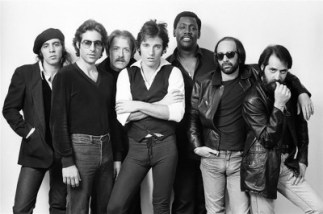
Most Important Bands of All Time(Photo: http://www.sfae.com)

New Jersey is tough and the Jersey shore is tougher. It’s Sinatra tough. It’s Sopranos tough. It was tough in the late 1960s when in and around the hardscrabble Ashbury Park a new, hard driving, working class music developed in seedy bars and seedier clubs. Like Liverpool in the early ‘60s, Ashbury Park in the early ‘70s saw bands form and fall apart. The journeymen went to factories and the best to other bands. Among the dwindling elite were Danny Federici, Vini Lopez, Garry Tellent, David Sancious and Clarence Clemons. They came to know each other and became friends with a skinny young Jersey singer named Bruce Springsteen.

Springsteen signed a recording contract in 1972 and offered a job to the best musicians on the Jersey Shore. They rehearsed at Sancious’ mother’s house on the corner of 10th Avenue and E Street. The name was born – The E Street Band. Their first album was entitled Greetings From Ashbury Park. A life of touring began. Some members left and were replaced but the sound grew tighter and even more powerful, and even tougher. The band was strengthened when ace guitarist Steven Van Zandt joined in 1975.

Springsteen became known for his working class anthems and he and the band for their working class dedication to fair play for fair pay. Concerts lasted three hours or more. There were few breaks between songs as the band kept the music or rhythm pulsating with the crowd engaged, enthralled, and enraptured. Songs people knew from the records were reinvented, made longer, more complex, and given more energy and different textures every night. Like the stadium band they became, they played to the back row. Like the bar band they had been, they played requests.

For 15 years, Springsteen recorded and performed without the band but they were reunited in 1995 and have been together ever since. Springsteen was not the same without them. He is better with them at his side and watching his back. Springsteen always affectionately introduces each member and then yells over the cheers: “It’s the heart-stopping, pants-dropping, house-rocking, earth-quaking, booty-shaking, Viagra-taking, love-making, legendary E Street Band!”

Try to imagine Born to Run without Clarence’s sax solo. Try to imagine Glory Days without Little Stephens’ guitar and crazy harmonies. They take good songs and made them better. That’s the job of any band but not a job just any band can do. Now try to imagine Bruce Springsteen without the E Street band. I’m guessing he’d be a retired steel worker living in Ashbury Park, strumming his acoustic guitar and wondering about glory days that might have been.

Please share this column with others if you liked it and leave a comment on my choices. Suggestions for most important groups would be welcomed. If you have not seen it – johnboyko.com – has my thoughts on six most important singers.

Hockey, Trump & Happy in the Hurricane’s Eye

Sometimes I feel a need to apologize. Like everyone, I harbour a few regrets, wish some things were a little different and others a trifle easier. Mostly though, I feel like I’m in a hurricane’s eye. Things are calm here, they’re nice, and yet all around me seems awhirl in furious thunder. While so many are so angry, I’m happy. Sorry.

Am I missing something? I’ve recently seen two sources of curious anger that gave me pause.

Hockey

Hockey is a great sport. Unlike football and baseball, offense and defence flip with no time for pauses or plans. Its beauty is the patterns in the chaos. Hockey culture, on the other hand, is another thing altogether. I’m not talking about the billionaire’s business posing as sport, but children’s hockey.

Hockey, Trump, Happy & the Eye of the Hurricane

It’s not the kids’ fault. Nearly all of them are there for the fun but too many parents see games as invitations to display their character’s worst colours. They yell at referees, coaches, their kids and other peoples’, and sometimes even each other. Those yelling loudest are always those who understand the game least.

How many of those shouting for their kids to do this or that or about someone denying their kid opportunity are revealing personal rage regarding chances they didn’t take or doors slammed on their ambitions? How many parents are pushing kids and attacking others in blatant attempts to chase unrequited dreams through imposing them on their children?

My seven-year-old granddaughter plays on two hockey teams and I love to watch her. The score is kept on the big board but tallying stops whenever the spread grows to more than three goals. Teams shake hands after every game. Afterwards, we ask only if she had fun. She never knows who won and never cares. Parents and grandparents laugh and cheer and shout nothing but encouragement. It’s great.

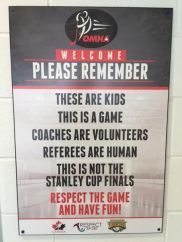
Folks at other games are apparently different because the arena found it necessary to erect the sign below. I hope it helps those unable to park their regrets, fears, and vicarious dreams that manifest as ugly anger. I wonder, though, if those who need the sign ever read it, heed it, or even understand it’s for them.

Why I'm Not Angry Enough

Trump

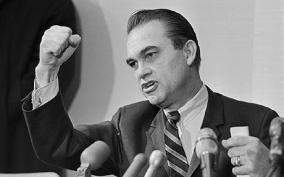
Last week I also watched a Donald Trump speech on YouTube. Trump is fascinating but it’s not the first time we’ve seen his ilk. In 1968, Alabama Governor George Wallace ran for president and attracted much the same people. Perhaps it is more accurate to say that he attracted the same emotion.

In the late 1960s, like today, a great many people were afraid that their world was changing in ways they didn’t like or understand. They were mad. Women and African Americans were demanding equality, the economy was shifting from its long post-war prosperity, and America was losing a war in Vietnam. Now, gays, lesbians, and transgendered people are demanding equality, the industrial revolution is over with nothing to replace avenues for middle-class prosperity and working-class mobility, and America seems to be losing the war on terror.

Why I Love Donald Trump and the Rhinoceros

What can be done? One could delve into nuanced and complex causes and effects and accept that economic and social shifts take time and demand concessions from all sides. Forget that! There is no time for that nonsense when one’s life is happening now, children need their futures to start now, and a living must be made and debts paid right now.

It is much easier to get mad at those deemed responsible for the disconnect between how life is and how it was expected to be. Wallace knew it then and Trump knows it now. Therefore, blame the desegregationists or the immigrants. Blame the other, whether it’s the other race, religion, ethnicity, lifestyle, region, party, and, of course, blame the government. Get mad at those who are causing the changes or not stopping them or refusing to acknowledge that the way things were before was better.

U1583804

George Wallace, February 1968.  (www.eurweb.com)

Trump rides the difference between nostalgia and history. It’s why facts don’t matter and lies are accepted. His followers, like Wallace’s, yearn for a misty-eyed past that never really existed; when rules were certain, dreams assured, and everyone knew their place.

It’s a fretful yearning that fuels anger, fills stadiums, makes signs, and fills lungs with desperate rage. It’s the same yearning that sparks screaming at little hockey loving kids.

Decision

I don’t yell at hockey games. I don’t support Mr. Trump. I just can’t muster the necessary anger. This makes me neither better nor smarter than anyone – far from it. But I choose to be informed rather than bamboozled. I choose to be calm around children, knowing that they’re watching and learning how to behave and how to be an adult.

Emotions are decisions. I choose to go outside, run, be with family, enjoy friends, play music, be childlike but not childish with children, set and celebrate achievable measurable goals, enjoy goofiness, and when I encounter one, to say right out loud, “This is a good moment.” In short, I choose not to be angry but happy.

Happy is not a surrender of personal sovereignty, a rejection of values, or naive. Anger, on the other hand, is all three. Anger’s adrenaline is cheap tequila while happy’s endorphins is a fine wine. No one’s happiness led them to become a bully in the stands or to follow one behind a lectern. I’ll leave those yelling at Mr. Trump’s rallies and in hockey arenas to their rage.

For me, happy is a better decision and the eye of the hurricane is a pretty nice place. I think I’ll stay.

If you enjoyed this column, please consider sending it to others and checking out more of my work at http://www.johnboyko.com.

6 Singers Who Matter Most

When It’s Time To Burn Your House and Go

Sometimes it’s not your fault. Sometimes the business cycle’s spin, the greed or stupidity of folks with big wallets and little hearts, a microscopic bug, or tiny shift in weather patterns can change everything. No matter how hard you work or how well you raise your children, respect your neighbours, love your spouse, or live by your God’s rules and land’s laws, things slip away. Cyril Oxford understands that. Today he is considering burning his house down.

When It's Time to Burn Your House and Go..

(Photo: www.fireengineering.com)

You see, Cyril lives in Little Bay Islands, Newfoundland. He was born there. For his seventy-two years, Cyril forged a life and living as a cod-fishing boat captain. Now, though, with his wife gone and children moved away, he has a decision to make.

Little Bay Islands is a group of five islands just off Newfoundland’s northeast coast. The abundant fish attracted Europeans over 200 years ago. The story goes that in 1825, a summer resident named Budgell shot the last Beothuck, thus ending the indigenous nation that had once thrived. But, of course, like many stories on and about the rock, legends and facts are seldom on speaking terms.

The Little Bay Island community grew with the bounty of the sea and indomitable spirit of people toughened and united by perpetual wind, ruthless winters, and the songs, jokes, and tales that fill dark nights and ease tough times. By the 1920s, 116 men on 14 boats fished and trapped cod, crab, and shrimp, a ship building company created three fine schooners a year, and determined farmers coaxed vegetables from thin soil. The Wesleyan church pews were full every Sunday and children learned at the little school. By the 1940s, nearly 800 people proudly called the place home.

Things changed after the war. Newfoundland joined Canada in 1949. In 1957, its premier, Joey Smallwood, the mercurial little man to whom so much is owed and on whom so much is blamed, undertook an aggressive program of relocation. More than 300 outport communities, accessible only by boat, that had been around for one or two hundred years were deemed financially unfeasible. People were given money to leave. Many fought. Many pocketed the cash. Black and white photographs of big wooden houses lashed to bigger barges and steaming through the waves were either sad signs of defeat or sparkling signals of courageous resilience. Through it all, Little Bay Island survived.

There was a crab processing plant, a cooperage, a shipyard, a fish plant, and eleven stores. Along with the new road came electricity, telephones, and a water system. A shiny, new ferry connected the islands to the mainland. A gym was added to the school. History books and old men’s tales boasted of days when you could drop a bucket over a dory’s side and pull up fish, over and over, stopping only when arms ached. Such abundance, it was believed, could never end.

But foreign trawlers and profligate habits meant that by the late 1980s, there were fewer crab, and then shrimp, and then cod. In a feeble and far too late attempt to save what remained, a moratorium was declared. And then there was none. One at a time the businesses closed. One at a time the young people left, and then families. Boats were sold and houses were shuttered. Today, only two students attend the school. The gym’s hardwood floor gleams in silence. There are no stores. There are no jobs. Only about 70, mostly gray-haired people remain.

When It's Time to Burn Your House and Go

(photo: www.lanephotography.com)

Three years ago a town counsellor approached the Newfoundland and Labrador government. He proposed the assisted suicide of his town. If it were killed, or allowed to finally die, then money could be saved with the end of government services. A deal was made whereby each resident would be offered $270,000 to leave. To ensure that death was truly the community’s will, it was insisted that a secret vote must be held and that 90% must agree.

The impending referendum split families. It divided friends. Summer residents had no vote but exerted pressure to vote no. There were arguments and threats as some wanted the cash and others spoke of tradition, home, and ancestor’s bones.

When the vote was tallied, all but ten had opted to go. It meant only an 89.47%, plurality, just shy of the necessary 90%. The government would not round up. The money stayed in St. John’s and the acidic atmosphere remained in Little Bay Island.

In 2014, acclaimed Newfoundland novelist Michael Crummey published a superb novel entitled Sweetland. It tells the story of a small, remote, and declining island town whose people are offered resettlement packages with the proviso that all must leave. Moses Sweetland says no. He then watches the community torn asunder by those seeking to change his mind and others changing theirs. The novel is exceptionally well written and the characters quirky and expertly drawn. It suggests the thin and wavering line between fact and fiction and Oscar Wilde’s wisdom in observing the imitative nature of art and life. I highly recommend the book.

A provincial election held on November 30 threw out the Tories and created a Liberal majority government. When the dust clears, the new government will need new answers to Little Bay Island’s old questions. For now, like Moses Sweetland, Cyril Oxford sits alone in his house. Outside and around town, the warmth of emotion fights the chill of logic as what’s fair battles what’s possible and proof is once again rendered that money does not really talk; it swears. Cyril told a reporter, “Things just can’t go on like this around here. When I go, my dear, it will be the last of the Oxfords on Little Bay Islands.”

If he goes, if they all go, it will be the last of a lot of things. It will represent the inevitable turning of the wheels of progress and the tragic consequence of bad decisions and lost opportunities. It will be a victory of the head and failure of the heart. It will be the sad end of two hundred years of hard work and dreams. If Mr. Oxford and the others go, the wind will still blow, the waves will still crash, and Little Bay Island ghosts will stand in silent reverence with Beothuck spirits.

If you enjoyed this column, please share it with others on Facebook or your social media of choice and consider checking my other columns at http://www.johnboyko.com


The Value of Values

Values matter. Values inform our character and offer touchstone and compass for our lives. If values are sacrificed for expediency, opportunity, or fear, we become blind wayfarers, adrift beneath a starless sky.

Values are as essential to us as individuals as to our collective selves: the nation. That is why we write them in the documents we cherish. They ring from the American constitution’s amendments, reflecting sacrifices made and victories won, as well as from the defiant, aspirational Declaration of Independence. Similarly, Canada’s constitution and Charter of Rights and Freedoms express values ingrained from lessons learned.

Sometimes, and seldom when seas are calm and skies blue, we are tested. The tests are not of the values themselves but of our fidelity to them.

Canadians were tested in 1914 when a ship called the Komagata Maru arrived in Vancouver’s harbour. Aboard were Indian families seeking to trade the corruption, poverty, and violence of their homeland for Canadian sanctuary. Officials discovered that the ship had passed through Hong Kong and so cited a 1908 law called the Continuous Passage Act which barred entrance to anyone arriving through a third country. It was a ruse. There were no direct routes from India to Canada. Canadians simply did not want Indians and certainly did not want the Komagata Maru’s 352 Sikh migrants. They were forced to steam away.

A generation later, in May 1939, the German ship St. Louis left Hamburg for Cuba. 937 Jewish refugees were fleeing Hitler’s madness. Nearly all had applied for American visas and saw Cuba as their stepping stone to freedom. Everyone knew of the Holocaust. Western newspapers had been reporting on the theft of Jewish dignity and rights and of Kristallnacht, the two horrifying nights the previous November in which synagogues and Jewish businesses were smashed. Everyone knew.

And yet, the Cuban government refused to allow the St. Louis’ passengers to disembark. The ship was forced to leave. It steamed north and when close enough to see Miami’s lights, American warships turned it away. President Roosevelt was told of the people’s plight and of their certain death if forced back to Germany, but he said nothing. A State Department telegram explained that the refugees must “await their turns on the waiting list and qualify for and obtain immigration visas before they may be admissible into the United States.” At that time, the waiting list was several years long.

The St. Louis was forced up the coast until it finally reached Halifax. Its reception was the same. The passengers were not allowed landfall. Canadian prime minister Mackenzie King was travelling in the United States at the time and referred the matter to his Immigration Branch director Frederick Charles Blair. Blair ordered the ship gone. When asked how many Jews would be allowed into Canada he retorted, “None is too many.”

The St. Louis arrived back in Europe and Belgium, Great Britain, France and the Netherlands accepted some of the passengers but not all. With options exhausted, 532 returned to Germany and 254 perished in the Holocaust’s ovens.

The Komagata Maru and St. Louis are, in essence, again at our door. This time it is Syrian refugees fleeing the horrors of a complex and brutal war. As in 1914 and 1939, many Canadians and Americans are arguing that we should bar that door. We should, it is said, ignore the fact that unless we are indigenous people that we are all from somewhere else and, more significantly, that we should ignore our values.

One argument for saying no to the refugees is that Islamic terrorists could slip in with legitimate refugees. However, we should note that recent terrorist attacks in neither Mali nor Paris were conducted by Syrians or refugees. Should we trust our screening systems and our police and security organization or should we surrender our values to the fear that of the thousands of people who could be saved that one might be dangerous? Are not domestic terrorists such as those who have blown up buildings, or crowds such as in Boston, or shot up schools, and theaters not a greater threat?

America’s Homeland Security and Canada’s RCMP and Canadian Security Intelligence Service agree that Syrian refugees present no threat to Canada or the United States. Time Magazine reported Pentagon sources as stating that the Syrian refugees are being carefully screened and that nearly all are, “survivors of torture, victims of sexual violence, targets of political persecution, the medically needy, families with multiple children and a female head of household.”

A second argument is more disturbing. The racism that sent the Komagata Maru and St. Louis away is with us still, it’s just become more cleverly hidden. The embers of racism are kept alive not just by the obscene beliefs and actions the KKK that we seldom see but by the little racist jokes at coffee shops that we too often hear. A number of pundits, politicians, and even some who wish to be president have been fanning those embers into flames. Canadian cities have seen Muslim women harassed and a mosque in Peterborough, Ontario was burned. Donald Trump has called for a registry of Muslim Americans. Jeb Bush said that only Christian Syrians should be admitted.

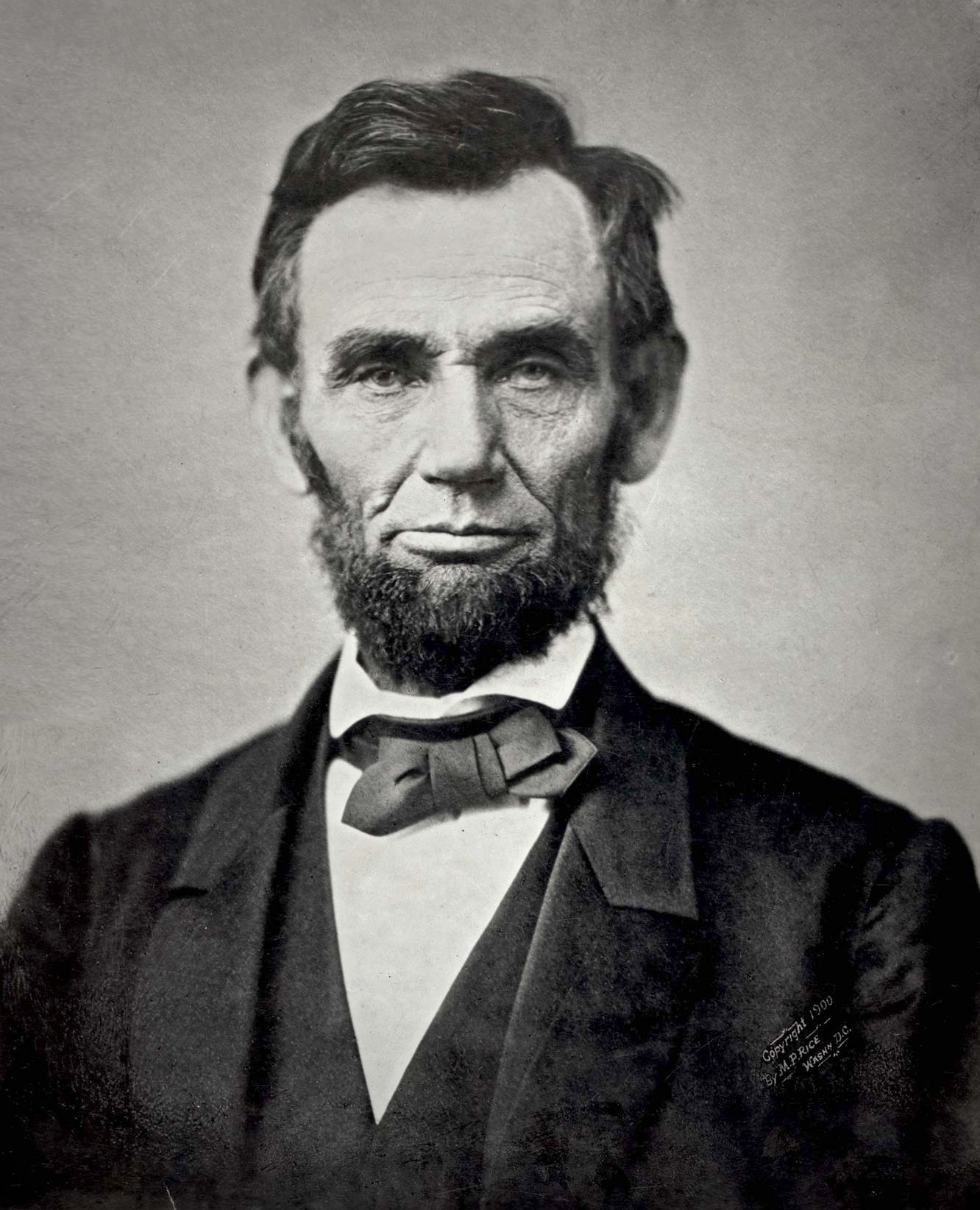
Do these fears, attitudes, actions, and proposals reflect the values inherent in our founding documents? Do they reflect the lessons learned from the Komagata Maru and St. Louis, or the Holocaust, by the treatment of indigenous people, or our Second World War Japanese internment camps? What would Lincoln, Kennedy, Diefenbaker, or Pearson say? Or, if you rather, and if you believe, in the Bible’s Matthew 25:35, Jesus taught that showing love for Him was done by caring for the most needy: “For I was hungry, and you gave Me something to eat; I was thirsty, and you gave Me something to drink; I was a stranger, and you invited Me in.” And you invited me in.

The question of the Syrian refugees, like all questions, whether at home, at work, or on the national stage, circle back to values. We believe in our values or we do not. Talking about them doesn’t count. We should measure ourselves, our leaders, and our nation according to the congruency of words and actions. If we do not act according to our values then we really don’t believe in them. If community doesn’t really matter then let’s stop pretending it does. If we really don’t believe in multiculturalism or tolerance or diversity or the separation of Church and State then let’s say so. Let’s concede that all men are not really created equal after all. Let’s take a chisel to the Statue of Liberty so that it no longer proclaims:

“Give me your tired, your poor,
Your huddled masses yearning to breathe free,
The wretched refuse of your teeming shore.
Send these, the homeless, tempest-tost to me,
I lift my lamp beside the golden door!”

Daily Life in Domiz refugee camp, Kurdistan Region of Iraq

(Photo: http://www.resettlement.eu)

We have a choice. We can listen to our values. Let us insist that the Komagata Maru and St. Louis incidents were aberrations from which we learned. Let us celebrate our values by living them. Let us reject those who sully established values for personal, professional, or political gains no matter how cleverly disguised as for the greater good.

We should welcome Syrian refugees because our values say that we should. And if all that is not enough, there is one more reason that we should save them – because we can.

 Please consider sharing this post with others through Facebook or other social media and checking my archive of Monday columns at http://www.johnboyko.com

The Rich Man’s Riot and Democracy’s Dawn

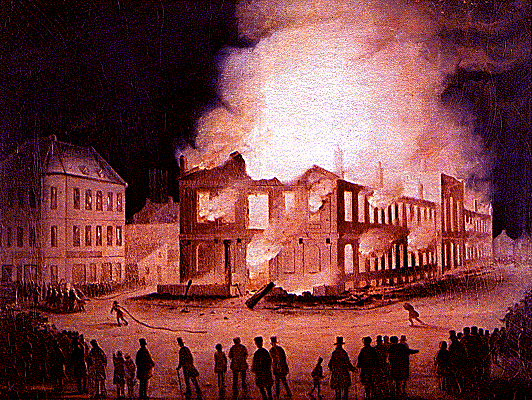
Like each of us, a nation’s character is forged by triumphs recalled and tragedies we choose to forget. On an April evening in 1849, a Montreal mob burned Parliament to the ground. The fire and ensuing riots are among many largely forgotten incidents suggesting that Canadians are not what we like to think we are.

Canada is not the meek and peaceable kingdom of our collective mythology. It’s more complicated than that. We are more complicated than that. If we wish to understand who we are as Canadians, who we truly are, then we must understand and acknowledge the ugly but transformative power of riots whose fires, blood, and mad destruction dot our past and colour our character.

The flint that lit the 1849 flames lay in the muskets and determination of farmers who, twelve years before, marched down Toronto’s Yonge Street and up the road to St. Denis. They understood power. They knew they had none. A small, rich, urban elite – we would call them the one percent – was making all the rules and ruling only for themselves. A British governor held executive authority and he appointed only rich business and clerical leaders to his cabinet then heard only the advice of London and those well-heeled friends. The people and its elected assembly were routinely ignored.

William Lyon Mackenzie, in what is now Ontario, and Louis Joseph Papineau, in what is now Quebec, harnessed the people’s righteous indignation and led armed rebellions. The Toronto fight ended quickly with gunfire where Maple Leaf Gardens would later stand. Papineau’s rebellion was longer and bloodier but it too was crushed. Three hundred and thirty died, 2,000 were arrested, 151 were banished to Australia, and 12 were hung. The leaders fled to the United States.

The foppish Lord Durham was dispatched to find out what happened. He grumbled through five months of high living and then wrote a report revealing that he had learned little. Thinking the rebellions were inspired wholly by religious and ethnic tensions, he recommended joining the two colonies under one administration to overwhelm the pesky French Catholics. However, he also recommended that the new colony’s governor rule according to advice from Canadians rather than London.

The old conservative elite rigged the new game to keep their old power. People like Toronto’s Bishop John Strachan and Montreal brewer John Molson still called the shots. Reform politicians Robert Baldwin and Louis-Hippolyte LaFontaine, however, forged an unlikely alliance. They insisted that members of the executive council – the cabinet – be appointed not from among the rich and clerics but, rather, from among those elected by the people.

After two violent elections that were corrupt even by 19th century standards, and then shifting priorities in Britain, a new Governor arrived. Lord Elgin allowed democratic reforms that farmers and urban merchants were demanding. The 1848 election afforded Reformers a parliamentary majority and Elgin asked Baldwin and LaFontaine to become co-premiers and form a cabinet. The 99% had won. The 1% were out – and they were mad.

Among the new government’s first legislation was the Rebellion Losses Bill. It pledged to compensate all those whose property had been damaged in the 1837 rebellions, including the rebels themselves. The old conservative elite was outraged. Their petition to the governor was dismissed. Although Elgin disagreed with the bill, he said that the people’s government had legally passed it and so he must sign it. At five o’clock on April 25, in the presence of the members of both houses of parliament, he affixed his signature.

As Elgin left the legislature, elegantly dressed business people and Conservative (Tory) MPs pelted his carriage with rocks. An egg smashed his face. With horses at a gallop Elgin escaped the melee. Drunk with indignation, 1,500 angry Tories and their supporters gathered at Champ-de-Mars. Holding torches aloft they marched, shattered windows, and chanted their way to the opulent St. Anne’s Market building that housed parliament.

The legislature was in session but members scattered as rocks smashed through windows. Sandford Fleming, who would later plot the railway route through the Rockies and invent standard time, grabbed a portrait of Queen Victoria and ran it out a back door. Several legislators, including John Sandford Macdonald, who would later be Ontario’s first premier, blockaded the large front entrance. Led by a well-known lawyer, the mob stole a 35-foot ladder and used it to crash their way inside. Legislators were knocked down and kicked. A fat man in an expensive waistcoat jumped atop the speaker’s chair and yelled, “I dissolve parliament!” Furniture was smashed. Gas pipes were broken and then torches thrown. Bankers, lawyers, and clerics cheered the collapse of the roof as the screaming, leaping flames licked the sky. The fire quickly engulfed a neighbouring house, two warehouses, and a hospital. And the cheering went on.

Rich Man's Riot.

(Photo: history.lbpsb.qc.ca)

The next night, men left their fine homes, expensive sherry, and imported cigars to reassemble downtown. There were more speeches about race, religion, class, and the natural order of things and power lost. This time their spitting anger was focused on the homes of political enemies whom they blamed for stealing what was considered rightfully theirs. LaFontaine’s house on rue de l’Aqueduc and Baldwin’s boarding house were among those attacked with torches and rocks.

As the mad violence threatened to fill a third night, the military assembled. General Gore warned of the arming of police constables and that the 71st regiment had rifles and cannon ready. There were scattered incidents of violence but a tense and eerie calm gripped the city.

Everyone knew the riot’s instigators. Everyone knew who had thrown stones and set flames. But Baldwin and LaFontaine restrained their reaction. They did not meet violence with violence. They ensured that some arrests were made but also that all were freed. They carefully enhanced security and for weeks there were flares of politically inspired violence but a bitter peace eventually prevailed. The army retired to base and the police locked up their guns.

Over the next weeks, Parliament was moved to Toronto. A Tory petition to London demanding an overturning of the Rebellion Losses Bill was denied. The payments were made. A Conservative movement demanding Canada’s annexation to the United States was initiated by new voices of the old Tory elite, including some who would later be fathers of confederation. It was allowed a natural death.

Most importantly of all, those still raging at the shift of power from the one to the ninety-nine percent fought not on the street but through committees, editorials, and speeches. The government remained in office with executive power, then and forever afterward, held not by the privileged, handpicked few but determined by the votes of the many.

The 1849 rich man’s riots did not signal Canada’s independence from Britain, but it was a crucial step. They did not give birth to true democracy, but parliament’s flames illuminated its dawn. Perhaps we are well served to recall incidents such as the Montreal riot to better understand ourselves and who we truly are. Further, perhaps we should ponder if the old fights regarding whose voices should be heard and interests served will be, or maybe even should be, re-fought. If so, let us listen for the voices of this generation’s Baldwin and LaFontaine, lest torches be lit again.

If you enjoyed this column please share it with others and considered checking our more from my Monday blog archive at http://www.johnboyko.com

Rocks, Guns, and Unicorns: Today’s Campaigns Are Child’s Play

The longest Canadian federal election since 1872 is finally over. Thank goodness. The attacks on Liberal leader Justin Trudeau began before the writ was dropped with TV ads declaring him not ready and others showing wildly out of context quotes and clips. The New Democratic Party and Liberals launched their own ads and assertions that were equally nauseous in tone and questionable in accuracy.

The long Canadian campaign was nothing, of course, compared to the American four-year presidential marathon that became real fully two years before party nominations. Canadian negative campaigning also pales in comparison. Consider the House Benghazi Committee that was ostensibly created to investigate the deaths of four Americans in Libya in September 2012. Republican House leader Kevin McCarthy recently bragged that the committee’s sole purpose is to destroy Hillary Clinton’s presidential bid.

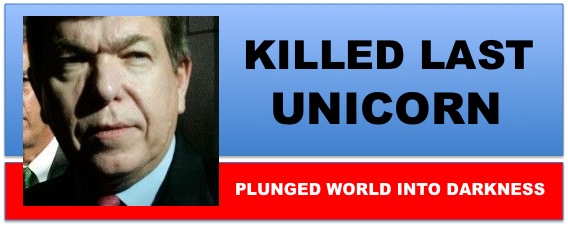
Today's Negative Campaigns Are Child's Play.

(www.faircitynews.com)

Negative ads and practices are used because they work. They have always been with us. In many ways, they are tamer now than before.

Consider Burr and Hamilton. Alexander Hamilton was the primary force behind the Constitution’s ratification and as the country’s first treasury secretary he saved the United States from bankruptcy. Aaron Burr was a senator and then Thomas Jefferson’s vice president. In 1804, Jefferson made it clear that he would drop Burr from the ticket in the upcoming election and so Burr ran for governor of New York. He lost by a wide margin; due mostly to vicious negative attacks launched against his character and lies told about his record. He blamed a number of people including Hamilton.

Burr challenged Hamilton to a duel. In a New Jersey field they paced it off, turned, fired, and Hamilton fell. One of America’s most respected founding fathers died the next day. Burr returned to Washington and, with Jefferson’s blessing, served out his term as Vice President.

Canada’s history is less violent. In 1861, Conservative John A. Macdonald was running for re-election. Former friend and Reform Party candidate Oliver Mowat arranged to run in Toronto and, as was legal at the time, against Macdonald in his Kingston riding. Mowat had a number of scandalous allegations made against Macdonald and printed in newspapers owned by members of his party. (The Reform Party became the Liberals.) Included among those blatantly and unapologetically partisan papers was the Globe. It was owned and edited by Reform party leader George Brown.

Macdonald arranged his first public meeting. Mowat hired a group of young men who spread themselves around the back of the hall. When the meeting began, they instigated fights. They threw rocks at those on the stage. Macdonald jumped into the fray and threw punches along with the rest. Macdonald won the fight and election and later become Canada’s first Prime Minister. Mowat was later elected Ontario’s premier.

In the twentieth century, newspapers and money continued to wield enormous power. In 1950, young Massachusetts congressman John F. Kennedy was running for the Senate. His multi-millionaire father, Joe Kennedy, used various committees to quasi-legally funnel several million dollars to his son’s Quixote effort. Joe saved the Boston Post from bankruptcy with a $500,000 loan and then, two weeks before the election, saw the influential paper flip from supporting the Republicans to endorse his son. Kennedy defeated the far more experienced Henry Cabot Lodge by a narrow 52% to 49% margin.

Democratic presidential candidate Adlai Stevenson used one of the first negative TV ads in 1952. A carnival barker fields questions for a Republican candidate who, because he has two heads, offers two contradictory answers. The ad was clever but the Republican’s Eisenhower won the election.

http://www.livingroomcandidate.org/commercials/1952/platform-double-talk

Things have become increasingly worse. It was believed that forcing candidates to say that they endorsed a particular ad would help. It didn’t. Some thought the backfiring of certain ads, such as the Conservatives making fun of Liberal Prime Minister Jean Chrétien’s face in 1993 would help. It didn’t.

Today we seem to be stuck with campaigns that demean democracy rather than elevate it. Canada’s prime minister, for instance, based much of his 2015 re-election bid on trying to divide and frighten Canadians. In the campaign’s dying days he spoke only of taxes and used a sophomoric game show gag to make his point while saying things about his opponents that were obviously untrue. It was embarrassing.

Meanwhile, the United States has Donald Trump saying demonstrably false and ludicrous things while firing shot gun blasts of negativity and yet polling far above his opponents. America also has the Supreme Court’s Citizen’s United v. FEC ruling that declared money is free speech. It allows folks like the Koch brothers to buy Congressional seats in ways that would make 19th Century Robber Barons blush.

A glance back suggests that parties, candidates, and the wealthy are not about to change. Maybe it’s up to us. Maybe we need to become a little more discerning and ask the next question of candidates who insult us by reducing complex issues to simplistic sound bites and slogans. Maybe we need to reject those who use negative smears in ads, speeches, and debates by using social media to fact check and fight back. Truth may beat trolls. Maybe we need more journalists with the courage of comedians such as John Oliver to take on issues that corporate-owned media or ideological mouthpieces avoid. Maybe we need to respect our citizenship by more intentionally exercising it. We could begin by insisting that candidates and politicians address more than just boutique tax cuts meant to buy us and, rather, tackle substantive issues that challenge and improve us; all of us. We can do it with our tweets and blogs and donations and attention and attendance and, most importantly, we can do it with our votes.

I may be naive. But that’s okay. Hope is never a waste of time. I sincerely believe we can have an uprising without a coup. We can have a revolution without guns. All we have to do to be better is want better. All we have to do is demand better. In this way, history’s lessons will not be that resistance is futile but that better is necessary and change is possible. We’ll see.

If you liked this column, please share it with others on Facebook or your social media of choice. You can see my other columns at http://www.johnboyko.com

Leadership Lessons from the Moon

The Globe and Mail’s July 21, 1969 front page was intoxicating. Bold, green, three inch high print announced MAN ON MOON. It reported 35,000 people breathlessly glued to a big TV screen in Toronto’s Nathan Phillips Square who cheered at 10:56 pm when Neil Armstrong stepped from the lunar module. Mayor Dennison delivered a brief speech calling it, “the greatest day in human history.” He may have been right. What he couldn’t know, and the Globe missed, were the important lessons contained on that front page.

Leadership Lessons from the Moon

(Photo: thedailydigi.com)

The moon adventure was the culmination of an effort begun by President John F. Kennedy on May 25, 1961. He had just returned from meetings with Soviet premier Nikita Khrushchev. While Kennedy negotiated, Khrushchev had hectored. Kennedy became convinced that the Cold War was about to turn hot.

Upon his return he called for a special meeting of Congress and asked for a whopping $1.6 billion increase for military aid for allies and $60 million to restructure his military. He called for a tripling of civil defence spending to help Americans build bomb shelters for a nuclear holocaust that, he warned, was a real possibility. The president also said: “I believe that this nation should commit itself to achieving the goal, before this decade is out, of landing a man on the moon and returning him safely to the earth.” His popularity surged.

It was daring and presumptuous. The Soviets were far ahead of the United States in space exploration. But that day and later Kennedy couched the courageous new effort in soaring rhetoric that appealed to America’s inspiring exceptionality and Cold War fears. When cheers arose from public squares and living rooms only seven years later and everyone instinctively looked up, it was the culmination of Kennedy’s dream for the world and challenge to America.

Kennedy had not micromanaged his NASA team. He set the vision and got out of the way. He did not badger them regarding tactics or berate them over temporary failures. He gave them the money they needed then trusted them to act as the professionals they were. His vision and leadership spurred the team and survived his death.

Leadership Lessons from the Moon.

(Photo: karmadecay.com)

The Globe and Mail’s July 21 front page declaring his vision’s realization did not mention President Kennedy. However, a smaller headline at the bottom noted, “Woman dies in crash, police seek to charge Kennedy.” The story explained that Senator Edward Kennedy, the president’s brother, would be prosecuted for leaving the scene of an accident.

On July 18, with the Apollo astronauts approaching the moon and their rendezvous with infamy, Kennedy had attended a party on Chappaquiddick Island for six women and two men who had worked on his brother Bobby’s doomed 1968 presidential campaign. While driving 28-year-old Mary Jo Kopechne back to her hotel, he took a wrong turn, then missed a slight curve on an unlit road and drove over a bridge and into eight feet of water.

Kennedy managed to escape the submerged car and later spoke of diving “seven or eight times” but failing to free Kopechne. He walked back to the party and was driven home. That night he consulted with advisors and then, eight hours after the accident, called police. A coroner reported that an air pocket probably allowed Kopenchne to survive for three or four hours before drowning. A quicker call for help, he concluded, would have saved her life.

Leadership Lessons from the Moon..

Car being pulled from river. Photo: www. www.latimes.com

In the 1990s, Edward Kennedy would become the “Lion of the Senate,” guardian of the Democratic Party’s progressive wing, and model for bi-partisanship. However, when he ran for his party’s nomination for president against the incumbent Jimmy Carter in 1980, many saw not a lion but liar and not a politician but playboy. Chappaquiddick appeared to reflect a belief that ethics, morality, and the law applied only to others. Voters punished his conceit by withholding support.

It was all there on the Globe and Mail’s front page, 46 years ago: the legacy of intrepid leadership by one brother and the price of hubris by another. They are leadership lessons of the moon. On this anniversary we are left to ponder questions inadvertently posed by the Globe that day regarding the difference between bold audacity and stupid risk, daring vision and manipulative reaction, planning and plotting, and between big decisions that positively affect millions and big decisions disguised as little ones that are always pregnant with unintended consequences. The front page’s historical coincidence urges us to wonder if, in their wisdom, people still reward leaders of selfless vision or selfish arrogance.

President Kennedy’s leadership lessons from the moon offer even more profound lessons for those willing to learn.

If you enjoyed this column, please send it to others on Facebook or your social media of choice.

The River’s Spirit for Those Who Can Hear It

It’s moving. It will be moving all day, all night, and for a billion tomorrows. The Otonabee River is a block from my home and on quiet nights we hear it relentlessly cascading over the dam. We smile at a loon’s mournful echo, nature’s saddest and most magnificent cry. The blue heron has his favourite spot near the Lakefield bridge and sometimes the osprey leaves his giant nest by the power station to perch in the tree above him. Both stare with infinite patience, waiting for the right moment to pounce into the gurgling water.

I walk home from work along the river and run the trail that hugs its banks. In the summer, when the city folks invade, canoes glide by and rented houseboats boom their music as they tack haphazardly along amid the mammoth floating mansions, always, it seems, with flapping American flags. The river splits our little Village in two and yet its bounty makes us whole and, in fact, possible.

The River's Spirit for Those Who Can Hear It..

Deeply respected Canadian novelist Margaret Laurence lived in Lakefield. Her most stunning book, The Diviners, begins by observing that the river runs both ways. It does you know, it really does – all rivers do. They run as natural facts but also as spirits and metaphors through our history, literature, music, and souls.

Science meets religion at the intersection of the Tigris and Euphrates. Between the two powerful rivers is the fertile valley where archaeologists insist human civilization first developed. Those ascribing to a literal translation of the Christian Bible agree, in a sideways sort of fashion, by claiming the junction housed the Garden of Eden.

Homer gave us one of our first stories. He told of the filthy waters of the Xanthus. Polluted by bodies killed in the Trojan War, the river rose up and nearly swallowed the hero Achilles. The river became a metaphor for war, a scourge so horrible that even the unworldly strength and courage of the greatest among us can neither defeat nor tame it.

War has too often soiled rivers with its evil. Battles have been won by fording armies, a bridge’s destruction, or an enemy trapped against a riverbank. During the American Civil War, the South named its armies after states but the North after rivers, hence the Army of Virginia fought the Army of the Potomac. Early battles had two names because the South considered the nearest town and the North the nearest river, so we have Sharpsburg or Antietam and Manassas or Bull Run.

Many civilizations developed along rivers from the Yangtze in China, the Amazon in Brazil, and the Nile in Africa. A predominant historian dubbed Canada the “Empire of the St. Lawrence,” arguing that without the natural highway to the interior, the country could not have developed when or how it did. Consider also the cities built upon rivers: Montreal, Calgary, Ottawa, New York, Washington, St. Louis, London, Paris, Moscow, Berlin, and…well…you can think of many more. Rivers are the veins through which so many cities’ lifeblood flows.

The Tennessee is the Singing River. To hear it you have to believe it. For thousands of years the Whana-le people heard the creator sing through the river’s sparkling waves. In the 1830s, the Whana-le were uprooted and banished to the barren Oklahoma Indian Territory. They starved beside tiny and silent rivers. One winter, an old woman named Te-lah-nay had enough. To save her family and people, she sought the wisdom of the river’s song and so walked from Oklahoma to her ancestral home, now called Alabama, on the banks of the Tennessee. Today, in northwest Alabama stands a long, winding, outrageously magnificent stonewall that her great-great-grandson Tom Hendrix created to commemorate the walk, his people, and the river that still sings for those with the spiritual faith to hear.

On the banks of the Tennessee is a town called Muscle Shoals. In the late 1950s, Rick Hall built the FAME recording studio and it soon produced hit records that reintroduced gospel, R & B, and soul to the pop charts. Percy Sledge, Aretha Franklin, Etta James, and Wilson Pickett recorded there. When Hall’s studio band, the Swampers, formed their own studio, the Muscle Shoals sound was heard in records by the Rolling Stones, Paul Simon, John Prine, Jerry Reed, Lynyrd Skynyrd, Alicia Keys, and on and on.

The Muscle Shoals feel was black but the studio musicians were white so the music was as colour blind as it was glorious. The singing Tennessee must have approved and maybe, just maybe, played a role in inspiring the magical sounds. Maybe it was the same enchantment that flowed from the mighty, muddy Mississippi that gave birth to rock ‘n’ roll in Memphis when, within blocks of the roiling river, Roy Orbison, Johnny Cash, B.B. King, Jerry Lee Lewis, Carl Perkins, and Elvis Presley all did their best work in the same little Union Avenue Sun studio. Maybe the same spirit sang from Liverpool’s Mersey River that created what the world came to know as the Mersey Beat of the Beatles and British invasion.

In his terrific novel that was turned into a fine movie, A River Runs Through It, author Norman Maclean wrote: “Eventually, all things merge into one, and a river runs through it. The river was cut by the world’s great flood and runs over rocks from the basement of time. On some of the rocks are timeless raindrops. Under the rocks are the words, and some of the words are theirs. I am haunted by waters.”

In Siddharta, Hermann Hess observed, “Have you also learned that secret from the river; that there is no such thing as time? That the river is everywhere at the same time, at the source and at the mouth, at the waterfall, at the ferry, at the current, in the ocean and in the mountains, everywhere and that the present only exists for it, not the shadow of the past nor the shadow of the future.”

The River's Spirit For Those Who Can Hear It.

I am both haunted and comforted by those thoughts as I prepare for my run along the banks of my river, the Otonabee River. The heron may be at the bridge and perhaps the osprey, and down near the Sawyer Creek lock the turtles will be sunning themselves. The bald eagle may be about, soaring without a care above it all and swooping with breathtaking majesty to steal his lunch from the river that he, like me, knows will always be here: powerful, relentless, with soul but without judgement. And through it all I am happy that in my Village, and my life, a river runs through it.

If you enjoyed this column please share it with others through Facebook or your social media of choice and consider returning for my regular Monday morning postings. Thank you.

Book Review: Three Weeks in Quebec

Christopher Moore’s latest work, at its core, is about long meetings. In the hands of a lesser writer, it could be as frightfully boring as most meetings themselves. Instead, the book crackles with wit, intrigue and, despite knowing how it all ends, genuine tension. Three Weeks in Quebec City is an entertaining, informative and gracefully written must-read for every Canadian concerned about the state of our country’s democracy. The story begins in the fall of 1864. British North America is comprised of the poor and poorly governed colonies of Newfoundland, Prince Edward Island, New Brunswick, Nova Scotia and Canada that was united in the forced marriage of what are now the southern portions of Quebec and Ontario. The Charlottetown Conference had taken place the month before. Delegates had agreed to form a new federal state. The goal of the 33 men assembled in Quebec was to forge a constitutional framework for their bold and improbable idea.

A harsh critic might note that Three Weeks in Quebec City is merely a rewrite of Moore’s 1867: How The Fathers Made a Deal. Let’s concede that Moore’s hugely successful 1997 book is at least his newest work’s father. Both hang their narratives on mini-biographies and invite us to the dinners and balls where alliances were made. Both take Sir John A. Macdonald down a peg. They note his being reluctantly dragged to the idea of Confederation, drinking too much and even fiddling with the minutes to balloon his actual importance.

The main point of both books is also the same. Moore believes, as did our founders, that the complex Canadian nation is best served by a state with power located not in the provinces but the federal government and not in the Prime Minister’s Office but Parliament.

The founders’ dedication to parliamentary democracy was demonstrated when each of the five delegations arrived with both government and opposition members. Important initiatives and decisions, they believed, are not the sole purview of the executive. Once assembled, they comfortably ignored public opinion. After all, parliamentary democracy empowers representatives to act responsibly on the citizenry’s behalf. They never discussed the creation of a Bill of Rights. A properly constituted and operating parliamentary democracy, they thought, is all the protection from the state a citizen needs.

The constitutional framework they forged reflected their fundamental beliefs. The longest debate, for example, involved the Senate. They wanted appointed senators to ensure the undemocratic body would enjoy nothing but dignified, advisory, ceremonial power. A neutered Senate met their goal of aping Britain’s bicameral parliament while locating real power where it belonged – in the elected House.

They afforded the central government a long list of powers to ensure its dominance. Important among them was the ability to disallow provincial laws and that any new areas of jurisdiction would become federal responsibilities. This division of power was fine with Quebec that needed to protect its French culture and tradition, the Maritimes that sought to avoid being swamped by the central Canadians and Macdonald, who didn’t want provinces in the first place.

The Conference did not, as the book unfortunately hints, occur in a vacuum. Moore merely mentions at various points that the American Civil War was happening at the time. In fact, Canadian and British actions, including a well-financed Canadian-based Confederate spy ring, led to real and perceived threats of American reprisals that focused minds on the urgency of getting Confederation done. Moore mentions the Irish American Fenians but ignores how their threats influenced Maritime support for Confederation. Similarly, Moore affords scant attention to the growing power of Britain’s Little Englander movement. Its advocating an end to colonialism rendered the old idea of Confederation a new and urgent necessity. The impatient Brits and angry Americans were the twin elephants in Quebec City conference rooms where Confederation was born and in the pubs, papers and Parliaments where it was later debated.

Much of what the founders created during their three weeks in Quebec remains in force. However, shortly after Confederation, court cases began handing more power to provinces. Beginning in the 1960s the executive began hoarding more power to itself. Macdonald, Cartier, Tilley, Tupper and the others would not recognize and would rage against today’s Americanized balances of power.

Three Weeks in Quebec invites readers to mourn Canada’s slow drift away from its centralist, parliamentary democratic founding principles. As recent events and trends have led many of us to consider the state of our state, the book’s greatest gift is its glimpse at original intentions. Moore’s insightful and valuable work encourages Canadians to ponder what has been lost and perhaps what needs to be won again.

This review appeared in the Globe and Mail on Saturday June 7, 2015.

Love Letter to a Country

Dear Canada,

It’s been said that you have too little history and too much geography. It’s a nice quip but the first part just speaks of too many bad history teachers convincing generations of kids that your past is short, boring, and without inspiring heroes and snidely villains. None of it is true, of course, but once a myth takes hold, it’s hard to shake.

The geography bit is interesting and a trifle more accurate because Canada, you are indeed massive. While old, thankfully gone history classes were having us memorize dates and the deeds of dead white guys, geography teachers were bragging that only the Soviet Union was bigger than you. Since, no matter what anyone says, size does indeed matter, it was exciting when Mr. Gorbachev let the ailing Soviet giant fall. The sparkle of elation was followed, however, as often happens, by the snuffed candle of disappointment. Even when shorn of its satellites, Russia remained biggest. But that’s alright. Famously modest Canadians would have been embarrassed to chant “We’re Number One”, so perhaps it’s for the best. But you’re still big.

A fun exercise is to have a friend close her eyes and then place her index fingers on an imaginary map, starting at the western tip of Lake Superior. Then, slowly move east and west to St. John’s and Vancouver Island, and then turn north with both fingers, angling in by the Yukon and Labrador to finally meet at the North Pole. If she squints just the right way, she has just drawn homeland as a home plate. That’s kind of nice.

Like in baseball, home is where we start. And during the frantic efforts of love and loss and jobs and kids and moving and moving again and through the trails and trials and travails of constructing our scrapbooks of madness along the base paths of our own design, home remains the constant, home remains the goal. After all, through it all, through the problems we invent for ourselves or have visited upon us, all we really want is to get home, and to be safe. Plus, its kind of nice that Santa Claus is Canadian.

But your geography is deceiving, because while you’re big, you’re relatively empty. Of course there are people everywhere but the vast majority of Canadians live along a two hundred mile swath hugging the American border. It makes sense. It’s warmer there. Crops grow there. But not every country is organized according to those considerations. This is where geography meets history.

The land has been here forever and aboriginal peoples almost as long, but you are not even 150 years old. That fact, by the way, makes you among the world’s oldest countries; but I digress. In the 1860s, the Americans were butchering each other over whether to enslave each other and also threatening, for a host of reasons, to invade and take the British colonies on their northern border. They’d tried before and were ready to give it another go. The bitty, broke Brits with their dysfunctional governments and a mother country more interested in abandoning than embracing them needed to save themselves by creating themselves.

Your birth had many midwives, but primary among them was John A. Macdonald. He linked his ambition to that of the country he envisioned. The conferences that cobbled you together would have failed without him. Much of the constitution is written in his hand. As the first prime minister, he knew two things for sure. First, the Americans still yearned for more land. Second, if the infant country did not grow, the Americans would soon have it surrounded and suffocated. It was grow or be gone and the only way was north and west. And the only way to do that, was with a railway.

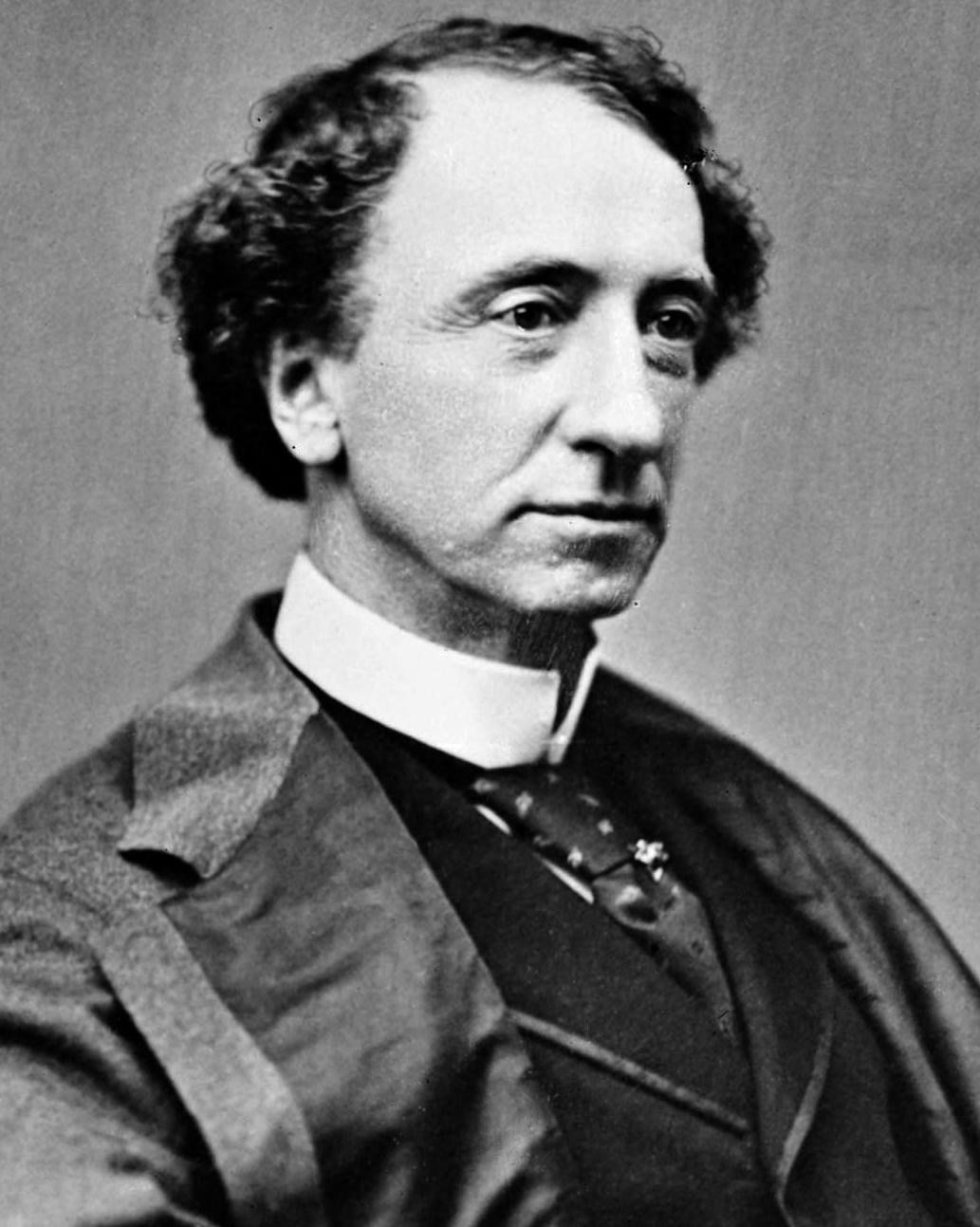
Brady-Handy_John_A_Macdonald_-_cropped

The idea was ludicrous. If completed, and experts lined up to say it could not be done; it would be the longest railway in the world. Not only that, it would be built over the world’s most inhospitable terrain. The rocks and thick forests of the Precambrian shield would be hard, the muskeg that could swallow men and machines whole would be harder, and the snow-peaked Rocky Mountains, well, they were impossible. Macdonald told the people of British Columbia that he would have the steel line to them in ten years and, based on that audacious pledge, they joined Canada rather than the United States which was bigger, richer and just next door. Now, the impossible had to be done.

There is a great deal about Macdonald that deserves admiration. There’s a lot that makes our twenty-first century selves squirm. To build his railway he exploited Chinese workers – the navvies. They were imported to build the line, given the worst and most dangerous jobs and, when finished, Macdonald acted to have them kicked out and the door barred. Native nations were in the way. Macdonald swept the plains by emptying bellies and filling schools in a slow-motioned cultural genocide. He was slapped into the opposition penalty box when caught swapping railway contracts for political donations, but was soon back.

Canadians preferred Macdonald drunk to the sobor alternative and him a little crooked than the less bold a little straighter. Beyond that, the building of the railway and the building of the country had become synonymous. It was both or neither. Without him, it looked like it would never get done.

When the railway was done the country was one. Try the imaginary map again. Start at Lake Superior and draw a straight line west and see if it touches nearly every major prairie city. That’s the line Sir John built. He built it on the backs of the forgotten and dispossessed, but all for the glory of the rest.

Too much Geography? No. you has just enough to hold your bursting potential. Too little History? No again. No one understands where they are unless they know where they’ve been. It is the marriage of geography and history that makes you and makes us. And together, our iron will to continue, to remain whole and strong and on guard for thee remains reflected in the unlikely but ultimately indestructible and now largely metaphorical long steel rail.

Sincerely,

A Friend.

Corporate Coup: Where Have You Gone Teddy Roosevelt?

Does this sound familiar?

  • The gulf was widening between a tiny elite that was growing richer while the vast majority was seeing the evaporation of economic security and social mobility.
  • Political leaders were largely voices of the powerful who backed campaigns and swayed votes with gargantuan political donations.
  • Cities were witnessing growing violence, as people grew helpless and hopeless with police apparently more interested in cracking heads to maintain order than enforcing laws to promote justice.
  • Rapaciously ambitious business interests that government seemed unwilling or unable to regulate for a common good or sustainable future were befouling the air, water, and forests.
  • The media pandered to the lowest common denominator with stories of the latest crime, tragedy, or scandal while ignoring what truly mattered.

It was the United States. It was 1895. Everything seemed to be circling the porcelain facility with gathering speed. But then, something happened.

Theodore Roosevelt was born to a affluent family in 1858. He could have taken his wealth and Columbia law degree and chased women or money or both but instead chose public service. As a New York assemblyman he was aghast at the working and living conditions of the poor to which his privileged upbringing had blinded him. He fought the deep pools of wealth and swirling eddies of political power that sought only to maintain the status quo or enhance its inequity.

A string of family crises took him to the west but he was soon back and with a burning desire to bring right to so much wrong. As New York City’s police commissioner he often took a reporter in tow and toured the city’s mean streets at midnight. He fired cops who were found asleep, corrupt, or unworthy of the badge. He shone light into dark tenements where unfair advantage, unenforced laws, and accepted practice worked against the working poor.

He continued these efforts as New York’s governor. With each demand for reform, he was threatened by those who believed him a traitor to his class and a danger to bosses who ignored laws, rules, ethics, and morality. Roosevelt’s Republican Party, seen as the party of the rich, white, elite, began to move against him.

Many Republicans applauded his being moved out of the way with his appointment as President McKinley’s Assistant Navy Secretary. They were even happier when, after his daring military exploits in Cuba made him nationally famous, he became McKinley’s Vice President. At that time the old joke rang true: One man went to sea and the other to the Vice Presidency and neither was heard from again.

However, McKinley was assassinated in 1901. At age 42, Roosevelt became America’s youngest president. Upon moving in, by the way, it was he who changed the name from the President’s Mansion to the White House.

Where Have You Gone Teddy Roosevelt

Roosevelt moved slowly toward implementing his Progressive agenda and was helped immensely by a growth in investigative journalism. McClure’s Magazine began it all with the publication of a number of fact-filled articles detailing corruption in government, unions, and business. Its greatest writer was Ida Tarbell. She wrote a series that exposed the Standard Oil Company as the worst of the huge trusts that were enriching a very few while exploiting workers, destroying the environment, and making a mockery of democracy and capitalism.

The McClure’s articles, and others that followed their lead, afforded Roosevelt the public support he needed to take on the trusts and their powerful mouthpieces in Congress and the mainstream press. He used the largely toothless Sherman Anti-Trust Act to launch a lawsuit that ended up smashing the trusts and their corporatist Congressional power. Despite what critics had warned, the economy did not collapse, in fact, it thrived as never before as millions were now participants and contributors rather than its minions and victims.

From this effort came what Roosevelt called his Square Deal. It was a program of government action that regulated business to make food and products safer, workplaces more humane, living conditions more human, and, through it all, the American dream more aspirational and obtainable. Hope replaced despair. Again, despite the warnings, the government activity did not end ambition; rather, it allowed it a more fertile field in which to blossom.

The Square Deal attacked the notion that the rich can’t be taxed and poor can’t be helped. This idea was the corollary of the maxim that the rich won’t work because they don’t have enough money and poor won’t work because they have too much. Roosevelt showed both were bosh.

Roosevelt was the first environmentalist president. His National Monuments Act created parks, bird sanctuaries, national forests, and game preserves. Against the baying lobbyists demanding the right to drain profits from untapped resources, Roosevelt protected national treasures such as the Grand Canyon.

Upon leaving the presidency, Roosevelt took pride in the fact that Robber Barons who had been despoiling capitalism and democracy were chastised. A movement for the responsible stewardship of the environment had begun. The role of government as the arbiter for the people rather than apologist for the little elite was established. The practice of socializing risk while privatizing profit was put at bay.

Now, though, it is 1895 again. The slow motion corporate coup d’état that began in the early 1980s in the United States, Canada, and Britain is nearly complete. Those noting the trend and offering solution are, like before, ignored, belittled, or attacked as enemies of the democratic, capitalist ideals they are trying to save from those who sing their praises while violating their principles.

Is that OK? Or is it time to wonder: “Where have you gone Teddy Roosevelt, our nation turns its lonely eyes to you.”

I guess its up to those of us who believe in real democracy and capitalism and not what they have become. It is for us to see through the negative ads, scandal de jour, screeching pundits, twitter trolls, ideologically warped cable news, and bread and circus on offer.

Perhaps those eager for change will not take to the streets but, rather, there will be a quiet but popular rejection of those who are bought and paid for. Maybe a lot of folks – it never takes a majority, just a lot – will call out those who use our money to bribe us and insult us by ignoring us or by hissing “obviously” through smirks. Maybe enough people will make it clear that we actually see through the contradictions between their words and actions and see their irony on parade and the cynicism of their papier-mâché faux patriotism.

Perhaps there is another Roosevelt out there and who know which party he or she is in? Teddy? Are you there?

Postscript: The story is true. Roosevelt was an avid hunter who once refused to shoot a small bear that his guides had leashed to a tree lest he go home without a kill. A toy company heard the tale and produced stuffed bears that it named after the president, hence, Teddy Bears.

If you enjoyed this column, please share it with others and consider checking my other columns and even following my weekly blog.

The Princess and the Tulips

Princess Juliana was in trouble. The country over which she would someday reign was in crisis and her life was in peril. The Nazi blitzkrieg was pushing its way north and west and her beloved Netherlands was certain to fall to Hitler’s mad ambitions.

Just three years before, with the encouragement of her mother, the powerful and extraordinarily wealthy Queen Wilhelmina, she had married a young German aristocrat named Prince Bernard of Lippe-Biesterfeld. They soon fulfilled the most important part of their royal duties by producing heirs. Princess Beatrix was born in 1938 and then, a year later, Princess Irene.

Despite suspicions of all things German, the Dutch people accepted Prince Bernard. He changed the spelling of his name to be less German and became a Dutch citizen. Now they worried about their future, the future of their country, and that of the Royal bloodline if the Princess and her family were captured by the Nazi horde about which astounding stories of unspeakable horror were being told.

The Royal family was evacuated to London. Queen Wilhelmina oversaw the creation of a Dutch government in exile. A month later, in June 1940, Princess Juliana and her family were sent to an even safer sanctuary in Ottawa, Canada. A spacious house was found in the tony neighbourhood of Rockcliffe Park, home to ambassadors and the city’s elite. The house was called Stornoway. It would later become the residence of the leader of Canada’s Official Opposition.

Juliana followed the tragic news of her country having fallen under the Nazi yoke as she worried about her mother enduring the London blitz. The shy princess led a quiet life and remained aloof from Ottawa society events to which she would have been welcomed. Problems arose in late 1942 when she found herself pregnant. If she gave birth in Canada, the child would have dual citizenship and so be robbed of a spot in the Royal line of succession.

The Canadian government came to the rescue. It declared her rooms in Ottawa’s Civic Hospital to be temporarily extra territorial. In other words, for the moment, Juliana was in the Netherlands. Princess Margriet was born on January 19, 1943. The child became the first, and remains the only, royal personage to be born in North America.

Princess and the Tulips Royal Family

Home from the Ottawa Hospital (Photo: cbc.ca)

Canadians were as pleased as the people of the besieged Netherlands. The news led Canadian radio broadcasts and adorned newspaper front pages. The Dutch flag fluttered atop the Parliament Building’s Peace Tower and its bells chimed out the Dutch national anthem and folk tunes.

Meanwhile, the war raged on. Successful D-Day landings by British, American, and Canadian troops initiated a slow and bloody push toward Berlin. Canadians were assigned the left flank and, in September 1944, they began the liberation of the Netherlands. It was tough. The Nazi army had flooded land, mined ports, and dug itself into intractable defensive positions. The Dutch people did what they could to offer fifth column help. So many were so hungry that they had been surviving by eating tulip bulbs. Many were saved when Royal Canadian Airforce planes dropped food for the starving.

Canadian troops fought gallantly. The Battle of the Scheldt was the most excruciating engagement. Between October and November 1944, the Canadian First Army suffered nearly 13,000 casualties. When it succeeded and Nazi forces retreated, Canadian soldiers were hailed as heroes. As they entered Dutch towns, the tired but smiling young men were showered with flowers and gifts.

On May 2, 1945, after five years in Canada, Princess Juliana and her children were able to return first to London and then, along with Queen Wilhelmina, to a freed and free Netherlands. To demonstrate their gratitude for all that Canada had done for the country and her family, the Princess arranged that 100,000 tulip bulbs were sent to Ottawa. The next year, 20,000 more arrived with the request that they be planted on the hospital grounds.

In 1948, as result of her mother’s long illness, Juliana, became Queen. She ensured that more tulip bulbs were sent to Canada every year. Every spring saw Ottawa resplendent in a riot of colour. In 1952, at the suggestion of noted Canadian photographer Malak Karsh, Ottawa began an annual Tulip Festival. The city hosted a celebration that grew to include concerts, buskers, plays, fireworks, and more. Every year the city’s tulip beds grew even more spectacular.

Princess and the Tulips Photo: magpiejewellery.com

In Canada’s centennial year, 1967, Queen Juliana was enthusiastically cheered as she enjoyed the festival. In 2002, Princess Margriet was the special guest commemorating the festival’s 50th anniversary.

This weekend my family will be enjoying the festival. We’ve been before. It is spectacular. The flowers, so fragile and lasting only a short while, are reminders of a friendship within a tragedy and of our common humanity. They remind us of what can be lost to the insanity of war and blind adherence to a hateful ideology. And, standing boldly in the spring breeze, they symbolize the assurance that after every winter follows the spring and the determined hope that we may someday be sufficiently mature to live in peace.

 This is a rare second column in what is usually a weekly blog. If you like it, please share it with others and consider leaving a comment.

The Little Known Canadian Links to Lincoln’s Assassination

One hundred and fifty years ago this week, on April 15, 1865, famous actor John Wilkes Booth placed a small derringer behind Abraham Lincoln’s left ear. Several hours later, the president who had led the United States through the horrific Civil War that had ended only days before, was dead.

With Lincoln went his goal of treating Southerners not as conquered but countrymen. The Senate’s Radical Republicans ran roughshod over a new and weak president to impose their program of punishment and retribution. To a large degree, America’s regional, political, and racial divisions are echoes of the botched reconstruction that Lincoln would not have allowed. We understand the assassination’s consequences for America but few know of its Canadian connections.

Canada and Lincoln Assassination

(Photo: en.wikipedia.org)

A virulent racist and staunch believer in the Southern cause, Booth gathered a group of like-minded people at Mary Surratt’s Washington boarding house and hatched a plan to kidnap Lincoln. They would release him when the United States, seen by Southerners as a foreign country that had invaded theirs, withdrew its forces. To help organize the plot, Booth travelled to Montreal.

Like many other Canadian cities, Montreal was a hotbed of Confederate activity. A year before, Confederate President Jefferson Davis had appointed Jacob Thompson, a former federal cabinet secretary, to save the South by going north. Thompson established offices in Montreal and Toronto. He organized Confederate deserters, escaped prisoners, and sympathetic Canadians who then harassed Lincoln’s Union with daring raids, Great Lakes piracy, and fifth column intrigues.

Booth arrived in Montreal in October 1864. He took a room at the swanky St. Lawrence Hall hotel that served as Thompson’s headquarters. He met with Confederate spies and gun and blockade-runners. At the Bank of Ontario, he exchanged $300 for gold sterling. Booth worked for 10 days making plans and contacts.

Booth’s failed kidnapping plot and the war’s end led to a new idea. On a single night they would kill Lincoln, Vice President Johnson, Secretary of State Seward, and General Grant. The government would be decapitated and the South inspired to rise again. However, at the appointed hour, Grant had left Washington, Johnson’s assassin got drunk, and Seward survived his stab wounds. Only Booth succeeded.

Booth was hunted down and shot by a 26-man detail led by Quebec-born First Lieutenant Edward Doherty. On May 2, a proclamation stated that the government was seeking a number of Booth’s accomplices, including “rebels and traitors against the United States, harboured in Canada.” Among those listed was John Surratt. He had fled to Canada and was being hidden by priests, first in a Village north of Montreal and then in the city. Canadians helped him to escape to Europe.

Booth’s other conspirators were captured and brought to trial. The prosecution sought to prove their guilt along with the complicity of what it called the Confederacy’s “Canadian Cabinet”. The first words spoken in testimony were by a War Department spy, “I visited Canada in the summer of 1864, and except for the time I have going backward and forward, have remained there for almost two years.” Canada was central to the majority of testimony that followed, including that of a spy posing as a Montreal businessman who later arrived to clear his name. The trial’s final words went to Special Judge Advocate Bingham, “Surely no word further need be spoken to show that…[Booth, Surratt] and Davis and his several agents named in Canada, were in this conspiracy.”

Sensational American newspaper coverage spoke of Canada’s complicity in their president’s murder. Public meetings and vicious letters to editors revealed even greater anti-Canadian sentiment than had developed during the war. There were calls for retribution. The rising tide of hatred led Canadians and Maritimers to renew their demand for Confederation that the Civil War had turned from a good idea to a necessity. Canada had to create itself to save itself.

Today’s divided America and united Canada are the twin legacies of Booth’s smoking gun.

For more on this story and of Canada and the American Civil War please check out “Blood and Daring: How Canada Fought the American Civil War and Forged a Nation”. It’s available everywhere including here: http://www.chapters.indigo.ca/en-ca/home/contributor/author/john-boyko/#page=0&pid=978030736146

Canadian Slavery

It’s time for Canadians to grow up. Whether living in a big city or a one-Tim’s town, too many Canadians seem to share a warped vision of our past that allows us to press our noses against the shop window that is the United States and tsk, tsk away with smug condescension. Forget it. Let’s take one of many points that could wipe the smirks from our faces – slavery.

chains

photo from http://www.bccns.com

Slavery is as old as humanity itself. Slaves built the pyramids. The ancient Greeks, who gave birth to our western civilization, owned slaves. The idea of enslaving Africans is credited to a Catholic priest who accompanied Columbus on his second voyage to the New World. The priest was sickened by Columbus’ ongoing slaughter of Haitians who had been enslaved to search for gold. He believed that Africans would be better able to do the job.

The first Africans arrived in the West Indies on Portuguese ships in 1518. They had been ripped from their homes and stripped of their families, religion, names, and humanity. Fifteen million followed. The Portuguese word for black is negro.

European notions of inhumanity soon found their way to what would become Canada. The first slaves were Native people. Explorer Jacques Cartier even kidnapped Iroquois chief Donnaconna and several of his people and toured them through France like a circus act. Most died of European diseases and none saw their homes or families again.

The first African slave to be settled in Canada was a six-year-old from Madagascar. He arrived in 1628 as a cabin boy on a pirate ship captained by the ruthless English rogue David Kirke. Kirke captured Quebec City in a violent raid, and then sold it back to France four years later with the boy part of the bargain. He was purchased by a French clerk and then a Jesuit priest who renamed him Olivier Le Jeune.

Despite the fact that slavery had been abolished in France, Quebec governor Jean Talon pressured King Louis XIV to continue the practice of slavery in Quebec. Slaves were purchased in Africa, the West Indies, and the United States, and were owned by nearly all of the business and political elite as well as the leaders of the colony’s Jesuit, Franciscan, and Dominican Orders.

The Seven Years War – French Indian War if you are American – led to the fall of Quebec to Britain in 1759. The articles of capitulation guaranteed the continuation of slavery in the colony. With the world war finally over and Britain stuck with Quebec – it had unsuccessfully tried to swap it for Guadeloupe but that’s another story – the newly appointed British governor James Murray sent a message to New York asking for more slaves to become fieldworkers and domestic servants.

Slavery was also common in the Maritime colonies. They were used to build Halifax in 1749. The growing city became a centre for the Maritime slave trade, with public auctions turning tidy profits. The only known opposition to slavery came from Halifax’s small Quaker community, but it was ignored.

The American Revolution brought thousands of Loyalists northward. The British government offered them and war veterans land, assistance, and permission to bring their slaves. About 10% the Loyalists fleeing to Nova Scotia were slaves or free Blacks. Slaves also moved with their owners to what would become Quebec, New Brunswick, and Ontario.

The powerful Mohawk leader Thayendanegea (Joseph Brant) had fought for the British. He was rewarded with 30 African slaves. He brought them when settling his people on a huge land grant along Ontario’s Grand River. Slaves helped build the settlement that is now Brantford and then a handsome home near what is now Joseph Brant Hospital in Burlington. Other slaves constructed many of the fine stone buildings that still stand in Belleville, Kingston, Montreal, and elsewhere.

The War of 1812 saw the United States, as it had during the Revolution attempt to take British North America. Towns were burnt and civilians murdered in what became a brutal war. To disrupt American invasion plans, Upper Canadian Attorney General John Beverley Robinson declared that any slave arriving from the United States to Canada would be freed. An all-Black regiment was formed and Black soldiers joined a number of other British regiments. About 50 Black soldiers served at the decisive battle at Queenston Heights. About 2,000 escaped slaves fought their way to Canada during and in the years following the war.

The British government banned slavery in 1833. Nearly all British North American slaves had already been freed. However, racist laws and segregation practices remained. Segregated churches, schools, restaurants and public services were commonplace in Canada until the 1960s. Segregation laws died in Canada at about the same time as in the American South with racist attitudes, of course, more difficult to kill.

Image_Niagara74

Canadians deserve to feel proud of their history that, despite the despicable way in which too many of us learned it teems with fascinating stories and colourful characters. However, in looking at how the United States and other countries are still dealing with race and being shocked when a disturbingly racist event occurs in our backyard, it would serve us well to remember that while we have come a long way, there’s a long road before us. On our journey toward becoming the type of people we like to think we have always been, we would be well served to recall that our hands are not clean.

If you enjoyed this, please share it with others. You might also be interested in my book Last Steps to Freedom: The Evolution of Canadian Racism – find it at Amazon or Chapters or at http://www.johnboyko.com