The Courage that Changed Nations

Courage changes lives. We are surrounded by a million acts of personal courage but nearly all are unseen and unsung. There is the courage of the shy boy raising his hand in the classroom and the timid girl clenching her jaw and walking on to the playground when, for many girls, it is a battlefield. There is the courage of the single Mom somehow managing another morning of scurrying kids to school and herself to work while wondering if there will be more month than money. Courage is not the absence of fear but the presence of determination. Courage is the world’s greatest agent of change.

Courage changes also nations.

In 1990, secret meetings between Canadian Prime Minister Brian Mulroney and provincial and territorial leaders led to the Meech Lake Accord. The short document detailed a series of constitutional changes that shifted significant power from the federal government. It was designed to seduce Quebec into doing what it had refused to do nine years before and sign Canada’s new Constitution with its embedded Charter of Rights and Freedoms. One by one, provincial and territorial governments ratified the Meech Lake deal before its looming June 23 deadline. No one expected what happened next.

The speaker of Manitoba’s legislature asked for unanimous consent to waive a two-day waiting period and immediately begin the ratification debate. Alone among his colleagues, with an eagle feather in hand, Elijah Harper said no. Harper was an Ojibwa-Cree and former Chief of the Red Sucker Lake Community. His bold action in the House that day reflected the anger of many Aboriginal people who were upset that they had been left out of the process that created the Meech Lake Accord and that its constitutional changes ignored their concerns. Their historic concerns and pleas for respect had not been dismissed by those who designed the constitutional accord. Worse. Their concerns and pleas had not even crossed their minds. Harper’s no paralyzed the legislature. It stunned the country.

The legitimate concerns of Aboriginal nations had not been dismissed by those who designed the constitutional accord. Worse. The concerns had not even crossed their minds. Then Harper’s no paralyzed the legislature. It stunned the country.
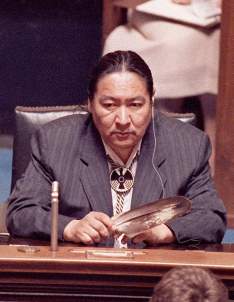
68157639.JPG

(Photo: Rabble.ca)

The next day, the speaker again asked for unanimous consent. Again, Mr. Harper said no. Eight times he said no until the clock ran out. The debate never happened. Newfoundland’s premier then refused to bring his legislature to a vote. Meech Lake was dead.

Prime Minister Mulroney was enraged, thought Harper was stupid, but understood the magnitude of what had just changed. He set to work constructing a new series of constitutional amendments that would become the Charlottetown Accord. This time, though, Mulroney sought a broader consensus. He ensured that Aboriginal people were part of the consultation and decision-making process.

Native nations spoke with many voices and all were heard. The Assembly of First Nations, Inuit Tapirisat of Canada, the Native Council of Canada, and the Métis National Council all participated in consultations and helped shape the final document.

The accord presented to the Canadian people in a 2009 referendum stated that, after a three-year waiting period, Aboriginal peoples would be granted self-government. Treaty rights would be entrenched in the Constitution. This time, however, for reasons that had little to do with Native participation or promises made, it was the Canadian peoples’ turn to say no.  The Charlottetown Accord was tossed on history’s scrap heap atop Meech Lake.

But a change had happened. Harper’s lesson was learned. The Charlottetown consultations had brought Aboriginal issues to the forefront of Canada’s civic conversation. Afterward, a Royal Commission on Aboriginal Peoples allowed a national airing of history’s insults, crimes, and atrocities. It led to a federal law that met Charlottetown’s promise: the recognition of the inherent right of Aboriginal self-government and a constitutional recognition of treaty rights. Parliament issued an apology for the unforgivable horrors of the government and church-run residential schools.

Aboriginal nations were now in the halls of power with more of their concerns recognized and better understood. But where laws and hearts must walk in tandem, change is slow. Many infuriatingly complex problems still face Aboriginal peoples and shape their place within Canada. Problems three hundred years in the making are not being quickly solved. But they are no longer ignored, and, despite occasional setbacks, there is steady, often begrudging, but determined progress.

A year after his brave stand in the Manitoba legislature, Elijah Harper received the prestigious Stanley Knowles Humanitarian Award. It was the same award given by the Canadian parliament to Nelson Mandela for the courage he showed in helping to end South Africa’s apartheid. Harper accepted the award with the same quiet, humility with which he had sat with his eagle feather and said no. Courage, after all, is neither brash nor boastful. Courage acknowledges doubt and fear but refuses to be cowed by them. It is the humility of the shy boy, timid girl, and single Mom who summon quiet courage to change and shape their lives. It is the courage of Mr. Harper who changed the Canadian nation and Aboriginal nations by placing them on the road to where they should always have been.

Redemption’s road is long and rocky but we must all summon the courage to travel it and to do so together. Let the drinking water be cleaned, let the children be educated, let the murdered and missing women be investigated, recognized, and mourned, let the treaties be obeyed, the land respected, and respect ensured. As the courageous Mr. Harper knew, it’s been too long, but it’s not too late.

If you enjoyed this column, please share it with others and consider checking my others at http://www.johnboyko.com
The Syrians, Irish, and Our Tree Fort

Canadians and Americans are at war with themselves. A battle in that war involves President Trump’s attempt to close the border to those from seven troubled countries. Another is revealed through one of Canada’s Conservative Party leadership candidates who once touted a hotline for Canadians to rat on their neighbours and now wants mindreading to shape immigration policy. As soldiers in the war for our soul, we must consider who we are. We must decide whether we wish to swap our values for a false sense of security and lives of fear or, rather, share our bounty with those whose homelands are in crisis. As always, the past contextualizes the present. So, let’s draw lessons from our response to a catastrophe that struck another people in peril.

In the early 1800s, rich English families owned 95% of Irish farms. The absentee landlords had middle-men subdivide them into smaller and smaller plots while charging higher rents. About half of rural Irish families suffered crushing poverty. Potatoes were the staple crop with most folks and farm animals living on little else. At the same time, English factories were stealing work from pre-industrial Irish towns. About 2.4 million of about 8 million Irish were unemployed.

A bad situation turned to crisis when, in 1845, potato plants turned black. Potatoes shrivelled and became inedible. British Prime Minister Sir Robert Peel ordered a commission to investigate but found neither cause nor cure. To address the ironic crisis of farmers without food, Peel ended Corn Law tariffs to lower food prices. It had little effect. Poor Law revisions split Ireland into 130 parts, called unions, and each was assigned a workhouse. Desperate urban poor traded prison-like conditions for housing and food while famine ravaged the countryside.

Starving tenant farmers were evicted from their homes for non-payment of rents. Soldiers marched the families away as landlords had houses knocked down to avoid taxes and keep the desolate from returning. Between 1849 and 1854, 250,000 people were swept from the land. Sixteen middlemen were shot by farmers resisting the mass evictions. London sent more soldiers.

The English gentry and business elite felt Peel was spending too much money and time on Ireland and voted his party from office. The new prime minister, Lord John Russell, cancelled food shipments to Ireland and ended Irish relief. The man in charge of the crisis, Assistant Secretary of the British Treasury Sir Charles Trevelyan, said the Irish needed to self-fund future relief programs and allow the market place to right everything. Linked to the British government’s belief in laissez-fair economics was its faith in providentialism. Trevelyan made the idea clear when he explained the Irish crisis as, “a direct stroke of an all-wise and all-merciful Providence, one which laid bare the deep and inveterate root of social evil.”

While the English blamed victims and debated ideology, hunger’s effects caused dysentery, fevers, and dropsy. Typhus, called Black Fever by those it was killing, turned a sufferers’ skin thin, brittle, and black. The Russell government created soup kitchens but, because they had to be paid for by dwindling Irish taxes, they were too few and most too far from rural areas. An increasingly common sight was entire families who had set out to find food and work – blackened skeletons in rags – laying side-by-side in ditches where they had died.

Landlords began hauling delinquent tenants to the docks. The first waves left for Canada. The hellish journeys lasted 40 – 90 days with cramped passengers suffering pots for communal toilets, thin and often rancid gruel, and all the while robbed of sleep by screaming hungry, babies and the incessant coughing of the sick and dying. Approximately 5,000 families carried loved one’s bodies from the fetid below-decks to ships’ rails where, after a few words of scripture, they were tossed into the roiling Atlantic. The vessels were dubbed Coffin Ships.

The emigration peak came in 1847 when 100,000 starving Irish migrants arrived in Quebec City. At one point in June, 40 Coffin Ships bobbed in a two-mile line waiting to be processed. Makeshift hospitals on Grosse Île helped emaciated people trying to survive their fifteen-day quarantine. But mass graves betrayed the growing tragedy. When Coffin Ships kept coming, some were waved through to Montreal and some further on to Kingston. Churches and charities did what they could to help the sick and settle the rest. Within weeks of arriving in Canada,     11, 543 died.

Desperate Irish families were also arriving in America. Unlike in Canada, where the majority were Protestant, most of those arriving in the United States were Catholic. This fact caused consternation among the predominantly Protestant public and public officials and spurred harsh immigration restrictions. Captains had to somehow guarantee that no passengers would ever become wards of the state. Passenger fares rocketed to three times that of ships heading to Canada and regulations restricted the number of people that could be aboard each ship. But the ships kept coming and the numbers swamped the rules. New York became home to more Irish people than Dublin.

As Irish immigrants moved into more American cities, anti-Irish, anti-Catholic prejudice and discrimination grew. This was nothing new. George Washington had spoken out against anti-Irish, anti-Catholic sentiments as far back as 1776. But in the 1840s, anti-Catholic street riots in New York and Philadelphia had raged for days. A sign appeared on store windows and factory gates: “No Irish Need Apply.”

Anti-Irish xenophobia played a significant role in creating a new political party called the Know-Nothings. Later renamed the American Party, it demanded a closing of borders to all immigrants, a 21-year waiting period for citizenship, and that foreign-born Americans be permanently banned from voting and holding public office. In 1855, the American party won 43 seats in the House of Representatives. American Party member and Massachusetts Governor Henry J. Gardiner attacked Irish and other immigrants as, “aliens born, aliens unnaturalized, and aliens entirely ignorant of our institutions.”

Irish migrants faced similar problems in Canada. The resentment and reaction were seen in Toronto. Between June and October 1847, 38,000 Irish economic refugees overwhelmed the city that had a population at the time of only 30,000. Many Irish families moved quickly through Toronto to join established Irish communities in places like Peterborough County, but that didn’t stem anger regarding the city’s changing demographic. George Brown was the influential owner and editor of the Globe and future Father of Confederation. He spoke for many when he observed, “Irish beggars are to be met everywhere, and they are ignorant and vicious as they are poor…They are lazy, improvident and unthankful; they fill our poorhouses and our prisons.”

Barred from integration, Toronto’s Irish congregated in Cabbagetown and in nearby Corktown, named after the county from which many had come. Many businesses refused to hire Irish people with the powerful anti-Catholic Orange Lodge bolstering anti-Irish feelings. To defend themselves, the Irish created the Hibernian Benevolent Society. Toronto witnessed 29 riots involving Orange Lodge members and Irish migrants. Orange Day parades and St. Patrick’s Day celebrations always sparked violence.

syrians-irish-and-our-tree-fort

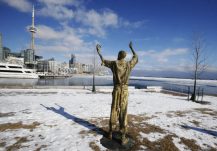
Irish Potato Famine Monument in Toronto (Photo: Toronto Star)

The potato famine reduced Ireland’s population from 8.4 million in 1844 to just 6.6 million six years later. About one million died of starvation and related diseases. Between 1845 and 1860, 360,000 Irish migrants settled in Canada and 1.7 million in the United States. It took a couple of generations, but the prejudice and discrimination directed at them slowly faded as they became contributing members of society and, in America, soldiers in the Civil War. The xenophobic hatred they endured remained but its cruellest wrath was refocused on newer newcomers.

So here we are again. Some want to help and others are eager to direct fear and hatred at the latest group of ‘others’ to arrive in search of better lives. Syrians and others from countries torn by war, political corruption, and economic catastrophes are the new Irish. Muslims are the new Catholics. They are gazing up at us in our fort, constructed years ago, without permission, in an Aboriginal tree. Mr. Trump and some seeking Canada’s Conservative Party leadership are urging us to push down the ladder. It’s up to us.

If you found this column interesting, please share it with others. You could also consider my other columns at http://www.johnboyko.ca or even my books available online at Chapters or Amazon or bookstores (if you can still find one).

The Real Change and Our Real Decision

A fundamental change that is marking our era and determining our future is upon us. We have a decision to make. We need to make it now.

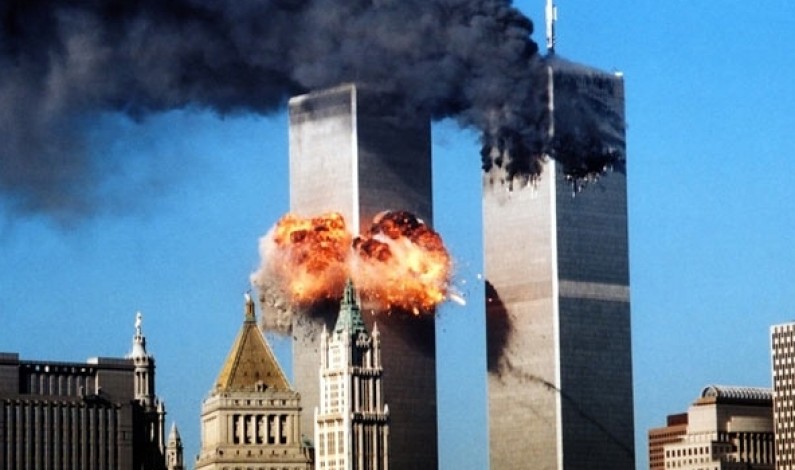
We are living the consequences of two crashes: 9-11 and the Great Recession. The American-led, western world’s response to the 2001 attacks saw troops, including ours, fighting impossible missions and too often in self-defeating ways. The middle east and then the world was destabilized as new terrorist organizations grew and impressionable youth were radicalized. Explosions in Boston, London, Paris, and elsewhere solidified the belief that fear is justified, there’s an enemy among us, and governments are unable to help.

the-real-change

Billions were borrowed and economic fundamentals teetered in the permanent war against a tactic and expensive domestic security measures that protected us from the last but not next attack. The economic and existential strains, along with the greed of a few bankers and financiers whom deregulation had freed to wallow in avarice, contributed to the 2008 economic crash. Governments were seen borrowing more money but giving it to those who had caused the crisis. Governments seemed incapable of or unwilling to provide a playing field sufficiently level to allow the rewarding of obeying the law, paying taxes, and honest, hard work. Corporations valued the loyalty of neither their workers nor customers. The millions of middle and working class people who lost jobs, homes, and dreams, and were still removing shoes in airports and seeing things explode on TV, could be forgiven for seeking someone, anyone, to blame.

In a world where long established rules and assumptions no longer applied, demagogues who would normally have been dismissed found their messages resonating. Those supporting Britain’s leaving the European Union, Brexit, said Britain first. In his inauguration speech, Donald Trump clenched his first and shouted America first – twice. France’s National Front leader and presidential candidate Marine Le Pen watches her popularity rise as she demands white, French, nationals first. They are not the change. They are the symptoms. They are the arbiters.

The two crashes led to the collapse of the western, liberal consensus that has informed progress and policy since the end of the Second World War. After liberalism and communism allied to defeat fascism, it was determined that we are all in this together. Multilateral, cooperative efforts would save us from another Auschwitz, Nanking, and Hiroshima. We would talk things out at the United Nations, have each other’s back through the North Atlantic Treaty Organization, keep each other stable through the International Monetary Fund, and buy each other’s stuff through trade agreements. The thought was that we were no longer in separate boats, racing through choppy waters for unique destinations. Rather, we’re in one big boat, squabbling like children, but together. We were united in our efforts to create more peace, equality, wealth, health, and democracy for all.

But now, forget the European Union, denigrate the UN, defund NGOs, end trade treaties, call NATO archaic, withdraw from or ignore global climate change initiatives, stifle immigration, throw up tariffs, and build that wall. Mr. Trump’s wall is not yet a reality but already an apt metaphor for our times. Russia knows it. China knows it. They’re loving it.

Canada punched above its weight in helping to create and maintain the post-war liberal-western consensus. Through his commitment to Syrian refugees, the Paris global climate change initiative, and more, Prime Minister Trudeau has demonstrated that that he still supports it. Some Conservative party leadership candidates, on the other hand, seem eager to join Trump and Le Pen in smashing it. Canada has a decision to make. We must join one side of history or the other. We must fight to protect what has protected us and others for so long or flip to the other side. Our decision will determine our future for generations.

The Chinese have a curse: “May you live in interesting times.” We do. Buckle up.

  If you enjoyed this column, please send it to others and consider checking out my others at http://www.johnboyko.com
Dear Canada: Winter

Dear Canada,

Summer is easy. What’s not to love about you in summer? Character, however, is only built and revealed in adversity. So anyone wanting to know you, anyone wanting to know us, has to know winter.

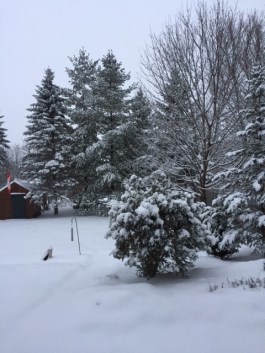
The leaves and temperature fall and everyone knows it’s on its way. Summer stuff gets stored, the outside water is shut off, and the sky goes purple-gray and silent as the last of the cowardly birds betray us and go. And then comes the day, snow’s first day, when we stand at the window and watch with a child’s eyes; as if for the first time. We marvel as snow too white to be real sparkles diamonds in the sun. It blankets leafless trees standing defiantly brittle amid sagging spruce and pines. And the yard becomes art.

Winter slows us down. There is no such thing as rushing out when having to first don boots and coat and hat and scarf and mitts. Thank goodness for Velcro, but a child’s snow suit still demands patience and time and then more of both when disassembled for the pee that is somehow, again, forgotten. And then there is the path to be shoveled to the car that then needs to be unburied, de-iced, and warmed.

Speed limits are for summer. All but main roads are snow-packed for months and the occasional melts turn them to pock-marked Passchendaele. Streets scoff at the oceans of salt and Sierras of sand so we bounce and creep, especially around corners with their paint-smeared telephone poles reminding us to be patient. The days shrivel. We make our way to and from work in inky darkness smudged with ghostly plumes of exhaust. Snowflakes that would be pretty if we were home with a fire and a glass of hearty red are instead headlight-engorged rockets that fire mercilessly into windshields inducing a hideous hypnosis.

Things do not speed up upon arrival. Three feet inside every public doorway stands a momentary community with their fogged-up glasses all exchanging knowing, blurry glances. Then it’s the slow, walking strip-tease, because everywhere inside in winter is warmer than outside in summer. Work places resemble used shoe stores with wet boots on soppy mats. Everyone’s hair is the shape of their hats. We approach door knobs with dread and sometimes actually see sparks. After a while, every place smells the same – wet wool and cough drops. It isn’t exactly bad and it doesn’t really matter because with the cold we’ve all been fighting for weeks it’s hard to smell anything anyway.

Winter can sometimes stop you altogether. What is more glorious than a snow day? We hear it on the radio and we’re suddenly all children. The radio also brings reports from the city’s “Thank God it’s Monday” crowd who slide and smash into one another to get to the vertical ice cube trays where they are apparently indispensable; unaware that no one’s keeping score. The wind howls hurricanes down concrete canyons that are empty of all of but the intrepid as the city-below-the-city bustles in its high-heeled obliviousness. Just a few miles away it’s all quite different.

dear-canada-winter

My yard, last snow day

Township and county plows tend to the main roads but it’s always a long while before they get to most streets, so there’s time for another coffee. Kids who usually fight to stay under covers burst outside with wide smiles and bright eyes and without a screen in sight. Folks are soon in driveways, leaning on shovels and speaking with neighbours who lean on theirs. Why not? Everyone knows the game. We scrape and shovel and throw it high onto piles that seem taller than last year. The plow waits until it senses we’re done and then, only then, it thunders by with three feet of plowcrete. The shoveling army mobilizes again; there’s nothing like a good minus-ten-degree sweat.

Climate change’s thaws and freezes have euchred all but the most dedicated backyard rink masters, but the little bay still goes stiff. Nothing’s ever organized but somehow it always gets scraped and there is skating for all. Windswept days between snowfalls sometimes provide the magic of pick-up hockey with nets a ridiculous distance apart. It seems fittingly patriotic to finish a hundred yard breakaway on a frigid sunny afternoon in the world’s only country with a hockey player on its Bill of Rights.

Gravity games rule. What’s not to love about skiing, tobogganing, and sledding. Kids love the snow-mountains that grow beside the school parking lot. Look up every big or little hill and see somebody in a primary-coloured snowsuit sliding down. Evening walks offer the joy of the crisp boot-fall crunch and the smell of woodstoves that stir a deep and primal yearning that’s lovely in its mystery. The stars seem closer and clearer. Lungs burn, breath freezes, cheeks redden, and there is nothing more romantic than holding hands through down-filled mitts.

Muddy April is marvelous but brings fixing and raking and cleaning. The gifts left by months-worth of wandering dogs present themselves along with the recycle stuff that cycloned from blue boxes Tuesday after Tuesday. Purple crocuses pierce the last bits of crystalline snow. The magical, riotous tulips remind us that the world is not black and white after all. There is always that one last storm with snow as pretty as the first but we damn it this time and steal its power by steadfastly refusing to shovel it; there, that will teach it. We convince ourselves that it will melt soon enough, and sure enough, it does. And then there is green, oh green, glorious green.

Winter defines. Winter slows, and winter stops. Winter reminds us that we are not the boss. It ignites a humble admiration for the power and majestic beauty of the true boss. It invites community. Winter says that work can wait and time with family is the only wealth, recognition, or reward we need; everything else is by the by. Winter reminds us that, like those dark nights with gently falling snow or those bold, defiant tulips, nothing lasts forever – nothing. But it’s all good right now, and right now, that’s good enough.

Sincerely,

A friend.

Song For A Winter’s Night  by Gordon Lightfoot

The lamp is burning low upon my table top

The snow is softly falling

The air is still in the silence of my room

I hear your voice softly calling

If I could only have you near

To breathe a sigh or two

I would be happy just to hold the hands I love

On this winter night with you


The smoke is rising in the shadows overhead

My glass is almost empty

I read again between the lines upon the page

The words of love you sent me

If I could know within my heart

That you were lonely too

I would be happy just to hold the hands I love

On this winter night with you


The fire is dying now, my lamp is growing dim

The shades of night are lifting

The morning light steals across my window pane

Where webs of snow are drifting

If I could only have you near

To breathe a sigh or two

I would be happy just to hold the hands I love

And to be once again with you

To be once again with you

A Nation of Festivals Making Us Better

We are a nation of festivals. There are film festivals, poetry festivals, rib festivals, art festivals, and every conceivable genre of music festivals. They are fascinating in like a conch blowing silently but convincingly through the ether they gather those of similar interests to form a temporary community. Festivals offer revelry in the acknowledgement that our particular passion is shared. My favourite are literary festivals. They intrigue me because they shouldn’t work.

Canadians read. Canadians read more books per capita than nearly anyone. A lot of folks enjoy books on tablets but most are sticking with the physical kind, the kind you can hold, smell, feel the joy of cracking for the first time, hold in bed without hurting your eyes, drop without breaking, and then shelve as a friend to share your home. Ok, I’m biased.

Canadians write. A generalization that is generally true is that all novels ask the question, “Who am I?” and all non-fiction asks “Who are we?” That Canada is blessed with so many talented writers asking both questions and so many readers reading all that stuff it is little wonder that we always seem to be in a state of existential angst and renewal. That’s a good thing. A reactive society is one of division and anger but a reflective society enjoys more consideration and compassion. Is this Trump versus Trudeau? Maybe that we read so much leads to our fighting so little.

The thing is, though, and the source of my fascination with writing festivals is that both writing and reading are solitary pursuits. Margaret Atwood once observed that you know you are a writer when you are typing away in your office in July about a winter scene and look up and out the window and wonder where the snow went. As an author, I know that feeling. Writing my history books often transports me back to the era that I am investigating and I quite honestly sometimes have trouble getting all the way back. I’m alone in my research. I’m alone in my writing.

But then, whatever I have written is released to the world. It is like I watch a young bird leave the nest. I wish it well. I always know some will like it. I always know some will attack it. I always hope the world will not just ignore it. It is up to the readers. Readers, of course, then buy what writers have spent so many hours silent and alone creating and devote more hours silent and alone to absorbing. Watch someone reading. They are not really there. They’ve been transported. Books are conduits of ideas from one solitary person to another.

The notion of two solitary experiences coming together for a community group hug is the source of my fascination with writing festivals. Writers blinkingly emerge from their writing dens with their pallid skin and reeking of coffee and wine and are suddenly before large groups and asked to talk about what they wrote, how they wrote it, and why they wrote it. For many, it’s like asking a fish to describe water. Readers emerge from their solitary reading spots to quiz the authors and each other about books and ideas. The isolation ends.

A Nation of Festivals

(Photo: Lakefield Literary Festival)

Festivals, like book clubs, lay out ideas to be examined as a community exercise. They remind us that books are like paintings and songs and any other art. Their meaning is only partially controlled by the artist. The rest is up to the experience and mood of the beholder. At festivals, the readers and writers both learn more about the books and ideas in question and about themselves. I am always intrigued when asked questions about my book that I never considered.

I have attended many but my favourite is the Lakefield Literary Festival. I am biased, of course, because I live in the Village of Lakefield. It is the Ontario community in what city people call “cottage country” consisting of only 2,400 people. Lakefield was once home to sisters Catherine Parr Trail and Susanna Moodie who were among Canada’s first writers and much later to Margaret Laurence who was among Canada’s best.

The Lakefield Literary Festival began in 1995 as a one-off banquet to celebrate Margaret Laurence but it became an annual event. It is now among Canada’s premier literary festivals, this year to take place over the weekend of July 15. It draws writers and readers from across the country to enjoy the campus of Lakefield College School and ideas and books and each other.

I will be at the Lakefield Literary Festival in a couple of weeks both speaking and teaching a writing class. I’ll be at Saskatoon’s Word on the Street Festival in September. I know I will enjoy both. I know I will enjoy meeting people who share a passion for writing, reading, books, and ideas. All those writers and readers at these and all the other literary festivals will emerge from their isolation. They’ll contribute to our national conversation by reflecting upon who we are as people and as a broader community. Perhaps all that isolated writing and reading and then all those festival conversations will play a role in making Canada a better place for us all.

If you enjoyed this column, please send it along to others. I hope to meet you in Lakefield in July or Saskatoon in September.

Santa, Trudeau, and the Acceptable Lie

We lie to our children. The biggest lie, of course, is that we adults know what we’re doing. Right up there with our major league whoppers is Santa Claus.

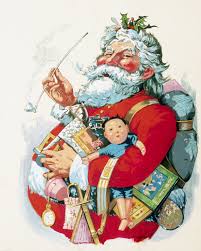
We know that Santa began as a 3rd century Turkish monk named St. Nicholas who gave his inherited wealth to the poor. The Dutch perpetuated the legend but called him Sinter Klaas. We also know that in 1823 American Professor of Oriental and Greek Literature Clement Clark Moore wrote a poem for his daughters that invented the notion of a fat man, chimneys, sleighs, and reindeer. Only much later was it entitled “T’was the Night Before Christmas.” In 1881, Harper’s Weekly political cartoonist Thomas Nast gave pictures to the poem and Santa got his red suit. We also know that in 1931, the Coca Cola Company hired illustrator Haddon Sundblom who, stealing from Moore and Nast, initiated a decades-long ad campaign based on Santa as a jolly, wholesome, kid-loving, and Coke-drinking Christmas mainstay. Cue the malls and parades.

Santa, Trudeau and the Acceptable Lie..

The Nast Santa

We know all that. But we lie anyway. And maybe that’s OK. Santa is the flimsy link between the magic of Christmas and parenthood’s delicate dance. He is among the gifts we offer our children to balance our warnings about holding hands crossing the street, not talking to strangers, secret code words, and practicing fire drills at home and lock downs at school. We scare the hell out of them to keep them safe so maybe it’s alright if we temper fear with fun through a few years of Santa, the Tooth Fairy, Easter Bunny, and our invincibility.

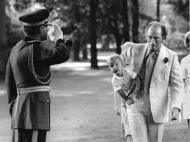
Canada’s Prime Minister Justin Trudeau is now enrapturing the country and many others around the world with his sunny disposition and deft ability to humanize the office that seems designed to suck the humanity from any who enter. Good on him. Canadians have known him from his birth – on Christmas day by the way – because his father was Prime Minister from the late ‘60s to early ‘80s. Canadians were reintroduced to Justin on September 28, 2000, when he delivered a touching eulogy at his father’s funeral. Consider a story he told:

“I was about six years old when I went on my first official trip. I was going with my father and my grandpa Sinclair up to the North Pole. It was a very glamorous destination. But the best thing about it is that I was going to be spending lots of time with my dad because in Ottawa he just worked so hard. One day, we were in Alert, Canada’s northernmost point, a scientific military installation that seemed to consist entirely of low shed-like buildings and warehouses.

Let’s be honest. I was six. There were no brothers around to play with and I was getting a little bored because dad still somehow had a lot of work to do. I remember a frozen, windswept Arctic afternoon when I was bundled up into a Jeep and hustled out on a special top-secret mission. I figured I was finally going to be let in on the reason of this high-security Arctic base. I was exactly right.

We drove slowly through and past the buildings, all of them very grey and windy. We rounded a corner and came upon a red one. We stopped. I got out of the Jeep and started to crunch across towards the front door. I was told, no, to the window.

So I clamboured over the snow bank, was boosted up to the window, rubbed my sleeve against the frosty glass to see inside and as my eyes adjusted to the gloom, I saw a figure, hunched over one of many worktables that seemed very cluttered. He was wearing a red suit with furry white trim.

And that’s when I understood just how powerful and wonderful my father was.”

Santa, Trudeau and the Acceptable Lie

Justin and his Dad (Ottawa Citizen Photo)

Let our leader be our guide. While we can, let’s enjoy the lie. This Friday my granddaughter will open presents that came all the way from the North Pole. Her eyes will sparkle. And that’s just fine.

If you enjoyed this column, please share it with others and check more of my Monday blogs at http://www.johnboyko.com but, please, not on Christmas Day. Instead, let’s darken our screens to devote undivided time with those we love.

Shut Up Boomers: Every ‘60s Decade Booms

Even Baby Boomers are weary of TV specials celebrating ’60s singers and bands, most of which, let’s face it, look and sound excruciatingly sexist and corny. And my first reaction to hearing that The Beatles One has been re-reissued was to question whether after owning vinyl, eight-track, cassette, CD, and then downloading, that Paul McCartney really wants me to buy Hey Jude yet again. Poor Sir Paul must need the money.

Shut Up Boomers- The 60's Always Matter.

Sir Paul (http://www.dailymail.co.uk)

The greater point is that the ‘60s matter and, sorry Paul and boomers everywhere, not just the 1960s. No matter the millennium, the ’60s decade always offers remarkable up, down, sideways, and significant change. For some reason, the ‘60s is when old assumptions and rules are thrown asunder and Canada rockets ahead in a new direction.

1660s

France’s Sun King, Louis XIV, declared Canada a French province. Later in the decade, French explorers Radisson and Groseilliers followed Native guides all the way to Lake Superior and Hudson’s Bay. Because of a spat with officious French officials, they claimed it all for England. Their adventures led to the creation of the Hudson’s Bay Company, the world’s first multi-national corporation. The chess pieces were thus set for a bloody two hundred year French-English grudge match; a struggle that many Quebecois insist is still on.

1760s

In 1760, in the shadow of the Conquest, where a small British army defeated an even smaller French one outside Quebec City, Montreal fell. With the broader world war finally over, in 1763 French negotiators traded cold and troublesome Quebec for the warm and prosperous island of Guadeloupe. Canada became a British colony with a French people. Native nations who had allied themselves with one side or the other were promised that their land would remain theirs. It was a lie. Shortly afterwards, gifts were made of smallpox-infested blankets in a brutal act of biological warfare.

1860s

The United States was butchering itself in a Civil War that would see over 600,000 dead and 40,000 Canadians serve. Partly as a result of all that death, and fear of what would happen when the killing ended, Canada was born. John A. Macdonald and others from the broke and dysfunctional Canadian province loaded a ship with great food and better booze and crashed a Charlottetown conference to urge Maritime delegates to think bigger. Nova Scotia and New Brunswick signed on. Canada was more dream than fact but the dreamers emerged from their ’60s decade with a vision as grand as the land.

1960s

The decade saw the dream reimagined. A new Bill of Rights said citizenship was based not on blood but law. Native people were afforded the right to vote as a tentative step toward righting centuries of wrong. The establishment of official bilingualism expressed a desire to descend the Tower of Babel. A distinctive new flag and Montreal’s Expo ’67 World’s Fair unleashed a patriotic tsunami. In 1967, Canada’s 100th birthday, the Toronto Maple Leafs did what they have not managed since and won the Stanley Cup. Canadians decided that everyone’s health was everyone’s concern and created a national system whereby we each pay a little to help those who need a lot – it’s a family thing.

New programs sought to end the sorry fact that generations of children could graduate without ever having read a Canadian book, seen a Canadian movie, or heard a Canadian song – and oh the songs. We could duck into seedy bars and pretentious coffee houses to hear kids like Joni Mitchell, Neil Young, Randy Bachman, Ian and Sylvia Tyson, Robbie Robertson, Gordon Lightfoot, and more and more. Canadian kids could hear a top ten song on the radio all week and then dance to that very band in their high school gym on Friday night. The songs, along with the words of Margaret Atwood, Irving Layton, Margret Laurence, and more invited us to more deeply consider eternal bonds.

Shut Up Boomers- The ‘60s Always Matter

Joni Mitchell (www.biography.com)

The 1960s west reverberated a hundred-year-old echo. It was in 1869 that Metis leader Louis Riel demanded respect and a recognition that the people of the west owned the west. Prime Minister Macdonald agreed to nearly all Riel’s demands and a new province was born. Sir John then set out to sweep Native nations from the plains and we still feel the pain and shame of that attempted cultural genocide.

By the end of the 1960s, thousands of Canadians were, as Gordon Lightfoot would sing, Alberta bound. Oil was gold and the rush was on. Cornerbrook accents filled Edmonton bars and cheques were mailed home to Halifax and St. John’s from wildcatting rigs and Wild West barracks. Politicians scrapped, fat cats plundered, and Canadians did as always – the best they could.

In the end, it doesn’t really matter if we were in buckskins or bell bottoms, starched collars or tie dye shirts. It was another turbulent ‘60s – the decade that always seems to matter. Maybe before the next ‘60s arrives we’ll be like Canadian Alex Trebic and have all the answers or at least be like Montreal’s Leonard Cohen and know the right questions. By the next ‘60s we may have learned how to live more peacefully with each other and gently on the land.

 If you enjoyed this column, please share it with others and consider checking my other columns as http://www.johnboyko.com

When It’s Time To Burn Your House and Go

Sometimes it’s not your fault. Sometimes the business cycle’s spin, the greed or stupidity of folks with big wallets and little hearts, a microscopic bug, or tiny shift in weather patterns can change everything. No matter how hard you work or how well you raise your children, respect your neighbours, love your spouse, or live by your God’s rules and land’s laws, things slip away. Cyril Oxford understands that. Today he is considering burning his house down.

When It's Time to Burn Your House and Go..

(Photo: www.fireengineering.com)

You see, Cyril lives in Little Bay Islands, Newfoundland. He was born there. For his seventy-two years, Cyril forged a life and living as a cod-fishing boat captain. Now, though, with his wife gone and children moved away, he has a decision to make.

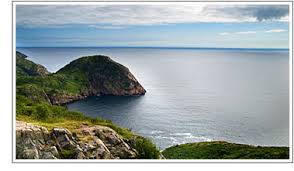
Little Bay Islands is a group of five islands just off Newfoundland’s northeast coast. The abundant fish attracted Europeans over 200 years ago. The story goes that in 1825, a summer resident named Budgell shot the last Beothuck, thus ending the indigenous nation that had once thrived. But, of course, like many stories on and about the rock, legends and facts are seldom on speaking terms.

The Little Bay Island community grew with the bounty of the sea and indomitable spirit of people toughened and united by perpetual wind, ruthless winters, and the songs, jokes, and tales that fill dark nights and ease tough times. By the 1920s, 116 men on 14 boats fished and trapped cod, crab, and shrimp, a ship building company created three fine schooners a year, and determined farmers coaxed vegetables from thin soil. The Wesleyan church pews were full every Sunday and children learned at the little school. By the 1940s, nearly 800 people proudly called the place home.

Things changed after the war. Newfoundland joined Canada in 1949. In 1957, its premier, Joey Smallwood, the mercurial little man to whom so much is owed and on whom so much is blamed, undertook an aggressive program of relocation. More than 300 outport communities, accessible only by boat, that had been around for one or two hundred years were deemed financially unfeasible. People were given money to leave. Many fought. Many pocketed the cash. Black and white photographs of big wooden houses lashed to bigger barges and steaming through the waves were either sad signs of defeat or sparkling signals of courageous resilience. Through it all, Little Bay Island survived.

There was a crab processing plant, a cooperage, a shipyard, a fish plant, and eleven stores. Along with the new road came electricity, telephones, and a water system. A shiny, new ferry connected the islands to the mainland. A gym was added to the school. History books and old men’s tales boasted of days when you could drop a bucket over a dory’s side and pull up fish, over and over, stopping only when arms ached. Such abundance, it was believed, could never end.

But foreign trawlers and profligate habits meant that by the late 1980s, there were fewer crab, and then shrimp, and then cod. In a feeble and far too late attempt to save what remained, a moratorium was declared. And then there was none. One at a time the businesses closed. One at a time the young people left, and then families. Boats were sold and houses were shuttered. Today, only two students attend the school. The gym’s hardwood floor gleams in silence. There are no stores. There are no jobs. Only about 70, mostly gray-haired people remain.

When It's Time to Burn Your House and Go

(photo: www.lanephotography.com)

Three years ago a town counsellor approached the Newfoundland and Labrador government. He proposed the assisted suicide of his town. If it were killed, or allowed to finally die, then money could be saved with the end of government services. A deal was made whereby each resident would be offered $270,000 to leave. To ensure that death was truly the community’s will, it was insisted that a secret vote must be held and that 90% must agree.

The impending referendum split families. It divided friends. Summer residents had no vote but exerted pressure to vote no. There were arguments and threats as some wanted the cash and others spoke of tradition, home, and ancestor’s bones.

When the vote was tallied, all but ten had opted to go. It meant only an 89.47%, plurality, just shy of the necessary 90%. The government would not round up. The money stayed in St. John’s and the acidic atmosphere remained in Little Bay Island.

In 2014, acclaimed Newfoundland novelist Michael Crummey published a superb novel entitled Sweetland. It tells the story of a small, remote, and declining island town whose people are offered resettlement packages with the proviso that all must leave. Moses Sweetland says no. He then watches the community torn asunder by those seeking to change his mind and others changing theirs. The novel is exceptionally well written and the characters quirky and expertly drawn. It suggests the thin and wavering line between fact and fiction and Oscar Wilde’s wisdom in observing the imitative nature of art and life. I highly recommend the book.

A provincial election held on November 30 threw out the Tories and created a Liberal majority government. When the dust clears, the new government will need new answers to Little Bay Island’s old questions. For now, like Moses Sweetland, Cyril Oxford sits alone in his house. Outside and around town, the warmth of emotion fights the chill of logic as what’s fair battles what’s possible and proof is once again rendered that money does not really talk; it swears. Cyril told a reporter, “Things just can’t go on like this around here. When I go, my dear, it will be the last of the Oxfords on Little Bay Islands.”

If he goes, if they all go, it will be the last of a lot of things. It will represent the inevitable turning of the wheels of progress and the tragic consequence of bad decisions and lost opportunities. It will be a victory of the head and failure of the heart. It will be the sad end of two hundred years of hard work and dreams. If Mr. Oxford and the others go, the wind will still blow, the waves will still crash, and Little Bay Island ghosts will stand in silent reverence with Beothuck spirits.

If you enjoyed this column, please share it with others on Facebook or your social media of choice and consider checking my other columns at http://www.johnboyko.com


Ten Rules for a Campaign Worthy of Canadians

In TV’s political drama West Wing, C. J. once bemoaned a trivial incident being reported as news and said, “Everybody’s stupid in an election year.” Charlie replied, “No, everybody gets treated stupid in an election year.” With the first debate in Canada’s long electoral slog heading toward the October vote now over and the campaign gathering steam, sadly, it appears that C. J. was correct. But there remains time to change. Canadians can enjoy the campaign they deserve if party leaders obeyed the following rules:

10 Rules for a Campaign Worthy of Canadians

(Photo: kelownalakecountry.liberal.ca)

  1. Don’t call us voters or taxpayers. We are citizens. Citizenship is a profound concept that informs our collective identity, individual rights, and responsibilities to others. Don’t cheapen citizenship’s nobility by confusing it with voting and paying taxes. They are merely two of its duties.
  1. Don’t tell us we’re choosing a prime minister. We’re not Americans picking a president or Human Resource directors involved in a hiring. Rather, we’re architects designing a House. The 338-member House we create will decide which party enjoys its confidence and that party’s leader will become ours.
  1. Don’t deride coalitions. Canada fought the First World War with Borden’s coalition government. In 2010, Britain’s Conservative and Liberal Democrat party leaders negotiated a coalition that successfully and responsibly governed Britain for five years. Coalitions are a legitimate option in any parliamentary democracy.
  1. Don’t offer false choices. The most obvious example is the old chestnut of picking either a thriving economy or sustainable development. Respected scientists and economists have argued for years that we can have both or neither.
  1. Don’t employ terms without definitions. Promising tax changes for the rich and middle class without defining either invites cynicism. Promises to help families are similarly shallow when the concept of family is so broad.
  1. Don’t try to scare us. We know that foreign policy discussions must involve Canada’s support for aid, international justice, environmental stewardship, and fair trade. We know we must sometimes go to war. Please don’t pretend that foreign policy is about nothing more than tempering liberty to battle terrorism that, after all, is not an enemy but a tactic.
  1. Don’t bribe us with our money. Monthly cheques for this program or that are just dribbles of our cash that you held for awhile. Come tax time, you’ll get part of it back again anyway. We are not children and our money is not your candy.
  1. Don’t devalue social media. If you shade the truth or outright lie, change your message in various regions, or contradict a previously stated principle, we’ll know instantly. We’ll know before you can react or spin. Your TV ads won’t save you because fewer of us watch them than follow Twitter and Facebook.
  1. Don’t underestimate us. Kim Campbell once said that campaigns are not a time to discuss complicated issues. The unusual length of this campaign offers a unique opportunity to prove her wrong. Trust our intelligence and attention spans by engaging us with complex ideas and grand visions. We just may surprise you.
  1. Don’t forget character. Impress us by your ability to rise above empty slogans, staged events, sophomoric behaviour, and bully tactics. Speak not at us but with us. Speak with journalists who inform us. We all suffer slips of the tongue so if you commit a verbal gaffe, apologize and move on. Relax. A leader’s most important attribute is not a bursting war chest, lists of promises, strict adherence to a script, or even, forgive me, nice hair. Leadership is about character. In fact, that’s all it’s about. Show it. We’ll recognize it. We’ll reward it.

West Wing’s Leo McGarry once said, “We’re going to raise the level of public debate in this country and let that be our legacy.” We respect all those working to earn a seat in our House. Just imagine if party leaders, in turn, respected us by obeying the ten rules and adopting McGarry’s goal as their guide. We could then engage in a campaign worthy of Canadians.

If you liked this, please send it to others through Facebook or your social media of choice. This column appeared as an op. ed. in the Montreal Gazette, Ottawa Citizen, and Maclean’s online.

Love Letter to a Country

Dear Canada,

It’s been said that you have too little history and too much geography. It’s a nice quip but the first part just speaks of too many bad history teachers convincing generations of kids that your past is short, boring, and without inspiring heroes and snidely villains. None of it is true, of course, but once a myth takes hold, it’s hard to shake.

The geography bit is interesting and a trifle more accurate because Canada, you are indeed massive. While old, thankfully gone history classes were having us memorize dates and the deeds of dead white guys, geography teachers were bragging that only the Soviet Union was bigger than you. Since, no matter what anyone says, size does indeed matter, it was exciting when Mr. Gorbachev let the ailing Soviet giant fall. The sparkle of elation was followed, however, as often happens, by the snuffed candle of disappointment. Even when shorn of its satellites, Russia remained biggest. But that’s alright. Famously modest Canadians would have been embarrassed to chant “We’re Number One”, so perhaps it’s for the best. But you’re still big.

A fun exercise is to have a friend close her eyes and then place her index fingers on an imaginary map, starting at the western tip of Lake Superior. Then, slowly move east and west to St. John’s and Vancouver Island, and then turn north with both fingers, angling in by the Yukon and Labrador to finally meet at the North Pole. If she squints just the right way, she has just drawn homeland as a home plate. That’s kind of nice.

Like in baseball, home is where we start. And during the frantic efforts of love and loss and jobs and kids and moving and moving again and through the trails and trials and travails of constructing our scrapbooks of madness along the base paths of our own design, home remains the constant, home remains the goal. After all, through it all, through the problems we invent for ourselves or have visited upon us, all we really want is to get home, and to be safe. Plus, its kind of nice that Santa Claus is Canadian.

But your geography is deceiving, because while you’re big, you’re relatively empty. Of course there are people everywhere but the vast majority of Canadians live along a two hundred mile swath hugging the American border. It makes sense. It’s warmer there. Crops grow there. But not every country is organized according to those considerations. This is where geography meets history.

The land has been here forever and aboriginal peoples almost as long, but you are not even 150 years old. That fact, by the way, makes you among the world’s oldest countries; but I digress. In the 1860s, the Americans were butchering each other over whether to enslave each other and also threatening, for a host of reasons, to invade and take the British colonies on their northern border. They’d tried before and were ready to give it another go. The bitty, broke Brits with their dysfunctional governments and a mother country more interested in abandoning than embracing them needed to save themselves by creating themselves.

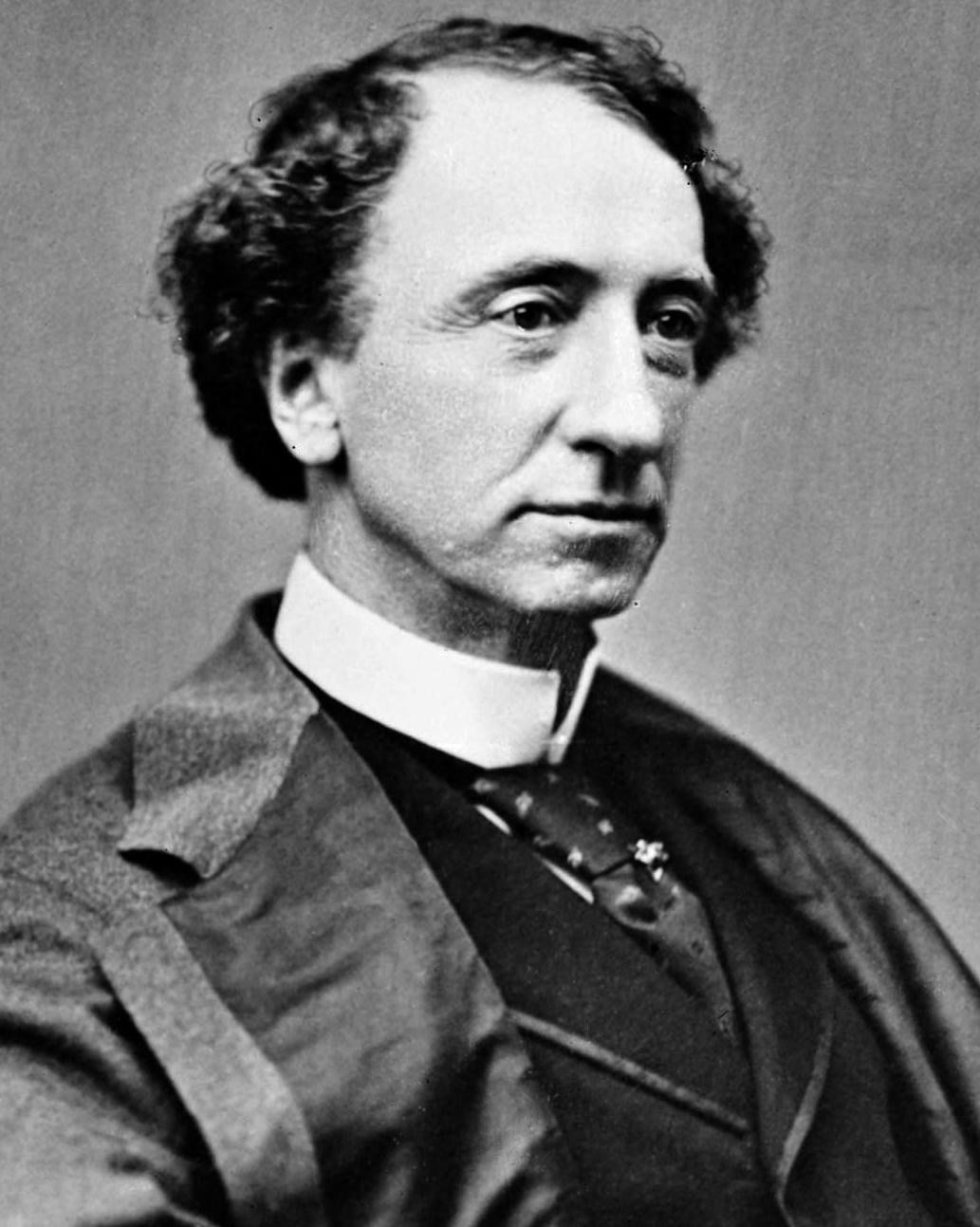
Your birth had many midwives, but primary among them was John A. Macdonald. He linked his ambition to that of the country he envisioned. The conferences that cobbled you together would have failed without him. Much of the constitution is written in his hand. As the first prime minister, he knew two things for sure. First, the Americans still yearned for more land. Second, if the infant country did not grow, the Americans would soon have it surrounded and suffocated. It was grow or be gone and the only way was north and west. And the only way to do that, was with a railway.

Brady-Handy_John_A_Macdonald_-_cropped

The idea was ludicrous. If completed, and experts lined up to say it could not be done; it would be the longest railway in the world. Not only that, it would be built over the world’s most inhospitable terrain. The rocks and thick forests of the Precambrian shield would be hard, the muskeg that could swallow men and machines whole would be harder, and the snow-peaked Rocky Mountains, well, they were impossible. Macdonald told the people of British Columbia that he would have the steel line to them in ten years and, based on that audacious pledge, they joined Canada rather than the United States which was bigger, richer and just next door. Now, the impossible had to be done.

There is a great deal about Macdonald that deserves admiration. There’s a lot that makes our twenty-first century selves squirm. To build his railway he exploited Chinese workers – the navvies. They were imported to build the line, given the worst and most dangerous jobs and, when finished, Macdonald acted to have them kicked out and the door barred. Native nations were in the way. Macdonald swept the plains by emptying bellies and filling schools in a slow-motioned cultural genocide. He was slapped into the opposition penalty box when caught swapping railway contracts for political donations, but was soon back.

Canadians preferred Macdonald drunk to the sobor alternative and him a little crooked than the less bold a little straighter. Beyond that, the building of the railway and the building of the country had become synonymous. It was both or neither. Without him, it looked like it would never get done.

When the railway was done the country was one. Try the imaginary map again. Start at Lake Superior and draw a straight line west and see if it touches nearly every major prairie city. That’s the line Sir John built. He built it on the backs of the forgotten and dispossessed, but all for the glory of the rest.

Too much Geography? No. you has just enough to hold your bursting potential. Too little History? No again. No one understands where they are unless they know where they’ve been. It is the marriage of geography and history that makes you and makes us. And together, our iron will to continue, to remain whole and strong and on guard for thee remains reflected in the unlikely but ultimately indestructible and now largely metaphorical long steel rail.

Sincerely,

A Friend.

Of Flags and Fury

February brings us one thing that Prime Minister Harper wants us to know and another he wishes we’d ignore. He hopes we pay attention to Bill C-51, his new and still pending Anti-Terrorist bill. He hopes we forget that today our flag turned 50 years old. The two offer a tremendous opportunity.

Unlike with the War of 1812 or the First World War, Mr. Harper has given little money or attention to the flag’s birthday. He’s right, let’s snub the flag. The notion is not as blasphemous as it sounds. Consider that every school day, millions of American children stand and recite, “I pledge allegiance to the flag of the United States of America and to the Republic for which is stands.” In other words, it is not the flag that deserves allegiance, but what it represents. So maybe Mr. Harper is right that commemorating the flag would trivialize our national identity by indulging in a patriotic celebration of its mere symbol.

Flag_of_Canada.svg

Patriotism, after all, is ankle-deep and transitory. It’s civic-nationalism that delineates who we are. Patriotism can dance merrily along without concern for introspection but civic-nationalism demands it. Unlike the bread and circuses of patriotism or jingoist chest-thumping or empty-headed chauvinist aggression, civic nationalism rests upon a quiet, self-assured confidence among citizens in what is unique, valued, and valuable. It is inspirational and aspirational in defining what deserves to be protected and enhanced.

Our flag is just patriotism on a pole. The day before Lester Pearson assumed office in 1963, a bomb shattered a Montreal afternoon. The horrible blast and those that followed fueled the ethnic-nationalist debate regarding the creation of an independent state for the Québécois nation. Pearson’s new flag offered tribalists and the rest of us the patriotic balm that the British flag would be removed from ours. To the parts of the prairies and north where maple trees do not grow, of course, the big red maple leaf offered yet another reminder of central Canada’s myopic vision and arrogance.

So let’s forget the flag’s patriotism and use the opportunity presented by its birthday and C-51’s potential birth to question not what’s up the pole but in our hearts. For too long we have been called taxpayers. For too long we’ve been treated only as consumers. We’ll soon just be considered voters. Let’s demonstrate that we are citizens by engaging in a national conversation. Let us post blogs, send tweets and emails, and my goodness, maybe even speak with one another. I suggest these questions to begin:

Do we respect parliament and so believe that new legislation should be introduced in the House and not at some place akin to a campaign stop? Do we believe the rule of law insists that our police and spies always obey the law? Do we believe that adequate staff, budget, and mandate must exist along with a process that reports to parliament before anyone can speak of proper oversight of our spies and police? Do we believe the rule of law implies that citizens can only be arrested when they break a law and not for what others think they’re maybe thinking? Do we believe the best way to fight those who do not share our democratic values is to suicide the democratic values we treasure? Do we believe misinformation is criminal propaganda if a citizen creates it but not if disguised as an MP mailing or TV ad? When the House debates begin, will we recall the difference between insult and argument? Do we believe a party that says it opposes the law should vote for it? Do we understand that economic prosperity and environmental sustainability are not either-or propositions but that security and liberty are?

So let’s take our government’s advice and ditch celebrations of a patriotic symbol. Let’s instead engage in something deeper – active citizenship. If we use C-51 to consider whom we are and whom we wish to be, we may just end up proving ourselves worthy of our allegiance to the flag through deepening our understanding of the Dominion for which it stands.

If you enjoyed this, please send it to others using your social media of choice, consider commenting, or joining my blog where I post about history, politics, music, or musings once a week.

The Land of Water – Dear Canada

Dear Canada,

You are a land of water. It’s right there in your motto: A Mari Usque Ad Mare (From Sea to Sea). It’s from the Bible: “He shall have dominion also from sea to sea, and from the river unto the ends of the earth”. In your case, of course, it should read from sea to sea to sea, because your rivers rush to die in not two oceans but three.

The Arctic Ocean is furthest from most Canadians and for decades it never crossed their minds. It was just as well. Its beauty is more than southerners can fathom. At the sight of a 360-degree horizon beneath a sky bigger than wonder itself, folks used to living in concrete, seeing the world through a windshield or screen, or whose vista ends at the backyard fence, would risk having their heads explode.

sunset arctic

Then came oil; black gold, Alaskan tea. The problem was not how to get the gunky goo out of the rock but how to ship it south through water with the irksome habit of turning to ice. The problem changed when the climate changed. The big melt came quicker than anyone expected, especially those who claimed there was no such thing as climate change but now rushed to exploit its effects. Your northern ocean was suddenly everyone’s friend. Men in silk ties beneath brand new parkas lined up with candy, flowers, and dewy-eyed concern for sovereignty.

The Pacific is Canada’s gateway to Asia. Back when Vancouver was nothing but a fort and a dream, people plied the vast blue water east from the East and helped shape your west. They came for the gold that created the province and then the railway jobs that built the nation. Then, sadly, came the disgrace of discriminatory laws and race riots and the shame of wartime internments. Sometimes apologies are not enough.

Pacific Ocean coastline, Morseby Island, British Columbia, Canada

The Pacific invites jealousy. The North Pacific Current flows through the Hawaiian Islands and turns to kiss the coast before sluicing on to California. It is the ocean, therefore, that offers TV pictures of Victoria daffodils to those suffering another 20 below Edmonton morning. But then, later, when folks at Portage and Main are swatting mosquitoes the size of Buicks, they try not to be smug when the radio reports rain in Vancouver. It’s said that British Columbians don’t age; they rust.

The Atlantic invited adventurous Europeans. They came for the fish, oil, and wood. Pines too straight and tall to be real became masts on British ships that built an empire. The oil was not drilled but was whale blubber boiled and barrelled. It was poured into lamps on sitting-room tables and poles along cobblestone streets. Canadian whales lit up Europe.

Then there were the fish. Cartier wrote of his men dangling buckets into the sea and seconds later withdrawing them to marvel at their flapping bounty. The fish brought rugged people to rough and tumble outports and little towns hugging the rocky coast. Men braved morning’s chill to beat dawn to their boats and then vanish into haunting mists. Everything from canning factories to shipyards depended on the fish and the fish never let them down. There was enough for everyone and forever. To believe something deeply enough and long enough is to erase the thin line between opinion and truth. Meanwhile, even Lunenburg’s mighty Bluenose, immortalized on the dime, when not beating all comers with its lightening speed and daring crew, was a fishing boat.

Like the men working Cape Breton coal mines, those on the tiny boats that disappeared each day into the ocean’s enormity traded risk for livelihood. Their fathers and grandfathers understood as well as them that at any moment, and without reason, the earth or ocean could shrug and swallow them whole. There are too many stones over empty graves.

Fisherman’s wives were as hearty and brave. They raised the kids who seemed to keep coming, and the kept the house, and watched laundry on the line flap hard and horizontal. They sang their party pieces with gusto around kitchen tables where hot fiddles and cold beer linked all in tears, fears, and dreams of better days.

And there was the woman, like so many before, who when the boat was late, put the kids to bed, pulled on a thin cardigan, and walked to the hill atop the town. Pulling the sweater tight around her waist she gazed out into the icy, purple world, out to the point where the sky melts to sea. Walking along the green, moss-covered silver stone she hummed the tune they sang together and loved so well. She was there the next night too, and the next, and the next after that. And then, finally, came a night when the sweater stayed on the hook.

hill top atlantic images

Yes, Canada, you are a land of water. Like all of nature’s magic, your oceans are powerful beyond measure. What we see is a fraction of what they are and more than our meager minds can comprehend. They teem with life and can snatch it away without comment, remorse, or judgement. Like you, the oceans were there long before we arrived and their waves will pound your shores long after we’re gone. And that reality, when allowed to rise to our consciousness for a startling moment, like a great blue off the bow, is a humbling reminder of our responsibility to you and each other.

Sincerely,

A Friend.

 This is the third of a series Dear Canada: Love Letters to a Nation, inspired by the songs of Gordon Lightfoot. If you enjoyed this, please share it with others and consider checking out the first two at johnboyko.com

Bitter Green   by Gordon Lightfoot

Upon the Bitter Green she walked the hills above the town, echoed to her footsteps as soft as eiderdown
Waiting for her master to kiss away her tears, waiting through the years

Bitter Green they called her walking in the sun loving everyone that she met. Bitter Green they called her waiting in the sun, waiting for someone to take her home

Some say he was a sailor who died away at sea, some say he was a prisoner who never was set free
Lost upon the ocean he died there in the mist, dreaming of a kiss

But now the Bitter Green is gone the hills have turned to rust, there comes a weary stranger whose tears fall in the dust
Kneeling by the churchyard in the autumn mist, dreaming of a kiss

Heroes Flawed and Fake

Dear Canada,

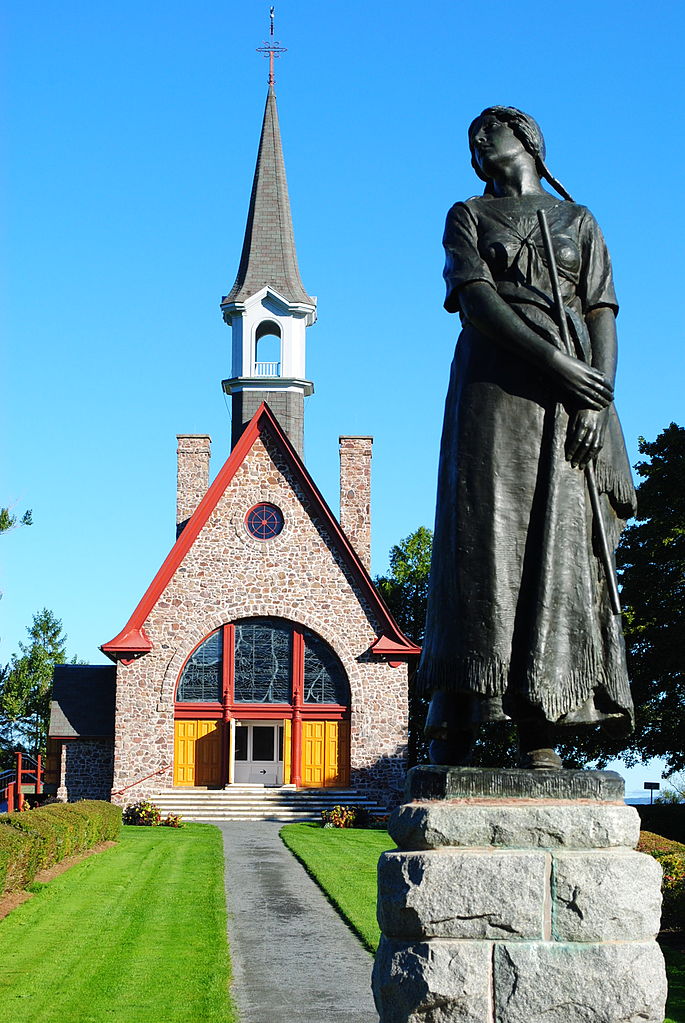
She stands alone in her Grand Prė garden. With a look of sad longing, Evangeline gazes over her shoulder toward heaven. She has her back to the church, the Church that turned its back on her. The tragic news arrived on her wedding day and tore her from her one true love. Her people were victims of a war that saw you become British, and her people uprooted because they were French. Their homes and villages were burned.

The deported Acadians fluttered as maple keys, some lighting as far away as Louisiana. It’s why New Orleans has Cajun music and a French Quarter. Evangeline devoted the rest of her life to searching for her beloved Gabriel, finding him years later, and only in time to have him die in her arms. Today, hundreds of years later, there stands Evangeline in her national park – a UNESCO World Heritage site, no less – a vision in bronze. She is a symbol of loss and for all that’s unfair. She expresses the power of love amid the hatred of war.

Evangeline_Grand_Pre

Meanwhile, over in Prince Edward Island, a long line is snaking its way from a rambling white farmhouse with stunning green gables. It’s Anne’s house. We know Anne Shirley through books, movies, and TV. She’s loved around the world and, since being placed on their school curriculum in the 1950s, a Japanese icon. Anne is what many of us first learn about us. She is honest, loyal, feisty, fun-loving and adventurous, with unbreakable bonds to the land and people she loves.

The tourists tour with reverence. Grownups steal a moment to peer at the rolling Cavendish countryside out Anne’s bedroom window. It’s the view that inspired her thoughts, and that the ten-year old then understood with the certainty of a ten-year old’s truth. They treasure the moment. They are warmed by embers of memory sunk deep in their hearts but now flickering from down where a child’s dreams are kept safe from adulthood’s flimsy facade. Then, as is always the case with such things, everyone exits through the gift shop. Japanese parents buy Chinese trinkets to celebrate a Canadian girl. Smiling children emerge beneath straw skimmer hats with long red pigtails, just like Anne’s.

Anne of Green Gables1

Anne and Evangeline share a secret. They never existed. Evangeline was the protagonist in a Longfellow poem, written nearly a century after the Acadian diaspora. The lines are lyrical but many of its facts are wrong. Anne Shirley sprang from the imagination of Canadian novelist Lucy Maud Montgomery. Visiting Anne’s actual green-gabled house is akin to visiting Batman’s actual cave.

But these facts rob neither Evangeline nor Anne of their importance. That is the nature, gift, and mystery of heroes and icons.

Consider the very real Emily Murphy. She was enraged that women were regularly and nonchalantly denied justice within the bastion of our male-dominated society. From her home in Edmonton, she organized a movement that pressured the Alberta government to enact a law allowing women to inherit their husband’s estates. Then, upset that women were unfairly treated in the courts, she exerted pressure until earning an appointment as Canada’s first female police magistrate; the first, in fact, in the whole British Empire.

When told by an uppity male lawyer that her gender disqualified her from the bench, she and four friends, later dubbed the Famous Five, fought back. They fought rusty old beliefs disguised as facts, politicians with their eyes on polls and feet in clay, and, finally, they fought the courts all the way over the pond to Westminster. Their efforts led to women being declared Persons; no longer just the property of Dads then husbands, but Persons with rights equal to men. Women could now be judges and senators and, well, anything they wanted to be. It was a spectacular achievement. Murphy had demonstrated intelligence, determination, and a burning sense of what should be.

murphystatue

However, under the guise of Janey Canuck, Murphy also wrote magazine articles and a novel espousing beliefs that we now recognize as racist. She was clearly on both the right and wrong side of rights. Does the racist rant erase the feminist achievement and so should Murphy’s statue be taken from parliament hill?

The heroes we venerate are players in a grand story we tell to ourselves about ourselves. Their triumphs and characters represent the best of us for the rest of us and the complexity within all of us. They challenge us to look beyond ourselves to become our best possible selves. Flawed or even fake, they inspire us to improve ourselves, our families, communities and, ultimately, to be worthy of you.

Sincerely,

A Friend.

Don Quixote   by © Gordon Lightfoot

Through the woodland, through the valley
Comes a horseman wild and free
Tilting at the windmills passing
Who can the brave young horseman be
He is wild but he is mellow
He is strong but he is weak
He is cruel but he is gentle
He is wise but he is meek
Reaching for his saddlebag
He takes a battered book into his hand
Standing like a prophet bold
He shouts across the ocean to the shore
Till he can shout no more

I have come o’er moor and mountain
Like the hawk upon the wing
I was once a shining knight
Who was the guardian of a king
I have searched the whole world over
Looking for a place to sleep
I have seen the strong survive
And I have seen the lean grown weak

See the children of the earth
Who wake to find the table bare
See the gentry in the country
Riding off to take the air

Reaching for his saddlebag
He takes a rusty sword into his hand
Then striking up a knightly pose
He shouts across the ocean to the shore
Till he can shout no more

See the jailor with his key
Who locks away all trace of sin
See the judge upon the bench
Who tries the case as best he can
See the wise and wicked ones
Who feed upon life’s sacred fire
See the soldier with his gun
Who must be dead to be admired

See the man who tips the needle
See the man who buys and sells
See the man who puts the collar
On the ones who dare not tell
See the drunkard in the tavern
Stemming gold to make ends meet
See the youth in ghetto black
Condemned to life upon the street

Reaching for his saddlebag
He takes a tarnished cross into his hand
Then standing like a preacher now
He shouts across the ocean to the shore
Then in a blaze of tangled hooves
He gallops off across the dusty plain
In vain to search again
Where no one will hear
Through the woodland, through the valley
Comes a horseman wild and free
Tilting at the windmills passing
Who can the brave young horseman be
He is wild but he is mellow
He is strong but he is weak
He is cruel but he is gentle
He is wise but he is meek

 This is the second of a series of Letter to Canada, inspired by the songs of Gordon Lightfoot. If you like it, please share it on your social media of choice and see the first one, and more of my weekly columns, at johnboyko.c