Lessons from the Snowman & 7-Year-Old

If warp speed is real, then we hit it. A thousand freezing needles stung our cheeks as tears swamped our eyes. The screams grew louder until we realized it was us. When finally crunching to a sudden stop on the sand-strewn rubber mat we sat frozen in place for a second or so until I groaned, rolled, and pulled myself to my knees. I wiped my face and stretched to realign tingling vertebrae. She, on the other hand, bounded up, leapt before me, and with wide-eyed, adrenaline fuelled, fist-clenched, unbridled joy squealed, “Let’s go again!”

“Sure,” I said. What else could I say? Quebec City’s toboggan slide, on the boardwalk – the Dufferin Terrace – adjacent to the majestic Château Frontenac, has been thrilling riders for over 100 years. Speeds have been reportedly clocked at over 70 miles an hour. I believe it.

She flopped atop the 10-foot solid-as-a-rock wooden toboggan with the thin red padding and we began the long haul back to the top. At the wooden ascending ramp, she moved in front and we trudged up and up and up. With the toboggan’s red rope around my waist, I measured each footfall on the cross pieces that resembled hockey sticks and presented no guarantee of a Wile E. Coyote slip and tumble back to the bottom, taking all those behind with me.

The summit offered a 10-by-10 wooden platform and spectacular view. The gigantic sky was cloudless and brilliantly blue and yet the St. Lawrence so far below morphed the sight to black and white. Only the Lévis ferry, gleaming white in the bright sun, broke the grey, pulsating river choked with chunks of gliding ice floes all disappearing at the horizon’s vanishing point.

The blissful moment ended with a French instruction grunted and tickets taken. We assembled ourselves on the long toboggan in the narrow centre lane. A thin metal bar blocked the bow while I adjusted my legs to flank hers, propped my boots upfront, and settled my arms over her shoulders to hold her in place. There would be no flopping about with possible injury on rough barriers that demarked the lanes, nearly touched us, and would soon be whirring by. A word in French, a dropped bar, and we were off. Warp speed.

20160206_121402 (1)

Canadian winters are not for the meek. Quebec City winters are especially harsh with mountains of snow and biting winds that whistle relentlessly up the river valley. Rather than deny winter, however, long ago the good folks of the fine city decided to welcome its challenge and revel in its glory. Observed every few years since 1894 but annually since 1955, the Quebec Winter Carnival is a three-week marvel.

A multi-room ice castle is built across the street from the magnificent, gothic National Assembly building. Nearby, the Plains of Abraham, where in 1759 the British defeated the French in a battle that still shapes Canada, hosts a festival of activities. What is best of all is that except for one crazy ride and a Ferris wheel, nothing is passive. There is no sitting down or strapping in and no watching others or screens. Instead, there is human foosball that had us playing, kicking, and cheering, dog sledding that had me leaning into turns behind the scurrying, yelping team, and hills where we dragged inner tubes and sleds back to the top to slide down again.

Forget other cities with subterranean sidewalks and malls and the hatless, silly-shod fashionable but freezing. Quebec City lives life outside with big boots, bigger coats, and even bigger toques. Forget delicate lunches in elegant settings. There are crepes, poutine, tourtiere, and stew, and then a line of maple syrup poured on a snow wall to be twirled around a tongue depressor for the sweetest and most Canadian of snacks. This is a place for practical people, enjoying unpretentious fare, and active, participatory fun. In Quebec City, low temperatures spark high spirits.

Our travelling companion was our energetic, witty, and always in the moment granddaughter who enabled us to see it all through the eyes and at the pace of a seven-year-old. Beyond the gift of her company and warm certainty of memories being forged and bonds being strengthened, she reminded us of the beauty of wonder. Her grade two French immersion allowed her to befriend a little girl in the hotel pool in a meeting of gentle sincerity. Absent were the false dichotomies of region, language, and religion, and in their place the essence of innocence.

The casual but intrepid way in which she tested her blood sugar level several times a day and accepted the insulin needle in restaurants, the hotel, and other places around town including a big police vehicle that an officer kindly offered, reminded us of her quiet courage. Type One diabetes is part of who she is. It does not and will never define her.

And then there is Bonhomme. The 7-foot tall snowman is not a mascot but an ambassador. He moves throughout the city in his traditional red hat and voyageur arrow sash welcoming guests and attracting crowds who swarm for pictures. Seldom is anyone alone with Bonhomme. Our granddaughter, however, watched, figured it out, devised a plan, and at just the right second, slid quickly from behind. His red-coated handler bellowed laughter at her cleverness and temerity. The snowman and 7-year-old exchanged a few thoughts in French and posed, just the two of them.

20160205_145237

And at that special moment, a second in time, there was the symbol of the Quebec Winter Carnival: traditional and corny, fun and funny, retro-cool and cold, and as Canadian as you can get. And smiling with him, the little girl who remains our most profound teacher, reminding us to be in the moment, accept difference without judgement, be courageous in adversity, remember what matters, to seek fun, love goofiness, eat when hungry, sleep when tired, and to unconditionally love and be loved.

If you enjoyed this column, please share it with others.

The Day JFK Visited Toronto

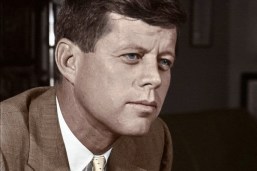
There was no welcoming crowd. There were no reporters. Although the 1960 presidential election was three years away, Senator John F. Kennedy had been vigorously campaigning and so he must have found his silent arrival in Toronto on that slate grey November afternoon either amusing or disconcerting.

Throughout 1957, he had been a frequent and entertaining guest on American political chat shows. His office flooded newspapers and magazines with press releases and articles he had written or at least edited. He accepted 140 speaking engagements. The herculean effort to render his already famous name even better known had spilled over the border, as these things do, and so Canadians knew of him and his ambition.

The Day JFK Visited Toronto.

John F. Kennedy (photo: historynewsnetwork.org)

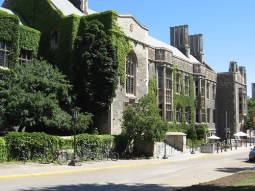
Twenty female University of Toronto students certainly knew of him and were waiting. They were outside Hart House, where Kennedy was scheduled to participate in a debate. Since Hart House was opened in 1919, its lounges, library, and recreational facilities had become the university’s social and cultural hub. The impressive gothic revival building was a gift from the Massey family that had insisted on guidelines stipulating that within its stone, ivy-covered walls, Hart House would allow no studying, drinking, or women.

The first two rules were often and flagrantly broken but Margaret Brewin, Judy Graner, and Linda Silver Dranoff led a contingent hoping to end the third. They asked the Hart House warden to allow women to see the debate. When rebuffed, they gathered friends and created placards and greeted Kennedy with chants that alternated between “Hart House Unfair” and “We Want Kennedy”.

Kennedy smiled but said nothing as he was escorted through the drizzling rain and noisy protesters. Beneath its towering, dark oak-panelled ceiling the Debates Room could seat two hundred and fifty. It was packed. A scuffle interrupted introductions when a sharp-eyed guard noticed a guest’s nail polish and removed three women who had snuck in disguised as men. With the women locked out, the men inside prepared to argue: “Has the United States failed in its responsibilities as a world leader?” Kennedy was given leave to present remarks from the floor in support of the team opposing the resolution.

Reading from a prepared text, he offered that Americans did not enjoy immunity from foreign policy mistakes but that the difference between statesmanship and politics is often a choice between two blunders. He expressed concern regarding the degree to which public opinion sometimes dictated sound public policy and admitted that the United States had misplayed some recent challenges. Regardless of these and other errors, he argued, American foreign policy rested on sound principles and his country remained a force for good.

The Day JFK Visited Toronto

Hart House (photo: toronto.cityguide.ca)

The address was well written but poorly delivered. Kennedy read in a flat tone and seldom looked up. The student debaters tore him apart. Leading the team against him was a nineteen-year-old second-year student named Stephen Lewis. As a member of the four-man U of T debate team, he had competed at various Canadian and American universities and won accolades, including the best speaker award at a recent international competition. Lewis argued that the United States consistently acted in ways that violated the tenets of its Constitution and Declaration of Independence. He accused America of trying to be, “policeman, baby-sitter and bank to the world.” The audience offered good-natured ribbing throughout the debate. Cheers rewarded good points and witty rejoinders. Kennedy seemed to enjoy himself and was heckled along with the rest.

The audience gasped in disbelief when adjudicators scored the debate 204 to 194 and declared Kennedy’s side victorious. Afterwards, at a participants’ reception, Lewis and others spoke with Senator Kennedy and expressed confusion as to why a Democrat such as he would defend the hawkish policies of the current Republican administration. Kennedy startled them by confessing that he was a Democrat only because he was from Massachusetts. He agreed with the suggestion that if he were from Maine, he would probably be a Republican.

Kennedy was not through raising eyebrows. When leaving Hart House, a reporter asked his opinion of the women’s loud but polite demonstration. He smiled and said, “I personally rather approve of keeping women out of these places…It’s a pleasure to be in a country where women cannot mix in everywhere.”

Although his side won, Kennedy had impressed few with his speech, fewer with his confession of political opportunism, and fewer still with his flippant dismissal of women and the concept of gender equality. His brief meeting with a small group of the protesting women the next morning changed no minds. Kennedy’s Toronto flop was surprising because by 1957 he had become quite adept at handling gatherings that demanded a blend of political chops and charm.

The next time Kennedy visited Canada it would be a president. In pursuit of his Cold War goals he would ask Prime Minister John Diefenbaker to meld Canadian policies with his own. Diefenbaker’s response offered Kennedy an even rougher reception than he had received three years before on that chilly November evening in Toronto. Diefenbaker wanted Canada to be more sovereign. Kennedy wanted a satellite. And there it began.

If you enjoyed this column, please share it with others. The above is among many stories found in Cold Fire: Kennedy’s Northern Front. Published on February 2, 2016, it is available at bookstores everywhere, Amazon, Barnes and Noble,, and at Chapters Indigo right here:

https://www.chapters.indigo.ca/en-ca/books/cold-fire-kennedys-northern-front/9780345808936-item.html

The Power of Graceful Words and Cogent Arguments

It was a word salad. Ms. Palin’s endorsement of Donald Trump’s candidacy last week did something few could imagine. It outdid even her past performances in presenting a rambling exhortation as bereft of grammar and sentence structure as it was a cogent argument. She had valid points to make but even Mr. Trump appeared embarrassed at her inability to make them.

Plenty of people laughed. Tina Fey revved up her spot-on impersonation for Saturday Night Live. Others were outraged at the depths to which political discourse has sunk and by the fact that her speech garnered applause at the time and, from the predictable quarters, praise afterwards. I, however, was sad.

I was sad for all those young people with good teachers who are learning the power and beauty of the spoken word. In classrooms across North America, good teachers are encouraging an appreciation for poetry, Shakespeare, and stirring speeches. Students are learning that the more they read, the better they can write, and the better they write, the deeper they are encouraged to think. They are learning that to be articulate is a good thing. And yet, there was Ms. Palin addressing a serious matter, the presidency, with profane and made up words more akin to a drunken karaoke rap than reasoned prose.

I was also sad for students learning the precision of a well-defined argument. They are being taught to dismiss false dichotomies that present either/or options that don’t really exist. Students are learning to begin the evaluation of an argument by exploring its premise and to be unfooled by straw men foisted as false foils. If nothing else, they are learning that arguments must at least be arguments, that is, they must state a point of view and defend it with demonstrably valid evidence. They learn that truth matters and that one can have one’s own opinion but not one’s own facts. And yet, there was Ms. Palin presenting not an argument as to why Mr. Trump should be president with but, rather, nonsensical assertions, jumbled phrases, insults, non-sequiturs, and even goofy rhymes.

If you missed it, all twenty minutes, here is part of what Ms. Palin had to say:

https://www.youtube.com/watch?v=CubzfKS5yQk

Let’s pause for a moment to consider two examples that demonstrate the way things used to be and can and should still be today. First, in about two minutes Abraham Lincoln’s 1863 Gettysburg Address stated the reason for the gathering, the value of the sacrifice of those lost in the recent battle, established the Civil War’s global and moral purpose, and affirmed the legitimacy of the fight. And he did it all in words he wrote himself and with the grace of a poet.

Take a moment to read what Lincoln said that afternoon in Pennsylvania with consideration for the value of marrying diction and argument.

http://avalon.law.yale.edu/19th_century/gettyb.asp

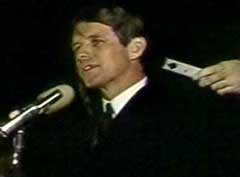
There is another example among many that could be chosen. On April 4, 1968, Robert Kennedy was running for President. A crowd in the predominately Black section of Indianapolis had been waiting for a long while and was growing restless. It was dark. Just as he was ascending the stairs to speak, Kennedy was told that Martin Luther King had been assassinated. His handlers ordered him back to the car. He refused.

Instead, Kennedy looked into the sea of Black faces and asked them to lower their campaign signs. This would not be about his campaign. He said that their hero and inspirational leader had been killed and that a White man had done it. There were gasps. But Kennedy went on. He gently interpreted the murder in a personal context and then as a national, existential challenge. He quoted several lines from the Greek poet Aeschylus. That’s right, a man running for president extemporaneously quoted a Greek poet.

Value of Graceful Words and Cogent Arguments

(Photo: http://www.peacebuttons.info)

In cities across America that night there were riots in Black neighbourhoods with grief expressed as rage. That is, in every major city except one: Indianapolis.

Allow yourself the gift to be moved by Robert Kennedy and the power of elegant, graceful  words and a genuine, cogent argument:

https://www.youtube.com/watch?v=BCrx_u3825g

I refuse to believe that Ms. Palin’s ramblings and Mr. Trump’s rants are cause for despair. It is just as I refused to be disheartened when in the recent Canadian election the prime minister embarrassed himself and disgraced the office by abandoning reasoned arguments to instead, day after day, present a sophomoric, faux game show complete with buzzers and bells.

Palin, Trump, Harper, and for that matter Mr. Cruz and Mr. Sanders, have their audiences and I think I understand them. They are angry. They are angry that the rules they have followed and thought they understood are changing. The bad guys have been winning on Baghdad’s Main Street and New York’s Wall Street. They are angry that the elite, donor class sold them on voting against their interests to support people, policies, and programs that have widened gulfs and strangled mobility. Their anger is palpable. Their anger is justified.

Unjustified, however, is meeting anger with bombast. Insults are not arguments. Beliefs are not policies. Prejudices are not facts. Biases are not opinions. We deserve better. All of us deserve better, even, or perhaps especially those angry folks attracted to Mr. Trump on one side and Mr. Sanders on the other.

Leaders and those who seek to lead should elevate and not stoop. They should inspire and not conspire. They should speak not to our inner demons but, as Lincoln called them, our better angels. And they should present themselves in ways that encourage calm reason over empty passion and articulate debate rather than spewed slogans. Like Kennedy, they should cool the embers of justifiable anger rather than stoke infernos. Picture Palin or Trump in Indianapolis that night.

For the sake of the children learning to speak, write, and present persuasive arguments as part of their becoming engaged citizens and whose world will be shaped by our decisions, let us demand more. Let us refuse to support those who’s jumbled words and absent arguments suggest we settle for less.

If you enjoyed this column, please consider sharing it with others on Facebook or your social media of choice.

Five Reasons Why JFK Still Matters

On a bright and frigid afternoon fifty-five years ago, John F. Kennedy became America’s 35th president. It was an exciting day. The unabating flood of articles, books, and movies suggest that his life and leadership continues to enthral. Let’s consider why he still matters by pondering questions he still poses.

5 Reasons Why JFK Still Matters

(Photo: mauialmanac.com)

Leadership and Wealth: The one percent who own and influence so much is under attack. In Canada’s recent election, Justin Trudeau’s opponents argued that his inherited wealth precluded him from understanding and helping working- and middle-class Canadians. Hillary Clinton is taking similar hits.

Kennedy grew up in mansions and was chauffeured to school in his father’s Rolls Royce. He could have done anything or nothing at all. Instead, he worked tirelessly to improve the lot of those toiling in shops, fields, and factories. He implemented a middle class tax cut, a higher minimum wage, and proposed universal health care. Does money kill compassion?

Government Power: Kennedy was more practical than liberal and more pragmatic than conservative. He decried ideological blindness that seeks victory without compromise while trying to tip the balance of power between government and business too far in one direction. He believed government was a positive societal force, essential for the collective good.

Because government cannot and should not do everything, should it do nothing? Does a government’s inability to completely solve a problem invite rejection of first steps?

Celebrity: Kennedy did not invent the celebrity politician but he was the first to exploit looks, charisma, and a photogenic family in the TV age. The 1960 campaign swung when he beat the more experienced but less-media savvy Richard Nixon in TV debates. Kennedy confessed that he would not be an effective president or possibly even have become president without television.

A journalist once wrote of Canada’s 1968 “Trudeaumania” election: “Canadians had enviously watched the presidency of John Kennedy, and continued to wish for a leader like him.” Last year, Canadians watched Trudeau’s son ride a wave of Kennedyesque celebrity while Nixon-like opponents attacked his appearance and gaps in his policies and resume, all the while forgetting Kennedy’s lesson. And now Trudeau commands, Donald Trump confounds and Kevin O’Leary considers. Must our leaders now also be celebrities?

Public Privacy: Kennedy’s legacy was later tarnished by revelations of reckless sexual liaisons. He also hid serious health problems and daily drug injections that managed symptoms. The press was complicit in the secrecy and silence.

The post-Watergate media changed the relationship between public and private. Social media shattered it. Canada’s last election saw candidates humiliated and others withdraw due to social media gaffes and attacks. Many good people now avoid public service, fearing slander and privacy’s surrender. Can a flawed person be a valid candidate or good leader? Are there limits to our right to know?

Aspiration: Many recall lines from Kennedy’s stirring inaugural address: “Ask not what your country can do for you…” or “The torch has been passed to a new generation…” In June 1963, he called for world peace based on our shared humanity. The next day he went on TV and reframed Civil Rights as a moral imperative.

We are well served by neither demagoguery nor technocratic managers masquerading as leaders. Instead, with so much and so many dividing us, Kennedy reminds us that real leaders really lead and that we need words that inspire, dreams that unite, and the positing of challenging questions and grand goals. What’s wrong with shooting for the moon?

Kennedy still matters because, in the final analysis, his enduring gift was not programs or policies but his inspirational leadership. We should consider the questions he still poses and answers he suggests. We owe it to ourselves and our children to consider his audacious exhortation that idealism is not naïve, hope is not foolish, hardship is incentive, and community can extend beyond one’s family, class, race, or even country.

This column originally appeared as an op ed in the Montreal Gazette on January 20, 2016, the 55th anniversary of JFK’s inauguration. If you enjoyed it, please consider sharing it with others.

Most Important Bands of All Time

The Beatles are not the best band of all time. Neither is U2 or Led Zeppelin. You see, a teenage John Lennon once snapped, “We’re not a band, we’re a group.” He understood. Lennon’s Quarrymen and then the Beatles were groups. So was the Clash and so are the Rolling Stones and the Eagles. In musical parlance, a group is a self-contained unit providing music and vocals while a band is a collection of musicians creating music either without or to accompany vocals. Forget boy bands. Their name is only part of what’s wrong with them.

So let’s leave groups aside and consider, in rough chronological order, the five most important bands.

  1. Tommy Dorsey Band

The 1930s brought the Depression and the 1940s the Second World War. Year after year people lost homes, loved ones, and faith in the rules they had believed would secure their families and futures. As always happens in eras of tragedy and transition, music filled the emotional void with fun. Swing music was nothing but fun.

Dance halls were everywhere and everywhere were big bands playing jumped up tunes with driving beats, mournful ballads, and goofy novelty numbers. The most influential of the big bands was led by Tommy Dorsey.

Dorsey played trombone, of all things. He reinvented the instrument so that it carried the melody. He promoted band members who stood and, in a nod to jazz, leaned into solos that were different every night. It was art as lightening, existing for the moment. Dorsey also sought the best singers around and handed careers to many including his best find of all, Frank Sinatra. Sinatra toured and recorded 80 songs with the Dorsey band. He learned his vocal styling and discipline from Dorsey’s trombone breathing techniques.

When other bands faded with changing musical tastes, Dorsey continued to evolve his sound and bring more jazz and popular music into his repertoire. His innovative ideas influenced another generation. His band placed an incredible 286 songs on the Billboard charts and he enjoyed 17 number ones. His biggest hit was I’ll Never Smile Again, which, in 1940, was number one for twelve weeks.

In the 1950s he and his brother Jimmy co-hosted a popular show on the new medium of television. He demonstrated courage when he ignored critics and insisted that a new young singer be invited to perform. It was through Dorsey, therefore, that America first saw Elvis Presley.

Tommy Dorsey died in 1956 when only 51 years of age. In 1982, his I’m Getting Sentimental Over You was inducted into the Grammy Hall of Fame and Marie was inducted in 1998. In 1996, the United States Postal Service issued a Tommy and Jimmy Dorsey stamp. His music lives on in singers and bands who believe they are inventing new ideas that Dorsey actually brought to audiences before their grandparents were born. 

  1. Wrecking Crew

Los Angeles session musicians used to arrive wearing suits and obediently read from charts to provide music for whatever commercial, movie, or singer rented their services. It was a nine to five job. That ended in the early 1960s when others began strolling in as the professionals were leaving. They dressed more casually. They played more casually. They could read charts but more often played what they felt. They made suggestions. They took chances. The grumpy old pros said the young bucks would wreck the music industry and so, according to drummer Hal Blaine, their name was coined.

You’ve heard their work if you’ve heard the Monkees, Paul Revere and the Raiders, Jan and Dean, the Partridge Family, Mamas & Papas, Association, 5th Dimension, Grass Roots, the Carpenters, the Byrds, the Turtles, Bread, Simon and Garfunkel, and on and on. Did you think the Monkees were the only group that didn’t play on their own records? You heard the Wrecking Crew if you’ve heard Dean Martin sing Everybody Loves Somebody or Frank Sinatra croon Strangers in the Night.

Sonny Bono once had a rather ordinary sounding song until the bass player, Carol Kaye, suggested a line that was simple in its complexity but riveting as a hook, and The Beat Goes On was born. She later suggested the descending bass notes in the Nancy Sinatra’s Boots. Brian Wilson employed the Wrecking Crew to create the Beach Boys’ Good Vibrations and Pet Sounds.

When Wrecking Crew guitarist Glen Campbell struck out on his own, it continued as his studio band. Other members that enjoyed solo success were Leon Russell and Mac Rebennack, who called himself Dr. John. Wrecking crew drummer Jim Keltner played on nearly all the Beatles solo albums, the Concert for Bangladesh, and, under the pseudonym Buster Sidebury, with the Travelling Wilburys. In 2007, the Wrecking Crew was inducted into the Musicians Hall of Fame.

Turn on an oldies radio station and be guaranteed that within minutes, whether you know it or not, you will hear the Wrecking Crew.

  1. The Band

Born in Arkansas and making a name for himself as a rockabilly wild man, Ronnie Hawkins toured Canada in 1958 and never went home. His music and show was like nothing seen or heard before. It was all made possible by the driving beat and incomparable sound of his band. They were kids. Arkansas native Levon Helm joined Canadians Robbie Robertson, Garth Hudson, Richard Manuel, and Rick Danko. They practiced all day and played all night. Their playing became as tight as their friendships.

Hawkins called them the Hawks. They quickly grew to be the premier band on Toronto’s Yonge Street strip that became the heart of the burgeoning Canadian music scene. Hawkins was crazy on stage. He yelled. He did back flips. He invented the moonwalk that Michael Jackson would later steal. Nearly any band can back someone who sticks to the songs but it took something all together special to hang on through the hurricane that was Rompin’ Ronnie. Through the antics, alcohol, and smoky haze was the band that never missed a beat, dropped a note, or missed a cue. Hudson’s keyboard work was majestic and rose beyond the limits of three-chord rock ‘n’ roll. Helms played masterful fills while Robertson took guitar leads to the edge of out of control.

In 1964, the band left Hawkins. They toured a little and recorded an unsuccessful album but a year later their ability to back quirky front men was recognized and rewarded when they received a call from Bob Dylan. At that point, Dylan was a tremendously successful folk singer. In July 1965, he had endured angry boos when he had plugged in a telecaster and, backed by Mike Butterfield’s band, sang an electric set at the New Port Folk Festival. Ready for more, and he hired Hawkins’ old band.

The American tour began a month later. It was like nothing anyone had heard before. Woody Guthrie had bedded the Beatles. The marriage of folk, pop, and rock is commonplace now but was then revolutionary. They toured the world and endured more negative reaction. There is film of a Manchester, England concert where someone yells that Dylan is Judas. Dylan snaps back, and then turns to the band, and shouts, “Play it fucking loud!” And they do. They play it loud and they play it well to those who were booing, those who understood, and for posterity.

The band accompanied Dylan back to Saugerties, New York, where, exhausted but exhilarated, they lived and made new music together. From Helms came southern country and from Hudson came classical. From Robertson came pop and his respect for southern history and native culture. From Manuel, and Danko came blues, gospel and traditional bluegrass. Their informal recordings became the Basement Tapes and a decades-long iconic, unheard mystery.

The eclectic talents and interests melded with their years with Hawkins and Dylan to inform their 1968 debut album, Music from Big Pink. They had been Hawkins band then Dylan’s band and now they needed a name. Helms suggested they be known as they were to many already, simply, The Band.

The group enjoyed hit songs and great success and well deserved places in the Canadian Music Hall of Fame and the Rock and Roll Hall of Fame. But it is as a band that they were midwives at the birth of rock n roll in Canada and country-rock around the world. Michael Nesmith, Linda Ronstadt, the Eagles, Jackson Browne, Lynyrd Skynyrd, and others who followed their lead owe a debt to the band called the Band.

  1. The Swampers

Speaking of Lyrnyrd Skynyrd, consider the fourth verse from their most popular song, Sweet Home Alabama:

Now Muscle Shoals has got the Swampers/And they’ve been known to pick a song or two/Lord they get me off so much/They pick me up when I’m feeling blue/Now how bout you?

The Swampers? You may have never heard of them but, like the Wrecking Crew, you’ve heard them. Entrepreneur Rick Hall built FAME recording studio in Muscle Shoals, Alabama. His very first song he recorded was by a shy, hospital orderly named Percy Sledge – the gospel-tinged power ballad When a Man Loves a Woman. The band is brilliant in its restraint. The organ creates a drone and the beat is pulled just slightly before each chorus, allowing tension to build to a climatic release. The notes are smooth, erotic, and let the singer and song do the work.

The record’s success brought attention to Muscle Shoals and more hit records to the world. People dancing to Wilson Pickett’s Mustang Sally were dancing to the Swampers. People swooning to Aretha Franklin’s Respect were loving the Swampers. Those moved by Etta James’ raucous Tell Mama were moved by the Swampers. Few knew the band. Fewer still knew that those motoring the new wave of Black R & B were all white.

None had musical training. But David Hood, Jimmy Johnson, Barry Beckett, Roger Hawkins, Pete Carr, Will McFarlane, Spooner Oldham, Clayton Ivey, Randy McCormick, and Albert S. Lowe all had soul, imagination, and a willingness to risk.

In 1969, Beckett, Hawkins, Hood, and Johnson formed their own studio called Pro Sound. The Swampers sound and feel, though, remained true to its roots. More singers came to capture its magic. They backed recordings by Rod Stewart, Joe Cocker, John Prine, Duane Allman, Boz Scaggs, and the Oak Ridge Boys. They helped the Rolling Stones record Wild Horses and Brown Sugar. Bob Dylan came to record Desire. It’s the Swampers you are enjoying when singing along with the Staple Singers I’ll Take You There, Paul Simon’s Kodachrome, and Bob Seger’s Night Moves.

God was having a particularly good day when he decided to place the intersection of Black and White music in the heart of segregated Alabama and allow its sweet sounds to offer lessons to us all.

  1. E Street Band

Most Important Bands of All Time(Photo: http://www.sfae.com)

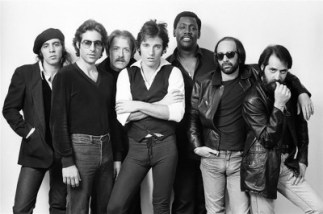
New Jersey is tough and the Jersey shore is tougher. It’s Sinatra tough. It’s Sopranos tough. It was tough in the late 1960s when in and around the hardscrabble Ashbury Park a new, hard driving, working class music developed in seedy bars and seedier clubs. Like Liverpool in the early ‘60s, Ashbury Park in the early ‘70s saw bands form and fall apart. The journeymen went to factories and the best to other bands. Among the dwindling elite were Danny Federici, Vini Lopez, Garry Tellent, David Sancious and Clarence Clemons. They came to know each other and became friends with a skinny young Jersey singer named Bruce Springsteen.

Springsteen signed a recording contract in 1972 and offered a job to the best musicians on the Jersey Shore. They rehearsed at Sancious’ mother’s house on the corner of 10th Avenue and E Street. The name was born – The E Street Band. Their first album was entitled Greetings From Ashbury Park. A life of touring began. Some members left and were replaced but the sound grew tighter and even more powerful, and even tougher. The band was strengthened when ace guitarist Steven Van Zandt joined in 1975.

Springsteen became known for his working class anthems and he and the band for their working class dedication to fair play for fair pay. Concerts lasted three hours or more. There were few breaks between songs as the band kept the music or rhythm pulsating with the crowd engaged, enthralled, and enraptured. Songs people knew from the records were reinvented, made longer, more complex, and given more energy and different textures every night. Like the stadium band they became, they played to the back row. Like the bar band they had been, they played requests.

For 15 years, Springsteen recorded and performed without the band but they were reunited in 1995 and have been together ever since. Springsteen was not the same without them. He is better with them at his side and watching his back. Springsteen always affectionately introduces each member and then yells over the cheers: “It’s the heart-stopping, pants-dropping, house-rocking, earth-quaking, booty-shaking, Viagra-taking, love-making, legendary E Street Band!”

Try to imagine Born to Run without Clarence’s sax solo. Try to imagine Glory Days without Little Stephens’ guitar and crazy harmonies. They take good songs and made them better. That’s the job of any band but not a job just any band can do. Now try to imagine Bruce Springsteen without the E Street band. I’m guessing he’d be a retired steel worker living in Ashbury Park, strumming his acoustic guitar and wondering about glory days that might have been.

Please share this column with others if you liked it and leave a comment on my choices. Suggestions for most important groups would be welcomed. If you have not seen it – johnboyko.com – has my thoughts on six most important singers.

Hockey, Trump & Happy in the Hurricane’s Eye

Sometimes I feel a need to apologize. Like everyone, I harbour a few regrets, wish some things were a little different and others a trifle easier. Mostly though, I feel like I’m in a hurricane’s eye. Things are calm here, they’re nice, and yet all around me seems awhirl in furious thunder. While so many are so angry, I’m happy. Sorry.

Am I missing something? I’ve recently seen two sources of curious anger that gave me pause.

Hockey

Hockey is a great sport. Unlike football and baseball, offense and defence flip with no time for pauses or plans. Its beauty is the patterns in the chaos. Hockey culture, on the other hand, is another thing altogether. I’m not talking about the billionaire’s business posing as sport, but children’s hockey.

Hockey, Trump, Happy & the Eye of the Hurricane

It’s not the kids’ fault. Nearly all of them are there for the fun but too many parents see games as invitations to display their character’s worst colours. They yell at referees, coaches, their kids and other peoples’, and sometimes even each other. Those yelling loudest are always those who understand the game least.

How many of those shouting for their kids to do this or that or about someone denying their kid opportunity are revealing personal rage regarding chances they didn’t take or doors slammed on their ambitions? How many parents are pushing kids and attacking others in blatant attempts to chase unrequited dreams through imposing them on their children?

My seven-year-old granddaughter plays on two hockey teams and I love to watch her. The score is kept on the big board but tallying stops whenever the spread grows to more than three goals. Teams shake hands after every game. Afterwards, we ask only if she had fun. She never knows who won and never cares. Parents and grandparents laugh and cheer and shout nothing but encouragement. It’s great.

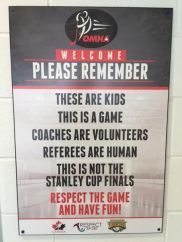
Folks at other games are apparently different because the arena found it necessary to erect the sign below. I hope it helps those unable to park their regrets, fears, and vicarious dreams that manifest as ugly anger. I wonder, though, if those who need the sign ever read it, heed it, or even understand it’s for them.

Why I'm Not Angry Enough

Trump

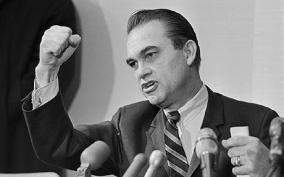
Last week I also watched a Donald Trump speech on YouTube. Trump is fascinating but it’s not the first time we’ve seen his ilk. In 1968, Alabama Governor George Wallace ran for president and attracted much the same people. Perhaps it is more accurate to say that he attracted the same emotion.

In the late 1960s, like today, a great many people were afraid that their world was changing in ways they didn’t like or understand. They were mad. Women and African Americans were demanding equality, the economy was shifting from its long post-war prosperity, and America was losing a war in Vietnam. Now, gays, lesbians, and transgendered people are demanding equality, the industrial revolution is over with nothing to replace avenues for middle-class prosperity and working-class mobility, and America seems to be losing the war on terror.

Why I Love Donald Trump and the Rhinoceros

What can be done? One could delve into nuanced and complex causes and effects and accept that economic and social shifts take time and demand concessions from all sides. Forget that! There is no time for that nonsense when one’s life is happening now, children need their futures to start now, and a living must be made and debts paid right now.

It is much easier to get mad at those deemed responsible for the disconnect between how life is and how it was expected to be. Wallace knew it then and Trump knows it now. Therefore, blame the desegregationists or the immigrants. Blame the other, whether it’s the other race, religion, ethnicity, lifestyle, region, party, and, of course, blame the government. Get mad at those who are causing the changes or not stopping them or refusing to acknowledge that the way things were before was better.

U1583804

George Wallace, February 1968.  (www.eurweb.com)

Trump rides the difference between nostalgia and history. It’s why facts don’t matter and lies are accepted. His followers, like Wallace’s, yearn for a misty-eyed past that never really existed; when rules were certain, dreams assured, and everyone knew their place.

It’s a fretful yearning that fuels anger, fills stadiums, makes signs, and fills lungs with desperate rage. It’s the same yearning that sparks screaming at little hockey loving kids.

Decision

I don’t yell at hockey games. I don’t support Mr. Trump. I just can’t muster the necessary anger. This makes me neither better nor smarter than anyone – far from it. But I choose to be informed rather than bamboozled. I choose to be calm around children, knowing that they’re watching and learning how to behave and how to be an adult.

Emotions are decisions. I choose to go outside, run, be with family, enjoy friends, play music, be childlike but not childish with children, set and celebrate achievable measurable goals, enjoy goofiness, and when I encounter one, to say right out loud, “This is a good moment.” In short, I choose not to be angry but happy.

Happy is not a surrender of personal sovereignty, a rejection of values, or naive. Anger, on the other hand, is all three. Anger’s adrenaline is cheap tequila while happy’s endorphins is a fine wine. No one’s happiness led them to become a bully in the stands or to follow one behind a lectern. I’ll leave those yelling at Mr. Trump’s rallies and in hockey arenas to their rage.

For me, happy is a better decision and the eye of the hurricane is a pretty nice place. I think I’ll stay.

If you enjoyed this column, please consider sending it to others and checking out more of my work at http://www.johnboyko.com.

New Year’s and the Redemptive Power of the Do-Over

Kids love do-overs. Golfers love mulligans. What’s not to love about getting another go at something missed or muffed? There are few among us who have not wished for a do-over after a botched job interview, thoughtless remark, or mistakenly sent ‘reply to all.’ Perhaps that’s the magic of New Year’s Eve. It reflects our faith in the do-over and the power of redemption.

New Year’s and the Redemptive Power of the Do-Over

(Photo: eilanhotel.com)

The Pagans understood. They proposed explanations for the unexplainable in ancient Egypt, Greece, and Rome. Renewal and redemption, for instance, informed the Pagan observance of the spring equinox. Winter had crippled the sun but April brought resurrection with days longer than nights. Celebrations involved Eostre, a northern goddess, who offered rabbits and eggs as symbols of fertility and rebirth.

The Catholic Church understands. The ritual of confession is based on our being weak and inclined to evil and thus apt to sin. However, all is forgiven if an adherent is truly contrite, fesses up, and then carries out the prescribed penance. The Sacrament of Reconciliation offers the washing of sin, a road back to God’s grace, and a new start on a more virtuous life.

Existentialists understand too. They reject the beliefs of pagans and most religions in their insistence that people control themselves. Kierkegaard, Nietzsche, Sartre, and more, essentially said forget God or gods having a grand plan or ability to forgive or influence our lives. Forget both nature and nurture for neither determines who or what we are. Everything, they said, is up to us. Existentialism’s power and freedom offered a double-edged sword for our ability to create our own meaning, being, and opportunities comes with a responsibility to do so. It insists that no one but us is to blame – neither parents nor God – for our confusion or shortcomings.

So while Pagans, Catholics, and Existentialists disagree about a host of matters, they link arms on the twin powers of reflection and redemption. They agree with Shakespeare who gave these words to Julius Caesar: “The fault, dear Brutus, is not in our stars, but in ourselves.” If they are all right, then New Year’s Eve offers a unique and powerful gift.

My band will be playing on New Year’s Eve and at midnight we’ll pause for the countdown and kisses. I will silently repeat the resolution that I will have decided upon. I’ll pledge to correct not a silly behaviour but a character flaw. I have plenty from which to choose. Perhaps I’ll resolve to listen more and talk less or buy less and give more. I might vow to see neighbours more and to see more as neighbours. The simpler my resolution, the more profound will be its impact, difficult its execution, and, therefore, essential to my ever evolving being and life’s nuanced meaning.

I will then plunge into 2016, confident in the power of restoration and redemption. I’ll try to do better by being better because on January 1, like you, I’ll get a new chance at new. Isn’t that what a do-over is all about?

Thank you for reading this column. If you liked it, please consider posting it for others to see and seeing my other work at http://www.johnboyko.com

The Legend of the Six Inch Triple

It was the top of the last inning of the championship game and we were down by a run. We had players on first and second. The count was three and two. Everything hung on the next pitch. The park fell into a silence as ominous as the inky, dark clouds roiling overhead. We held our breath as an apparently equally enthralled Mother Nature held her rain. Finally, after chicken scratching at the mound, the pitcher released the ball. It seemed to hang at the top of its arc for a long, lingering moment and then Val stepped into a mighty swing. Her aluminum bat kissed the top of the spinning lime green ball which dropped with a thud at her feet – but fair. Val didn’t care. The bat flew and she was off like a rocket. The catcher leapt forward, snatched the ball but then, inexplicitly, sailed it two feet over the first baseman’s outstretched glove.

Our bench exploded. Our base coaches screamed. Our man at second did not slow down over third and passed home. Their right fielder’s angle must have convinced him that the ball was out of play for he was ambling toward it with a cool casualness, but we could see it. The ball lay clearly within the chalk line and so like the Monty Python villager it was not quite dead, in fact, it was still very much alive.  It was their bench’s turn to scream but Val was already sprinting to second as our other runner rounded third.

Their fielder finally awoke to the moment, ran to the ball and with a long stride hurled it toward home. Our runner from first was puffing toward home and nearly there. The ball was nearly there. The catcher’s glove smacked and the umpire yelled, “Safe!” We had done it. Really, Val had done it. She stood on third base breathing hard and beaming. We were jumping and cheering and high-fiving each other, but, it was not over.

We were soon on the field for their last at bats. We were up by a run but earlier in the game they had scored seven in a single inning and so we respected their speed and power; we feared it. We knew they were younger and stronger than us. As one of our team mates had noted earlier: “They don’t even jiggle when they run!” A one run lead was nothing.

A long loping hit to left field put a man on second and with a bloop single he advanced to third – the tying run. Two quick outs and a couple of pitches later they were same spot in which we had found ourselves only minutes before. There were two strikes on the batter. It all came down to this pitch. He swung hard but spun the ball into a high pop fly in foul territory just a couple of yards from third base – my base. I edged carefully forward and to my right and moved my free hand to the back of my old black glove. I could not drop this. I had time to think: “Don’t drop this. Do not drop this!” I felt it find my glove and squeezed as tightly as I’ve squeezed anything. I heard the cheers. I heard the shouts. I stood with the ball in my glove still held high above my head. We did it. We won.

It was the second year in a row that our team, the Black Plague, had won the championship. This year was even sweeter because a dear friend of ours, a giant of a man who lived meagrely and gave generously and whose laugh sparked laughter in all he met, had died. One of his many nicknames was spray painted on the snow fence that delineated the outfield. Another was on the shoulder of our new jerseys. We had dedicated the season to him and now we had won.

Black Plague

The Black Plague is one of eight teams in the Trent University slo-pitch softball league that has been playing for fun for thirty years. Everyone involved works at, attends, or went to Trent. The weekly games on soft summer nights bring hearty cheers, good-natured jeers and shouts of, “Yay Dad!” and “Way to go Uncle Mike!” During the season the diamond has neither lines nor umpires. The arcane rules that no one seems to fully fathom are enforced by mutual consent. Hit the plywood board and it’s a strike. The catcher calls outs and foul balls. No leadoffs. No stealing. There are occasional discussions but never arguments. One of the rules states that a team must have at least three women on the field at all times. I think it must be a hold-over from another era because nearly all the women are terrific players; many are a lot better than a lot of the men and nearly all are better than me.

You see, I love baseball. I love listening on the radio and following the season. I love the pace, the strategies, and the fact that it is a team sport that comes down to individual moments. I love that there is no clock, no regulation field size, no best way of doing anything and I love the game’s rich and storied history. It’s great that statistics say it all but the legends say even more. I love that every season starts as a story, slows to a paragraph and ends as a sentence.

My grandfather was a Yankees fan and so as a boy I was too. While I cheer for the Blue Jays now there’s still something about the Yankees that moves something within me no matter how much I try to dislike them and their pennant-buying, celebrity-driven ways. I’ve been to Yankee Stadium and Cooperstown. I saw the Expos at the Big O and saw Ripken play at Camden Yards and Griffey hit one into the Sky Dome’s third deck. But loving something does not automatically make you any good at it. In fact, despite loving the game I am really no good at it at all.

I take my turn at third base and most times I can stop and sometimes even catch balls coming my way. Most times I can make the long throw to first but I occasionally bounce them. My hitting is laughable. I try so hard. I try to ignore the ball jumping erratically every time its trajectory carries it in and out of my bifocal range. I desperately try to be patient and to wait for the ball to fall into the strike zone and to keep my elbow up and to swing level and to follow through and to turn my hips and to do everything else that jumbles my brain at the plate – at the board, that is. I have hit a few doubles and a couple of triples and a slew of singles but far too often I just pop it up or smack a toothless grounder to the short stop.

My lack of prowess is sometimes embarrassing but my team mates are as patient as they are kind. They coach. They tease a little, but they never criticize and I always get my turn. Despite being so bad at it I have fun. And that’s the point.

Because you are good at something does not mean you have to do it. Consider that upon the birth of his second child, John Lennon retired from the music business. He didn’t publicly sing a note or record a song for five years. He wrote, “I’ve already lost one family to produce what? Sgt. Pepper. I am blessed with a second chance.” He baked bread and changed diapers and read stories and took his son for long walks in Central Park. Finally, right there at home, he found what he had been seeking for so long – peace.

Because you are bad at something does not mean you should not do it. It would be a quiet forest indeed if only birds with the sweetest voices sang. So I look forward to next spring’s baseball season. I will try harder but probably not be much better, but so what? For now, the Black Plague has received not a single challenge from any other team on the planet. That makes us World Champions. A few months from now, in the depths of a cold, Canadian winter, that thought and memories of Val’s legendary six-inch triple, will offer a little warmth. And could we all not use a bit of that from time to time?