Lessons From a 2-Year-Old

There are few things more humbling than time with a 2-year-old. I am one of the lucky ones who is privileged to be able to do so every day when my dear wife and I pick her up from daycare and then tend her and her older sister until Mom arrives home from work. We even enjoy occasional evenings. Some times are challenging but all are special and many, many moments are diamonds. The bright, cheerful, and sweet little girl is the most profound teacher I know.

Food

Food is not merely something that sustains us but a pleasure to be experienced. Sometimes that means dispensing with utensils and digging fingers deeply into our meal. Manners matter and please and thank you are necessary, of course, but the visceral joy of some meals must involve all the senses with gratitude measured by the colour of one’s cheeks. The rituals we adults attach to food are reduced to silly, cultural affectations.

Wonder

Walks offer startling moments of discovery. The spectacle of the sight and sound of breeze through the fresh, green leaves of a spring maple is something to stop and contemplate. “The tree is dancing!” “Yes, yes, it is.” The soft marvel of moss on forest rocks deserves a furrowed brow, gentle touch, and quiet contemplation. The fallen tree is a detective’s challenge. There is nothing better to awaken the soul than to have one’s eyes opened to sparkling detail.

Puddles

Rain is great because rain brings puddles. There is nothing in the world like marching with knees high and giggling with glee as puddles explode. Big, long ones demand several marches with each better than the last. Imagine if we could all relax and get over ourselves sufficiently to derive such unrestrained joy from such tiny pleasures.

Lessons from a 2-Year-Old

Hiding

Nothing beats hiding. If I can’t see you, of course, means that you can’t see me, so I vanish if covered by a blanket on the couch. Even covering one’s eyes will do. It never gets old. It is kind of like avoiding eye contact at meetings when a volunteer is being sought.

Determination

Sometimes words won’t do. There are some situations where only a foot-stomping, arm-waving, tear-pouring, high-decibel meltdown is equal to the rage of a prize denied, the unfair barrier, slight, or unmet goal. Each red-hot episode is followed by a period of reflection and contemplation, a settling of the soul, a hug, and the realization that life goes on. How many of us face similar situations of frustration and unfairness that leave us raging in silence, swallowing mind and body ripping stress, and longing for the hug.

Bath time

Bath time is fun. Stripping down, getting soapy and blowing bubbles while surrounded by colourful toys that float, toot, and sing is great.  And there is nothing like the security of a big warm blanket and clean pyjamas. Imagine if every day ended with a long, hot bath.

Books

Books are adventures. The world comes alive with possibilities as animals talk, kids explore, nature is kind, adults are safe, fun happens, and even in the face of danger and heartache, the ending is always happy. What a pleasure to watch cynicism on vacation.

Sleep

Sleep when tired. Awake when refreshed. How simple. Routine but no schedule. And the last thing you hear before heavy eyes whisk you to dreams, whether for a mid-day nap or ten hours at night, is “I love you.” May we all be so blessed.

The best hoax adults perpetrate on children is that we have it all figured out and know what we’re doing. Far from it. We are doing the best we can, making it up as we go along, and we are always learning. The best teachers I have in my life-long quest for wisdom are nine and two years old. There is nothing like the often gentle and sometimes stark and sudden lessons of a two-year-old to stand you up, cock your head, and remind you of how much is left to be learned.

If you enjoyed this column, please share it others and consider leaving a comment. My other columns rest at http://www.johnboyko.com and my books, all addressing History and Politics, are available through Chapters, Amazon, and, as Stuart Mclean used to used to say, at reasonable books stores everywhere.

The World’s Worst Housemate

I would like to interest you in someone to share your home, a housemate. He often smells like old cheese and rotting leaves and seldom bathes. His breath would stagger a rutting moose. He will demand that you prepare his meals. He’ll scream gibberish at guests and then do rude things that embarrass them. He will have you drive him to medical appointments and leave you with the bill. He’ll shamelessly use your yard as a toilet and never pay rent. Are you interested?

Funny you said no because 35% of Canadian homes have at least one of the country’s 5.9 million dogs. In the United States, it’s a similar 36%, meaning that there are 68 million hairy, gnarly American housemates.

Why? Why do so many people endure from a dog what they would never accept from a human? Surely it can’t be because they’re so damned cute. After all, there are a lot of adorable-looking, sad-eyed people from whom such behaviour would never be tolerated. And they even have the decency to wear clothes. Let’s think about it. Why own a dog?

Chemistry

According to psychologists who study this kind of thing, playing with a dog floods your brain with dopamine and serotonin. They are natural neurotransmitters that reward us with feelings of peace and happiness. It’s why therapy dogs are such a big hit at retirement residences.

But what about another chemical? Adrenaline. A jolt of adrenaline races your heart, tenses your muscles, and tightens your innards, causing a gastroesophageal reflux that drops a metallic taste in your mouth. You are ready to fight or flee, say because you’re being chased by a grizzly. Or, maybe it’s the sight of your dog with one of your new, expensive shoes in its slobbering gob or perhaps he’s sitting proudly, with tongue a-dangle and eyes wide, before a table leg that he’s just chewed into impressionist art. Again, it’s chemical.

Loyalty

Dogs were our first domesticated pets. Archaeologists suggest that people began living with dogs about 32,000 years ago. Dogs descended from wolves and wolves run in packs. So when you bring a dog into your home you are inviting him to join your pack. A well-trained dog recognizes you as the pack’s alpha male and so he obeys orders.

It’s a nice idea but a 2010 Psychology Today article called it bollocks. Studies of dog’s memories show that despite their ability to act on command, dogs have quite limited long and short-term memories. It’s been proven that when you leave, you’re forgotten. Reunions are always nice but dogs don’t pine away in our absence. Scientists dismiss the idea that dogs feel loyalty as a “modern invention”, sappy sentimentality, or our sad habit of anthropomorphization, where we Disneyfy animals by attributing them with human characteristics.

Health

It has been demonstrated that owning a dog increases people’s physical fitness by getting them off the couch, even in the worst weather, to walk around the block. Anything that gets people moving is a good thing.

One has to wonder, however, about our self-discipline and dedication to health if it takes a jumpy dog’s pee dance to drag us out the door. Further, even in the absolute worst cases of slavery, when people were robbed of their very humanity and forced to live in unspeakable conditions and do appalling things, there are no examples of slaves being forced to trail their masters, wait for them to poop, and then scoop it into a bag and carry it home. Kurt Vonnegut once wrote that if aliens hovered over the earth and observed this practice they would conclude that dogs are the planet’s master species, feel sorry for human beings, and cite the relationship as the universe’s cruelest example of slavery. Perhaps going for a walk every day without toting a little bag might be okay.

Welcome

There is no one, no one in the world, who is happier to see you than your dog. Arrive home from work, stressed and tired, and watch your mood suddenly change when he explodes with the simple joy of your being. What can be more affirming?

Do we keep a dog partly for this welcome; this non-judgmental, boundless affection that we reward with a demand for absolute obedience? Is it that we like the idea that no matter what in our lives spins beyond our control and how many people determine what we do, and when and we’ll do it, that there is at least one thing, one living thing, over which we have dominance? Is our secret embrace of that shameful feeling at the core of our enjoying our joyous welcome? Or, is a hole in our soul so deep that our ache to be loved is so mightily profound? Or, on the other hand, are dogs just goofy, good company and fun to have around?

The World's Worst Housemate

(Photo: Saved By Dogs)

As you may have guessed, I don’t have a dog. I don’t want one. But I had one as a teenager. He was a big, floppy, black and white, mutt-face of a guy who was born on February 10. From then to now there is not a February 10th goes by that I am not warmed by a kind thought of my old friend. I know. Dogs are hard to explain.

If you found this column interesting, please share it with others and consider checking my other work at http://www.johnboyko.com

The Princess and the Tulips

As the tulips are finding our gardens again I thought it apt to re-post this story from a couple of years ago. I hope you enjoy it.

Princess Juliana was in trouble. The country over which she would someday reign was in crisis and her life was in peril. The Nazi blitzkrieg was pushing its way north and west and her beloved Netherlands was certain to fall to Hitler’s mad ambitions.

Just three years before, with the encouragement of her mother, the powerful and extraordinarily wealthy Queen Wilhelmina, she had married a young German aristocrat named Prince Bernard of Lippe-Biesterfeld. They soon fulfilled the most important part of their royal duties by producing heirs. Princess Beatrix was born in 1938 and then, a year later, Princess Irene.

Despite suspicions of all things German, the Dutch people accepted Prince Bernard. He changed the spelling of his name to be less German and became a Dutch citizen. Now they worried about their future, the future of their country, and that of the Royal bloodline if the Princess and her family were captured by the Nazi horde about which astounding stories of unspeakable horror were being told.

The Royal family was evacuated to London. Queen Wilhelmina oversaw the creation of a Dutch government in exile. A month later, in June 1940, Princess Juliana and her family were sent to an even safer sanctuary in Ottawa, Canada. A spacious house was found in the tony neighbourhood of Rockcliffe Park, home to ambassadors and the city’s elite. The house was called Stornoway. It would later become the residence of the leader of Canada’s Official Opposition.

Juliana followed the tragic news of her country having fallen under the Nazi yoke as she worried about her mother enduring the London blitz. The shy princess led a quiet life and remained aloof from Ottawa society events to which she would have been welcomed. Problems arose in late 1942 when she found herself pregnant. If she gave birth in Canada, the child would have dual citizenship and so be robbed of a spot in the Royal line of succession.

The Canadian government came to the rescue. It declared her rooms in Ottawa’s Civic Hospital to be temporarily extraterritorial. In other words, for the moment, Juliana was in the Netherlands. Princess Margriet was born on January 19, 1943. The child became the first and remains the only, royal personage to be born in North America.

Princess and the Tulips Royal Family

Home from the Ottawa Hospital (Photo: cbc.ca)

Canadians were as pleased as the people of the besieged Netherlands. The news led Canadian radio broadcasts and adorned newspaper front pages. The Dutch flag fluttered atop the Parliament Building’s Peace Tower and its bells chimed out the Dutch national anthem and folk tunes.

Meanwhile, the war raged on. Successful D-Day landings by British, American, and Canadian troops initiated a slow and bloody push toward Berlin. Canadians were assigned the left flank and, in September 1944, they began the liberation of the Netherlands. It was tough. The Nazi army had flooded land, mined ports, and dug itself into intractable defensive positions. The Dutch people did what they could to offer fifth column help. So many were so hungry that they had been surviving by eating tulip bulbs. Many were saved when Royal Canadian Airforce planes dropped food for the starving.

Canadian troops fought gallantly. The Battle of the Scheldt was the most excruciating engagement. Between October and November 1944, the Canadian First Army suffered nearly 13,000 casualties. When it succeeded and Nazi forces retreated, Canadian soldiers were hailed as heroes. As they entered Dutch towns, the tired but smiling young men were showered with flowers and gifts.

On May 2, 1945, after five years in Canada, Princess Juliana and her children were able to return first to London and then, along with Queen Wilhelmina, to a freed and free Netherlands. To demonstrate their gratitude for all that Canada had done for the country and her family, the Princess arranged that 100,000 tulip bulbs were sent to Ottawa. The next year, 20,000 more arrived with the request that they be planted on the hospital grounds.

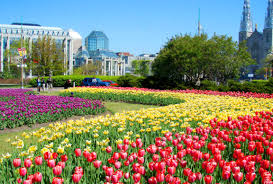
In 1948, as result of her mother’s long illness, Juliana, became Queen. She ensured that more tulip bulbs were sent to Canada every year. Every spring saw Ottawa resplendent in a riot of colour. In 1952, at the suggestion of noted Canadian photographer Malak Karsh, Ottawa began an annual Tulip Festival. The city hosted a celebration that grew to include concerts, buskers, plays, fireworks, and more. Every year the city’s tulip beds grew even more spectacular.

Princess and the Tulips Photo: magpiejewellery.com

In Canada’s centennial year, 1967, Queen Juliana was enthusiastically cheered as she enjoyed the festival. In 2002, Princess Margriet was the special guest commemorating the festival’s 50th anniversary.

The fragile flowers last only a short while but are annual reminders of a friendship within a tragedy and of our common humanity. They remind us of what can be lost to the insanity of war and blind adherence to a hateful ideology. And, standing boldly in their primary colours, they symbolize the assurance that after every winter, man-made or otherwise, lives a determined hope that there is always spring, and that someday we may be sufficiently mature to live in peace.

If you enjoyed this column, please consider sending it to others and perhaps leaving a comment.

The Queen and the Problem with Problems

The village was grumpy. Everyone seemed to be complaining about something. Marriages and friendships were fraying, folks were miserable with each other at work, children were grouchy at school and teachers were frowning too much. Old men met for coffee and biscuits each morning to gripe that things were better before. But the Queen was wise.

She gathered everyone for a meeting on the grand lawn of the village square. She announced an edict. Everyone, even the kids, was to take from the great, long table a black marker and a clear plastic bag that contained five white balls. The Queen said that everyone was to find a spot on the square to be alone, sit down, and contemplate their five biggest problems. They were then to write them on the five balls, put the balls back in the bag, retie it with the gold ribbon, and bring it back to the circle.

The Quenn & Problem with Problems

The people were quizzical. There were harrumphs from a few and a couple of teenagers threatened to leave. Soon, though, everyone was on their own, pondering, and writing. It took a while, but finally, everyone was back in the large circle with inscribed balls in the bag before them. The long, gold ribbons gleamed in the sun.

The Queen then instructed that at the count of three they were to toss their bag high in the air and into the centre of the circle. And for a moment, it was magical. All the bags were aloft at once, all the problems of all the people floated, weightless, for just a second, beneath the cloudless blue sky. Kids laughed as the bags landed and bounced and settled in chaotic heaps. The Queen then said something startling.

“No one’s life,” she said, “is without challenges. Everyone has troubles, regrets, and things they wish were different. Everyone has said and done things they wish they hadn’t and didn’t say or do things they wish they had. But I have good news. All of your problems are now over. You just threw them away. Now, please, wander the green, take your time, and read the balls within the bags. Then, choose any bag you wish and return to the circle.”

The people were stunned.

“Really?” asked an 8-year old girl, glancing at the mean girl who had been teasing her lately.

“It will never work.” grumbled the fat old doctor whose foot ached with gout.

“I promise,” said the Queen, “choose whatever bag you wish in exchange for your own.”

The people moved slowly, gingerly, at first. Soon though, they were walking about the square lifting bags, reading carefully, dropping them, and moving to another. There were a few gasps. The librarian began to cry at one point and needed to rest for a bit. It took a while, but finally, everyone was back in the large circle with a bag at their feet.

“Now,” said the Queen, “Take up your bag of chosen problems, return to your homes, contemplate what just happened here, and choose to be happy.”

There were broad smiles around the circle. There were more than a few hugs and even a tear or two. They all knew, as did the Queen, that after having been offered the choice, everyone, every last one of them, had chosen their own bag of problems. They all walked home, many hand-in-hand.

And they all chose to be happy.

If you enjoyed this story, please share it with others.

Trudeau, Power, & Sir John’s Echo

Canada is a conversation. When confronting troubles visited upon us, or of our own making, Canadians reach not for a gun but a gavel. We talk it out. Every leadership race and election, every new bill, public initiative, or staggering crisis, and every table pounding in the House of Commons or at the local Tim’s is another element of that conversation. And when we’re talking, we’re always talking about power. So, let’s talk.

Political power touches us all. Positively expressed, it offers a vehicle through which we are collectively encouraged and enabled to act for the common good. Power matters and so, it matters who has it.

Our founders understood. In 1864, they met in Charlottetown and Quebec City and talked their way into a country. From Britain, came the ideas of a limited monarchy and parliamentary democracy. From the United States, they took a written constitution and a federal state, one comprised of a central government and provinces. This is where the real talking about power began.

John A. Macdonald led the way in arguing that while the American Constitution was brilliant in its conception, the fact that the United States was, at that moment, butchering itself in Civil War, demonstrated its appalling failure in practice. The Confederation delegates stood the American system on its head. Macdonald explained that Canada would reverse the “primary error” of the United States, “by strengthening the general government and conferring on the provincial bodies only such powers as may be required for local purposes.”

Power and Sir John's Echo

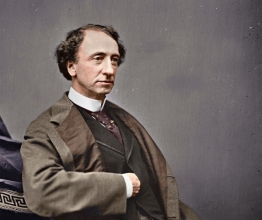
(Photo: Canadian Colour)

The provinces were given only municipal-like areas of responsibility and limited ability to raise revenue. The federal government, on the other hand, was afforded the major powers relating to sovereignty including trade, the military, post office, criminal law, currency, and banking. Unlike the United States where, until 1913, the states appointed Senators, the prime minister would populate our upper chamber. The prime minister would also appoint Lieutenant Governors who approved provincial bills while sending questionable ones to the federal cabinet, which could disallow them. Anything the constitution left out or that came up later, like airports, would go automatically to the federal government.

Throughout Canada’s 150-year conversation, provinces have worked to overturn our founders’ vision and shift power to themselves. An example is the decades-long provincial demand for greater power that sabotaged repeated federal efforts to earn greater independence by gaining control of our constitution. In standing up for what they believed was best for their province, too many premiers betrayed and undermined the very concept of Canada while dividing Canadians against themselves.

This is not to say that premiers are not patriots and provinces don’t matter. Of course they are and of course they do. But it was successive federal governments that fought to maintain our founders’ vision. Provinces were cajoled and dragged along as the federal government led the building of Canada through projects like the trans-continental railway, St. Lawrence Seaway, and the TransCanada Highway. The federal government needled, nudged, and negotiated for Canadians in creating national policies such as pensions and health care. Federal governments rallied our response to emergencies such as global wars, the Great Depression, and the FLQ Crisis. The federal government spoke for Canadian values whether reflected as peacekeepers or climate change leaders.

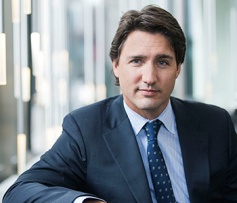
Ignore whether you like or dislike our current prime minister, or his policies, but grant that Mr. Trudeau’s  tour a few months ago indicated his understanding that Canada is indeed a conversation. He is also demonstrating that he is the personification of Sir John’s vision. He gathered the premiers and then led the revamping of pensions, unemployment insurance, and health care. He told the provinces that we will combat climate change as a nation and that they will step in line. His government organized a national emergency response to the Fort McMurray wildfires.

Hundred Days and Honeymoons

We have been at our best when the power that our founders afforded the federal government was effectively employed. We have gone off the rails when firewall letters, referendums, and power squabbles have attempted to distort that vision. We are better when we consider ourselves not as of a particular province but more broadly, as Canadians first, stronger in the complexity of our citizenship.

Every time you hear our prime minister speak, listen carefully for a hint of a Scottish burr, for you’re hearing Sir John’s echo.

If you enjoyed this column, please send it to others and perhaps even explore my full argument which is in my latest book, published just two weeks ago, and called, perhaps unsurprisingly, Sir John’s Echo.  It’s available at bookstores, Amazon, and here through Chapters https://www.chapters.indigo.ca/en-ca/books/sir-johns-echo-speaking-for/9781459738157-item.html

Seeking the Universal

The village was hot, dusty, dirty, and smelled a lot like the scrawny cow that lay in the empty lot, nonchalant in its holiness. I was in northwest Nepal. Our little group was on the second day of a bone-rattling journey in an ancient Tata bus from Katmandu to the Karnali River. We had stopped for lunch in a place maps forgot. Our restaurant was a collection of ramshackle old picnic tables, six feet off the road, with black, rusty oil drums converted to smoke-belching outdoor ovens. I was swatting flies, and swallowing a mashed rice and vegetable concoction, mixed with a scorching brown sauce. It was all great. Then, a young woman I would never meet made it even better.

She was about twenty-five or thirty years old, wearing a simple dress and flip flops and walking slowly along the road with her daughter, who looked about two. The little girl fell. She wailed. Mom knelt. She rubbed the knee. She kissed it. There was a hug. The crying stopped. And off they went. The universal happened. How many parents, I thought, on that very day, perhaps at that very moment, had done exactly the same thing?

Seeking the Universal

(Photo:Dreamstime.com)

We pride ourselves on our individuality. We plot our lives and careers and make our way but the universe has a way of smiling when we do. I think of a group of friends I’ve been lucky enough to have and love since university. At the beginning, our conversations were mostly about girls. Then it was about getting married and we attended each other’s weddings. Then we talked mostly about jobs and kids. Now we discuss when we’ll retire and our latest aches and pains. We have lived different lives, in different cities, and been cheered by different celebrations and rocked by different tragedies but fundamentally, we’ve been on the same journey and handled much the same things in much the same ways.

Abraham Maslow understood. He was a psychologist who, rather than studying mentally ill people, examined apparently healthy, well-adjusted, college-educated folks who appeared to be happy and doing well. He determined that we all need the same things. We need the basics of food, shelter, and safety, and then a feeling of being loved and belonging to a group. We all want our lives to have a witness. With all that in place we can make a positive difference to someone else and that, he said, is happiness. Everything else, everything, is by the by.

Maslow took years to come up with his notion of a hierarchy of needs and spent more years explaining it. The young woman in Nepal taught her lesson in thirty seconds. We need to get over ourselves. We need to watch and listen. The universe is trying to teach us about the universal; those truths that transcend.

If allowed to do so, the universal can inform our thoughts about what our government should be doing and not doing. The universal can help us when cringing at a newscast showing people being bombed by terrorists or by planes seeking to stop the terrorists. It can shape our reaction to seeing climate change and corruption starve children in one part of the world and a greedy few allowing the poisoning and starving of more children in another. The universal can affect our opinion of folks approaching from outside our gates, wanting only to step upon the first rungs of Maslow’s ladder.

A year after I left Nepal, its government collapsed. Maoist rebels took control. Corrupt leaders had tried to maintain power with power; they had bought and used more guns. The Maoists had won the support of the people by living among them. Their greatest tactic in winning hearts was to dig wells and build latrines and schools in little villages like the one at which I had stopped. They understood Maslow. They understood the universal. They knew that our happiness is based not on the size of our wallets but the content of our hearts. They understood that the universal is found not in the palaces of the kings or the ones we choose to sometimes gather around ourselves to hide within, but rather, in places where Moms kiss skinned knees and make it all better.

The universal is all around us. I swear, it’s right there. If we pause for just a moment from busily making our apparently unique way in our apparently unique lives, we’ll see it. And if we really see it, we’ll be humbled, and changed.

If you enjoyed this column, please share it with others on Facebook or your social media of choice and consider checking my other columns as http://www.johnboyko.com

Thanking the River and More

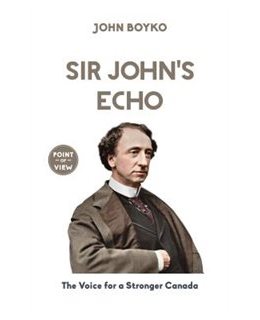
I don’t know about you, but I always just skim a book’s acknowledgments. They are usually akin to a bad Oscar speech: a list of names of people I don’t know. My latest book, Sir John’s Echo: The Voice for a Stronger Canada, was released last weekend. It’s my seventh book and this time I tried something a little different for my acknowledgments. I thanked some folks, of course, but also tried to consider what really inspired me to write. Let me know what you think.

Acknowledgments: Sir John’s Echo

Dividing and defining our Village is a river that, as Lakefield resident Margaret Laurence once observed, runs both ways. It does, you know. It really does. It is on long, slow runs along the river that I wrote this book. Oh, certainly I typed it in my office but the genuine work, the tumbling and juggling of ideas, the real stuff of writing, came accompanied by the falling of footsteps and washing of water.

And so, odd as it may seem, I would like to acknowledge and thank the river for its uncaring but profound inspiration. It reminded me that somewhere beneath its gently flowing surface, at the heart of its magic, hides the metaphor for our country. The truth and what truly matters lay not in the surface sparkles, gleaming as diamonds in the sun, but with the rocks and roots and weeds below that roil all above, offering resistance and form.

The river urged me to take a broader view, to consider more expansive ideas, deeper concepts, and to think not of passing fads and fancies that capture clicks and headlines but what really matters. Power. The power to shape, inspire, speed up or slow down, to move while lifting or, sometimes, pulling below.

That’s what this book is all about. Power. It’s the power of perpetual motion, of rugged beauty and gentle grace lying comfortably with the awful potential to direct or destroy. That is the river’s power. That is Canada’s power. That is the power we owe ourselves to contemplate; relentless power that moves even when we don’t notice, while we sleep, flexed and expressed and occasionally challenged, and while appearing to be heading in one direction in a natural, linear fashion, sometimes, flows both ways.  I thank the river for encouraging my contemplation so that I might invite yours.

And what of Margaret Laurence? I thank her for being among those who taught me a love of words and a respect for the power of ideas powerfully expressed. There were others: Margaret Atwood, Leonard Cohen, John Lennon, Kurt Vonnegut, John Ralston Saul, John Prine, Doris Kearns Goodwin, Shelby Foote, Gwynne Dyer, Paul Simon, and John W. Boyko, Sr. I thank them all.

This book began with a conversation between Patrick Boyer, Steve Paikin, and me – three men insatiably entranced by books, politics, ideas, and Canada. Patrick invited me to contribute a book to Dundurn’s Point of View series as part of the commemoration of Canada’s 150th birthday. Make it controversial, Patrick urged, stir readers’ passions and propose notions to spark debate. Thank you, Patrick, for inviting and trusting me to write and for your valuable suggestions on an early draft. I hope I have not let you down.

Sir John's Echo

Thank you to the Dundurn team who embraced me so thoughtfully and supported me so professionally. I am grateful for the vision of president and publisher Kirk Howard, and for the editorial skills of Dominic Farrell, Cheryl Hawley, and Michael Carroll. I thank the talented Lawrence Martin for his constructive suggestions and fine forward.

This is my seventh book and I have lost count of the number of editorials, articles, and blog posts I have written. My dear wife Sue has read and edited every word. She brings to all I do an unparalleled editorial precision and skill and sense of when something is going on a little too long or needs to be fleshed out. She knows what it is about my work that works, and doesn’t. Her kindness, care, tenderness, wit, and love, makes all I do better, possible, and worthwhile.

I am grateful to Craig Pyette and Ann Collins of Penguin Random House Knopf who lent me to Dundurn for this project and to my literary agent Daphne Hart who encouraged me.

Being a father is one thing but being a grandfather is something else altogether. Grandchildren teach you to love all over again. Without trying, my two sweet granddaughters remind me of all that truly matters, including the country in which they will be making their lives. Canada was not inevitable and is not immutable. All that is great about it, from its stunning physical beauty to the strength and marvel of its complexity, must be not just celebrated but protected. You won’t protect what you don’t love and can’t protect what you don’t understand. Without understanding, we can sing about standing on guard but not really do the deed. It is the future of my grandchildren, and yours, even if you don’t yet know them, that renders the striving to understand, in order to protect what is worth protecting, worth the effort. I thank my grandchildren for inspiring my contemplation of the home they deserve.

Thank you for reading my thank yous. Please share them with others if you wish. I am now on the road promoting Sir John’s Echo, doing TV, radio, and print interviews, as well as speeches. It is the business part of the book business. I’m also hard at work on my 8th book. Writing is fun.


Rule One at the Men’s Book Club

I have always loved reading. I recall my Mom telling me to put the book down and go outside and play, and my sneaking it out with me. I was an active, sports-loving kid but she later told me that, despite being a voracious reader herself, she was sincerely worried about me reading so much. My first job was delivering 139 Burlington Post newspapers every Wednesday for which I was paid $1.39. (It was a while ago.) I used to save up, and every two weeks buy a bottle of coke and Hardy Boys book. It is my fascination with reading and books that led to my becoming a writer and, lately, to forming the Men’s Book Club.

I have always liked the idea of book clubs. To get together once a month to discuss a book seems like a grand idea. My dear wife belongs to a book club. I see her reading away, we talk about her current project, and she always arrives home from her book club meeting invigorated by the discussion; whether she particularly liked the book or not. But there were a few problems, in my estimation, with most book clubs. Around here, anyway, they involve only women, hosting meetings at your home with carefully considered drinks and snacks, and the reading of novels. The first left me out and the next two left me cold.

I spoke with a number of men in my Village who felt the same way. Hosting seemed like too much work and we agreed that we are fundamentally lazy. Like me, they read ten non-fiction books for every novel. Don’t get me wrong. I think novels are important and great and there have been many that I have truly enjoyed – springing to mind are The Art of Racing in the Rain, The Lottery, and my John Grisham junk food. But non-fiction is different. Non-fiction books feed my insatiable curiosity. To me, non-fiction books are like speaking with the smartest people around about the most fascinating events, people, and places. Others agreed and so we made a decision.

Rule One at the Men's Book Club

(Photo: www.123rf.com)

Our first Men’s Book Club met in February. Eleven showed up. We met at our local pub, the Canoe and Paddle, on a Sunday evening. No one had to tidy up their house and if you wanted something to eat or drink, the bar was right there. (We agreed that if there is beer involved, men will do just about anything, even read.)

After the pints arrived, we discussed the rules we should play by and it was established that the first rule of book club was that there were no rules. Perfect. Our second decision built on the first. Instead of us all reading the same book each month, we established themes. Our first month would be music, then the environment, and then, for the 100th commemoration of Vimy Ridge, war. Near the end, one gentleman said that he loved the idea of meeting for beer and chatting once a month but wondered if he really had to read a book. He was referred to rule one.

Our first Monday in March meeting was terrific. I had enjoyed Robbie Robertson’s Testimony. Others read books about or by Bruce Springsteen, the Beatles, Bruce Coburn, Sting, and more. It was fascinating to learn how many talented singers and songwriters came from parents either physically or emotionally absent or abusive. It was revealing to see how long and hard they had all worked to become successful. It was also interesting to see that behind the sensitive lyrics, some are not really nice people. We wouldn’t have been able to make the connections if we’d all read the same book.

For our next meeting, I am now reading Wade Davis’ The Wayfinders. It is not really about the environment. It’s more cultural anthropology. But it’s close enough to the theme. If anyone complains, I’ll refer them to rule one.

If you enjoyed this column, please share it with others and consider checking more at http://www.johboyko.com or even some of my non-fiction books, available online through Chapters and Amazon and, as Stuart McLean used to say, at sensible book stores everywhere. (Miss you Stuart.)


One-Sentence Lives and a Challenge

Long-time Toronto Blue Jays announcer Tom Cheek once said that every baseball season begins as a story, turns to a paragraph, and ends as a sentence. “Boston breaks the Bambino curse.” “Carter hits the walk-off homer.”

I believe that what is true of baseball is also true of people’s lives. It was this thought that helped me to complete a writing commission in which I was asked to write one-sentence biographies of all 23 Canadian prime ministers. The thought also helped me to reflect on a birthday of note; one of those ending in a zero that moved me into a new decade.

I offer one of the one-sentence biographies and then my own. They are, I confess, run-on sentences that would have my editor’s red pen flying and old English teachers’ fingers wagging, but one sentence none the less. Then comes the challenge.

one-sentence-lives-and-a-challenge

Sir John A. Macdonald: As the most prominent voice at the Confederation conferences, Macdonald was instrumental in creating Canada with its constitution placing dominant power with the federal parliament, essential in building Canada when, as our first prime minister, he added enormously to Canada’s size by purchasing Rupert’s Land and welcoming new provinces, and with his National Policy that allowed the country to grow on steel rails and behind tariff walls, and he was then key in saving Canada at the Washington Treaty negotiations that kept us from American annexation while winning recognition as a sovereign state, and, so, despite some tragic and wrong-headed policies, such as those involving Aboriginal nations, Macdonald was Canada’s indispensable man whose echo reverberates to this day.

And now for me: John Boyko is a walking talking advertisement for the power of existentialism for he has been a teacher, administrator, politician, musician, and author, whose insatiable curiosity, confidence in one’s ability to reinvent oneself, and belief in seeking motive in challenge rather than comfort, and value in experience over things, have informed his life, while through it all he has been a loyal if sometimes annoying friend, and, in the most important part of his life, a devoted but sometimes flawed husband, father, and grandfather.

Our lives are write-your-own-adventure stories. There are so many more books to be read, places to explore, ideas to consider, challenges to be accepted, and warm moments to build and share.

And so now the challenge. I challenge you to write your one-sentence biography. If unhappy with the sentence as written, I sincerely believe we can write ourselves a better tomorrow. Our greatest fear is not that we don’t have enough power to change but that we have more than enough.

If you enjoyed this column, please share it with others and consider checking more of my thoughts at http://www.johnboyko.com or even my books, available online at Chapters and Amazon and bookstores (if you can still find one).


The Power of No

The most powerful word I know is no. I have determined to embrace its elegance to urge the bright and positive from its deceptive negative.

No to My Phone

My phone is a tool that has too often made me act like one. I shake my head at couples in restaurants tapping phones while ignoring each other and at teenagers huddled as pet shop puppies but engaged with others elsewhere that they probably don’t even know. But then I feel that drip of dopamine when the thing dings. No more.

When in a restaurant it will remain in the car. When with friends and family it will remain in my room. When in a meeting it will remain in my office. I will still use it to read news in the morning and tweet things I find funny, interesting, or infuriating, to bank, and, like now, check Facebook once every other day or so. But I will stage my coup d’état and conquer my phone by saying no to its addictive lure.

No to Coffee and Wine

 This one hurts. I sing in a little pop band and about a year ago I noticed that some notes were getting harder to sustain and some actually hurt. I was dreadfully hoarse the day after rehearsals and gigs. I felt like there was always something in the back of my throat. The doctor said, as doctors often do, that it could be nothing or it could be cancer. Great. Three months later (living with those options made days interesting) a specialist said that I had laryngopharyngeal reflux. Great again. I’ll live but can’t pronounce my ailment.

It means that stomach acid has been heading up the esophagus and, without causing the usual heartburn, damaging tissue by my vocal chords. After a discussion of my lifestyle and habits, he recommended that I continue running (that’s good), cut songs at the top of my range (rats), and say no to things that cause the acid reflux (good God!).

For four weeks now I have said no to snacks after 7:00 pm, no to red wine, and no to coffee. The snacks and wine were easy. Cold turkey on coffee rewarded me with three days of booming headaches. I had been an addict. Every morning I still have a dreadful yearning for that old jolt which is, I guess, like an alcoholic passing a bar. But I’m proud of my no.

the-power-of-no

No to Stuff

Last summer my brothers and I emptied my Dad’s house. He had lived there for over 40 years and we had been children there. It was hard. Most fascinating was the four of us transitioning from smiles over sentimental keepsakes to throwing junk in the dumpster. We gave a lot to a committee supporting two Syrian refugee families and more to charity. We took a few things and sold others but most went into the big steel box in the driveway.

I have always believed, as minimalists do, that you should love people and use stuff and not the other way around. The summer experience reinforced that notion and led me to attack the relatively small amount of stuff I have. There were trips to the dump and to the charity drop off. Old records, dozens of books, old clothes, and much more went out the door. Dumping stuff was made easier by my wondering what was in the back of my throat.

Last summer reminded me of time’s ruthlessness, life’s frailty, and what truly matters in the end. It confirmed the belief that the last thing I ever want anyone to say about me when I’m gone is that the guy sure had a lot of nice stuff.

No to Negative

The Enlightenment tricked us into thinking that progress is linear and things will always get better. Last year reminded us that time moves not in lines but circles. Recall that Germany gave us Beethoven and then the Holocaust. Trump and Brexit and those now selling the same anger, fear, and misinformation and flat out lies remain distressing. But all tyrannies, whether of people or ideas, all of them, fall. Always. Think about that. Always.

It is better to celebrate the best of us than despair the worst of us. I will say no to impugning motives and being enraged by the dopy and dangerous incuriosity of others. I will do it secure in the belief that the pendulum will swing as it always does. Darkness, after all, is defenseless against light.

No to Gremlins

We all have them. They are the negative thoughts that haunt us; the little voices in our heads that remind us of mistakes and say we’re just lucky or not good enough. I have another book coming out in April. The gremlins will be shouting. Like every author I have read good reviews that make the gremlins laugh in disbelief and bad reviews that have them waggle their crooked little “I told you so” fingers. When I hear them whispering about my book and other aspects of my life I will steal their power by saying no. I will do so by acknowledging their existence and then telling them to bugger off.

So, I’m off for another trip around the sun in a year I will need to play by ear. I’ll travel confident that the power of no will bring the rewards of yes to the happiness I seek for myself and those I love.

If you enjoyed this column, please share it with others and consider leaving a comment.

Dear Canada: Winter

Dear Canada,

Summer is easy. What’s not to love about you in summer? Character, however, is only built and revealed in adversity. So anyone wanting to know you, anyone wanting to know us, has to know winter.

The leaves and temperature fall and everyone knows it’s on its way. Summer stuff gets stored, the outside water is shut off, and the sky goes purple-gray and silent as the last of the cowardly birds betray us and go. And then comes the day, snow’s first day, when we stand at the window and watch with a child’s eyes; as if for the first time. We marvel as snow too white to be real sparkles diamonds in the sun. It blankets leafless trees standing defiantly brittle amid sagging spruce and pines. And the yard becomes art.

Winter slows us down. There is no such thing as rushing out when having to first don boots and coat and hat and scarf and mitts. Thank goodness for Velcro, but a child’s snow suit still demands patience and time and then more of both when disassembled for the pee that is somehow, again, forgotten. And then there is the path to be shoveled to the car that then needs to be unburied, de-iced, and warmed.

Speed limits are for summer. All but main roads are snow-packed for months and the occasional melts turn them to pock-marked Passchendaele. Streets scoff at the oceans of salt and Sierras of sand so we bounce and creep, especially around corners with their paint-smeared telephone poles reminding us to be patient. The days shrivel. We make our way to and from work in inky darkness smudged with ghostly plumes of exhaust. Snowflakes that would be pretty if we were home with a fire and a glass of hearty red are instead headlight-engorged rockets that fire mercilessly into windshields inducing a hideous hypnosis.

Things do not speed up upon arrival. Three feet inside every public doorway stands a momentary community with their fogged-up glasses all exchanging knowing, blurry glances. Then it’s the slow, walking strip-tease, because everywhere inside in winter is warmer than outside in summer. Work places resemble used shoe stores with wet boots on soppy mats. Everyone’s hair is the shape of their hats. We approach door knobs with dread and sometimes actually see sparks. After a while, every place smells the same – wet wool and cough drops. It isn’t exactly bad and it doesn’t really matter because with the cold we’ve all been fighting for weeks it’s hard to smell anything anyway.

Winter can sometimes stop you altogether. What is more glorious than a snow day? We hear it on the radio and we’re suddenly all children. The radio also brings reports from the city’s “Thank God it’s Monday” crowd who slide and smash into one another to get to the vertical ice cube trays where they are apparently indispensable; unaware that no one’s keeping score. The wind howls hurricanes down concrete canyons that are empty of all of but the intrepid as the city-below-the-city bustles in its high-heeled obliviousness. Just a few miles away it’s all quite different.

dear-canada-winter

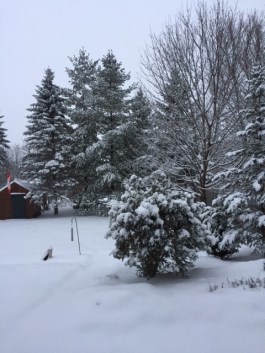
My yard, last snow day

Township and county plows tend to the main roads but it’s always a long while before they get to most streets, so there’s time for another coffee. Kids who usually fight to stay under covers burst outside with wide smiles and bright eyes and without a screen in sight. Folks are soon in driveways, leaning on shovels and speaking with neighbours who lean on theirs. Why not? Everyone knows the game. We scrape and shovel and throw it high onto piles that seem taller than last year. The plow waits until it senses we’re done and then, only then, it thunders by with three feet of plowcrete. The shoveling army mobilizes again; there’s nothing like a good minus-ten-degree sweat.

Climate change’s thaws and freezes have euchred all but the most dedicated backyard rink masters, but the little bay still goes stiff. Nothing’s ever organized but somehow it always gets scraped and there is skating for all. Windswept days between snowfalls sometimes provide the magic of pick-up hockey with nets a ridiculous distance apart. It seems fittingly patriotic to finish a hundred yard breakaway on a frigid sunny afternoon in the world’s only country with a hockey player on its Bill of Rights.

Gravity games rule. What’s not to love about skiing, tobogganing, and sledding. Kids love the snow-mountains that grow beside the school parking lot. Look up every big or little hill and see somebody in a primary-coloured snowsuit sliding down. Evening walks offer the joy of the crisp boot-fall crunch and the smell of woodstoves that stir a deep and primal yearning that’s lovely in its mystery. The stars seem closer and clearer. Lungs burn, breath freezes, cheeks redden, and there is nothing more romantic than holding hands through down-filled mitts.

Muddy April is marvelous but brings fixing and raking and cleaning. The gifts left by months-worth of wandering dogs present themselves along with the recycle stuff that cycloned from blue boxes Tuesday after Tuesday. Purple crocuses pierce the last bits of crystalline snow. The magical, riotous tulips remind us that the world is not black and white after all. There is always that one last storm with snow as pretty as the first but we damn it this time and steal its power by steadfastly refusing to shovel it; there, that will teach it. We convince ourselves that it will melt soon enough, and sure enough, it does. And then there is green, oh green, glorious green.

Winter defines. Winter slows, and winter stops. Winter reminds us that we are not the boss. It ignites a humble admiration for the power and majestic beauty of the true boss. It invites community. Winter says that work can wait and time with family is the only wealth, recognition, or reward we need; everything else is by the by. Winter reminds us that, like those dark nights with gently falling snow or those bold, defiant tulips, nothing lasts forever – nothing. But it’s all good right now, and right now, that’s good enough.

Sincerely,

A friend.

Song For A Winter’s Night  by Gordon Lightfoot

The lamp is burning low upon my table top

The snow is softly falling

The air is still in the silence of my room

I hear your voice softly calling

If I could only have you near

To breathe a sigh or two

I would be happy just to hold the hands I love

On this winter night with you


The smoke is rising in the shadows overhead

My glass is almost empty

I read again between the lines upon the page

The words of love you sent me

If I could know within my heart

That you were lonely too

I would be happy just to hold the hands I love

On this winter night with you


The fire is dying now, my lamp is growing dim

The shades of night are lifting

The morning light steals across my window pane

Where webs of snow are drifting

If I could only have you near

To breathe a sigh or two

I would be happy just to hold the hands I love

And to be once again with you

To be once again with you

Inventing Change: Why We Do the Things We Do

Consider when you showed up at work this morning and the consequences if you were late. How do you measure the power of your car and the light bulbs in your home? Consider your notions of a healthy environment, how your children are educated, and why most of us live where we do.

In that consideration, pay mind to the fact that at the Crofton Pump Station in Wiltshire, south of Birmingham, England, a steam-driven pump is pushing about twelve tons of water a minute to operate the locks along the Kennet and Avon canal. The same pump has been operating efficiently since it was installed in 1812. More than that, the pump’s core technology, and the notion that led to its invention, changed your world and is affecting you today in ways you seldom stop to think about. Change, you see, is sneaky.

inventing-changePhoto: feelgrafix.com

In 17th century Britain, coal had replaced wood as a source of energy. The need for more coal led to deeper mines which had a tendency to flood. At first, horses walked in endless circles to power the pumps that drained the mines. Then, using technology first developed by Hero in ancient Greece, Newcomen engines were developed. They burned coal to heat water to create steam which, when injected through big cylinders, caused a piston to move up and down to pump the water. In 1763, an enterprising young Scottish craftsman named James Watt was asked by the University of Glasgow to fix a broken Newcomen steam engine. He did more than that. He undertook a ten-year journey to solve the pump’s inadequacies. He even learned to read Italian and German to study current research.

Watt eventually invented a separate condenser that allowed cylinders to maintain a constant temperature and the pump to become enormously more efficient. He then formed a partnership with businessman Matthew Boulton. With Boulton’s financial backing and the use of his company’s precision tools and machinery, Watt invented an entirely new steam engine based on a rotary engine with separate gears and his separate condenser. It was powerful, efficient, reliable, and allowed an operator to control its heat and speed.

(For CBC TV fans, Watt’s brilliant assistant who ingeniously developed new tools and ways of doing things was named William Murdoch.)

To sell his engines, Watt calculated that a mill horse could pull about 33,000 pounds of grain one foot per minute. His engine, however, could push 200 times that amount of grain per minute. He boasted, therefore, that his engine had the equivalent power of 200 horses. A unit of measure was invented that could be easily understood. Watt’s company could barely meet the demand for his 200 horsepower engines.

Bouton-Watt steam engines were soon pumping water from every mine in the country. More coal was extracted than ever before. Brewers used the engine to grind ingredients. Steam engines were soon powering cotton-spinning textile factories and flint mills. Giant steam-powered bellows allowed manufacturers to smelt more refined iron than had been previously imaginable. Steam-powered rolling mills produced better quality steel which was used to make better machinery, tools, and buildings. Every industry that switched from water and horses to steam saw their productivity explode.

It was not long before another English inventor, Robert Trevithick, adapted the steam engine to move wheels and, in so doing, created the first locomotive. In 1830, George Stephenson announced the Rocket. The Rocket was the world’s fastest and most powerful locomotive and was soon moving what had been previously considered unbelievable amounts of freight at unfathomable speeds, up to 36 miles per hour. The world’s first railway linked Manchester mills to Liverpool’s docks. From there, newly developed steam -powered ocean going ships made with steel from steam-powered foundries linked those docks to the world.

Britain’s economy boomed. In the first fifty years of the nineteenth century, it became the world’s leading manufacturer and exporter of steel, iron, textiles, and coal. Iron alone increased its production by an astounding 2,500%. A circle was created where colonies provided raw materials and then the markets for finished products. With its far-flung colonies and secure trade routes all protected by its enormous navy, the steam engine and the industrial revolution it had unleashed saw Britain become the richest and most powerful empire of all time.

Like in all revolutions, the industrial revolution had winners and losers. The few, the less than one percent, grew enormously wealthy through controlling the import of sugar, cotton, and more from the colonies. Others owned or invested in the railways and shipping lines. A few owned or controlled the mills or as Marx would call them, the means of production.

And those growing mills, factories, ports, trains, and ships needed workers. Thousands left farms and obsolete village cottage industries. Former farm workers made more of the tractors that replaced them in the first place. Rapid urbanization saw many cities grow. London became the economic and cultural capital of the world with its population doubling in only fifty years to 2.7 million. People left relatively independent self-sufficient lives to live in deplorable conditions and, at work, act like the cogs in the machines they serviced. Author Charlotte Bronte wrote in Shirley: A Tale, “Misery generates hate: these sufferers hated the machines which they believed took their bread from them: they hated the buildings which contained those machines; they hated the manufacturers who owned those buildings.”

People living in Africa, Asia, and the middle east, often against their own will, became under paid or sometimes unpaid workers that fed British wealth. The need for more textile material led southern American cotton plantation owners to buy more slaves and become so wealthy that, eventually, they thought they could split from the northern powers they never liked and create their own country. The ensuing Civil War killed 600,000 Americans.

Back in England, and in every other country that followed its lead into the industrial era, and for the first time, people cared about time. Farmers followed the sun and seasons. But factories didn’t obey nature, they conquered it. Nature’s time was defeated as workers had to show up at a particular time and were paid by the hour. There were regulated times for breaks, lunch, and going home. Trains had to run on time too and so schedules were created. The tallest feature in many cities and towns ceased to be church spires but the town clocks. For a long while, cities set clocks according to the sun, making schedules impossible to maintain until a Canadian, Sir Sanford Fleming, reworked the most fundamental part of our existence so that the new society that steam had created would work – he mapped out time zones and standardized time.

An education system was created to mimic factory hours and rules. The schools taught the factory mentality of rote learning and obedience to the boss. School was considered practical only if it rendered one better able to work. It was industrial revolution teaching for a determined purpose and not, as the Greeks had envisioned, learning to become a wiser person.

But most kids didn’t attend. Children had worked before but with the massive movement of people and the new, insatiable need for labour, more children than ever came to know 16 hours shifts in the harshest of conditions. The 1832 Sadler Committee Report described parents often being separated from their kids for months or even years at a time and children being denied education, suffering workplace physical and sexual abuse, and sustaining more injuries than adult colleagues due to chronic fatigue. The report said that it was impossible to accurately state the number of children under 10 who died every year on the job.

The burning of so much coal to operate the factories and heat the new homes in the growing cities blackened the sky. It filled lungs with soot and brought disease and death. The rich escaped to big estates outside the cities and far from what radical Christian William Blake called in his poem Jerusalem, “dark satanic mills.” Ironically, many schools, those relics of industrial age educational organization, still maintain Jerusalem as their school song.

The world’s first seismic change, the agrarian revolution, began about four thousand years ago when it was discovered that one could grow food instead of chasing it. Farming made land the world’s most valuable resource and so the world’s richest people were those with the most of the stuff. They were called different things in different societies but in Britain, Lords controlled the land and the King, who owned the most land, controlled the Lords. The industrial revolution meant that the richest people were suddenly those who didn’t own the land but controlled the factories. American steel magnate Andrew Carnegie, one of the richest people of the industrial age, in fact, one of the richest people ever, understood the change and how it had happened. He tipped his hat to James Watt by writing a biography of the Scottish inventor.

The world’s scientists understood too. Watt’s enduring influence in having created a new form of power is remembered each time you turn on a light or power-up nearly anything. A unit of power equal to one joule per second is called a watt.

A number of factors cause change and one of the most significant can be a single invention. Inventions are not discoveries. To discover something is impressive but is essentially noticing what already existed. To have noticed black holes in space was not to invent them. James Watt invented the steam engine and what that invention wrought changed the world. Although the industrial revolution is over, given way to the new information age, sparked by a new invention, its effects remain with us today in ways we seldom even think about.

I bet you showed up on time this morning. And meanwhile, in Compton, the pump keeps right on pumping.

If you enjoyed this column, please send it to others and consider checking my others at http://www.johnboyko.com

An Election Really Rigged – Part Two

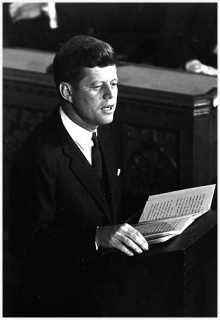
American presidents have ways of getting rid of governments they don’t like. Ask Iran (1953), GuatemalaAmerican presidents have ways of getting rid of foreign governments they don’t like. (1954), Congo (1960), Dominican Republic (1961), South Vietnam (1963), Brazil (1964), and Chile (1973). Or, as explained in my November 7th blog, part one of this story, ask Canada (1963). President John F. Kennedy played a direct role in helping to topple the teetering government of Prime Minister John Diefenbaker.

Now for part two. Kennedy’s efforts would be wasted if Lester Pearson’s Liberals, his preference to form Canada’s government, did not win the ensuing election. Kennedy set out to put Pearson in power.

The Pollster:

Pearson’s team had all read Theodore White’s brilliant The Making of the President 1960. It outlined factors that determined Kennedy’s success, including the use of frequent and targeted polling. Kennedy had hired former marketing executive Lou Harris. For the first time in electoral politics, a pollster worked exclusively for a campaign and employed daily random sampling to correlate and analyse massive amounts of data then suggest changes that shaped the candidate and message.

The Liberals had asked Harris for help in the 1962 election. He had previously been asked to assist the British Labour Party but the president wanted the Conservatives re-elected and so asked him to decline the job. After the call from the Canadian Liberals, Harris again asked Kennedy’s permission. He was soon on a plane to Ottawa. Now, a year later, he heading north again.

Like before, the Liberals sought to hide Kennedy’s man so Harris again assumed his wife’s maiden name and used the phony passport forged by the State Department. He avoided Parliament Hill where he might be recognized and attended weekly meetings at Pearson’s home. Harris hired 500 women who made daily calls across the country. The polling determined, for example, how Pearson would dress – in a straight and not bow tie – which cities he would visit, the policies he would emphasize, phrases he would use, and that the campaign would sell the team and not the leader.

Harris later said that Kennedy was, “…all but shouting from the sidelines. He hated Diefenbaker…He obviously couldn’t say anything publicly. But every day or two he would want to know how the election was going.”

The Reporter:

One of Kennedy’s closest friends was Newsweek magazine’s Washington bureau chief Benjamin Bradlee. Several times the two had discussed the need to get rid of Diefenbaker. In the campaign’s first week, Newsweek arrived in mailboxes and on newsstands across Canada with an arresting cover showing a disturbingly close-up and alarmingly unpleasant photograph of Diefenbaker over the title: Canada’s Diefenbaker: Decline and Fall. The accompanying article embarrassed even the prime minister’s staunchest critics: “It would be too flattering to dismiss him just as a superficial fellow – he’s really much dimmer than that.” The article claimed that that Diefenbaker lacked leadership skills, was unable to make decisions, and had been bad for Canada, NATO, America, and the world.

At a news conference the morning after the magazine’s release, Diefenbaker was greeted by reporters holding its cover up over their smiles. He laughed but burned inside. The Newsweek issue allowed him to openly add Kennedy to those he said were out to unseat him.

The Editorialist:

Among the newspapers clearly against Diefenbaker was the widely read Toronto Star. It published over a dozen articles by Sam Lubell that were crammed with quotes gathered from Canadians. None supported Diefenbaker. Typical were these from an April 2 article: “He’s so irresponsible he makes me ashamed I am a Canadian.” “I can’t stand to look at him on TV.” “He’s out on a limb sawing off our relations with the United States.”

Lubell was an American journalist, pollster, and political strategist. Among his closest friends was Kennedy’s national security advisor McGeorge Bundy. After the election, Lubell left for Europe carrying a letter of introduction from Bundy that stated, “He has been very helpful to the Government on more than one occasion, and he is a very able and disinterested reporter.”

The Ambassador:

The American ambassador to Canada was an old friend of the Kennedy family, Walter Butterworth. As all ambassadors do, Butterworth sent home regular reports that summarized the editorial stands of a host of Canadian newspapers. He went further, though, and held regular, secret briefings with a select group of Canadian journalists who were known to be critical of Diefenbaker. Throughout the campaign, he fed them information to augment their pro-Pearson, anti-Diefenbaker articles and editorials. In communications to Washington he boasted of the degree to which he was shaping Canadian public opinion.

The Direction:

The Kennedy administration’s interference became so blatant that Pearson was forced to deny that he and the president were in direct contact. He was repeatedly heckled as an American stooge. As he approached the podium to address a large Vancouver rally, an American flag was unfurled before the stage and burned. Hecklers shouted “American Slave” and “Yankee Lover” as a group of young men in the balcony loaded long straws and pelted him with frozen peas. He shouted his speech while his wife, Maryon, sat stoically on the platform with tears streaming down her cheeks.

A couple of days later, Pearson was about to speak in Edmonton when he was told that he and Kennedy’s mutual friend,Washington-based Canadian journalist Max Freedman, was on the phone from the White House press room. Pearson was rushed to a janitor’s room to take the call. He was told that Freedman and Kennedy had been having dinner and discussing the election and that the president wanted to speak with him. A tired and frustrated Pearson explained how Kennedy’s actions were backfiring and finally shouted, “For God’s sake, tell the president not to say anything. I don’t want any help from him. This would be awful.”

Lou Harris reported to Kennedy that all the American interference in the Canadian campaign was actually hurting Pearson and pleaded with the president to “call off his dogs”. “And for God’s sake,” he said, “keep quiet about Pearson no matter what you’re thinking.” The chastened president directed Bundy to order staff not to necessarily stop interfering in the election, just stop getting caught. A memo read: “The President wishes to avoid any appearance of interference, even by responding to what may appear to be untruthful, distorted, or unethical statements or actions. Will you, therefore, please ensure that no one in your Departments, in Washington or in the field, says anything publicly about Canada until after the election without first clearing with the White House.”

Memo:

When Kennedy had visited Ottawa in 1961, he had mistakenly dropped a briefing memo written by his deputy national security assistant Walt Rostow. It was given to Diefenbaker who was incensed that it listed policies Kennedy would “push” Canada to adopt. Near the end of the 1963 campaign, Canadian journalists learned of the memo and wrote of the degree to which Kennedy was indeed “pushing” Canada.

The next morning, Kennedy saw an AP news story about the Rostow memo and immediately called Assistant Secretary of State Tyler. Kennedy read him excerpts and noted parts that he said were false. “Now it seems to me,” he said, “that he may have leaked this – Diefenbaker. It makes him look good and us look lousy…he’s a liar.” Kennedy asked Tyler to see what reaction the story was sparking in Canada and said, “If it is helping Diefenbaker we ought to knock it down. The question is how.”

A new Montreal Gazette article suggested that the memo contained a margin note, scribbled by the president, in which he referred to Diefenbaker using a “derogatory term” that was quickly purported to be “SOB”. Kennedy and Bundy discussed how they could handle the latest bad press without lending credibility to Diefenbaker’s claim that they were involved in the campaign. They decided that Kennedy’s press secretary would call the Gazette reporter and deny the SOB rumour. Minutes later, Time magazine’s Hugh Sidey was ushered into the White House for a previously arranged meeting. Still upset, Kennedy declared, “Now I want you to get this damn thing about Diefenbaker correct. I’ve been in this damn business long enough to know better than that. There are a lot of stupid mistakes I make but that isn’t one of them.” He added with a smile, “Besides, at the time I didn’t know what kind of guy Diefenbaker was.” Ben Bradlee later reported that Kennedy confided with him that he did not think Diefenbaker was a son of a bitch, he thought he was a prick.

Kennedy’s press secretary privately briefed selected reporters on the Rostow memo. From that meeting came an article by New York Times syndicated columnist James “Scotty” Reston, a mutual friend of Kennedy and Pearson. It appeared in the Montreal Star on the morning of April 8 – Election Day. It blamed Diefenbaker for the whole kerfuffle saying he had been wrong to have kept the memo, probably leaked news of its existence, had lied about it, and was wrong in using it for political advantage. As Canadians went to the polls, they pondered whether their prime minister was a liar or political rapscallion, and perhaps whether the president they admired so much thought he was a son of a bitch.

Voting Day:

Canadians did as Kennedy had hoped and elected a Liberals government. Lester Pearson became Canada’s prime minister. What had just happened was not secret. Washington Daily News columnist Richard Starnes noted, “It is an irony of history that President Kennedy’s Administration while properly charged with failures in Cuba, Laos and Europe is prevented by the rules of the game from claiming credit for a skilfully executed triumph elsewhere. The victory occurred in Canada where adroit statecraft by the American State Department brought down the bumbling crypto anti-Yankee government of Prime Minister John Diefenbaker and replaced it with a regime which promises to be faithful to the concept of Canadian-American interdependence…the Kennedy Administration must congratulate itself in private for its coup.” The Starnes column was passed around the State Department and White House with readers adding smug handwritten notes to its cover page. Assistant Secretary of State Tyler wrote to McGeorge Bundy: “Mac, You see how smart we, I mean you, are!”

Canadians knew too. In a column that appeared in papers across Canada, syndicated columnist Charles Lynch  wrote, “Diefenbaker was defeated by Kennedy.” His observation was echoed even in France where the Paris-Presse headline was succinct: “Canada has voted American.”

This question that comes first to mind is how this could have happened. The second, and more important given the Donald Trump victory, is could it happen again.

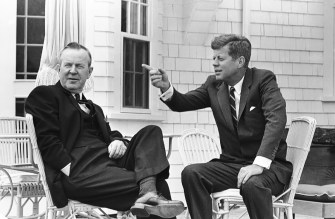
John F. Kennedy,  Lester Pearson Photo Toronto Star

If you enjoyed this column, please share it with others and consider checking part one of this story at https://atomic-temporary-67632770.wpcomstaging.com/2016/11/07/an-election-really-rigged-part-one/.

To learn more about Kennedy and Canada please consider Cold Fire: Kennedy’s Northern Front, available online and in sensible bookstores in Canada and the United States.


Why Laughter Matters

It was Red Skelton’s fault. From ‘30s vaudeville then radio, movies, and on to television, Skelton’s gentle humour always induced howls of laughter. In 1950, broadcast engineer Charles Rolland Douglass taped Skelton audiences. He then played snippets during a Hank McCune TV show. It worked. Folks at home were prompted to laugh along with the supposed studio audience. When it was reported that people found shows with laugh tracks funnier than those without, the “Laugh Box” was soon employed by all comedies. Without knowing it, generations of people perched before radios and televisions were laughing along with Skelton audiences. We laughed. And that’s no laughing matter because laughter matters.

Public speakers know. Regardless of the weightiness of the address, every good speech begins with levity. An audience becomes connected with each other and the speaker and so more willing to consider messages that come through the simple act of a shared laugh. Teachers know. Any educator who fails to see the link between entertainment and teaching knows nothing of either. Humour makes even the most mundane material more accessible and so learning, rather than just teaching becomes more likely. Preachers know. Witness the erasing of the wafer thin line between laughter and tears at every funeral when funny stories are told about the deceased. Permission to laugh offers permission to grieve.

All laughter is not good. Too many YouTube videos and cheap Comedy Channel programs rest upon enjoying the misfortunes of others. Leave it to the Germans to have named that sad brand of humour. They called it schadenfrude. A Leiden University study confirmed that we are embarrassed when laughing at others tripping, failing, or being humiliated. While we know it’s wrong, though, we just can’t help ourselves. The study also showed that narcissists, and folks with low self-esteem or mean streaks find schadenfrude particularly pleasurable. Picture Hitler laughing.

The Navajo people understand laughter’s mystical value. Their rich and complex culture portends that when a baby is born it is of two worlds – the spiritual and the earth. Adults await the child’s first chuckle. The first belly laugh, that bursting of pleasure that all parents treasure, signals that the child has completed the birth process and fully joined the family and community. The first laugh brings the A’wee Chi’deedloh or Baby Laughed ceremony. People gather and pass by the baby with plates brimming with food and exchange gifts of salt. The symbols of health and rejuvenation not only welcome the child fully to earth but also imbue the notion that a good life is one of generosity. Whoever induces the first laugh pays for the party so it is not uncommon for Navajo people to ask nervously when presented with a newborn, “Has this child laughed?”

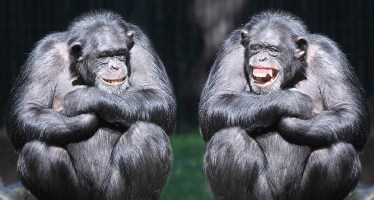
Human beings are not alone in laughter. Chimpanzees, gorillas, apes, and rats also laugh. Chimps love magic tricks and literally roll with laughter when surprised. Rats laugh when tickled and will move toward a hand or feather to enjoy it again. Koko the sign language expert gorilla surrenders to schadenfrude as she laughs when her handlers perform pratfalls. Humans are unique, though, in spending so much time and money, the equivalent of animals surrendering food, just to laugh.

Laughter Matters

(Photo: http://www.sciencenews.org)

So wait for it. Wait for it at the coffee shop or office. No matter how heavy the baggage lugged along, wait for it at family gatherings. The bursts of laughter are the shattering of barriers and linking of hearts. If only for that moment we become one. For that moment, we make gentle the harshness of the world and remember that we are here not to soil our souls with ambition or the gathering of stuff but simply to be happy; to be happy simply.

A young John Lennon once angered a teacher for when his class was asked to compose something on what they wanted to be in life he wrote, “Be happy.” The teacher said, “You did not understand the assignment.” Lennon replied, “You don’t understand life.” Red Skelton would have laughed.

If you enjoyed this column, please consider sharing it with others through Facebook or your social media of choice. Please also consider offering a comment.


Don’t Be Smug: Canada’s Racist Legacy

The recent gunshots in Dallas and echoing on many other American streets have reignited debates about state power and racism. It’s a 350-year-old argument with no sign of resolution. Canadians can learn a good deal from America’s twisting itself through its pain and search for solutions and redemption but should not feel smug. No one is clean. The history of systemic Canadian racism is too complex, long, and sad to consider here but let’s look briefly at one example to illustrate a point. Let’s look at Africville.

The bulldozers came in the morning. For days they roared like monsters demolishing houses and streets and even the church. They tore down what remained of Canada’s moral authority to say anything about race other than, “We were wrong.”

Africville was created in 1842 with land grants to African American families escaping slavery and discrimination with little more than the dream of better lives. The original sixteen single-acre lots overlooked the Bedford Basin and were separated from Halifax, Nova Scotia by a thick woods and impassable road. The community was called Campbell Road. As other Black families left the racism of Halifax and elsewhere seeking solace among friends it was dubbed ‘Africville’. The name stuck.

Links between Halifax and Africville grew over the years as kids were bussed to school and most of their parents worked in the city. Throughout the 1940s and 1950s, a number of famous people visited, including retired boxing champion Joe Louis and Duke Ellington, who married an Africville woman named Mildred Dixon. Folks were thrilled with the celebrities but understood that their hospitality was essential because while Louis and Ellington were feted in Halifax during the day they were unable to find lodging in the segregated city at night.

In that way, Halifax was no different than most other Canadian cities and towns. The Queen may have been Canada’s head of state but Jim Crow was boss. African Canadians grew used to restaurants where they could not eat, churches in which they could not pray, houses they could not buy, business licenses for which they could not apply, and schools their children could not attend.

Africvillephoto: Halifax.com

By the 1950s, Halifax had grown to nearly encircle Africville. City council embarked on a determined campaign to rid itself of the Black community that had become part of their city. Despite the fact that Africville’s people were Halifax citizens and paid municipal taxes, the road to and through the community was unpaved and in the winter it seldom saw a plow. There were no streetlights. There were no sewers. Families drew water from a central well that the city had dug as a “temporary measure” in 1852.

Police seldom patrolled and ignored most calls. In 1947, seven houses had been destroyed by fire because, although the fire department had been alerted, like usual, it had not responded. Insurance companies refused to sell home and property policies, so banks issued neither mortgages or home improvement loans.

Africville churchphoto: Halifax.com

Everything distasteful and dirty went to Africville. With no consultation with Africville’s citizens, and in defiance of petitions and presentations, Halifax council located in or adjacent to the community a pungent slaughterhouse, an oil refinery, and tar factory, a deafeningly loud stone crushing plant, and a hospital for infectious diseases. A railway company was allowed to build a line through the community and landowners were only partially compensated for expropriated land. The city dump was relocated 350 yards from west end Africville homes and then a smoke-belching incinerator was constructed nearby.

The disgraceful treatment of the community and the racism faced by those working in Halifax took its toll. Africville got tough. The “Mainline” portion of town was home to middle-class people who worked hard and did their best. The “Big Town” area, however, knew every crime and vice imaginable. The only white people who saw Africville came to Big Town for dirty old times after Halifax bars closed.

University of Toronto’s Gordon Stephenson wrote a report reflecting 1950s urban renewal practices. He recommended relocating Africville’s people and razing their homes. A 1962 Halifax Development Department report stated that the majority of Africville’s people did not want to leave; they just wanted the services that other Halifax citizens – White Halifax citizens – had enjoyed for decades. The report concluded, however, that the people should be ignored and the professor obeyed.

Concerned Africville citizens met at the heart of their community, the Seaview Church. Over a hundred people vowed to save their homes. Peter Edwards made an impassioned plea to city council on October 24, 1962. He spoke of Africville’s history and spirit. He spoke of the racist policies and treatment endured over the years and in the current process. “If they were a majority group,” he said, “you would have heard their impressions first.”

City council responded by hiring University of Toronto’s Albert Rose to again study the situation. No one was fooled. Rose had written Regent Park: A Study for Slum Clearance. They knew what he would say. In no time at all he said it. Africville was doomed.

Residents received an average of $500 for their homes. It was later discovered that additional assistance had been available but only 30% of the people were told about it and then only 15% of applicants were approved. People who had been self-sufficient homeowners were forced into a subsidized housing project and then forced to move again when told that even before they had been crammed into the ramshackle apartments, the complex had been scheduled for demolition.

By 1969, Africville was gone. The city had said it needed the land for industrial expansion but it never happened. It said it needed the land to construct a bridge but ended up using a sliver of the property.

In 1985, a monument was erected to the people of Africville in what had become the Seaview Memorial Park. The names of the original families were engraved in a stone. Family reunions began finding their way home with grandchildren being told the old stories. A former resident recalls, “Out home, we didn’t have a lot of money but we had each other. After the relocation, we didn’t have a lot of money – but we didn’t have each other.”

Africville lives. It lives as a symbol of the more than three hundred years of systemic racism that African Canadians endured and against which they struggled. In 2010, the Halifax City Council apologized to the people of Africville for all they did and did not do for the community. It apologized for Africville’s destruction.

A hectare of land was set aside and money allocated to rebuild the Seaview United Baptist Church. It will serve as a historical interpretive centre in a park renamed Africville. There, stories will be told of a time when racism coursed through Canadian veins and of a hope that someday, racism will be relegated to the dustbin of history. Someday.

If you enjoyed this column, please share it with others even buying my book entitled Last Steps to Freedom: The Evolution of Canadian Racism, that addresses the h. (Find it at Amazon or here at Chapters online: http://www.chapters.indigo.ca/en-ca/home/contributor/author/john-boyko/