Top 5 Concerts of the Last 5 Decades

Top 5 Concerts of the Last 5 Decades

Taxes are the price we pay for living in a civilized society but books and music are the best evidence that the civilization is thriving. Let’s leave books aside for the moment and consider music. People far smarter than me have failed to determine exactly why music is so pleasurable. It can be a hot bath or a cold shower, a dose of valium or a hit of Red Bull; music can be stimulating, irritating, compensating and luxuriating.

If the best way to experience music is to play it with others then the second best is to experience it with others. A concert is a visual, auditory, sociological carnival. The difference between a concert and a recording is like between a movie and a play. The concert is immediate, existing only in the moment, and enjoyed in the dark with others. There is danger because mistakes can be made. It is enthralling because art is being created right before your eyes. It is art that will exist only for an instant and then be gone forever.

I have experienced a lot of concerts and will not bore you with the entire list. A few I’ve enjoyed include Eric Clapton, Bob Dylan, Bruce Springsteen, John Fogerty, Buddy Guy, Ben Harper, Sheryl Crow, Elvis Costello, Willie Nelson, John Hiatt, Jackson Browne, the Beach Boys, the Monkees, Phish, Bare Naked Ladies, Blue Rodeo, Chicago, Johnny Cash, Ricky Nelson, Ringo Starr, Kris Kristofferson and on and on.

Many concerts have disappointed. I saw Gordon Lightfoot in his prime but left wondering if he really wanted to be there. I saw B. B. King and Chuck Berry when their primes were in the rear view mirror. King rambled rather than played and twice during solos that he clumsily threw to his pick-up band Berry forgot what song he was singing.

Some concerts have delighted me. Bruce Springsteen was, well, he was Bruce for over three hours, outdoors, blasting into the summer breeze rock n roll played by grown men. All three Paul McCartney concerts left me amazed with the man’s energy, talent and catalogue. The first time I saw Elvis Presley I was thrilled by the musicianship of his band, his energy and charisma, and the power of his voice that in a couple ballads and gospel numbers seemed to shake the arena.

Image

Elvis in Niagara Falls, New York in 1975

I was once in Nashville. Arriving early to see Jerry Lee Lewis I found myself in a tiny, chicken BBQ juke-joint. I was told that the concert was out back and so walked through a small door and into a large parking lot with a thousand stacked-up folding chairs and a stage at one end. I pulled a steel chair from the pile, placed it in what would become the front row and a twelve-year-old boy offered to guard it for a dollar.  I returned an hour later to find the place packed and the boy good to his word. Lewis was terrific. He explained that when his career collapsed in scandal that the owner of the place was one of the few who would hire him and so he performed once a year to return the favour.

The best concerts are those that surprise me. One year at the Mariposa Folk Festival, back when it was on Toronto Island, we heard a deep baritone coming from a small stage. We spread our blanket and were captivated by the voice, songs and stories of Stan Rogers. Another Mariposa festival ended with John Prine. The brilliance of lyrics that combined humour, insight and bathos was magnificent and to top off a perfect show he was joined by his pal Steve Goodman. They played Souvenirs and Paradise and seemed lost in the joy of the songs, the crowd, and each other’s company. Music’s ability to unite strangers was evident with the sound (and aroma) of hundreds of us singing Paradise over and over again on the ferry back to the city.

Paul Simon’s Graceland tour was a special moment in cultural, political and musical history. Maple Leaf Gardens was an awful place to see a concert. I had seen the Good Brothers there and Jimmy Buffet and Neil Diamond and everyone always suffered the bad sight-lines and worse sound. That rainy night it did not matter. Nelson Mandela was still in jail and apartheid appeared invincible. But Lady Smith Black Mambazo danced with moves and rhythms that shocked and enchanted. They and others sang of their homeland sometimes in words we could not comprehend but with an emotional commitment that could not be denied. Simon was great but almost an afterthought as the singers, musicians and music of a country in pain beguiled us with a joyous spirit of undiminished hope.
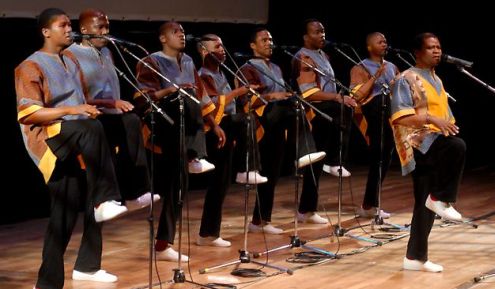
Image Lady Smith Black Mambazo

The most surprising concert of all, and therefore my favorite, was close to home. The Pines is gone now. For generations it was an institution. The Pines was a smoke-smelling, falling-down, big box of a building just outside of my hometown that harkened back to the honkey tonks of the American south. At least, that’s what Ronnie Hawkins said one night as he led his band through old rock-a-billy songs while sipping vodka and orange juice from a beer pitcher.

Superman Song was on the radio at the time. It was funny and mournful. It was hopeful and sad. It spoke of Superman’s funeral, attended by his old superhero pals who were in awe of his life’s work but understood a man who felt unappreciated, unrewarded, and with an immigrant’s sense of homelessness. The band was called the Crash Test Dummies. The singer, Brad Roberts, sang so low and with a tone so melancholy that it suggested the voice of Methuselah; or maybe of God Himself. We bought tickets based on that one song.

Our surprising night began with the opening act. Lennie Gallant is from PEI and at that point had just recorded his first album. He had borrowed sound equipment from a friend; it was all stamped Rita McNeil. His voice was strong, his band was stronger and his songs were stronger still. They had catchy hooks, clever changes and lyrics that actually said something of life’s challenges and love’s trials and of a region of the country where there is a constant battle between hope, fear and fun. Every song was better than the last. At one point he sang a ballad of the sea, accompanying himself on an Irish bodran.  The night could have ended there, but then it got even better.
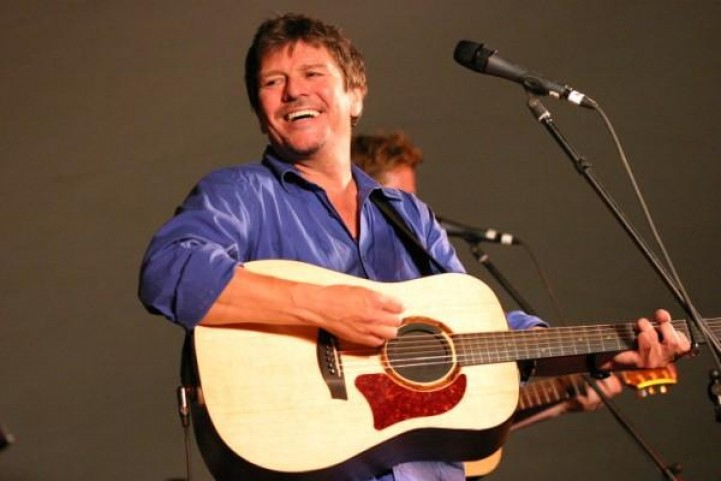
Image Lennie Gallant

The Crash Test Dummies exuded the perfect balance of show biz swagger and Canadian modesty. Roberts was obviously the leader and his voice the star. The harmony vocals of Ellen Reid were angelic. Her sarcastic banter and sly smile kept Roberts humble. Roberts introduced the band that included his older brother who he said was behind him and to the left but was smarter, more talented, better looking and more popular with women but still, he reminded us, behind him and to the left.

The songs were ingenious without being glib. The melodies were like all well-crafted songs in that they were fresh but instantly memorable and stirred an inkling that I’d had heard them before. Each offered a new perspective on an old idea. Each used interesting metaphors and offered unpredictable patterns and breaks, rhythms and instrumentation. Unlike some bands, no one showed off. They seemed to remember that when the songs are strong they will do the work; no one overpowered the songs or each other. You could see them playing for us but listening to each other and enjoying themselves; that’s why they call it playing. They sang their whole debut album and the Superman Song twice.
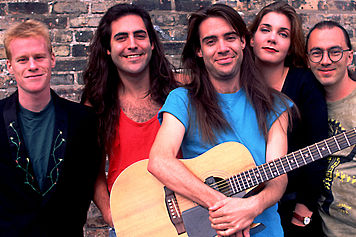
Image Crash Test Dummies

It was the best concert ever because I went expecting nothing and was surprised by everything. It was the music, the players, crowd, the venue, and those I was with – it was perfect. Canada has incredible musical talent. I’ve enjoyed concerts by Sam Roberts, Blue Rodeo, the Sadies, Randy Bachman, Serena Ryder, Royal Wood, April Wine, the Guess Who, Cowboy Junkies, Valdy, Murray McLaughlin, Blackie and Rodeo Kings and many more but I always kind of knew what to expect. But that night at the Pines, way back in 1991 took me by surprise and left me dazzled. The Crash Test Dummies and Lennie Gallant – the best concert ever.

    Top 5 Concerts of the Last 5 Decades

  1. Crash Test Dummies and Lennie Gallant – 1991
  2. Paul Simon – Graceland – 1986
  3. Bruce Springsteen – 2013
  4. Elvis Presley – 1975
  5. Paul McCartney – 2002

John Diefenbaker’s Legacy and Lessons for Today

The best part about History is that won’t shut up. It insists that we consider things we don’t know and, even better, reconsider things we thought we knew for sure. We were reminded of History’s relentless truculence last fall when Saskatoon’s Stan Goertzen announced that his father was Prime Minister John Diefenbaker’s illegitimate son. Diefenbaker was Canada’s prime minister from 1957 to 1963. He was married twice but had no children, at least, that is, none by those marriages. DNA testing has apparently proven that Goertzen is related to Toronto’s George Dryden, who claims to be another of Diefenbaker’s secret children. The revelations have comforted men seeking clarity about their pasts. The startling news offers us an invitation to reconsider what we thought we knew about Diefenbaker. Perhaps our accepting that invitation invites us to reconsider all that we thought we knew about Diefenbaker’s legacy and his lessons for today.

With the 2015 election on the horizon, we are discussing dirty tricks, attack ads and charm versus experience. In 1957, Diefenbaker ended 22 years of Liberal rule as voters turned against a government perceived to be corrupt, controlling and arrogant. The next election, held only a few months later, saw Dief-mania. Crowds swarmed, women fainted and men reverently reached out to touch his sleeve. His speeches were emotional, evangelical feats of oratory that were short on facts but reached out to hearts and dared voters to dream. Liberal attacks were vicious. With the Second World War fresh in everyone’s mind a favorite tactic in many local campaigns was to remind voters of Diefenbaker’s Germanic name. Many of his speeches were interrupted with bigots yelling out “Hun” and worse. It didn’t matter. His campaign had become a movement and attacks were wasted where charisma ruled the day. His Progressive Conservatives took 208 of 265 seats; as a percentage of seats to be won, it remains the largest majority we’ve ever known.

Image  Diefenbaker rally in Quebec City

As our middle class collapses, we are discussing wage disparity and the power of the “One Percent”. We are seeing a revival of Reaganomics in the current Ontario election with the Tory leader convinced that firing 100,000 people and cutting corporate taxes is the best way to ensure prosperity once the benefits afforded the rich trickle down to the rest of us. The notion, of course, is that rich people won’t work because they don’t have enough money and that the poor won’t work because they have too much. John Diefenbaker was a Red Tory populist. He said that the concentration of power and wealth among a privileged few was unfair and un-Canadian. Diefenbaker criticized “elites” and argued for a more equitable balance of wealth and opportunity. His policies led to more income and security for working class families and farmers. He sought greater trade opportunities in China and elsewhere with the conviction that new markets would spur not just profits but profits and jobs; not profits instead of jobs.

We are weighing immigration reform and the hiring of temporary foreign workers while the voters of Quebec made their decision on the blatantly discriminatory Charter of Values. A Montreal Canadiens hockey player who happens to be Black was recently slurred with racist taunts many of us thought belonged to the past. Diefenbaker dedicated himself to what he called ‘One Canada’. He envisioned a society where everyone is accepted for who they are rather than what they are. He appointed the first person of Ukrainian descent and the first woman to cabinet. He appointed the first Aboriginal Senator. In 1960, Diefenbaker passed a law granting Native Peoples the right to vote; it was a far cry from correcting Canada’s original sin, of course, but an important first step. He enshrined equality under the law by creating the Canadian Bill of Rights. In so doing he declared that we should consider ourselves not consumers but citizens. Diefenbaker also led the fight to rally the world against apartheid and organized the Commonwealth’s expulsion of South Africa.

Sir John A. Macdonald was a transformational leader who spoke not of small ideas to win votes in the next election but of a grand vision to realize benefits for the next generation. Macdonald dreamed of moving Canada west. Diefenbaker dreamed of moving Canada north. He knew the North would not be developed and its potential not fully realized during his time in office or even during his life time but as with an oak tree the best time to plant is either twenty years ago or today. Diefenbaker advocated and then began the building what he called “roads to resources”. As climate change changes the world it is beginning with the North. It is causing damage and creating opportunities. We are now exerting our Arctic sovereignty with a renewed vigor that would make Diefenbaker smile.

The Keystone XL Pipeline and Canadian Middle East policies are now testing our relationship with the United States. President Kennedy insisted that Canada join the Organization of American States but Diefenbaker said no. Kennedy demanded that Canada house American nuclear weapons but Diefenbaker said no. Kennedy said Canada should end its trade with Cuba and China but Diefenbaker said no. Kennedy offered assurances that Canada would be consulted on all issues related to continental defense but then, with no consultation, he assumed Canada’s immediate and unreserved support during the Cuban Missile Crisis – Diefenbaker said no. Diefenbaker was not anti-American, he was pro-Canadian. In all that he did he acted like Canada was a sovereign state to be respected. Kennedy acted like Canada was a satellite that should be obedient. Diefenbaker stood up to the bully and didn’t care if Kennedy liked him. Kennedy was not used to being told no and hated Diefenbaker for it.

Diefenbaker and Kennedy   Kennedy and Diefenbaker in the Oval Office

We are debating the role of our military in a changing world. Diefenbaker agreed with the previous Liberal government that the Avro Arrow had become too expensive and that new missile technology had rendered it obsolete. He scrapped the fighter jet project. His decision stood against military-industrial complex dictates in proclaiming that military need alone should determine military procurement. At the same time, however, he increased the defense budget along with the number of troops, ships, and planes. He established during the Berlin crisis and other moments of trouble that Canada would advance its national interests through supporting it allies and working through international organizations like the UN and NATO.

History has been unkind to our 13th prime minister. Too many accounts of him and his administration were written from the perspective of butchers explaining how the sausage was made rather than those at the BBQ savoring results. Too many accounts were written by those with tender egos and partisan perspectives. But Diefenbaker’s reputation is now, and finally, being revived.

At Nelson Mandela’s funeral service, Prime Minister Brian Mulroney praised Diefenbaker’s having led the way in the anti-apartheid fight. Prime Minister Stephen Harper has said that Diefenbaker was a great prime minister that deserves re-evaluation. Saskatoon’s Diefenbaker Centre has been renovated. A new Human Rights Award and Ottawa’s re-dedicated old city hall building now bear his name and as will a new Arctic ice-breaker.

Yes, History has been unkind to Diefenbaker but History is never quiet for long. Perhaps the controversy regarding his secret children will invite us to reconsider Diefenbaker’s legacy. He has been gone for a long time now but like History itself he has lessons left to teach if only we are willing to learn.

A Canadian in the American Civil War: Sarah Emma Edmonds

The American Civil War continues to intrigue us because so many of the issues over which it was fought remain among us. Part of the fascination also springs from the horrible and heartwarming, the tragic and awe-inspiring stories of so many of the people involved. One such person was Sarah Emma Edmonds.

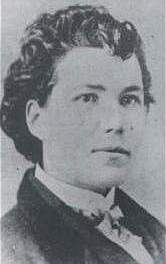
Edmonds was born to a poor New Brunswick farming family in 1841. When seventeen, her father ordered her to marry a man she had never met and who was nearly twice her age; she fled. A friend named Linus Seelye helped her escape by disguising her as a man. Besides adopting men’s clothing, she cut her hair, darkened her skin and changed her gait; she became Franklin Thompson. Edmonds was shocked by how differently she was suddenly treated. She was able to quickly find work and an apartment and to move about with a freedom she had never known. In her duplicitous but splendid liberation Edmonds was inadvertently illuminating women’s struggle and challenging the 19th century insistence that women couldn’t handle nor did they even want lives of self-sustaining independence.

After about a year, she did what many Maritimers and Canadians were then doing and moved to seek better opportunites in the United States. With an advance from a Boston publisher, she was soon back in the Maritimes selling Bibles. Her disguise had become so convincing that on a brief visit home she, for a while at least, even fooled her mother and sisters.

Image Sarah Emma Edmonds

Shortly after moving to Michigan for better commissions, Fort Sumter fell and America tumbled into war. Both sides called for recruits in what President Lincoln said was a crusade to save the Union while President Davis claimed to be leading a struggle to defend his country against a northern aggressor. Over 600,000 would die. An extrapolation of population figures means that it would be the equivalent today of over 6 million deaths. Edmonds could have easily missed the slaughter by returning home but instead she enlisted.

She became one of about 40,000 Canadians and Maritimers who donned the blue or gray. Some, like her, were already in the United States working when they signed up. Many others left what is now Canada to enlist in order to seek adventure or earn a little money or to offer themselves for a cause in which they believed. As the war dragged on and recruitment became tougher, many Canadians were cajoled, tricked, or drugged to fill Northern enlistment quotas. Many American recruiting agents, called crimpers, even kidnapped Canadian children from school yards.

Meanwhile, Edmonds, in her Franklin Thompson personae, became the 2nd Michigan’s field nurse. It was believed that women could not be exposed to battle’s gore or men’s bodies and so nearly all nurses at the time were male. Without anyone’s knowledge, Edmonds was again invalidating gender stereotypes.

At Bull Run, or Manassas if you were from the South, the war’s first major battle, Edmonds watched Union troops move smartly forward but then the tide turned. Her field hospital was overwhelmed. She helped saw limbs and patch wounds and then moved through the thundering din and whizzing minié balls to rescue bloodied young men, all moaning for water and their mothers.

Later, she was part of the ill-fated Peninsula Campaign that took the Union army within sight of Richmond’s church steeples. As a mail carrier and dispatch rider she was often alone and suffered the cold fear of capture and the white heat of enemy fire.

Seeking greater service, Edmonds volunteered to be a spy and undertook ten treacherous missions. She donned various disguises and once, ironically, slipped through enemy lines dressed as a woman. Between assignments she nursed or rode messages and, at the battle of Williamsburg, was handed a weapon and fought.

In Kentucky, Edmonds was felled by emotional trauma and malaria. Coughing, shivering and enduring nightmarish hallucinations, she remained sufficiently lucid to realize that she could not seek treatment without ending her ruse. She purchased a train ticket and fled. She limped into an Illinois hotel and two weeks later emerged wan and weak to find herself listed as a deserter. She purchased a dress and left the fugitive Franklin Thompson behind.

By this point, desperation was trumping discrimination and women were being accepted as nurses so Edmonds re-enlisted as herself. Like other Canadians who served, nearly all for the North, she had grown used to meeting other Canadians. Happenstance reunited her with her New Brunswick beau Linus Seelye. At the war’s end they were married.

Edmonds wrote a bestselling book entitled Nurse and Spy in the Union Army. It offered great detail but kept the fact of her gender switch from the reader. While some later criticized her for embellishing some tales, the book remains a tremendous account of adventure, courage and determination and a valuable resource for understanding the war from a soldier’s view.

At an 1884 regimental reunion, her Michigan comrades were shocked that the man they had known was a woman. They discussed the fact that because Thompson had been disgraced as a deserter that Edmonds could not receive a pension. Many of them wrote letters to Congress detailing her bravery and contributions. Eventually the President granted her an honourable discharge and her monthly stipend began. By that point, hundreds of pension cheques were also crossing the border into Canada and the Maritimes. Canadian bones were in Civil War cemeteries throughout the North and South and 29 Canadians had won the Congressional Medal of Honor.

Edmonds died in 1898 at the Texas home of her adopted son. She was buried with full military honours in a Houston cemetery. Her headstone reads, with typical Canadian modesty, “Emma E. Seelye, Army Nurse.”

Image

Sarah Emma Edmonds offered her life for a cause in which she believed and she served with élan. She proved that women were equal to men in will, courage, spirit and abilities. She represents the 40,000 other Canadians and Maritimers who offered themselves in a war that played an instrumental role in how and when Canada was born. Like the Civil War itself, Edmonds deserves to be remembered.

If you wish to discover more about Edmonds please check out Blood and Daring: How Canada Fought the American Civil War and Forged a Nation.

Civil War Hero or Villian

Civil War Hero or Villain

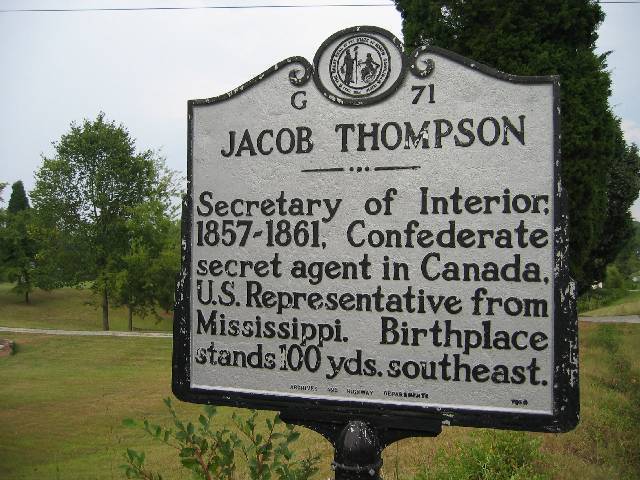
You may not know Jacob Thompson but he knew us. One hundred and fifty years ago this week Thompson brought the American Civil War to Canada as it hadn’t been before and helped spur Confederation. His role in our birth reminds us of the ideas that seem to be motivating us still.

The winter of 1863-64 was tough on the Confederate States of America. Its armies were losing men and battles, its cities saw food riots and its dollar was plummeting. President Jefferson Davis needed to turn things around and so he turned to Jacob Thompson.

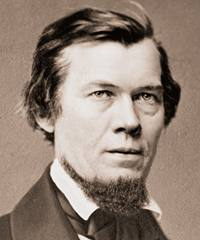
Image

Thompson was a Mississippi lawyer, politician and former federal cabinet secretary. Davis asked him to save the South by going north. He was given one million dollars, an astronomical sum at the time, and ordered to harass and distract Lincoln’s Union from Canada.

Thompson arrived in the first week of May, 1864 and established offices in Montreal and in Toronto’s swankiest hotel, the Queen’s, located where the Royal York is today. He mobilized Confederate deserters and escaped prisoners and Canadians sympathizers.

One of his first acts was to invite America’s most influential newspaper publisher and Lincoln’s personal secretary to Niagara Falls under the pretence of negotiating a peace agreement. When Lincoln set terms the South could never meet, Thompson’s contacts pilloried him in the press for being a warmonger with no interest in peace. Lincoln’s already shaky support in the war-weary North suffered.

Union ships on Lake Erie were hijacked. Attempts were made to free Confederates from Northern prisons. Arms and ammunition were manufactured in Guelph and Toronto and shipped to the South. Thompson worked with the Copperhead movement to stop Lincoln’s re-election and split the North by creating a new, independent country. The Copperhead leader ran operations from his hotel in Windsor. Thompson and the Copperheads disrupted Lincoln’s Republican Party convention.

Thompson’s underground actions led to more Union troops being moved to the border. American ships ignored a War of 1812 agreement and rearmed. In response, more British soldiers were deployed to Canada along with more complaints from London that the colony was too expensive and should be left to its own devices. Canadian militia units were mobilized with the realization that the broke, politically dysfunctional colony could not effectively defend itself in the face of growing American threats.

John A. Macdonald knew that Thompson’s actions had enraged a United States that was already upset with Canadian war-time actions and attitudes. The likelihood of a post-war invasion seemed real and terrifying. For years, Confederation had been an interesting idea but it had become a necessity. To save itself Canada needed to create itself. It is no coincidence that five months after Thompson arrived in Toronto the Fathers of Confederation arrived in Charlottetown.

While Macdonald debated Thompson terrorized. His men simultaneously engulfed a number of Manhattan’s hotels and theatres in flames and then fled back to Toronto. Among the New Yorkers caught in the chaos on Broadway was the famous actor John Wilkes Booth. As part of his plot that killed Lincoln, he spent a week with Thompson’s men in Montreal.

Several of Thompson’s terrorists raided St. Alban’s, Vermont. They robbed its banks, killed a man and then fled with guns blazing and a posse in pursuit. They were caught by Canadian authorities but a judge freed them. American newspapers insisted that Lincoln immediately invade Canada in retribution. The American Senate reacted by ending the Canadian-American free trade agreement and taking other actions that promised to economically punish Canada. Canadians were further convinced of the threat to all they valued and yearned to preserve.

With his country dying, Jacob Thompson inadvertently aided in the birth of ours; he was our Uncle of Confederation. Considering his role in motivating change allows us to consider the degree to which our political decisions are still based upon equal parts courage, hope and fear. And, as in politics so often and war always, we are left to ponder whether Thompson was a hero or a villain.

Image

Read more about Jacob Thompson and about Canada’s role in the war in the bestselling Blood and Daring: How Canada Fought the American Civil War and Forged a Nation.

http://www.amazon.ca/John-Boyko-Books/s?ie=UTF8&page=1&rh=n%3A916520%2Cp_27%3AJohn%20Boyko

http://www.chapters.indigo.ca/home/search/?keywords=john%20boyko

It’s Time to Put R. B. Bennett on the Hill

It’s Time to Put Bennett on the Hill                                                       

History matters. It is the stories we tell ourselves and others about whom we are and who we aspire to be. Among the important ways we tell those stories are through the monuments we erect on Parliament Hill; the lawn outside our House. Sir John is there. So are Diefenbaker and Laurier, the Queen, the Famous Five, and more. But Parliament Hill’s story is incomplete for it is without a statue of Prime Minister R. B. Bennett. He deserves to be there. We need him there for visitors to ponder his life and contributions as reflections of the values we cherish as Canadians.

Bennett was a remarkable man. Born to a poor New Brunswick family, he was a school principal by age 19. Wanting more, he attended law school. Senator James Lougheed was so impressed with the young student that he offered a full partnership so that Lougheed-Bennett was born in the Wild West boomtown of Calgary. Bennett was soon president of several companies and on the boards of more. Through hard work, connections and good luck he became a multi-millionaire. But he was never inspired or impressed by wealth. He owned neither a car nor, until retirement, a house. He gave nearly all of his money to individuals, charities, schools and universities.

Bennett was an engaged citizen. He believed in the nobility of public service. He was a city counsellor, territorial representative, and then a member of Alberta’s provincial parliament. He was the first leader of the Alberta Conservative Party. He won a federal seat and served in cabinet. In 1927 he became leader of the federal Tories and then, in 1930, Canada’s prime minister – the first, but not the last from Calgary.

After suffering defeat in 1935, Bennett was an effective opposition leader for two years but then fulfilled a life-long dream and retired to England. The Second World War drew him back to public service. He led the preparation of the Royal Air Force by coordinating the building of planes and air strips. Churchill rewarded him with an appointment to the House of Lords where he worked hard to prepare for the post-war years.

Bennett was a transformational leader. He became prime minister just as the Great Depression was entering its darkest days. The Red Tory principles that he had espoused throughout his life led to policies that respected the positive power of capitalism and a constructive role for government.

Bennett’s government provided immediate relief for those in need and then restructured the economy to mitigate the impacts of future economic calamities. He modernized unemployment insurance, established a minimum wage and limits on work hours, extended federally-backed farm credit, enacted anti-monopoly legislation, and saved thousands of farms with a revamped Wheat Board. He wrestled control of monetary policy from chartered banks with the establishment of the indispensable Bank of Canada. To protect and promote Canadian culture and national unity, Bennett formed the Canadian Radio Broadcasting Commission that became the CBC.

His legacy also includes increased trade with a host of countries and a trade deal with America that was enacted weeks after he left office. He negotiated a treaty that later served as the framework for the construction of the St. Lawrence Seaway. Bennett’s bold actions led to a reinterpretation of the constitution that allowed the creation of many of the social policies which Canadians now proclaim as their birthright.

Bennett was not a perfect prime minister. There is no such thing. He was not a perfect human being – none of us are. But he was a remarkable man, a generous philanthropist, an engaged citizen and a transformational leader. His contributions, principles, and the questions his life forces us to ponder helps us understand ourselves and our country. R. B. Bennett’s story deserves to be a larger part of our collective story. We should begin our consideration of its place and lessons by placing a commemorative statue of R. B. Bennett on Parliament Hill.

(For more on R. B. Bennett see Bennett: The Rebel Who Challenged and Changed a Nation (Goose Lane Editions) available at: amazon.ca and chapters.indigo.ca

(This was published as an op. ed. column in Ottawa’s Hill Times on April 28, 2014)


The Day I Was Tear Gassed

THE DAY I WAS TEAR GASSED

Canadians are nice. We seem to revel in our international reputation as being so nice that when bumped we say sorry or when queue-jumped we say nothing. A problem, of course, is that a slight scratch beneath of the surface of ourselves and our history reveals that we are really not that nice at all.

I glimpsed beneath those surfaces in April, 2001. After reading about the 1999 troubles in Seattle and with Horton Hears a Who in our minds – I swear – my dear wife and I left our little Ontario village and headed to Quebec City. We were ready to add our little yop to voices being raised in concern over cascading corporate power on display at the third Summit of the Americas conference. As I am a historian and my wife’s degree is in political science, we were curious about being witness to the making of history and a political point.

We arrived in time to join a wondrously joyful parade. Colourful banners and flags were hoisted above thousands of people singing, strumming guitars and some even dancing on stilts. There were old people and children. There were families and groups who had obviously journeyed here together and other that had spontaneously come together. Most of the signs were serious and many were good natured. Many expressed self-interest and reminded me a little of the old Buffalo Springfield song as they seemed to shout “Hooray for Our Side”. We walked slowly beneath a wonderfully cloudless blue sky enjoying the positive, party atmosphere and folks who were taking their messages but not themselves too very seriously.

The world leaders discussing the possibility of creating a Free Trade Area of the Americas, of course, didn’t see the parade. They were ensconced far away and up the hill in the National Assembly building behind 4 km of fence and cordons of police. At the parade’s end most people milled about and there were hugs and goodbyes. But I couldn’t leave. I could not go home without venturing up to see the so-called red zone, the area closest to the fence, where the streets were blocked and businesses shuttered.

As I walked up the hill it was if I could hear the theme to some Clint Eastwood spaghetti western in my head. I walked slowly and then slower still. As I reached the outer limits of the red zone I was stunned. It was like an eclipse had suddenly blotted the sun and the world had morphed into black and white. It was eerily quiet. The parade had been a party but this was a war. The air smelled of gasoline. The streets were dirty. People were dressed in varieties of battle fatigues and many had bandanas and goggles dangling on their chests. No one smiled.

Down a narrow street I saw a group of about twenty young people sitting in a circle and singing John Lennon’s Imagine. Strung behind them from building to building was the silver, gleaming 3 meter high chain-link fence. Behind the fence was a row of police officers. They were in black riot gear with face guards down and hand-held shields up. They looked every bit like a row of Darth Vaders. Each officer held a club and each smacked it onto their left palms to the song’s beat – ones and threes. They could not have been more intimidating. I guess that was the point.

I moved on to find a spot where I could be alone to swallow the metallic taste of adrenaline and catch my breath for I suddenly realized that I was breathing as if in a race. Around the corner I found another stretch of fence blocking the road before me with another row of police officers behind it; but I was alone. I did what I always do when I see a police officer; I smiled and waved. None waved back. In a minute or so a man about my age joined me and we stood chatting quietly. We were about ten feet from the fence, looking at each other and not the officers off to our right. No one else was near. We discovered that curiosity had drawn us both from Ontario to the parade and then up the hill and that we were both shocked by the incredibly tense atmosphere. We traded ideas about a restaurant for dinner. We were just two middle-aged guys dressed in shorts and golf shirts, very much tourists and not terrorists.

We were suddenly startled when a silver canister crashed behind us and white-gray tear gas spewed forth. We instinctively spun away and blindly careened right into the fence. The line of cops charged forward and smashed it with their clubs. We turned and stumbled through the noxious cloud with eyes and lungs on fire. A masked and khaki angel pulled me to a curb, sponged my eyes from a galvanized pail, secured a red kerchief over my nose and mouth, told me to run when I could, and then was gone. I have no idea what happened to my companion. I staggered dazed and bewildered as people ran past in both directions shouting that crazy Canadian jumble of French, English and profanity that transcended them both.

Image

Woozy and blinded, I wobbled down the road and happened upon a group of young people shouting through the fence at yet another line of storm troopers. I turned and joined them, yelling every ugly epithet my years of school yards and hockey dressing rooms had taught me. But then, in mid-tirade, it was like I suddenly awoke. Perhaps the gas had worn off. Perhaps my righteous temper had peaked. I was suddenly embarrassed that every ounce of anger I had imprisoned since childhood had been so quickly and completely un-caged. I was shocked at my rage and the sound of my own voice and what I heard that voice shouting.

I stumbled back to the sidewalk across the street and stood watching the two groups of people – protesters and police – probably much the same age, who probably grew up in similar neighbourhoods, separated only by twists of fate and a fence that I was suddenly glad was there. My youngest brother is a police officer and I knew that he was one of the helmeted cops assembled that day. He may have been among those standing in silence before me now; perhaps he was the target of my crazy abuse. I needed to get out of there.

I walked back down the hill to meet my wife and breathlessly told her what had happened. We ventured cautiously up the hill just a little so she could glimpse the place but we then turned back and were soon in our car and heading for home.

I found out later that while my companion and I were very innocently chatting, the security system on the other side of the red zone, far from where we were, had faltered. Protesters or anarchists or whatever they were had torn down part of the fence at Boulevard René Lévesque and police had reacted around the whole perimeter with gas, water cannons and rubber bullets. In their attempt to re-establish order, police were attacking those on the fences and those singing songs. They attacked those with rocks and those with guitars. They attacked those administering first aid. And they attacked my companion and me, over a kilometer from the real trouble, who had done nothing.

On the streets of Quebec City I left a certainty about myself along with my naive conviction that Canadians are nice. I am no different than anyone else. As individuals, nearly all rational Canadians are guided by ethical and moral codes that afford us the opportunity to forge happy lives, secure in our nearly always rational society. But sometimes we find ourselves in crowds. In crowds we occasionally do things that we would never remotely consider doing on our own – like swearing at police officers, tearing down security fences, smashing store windows or overturning cars. Sometimes it’s for a political or social cause and other times it’s simply because our team lost the big game.

Riots are not nice. Neither are all the people who perpetrate them nor all the police who stop and sometimes start them. And yet, riots are as much a part of Canada’s civil society as voting and kids’ hockey and soccer leagues. We are a nation of riots. Consider the 1848 Quebec City Parliament Buildings riot, the 1907 Vancouver Race Riot, the 1929 Winnipeg General Strike riot, Regina’s 1935 On To Ottawa Trek riot, the 1955 Rocket Richard riot and many, many more. Some led to good things happening and others to nothing more than the revealing of ugliness and an undercurrent of furious indignation that we thought only existed elsewhere.  Perhaps we need to think about the riots as I thought of my reaction to being caught up in one. That’s what history for – to teach, to expose, to challenge.

The day I was tear gassed changed me. It made me a little more reflective and a whole lot more wary. It did not rob me of my optimism for Canada, pride in being Canadian or my respect for those who legally and reasonably protest or those who reasonably and legally keep law and order in our society. I still believe that Canadians are inherently nice but my being tear gassed made me put aside old comforting thoughts and ponder the degree to which our niceness is a thin and vulnerable veneer.