The Queen and the Problem with Problems

The village was grumpy. Everyone seemed to be complaining about something. Marriages and friendships were fraying, folks were miserable with each other at work, children were grouchy at school and teachers were frowning too much. Old men met for coffee and biscuits each morning to gripe that things were better before. But the Queen was wise.

She gathered everyone for a meeting on the grand lawn of the village square. She announced an edict. Everyone, even the kids, was to take from the great, long table a black marker and a clear plastic bag that contained five white balls. The Queen said that everyone was to find a spot on the square to be alone, sit down, and contemplate their five biggest problems. They were then to write them on the five balls, put the balls back in the bag, retie it with the gold ribbon, and bring it back to the circle.

The Quenn & Problem with Problems

The people were quizzical. There were harrumphs from a few and a couple of teenagers threatened to leave. Soon, though, everyone was on their own, pondering, and writing. It took a while, but finally, everyone was back in the large circle with inscribed balls in the bag before them. The long, gold ribbons gleamed in the sun.

The Queen then instructed that at the count of three they were to toss their bag high in the air and into the centre of the circle. And for a moment, it was magical. All the bags were aloft at once, all the problems of all the people floated, weightless, for just a second, beneath the cloudless blue sky. Kids laughed as the bags landed and bounced and settled in chaotic heaps. The Queen then said something startling.

“No one’s life,” she said, “is without challenges. Everyone has troubles, regrets, and things they wish were different. Everyone has said and done things they wish they hadn’t and didn’t say or do things they wish they had. But I have good news. All of your problems are now over. You just threw them away. Now, please, wander the green, take your time, and read the balls within the bags. Then, choose any bag you wish and return to the circle.”

The people were stunned.

“Really?” asked an 8-year old girl, glancing at the mean girl who had been teasing her lately.

“It will never work.” grumbled the fat old doctor whose foot ached with gout.

“I promise,” said the Queen, “choose whatever bag you wish in exchange for your own.”

The people moved slowly, gingerly, at first. Soon though, they were walking about the square lifting bags, reading carefully, dropping them, and moving to another. There were a few gasps. The librarian began to cry at one point and needed to rest for a bit. It took a while, but finally, everyone was back in the large circle with a bag at their feet.

“Now,” said the Queen, “Take up your bag of chosen problems, return to your homes, contemplate what just happened here, and choose to be happy.”

There were broad smiles around the circle. There were more than a few hugs and even a tear or two. They all knew, as did the Queen, that after having been offered the choice, everyone, every last one of them, had chosen their own bag of problems. They all walked home, many hand-in-hand.

And they all chose to be happy.

If you enjoyed this story, please share it with others.

Trudeau, Power, & Sir John’s Echo

Canada is a conversation. When confronting troubles visited upon us, or of our own making, Canadians reach not for a gun but a gavel. We talk it out. Every leadership race and election, every new bill, public initiative, or staggering crisis, and every table pounding in the House of Commons or at the local Tim’s is another element of that conversation. And when we’re talking, we’re always talking about power. So, let’s talk.

Political power touches us all. Positively expressed, it offers a vehicle through which we are collectively encouraged and enabled to act for the common good. Power matters and so, it matters who has it.

Our founders understood. In 1864, they met in Charlottetown and Quebec City and talked their way into a country. From Britain, came the ideas of a limited monarchy and parliamentary democracy. From the United States, they took a written constitution and a federal state, one comprised of a central government and provinces. This is where the real talking about power began.

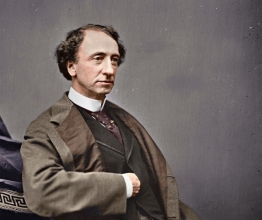
John A. Macdonald led the way in arguing that while the American Constitution was brilliant in its conception, the fact that the United States was, at that moment, butchering itself in Civil War, demonstrated its appalling failure in practice. The Confederation delegates stood the American system on its head. Macdonald explained that Canada would reverse the “primary error” of the United States, “by strengthening the general government and conferring on the provincial bodies only such powers as may be required for local purposes.”

Power and Sir John's Echo

(Photo: Canadian Colour)

The provinces were given only municipal-like areas of responsibility and limited ability to raise revenue. The federal government, on the other hand, was afforded the major powers relating to sovereignty including trade, the military, post office, criminal law, currency, and banking. Unlike the United States where, until 1913, the states appointed Senators, the prime minister would populate our upper chamber. The prime minister would also appoint Lieutenant Governors who approved provincial bills while sending questionable ones to the federal cabinet, which could disallow them. Anything the constitution left out or that came up later, like airports, would go automatically to the federal government.

Throughout Canada’s 150-year conversation, provinces have worked to overturn our founders’ vision and shift power to themselves. An example is the decades-long provincial demand for greater power that sabotaged repeated federal efforts to earn greater independence by gaining control of our constitution. In standing up for what they believed was best for their province, too many premiers betrayed and undermined the very concept of Canada while dividing Canadians against themselves.

This is not to say that premiers are not patriots and provinces don’t matter. Of course they are and of course they do. But it was successive federal governments that fought to maintain our founders’ vision. Provinces were cajoled and dragged along as the federal government led the building of Canada through projects like the trans-continental railway, St. Lawrence Seaway, and the TransCanada Highway. The federal government needled, nudged, and negotiated for Canadians in creating national policies such as pensions and health care. Federal governments rallied our response to emergencies such as global wars, the Great Depression, and the FLQ Crisis. The federal government spoke for Canadian values whether reflected as peacekeepers or climate change leaders.

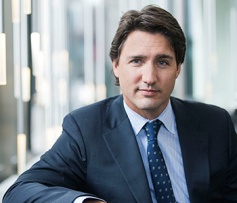
Ignore whether you like or dislike our current prime minister, or his policies, but grant that Mr. Trudeau’s  tour a few months ago indicated his understanding that Canada is indeed a conversation. He is also demonstrating that he is the personification of Sir John’s vision. He gathered the premiers and then led the revamping of pensions, unemployment insurance, and health care. He told the provinces that we will combat climate change as a nation and that they will step in line. His government organized a national emergency response to the Fort McMurray wildfires.

Hundred Days and Honeymoons

We have been at our best when the power that our founders afforded the federal government was effectively employed. We have gone off the rails when firewall letters, referendums, and power squabbles have attempted to distort that vision. We are better when we consider ourselves not as of a particular province but more broadly, as Canadians first, stronger in the complexity of our citizenship.

Every time you hear our prime minister speak, listen carefully for a hint of a Scottish burr, for you’re hearing Sir John’s echo.

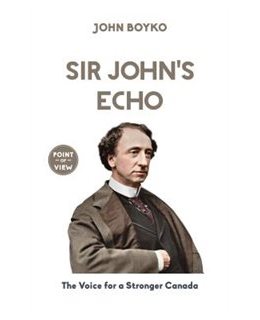
If you enjoyed this column, please send it to others and perhaps even explore my full argument which is in my latest book, published just two weeks ago, and called, perhaps unsurprisingly, Sir John’s Echo.  It’s available at bookstores, Amazon, and here through Chapters https://www.chapters.indigo.ca/en-ca/books/sir-johns-echo-speaking-for/9781459738157-item.html

Seeking the Universal

The village was hot, dusty, dirty, and smelled a lot like the scrawny cow that lay in the empty lot, nonchalant in its holiness. I was in northwest Nepal. Our little group was on the second day of a bone-rattling journey in an ancient Tata bus from Katmandu to the Karnali River. We had stopped for lunch in a place maps forgot. Our restaurant was a collection of ramshackle old picnic tables, six feet off the road, with black, rusty oil drums converted to smoke-belching outdoor ovens. I was swatting flies, and swallowing a mashed rice and vegetable concoction, mixed with a scorching brown sauce. It was all great. Then, a young woman I would never meet made it even better.

She was about twenty-five or thirty years old, wearing a simple dress and flip flops and walking slowly along the road with her daughter, who looked about two. The little girl fell. She wailed. Mom knelt. She rubbed the knee. She kissed it. There was a hug. The crying stopped. And off they went. The universal happened. How many parents, I thought, on that very day, perhaps at that very moment, had done exactly the same thing?

Seeking the Universal

(Photo:Dreamstime.com)

We pride ourselves on our individuality. We plot our lives and careers and make our way but the universe has a way of smiling when we do. I think of a group of friends I’ve been lucky enough to have and love since university. At the beginning, our conversations were mostly about girls. Then it was about getting married and we attended each other’s weddings. Then we talked mostly about jobs and kids. Now we discuss when we’ll retire and our latest aches and pains. We have lived different lives, in different cities, and been cheered by different celebrations and rocked by different tragedies but fundamentally, we’ve been on the same journey and handled much the same things in much the same ways.

Abraham Maslow understood. He was a psychologist who, rather than studying mentally ill people, examined apparently healthy, well-adjusted, college-educated folks who appeared to be happy and doing well. He determined that we all need the same things. We need the basics of food, shelter, and safety, and then a feeling of being loved and belonging to a group. We all want our lives to have a witness. With all that in place we can make a positive difference to someone else and that, he said, is happiness. Everything else, everything, is by the by.

Maslow took years to come up with his notion of a hierarchy of needs and spent more years explaining it. The young woman in Nepal taught her lesson in thirty seconds. We need to get over ourselves. We need to watch and listen. The universe is trying to teach us about the universal; those truths that transcend.

If allowed to do so, the universal can inform our thoughts about what our government should be doing and not doing. The universal can help us when cringing at a newscast showing people being bombed by terrorists or by planes seeking to stop the terrorists. It can shape our reaction to seeing climate change and corruption starve children in one part of the world and a greedy few allowing the poisoning and starving of more children in another. The universal can affect our opinion of folks approaching from outside our gates, wanting only to step upon the first rungs of Maslow’s ladder.

A year after I left Nepal, its government collapsed. Maoist rebels took control. Corrupt leaders had tried to maintain power with power; they had bought and used more guns. The Maoists had won the support of the people by living among them. Their greatest tactic in winning hearts was to dig wells and build latrines and schools in little villages like the one at which I had stopped. They understood Maslow. They understood the universal. They knew that our happiness is based not on the size of our wallets but the content of our hearts. They understood that the universal is found not in the palaces of the kings or the ones we choose to sometimes gather around ourselves to hide within, but rather, in places where Moms kiss skinned knees and make it all better.

The universal is all around us. I swear, it’s right there. If we pause for just a moment from busily making our apparently unique way in our apparently unique lives, we’ll see it. And if we really see it, we’ll be humbled, and changed.

If you enjoyed this column, please share it with others on Facebook or your social media of choice and consider checking my other columns as http://www.johnboyko.com

Thanking the River and More

I don’t know about you, but I always just skim a book’s acknowledgments. They are usually akin to a bad Oscar speech: a list of names of people I don’t know. My latest book, Sir John’s Echo: The Voice for a Stronger Canada, was released last weekend. It’s my seventh book and this time I tried something a little different for my acknowledgments. I thanked some folks, of course, but also tried to consider what really inspired me to write. Let me know what you think.

Acknowledgments: Sir John’s Echo

Dividing and defining our Village is a river that, as Lakefield resident Margaret Laurence once observed, runs both ways. It does, you know. It really does. It is on long, slow runs along the river that I wrote this book. Oh, certainly I typed it in my office but the genuine work, the tumbling and juggling of ideas, the real stuff of writing, came accompanied by the falling of footsteps and washing of water.

And so, odd as it may seem, I would like to acknowledge and thank the river for its uncaring but profound inspiration. It reminded me that somewhere beneath its gently flowing surface, at the heart of its magic, hides the metaphor for our country. The truth and what truly matters lay not in the surface sparkles, gleaming as diamonds in the sun, but with the rocks and roots and weeds below that roil all above, offering resistance and form.

The river urged me to take a broader view, to consider more expansive ideas, deeper concepts, and to think not of passing fads and fancies that capture clicks and headlines but what really matters. Power. The power to shape, inspire, speed up or slow down, to move while lifting or, sometimes, pulling below.

That’s what this book is all about. Power. It’s the power of perpetual motion, of rugged beauty and gentle grace lying comfortably with the awful potential to direct or destroy. That is the river’s power. That is Canada’s power. That is the power we owe ourselves to contemplate; relentless power that moves even when we don’t notice, while we sleep, flexed and expressed and occasionally challenged, and while appearing to be heading in one direction in a natural, linear fashion, sometimes, flows both ways.  I thank the river for encouraging my contemplation so that I might invite yours.

And what of Margaret Laurence? I thank her for being among those who taught me a love of words and a respect for the power of ideas powerfully expressed. There were others: Margaret Atwood, Leonard Cohen, John Lennon, Kurt Vonnegut, John Ralston Saul, John Prine, Doris Kearns Goodwin, Shelby Foote, Gwynne Dyer, Paul Simon, and John W. Boyko, Sr. I thank them all.

This book began with a conversation between Patrick Boyer, Steve Paikin, and me – three men insatiably entranced by books, politics, ideas, and Canada. Patrick invited me to contribute a book to Dundurn’s Point of View series as part of the commemoration of Canada’s 150th birthday. Make it controversial, Patrick urged, stir readers’ passions and propose notions to spark debate. Thank you, Patrick, for inviting and trusting me to write and for your valuable suggestions on an early draft. I hope I have not let you down.

Sir John's Echo

Thank you to the Dundurn team who embraced me so thoughtfully and supported me so professionally. I am grateful for the vision of president and publisher Kirk Howard, and for the editorial skills of Dominic Farrell, Cheryl Hawley, and Michael Carroll. I thank the talented Lawrence Martin for his constructive suggestions and fine forward.

This is my seventh book and I have lost count of the number of editorials, articles, and blog posts I have written. My dear wife Sue has read and edited every word. She brings to all I do an unparalleled editorial precision and skill and sense of when something is going on a little too long or needs to be fleshed out. She knows what it is about my work that works, and doesn’t. Her kindness, care, tenderness, wit, and love, makes all I do better, possible, and worthwhile.

I am grateful to Craig Pyette and Ann Collins of Penguin Random House Knopf who lent me to Dundurn for this project and to my literary agent Daphne Hart who encouraged me.

Being a father is one thing but being a grandfather is something else altogether. Grandchildren teach you to love all over again. Without trying, my two sweet granddaughters remind me of all that truly matters, including the country in which they will be making their lives. Canada was not inevitable and is not immutable. All that is great about it, from its stunning physical beauty to the strength and marvel of its complexity, must be not just celebrated but protected. You won’t protect what you don’t love and can’t protect what you don’t understand. Without understanding, we can sing about standing on guard but not really do the deed. It is the future of my grandchildren, and yours, even if you don’t yet know them, that renders the striving to understand, in order to protect what is worth protecting, worth the effort. I thank my grandchildren for inspiring my contemplation of the home they deserve.

Thank you for reading my thank yous. Please share them with others if you wish. I am now on the road promoting Sir John’s Echo, doing TV, radio, and print interviews, as well as speeches. It is the business part of the book business. I’m also hard at work on my 8th book. Writing is fun.


Rule One at the Men’s Book Club

I have always loved reading. I recall my Mom telling me to put the book down and go outside and play, and my sneaking it out with me. I was an active, sports-loving kid but she later told me that, despite being a voracious reader herself, she was sincerely worried about me reading so much. My first job was delivering 139 Burlington Post newspapers every Wednesday for which I was paid $1.39. (It was a while ago.) I used to save up, and every two weeks buy a bottle of coke and Hardy Boys book. It is my fascination with reading and books that led to my becoming a writer and, lately, to forming the Men’s Book Club.

I have always liked the idea of book clubs. To get together once a month to discuss a book seems like a grand idea. My dear wife belongs to a book club. I see her reading away, we talk about her current project, and she always arrives home from her book club meeting invigorated by the discussion; whether she particularly liked the book or not. But there were a few problems, in my estimation, with most book clubs. Around here, anyway, they involve only women, hosting meetings at your home with carefully considered drinks and snacks, and the reading of novels. The first left me out and the next two left me cold.

I spoke with a number of men in my Village who felt the same way. Hosting seemed like too much work and we agreed that we are fundamentally lazy. Like me, they read ten non-fiction books for every novel. Don’t get me wrong. I think novels are important and great and there have been many that I have truly enjoyed – springing to mind are The Art of Racing in the Rain, The Lottery, and my John Grisham junk food. But non-fiction is different. Non-fiction books feed my insatiable curiosity. To me, non-fiction books are like speaking with the smartest people around about the most fascinating events, people, and places. Others agreed and so we made a decision.

Rule One at the Men's Book Club

(Photo: www.123rf.com)

Our first Men’s Book Club met in February. Eleven showed up. We met at our local pub, the Canoe and Paddle, on a Sunday evening. No one had to tidy up their house and if you wanted something to eat or drink, the bar was right there. (We agreed that if there is beer involved, men will do just about anything, even read.)

After the pints arrived, we discussed the rules we should play by and it was established that the first rule of book club was that there were no rules. Perfect. Our second decision built on the first. Instead of us all reading the same book each month, we established themes. Our first month would be music, then the environment, and then, for the 100th commemoration of Vimy Ridge, war. Near the end, one gentleman said that he loved the idea of meeting for beer and chatting once a month but wondered if he really had to read a book. He was referred to rule one.

Our first Monday in March meeting was terrific. I had enjoyed Robbie Robertson’s Testimony. Others read books about or by Bruce Springsteen, the Beatles, Bruce Coburn, Sting, and more. It was fascinating to learn how many talented singers and songwriters came from parents either physically or emotionally absent or abusive. It was revealing to see how long and hard they had all worked to become successful. It was also interesting to see that behind the sensitive lyrics, some are not really nice people. We wouldn’t have been able to make the connections if we’d all read the same book.

For our next meeting, I am now reading Wade Davis’ The Wayfinders. It is not really about the environment. It’s more cultural anthropology. But it’s close enough to the theme. If anyone complains, I’ll refer them to rule one.

If you enjoyed this column, please share it with others and consider checking more at http://www.johboyko.com or even some of my non-fiction books, available online through Chapters and Amazon and, as Stuart McLean used to say, at sensible book stores everywhere. (Miss you Stuart.)


The Guitar That Reminds Us Who We Are

Sometimes the craziest of ideas can be terrifically inspiring. This one involves a guitar and a nation.

It was 1995 and Canada was coming apart at the seams. Prime Minister Brian Mulroney had decided that because Quebec had not signed the constitution when it was finally brought home from Britain in 1981, that he would seduce the signature by transferring a host of federal powers to it and the other provinces. The provinces loved it, of course. Then the whole package, called the Charlottetown Accord, went to the people in a national referendum. That’s when the arguments began. Revolutions had been fought about such things. In the United States, over 700,000 people were butchered in their Civil War deciding whether dominant power should rest with the federal or state governments. But Canadians are different. We reached not for guns but gavels. We debated in public meetings. We argued at kitchen tables, and over backyard fences. It got ugly.

Jowi Taylor reacted differently. The CBC writer and radio host met with luthier George Ritzsanyi and suggested that they make a guitar. They would call it Voyageur. Ritzsany was a first-generation Hungarian immigrant who had worked as an auto worker but had become renowned among guitar lovers for his unique and fine work. But this would not be just any guitar.

Taylor would assemble this guitar from fragments of the nation to which it would be dedicated. David Suzuki, the well-known environmentalist and TV host, was instrumental in pointing Taylor to the Golden Spruce. It was the rare, 300-year-old albino tree on Haida Gwaii (formerly the Queen Charlotte Islands) that was sacred to the Haida people. It became a symbol of resistance to broken treaties and land rights encroachments when, in the middle of the night, an angry logging scout chainsawed the sacred tree to the ground. Suzuki introduced Taylor to Haida elders and, after great debate, they agreed that the guitar would be an honoured place for part of the felled tree to live on. Voyageur would be made from a piece of the sacred Golden Spruce.

The tree was an important and inspiring first step but Taylor needed more items to embed in the guitar and money to support their collection. He called his project The Six String Nation. He set up a website and wrote emails and snail mails and made countless phone calls. He traveled. He begged for funding and was disappointed more often than pleased. The Globe and Mail published a front page story about the project but even that brought frustratingly little funding. The CBC offered to make a film but that fell apart.

But Canadians came through. Individual sponsors stepped up and big and small donations were made. Many people logged on and bought guitar straps to help finance the project. (Full disclosure, one of them was me. The black strap holds my Gretsch at every gig I play.)

Taylor’s persistence began paying dividends and more precious objects were collected. There was a piece from Rocket Richard’s Stanley Cup ring, a fragment from Wayne Gretzky’s hockey stick and another Paul Henderson’s stick. There was an antler from a moose and another from a mastodon. There was a piece of steel rail from a CPR track, one from Sir John A. Macdonald’s sideboard, and a chunk of copper from the roof of the parliamentary library, Canada’s most beautiful room. There was a chunk of a seat from Massey Hall and another from the old Montreal Forum. There was a piece of Nancy Green’s ski and one from Pierre Trudeau’s canoe paddle.

Finally, on June 14, 2006, the fragments had been collected and incorporated and the guitar was done. It was beautiful. It played beautifully. A week later it was in Ottawa where preparations were being made for the Canada Day celebration. Renowned bluesman Colin James strummed it for gathered reporters and said it was a fine guitar that he was proud to play. Colin Linden played it at a press event the next day. Then, on the big stage, on July 1, the guitar’s story was told and the enormous crowd thundered its approval with applause that echoed off parliament’s centre block. Stephen Fearing took Voyageur in hand and kicked off his set with the Longest Road. It had indeed been a long road but it was not over.

The Guitar and the Nation

Jowi Taylor and Voyageur (Photo: Doug Nicholson)

The guitar toured the country. Professionals and amateurs held it and played it. As guitarists know, playing a guitar is an intimate act. It is the only instrument the player cradles when playing like a child, like a lover. And Canadians loved the guitar.

Canadians are a nation by choice. We are a nation not of blood but of laws. We build bridges not walls and we extend our hands to those in need whether suffering the aftermath of World War Two, or the Vietnam War, or the Syrian War. We all know, and most of us recall, that we are nearly all from away and at one point we were the aliens on the boats, risking all to seek a better life and contribute to nation worthy of our dreams. Canada, after all, is less an entity than a conversation. Jowi Taylor’s Voyageur guitar has become an important part of that conversation by inviting us to consider the fragments within it that are fragments of ourselves.

Please visit http://www.sixstringnation.com/ where you can scan the guitar and see all the amazing fragments  embedded it in. Please consider sending this column to others.

The Future Arrived and We Missed It

In 1957, Stockholm hosted the St. Erik International Trade Fair on Automation. The fair was a dazzling display of inventions that included new gadgets called robots. They were essentially tools that could do simple, multi-step tasks. The word robot came from a 1921 Czechoslovakian dystopian play in which machines, called robota, replaced humans. Robata is Czech for labour.

Inventor George Devol Jr. met physicist Joseph Engleberger at a cocktail party. They discovered a shared interest in electronics and robotics and the potential of the recent invention of the integrated circuit. Shortly afterward, they formed a company, Unimation, and created a robotic arm that synthesized all the current work going on in university and government labs. By 1961, General Motors had purchased the robotic arm and it was hard at work on one of their New Jersey assembly lines. It took red-hot pieces of metal from a die casting machine and placed them in neat piles. The robot saved money by improving the line’s efficiency and replacing expensive workers. GM then bought and employed several Unimation robot welders.

General Motors’ successful use of robots inspired others until, by the 1970s, nearly every thriving manufacturing company in the world had robots on their lines. Production increased and profits rose as labour costs fell. By the 1990s, robots had become so sophisticated that they were even doing jobs that required decision-making and complex thought. A giant leap was taken when robots began using algorithms to design better versions of themselves.

The Future Arrived and we Missed It

(Photo: Business Insider)

India, China, Mexico and others adapted robots to their assembly lines while also offering multinational corporations cheap labour, lax health and environmental regulations, and low taxes. Because corporations are beholden to shareholders, and not to workers or a particular country, they jumped. American, British, and Canadian factories that had provided employment for generations either shrank or closed. Empty, rusting factories and the shuttered businesses that once supplied them and provided services to haunted souls and hollowed cities stood as mocking monuments to broken dreams and an era’s end. The plants that survived did so by trading workers for robots who never erred, stopped to eat or pee, or went on strike.

Robots helped break capitalism’s cycle where production boosted wages, increased spending, which, in turn, demanded more production. It threatened the concept of consumer capitalism and, in fact, capitalism itself. In 2010, American permanent job losses were compared to new job creation and it was discovered that the 21st century’s first decade had created not a single new job. This was unprecedented and frightening.

The changes robots brought about gave rise to populist politicians who spoke to the frustration of those whose dreams of better for themselves and their children were as shattered as their once-gleaming but now disintegrating cities. People were told that others, and the “other”, were to blame. But apportioning blame is not the same as presenting a solution and anger and fear are not strategies. Those who asked the next question knew that India, Mexico, and China could close every one of their manufacturing plants and western countries could slam shut their borders to every immigrant and refugee, and it would change very little. The robots have the jobs and they are not giving them back.

In February 2017, Dominic Martin was the bearer of bad news. As the head of Canadian Prime Minister Justin Trudeau’s Economic Growth Advisory Council, he had been studying the effects of robots and automation on the job market. He reported that due to the increasing automation of jobs in every sector of the Canadian economy, within ten years about 40% of all jobs currently in existence will be gone. Martin’s estimate was close to that of the American McKinsey and Company. It reported in 2016 that 45% of all jobs currently done by American workers will be automated with ten years.

The Canadian and American reports mirrored findings in other countries. Driverless vehicles will replace truck and taxi drivers. Automated check-in and check-out devices will continue to replace grocery store clerks, bank tellers, fast food order-takers, and hotel desk attendants. Automated and online purchasing will continue to replace independent store owners and retail sales staff. Automated robots will replace more agricultural workers as they plant seed, pick fruit, prune trees, and milk cows. Automated calculators will replace more accountants and automated tutors will replace more teachers while automated drones will replace couriers and on, and on, and on. If the Martin and the Kinsley reports are correct, by the year 2030, the unemployment rate in countries like Canada, the United States, Germany, and Britain will reach about 47%. That is a staggering number. Consider that at the height of the Great Depression, that catastrophic collapse that threatened capitalism and democracy and abetted the rise of tyrants like Adolf Hitler, the unemployment rate peaked 30%.

The changes brought about by the invention of robots will continue to change our world in ways that fundamentally change how we live and work and measure success. Capitalism and democracy will change. And the robots won’t care.

If you enjoyed this column, please share it with others and consider checking more of my columns as http://www.johnboyko.com

Canada’s Only Assassination and Last Public Hanging

Patrick Whelan lived his life at the intersection of politics and passion. He was born around 1840, just outside of Dublin, Ireland. When only 14 years of age, Whelan did as most young Irish people did at the time and left school to pursue a trade. He found work as a tailor in Dublin and eventually completed his apprenticeship. Times were tough. They would get tougher.

Ireland was still suffering from a blight on the potato crops that, beginning in 1845, had led to wide-spread famine, dislocations, and nearly two million people leaving the country for Canada and the United States. The decade’s long economic and humanitarian crisis led to political upheaval. A group of Irish nationalists called the Young Irish sought to use peaceful, democratic means to win back Irish independence that had been lost to Great Britain in 1800. By the time Whelan arrived in Dublin, the group had failed to advance their agenda. Those frustrated by a lack of progress created a more radical group called the Fenian Brotherhood. Named after ancient Irish warriors called the Fianna Eirionn, the Fenians sought independence through revolution.

Whelan moved to England and again found work as a tailor. In 1865, the year of a violent but futile Fenian uprising, Whelan followed so many of his countrymen and fled economic hardship and political upheavals for a better life in Canada. He arrived in Quebec City and took up his trade with Mr. Vallin. He enjoyed horses, dancing, and drinking. He contributed to his new city in early 1866 by joining Montreal’s Volunteer Cavalry.

Irish political troubles crossed the Atlantic with the Irish immigrants. The American Civil War (1861-1865) saw a number of Irish-American regiments fight bravely. With the war’s end, Fenian leaders worked to use the military experience of the soldiers to their advantage. Approximately 10,000 men pledged allegiance to the Fenian cause and supported the idea that they would invade and capture the British North American colonies. (British North American at that time consisted of Canada – Ontario and Quebec. Nova Scotia, New Brunswick, PEI, and Newfoundland) Britain would be asked to trade Canada and the Maritime colonies for Irish independence. The 1866 Fenian border crossing in New Brunswick was a minor nuisance but there was a battle in June near Ridgetown, north of Lake Erie, near Niagara Falls. The Fenian Americans quickly withdrew.

Whelan’s cavalry unit was not involved in the Fenian raids but his sympathies were betrayed when he was arrested for trying to persuade a British soldier to join the Fenians. He was released when only the solicited soldier could testify about the conversation. At the time of the Fenian Raids, Whelan was reported to have been in Buffalo, the center of American Fenian activity. He then worked as a tailor in Hamilton before moving to Montreal. It was there that he was married to a woman about thirty years older than himself. He became involved with an Irish nationalist group called the St. Patrick’s Society. In the fall of 1867, he and his wife moved to Ottawa where he worked for tailor Peter Eagleson, a well-known supporter of the Fenian cause.

assassin-whelan

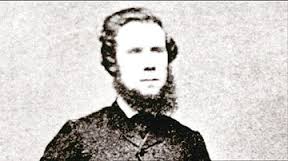
Whelan (Photo: CBC)

An important gentleman opposed to that cause was Thomas D’Arcy McGee. McGee had been born in Ireland, emigrated to Boston at age 17 and was the co-editor of a journal advocating Irish nationalism. Young Ireland leaders asked McGee to return to Ireland and write about the movement. He was among those who, in 1848, tried to spark a revolution to establish an independent Irish republic. The effort’s failure took him back to the United States and then, in 1857, to Montreal. Months later, the journalist, poet, author,  and gifted public speaker was elected to the Canadian legislature.

By 1864, McGee was an influential member of the Canadian cabinet and in the Confederation meetings in Charlottetown and Quebec City that led to Canada’s creation in July 1867. He had also changed his political views and was now writing and speaking against Irish nationalism and the Fenians. By 1868, his close friend Prime Minister Sir John A. Macdonald was considering him a possible successor but many Irish Canadians saw him as a traitor.

On April 7, 1868, McGee’s late evening House of Commons speech about Canada’s promise was met with rousing applause. The House adjourned just after two o’clock in the morning. McGee walked across the Parliament Hill lawn and then the two blocks to his Sparks Street rooming house, enjoying the unusually mild evening illuminated by a stunning full moon. He was reaching for his key when an assassin crept behind him and fired a .32 calibre bullet through the back of his head. He died instantly.

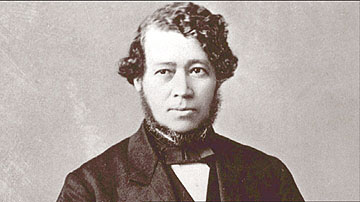
mcgee

McGee (Photo: CBC)

Within an hour, Police Detective Edward O’Neill was on the case. The House of Commons doorkeeper told him to arrest the “sandy whiskered tailor” at Eagleson’s tailor shop. O’Neill knew the Irish community well and so he knew the man in question was Whelan. Whelan’s rooms at Michael Starr’s Hotel were searched and found to contain a great many Irish nationalist and Fenian publications. Police found several copies of the Irish American and several blank membership cards to Irish nationalist groups, which suggested that he was involved in distributing literature and soliciting memberships. Police also found Whelan’s Smith & Wesson, .32-calibre revolver. One bullet had recently been re-loaded and there was fresh powder on the muzzle. Whelan was arrested for the murder of Thomas D’Arcy McGee.

Based on the suspicion that the murder was a Fenian conspiracy, forty others believed to have been involved were also arrested. They included Whelan’s boss, his landlord, a number of his friends, and even prominent Fenians in Toronto and Montreal.

Whelan’s trial began in September. He appeared resplendent in a green suit and white vest. The courthouse was packed with reporters and Prime Minister Macdonald sat at the table with the crown’s lawyers. Testimony revealed that Whelan had been seen outside McGee’s boarding house twice in the days before the murder. He had been seen looking anxious and jittery on Parliament Hill on the night before and, with his pistol in his pocket, in the House of Commons gallery watching McGee’s final speech. It was stated that Whelan had spoken many times about wanting to kill McGee. A man who was incarcerated in the jail cell across from Whelan, testified that Whelan had confessed to feeling remorse about having shot McGee. Another gentleman testified that he had seen the murder take place and, while his testimony was confused in places, he was sure Whelan was the assassin.

The defense poked holes in the eye-witness testimony and much of that presented by others, but the evidence was clearly stacked against the accused. Whelan took the stand on the trial’s final day. Dressed all in black, he said that he was not a Fenian and had great admiration for McGee. He concluded, “Now I am held to be a black assassin. And my blood runs cold. But I am innocent. I never took that man’s blood.”

After several hours of deliberation, the jury found Thomas James Whelan guilty of the murder of Thomas D’Arcy McGee. The conviction was appealed to the Court of Queen’s Bench of Ontario but to no avail. It was appealed again and, in January 1869, the Ontario Court of Appeal rejected it again. There was nothing left but for Whelan to face the sentence the court had announced. He would be hanged.

Whelan languished in cell number 4 in Ottawa’s Carleton County Jail for ten months, awaiting the hangman’s noose. On the day before he was scheduled to die, he composed a three-page letter to Sir John A. Macdonald. As he had in court, he claimed to be a loyal British subject, to have never been a Fenian, and that he had not shot McGee. The letter went unanswered.

Whelan enjoyed his last meal on the morning of February 11, 1869. The gallows were ready. Whelan’s hands were lashed behind his back and he was slowly led up the wooden steps. A hushed crowd of 5,000 watched intently. Whelan’s last words, uttered a moment before a hood was lowered over his head: “I am innocent.” It would be Canada’s last public hanging and the only assassination of a Canadian politician.

The pistol that killed McGee is now on display in Ottawa’s Canadian Museum of History. Ottawa’s Carleton County Jail has become a hostel where people spend the night and hear of ghost stories including that of Whalen’s ghost, reportedly seen in his old cell, writing his letter to Macdonald. In August 2002, descendants of Whelan’s family came to the spot near the hostel where Whelan was buried. They proclaimed his innocence. A priest said a short prayer. A mound of earth was scooped into a box and taken to Montreal where it was interred next to Whelan’s widow, at Cote des Neiges cemetery. In the same cemetery, rests the remains of Thomas D’Arcy McGee.


This column is the second that I have been invited to contribute to the Canadian Encyclopdia. If you enjoyed it, please share it with others.


The Courage that Changed Nations

Courage changes lives. We are surrounded by a million acts of personal courage but nearly all are unseen and unsung. There is the courage of the shy boy raising his hand in the classroom and the timid girl clenching her jaw and walking on to the playground when, for many girls, it is a battlefield. There is the courage of the single Mom somehow managing another morning of scurrying kids to school and herself to work while wondering if there will be more month than money. Courage is not the absence of fear but the presence of determination. Courage is the world’s greatest agent of change.

Courage changes also nations.

In 1990, secret meetings between Canadian Prime Minister Brian Mulroney and provincial and territorial leaders led to the Meech Lake Accord. The short document detailed a series of constitutional changes that shifted significant power from the federal government. It was designed to seduce Quebec into doing what it had refused to do nine years before and sign Canada’s new Constitution with its embedded Charter of Rights and Freedoms. One by one, provincial and territorial governments ratified the Meech Lake deal before its looming June 23 deadline. No one expected what happened next.

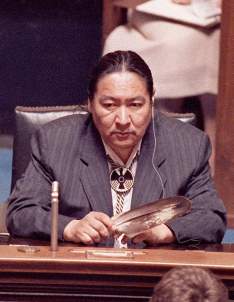
The speaker of Manitoba’s legislature asked for unanimous consent to waive a two-day waiting period and immediately begin the ratification debate. Alone among his colleagues, with an eagle feather in hand, Elijah Harper said no. Harper was an Ojibwa-Cree and former Chief of the Red Sucker Lake Community. His bold action in the House that day reflected the anger of many Aboriginal people who were upset that they had been left out of the process that created the Meech Lake Accord and that its constitutional changes ignored their concerns. Their historic concerns and pleas for respect had not been dismissed by those who designed the constitutional accord. Worse. Their concerns and pleas had not even crossed their minds. Harper’s no paralyzed the legislature. It stunned the country.

The legitimate concerns of Aboriginal nations had not been dismissed by those who designed the constitutional accord. Worse. The concerns had not even crossed their minds. Then Harper’s no paralyzed the legislature. It stunned the country.

68157639.JPG

(Photo: Rabble.ca)

The next day, the speaker again asked for unanimous consent. Again, Mr. Harper said no. Eight times he said no until the clock ran out. The debate never happened. Newfoundland’s premier then refused to bring his legislature to a vote. Meech Lake was dead.

Prime Minister Mulroney was enraged, thought Harper was stupid, but understood the magnitude of what had just changed. He set to work constructing a new series of constitutional amendments that would become the Charlottetown Accord. This time, though, Mulroney sought a broader consensus. He ensured that Aboriginal people were part of the consultation and decision-making process.

Native nations spoke with many voices and all were heard. The Assembly of First Nations, Inuit Tapirisat of Canada, the Native Council of Canada, and the Métis National Council all participated in consultations and helped shape the final document.

The accord presented to the Canadian people in a 2009 referendum stated that, after a three-year waiting period, Aboriginal peoples would be granted self-government. Treaty rights would be entrenched in the Constitution. This time, however, for reasons that had little to do with Native participation or promises made, it was the Canadian peoples’ turn to say no.  The Charlottetown Accord was tossed on history’s scrap heap atop Meech Lake.

But a change had happened. Harper’s lesson was learned. The Charlottetown consultations had brought Aboriginal issues to the forefront of Canada’s civic conversation. Afterward, a Royal Commission on Aboriginal Peoples allowed a national airing of history’s insults, crimes, and atrocities. It led to a federal law that met Charlottetown’s promise: the recognition of the inherent right of Aboriginal self-government and a constitutional recognition of treaty rights. Parliament issued an apology for the unforgivable horrors of the government and church-run residential schools.

Aboriginal nations were now in the halls of power with more of their concerns recognized and better understood. But where laws and hearts must walk in tandem, change is slow. Many infuriatingly complex problems still face Aboriginal peoples and shape their place within Canada. Problems three hundred years in the making are not being quickly solved. But they are no longer ignored, and, despite occasional setbacks, there is steady, often begrudging, but determined progress.

A year after his brave stand in the Manitoba legislature, Elijah Harper received the prestigious Stanley Knowles Humanitarian Award. It was the same award given by the Canadian parliament to Nelson Mandela for the courage he showed in helping to end South Africa’s apartheid. Harper accepted the award with the same quiet, humility with which he had sat with his eagle feather and said no. Courage, after all, is neither brash nor boastful. Courage acknowledges doubt and fear but refuses to be cowed by them. It is the humility of the shy boy, timid girl, and single Mom who summon quiet courage to change and shape their lives. It is the courage of Mr. Harper who changed the Canadian nation and Aboriginal nations by placing them on the road to where they should always have been.

Redemption’s road is long and rocky but we must all summon the courage to travel it and to do so together. Let the drinking water be cleaned, let the children be educated, let the murdered and missing women be investigated, recognized, and mourned, let the treaties be obeyed, the land respected, and respect ensured. As the courageous Mr. Harper knew, it’s been too long, but it’s not too late.

If you enjoyed this column, please share it with others and consider checking my others at http://www.johnboyko.com

One-Sentence Lives and a Challenge

Long-time Toronto Blue Jays announcer Tom Cheek once said that every baseball season begins as a story, turns to a paragraph, and ends as a sentence. “Boston breaks the Bambino curse.” “Carter hits the walk-off homer.”

I believe that what is true of baseball is also true of people’s lives. It was this thought that helped me to complete a writing commission in which I was asked to write one-sentence biographies of all 23 Canadian prime ministers. The thought also helped me to reflect on a birthday of note; one of those ending in a zero that moved me into a new decade.

I offer one of the one-sentence biographies and then my own. They are, I confess, run-on sentences that would have my editor’s red pen flying and old English teachers’ fingers wagging, but one sentence none the less. Then comes the challenge.

one-sentence-lives-and-a-challenge

Sir John A. Macdonald: As the most prominent voice at the Confederation conferences, Macdonald was instrumental in creating Canada with its constitution placing dominant power with the federal parliament, essential in building Canada when, as our first prime minister, he added enormously to Canada’s size by purchasing Rupert’s Land and welcoming new provinces, and with his National Policy that allowed the country to grow on steel rails and behind tariff walls, and he was then key in saving Canada at the Washington Treaty negotiations that kept us from American annexation while winning recognition as a sovereign state, and, so, despite some tragic and wrong-headed policies, such as those involving Aboriginal nations, Macdonald was Canada’s indispensable man whose echo reverberates to this day.

And now for me: John Boyko is a walking talking advertisement for the power of existentialism for he has been a teacher, administrator, politician, musician, and author, whose insatiable curiosity, confidence in one’s ability to reinvent oneself, and belief in seeking motive in challenge rather than comfort, and value in experience over things, have informed his life, while through it all he has been a loyal if sometimes annoying friend, and, in the most important part of his life, a devoted but sometimes flawed husband, father, and grandfather.

Our lives are write-your-own-adventure stories. There are so many more books to be read, places to explore, ideas to consider, challenges to be accepted, and warm moments to build and share.

And so now the challenge. I challenge you to write your one-sentence biography. If unhappy with the sentence as written, I sincerely believe we can write ourselves a better tomorrow. Our greatest fear is not that we don’t have enough power to change but that we have more than enough.

If you enjoyed this column, please share it with others and consider checking more of my thoughts at http://www.johnboyko.com or even my books, available online at Chapters and Amazon and bookstores (if you can still find one).


The Syrians, Irish, and Our Tree Fort

Canadians and Americans are at war with themselves. A battle in that war involves President Trump’s attempt to close the border to those from seven troubled countries. Another is revealed through one of Canada’s Conservative Party leadership candidates who once touted a hotline for Canadians to rat on their neighbours and now wants mindreading to shape immigration policy. As soldiers in the war for our soul, we must consider who we are. We must decide whether we wish to swap our values for a false sense of security and lives of fear or, rather, share our bounty with those whose homelands are in crisis. As always, the past contextualizes the present. So, let’s draw lessons from our response to a catastrophe that struck another people in peril.

In the early 1800s, rich English families owned 95% of Irish farms. The absentee landlords had middle-men subdivide them into smaller and smaller plots while charging higher rents. About half of rural Irish families suffered crushing poverty. Potatoes were the staple crop with most folks and farm animals living on little else. At the same time, English factories were stealing work from pre-industrial Irish towns. About 2.4 million of about 8 million Irish were unemployed.

A bad situation turned to crisis when, in 1845, potato plants turned black. Potatoes shrivelled and became inedible. British Prime Minister Sir Robert Peel ordered a commission to investigate but found neither cause nor cure. To address the ironic crisis of farmers without food, Peel ended Corn Law tariffs to lower food prices. It had little effect. Poor Law revisions split Ireland into 130 parts, called unions, and each was assigned a workhouse. Desperate urban poor traded prison-like conditions for housing and food while famine ravaged the countryside.

Starving tenant farmers were evicted from their homes for non-payment of rents. Soldiers marched the families away as landlords had houses knocked down to avoid taxes and keep the desolate from returning. Between 1849 and 1854, 250,000 people were swept from the land. Sixteen middlemen were shot by farmers resisting the mass evictions. London sent more soldiers.

The English gentry and business elite felt Peel was spending too much money and time on Ireland and voted his party from office. The new prime minister, Lord John Russell, cancelled food shipments to Ireland and ended Irish relief. The man in charge of the crisis, Assistant Secretary of the British Treasury Sir Charles Trevelyan, said the Irish needed to self-fund future relief programs and allow the market place to right everything. Linked to the British government’s belief in laissez-fair economics was its faith in providentialism. Trevelyan made the idea clear when he explained the Irish crisis as, “a direct stroke of an all-wise and all-merciful Providence, one which laid bare the deep and inveterate root of social evil.”

While the English blamed victims and debated ideology, hunger’s effects caused dysentery, fevers, and dropsy. Typhus, called Black Fever by those it was killing, turned a sufferers’ skin thin, brittle, and black. The Russell government created soup kitchens but, because they had to be paid for by dwindling Irish taxes, they were too few and most too far from rural areas. An increasingly common sight was entire families who had set out to find food and work – blackened skeletons in rags – laying side-by-side in ditches where they had died.

Landlords began hauling delinquent tenants to the docks. The first waves left for Canada. The hellish journeys lasted 40 – 90 days with cramped passengers suffering pots for communal toilets, thin and often rancid gruel, and all the while robbed of sleep by screaming hungry, babies and the incessant coughing of the sick and dying. Approximately 5,000 families carried loved one’s bodies from the fetid below-decks to ships’ rails where, after a few words of scripture, they were tossed into the roiling Atlantic. The vessels were dubbed Coffin Ships.

The emigration peak came in 1847 when 100,000 starving Irish migrants arrived in Quebec City. At one point in June, 40 Coffin Ships bobbed in a two-mile line waiting to be processed. Makeshift hospitals on Grosse Île helped emaciated people trying to survive their fifteen-day quarantine. But mass graves betrayed the growing tragedy. When Coffin Ships kept coming, some were waved through to Montreal and some further on to Kingston. Churches and charities did what they could to help the sick and settle the rest. Within weeks of arriving in Canada,     11, 543 died.

Desperate Irish families were also arriving in America. Unlike in Canada, where the majority were Protestant, most of those arriving in the United States were Catholic. This fact caused consternation among the predominantly Protestant public and public officials and spurred harsh immigration restrictions. Captains had to somehow guarantee that no passengers would ever become wards of the state. Passenger fares rocketed to three times that of ships heading to Canada and regulations restricted the number of people that could be aboard each ship. But the ships kept coming and the numbers swamped the rules. New York became home to more Irish people than Dublin.

As Irish immigrants moved into more American cities, anti-Irish, anti-Catholic prejudice and discrimination grew. This was nothing new. George Washington had spoken out against anti-Irish, anti-Catholic sentiments as far back as 1776. But in the 1840s, anti-Catholic street riots in New York and Philadelphia had raged for days. A sign appeared on store windows and factory gates: “No Irish Need Apply.”

Anti-Irish xenophobia played a significant role in creating a new political party called the Know-Nothings. Later renamed the American Party, it demanded a closing of borders to all immigrants, a 21-year waiting period for citizenship, and that foreign-born Americans be permanently banned from voting and holding public office. In 1855, the American party won 43 seats in the House of Representatives. American Party member and Massachusetts Governor Henry J. Gardiner attacked Irish and other immigrants as, “aliens born, aliens unnaturalized, and aliens entirely ignorant of our institutions.”

Irish migrants faced similar problems in Canada. The resentment and reaction were seen in Toronto. Between June and October 1847, 38,000 Irish economic refugees overwhelmed the city that had a population at the time of only 30,000. Many Irish families moved quickly through Toronto to join established Irish communities in places like Peterborough County, but that didn’t stem anger regarding the city’s changing demographic. George Brown was the influential owner and editor of the Globe and future Father of Confederation. He spoke for many when he observed, “Irish beggars are to be met everywhere, and they are ignorant and vicious as they are poor…They are lazy, improvident and unthankful; they fill our poorhouses and our prisons.”

Barred from integration, Toronto’s Irish congregated in Cabbagetown and in nearby Corktown, named after the county from which many had come. Many businesses refused to hire Irish people with the powerful anti-Catholic Orange Lodge bolstering anti-Irish feelings. To defend themselves, the Irish created the Hibernian Benevolent Society. Toronto witnessed 29 riots involving Orange Lodge members and Irish migrants. Orange Day parades and St. Patrick’s Day celebrations always sparked violence.

syrians-irish-and-our-tree-fort

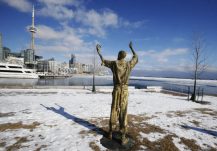
Irish Potato Famine Monument in Toronto (Photo: Toronto Star)

The potato famine reduced Ireland’s population from 8.4 million in 1844 to just 6.6 million six years later. About one million died of starvation and related diseases. Between 1845 and 1860, 360,000 Irish migrants settled in Canada and 1.7 million in the United States. It took a couple of generations, but the prejudice and discrimination directed at them slowly faded as they became contributing members of society and, in America, soldiers in the Civil War. The xenophobic hatred they endured remained but its cruellest wrath was refocused on newer newcomers.

So here we are again. Some want to help and others are eager to direct fear and hatred at the latest group of ‘others’ to arrive in search of better lives. Syrians and others from countries torn by war, political corruption, and economic catastrophes are the new Irish. Muslims are the new Catholics. They are gazing up at us in our fort, constructed years ago, without permission, in an Aboriginal tree. Mr. Trump and some seeking Canada’s Conservative Party leadership are urging us to push down the ladder. It’s up to us.

If you found this column interesting, please share it with others. You could also consider my other columns at http://www.johnboyko.ca or even my books available online at Chapters or Amazon or bookstores (if you can still find one).

First World War’s Last Battle was Last Week

President Trump didn’t send Navy SEALS to intentionally kill an 8-year-old girl. But they did. When the president spoke of the January 29th Yemen raid, he mentioned the death of an American soldier and suspected terrorists but not the girl. Presidents often shade the truth. We do too. For instance, we teach our kids that the First World War ended in 1918. It didn’t. Not really. Its latest battle was Trump’s raid. The little girl was the First World War’s latest casualty.

The First World War senselessly murdered a generation and brought about transformational changes. It led to women earning the right to vote. It enabled the birth of the first Communist state that ravaged its people, conquered its neighbours, exported revolution, and contributed to the Cold War proliferation of nuclear weapons. The manner in which the First World War was settled led to the century’s second global war by making Germans susceptible to the rantings of a narcissist lunatic who promised to make Germany great again.

But the First World War spurred more than just those changes that shaped the past. To see how it affects us today, we need to go back, way back.

From the 14th to 17th centuries, the Ottoman Empire grew to rule swaths of land in north Africa, the Greek peninsula, nearly all of what we now consider the middle east, and southeast Europe all the way to Vienna. It was the world’s most advanced civilization. The multi-cultural but predominantly Islamic empire made stunning progress in mathematics, chemistry, art, and business. It rescued antiquity’s ideas by saving its libraries. The empire’s power sputtered, however, when it failed to adjust to Europe’s industrial revolution. Then, in 1914, came the war.

Germany promised to respect the Ottoman empire’s borders and so an alliance was formed. In 1915, Britain said it would help preserve the holy city of Mecca if Egypt would attack the Ottoman Turks. A year later, French and British diplomats Mark Sykes and Francois Georges-Picot negotiated an agreement whereby their nations would help conquer and then split the Ottoman empire between them. British and empire troops were taken from the western front to attack. Rebel groups were funded and armed. More money and support flowed to the effort when Britain offered Zionists a Jewish homeland in what was then Palestine. The monarchy collapsed and the empire fell.

The Versailles victors’ conference rubber stamped the Sykes-Picot Agreement. While French, British, and American leaders spoke of people ruling themselves – self-determination – they ignored the principle when it suited their interests. They ignored it in the middle east. Nations, ethnicities, religious sects, and tribal groups within the sprawling, complex but now crushed Ottoman empire were ignored. The men in Paris simply drew arbitrary lines on a map. They invented countries from nothing, foisted leaders of their choosing upon them, and lumped competing groups within them. Syria was created. Lebanon was invented. So was Iraq and Iran and more. Meanwhile, national groups such as the Kurds were left state-less, split between what became three new countries.

The anger was immediate but protest was crushed. British and French, and later, American money protected the protectorates with blind eyes turned to whatever their chosen leaders chose to do to their people. The flowing oil enriched multinational corporations, western economies, and the tiny local, governing elites. People raged at the harsh, corrupt, secular, westernized governments. For decades, the rage burned underground.

Anger turned to action with an Iranian university philosophy professor. The Ayatollah Ruhollah Khomeini was exiled in 1964 for criticizing Iran’s puppet regime that was disparaging Islamic religious scholars opposed to the ongoing secularization and westernization. From Paris, Khomeini smuggled cassette tapes back to his homeland. They contained speeches explaining that the Ottoman empire had once been the most powerful in the world but God had turned His back on its people because they had rejected Him. Allah would renew power, happiness, and sovereignty, he said, if the region’s Islamic people again lived according to His wishes. Iran’s people must first adopt orthodox Muslim lifestyles. Then they could overthrow Iran’s leader, the Shah, and create an Islamic state where religious and temporal law were one. In 1979, it happened.

The new Iranian state did as Khomeini pledged and implemented Sharia law. A similar state arose from the carnage of the Soviet war in Afghanistan. Taliban leaders used different words but sought the same goals for the same reasons. But the other middle eastern states invented by the First World War remained propped up and powerful. More action was needed.

On August 11,1988, in Peshawar, Pakistan, the son of a Saudi millionaire, Osama Bin Laden, met with Saudi medical doctor Ayman Mohammed Rabie al-Zawahiri, and Egyptian political philosopher Sayyed Imam Al-Sharif, who is often called Dr. Fadl. They agreed that Khomeini’s vision and goal were correct. They established a new organization and plotted new tactics to pursue it. They would poke the west. They would poke it again and again until it finally reacted by attacking the middle east. Those attacks would bring the long simmering, underground rage to the streets. The pan-Arab idea would win by not losing. That is, the west would be defeated by wearing it down, as happened with the Soviets in Afghanistan and the Americans in Vietnam. The corrupt, secular middle eastern governments would then be replaced by leaders professing Sharia law. The old empire would return. It would be like the First World War had never happened. They called their new organization Al-Qaeda.

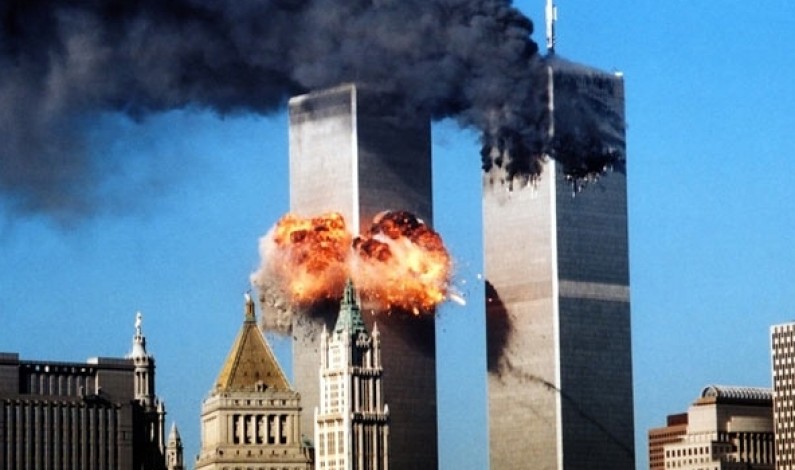
The poking began with two westerners killed at Aden’s Gold Mihor hotel in 1992. Two months later, Al-Qaeda operatives detonated a 500kg bomb at New York’s World Trade Centre. Americans screamed but did nothing. It would take more. In August 1998, American embassies in Kenya and Tanzania were simultaneously attacked and 223 were killed. The Americans blew up some Al-Qaeda bases. It wasn’t enough. USS Cole was rammed and sailors were killed. The Americans blew up a few empty tents in the desert. It still wasn’t enough. In September 2001, Al-Qaeda high jackers turned planes into weapons and flew them into the World Trade Centre, the Pentagon, and a fourth plane, on its way to Washington, crashed into a Pennsylvania field. That was enough.

The Americans finally did what Bin Laden and his partners had been hoping all along and attacked Afghanistan and then Iraq. It was perfect. The Americans and their allies brought western armies to Muslim countries and killed Muslims. They desecrated the holy city of Mecca by flying missions from Saudi Arabia. Just as Bin Laden had hoped, the Americans and the west were now, more than ever, the devil to be rejected along with their devilish western ways.

It took longer than the First World War itself but eventually, the Taliban was crushed, Al-Qaeda was broken, and Bin Laden was killed. But Al-Qaeda morphed into a hundred smaller organizations and pockets of resistance without a headquarters to bomb or an army to defeat.

The Islamic State of Iraq and Syria (ISIS) became the most powerful of the angry lot. Its stated goal was familiar: to create a caliphate, one state comprising nearly all of the middle east, and united under Sharia law. In June 2014, ISIS bulldozers flattened desert berms that had demarked the Syrian-Iraqi border. ISIS leaders said they were erasing the line created by the First World War’s Sykes-Picot Agreement and Treaty of Versailles. Every western pledge to defeat ISIS was another promise to keep the old, imperial, unprincipled and artificial First World War borders in place.

Historians say the First World War resulted in the deaths of 7 million civilians and 11 million soldiers. They are wrong. Mr. Trump’s botched Yemen raid on an Al-Qaeda-held village killed an American Navy SEAL, 14 suspected militants, and 10 women and children. One of the children was an 8-year-old girl, an American citizen, born in the United States. Her name was Nawar al-Awlaki. She was shot in the neck.

first-world-wars-last-battle

Nawar al-Awlaki (Photo: Middle East Monitor)

We should add her and the others to the First World War’s staggering statistics for the lives that ended last week are the latest casualties in a war that has yet to end.

If you enjoyed this column, please send it to someone and consider checking out others at http://www.johnboyko.com or even checking out my books that are available at Chapters, Amazon, and bookstores everywhere.

The Real Change and Our Real Decision

A fundamental change that is marking our era and determining our future is upon us. We have a decision to make. We need to make it now.

We are living the consequences of two crashes: 9-11 and the Great Recession. The American-led, western world’s response to the 2001 attacks saw troops, including ours, fighting impossible missions and too often in self-defeating ways. The middle east and then the world was destabilized as new terrorist organizations grew and impressionable youth were radicalized. Explosions in Boston, London, Paris, and elsewhere solidified the belief that fear is justified, there’s an enemy among us, and governments are unable to help.

the-real-change

Billions were borrowed and economic fundamentals teetered in the permanent war against a tactic and expensive domestic security measures that protected us from the last but not next attack. The economic and existential strains, along with the greed of a few bankers and financiers whom deregulation had freed to wallow in avarice, contributed to the 2008 economic crash. Governments were seen borrowing more money but giving it to those who had caused the crisis. Governments seemed incapable of or unwilling to provide a playing field sufficiently level to allow the rewarding of obeying the law, paying taxes, and honest, hard work. Corporations valued the loyalty of neither their workers nor customers. The millions of middle and working class people who lost jobs, homes, and dreams, and were still removing shoes in airports and seeing things explode on TV, could be forgiven for seeking someone, anyone, to blame.

In a world where long established rules and assumptions no longer applied, demagogues who would normally have been dismissed found their messages resonating. Those supporting Britain’s leaving the European Union, Brexit, said Britain first. In his inauguration speech, Donald Trump clenched his first and shouted America first – twice. France’s National Front leader and presidential candidate Marine Le Pen watches her popularity rise as she demands white, French, nationals first. They are not the change. They are the symptoms. They are the arbiters.

The two crashes led to the collapse of the western, liberal consensus that has informed progress and policy since the end of the Second World War. After liberalism and communism allied to defeat fascism, it was determined that we are all in this together. Multilateral, cooperative efforts would save us from another Auschwitz, Nanking, and Hiroshima. We would talk things out at the United Nations, have each other’s back through the North Atlantic Treaty Organization, keep each other stable through the International Monetary Fund, and buy each other’s stuff through trade agreements. The thought was that we were no longer in separate boats, racing through choppy waters for unique destinations. Rather, we’re in one big boat, squabbling like children, but together. We were united in our efforts to create more peace, equality, wealth, health, and democracy for all.

But now, forget the European Union, denigrate the UN, defund NGOs, end trade treaties, call NATO archaic, withdraw from or ignore global climate change initiatives, stifle immigration, throw up tariffs, and build that wall. Mr. Trump’s wall is not yet a reality but already an apt metaphor for our times. Russia knows it. China knows it. They’re loving it.

Canada punched above its weight in helping to create and maintain the post-war liberal-western consensus. Through his commitment to Syrian refugees, the Paris global climate change initiative, and more, Prime Minister Trudeau has demonstrated that that he still supports it. Some Conservative party leadership candidates, on the other hand, seem eager to join Trump and Le Pen in smashing it. Canada has a decision to make. We must join one side of history or the other. We must fight to protect what has protected us and others for so long or flip to the other side. Our decision will determine our future for generations.

The Chinese have a curse: “May you live in interesting times.” We do. Buckle up.

  If you enjoyed this column, please send it to others and consider checking out my others at http://www.johnboyko.com

The Woman Who Changed the World

The crowd hushed, cameras snapped, and Senators sat respectfully still as the slight, pale woman limped slowly to the big table then, painfully, took her seat. It was June 4 1963, and Rachel Carson was 56 but looked much older. She was dying. Cancer had fractured her pelvis, taken a breast and, hidden by a dark wig, her hair.

Carson had worked as a United States Fish and Wildlife Service marine biologist and written articles for a number of magazines. She had turned her love of the sea and outrage with what was happening to rivers, lakes, and oceans into three best-selling books: The Edge of the Sea, Under the Sea-Wind, and The Sea Around Us. Each presented disturbing ideas and scientifically sophisticated arguments without jargon, preaching, or rancour. She married her knowledge, passion, and writing and investigative skills in the creation her next book: Silent Spring.

While researching the book, Carson had served on the Natural Resources Committee of the Democratic Advisory Council where she became aware of Massachusetts Senator John F. Kennedy having initiated the Cape Cod National Seashore Act. Kennedy had read her books on the sea and then the committee report and so when he sought his party’s nomination for president, he invited Carson to join the Women’s Committee for New Frontiers.

rachelcarson

Photo: Rachel Carson Council

As president, Kennedy read Silent Spring pre-publication excerpts in the New Yorker magazine. He was moved by Carson’s detailing the devastating effects of pesticide use on animal and human health and invited her to attend a White House conference on conservation. The conference led to Kennedy announcing that, because of Carson’s work, he was ordering the Department of Agriculture and the Public Health Service to investigate the dangers of pesticide use and the establishment of the President’s Science Advisory Committee to study links between pesticides and health.

Silent Spring became an instant bestseller when published in September 1962. It explained how pesticides, and specifically DDT, had been around since 1874. The American army had used DDT in both world wars to delouse soldiers and that Paul Hermann Müller had won the 1948 Nobel Prize for determining its effectiveness in killing mosquitoes and other pests. Carson’s book explained how DDT was also killing fish, birds, and people. Her title warned of the day that birds would be gone and skies without song. Most shockingly, Silent Spring told of how the government, scientific community, and the companies making and selling pesticides knew of their harmful effects. But there was money to be made. And so, the evidence was ignored, hidden, and denied. Carson asked an essential question: “How could intelligent beings seek to control a few unwanted species by a method that contaminated the whole environment and brought the threat of disease and death even to their own kind?”

silent-spring

Pesticide manufacturing companies Cyanamid, Monsanto, and Velsical were outraged. They attacked. Velsical threatened to sue Carson, her publisher, and the New Yorker. They even tried to stop the publication of an article about the book in the Audubon magazine. The companies paid scientists to write editorials and articles that belittled Carson and her conclusions. The National Agricultural Chemicals Association published a booklet, Fact and Fancy, that savaged Kennedy and Carson. It was argued that Americans would suffer a food shortage without DDT.

In May 1963, the President’s Science Advisory Committee released a 46-page report, Use of Pesticides. With point after well-supported point, it said the companies were wrong and Carson was right. It stated, “Until the publication of Silent Spring by Rachel Carson, people were generally unaware of the toxicity of pesticides…The Government should present this information to the public in a way that will make it aware of the dangers while recognizing the value of pesticides.”

A month later, as part of that public education process, the sick, fragile, and wan Carson took her seat before the Senate subcommittee. She briefly summarized Silent Spring’s findings and then listed specific recommendations. The government should ban aerial spraying without the permission of landowners. Citizens should enjoy guaranteed security against poisons used by companies, governments, and private individuals. Corporations making pesticides, and all those using them, should be strictly regulated. She advocated the outright banning of DDT. The government should fund and support grass roots citizen organizations and non-government organizations to encourage awareness of environmental issues.

The environmental movement was born. American companies sold 90,000 tonnes of DDT in 1963 but production decreased the next year and every year after that. It took a while, but in 1972, American DDT production was banned. Carson’s name was raised and Silent Spring was read by those advocating and then celebrating President Nixon’s Clean Air and Water Acts, the National Environmental Policy Act, the Endangered Species Act, and, in 1970, his establishment of the Environmental Protection Agency.

In his 1996 book, Our Stolen Future, Dr. Theo Colborn wrote about chemicals that interfere with our body’s hormonal system called endocrine disrupters. He credits Silent Spring with awakening him and other scientists and researchers to the dangers of manmade chemicals and noted how it was still inspiring discoveries and environmental advocacy.

Breast cancer took Rachel Carson in 1964. But her voice still echoes for Silent Spring is still read. It still inspires. It still exasperates.Silent Spring is still discussed around the world every Earth Day.

Books that matter always educate and infuriate and important authors, like important ideas, are always ignored, then mocked, then attacked, and, in time, celebrated. Books measure how far we have come and how far remains to go. As the American government appears ready to deregulate corporations and eviscerate environmental regulations, and women are leading the charge to fight the turning back of the clock on this and other issues, perhaps Silent Spring is more important now than ever.

Rachel Carson’s Silent Spring helped change the world. It may need to change it again.

If you enjoyed this column, please share it with others and consider checking my other work at http://www.johnboyko.com


The Shameful Power of Lies

I refuse to believe that the truth no longer matters. I refuse to believe that the truth is simply what I choose to believe. I’m loath to admit it, but a clear-eyed look at world politics today and examples from the past suggests I’m wrong. Too many lies have been casually accepted as truth and too many lies have sparked monumentally consequential change.

A young George Washington never cut down a cherry tree or confessed with the line we all know: “I cannot tell a lie.” Biographer Mason Locke Weems made no mention of the tale in the first five editions of The Life of George Washington but the incident suddenly appeared in the sixth. Weems made it up. Similarly, there was no gift-horse, filled with soldiers, with which the Greeks duped the Trojans. Nero did not play the violin as Rome burned. When leaving the room, Galileo did not mumble, “But it does move.” Newton’s work on gravitation was not inspired by a falling apple. Benjamin Franklin never flew a kite in a lightning storm. I could go on.

Lies such as these have been repeated as fact by so many and for so long that they’ve become accepted as true. Joseph Goebbels would understand. As Hitler’s propaganda minister, he said a lie becomes truth when forcefully presented and repeated. Donald Trump certainly understands.

Politico.com studied Mr. Trump’s 2016 campaign speeches and determined that, on average, he lied once every five minutes and sometimes twice in a single, rambling, non-sequitur littered sentence. He lied about having seen thousands of Muslims in New Jersey celebrating the 9-11 attack. He lied about MSNBC distorting his views by editing his statement on abortion. He repeatedly lied about America’s crime rate being higher than ever, about GDP growth being zero for the previous two quarters, and about the United States having the world’s highest corporate taxes. All the lies were shown to be lies but it didn’t seem to matter. Mr. Trump won the presidency. He continues to lie. He recently said there are 96 million unemployed Americans but that counts retired folks and kids in school.

Do the lies that inform so much of what we think we know about our past and Mr. Trump’s successfully lying his way to the White House prove that we don’t care about the truth? We should. Because sometimes lies bring about changes that are enormously consequential. Consider two examples.

President Truman said he approved the dropping of atomic bombs on Japan to save the lives of American soldiers who were preparing to invade the island. With each subsequent interview, Truman’s estimate of the number of men saved went up. He couldn’t quantify it because his justification was a lie. Truman had been advised by the scientists who created the bomb that its use would be immoral. A number of generals and military advisors, including future president General Dwight D. Eisenhower, said it was unnecessary. Japan was on the verge of collapse. All its major cities had been incinerated. The Soviet Union had declared war and was moving on Japan. Japanese leaders were preparing to surrender and Truman knew it.

But the bomb was not really about Japan. Truman agreed with Secretary of State John Foster  Dulles and other advisors that the bomb had to be dropped to brandish its power, especially to the Soviet Union, which they had decided to turn from ally to enemy. They had to demonstrate that America would dominate the post-war world. And so the bombs fell. Months before, Japanese leaders had offered to stop fighting with the condition that Emperor Hirohito stay in place but the Americans refused with their insistence on unconditional surrender. With the atomic bombs suitably displayed, Truman accepted the surrender terms that had been unacceptable before. Hirohito remained. The war ended. But Truman’s lie unnecessarily murdered 150,000 people in Hiroshima and 75,000 in Nagasaki with hundreds of thousands suffering life-altering wounds and horrifying birth defects.

While Truman’s lie involved the end of a war, other lies have started them. The Iraq War was based on the lie that Saddam Hussein had weapons of mass destruction. He didn’t. In 1964, Congress gave President Lyndon Johnson unrestricted power to wage war in Vietnam after an attack on the American destroyer USS Maddox. But the attack didn’t really happen. The lies are disturbing but sadly, tragically, not rare.

At 9:40 in the evening, on February 15, 1898, a tremendous explosion sent a fire ball into sky above Havana’s harbour. The American battleship Maine, which had been anchored there as an expression of American power, had exploded. The ship was destroyed. Its burning, shredded hulk sank, and 266 Americans lost their lives.

Cubans had been rebelling against their Spanish colonial masters in a low-level guerilla war. Thousands of Cuban refugees had been working from new homes in Florida and New York to entice America to intervene on their behalf. After all, they argued, the Monroe Doctrine said that the United States considered the western hemisphere its back yard and would take action to keep countries stable and Europe out.

Powerful newspaper owners had joined their fight. The New York Journal’s William Randolph Hearst and the New York World’s Joseph Pulitzer were in a circulation war and both saw a Cuban war as their ticket to victory. They both had reporters in Cuba before the explosion writing articles that urged President William McKinley to take military action. Two days after the Maine explosion, Hurst’s Journal ran the headline: “Destruction of the warship Maine was the work of the enemy.” The next day, an article quoted unnamed naval men as believing that a Spanish mine had caused the explosion. Hurst offered $50,000 to anyone who turned in those responsible for the mine. Readership soared.

Thousands of Americans wrote to their president demanding a war of revenge with Spain. Militia groups formed and volunteered to leave immediately. Men yelled “Remember the Maine and to Hell with Spain!” as they swamped recruitment offices. Congressmen joined the jingoist parade, declaring that American honour had to be respected. A March 28 Naval Court of Inquiry moved with lightning speed to conclude that the Maine had indeed been downed by a mine. President McKinley was suspicious of the evidence but the mounting political pressure was enormous. He acquiesced. In April, the United States declared war on Spain.

The war lasted only ten weeks. The most famous battle was the taking of San Juan Hill by the Rough Riders, a rag tag group of cowboys, college students, and ex-convicts organized by Assistant Secretary of the Navy Theodore Roosevelt, who had quit his post to join the fight. The war was won when the American navy destroyed Spain’s Atlantic fleet in the Philippine’s Manila Bay. About 2,000 Americans died in the war, all but 385 of disease. About 60,000 Spanish and Cuban soldiers and civilians died. America’s victory led to the Paris Treaty which gave Cuba its independence and ceded the Philippines, Guam, and Puerto Rico to the United States.

The war’s second phase began when Filipino nationalists insisted on independence rather than trading one colonial master for another. When rebuffed, they shouldered rifles. The fighting lasted three years and took the lives another 4,200 Americans and over 20,000 Filipino combatants. The war also saw about 200,000 civilians die from war-related famine, violence, and disease.

The Maine attack and wars that followed entered American civic understanding alongside Washington’s hatchet and Franklin’s kite. They were true because they were believed to be true. But the truth is stubborn.

In its rush to not really investigate but simply confirm the mining of the Maine, the US Naval Court of Inquiry had refused to hear from a number of experts. Included among them was Navy ordnance professional Philip R. Alger. He told the Washington Star that the explosion’s power and ship’s wreckage suggested that the blast had originated with a fire in the Maine’s engine room that ignited its magazine, the room where ammunition and gun powder was stored. In fact, another naval inquiry had reported only a month before that designers of ships such as the Maine had put magazines too close to coal-fired engine rooms. This was alarming because coal bunker fires were a regular problem on naval ships at the time and it had been found that those carrying bituminous coal, like the Maine, were far more likely to suffer spontaneous engine room fires than those carrying anthracite coal. Those salivating for war knew all this but ignored it as they silenced Alger.

In 1974, Admiral Hyman G. Rickover initiated an inquiry into the Maine’s sinking. American, Spanish, and Cuban records were scoured and experts on ship explosions were interviewed. The study concluded that “without a doubt” the Maine had been sunk by a spontaneous combustion fire in her engine room that ignited the magazine. The Spanish had nothing to do with it. Wars had been fought in Cuba and the Philippines, thousands had died, the Spanish empire had shrunk, the American empire grew, and Roosevelt’s political career took flight, all because of a lie. It was a lie the American media helped create and then exploit and that the American people were too willing to believe.

Today, in the revered Arlington National Cemetery, just across the Potomac from Washington, lay the remains of over 14,000 American veterans. On a hilltop near the Tomb of the Unknown Soldier, towers a gleaming white mast. It’s the Maine’s mast. In 1915 it was salvaged and erected atop a large concrete base resembling a ship’s turret. The mast throws a shadow over the respected dead laying nearby while serving as a monument to the power of lies.

power-of-lies-memorial

Maine Memorial (Photo Arlington National Cemetery)

Lies led to the dropping of the world’s worst weapons, were cynically employed to elect a president and used to start unnecessary wars. Lies ended lives and changed the world. It is said that we live in a post-truth era. No. No! We can’t afford that luxury, that embarrassment, that threat. Ignorance is not bliss, it’s dangerous. Ask those resting in American military cemeteries laid there by lies or the ghosts haunting Cuba, the Philippines, Japan, Iraq, and Vietnam. Ask Joseph Goebbels.

The media has an awesome responsibility as the citizens’ eyes, ears, and conscience. It must question and say no to power and not be its poodle. Rewriting press releases is not journalism. The media cannot, as Hearst did, and as Fox and others do, report lies or fashion lies of their own for ratings, clicks, and sales while making us dumber and less safe. We must join the media in robbing lies of their power by calling them what they are and calling out those who either don’t speak the truth, don’t seem to care, or don’t know the difference. We deserve the truth. We can handle the truth. We must demand it.

If you enjoyed this column, please share it with others and consider leaving a comment.