Two Questions to Never Ask Teenagers

You should never try to teach a dog to whistle for it will result in nothing more than frustrating yourself and annoying the dog. Similarly, there are questions that you should never ask a teenager. The two most important are these:

Question One: What were you thinking?

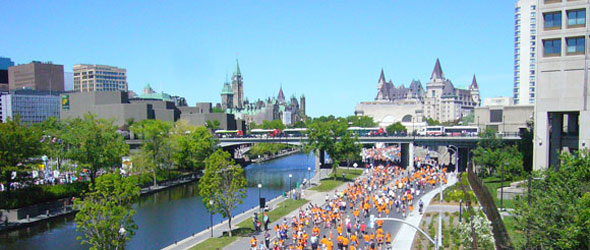
Last Saturday evening I was leaning on a railing enjoying the majestic view of the river and parliament buildings from Ottawa’s beautiful Major Hill Park. Then, far below, a young man had missed the Frisbee thrown by a friend and they were staring forlornly into Rideau Canal’s shallow, stagnant water fifty feet down.

The taller, skinnier one was suddenly climbing down the lead used by boats in the summer. A small crowd gathered at my railing. We were too far away to intervene but some giggled, some shook their heads, and, like me, others held their breaths.

Two Essential Questions to Never Ask Teenagers

Rideau Canal from the park (www.tripadvisor.com)

At the bottom of the cable, the young man found himself six feet or so from his little yellow toy. He clamoured back up. Soon he had descended again, had a leg linked over the bottom of the cable, and was precariously dangling upside down. He’d gone Cirque du Soleil on us. His friend then dropped a long stick that he miraculously caught. He used it to snag the Frisbee and then sailed it back to the top. Clearly exhausted, he slowly climbed out with his legs visibly shaking. Our little crowd dispersed as our two heroes commenced a spirited victory dance.

Why did he do what could have led to a serious injury or death? It was his brain’s fault.

You see, the last part of our brains to become fully functional is the pre-frontal cortex. It is just behind the forehead. It is the area responsible for being responsible. It links cause and effect. The incomplete wiring renders teenagers not unwilling but unable to fully comprehend situations that adults would consider socially awkward or inherently dangerous. As a result, teenagers often embarrass or infuriate adults or take what an adult would consider crazy risks like, for instance, climbing into a deep, concrete canal.

Scanning of a human brain by X-rays

(Photo: sharpbrains.com)

The nucleus accumbens is another part of the story. That is near the back of our brain and is the first to develop. In teenagers, the impulses flowing through that wiring work overtime. It is the pleasure seeking, reward loving part of the brain. It is the part that inspires action not because it would be right or safe but only because it would be fun. With no frontal cortex to warn of risks, the teenagers are off to the party, into the fast car, skipping away from class, or, like last Saturday, lowering themselves down canal walls.

I wish I had been closer so that I could have warned our young friend about what he was about to do. I could have done as good parents and teachers do and, like a computer’s remote hard drive, acted as his remote pre-frontal cortex. But we spectators were all too far away. And it was just as well there were no adults waiting at the top when he emerged to ask our young climber what he was thinking. His honest answer would have been, “I was not thinking at all.”

Question Two: What do you want to be?

This question is dumb for three reasons. First, it implies that the teenager is nothing now. That’s insulting.

Second, the question is probing for a profession. The problem is that most teenagers don’t know and so will just proffer an answer likely to please. Why encourage lying? Further, according to Forbes magazine, teenagers today will have 15 to 20 jobs in their working lives. So why ask the question left over from the days of gold watches? Plus, one or more of those occupations will likely involve a job that does not now exist. So how can a teenager know what their job or jobs will be?

Most important of all, though, is that the question perpetuates the sad habit of defining oneself by a job. It’s the game show mentality of defining questions: what’s your name, where are you from, what do you do? It’s what crushes the souls of the un- and underemployed, led to baby boomer suicides after the 2008 crash, and makes retirement difficult for far too many. What am I if I am not the teacher, lawyer, or whatever? If a person is more than their race, gender, sexual orientation, class, ethnicity, ability, and body shape, then are they not also more than their job?

So if an adult asks a teenager what they want to be, a good answer would be this: “I hope to be an engaged citizen, a person of good character, a responsible parent, and a person who loves and is loved.” In fact, that would be a good answer for even those of us with fully wired brains.

For now, let’s avoid both questions. Instead, let’s enjoy our non-whistling dogs and the teenagers who are doing the best they can.

If you enjoyed this column, please share it with others using your social media of choice.


The Princess and the Tulips

Princess Juliana was in trouble. The country over which she would someday reign was in crisis and her life was in peril. The Nazi blitzkrieg was pushing its way north and west and her beloved Netherlands was certain to fall to Hitler’s mad ambitions.

Just three years before, with the encouragement of her mother, the powerful and extraordinarily wealthy Queen Wilhelmina, she had married a young German aristocrat named Prince Bernard of Lippe-Biesterfeld. They soon fulfilled the most important part of their royal duties by producing heirs. Princess Beatrix was born in 1938 and then, a year later, Princess Irene.

Despite suspicions of all things German, the Dutch people accepted Prince Bernard. He changed the spelling of his name to be less German and became a Dutch citizen. Now they worried about their future, the future of their country, and that of the Royal bloodline if the Princess and her family were captured by the Nazi horde about which astounding stories of unspeakable horror were being told.

The Royal family was evacuated to London. Queen Wilhelmina oversaw the creation of a Dutch government in exile. A month later, in June 1940, Princess Juliana and her family were sent to an even safer sanctuary in Ottawa, Canada. A spacious house was found in the tony neighbourhood of Rockcliffe Park, home to ambassadors and the city’s elite. The house was called Stornoway. It would later become the residence of the leader of Canada’s Official Opposition.

Juliana followed the tragic news of her country having fallen under the Nazi yoke as she worried about her mother enduring the London blitz. The shy princess led a quiet life and remained aloof from Ottawa society events to which she would have been welcomed. Problems arose in late 1942 when she found herself pregnant. If she gave birth in Canada, the child would have dual citizenship and so be robbed of a spot in the Royal line of succession.

The Canadian government came to the rescue. It declared her rooms in Ottawa’s Civic Hospital to be temporarily extra territorial. In other words, for the moment, Juliana was in the Netherlands. Princess Margriet was born on January 19, 1943. The child became the first, and remains the only, royal personage to be born in North America.

Princess and the Tulips Royal Family

Home from the Ottawa Hospital (Photo: cbc.ca)

Canadians were as pleased as the people of the besieged Netherlands. The news led Canadian radio broadcasts and adorned newspaper front pages. The Dutch flag fluttered atop the Parliament Building’s Peace Tower and its bells chimed out the Dutch national anthem and folk tunes.

Meanwhile, the war raged on. Successful D-Day landings by British, American, and Canadian troops initiated a slow and bloody push toward Berlin. Canadians were assigned the left flank and, in September 1944, they began the liberation of the Netherlands. It was tough. The Nazi army had flooded land, mined ports, and dug itself into intractable defensive positions. The Dutch people did what they could to offer fifth column help. So many were so hungry that they had been surviving by eating tulip bulbs. Many were saved when Royal Canadian Airforce planes dropped food for the starving.

Canadian troops fought gallantly. The Battle of the Scheldt was the most excruciating engagement. Between October and November 1944, the Canadian First Army suffered nearly 13,000 casualties. When it succeeded and Nazi forces retreated, Canadian soldiers were hailed as heroes. As they entered Dutch towns, the tired but smiling young men were showered with flowers and gifts.

On May 2, 1945, after five years in Canada, Princess Juliana and her children were able to return first to London and then, along with Queen Wilhelmina, to a freed and free Netherlands. To demonstrate their gratitude for all that Canada had done for the country and her family, the Princess arranged that 100,000 tulip bulbs were sent to Ottawa. The next year, 20,000 more arrived with the request that they be planted on the hospital grounds.

In 1948, as result of her mother’s long illness, Juliana, became Queen. She ensured that more tulip bulbs were sent to Canada every year. Every spring saw Ottawa resplendent in a riot of colour. In 1952, at the suggestion of noted Canadian photographer Malak Karsh, Ottawa began an annual Tulip Festival. The city hosted a celebration that grew to include concerts, buskers, plays, fireworks, and more. Every year the city’s tulip beds grew even more spectacular.

Princess and the Tulips Photo: magpiejewellery.com

In Canada’s centennial year, 1967, Queen Juliana was enthusiastically cheered as she enjoyed the festival. In 2002, Princess Margriet was the special guest commemorating the festival’s 50th anniversary.

This weekend my family will be enjoying the festival. We’ve been before. It is spectacular. The flowers, so fragile and lasting only a short while, are reminders of a friendship within a tragedy and of our common humanity. They remind us of what can be lost to the insanity of war and blind adherence to a hateful ideology. And, standing boldly in the spring breeze, they symbolize the assurance that after every winter follows the spring and the determined hope that we may someday be sufficiently mature to live in peace.

 This is a rare second column in what is usually a weekly blog. If you like it, please share it with others and consider leaving a comment.

What Can We Learn from Leviticus, Wealth, and the Monkees?

As a historian, my job is to urge greater understanding of where we are through offering fresh perspectives on where we’ve been. My humble efforts constantly have me discovering things I never knew while challenging myself to reconsider things I thought I knew for sure. The curiosity quest has led to more questions than answers, which, I think, is as it should be. The following are among those issues and queries currently furrowing my brow.

Questions(Photo: http://www.cedar-rapids.org)

Science: In grade 4, Miss Haney taught me that man very early made jars stand up nearly perpendicular. The mnemonic device allowed me to remember the nine planets and their order from the sun. Look back and see what I mean; I’ll wait.

All was well until 2006 when scientists demoted Pluto to dwarf planet status because it had an unsteady orbit and was unable to “dominate its neighbourhood”. Then, thanks largely to the Hubble telescope, it was discovered that beyond our solar system there are perhaps a trillion planets. I don’t really know what a trillion is but it’s a lot more than eight. These new facts laid waste to Miss Haney’s old facts and ruined her perfectly charming memorization trick.

So, is science based not on facts but our best guess at the moment? If that is true, then what of mathematics, economics or anything else resting upon quantifiable truths?

Music: I used to sneak a small transistor radio into my bed every night. From beneath my pillow, so my parents couldn’t hear, I nodded off to a Buffalo radio station that skipped the latest rock ‘n’ roll across Lake Ontario just for me. I was ripe for the Monkees. I bought the records and every week enjoyed their TV show.

Although an enamoured nine-year old, I noticed that what I was hearing did not match what they were playing; especially Micky the drummer. It ends up that the Monkees sang but the music was played by a group of crack LA studio musicians called the Wrecking Crew. They were the same talented group we really heard when listening to The Byrds, Mamas and Papas, Beach Boys, Association, Partridge Family, Grass Roots, Paul Revere and the Raiders, and many more.

So, can music be enjoyed while accepting deceit in its creation? If so, does the same acceptance apply to other forms of artistic endeavour? If we accept deception in art, then where else will we wink at irony tilting toward lies – perhaps business and governance?

Bible: Until we stopped going to church for some reason, I attended Sunday school. Every week I fidgeted with the adults before we kids were led downstairs for a snack and lesson that we could actually understand. The rather violent portrayal of Jesus upstairs and the equally gruesome representation in the basement frightened me. The stories of God were thankfully reassuring as we were encouraged to consider Him as an old man who not only looked like Santa Claus but also acted a lot like him. Both had lists of naughty and nice and both meted out rewards and punishments although God seemed more quick to anger and a whole lot more spiteful and violent. I recall being shaken by the thought that I was apparently under constant surveillance.

I later enjoyed a university World Religions course, read a great deal, and, over the years, I have re-read the Bible four times. I learned to accept that Jesus was likely not the fair-skinned, blue-eyed, blond man with whom I’d grown up. I learned that crucifixion was the Roman’s chosen form of capital punishment. So wearing a cross as jewellery then would be like wearing an electric chair now. Further, I learned that God is no more a man than Santa but, rather, a concept.

All this was fine but I was more troubled to find myself cherry picking from the Bible. I read that Leviticus 18:22 says, “Thou shalt not lie with mankind, as with womankind: it is abomination.” Ok, I disagreed, but it was clearly stated that homosexuality is a sin. But wait, 25:44 says, “Your male and female slaves are to come from the nations around you; from them you may buy slaves.” So slavery, alternatively, is not a sin but, in fact, encouraged. It must be so because Exodus 21:7 says, “If a man sells his daughter as a servant, she is not to go free as menservants do.”

So, can we accept the good things a religion proffers while ignoring the questionable stuff? Can we use a part of the Bible to justify a particular belief while ignoring other parts? Can we treat the Bible as a smorgasbord without cheapening or even rejecting its core message?

Wealth: I once worked at a school for teenagers who were damaged, learning disabled, culture shocked, lost in the criminal justice system, or just lost. Later, I worked in a private school where those of means could buy their children’s peers and opportunities no longer available in the ideologically besieged and fiscally starved public system. I found about the same percentage of happy and unhappy kids in both schools.

Happiness, it turns out, has little to do with money. Last year, University of San Francisco psychology professor Ryan Howell determined that buying more stuff, having more clothes and cars and living in bigger houses do not make people happier. His findings supported a 2010 Princeton study showing that happiness rises until income hits about $75,000. After that, it was found that happiness goes up not one whit even if one’s income soars higher than poor old Pluto.

So, was John Lennon right? Is love really all we need? If the studies are true then should we re-examine the meaning of success, the efficacy of ambition, and the value of materialism?

There are folks I know who are deeply offended by questions that invite an exploration of opinions that they have hardened into facts. The questions should none the less be asked. I believe that we owe it to ourselves to ask questions of ourselves, even if the answers are difficult, illusive, or impossible.

 If you enjoyed this column please share it with others and consider pushing the blue button to follow my weekly blog.

A Woman’s Power

Movie lines sometimes contain more truth than a philosophy tome. Consider my favourite line from My Big Fat Greek Wedding. A mother is patiently explaining to her adult daughter that Dad is indeed the head of the family. However, she adds, “I am the neck.” I love that. I might add that women are also often the glue.

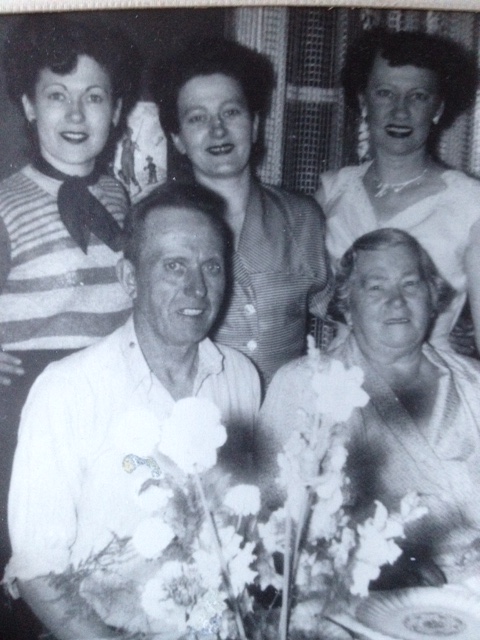
I learned this truth by unconsciously absorbing my paternal grandmother’s lessons. She was the eldest of three strong sisters, the second generation of Ukrainian immigrants escaping turn of the century pre-revolutionary violence. Her mother provided Ukrainian language lessons to other immigrant kids in Hamilton’s hardscrabble east end. One day, the skinny 15 year-old was bored and waiting for her Mom to finish when a shy pupil not much older than her approached. He whispered that she was the most beautiful girl he had ever seen, and that someday he would like to marry her. That was my grandfather. They were married for 63 years.

Her father was one of the first men hired at Hamilton, Ontario’s brand new Dominion Foundry and Steel (Dofasco). He arranged a job for his son-in-law where he worked for 42 years. Later, the Second World War saw North American women doing what many women and most men said could not be done; they fought the war on factory floors. My grandmother worked 8-hour shifts in heavy overalls and beneath a thick kerchief. She lifted, turned, and processed steel sheets. She was, in the vernacular of the day, Rosie the Riveter.

An old Dofasco newsletter shows her and other women smiling broadly and doing their bit with a patriotic passion and rugged determination to make a deeper point. There was celebration when the guns fell silent and the afternoon shift was let out early. Amid the cheers, all the women were given small paper packets containing a tiny bonus and a pink slip. She told me how that she would have liked to have kept working and, like many others, felt used and cheated.

Women Are Glue

(The three sisters and their parents, my grandmother is standing on right)

When her mother was failing, my grandmother made a promise. She would keep the family together and carry on the tradition of the large gatherings like those at the old Port Dover farm. The basement of her modest Burlington home was refashioned into a party room. Every big occasion, and certainly every Christmas, the room sang with my large and loud extended Ukrainian family. My grandmother met everyone at the door with a smile, kiss, and hug. She was a big woman and when you got hugged, you stayed hugged.

Long tables sagged under more food than even our army of a family could consume and then everything was packed away for my cousin’s band and the dancing. The adults got to drink a little too much and the kids got to stay up past bedtime as the old stories and jokes were told through Export A smoke, smiles, and laughter.

The last time I saw her was in a hospital bed. As I was saying goodbye she put her hands on my cheeks and squeezed them together and pulled me close as if I was a six-year-old again. Perhaps, in her eyes, I was. She said, “I hope you know how much I love you.” I said, “I do. And I hope you know how much I love you.” They were our last words.

She told the doctor that she wanted to go home and he said only when she could walk the hallway and was completely off morphine. He didn’t know her very well. She did both the next day. She arrived home and within 45 minutes she was gone. This last act said everything you need to know about her strength.

That Christmas, there was no party. Everyone was too sad. She wasn’t there to push us through our grief. There was never another party. First the extended family and then some even closer drifted further. The glue was gone.

No family is perfect. Scratch the surface of any family and amongst the litter of love and happy days glowing like Facebook postings, you’ll find scars and unhealed wounds. Despite this fact, family, no matter how defined, constructed, or shifting, is sanctuary. Family is what reminds us of who we are when we sink too low or fly too high. Family is what affords us the courage to carry on when we’d rather quit and the reason and confidence to venture forth in the first place.

Every family has one person that acts as glue and holds it all together when so much seems determined to tear it asunder. Because most men, like me, are dullards about such things and too often too self-absorbed, the job usually falls to women. They are the miraculous caregivers who become the bond between people and generations. They love without judgement. Their lives and the values that guide them become their silent advice. They kiss your cheek or kick your ass or just sit and listen, and then listen some more.

They are the women who only those with enough love can see for who they truly are. Bless these women. They, like my grandmother, are the angels among us now and forever.

If you liked this column, please send it to others and consider following my Monday morning blog.

The Importance of Ignoring Your Rabbits

Journalists, detectives, and hiring teams love hypothetical questions. Those in their sights are asked to imagine situations and predict reactions. Politicians dismiss them. Suspects leap behind lawyers. Pity the sweaty-palmed job applicant spinning an internal Rolodex of possible responses while balancing honesty with guessing the right answer

As an author, I have been interviewed countless times in TV and radio studios, over the phone and over coffee, and before audiences. Speaking engagements always end with a Q and A. In most cases, I am asked about whatever book has just been published and my answers come relatively easily. After all, by the time a book leaves the nest to make its perilous way in the world, it has been re-written so many times that an author nearly has it memorized. Further, after a while, an author hears the same dozen or so questions and it becomes a little like Neil Diamond singing Sweet Caroline – the performance is still heart-felt, enjoyable, and hopefully entertaining, but seldom challenging.

But then, once in a while, down the queue comes the query – the hypothetical. It just happened to me again. I am proud and was humbled to have been invited to be one of six artists, authors, business people, and community leaders to participate in the annual fundraiser for the Greater Peterborough Health Services called Peterborough Speaks.

Last Wednesday evening, each of us took a turn on a chat show-like setting at the Market Hall theatre. We were interviewed for about 15 minutes before an audience of 250 and those who will watch later on television. Media personality Michelle Ferreri began my session with a question about my upcoming book and all was going well enough, I thought, until the end. She concluded with, “What advice would the current you give to your 20-year-old self?”

Ignoring Rabbits (photo: Peterborough Examiner)

Wow! Up in the Green Room, I had heard BrandHealth president Paul Hickey asked that question and so I didn’t think the same bullet would be fired again. I was reminded of the same gulping feeling I experienced when asked by a Calgary CBC journalist during a live radio broadcast: “Of all the Canadian prime ministers, which would have been the best NHL hockey player and why?”

That time, I was on the phone with radio’s cruel absence of the communication crutches of expressions or gestures and the terror of dead air. Now I was on stage before all those people and cameras. I was suddenly like one of the hundreds of job applicants who, in another part of my life, I had interviewed with similarly tough, hypothetical questions. It was my turn to spin the Rolodex.

I said, “I would tell my 20 year-old self to ignore the rabbits and tend the tree.” Michelle looked incredulous and there were smatters of nervous laughter from the audience. I explained;

“When I was 20, I was like a frenetic young man alone in a large field teeming with rabbits. I was armed with a tiny net called ambition. I scurried from one to the next, finding that with every rabbit I snared, two more got away. I wish I could convince that guy to leave the field and seek a sanctuary of silence to contemplate what is truly important. I would implore him to imagine shaping his life less as a hunter and more as a gardener before a young bonsai tree. I would suggest that he slowly nurture its growth by picturing its ideal shape and then, over time, mold it into that shape by snipping off certain people, places, activities, and habits and all else that is destructive and distracting. I’m not sure he would have had the capacity to hear me for winter can seldom warn the spring, but I would advise my 20-year-old self to ignore the rabbits and tend the tree.”

I had considered the metaphor of the bonsai before but never constructed the thought as I expressed it that evening. Now that I have, and because I did it in such a public way and with this writing I am doing it again, I am pressing myself to a new challenge. I will soon be making a couple more snips.

As for the fellow in Calgary, I said, “Sir John A. Macdonald would have been the best NHL hockey player for in the Gordie Howe tradition he had the broadest skill set of anyone at the time and was not above throwing a few elbows.” I hope Sir John and Mr. Howe would have liked that. I suspect that as young men they had learned to ignore the rabbits.

If you enjoyed this column, please consider sharing it with others through your social media of choice and to subscribing to follow my Monday morning blog: http://www.johnboyko.com

The Little Known Canadian Links to Lincoln’s Assassination

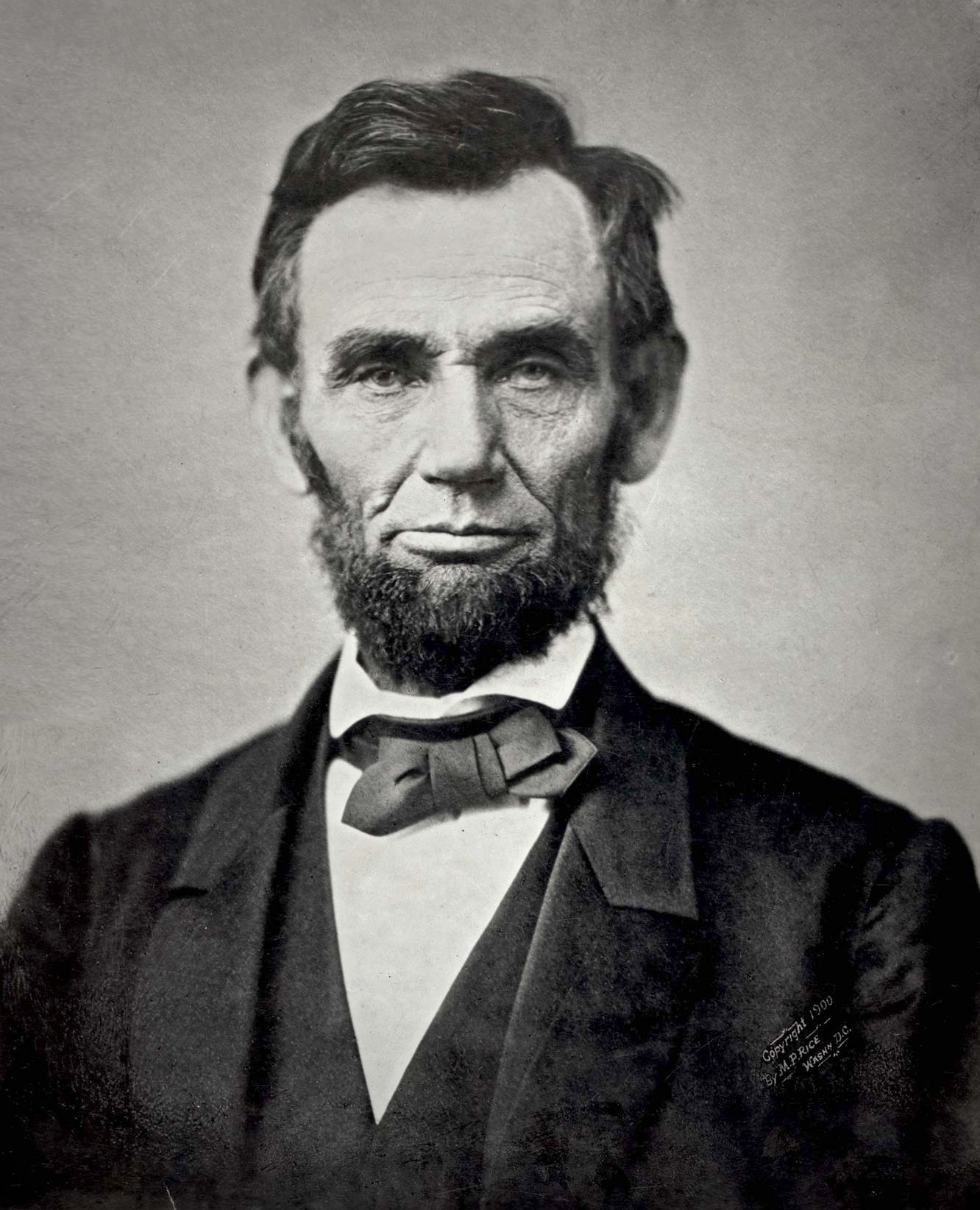
One hundred and fifty years ago this week, on April 15, 1865, famous actor John Wilkes Booth placed a small derringer behind Abraham Lincoln’s left ear. Several hours later, the president who had led the United States through the horrific Civil War that had ended only days before, was dead.

With Lincoln went his goal of treating Southerners not as conquered but countrymen. The Senate’s Radical Republicans ran roughshod over a new and weak president to impose their program of punishment and retribution. To a large degree, America’s regional, political, and racial divisions are echoes of the botched reconstruction that Lincoln would not have allowed. We understand the assassination’s consequences for America but few know of its Canadian connections.

Canada and Lincoln Assassination

(Photo: en.wikipedia.org)

A virulent racist and staunch believer in the Southern cause, Booth gathered a group of like-minded people at Mary Surratt’s Washington boarding house and hatched a plan to kidnap Lincoln. They would release him when the United States, seen by Southerners as a foreign country that had invaded theirs, withdrew its forces. To help organize the plot, Booth travelled to Montreal.

Like many other Canadian cities, Montreal was a hotbed of Confederate activity. A year before, Confederate President Jefferson Davis had appointed Jacob Thompson, a former federal cabinet secretary, to save the South by going north. Thompson established offices in Montreal and Toronto. He organized Confederate deserters, escaped prisoners, and sympathetic Canadians who then harassed Lincoln’s Union with daring raids, Great Lakes piracy, and fifth column intrigues.

Booth arrived in Montreal in October 1864. He took a room at the swanky St. Lawrence Hall hotel that served as Thompson’s headquarters. He met with Confederate spies and gun and blockade-runners. At the Bank of Ontario, he exchanged $300 for gold sterling. Booth worked for 10 days making plans and contacts.

Booth’s failed kidnapping plot and the war’s end led to a new idea. On a single night they would kill Lincoln, Vice President Johnson, Secretary of State Seward, and General Grant. The government would be decapitated and the South inspired to rise again. However, at the appointed hour, Grant had left Washington, Johnson’s assassin got drunk, and Seward survived his stab wounds. Only Booth succeeded.

Booth was hunted down and shot by a 26-man detail led by Quebec-born First Lieutenant Edward Doherty. On May 2, a proclamation stated that the government was seeking a number of Booth’s accomplices, including “rebels and traitors against the United States, harboured in Canada.” Among those listed was John Surratt. He had fled to Canada and was being hidden by priests, first in a Village north of Montreal and then in the city. Canadians helped him to escape to Europe.

Booth’s other conspirators were captured and brought to trial. The prosecution sought to prove their guilt along with the complicity of what it called the Confederacy’s “Canadian Cabinet”. The first words spoken in testimony were by a War Department spy, “I visited Canada in the summer of 1864, and except for the time I have going backward and forward, have remained there for almost two years.” Canada was central to the majority of testimony that followed, including that of a spy posing as a Montreal businessman who later arrived to clear his name. The trial’s final words went to Special Judge Advocate Bingham, “Surely no word further need be spoken to show that…[Booth, Surratt] and Davis and his several agents named in Canada, were in this conspiracy.”

Sensational American newspaper coverage spoke of Canada’s complicity in their president’s murder. Public meetings and vicious letters to editors revealed even greater anti-Canadian sentiment than had developed during the war. There were calls for retribution. The rising tide of hatred led Canadians and Maritimers to renew their demand for Confederation that the Civil War had turned from a good idea to a necessity. Canada had to create itself to save itself.

Today’s divided America and united Canada are the twin legacies of Booth’s smoking gun.

For more on this story and of Canada and the American Civil War please check out “Blood and Daring: How Canada Fought the American Civil War and Forged a Nation”. It’s available everywhere including here: http://www.chapters.indigo.ca/en-ca/home/contributor/author/john-boyko/#page=0&pid=978030736146

Who’s Your Klingon?

Captain Kirk hated Klingons. We understood why. Kirk’s Federation was Athens in the stars, or perhaps America. It sought peaceful exploration. Klingons were the militaristic Spartans, or Soviets, spoiling for battle in their drive to conquer and rule an empire. We got it. We also viscerally understood that the Klingons were to be feared and fought because they represented “the other”.

Who's Your Klingon

(photo: ro.wikipedia.org)

We have always struggled against the other. Since the Reformation, and certainly from the outset of the Industrial Revolution, the West ruled. Its rules and rulers were white, male, and Christian. Everyone else was Klingon.

Like all countries, Canada harbours tragic tales of past fights with the other. Consider the Jewish story. Twenty-year-old Esther Brandeau, disguised as a boy, had worked aboard the Saint-Michel for four years. The captain discovered her deception and, in 1783, put her ashore at Quebec. According to Quebec’s 1627 founding charter, Jews were not allowed in the colony so she was shipped back to France.

In 1864, Pope Pius IX declared Jews among those unworthy of God’s love and, therefore, enemies. Beginning in the 1870s, a series of brutally anti-Semitic German books and then a forged Russian screed called the Elders of Zion, created and perpetuated myths including ritual Jewish killings of Christian babies and a Jewish conspiracy to rule the world’s banks. The Pope and publications instigated mass murders called pogroms. Jewish villages and neighbourhoods were burned. By 1919, over 1,200 pogroms had killed an estimated 50,000 European Jews.

The violence did not soften many Canadian hearts. Important public intellectual Goldwin Smith wrote a series of articles in which he called Jews parasites. He wrote that Jews were, “encamping in all other nations, absorbing their wealth by financial skill…and bringing pogroms upon themselves by their exclusiveness.” They could not be trusted, he said, and should be deported.

Quebec’s powerful Henri Bourassa said in the House of Commons, “The Jews are the most undesirable class of people any country can have…They are vampires on a community instead of being contributors to the general welfare of the people.” Abbe Lionel-Adolphe Grouix, an intellectual who former Quebec Liberal leader Claude Ryan called the “the spiritual leader of modern Quebec” once wrote, “Do not buy from the Jews…Buy from your own people…within a year, the Jewish problem would be resolved, not only in Montreal but from one end of the province to the other.”

William Aberhart was a Protestant fundamentalist preacher who created the Social Credit Party. He said on his popular radio program that Jews must accept Jesus as the Son of God and until they do, “they must expect the curses of the world and cannot expect the Blessings of God.” Aberhart’s party formed the Alberta government in 1935 and would rule there and elsewhere for decades.

On April 16, 1933 a Jewish baseball team was playing a non-Jewish team at Toronto’s Willowdale Park. The stands filled and a large Nazi flag was unfurled. Anti-Semitic abuse smudged the air. Two evenings later the team was back and tension was palpable. When the first punch was thrown, carloads of Jewish men arrived from one direction and non-Jews from another. Lead pipes and baseball bats were swung. Blood flowed. The riot spilled into the neighbourhood and raged for six-hours. Jewish homes and businesses were smashed and burned.

The next day, the Toronto Telegram blamed the Christie Pitts Riot not on the city’s rampant antisemitism and numerous Swastika Clubs but on the Jewish community that, it said, instigated it. Later that summer, Swastika Clubs declared that Jews were banned from Toronto’s Balmy and Kew Beaches. The police did nothing.

“Gentile Only” and “No Jews Allowed” signs hung or rules were enforced in a number Canadian restaurants, golf and tennis clubs, and kids summer camps. Many universities enforced quotas on Jewish admittance. Many insurance companies charged Jewish customers double or triple normal rates. Many boards of education refused to hire Jewish teachers. Real estate agents regularly warned Jewish families of neighbourhoods where they would not be welcome.

At that point Hitler had stripped German Jews of citizenship rights. He encouraged them to flee but few found countries willing to accept them. Canada was among those with locked doors. Prime Minister William Lyon Mackenzie King had met the Führer and confided in his diary, “Hitler might come to be thought of as one of the saviours of the world…his ends, [are] the well-being of his fellow man; not all fellow-men, but those of his own race.” After an international conference discussed saving German Jews, King wrote “We must seek to keep this part of the Continent free from unrest and from too great an intermixture of foreign strains of blood.”

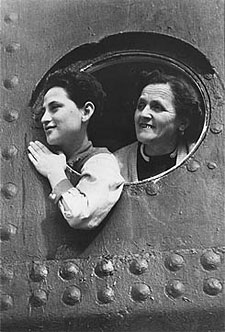
In the spring of 1939, a ship called the St. Louis left Hamburg. It carried 907 German Jews with Cuban visas. Upon their arrival, however, their papers were invalidated. They tried to disembark at Argentina, Uruguay, Paraguay, and then Panama but each said no. Americans dispatched a battleship to keep them from their coast.

The Saint Louis finally arrived at Halifax. For six years, Canadian newspapers had reported Nazi horrors. Canadians knew of the Ghettos and Hitler’s monstrous acts and threats. Mackenzie King was asked to save the 907 men, women, and children. His cabinet discussed it and declined. A reporter asked Canada’s director of immigration Frederick Blair how many Jews would be allowed into Canada and he replied, “None is too many.”

The St. Louis eventually returned to Germany. While all records were not later found, it has been proven that the majority of those aboard perished in Hitler’s gas chambers. We could have saved them. We chose not to.

Whose Your Clingon?

Two St. Louis Passengers (photo: ushmm.org)

Canada’s anti-Semitic past reflects the willingness of too many of us to let a fear of the other dictate attitudes and decisions. Perhaps its lesson is to consider who are today’s others. Are they Canadian Muslim women who wear headscarves? Are they gay and lesbian folks in Indiana and Arkansas who wish only to enjoy a restaurant meal or marry the person they love? Are they men pulled over by police for a DWB: “Driving While Black”?

Perhaps we should more carefully listen for the dog whistle code from exploitative politicians, pundits, and twitter trolls. When they urge us to be angry with or frightened of the other, we could instead ask the next question. We could react with reason rather than emotion – more Spock and less McCoy. We could simply replace the name of “the other de jour” with the word Jew. We could ask if the substitution instantly renders the actions, laws, or opinions under consideration contrary to whom we are or aspire to be.

So, with our being asked to be afraid of the other becoming an increasingly popular political tool, perhaps it is time for us to honestly consider for a moment who, indeed, are our Klingons, and why.

If you enjoyed this column, please share it with others. I relate a much fuller story of Jewish Canadians and five other racial and ethnic groups in Last Steps to Freedom: The Evolution of Canadian Racism. It is available here: http://www.amazon.ca/Last-Steps-To-Freedom-Evolution/dp/1896239404

Secrets: Hitler, the King and the Teacher

A tombstone in a small Canadian city suggests that there may be even more skeletons crammed into the already bone-riddled closets of Britain’s House of Windsor.

It all begins with Edward. The eldest son of King George V never really appreciated his Royal responsibilities. Called David by his family, he was a rebellious boy, raised by nannies. As soon as he was of legal age, he fought to fight and so served in the First World War. Much to his chagrin, he was kept safely back from the front. At the war’s end, he returned to devoting most of his time to bedding young women, many of whom were married. The tittering British public derided the Duke of Windsor as the Playboy Prince.

Partly to end the embarrassing trysts, the angry King put the randy Prince on the road. One of his tours brought him to Canada. In autumn 1919, he was in Galt, Ontario. Galt is one of three small towns that were later amalgamated to form Cambridge. The 25-year-old and his retinue checked into the Iroquois Hotel. Edward often demanded last minute schedule changes and sometimes missed events. He did it again at Galt and escaped his handlers. At this point, the line between fact and conjecture becomes somewhat murky.

According to local legend, the handsome and dapper young man wandered from the hotel and happened upon a 27 year-old teacher who was tending her garden. He introduced himself as David and claimed to be an underling with the Royal Visit. The beguiling and pretty Millicent Milroy was polite but confessed no interest in Royalty. He was entranced. They spoke for a while and then walked together to the Iroquois.

Millicent Milroy

Millicent Milroy (generations.regionofwaterloo.ca)

Edward was soon on his way but suddenly quite interested in Canada. He purchased the Bedingfield ranch in Alberta. On a subsequent visit, he donated the Prince of Wales Trophy to the N.H.L.

Millicent – everyone called her Millie – went back to her students while the Duke’s recklessness with women intensified and was even debated in the British House of Commons. His father exclaimed, “After I am dead, the boy will ruin himself in 12 months.” Among the many married women with whom Edward had illicit relationships was an American named Wallis Simpson. He tried to bring her to a Buckingham Palace event but the King and Queen refused to receive her.

Following the death of his father, on January 20, 1936 Edward became King Edward VIII. That November, he told Prime Minister Baldwin that when Mrs. Simpson’s second divorce was finalized, he wished to marry her. Baldwin was aghast. He said it would violate Church of England law and the British sense of moral decency. The Prime Ministers of various Commonwealth countries were consulted and Canada’s Mackenzie King expressed opposition. Millie was mum.

On December 11, 1936, people huddled close to their crackling radios to hear their King say, “I have found it impossible to carry the heavy burden of responsibility and to discharge my duties as king as I would wish to do without the help and support of the woman I love.” Edward abdicated and his brother succeeded him as George VI. Film goers recently came to know the new king’s struggles to overcome a stutter in The King’s Speech.

The retitled Duke of Windsor fled England for Austria. He married Wallis Simpson in June 1937. The Royal Family was glaringly absent from the wedding. In fact, his brother threatened to end the Royal allowance if he ever returned to Britain.

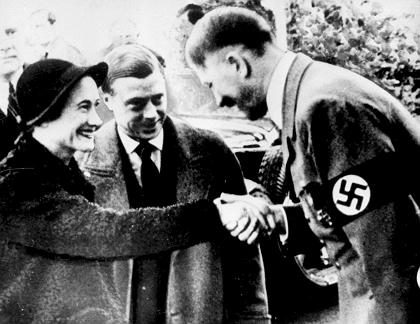
While angry with his family, the Duke became an admirer of Adolf Hitler. Hitler had taken power in 1933, took Jewish rights the next year, and was soon taking chunks of Europe. After honeymooning in Nazi-occupied Austria, the Duke and his new wife visited Hitler. In October 1937, before a large Berlin crowd, he offered Hitler the straight-armed Nazi salute. They then enjoyed a 12-day tour of the country that included a long stay with Hitler and his top advisors at Berchtesgaden, the Fuhrer’s opulent retreat.

Prinz Harrys Urgroßonkel Herzog von Windsor traf Hitler

Duke, Duchess and Fuhrer (photo: en.wikipedia.org)

After the war, British and American authorities captured and sealed the meeting records but they have been recently released. They are reported in a book entitled 17 Carnations that was published just weeks ago by British writer Andrew Morton. The records contain a letter in which Edward calls Hitler “a very great man” and that it would be “a tragic thing for the world if he were overthrown.” The records also show that Hitler pledged to protect Edward and his wife if they would stay quietly in a Spanish chalet while Britain was attacked. After Britain’s fall, the Duke and Duchess would be moved to Buckingham Palace to reign as Hitler’s puppets.

Recently released Nazi diplomatic records note that the Duke was “the only Englishman with whom Hitler would negotiate any peace terms, the logical director of England’s destiny after the war.” Other documents reveal that Edward believed that his brother the King was ‘utterly stupid’ and that Churchill was a ‘war monger’. Their insistence on fighting Hitler, he believed, would needlessly waste British lives.

Following his German visit, the Duke, indeed, moved to Spain. He and Churchill began a brief correspondence and shortly afterward, the Duke and Duchess were moved first to Portugal and then, in August 1940, to the Bahamas. Churchill hoped the dangerous Duke would be safely away from his fascist friend.

Recently released FBI files indicate that President Roosevelt had them carefully watched. The FBI told the president that while in Austria, the Duchess had engaged in a torrid affair with Hitler’s ambassador to London Joachim von Ribbentrop. The romantic or conniving Nazi who would later be Hitler’s Foreign Minister, sent his lover 17 carnations – one for each day of their fling The FBI also told Roosevelt of proof that Herman Goering, Commander of the Luftwaffe and Hitler’s designated successor, had concluded Hitler’s deal – the Duke would become the Nazi-dominated King after Britain’s defeat.

The plots and plans ended in May 1945 with Hitler’s death and silencing of the guns. The Duke and Duchess lived the rest of their days in pampered affluence and caused no further diplomatic stirs. Edward died at age 78, a forgotten relic, in May 1972.

The story then returns to Canada. The 80 year-old retired teacher, Millicent Milroy, had pre-arranged her funeral. She’d had a stone placed in the Mount View Cemetery. Two weeks after the Duke’s death, she had the stone carved to read: “Millicent Milroy, daughter of James and Helen Jane Milroy, 1892 – _______ Wife of Edward (VIII), Duke of Windsor, 1894 – 1972.

Milroy tombstone

(photo: cynfulcreationscanada.blogspot.com)

A journalist was soon banging on her door, insisting to know if the stone was a joke. She explained that at the Iroquois Hotel in 1919, she and the Prince had become so instantly enamoured with one another that they had a “romantic encounter” and were secretly married. They agreed to keep their secret from the world until one of them died.

Some folks dismissed Ms. Milroy as a delusional loon. However, everything about her suggested otherwise. She had enjoyed a fine career and had always been an upstanding member of her community. She was perfectly lucid, with clear and vivid memories of all aspects of her life. She weaved no other tales linking her with any other important people or events.

Millie Milroy died in 1984. She never budged from her story and was buried beneath the stone insisting on its veracity. Perhaps it is just a story. However, when considered in light of other facets of Edward’s life that are only now being revealed and confirmed, maybe Galt’s Queen Millie deserves another look.

If you enjoyed this column, please use email or your social media of choice to share it with others and perhaps see more of the columns that I post every Monday morning.

Business Beware – Stuff Stinks

Betty Friedan and George Carlin had it right. Friedan observed a problem with no name. Women of the early ‘60s had shiny new gadgets that filled their homes but left their lives empty. Carlin asked, “Have you ever noticed how your shit is stuff and everybody else’s stuff is shit?” We are now at the crossroads of Friedan and Carlin where all stuff is shit.

We have the millennials to thank. They are the cohort born from the early 1980s to the early 2000s. Its first wave is now sloshing into peak earning years and we baby boomers are learning that they don’t think much of how we did things. It’s a little disconcerting for those of us born between 1946 and 1964 because we have ruled the roost for a long while. Our expiry date, however, is in the rear view mirror. Businesses not adjusting are sinking.

While hearing us enjoy Abbey Road for the millionth time and laugh through M*A*S*H* re-runs yet again, the millennials have been watching. They saw devotion to jobs at the expense of families leave too many families shattered. They saw the work-life balance teeter-totter grounded at down with life delayed until retirement. They saw loyalty to companies betrayed by loyalty unreciprocated. They saw us falter and many fall when the insatiable greed and arrogant maleficence of the 2008 Great Recession stole so much and left shaky all that had been certain. They saw the bad guys win.

They also saw us gather stuff. In fact, they saw us gather so much stuff that we became stuff’s slaves. We went into debt to buy stuff and kept jobs we hated to pay for stuff. We read magazines about stuff and made a leisure activity of going out to look at stuff. The saw us accumulate more and more stuff while measuring ourselves and judging others by stuff’s quantity, quality, and flirty trendiness.

Business Beware - Stuff Stinks

(Photo: adventure-journal.com)

Truth be told, I was never pro-stuff. Three experiences, though, made me anti-stuff. I once enjoyed three weeks in Japan including two days at the home of a very nice family. They asked about a typical Canadian household and, among other things, I explained how our refrigerators were larger, as theirs resembled a bar fridge, and that many homes, including mine, also had a big box freezer. “Why?” the Mom asked, “Are grocery stores far from your home or do you often get frozen in?” She was right. Shortly after returning home we got rid of our freezer.

Second, for years my dear wife owned and ran a successful flower shop. One day I accompanied her to a Toronto trade show. As we strolled into a gigantic warehouse bursting with items for florists to sell I felt gobsmacked. After a few minutes of wide-eyed wandering I whispered, with great respect for the tertiary part of her business, “There is not one thing here that anyone needs.”

Finally, amid mourning the death of a member of my wife’s family and then mine, we witnessed harsh words, hard feelings, and the cutting of wounds yet to heal – and all over the distribution of stuff. I also watched the packing and dumping of a lot of stuff once thought precious.

The three experiences led to a clearing of personal ballast. Trips to the reuse and recycling centre and county dump became causes to uncork a bottle of red. One new thing into our house necessitated two things out. Second hand became better than buying new and the second car was sold. Things are better now but could be better yet. If I won the lottery I would not buy more stuff but hire three strong men and a dumpster for a final purge.

And that brings me back to the millennials. We baby boomers crammed our houses with stuff and then began filling rented storage spaces. A tenth of all Americans now rent storage space – more than any country on earth. Canadians are second. North America now has 2.3 billion square feet of storage space. Think about that – it’s the size of Manhattan! I don’t get it. The millennials don’t get it.

While boomer-led companies continue to market to stuff-addicted baby boomers, millennial-run companies have been starting anti-stuff businesses. Consider Zipcar that rents cars by the hour, allowing more people to get around without ever buying cars. Consider companies that organize the downloading of music and books that allow folks to listen and read without owning books or CDs. Consider Netflix and its clones that are rendering anachronistic owning DVDs. Consider the website that allows people to rent rather than buy power tools that would otherwise spend nearly their entire lifespans gathering dust.

A millennial friend of mine, a professional man, was on to this years ago. One day he told me that he would no longer buy new clothes. Everything he has worn since has come from second-hand stores. We have several neighbours in our little Village that, like him, could easily afford to buy new clothing, but don’t.

How will businesses adjust? Costco, Walmart, and the other Chinese distribution centers are continuing to base business plans on the boomer mentality of buying more than we need, storing it when our homes burst their seams, and then coming back for still more. Home Depot, on the other hand, is now renting tools as well as selling them. Uber allows people without cars to text people who do for a ride. Taxi and car rental companies are screaming at Uber like King Canute thrust his palm to the sea.

Will other companies adjust like Home Depot or invent like Uber? Will more companies understand that disposable income can be spent on only two things: experiences or stuff. Experiences enrich and stay with us forever. Stuff inevitably wears out, is thrown out, or argued over. Will more companies sell reading and not books, or music and not CDs, or transportation and not cars? Will more companies sell experiences to millennials eager to do without the latest stuff in order to enjoy life with someone they love rather than buying stuff to impress people they don’t.

So I offer an insincere apology to the old school businesses and, for that matter, to the entire consumer-driven economy that need me to keep buying stuff. I’m not going to do it. The millennials are not going to do it either. Something has to give and changes need to be made. But I’m not going to worry about that right now. I’m off to gather more stuff to throw away.

If you enjoyed this column, please send it to others through your social media of choice, consider commenting, or even following my weekly blog. And for baby boomers – check out what Paul McCartney says about this: https://www.youtube.com/watch?v=uAQHhWbImyY

What Will A Man Do For Love? He’ll Run!

In the animal kingdom you awake and run. You run to catch food or run to escape becoming another’s meal. The metaphor is unfortunately apt for the business world where one eats or is eaten and so running to, from, and around others is a daily challenge.

But why run when one’s food or rung on the corporate ladder are not at stake? Why change into stupidly expensive shoes to take to roadways and trails to pant and sweat and endure pain and risk injury? Why embark on long treks that always bring you right back to the start?

cartoon runner (Photo: galleryhip.com)

John Stanton has made a successful business from those questions. He founded The Running Room that now has storefronts across Canada. He wrote Running Room’s Book on Running that has enjoyed several editions. Its opening sentence states, “The book is for all those people who want to strengthen their bodies, calm and stimulate their minds and soothe their souls. Running improves us mentally, physically and spiritually.” Well, it certainly continues to improve Mr. Stanton financially. Good on him, I say. But, for me, he’s only partly right.

I began running while in university when a friend spoke of its relieving stress and improving fitness. She was right. I began with short distances and after a week or so I did indeed begin to feel better. I soon began to lose some of the weight my discovery of beer had afforded me and became a big fan of endorphins. Endorphins are neurotransmitters secreted by the pituitary gland and parts of the brain that reduce pain and cause stimulation similar to morphine. They lead to a feeling of euphoria called “runner’s high”. I confess that it’s quite wonderful. But less stress, fewer pounds and a free high are not why I run.

As my distances increased I developed the desire to run a marathon. It’s a silly notion really. After all one can argue that it is natural to run as our forebears ran from wild beasts but no predator will chase you for 26.2 miles. That distance is silly too. It’s based on the ancient Greek tale of Philippides who ran 24 miles from Marathon to Athens to report a military victory. He delivered the news, said, “Joy to you” and then, by the way, dropped stone dead. The final 2.2 miles was added for the 1908 London Olympics so that the race could begin at Windsor Castle and end directly before the Royal Family’s White City stadium viewing box.

I ran the Ottawa Capital Marathon with my youngest brother. We had not trained properly and had the wrong shoes and really had no good reason to finish – but we did. I crossed the line and nearly fell into the arms of my dear wife who supports all of my wacky endeavors with the patience of Job squared. I made her pledge that she would never let me run another marathon.

ottawa marathonOttawa Marathon (www.time-to-run.com)

A couple of years later I was preparing to do it again. For the first while I jogged. It’s a nice loping affair punctuated by frequent walks. I then began running, which involves a quicker pace and fewer breaks. I then began training. I created a schedule based on Mr. Stanton’s book, timed myself, recorded my runs, ran hills, ran fartleks (google it), ran in the cold and rain, and tended to frown a lot. Training, after all, is serious business.

I ran the Toronto Waterfront Marathon a lot quicker than I had done the Ottawa. I leapt over the finish line and felt proud of my accomplishment. This time, I could not wait to do another. I completed two more. I ran the last one with a slight hamstring pull so my speed was off and the enjoyment gone.

After a long while off I was pain free but found it difficult to muster the will to move from jogging to running to training. My goal shifted from speed and endurance to the avoidance of injury. In the parlance of the vertical ice cube trays where too many well-dressed, high-stressed people work each day, I guess I’d moved from trying to say smart things in meetings to avoiding saying anything stupid. When that line is crossed, it’s over.

Except, it was not over – not by a long shot. I finally figured out why I run. It is not for the endorphins. It is not to train for another marathon and whatever ego-driven competitiveness those things involve. I discovered it nearly seven years ago. This morning I was reminded.

This morning I was cradling someone who is precious to me in a way that only another grandparent can truly understand. She is only six weeks old. Our eyes met. We held our gaze for a long while until a tear found my eye. I want to see her grow. I want to cheer her games, play with her on the climbers, slide down snow mountains, share her jokes, console her heartaches, and, later, explain why boys are indeed crazy but her Mom is really not. And for all that I need to stay healthy and for that I need to remain fit.

So tomorrow, I will plug in my ear pods, tune into to a favorite playlist or CBC podcast, and lope my way down the trail. I might run. But I will probably just jog. As I ignore creaky knees, await endorphins, and wallow in the beauty of the river on one side and farmland and forest on the other, I will know exactly why I’m there.

If you enjoyed this column, please share it with others through your social media of choice and consider leaving a comment or following my weekly blog.

For Men: Ten Things I Know About Women

As one of four boys, I grew up in a male world. I lived with more young men in university before marrying the girl that had left me gobsmacked in high school and with whom I remain hopelessly in love. Then came a daughter, a granddaughter, and then another granddaughter. My world is now female. So as a refugee from the Planet Testosterone, I humbly offer to men willing to pause and consider, all I have come to know for sure about women:

  1. Shut Up: When a woman is relating a problem, she does not want you to present a solution. The chances are good, very good in fact; that she already knows what she will do but only needs to solidify it in her mind by talking it out so shut up and listen. This seems to begin when women are about age 5.
  2. Speak Up: It may seem contradictory, but while shutting up, make affirming sounds. Men don’t naturally use them and don’t need them with each other but women do. Saying “ah” “oh” “mm” or any in a range of affirming sounds will do. Skip the affirming sound and be accused of not listening, even if, perchance, you actually are.
  3. Drop the Toilet Seat: Pity the man who forgets this rule. Enough said.
  4. Use Your Words: The average woman has 30% more Foxp2 protein in her brain than the average man. This protein feeds the brain’s language center. It results in women speaking about 20,000 words a day, or 13,000 more than men. So in the evening, men need to dig deep, even when they have probably already used up all their words.
  5. You Will Never Understand Shoes: Most women love shoes. Most women love shoe shopping. Most women love having more shoes than they can ever wear. You will never understand it. Never. Don’t try.
  6. There are Blue Jobs: Even Betty Friedan and Gloria Steinem would stand aside to let a man do certain tasks. The jobs often involve garbage, grass, mice, bats, and dead things the cat dragged home.
  7. Men Are Wrong: In a time of conflict men should begin with, “I’m sorry. I was wrong.” The chances are that he was, even if it sometimes takes tears or years to realize it. If a man is standing alone in a forest, he would still be wrong.
  8. Women are Magical: Consider growing a human being inside of you. Consider the act of giving birth. Consider feeding another human being from the milk your body produces. Now think of anything a man can do and whether it compares to anything remotely as mystical or breathtakingly wonderful.
  9. Women Are Beautiful: Women – all women – are works of art. Men’s lumpy, hairy, smelly bodies are utilitarian locomotion devices to be endured, covered, and forgotten. Get over yourselves because women already have.
  10. Women are Smarter: The human brain is split into two hemispheres with each side responsible for particular functions. Women’s brains have far more neural pathways between the right and left sides. This fact allows for far more connections between logic and emotion and present and past and to read faces and situations infinitely quicker and far more accurately than men. Go to a party with a woman and she will have everyone figured out and the dynamic of the room nailed while you’re still looking for the bar.

Living in my women’s world has made me a better man. I applaud that women now lead 22 countries. Perhaps if more women were in positions of political, economic, and social power we would have a better world. Scratch the word perhaps – that’s another thing I know for sure. Then again, I’m a man, so I’m probably wrong.

KenzieAndGrandpaIMG_1240

The author, happy in his women’s world, being directed as to what to do next.

If you liked this, please share it with others, consider commenting, or following my weekly blog.

Shudder or Think? We Must Decide

Canadians are being asked to be afraid. We should apparently be so afraid that we will trade a little more security for a lot less liberty with Bill C-51, Canada’s Patriot Act. It will affect our privacy at home and at work and is why four former prime ministers, retired judges, and so many academic experts in privacy matters oppose it.

At the same time, we are to be afraid of what people wear. A hijab, we’re told by the federal government and a Quebec court, is a threat; not a burka, that covers a person’s face, but a hijab that covers one’s hair. Is this a thin edge of the wedge where courts and the government can tell us what to wear and to fear those outside the mainstream, wherever that ever shifting current happens to be at the moment?

quebec-hijab-dispute-crowdfund-20150228

Rania El-Alloui was recently told by a Quebec judge to remove her hijab or consult a lawyer before proceedings could continue. (Photo: Graham Hughes)

Rather than shuddering, many Canadians opting to think because the anti-terrorist bill and hijab kerfuffle are stirring a debate regarding the definition of Canada.

To try and define Canada, however, is tough for any assortment of words quickly tumbles into confessions of a job half done. Canada is the dancing fire in Iqaluit’s sky as much as the homeless veteran on a Yonge Street sidewalk. Canada is Montreal private club English and Moncton Franglais as much as Ottawa Valley twang and Come By Chance slang.

If only we could ask the Irish who, when the potatoes went dead in the ground and rents flew high, left to start again where merit meant more than whose your father. It would be nice to ask the slaves who snapped their chains and followed the North Star to freedom. Or, maybe the Ukrainians, those peasants in sheepskin coats, who left poverty and oppression for free land and a fresh beginning.

Nowhere was Adolf Hitler’s evil more banal than at the death camps, and the worst of the worst was Auschwitz. The innocent who suffered unspeakable horror spoke of a building where their confiscated property was stored. It became a sliver of light through the cruel darkness. It held the promise that someday they might be released. We could speak with them about their naming the building Canada.

At the war’s end, Canadian doors opened to its victims. Hungarians, Italians, Czechs, Poles, and more came to work the mines, factories, and farms and build the schools, roads, and little towns and towering towers. The Ottawa men called them Displaced Persons while some snarled DP as an insult. The latest to arrive are always harshest on the next in line. Ask the Vietnamese about the Pakistanis or the Irish about the Jews or, for that matter, ask the Boethuk about the English; that’s if you can find a Boethuk to ask.

All the answers from all these people, along with songs and stories and dusty old Royal Commissions, leave us with a country too complex to fully comprehend let alone define. Maybe that’s OK. Canada is like the shape-shifting trickster Raven whose beauty is its ever-changing complexity.

Perhaps this vision brings us as close as we will come in our quest for understanding. But in our hearts, we have always understood the Canadian secret. It is the freedom to try and fail and try again. It’s the draw bridge locked open to new people and ideas.

It is embracing complexity and the fundamental notion that there is value in us all that has created a society where each of us gives a little to help folks we will never meet, whether it’s the old man across town or the hungry child half way around the globe. It’s the notion of community extending beyond our family to where every child is ours. It’s where differences in whom we are, whom we worship, and whom we love are not just tolerated but accepted as who we are

It’s complicated. It’s hard. It’s meant to be. But it is what will save us from fear-based prejudices and policies, be they the proposition of police-state practices or a national dress code. It is our celebration of Canadian complexity that we guard, oh Canada, when we stand on guard for thee.

 If you like this column please share it with others through your social media of choice and please consider subscribing to my Monday morning blog.


Africville: Racism and Redemption

The bulldozers came in the morning. For days they roared like monsters demolishing houses and streets and even the church. They tore down what remained of Canada’s moral authority to say anything about race other than, “We were wrong.”

Africville was created in 1842 with land grants to African American families escaping slavery and discrimination for the hope of better lives. The original sixteen single-acre lots overlooked the Bedford Basin and were separated from Halifax, Nova Scotia by a thick woods and impassable road. The community was called Campbell Road. As Black families left the racism of Halifax and elsewhere seeking solace among friends it was dubbed ‘Africville’. The name stuck.

Links between Halifax and Africville grew over the years as kids were bussed to school and most of their parents worked in the city. Throughout the 1940s and 1950s a number of famous people visited, including retired boxing champion Joe Louis, and Duke Ellington who married an Africville woman named Mildred Dixon. Folks were thrilled with the celebrities but understood that their hospitality was essential because while Louis and Ellington were feted in Halifax during the day they were unable to find lodging in the segregated city at night.

In that way, Halifax was no different than most other cities and towns. The Queen may have been Canada’s head of state but Jim Crow was boss. African Canadians grew used to restaurants where they could not eat, churches in which they could not pray, houses they could not buy, business licenses for which they could not apply, and schools their children could not attend.

Africvillephoto credit: Halifax.com

By the 1950s Halifax had grown to encircle Africville. The city council embarked on a determined campaign to rid itself of the Black community that had become part of their city. Despite the fact that Africville’s people were Halifax citizens and paid municipal taxes, the road to and through the community was unpaved and in the winter it seldom saw a plow. There were no streetlights. There were no sewers. Families drew water from a central well that the city had dug as a “temporary measure” in 1852.

Police seldom patrolled and ignored most calls. In 1947, seven houses were destroyed by fire because, although the fire department had been called, like usual, it had not responded. Insurance companies refused to sell home and property policies, so banks issued neither mortgages or home improvement loans.

Africville churchphoto credit: Halifax.com

Everything distasteful and dirty went to Africville. With no consultation with Africville’s citizens, and in defiance of petitions and presentations, Halifax council located in or adjacent to the community a pungent slaughterhouse, oil refinery, and tar factory, a deafeningly loud stone crushing plant, and a hospital for infectious diseases. A railway company was allowed to build a line through the community and landowners were only partially compensated for expropriated land. The city dump was relocated 350 yards from west end Africville homes and then a smoke-belching incinerator was constructed nearby.

The disgraceful treatment of the community and the racism faced by those working in Halifax took its toll. Africville got tough. The “Mainline” portion of town was home to middle-class people who worked hard and did their best. The “Big Town” area, however, knew every crime and vice imaginable. The only white people who saw Africville came to Big Town for dirty old times after Halifax bars closed.

University of Toronto’s Gordon Stephenson wrote a report that echoed 1950s urban renewal practices. He recommended relocating Africville’s people and razing their homes. A 1962 Halifax Development Department report stated that the majority of Africville’s people did not want to leave; they just wanted the services that other Halifax citizens – White Halifax citizens – had enjoyed for decades. The report concluded, however, that the people should be ignored and the professor obeyed.

Concerned Africville citizens met at the heart of their community, the Seaview Church. Over a hundred people vowed to save their homes. Peter Edwards made an impassioned plea to city council on October 24, 1962. He spoke of Africville’s history and spirit. He spoke of the racist policies and treatment endured over the years and in the current process. “If they were a majority group,” he said, “you would have heard their impressions first.”

City council responded by hiring University of Toronto’s Albert Rose to study the situation. No one was fooled. Rose had written Regent Park: A Study for Slum Clearance. They knew what he would say. In no time at all he said it. Africville was doomed.

Residents received an average of $500 for their homes. It was later discovered that additional assistance had been available but only 30% of the people were told about it and then only 15% of applicants were approved. People who had been self-sufficient homeowners were forced into a subsidized housing project and then forced to move again when told that even before they had been crammed into the ramshackle apartments, the complex had been scheduled for demolition.

By 1969, Africville was gone. The city had said it needed the land for industrial expansion but it never happened. It said it needed the land to construct a bridge but ended up using a sliver of the property.

In 1985, a monument was erected to the people of Africville in what had become the Seaview Memorial Park. The names of the original families were engraved into a stone. Family reunions began finding their way home with grandchildren being told the old stories. A former resident recalls, “Out home, we didn’t have a lot of money but we had each other. After the relocation, we didn’t have a lot of money – but we didn’t have each other.”

Africville lives. It lives as a symbol of the more than three hundred years of systemic racism that African Canadians endured and against which they struggled. In 2010, the Halifax City Council apologized to the people of Africville for all they did to, and all they did not do for the community. It apologized for Africville’s destruction.

A hectare of land was set aside and money allocated to rebuild the Seaview United Baptist Church. It will serve as a historical interpretive centre in a park renamed Africville. There, stories will be told of a time when racism coursed through Canadian veins and of a hope that someday, racism will be relegated to the dustbin of history. Someday.

If you enjoyed this column, please share it with others, consider commenting or following my blog, or even buying my book entitled Last Steps to Freedom: The Evolution of Canadian Racism, that addresses the history of racism in Canada. (Find it at Amazon or here at Chapters online: http://www.chapters.indigo.ca/en-ca/home/contributor/author/john-boyko/

Of Flags and Fury

February brings us one thing that Prime Minister Harper wants us to know and another he wishes we’d ignore. He hopes we pay attention to Bill C-51, his new and still pending Anti-Terrorist bill. He hopes we forget that today our flag turned 50 years old. The two offer a tremendous opportunity.

Unlike with the War of 1812 or the First World War, Mr. Harper has given little money or attention to the flag’s birthday. He’s right, let’s snub the flag. The notion is not as blasphemous as it sounds. Consider that every school day, millions of American children stand and recite, “I pledge allegiance to the flag of the United States of America and to the Republic for which is stands.” In other words, it is not the flag that deserves allegiance, but what it represents. So maybe Mr. Harper is right that commemorating the flag would trivialize our national identity by indulging in a patriotic celebration of its mere symbol.

Flag_of_Canada.svg

Patriotism, after all, is ankle-deep and transitory. It’s civic-nationalism that delineates who we are. Patriotism can dance merrily along without concern for introspection but civic-nationalism demands it. Unlike the bread and circuses of patriotism or jingoist chest-thumping or empty-headed chauvinist aggression, civic nationalism rests upon a quiet, self-assured confidence among citizens in what is unique, valued, and valuable. It is inspirational and aspirational in defining what deserves to be protected and enhanced.

Our flag is just patriotism on a pole. The day before Lester Pearson assumed office in 1963, a bomb shattered a Montreal afternoon. The horrible blast and those that followed fueled the ethnic-nationalist debate regarding the creation of an independent state for the Québécois nation. Pearson’s new flag offered tribalists and the rest of us the patriotic balm that the British flag would be removed from ours. To the parts of the prairies and north where maple trees do not grow, of course, the big red maple leaf offered yet another reminder of central Canada’s myopic vision and arrogance.

So let’s forget the flag’s patriotism and use the opportunity presented by its birthday and C-51’s potential birth to question not what’s up the pole but in our hearts. For too long we have been called taxpayers. For too long we’ve been treated only as consumers. We’ll soon just be considered voters. Let’s demonstrate that we are citizens by engaging in a national conversation. Let us post blogs, send tweets and emails, and my goodness, maybe even speak with one another. I suggest these questions to begin:

Do we respect parliament and so believe that new legislation should be introduced in the House and not at some place akin to a campaign stop? Do we believe the rule of law insists that our police and spies always obey the law? Do we believe that adequate staff, budget, and mandate must exist along with a process that reports to parliament before anyone can speak of proper oversight of our spies and police? Do we believe the rule of law implies that citizens can only be arrested when they break a law and not for what others think they’re maybe thinking? Do we believe the best way to fight those who do not share our democratic values is to suicide the democratic values we treasure? Do we believe misinformation is criminal propaganda if a citizen creates it but not if disguised as an MP mailing or TV ad? When the House debates begin, will we recall the difference between insult and argument? Do we believe a party that says it opposes the law should vote for it? Do we understand that economic prosperity and environmental sustainability are not either-or propositions but that security and liberty are?

So let’s take our government’s advice and ditch celebrations of a patriotic symbol. Let’s instead engage in something deeper – active citizenship. If we use C-51 to consider whom we are and whom we wish to be, we may just end up proving ourselves worthy of our allegiance to the flag through deepening our understanding of the Dominion for which it stands.

If you enjoyed this, please send it to others using your social media of choice, consider commenting, or joining my blog where I post about history, politics, music, or musings once a week.

Time to Change the Faces on Our Money

It’s been loud lately. The tragic popping of gunfire from criminal minds in Paris and Alberta and from Canadian troops in Iraq, along with the sucking sound of the latest oil boom going bust have been loud indeed. Lost in the din have been two related arguments that deserve some attention.

The first began with Sir John A. Macdonald’s 200th birthday. Many commemorated our first prime minister as a visionary. Others castigated him as a racist. The second was stirred by a letter from NDP MPs Niki Ashton and Murray Rankin to Bank of Canada Governor Stephen Poloz in support of an effort begun a year ago by Victoria’s Merna Forster to have more women, such as the Famous Five, on our money.

The arguments are related because they go to the heart of our nationhood. Those we choose to celebrate in books or bronze, or on whatever that sticky polymer stuff passing as paper money is, say a great deal about the character traits and achievements we believe represent the best of us.

So perhaps we should remove Sir John from our money. But then, William Lyon Mackenzie King is on our 50, yet in the Second World War he interned Japanese-Canadians who had committed no crimes. Sir Robert Borden is on our 100, yet he approved his party’s virulently anti-Asian British Columbia campaign under the slogan “White Power.” Should they be removed from our money too?

Oscar Peterson banknote

Queen Elizabeth is the only woman currently on our currency. But does our sovereign’s visage remind us of our sovereignty’s limits? Does she represent a political system based on the hereditary passage of power that contradicts current Canadian values and has passed its best-before date? Accordingly, should she be removed from our money?

And what of the Famous Five? Their fame began when Edmonton’s Emily Murphy was appointed Canada’s first female police magistrate. Shortly afterward, an uppity male lawyer said she was unqualified because the constitution listed “Persons” who could be judges with the implication that they were male. Murphy and her Alberta friends took the case all the way to Britain’s Judicial Committee of the Privy Council where, in 1929, it was determined that women were Persons. It was an enormous step for women and toward citizenship and equality for all.

However, Emily Murphy was also a novelist who wrote under the pseudonym Janey Canuck. In The Black Candle, published in 1922, she wrote of non-White immigrants running the Canadian drug trade to intentionally defile White women and destroy the White race. The only option, she argued, was to purify Canada by ridding it of all people of colour. Should the writer of such reprehensible ideas be on Parliament hill, or on the Edmonton mural, or on our money? What would Sir John or those currently attacking him say?

The Ashton and Rankin letter states, “Our banknotes are an important opportunity to celebrate the diversity of our country and the innumerable contributions to its history made by people of all genders, ages, religions and ethnicities.” Perhaps agreeing with that very Canadian thought leads to a desire to replace all of the political figures now on our money with those who better animate our collective soul: our artists.

Susanna Moodie banknote

Louis Riel once said, “My people will sleep for one hundred years, but when they awake, it will be the artists who give them their spirit back.” He was right. Painters, poets, authors, songwriters, and sculptors and more speak to our intellects and emotions while inviting us to think deeper about that which truly matters. Let us celebrate those who help us celebrate our spirit.

The Bank of Canada regularly considers recommendations for changes to our currency and advises the minister of finance who signs off on new designs. Let the conversation begin. Mr. Poloz, for our 10, 20, 50 and 100 I recommend Oscar Peterson, Susanna Moodie, Norval Morrisseau, and Alice Munro.

This column originally appeared in the Ottawa Citizen on February 2, 2015. The Citizen created the images. If you enjoyed it, please share it with others through your favourite social media.