Elect Billy the Kid

The Civil War tore the United States asunder. Over 700,000 were killed by metal or pathogens that ripped bodies apart as spectacularly as the country and concepts they were defending. The Reconstruction era that followed added distress and deprivation as shameless political maneuvering re-established elitist power throughout the country and southern white supremacists used unbridled violence to renew slavery in all but name.

The heroes who arose in that land without pity were not those who obeyed discredited laws, no, they were the outlaws. They were not the good guys and did not pretend to be. They were in it for themselves and themselves alone. While challenging and rejecting rules and laws proven unworthy of respect, they were embraced by those who wished they had the courage to raise a middle finger to those monetizing misery.

So in the 1870s, to the veterans and widows and those with land stolen or denied, a host of non-heroic heroes unwittingly offered themselves. Newspapers and dime novels extolled the adventures of Jesse James, Billy the Kid, and Wild Bill Hickock. They stole from banks. Good on them, readers thought. They broke the law and then dodged the lawmen. Good on ‘em all.

In 1929, everything fell again. This time it was caused not by state’s rights but states’ wrongs. Western governments, including Canada’s, were intentionally and stubbornly blind to the cost of rampant avarice that upset the delicate financial teeter-totter of fear and greed. They were as dumbfounded as Dobermans, unaware that they had the keys to their chains. They stared in disbelief as overproduction, insane speculation, and skyrocketing debt and tariffs fed the obdurate belief that what goes up could never come down. And then Mother Nature piled on. Soon, farmers who had fed the world were starving, mines that had enriched the world were bankrupt, and factories that had moved the world were stopped dead.

And the outlaws returned. People with empty bellies and nothing left to lose cheered the exploits of Bonnie and Clyde, John Dillinger, and Pretty Boy Floyd. Why not applaud the daring of those who took from the bank that had taken your farm? Dillinger was once asked why he robbed banks. He replied, “That’s where the money is.” Once again, good on ‘em all.

And now, here we are again. The 2008 economic collapse stole the homes and dreams of millions while the privileged few who had caused the whole thing were bailed out and let off. It was a clear demonstration of socialism for the rich and capitalism for the rest. Then the pandemic locked us in our homes and, once again, those without white-collar privilege and invested wealth carried on while the rest, the vast majority, those with the least, suffered the most.

The one-two punches of the Great Recession and Pandemic echoed the Civil War and Reconstruction and the deep and long Depression. Once again, everything that seemed right and certain simply vanished. Laws and assumed rules no longer seemed to matter. And we are emerging from the darkness weakened, staggering under a collectively felt Post Traumatic Stress Disorder manifested in spiking divorce and addiction rates, domestic violence, and school violence.

So who are our outlaws? Who is our Butch Cassidy or Baby Face Nelson? Maybe our villainous heroes this time are the politicians who tell us we are right; who tell us that nothing and no one can be trusted. Don’t trust the media because they lie, they’re fake news. Don’t trust the law because the cops are crooked and courts rigged. Don’t trust elections because they’re fixed. Don’t trust science because it pushes poison on behalf of greedy drug companies. And while we’re at it, don’t trust teachers or priests or doctors or anyone with some fancy diploma. But, of course, trust them. Trust them as the only ones who understand our fears and feel our pain. After all, they are as angry as us and hate the same people we hate.

It makes sense. It fits the pattern. Disruptive times lead to the celebration of outlaws; those who flaunt rules, insult convention, focus rage, and inspire shameful joy. It makes sense, but then, maybe this time it’s a little more dangerous. After all, Billy the Kid never ran for office.

Truth and the Canadian Encyclopedia

Lately, I have been finding it easy to feel uneasy. It seems that too much of what passes for political discourse in the United States and, disturbingly and increasingly in Canada, rests on a foundation of lies and a fundamental misunderstanding of history and civics. That’s why education is so important. That’s why critical thinking is essential. That’s why considering one’s source of information matters so much.

I would like to offer the online Canadian Encyclopedia as a trusted source of information about Canada’s history, culture, politics, and important individuals. As one of the writers who contribute entries to the Encyclopedia, I can attest to its veracity.

Here’s how it works. One of its editors contacts me with an assignment. I research, write, and submit an 800 or 1,000-word entry on the person, event, or idea. It is then edited. It is then fact-checked. It is edited and fact-checked again. It comes back to me for more edits and my sign-off. Only then is it posted. If errors or omissions are discovered, it is amended.

I am proud to have written over 100 entries for the Canadian Encylopedia and in so doing played at least a tiny part in providing a trusted source of information that, hopefully, allows readers to engage more fully with their community, armed with knowledge, context, and truth.

Check some of the entries I have submitted here: https://www.thecanadianencyclopedia.ca/en/author/john-boyko

Hopefully, some of the entries will stir your curiosity such that you will wander the site and find more of interest.

Then, let’s take a deep breath. My study of history gives me confidence that those spreading lies and sewing divisions based on lies and naked self-interest will go away. They always do. Husksters and demagogues and even dictators always fail and fall. Think about that. Always.

History neither moves in a straight line nor repeats itself. Rather, it moves as eddies in a stream, occasionally circling back, but always, eventually, moving forward. We need to be strong. We need to be diligent. But we’ll be okay.

Inaugural Council Speech 

On November 22, 2022, Selwyn Township Council held its inaugural meeting. Council was sworn in and then each councillor, the deputy mayor, and the mayor were invited to make their inaugural remarks. Below is my speech.

——————————————————————————————————————-

Selwyn is a diverse community comprised of those who live on farms, in urban enclaves, in waterfront homes, and in a fully serviced urban Village. Mary, Brian, and I were elected in our wards but now, like Sherry and Ron, we must, and we will consider and represent the interests of all the people of Selwyn.

As a council and staff, we have two challenges before us. First, working as a team, we must be managers. We must manage the maintenance and enhancement of our services and infrastructure.

The second challenge is that while managing, we must also be leaders. Leadership is tougher than management because it entails dealing not with what is immediately before us, but instead, with all that lies beyond the horizon.

Leadership demands engaging in an existential conversation regarding who we are and who we wish to be. In many ways, the five of us are joining that conversation already in progress. The conversation is reflected in our official plan, in our strategic plan, and in the goals of our staff departments.

But part of that conversation should, I think, now become more intentionally focussed upon the pivot point at which we find ourselves due to the most fundamental issue that lies before us — growth. Everything else we address in the next four years will be affected, and informed, by growth.

Growth is necessary because we must play our part in addressing the nationwide housing crisis. We owe it to those in Selwyn now and those wishing to move here, to provide more and more affordable housing. Growth is necessary because we owe it to ourselves to be a vibrant community in which people can work, live, play, and invest. We must accept the responsibility to not just manage how we grow, but to lead it.

Over the next several years, growth will occur throughout the township with the creation of new lots on which new homes will be built. Our largest area of growth, though, will be Lakefield South. When completed, it will be home to 2,500 to 3,000 new neighbours – close to the current population of Lakefield. Let us begin the exercise of our leadership by considering Lakefield South a blank canvas. Let us establish a vision regarding the neighbourhood we wish to build there, within the community we wish to be.

Let us accept the leadership challenge necessary to create, through our development of Lakefield South, a process and showpiece that will inform the growth that will inevitably follow — more in and around Lakefield and Bridgenorth, and more spilling over Peterborough’s borders. Let’s do even more than that. Let’s accept the challenge to make Lakefield South a nationally recognized benchmark in how community building can and should be done. We can do this.

Let’s be clear, the Ontario government has committed to seeing 1.5 million homes built in the province over the next ten years. It has the power now to largely dictate the process through which those homes will be built. Its new Bill 23 proposes to increase that power. We must lead within those provincial parameters. Further, a lot of work has already been done to advance the development of Lakefield South and elsewhere in the Township and we must also lead while respecting that work.

But here again, is the fundamental question before us — we can manage or lead. Leading means that we do not bemoan the power that is not ours, but rather, responsibly apply that that remains. Responsible leadership, in this case, means seeing developers as partners who share our desire to create the best possible community.

We have an extraordinarily professional and skilled staff. We have an exceptionally strong council of which I am sincerely humbled to be a member. It is the strength of our council and the professionalism of our staff that affords me the confidence to propose what I have, and the assurance to know that we can do it.

I thank my wife Sue, daughter Jennifer, and granddaughters Kenzie and Anna who encouraged me to undertake this endeavour and then helped to realize the goal, the many volunteers who supported my campaign, those who engaged me in conversation when I knocked on every door in Village, twice, the staff and my fellow councillors for their dedication to community, and I thank Anita Locke for her years of public service.

I am looking forward to working with the other members of the council, staff, and others, as we critically assess the pivot point at which we find ourselves, and develop the processes and partnerships, based on transparency and trust, that will allow us, together, to lead our way forward.

All-Candidate’s Debate

Granted, it was really more of a joint press conference than a debate, but it still allows viewers to see;

a. what each of the candidates thinks about various issues,

b. their priorities as seen in their opening and closing statements,

c. how well they can express themselves and so how effective they will be in dealing with others on the council, staff, and the community

You can watch the September 29 debate at the link below. Please leave a comment regarding any part of the debate below or contact me at boykolakefield@gmail.com

I hope I can earn your support. Remember that voting begins online or by phone on October 11. You should have already received a letter from the Township with your pin number that will enable you to vote.

OPENING STATEMENT AT SEPTEMBER 29 ALL-CANDIDATE’S DEBATE

The Selwyn Township All-Candidates Debate took place on September 29 via zoom. The link to watch the debate will be available soon and I will place it here.

Below is my opening statement:

My name is John Boyko, and I am running for Selwyn Township’s Lakefield Ward Councillor. I grew up in Peterborough and have lived in and served the community for over 30 years and if you would like to learn more about me please visit my website at johnboyko.com.

The next council will address many issues and I hope we can address some of them tonight. But I believe the umbrella issue under which all others will rest, because it will shape our community going forward, is growth.

We are at a pivot point.

The Peterborough County and Selwyn Township Official Plans both state that Lakefield will grow through infilling, that is, building over 300 homes in the village by 2051. This determination begs questions regarding available property in the Village, the development off Bishop Street, and the future of Ridpath School.

The Official Plans also establish growth areas; one of which lies between the water tower and the 7th line, called Lakefield South.

If implemented under its current iteration, one preliminary development plan for Lakefield South would see the building of 966 units – houses, townhouses, and apartments. It would represent a doubling of Lakefield’s population.

We are fortunate that we have a fine Township staff who have been handling the development process for several years now and that the preliminary plan is by Triple T; a strong, local company, run by good people.

The next council must navigate this pivot point at which we find ourselves by establishing a clear vision for growth.

We cannot surrender our agency or forfeit our responsibility by saying it will be years before the developments are completed. We must instead acknowledge that we are at a pivot point and that decisions made by the next council will shape our community for generations. It is for that reason that Lakefield needs a strong voice on Selwyn Council. I hope to become that voice.

Pivot Points

We know the moments when our lives change. Sometimes we choose those moments such as when we marry, divorce, or change careers. Sometimes the moments choose us like when we suffer a life-altering accident or the death of a spouse. We recognize the moments as pivot points that split before from after.

Countries experience pivot points. They are sometimes sudden such as when 9-11 quickly changed how we swap inconvenience for security. Sometimes national pivot points arrive in slow motion like when the Great Depression led to new regulatory policies and social programs.

Communities experience pivot points too. Lakefield is at a pivot point right now. The Official Plans of Peterborough County and Selwyn Township both state that Lakefield will grow through building homes in the current Village and in the area known as Lakefield South — between the water tower and 7th Line. Plans now with the current council will, when completed, see the addition of people to our community approximately equal to Lakefield’s current population.

We are fortunate to have fine Township staff and that Triple T, a good, experienced, local company with good people, is presenting the largest of the currently proposed developments. A lot of good work has already been done.

The next council will be responsible for ensuring that growth happens in a way that is in the best interests of those now living in Lakefield — all of whom, after all, chose to live in a village and not a city or suburb. The next council must also consider the best interests of those who live in the rest of Selwyn and those who will be our new neighbours.

The next council must navigate the pivot point by ensuring that the next steps are informed by a clear vision of what Selwyn and Lakefield are and what we want our community to be. That vision must include acknowledging the climate crisis, the importance of a walkable, bikeable, community built for people and not cars, and the importance of parkland containing active elements for kids and families. The vision must include how those in the current village, on the 7th line, and in the new neighbourhood will interact as one community. The vision must include how the safety, lifestyle, and character of Lakefield will be positively enhanced and not negatively impacted by more people, traffic, and strains on already taxed infrastructure, police, fire, education, recreation, and healthcare services.

We cannot surrender our agency and forfeit our responsibility by saying that it will be years before the developments in and adjacent to Lakefield will be completed. Rather, we must acknowledge that decisions made by the next council will shape our community for generations.

Leaders recognize a pivot point when they see it. Leaders see the challenges and opportunities that pivot points represent. Leaders humbly seek to learn, understand, and consult, and then, with genuine, transparent communication, to lead.

Lakefield is at a pivot point and, consequently, needs strong leadership on Selwyn Township Council. I am doing my best to earn the support needed in the October election to become that leader as Lakefield Ward Councillor.

(I hope I can earn your vote. Please contact me with questions, suggestions, or offers of support at boykolakefield@gmail.com)

National to Local in Two Minutes

Last Thursday I was humbled by a successful launch to my campaign to become Selwyn Township’s Lakefield Ward Councillor. Seventy-one people gathered at Lakefield’s Isabel Morris Park Pavilion on a beautiful warm evening. Lakefield’s former Reeve, Bob Helsing, was MC and introduced businesswoman Susan Twist and engaged-citizen Sue Bell-Gastle. All said positive things about my candidacy. Their words and the crowd’s presence left me humbled. Then it was my turn.

Part of my remarks addressed the issue that seems top of mind for most people I am meeting at their doorsteps: the planned neighbourhood between the water tower and 7th Line known as Lakefield South. Some people have told me that it’s been talked about for years and will never happen and others that we must stop it. My response to both is the same. It’s happening. Our task is to ensure that it’s done right.

In my speech, I said that we should consider the impending Lakefield South development from a broad then narrowing perspective. To begin, all of Canada is experiencing a housing crisis. House prices and rents are too high, partly because supply is too low. We need more housing across the country, including here.

The Ontario government has designated Peterborough County as part of the Greater Toronto Area, or Golden Horseshoe, in terms of development. Part of that designation makes new housing a priority as much here as Toronto, Oshawa, or Hamilton. The province can issue ministerial orders regarding development decisions.

Peterborough County and Selwyn Township have both submitted new Official Plans to the province for approval. Both have designated two areas in Selwyn for development. One is Woodland Acres, adjacent to Peterborough, and the other is Lakefield South.

So, Lakefield South is happening. We are fortunate that a large portion of the land that will be developed has been purchased by Triple T, the Turner family business. We are fortunate because the Turners are good people, the company is strong with a track record of good work, and it is local. The people who will be on the next Selwyn council matter because to them will fall the task of partnering with Triple T to plan our community’s future.

We must begin with a vision. The vision must be informed by community. We must consider who we wish to attract to live in Lakefield South and how we can help them to interact with each other and those already here in safe and healthy ways. We must enhance and protect the character of the Selwyn-Lakefield community and not simply build a Peterborough suburb.

The vision must be future-ready with considerations that include environmental sustainability, a recognition that the climate crisis is real, and a genuine dedication to doing our part, however small, to address it. Directly linked to that imperative is that we must make the new neighbourhood for people and not cars and so consider safety, walkability, sidewalks, bike lanes, green space versus concrete, and plans for recreation, trees, and landscaping.

We must consider traffic in and around the new neighbourhood so that the tense situation where Lakefield already experiences frequent traffic snarls from the downtown traffic lights to Clementi Street is not made worse. We must consider the challenges and opportunities that welcoming 3,000 or so new neighbours will have on schools, arenas, police, fire, ambulance, and other municipal services.

There is more that can be said about establishing a comprehensive vision and some of this work has already begun but the point, I hope, is clear. That is, the decisions that the next council will make will affect the future of Selwyn and Lakefield for decades. Like the national to local perspective regarding whether the development will take place, we must begin with a vision, let that vision inform the plan, and the let the plan inform the details.

We have a once in a generation opportunity before us. We owe it to those of us living here now, our new neighbours, and to generations ahead, to get it right.

(I hope to earn your vote in the election that takes place beginning on October 11. Please contact me at boykolakefield.com with questions or comments.)

Community Matters

A new neighbour was marvelling that she could walk to the post office, bank, and pick a few things up at Foodland and be back home so quickly. My wife said, “Well when you’ve been here a while it will take you much longer because you’ll be stopping to chat with so many people.”

It was a very Lakefield conversation. It reflected part of why so many of us like living in this community so much.

Community matters. It matters because we are social beings who seek comfort among those who share beliefs, values, and habits. Communities, of course, are complex, overlapping, and with today’s technology, they can be virtual. Lakefield is a small geographic community and home to a diverse group of people who are linked by their shared conviction that a small, safe, walkable, accessible village is the best place in which to live, raise children, work, invest, run a business, and, perhaps most importantly, call home.

In our own ways, we all contribute to our Lakefield community. Our contributions might involve being a friendly neighbour, coaching a kids’ soccer team, playing pickleball or baseball at the park or hockey at the arena, taking the risk to begin a new business at home or downtown, volunteering, joining a Board, or running for public office. We are all part of the Lakefield community and in our own ways, we all contribute.

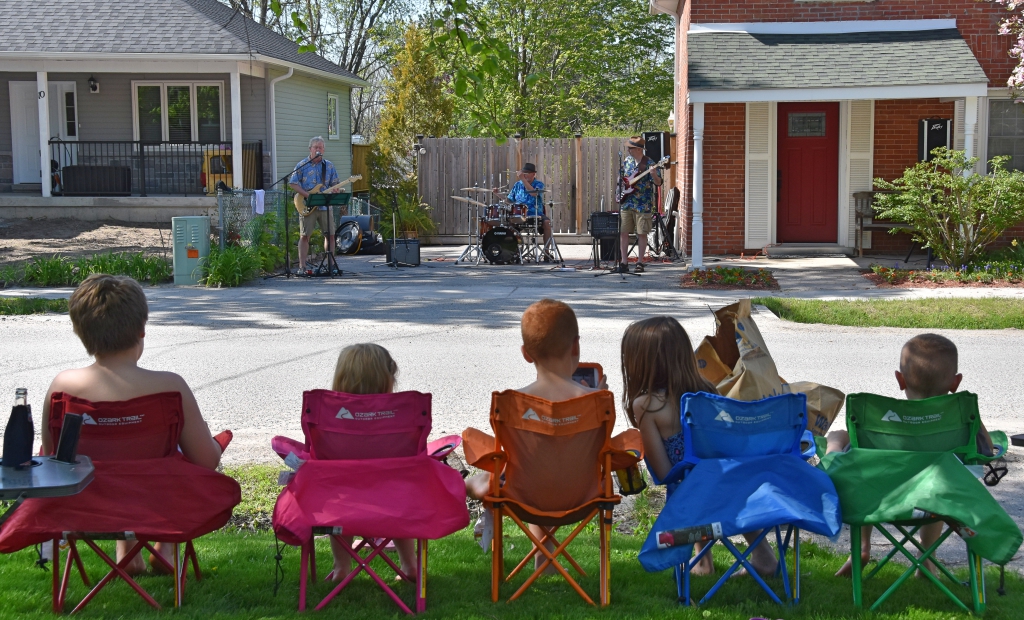
In May 2020, when we were hunkered down in the early days of the pandemic, two neighbours and I decided to play a one-hour driveway concert. I delivered a note to those within hearing distance and, like always happens in our Village, the word went out. On the afternoon of the concert, nearly 75 socially distanced people were gathered up and down the street, in lawn chairs, in cars, and on porches. It was great fun. It ended with The Beatles’ I Saw Her Standing There. There was dancing on William Steet. That was community.

Community was seen again with last May’s derecho. Neighbours were sharing generators and helping to clear fallen trees and hauling brush to the landfill. That was community.

Our municipal council protects community in ways that most of don’t think of as we go about our lives. Council ensures that infrastructure and services are properly maintained and upgraded. It ensures that infilling opportunities are properly planned and implemented. It should see that permits for improvements to our homes are processed quickly and properly.

Sometimes we are presented with a once in a generation challenge to our community. The impending construction of the Lakefield South Development Area, between the water tower and the 7th Line, is that challenge. It is one of two identified development zones in our township. The land has been purchased by a developer and the process to build 966 homes there has begun.

The problem, though, is that the current draft plan lacks a clear vision. Planning must always begin with a vision. That vision must reflect and respect Lakefield’s character. It must protect the interests of those now in the Village and those of the new neighbours we have not yet met. The vision must be fiscally responsible. It must recognize the climate crisis and so be environmentally sustainable.

Doubling the size of our Village and creating a new and huge neighbourhood is a daunting challenge and tremendous opportunity. We must get it right. In our desire to get it right we must always be thinking about what brought us here, what keeps us here, and what makes being here what it is—community.

We need a strong Lakefield voice on Selwyn Township Council. I hope I can earn your vote to become that voice.

(You are invited to my campaign launch on Thursday, September 8 at 7:00 at Lakefield’s Isabel Morris Park Pavillion. Please share this article and invitation with neighbours and friends.)

Change is Coming to Lakefield

Lakefield will change more in the next ten years than in the last fifty.

After decades of talking about it, plans are now being made to build a new community in Lakefield South, between the water tower and 7th Line. Current plans call for 966 houses on 40 foot-lots, townhouses, and apartments/condos. When complete, the development will double Lakefield’s population.

We need to do this right and so we need strong leadership on Selwyn Township Council.

Growth must be fiscally responsible and environmentally sustainable. Growth must protect our community’s safety, character, and quality of life.  Growth must be in the best interest of Lakefield’s current residents and our future neightbours.

I am now enjoying conversations with a great many people about Lakefield’s challenges and opportunities. The most frequent questions I hear, however, are about what will happen to our Village when about 3000 people move in next door.

I am running for Lakefield Ward Councillor to be Lakefield’s strong voice on the Selwyn Township Council. I hope I can count on your vote.

(Please contact me with questions or suggestions: boykolakefield@gmail.com)

Five Rules Candidates Should Obey

The municipal campaigns in Selwyn and elsewhere are now underway. Mercifully, though, we’ll not see or hear much until after Labour Day. Selwyn is like all municipalities in that staff has informed candidates of the rules regarding fundraising, where to place signs, and more. But perhaps we could make the experience a little more valuable for everyone if all Ontario’s municipal candidates considered obeying these five additional rules:

  1. Don’t call us voters or taxpayers. We are citizens. Citizenship is a profound concept that informs our collective identity, individual rights, and responsibilities to others. Don’t cheapen citizenship’s nobility by confusing it with voting and paying taxes. They are but two of its duties.
  2. Don’t offer false choices. The most obvious example is the old chestnut of picking either a thriving economy or environmental sustainability. Respected scientists, economists, and urban planners have argued for years that we’ll have both or neither.
  3. If you say something brilliant or dumb or contradict a previously stated stand, social media will instantly let us know. Admit mistakes, apologize when you should, and insist that sometimes more information leads to a more nuanced and perhaps different point of view. We’re grown-ups. We’ll understand.
  4. Don’t underestimate us. Kim Campbell once said that campaigns are not a time to discuss complicated issues. She was wrong. Trust our intelligence and attention spans by engaging us with complex ideas and grand visions. We just may surprise you.
  5. Don’t forget character. Leadership is about character. In fact, in the final analysis, that’s all it’s about. Show it. We’ll recognize it. We’ll reward it.

I am a candidate for Selwyn Township’s Lakefield Ward. I will, of course, follow the Township’s written rules. When asking for support in the soon-to-commence campaign, however, I will also obey the additional five.

(Please check that you are registered to vote. If you would like to support or even help with my campaign, please contact me at boykolakefield@gmail.com)

Why Would Anyone Be a Candidate?

It’s a hard slog. People running for municipal, provincial, or federal offices work for months to apply for a job that entails long and thankless hours. Inevitably, half the people think you’re wrong no matter what you do or say. When running and in office, many people insult you, lie about you, and assume the worst about you. Consider the sexist attacks endured by Peterborough mayor Diane Therrien or the invective lobbed at Prime Minister Trudeau when all he did was get a haircut.

Attacking politicians is as old as politics itself. The invention of social media, the erosion of public decorum, and the Trumpian destruction of a foundation of agreed upon facts have made a bad thing worse. So, again, why would anyone be a candidate?

I concede that some people run for the wrong reason. Some run for the money and some to feed their ego. Others run to build their brand for future opportunities. I sincerely believe, however, that they are the minority. I believe that most candidates and, consequently, most who serve, do so for noble reasons.

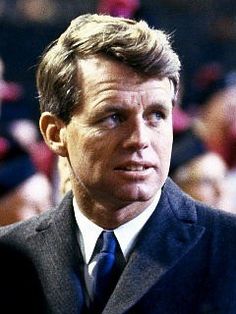
Consider what Robert Kennedy said in 1964. Months after his brother was assassinated, Kennedy resigned as Attorney General to run as a Senator for New York. He was asked during a raucous event at Columbia University why he was running. I like his answer. Kennedy said, “I don’t need the title because apparently I can be called General for the rest of my life, and I don’t need the money, and I don’t need the office space…frank as it is, I’d like to be a good United States senator, I’d like to serve.”

Robert F. Kennedy

Kennedy offers an important reminder that a public office is public service. When serious people run for the right reasons, they do not do so because they think they are smarter than others, have better vision, or are better able to make important decisions. They run because they care about their community, have thought deeply about the challenges and opportunities before it, and believe they have something to contribute to help make it a little better. The right people run because, like Kennedy, they want to serve.

I am running for Lakefield Ward councillor in my hometown. It’s certainly not as lofty an office as United States Senator and I am certainly no Robert Kennedy. But if I can paraphrase him: I don’t need the money, title, or office space. I am running because I want to serve. I know that sounds corny and perhaps even naive in our world of vicious politics and alternative facts, but it’s true.

Perhaps as we consider the municipal candidates whose signs will soon sprout on lawns around town we might temper our skepticism a little and consider that maybe most of them are running for the right reason.

(If you liked this article, please consider sharing it with others.)

Three Priorities For Lakefield

My campaign issued its first media release announcing my candidacy in the October municipal election. It stated my three priorities for Lakefield.

John Boyko Announces Candidacy for Selwyn Township’s Lakefield Ward Councillor

Former Lakefield Deputy Reeve, educator, and nationally respected author John Boyko has announced his candidacy for Selwyn Township’s Lakefield Ward Councillor. Boyko says “Lakefield is poised to change more in the next ten years than it has in the last fifty. I am committed to providing a strong voice on council to help manage that change.”

Boyko says his three priorities are, “the delivery of quality municipal services, continued improvement of infrastructure and public spaces, and managing growth. We must move forward in ways that are fiscally responsible, environmentally sustainable, and that respect our community’s safety, character, and quality of life.” Boyko pledges transparent communication and engaged, informed leadership.

“All decisions and our inevitable growth,“ Boyko says, “must respect that Lakefield’s strength rests upon kind neighbours, energetic entrepreneurs, and committed volunteers enjoying a walkable, accessible, environmentally sustainable community.”

John Boyko has lived in Lakefield for 33 years with his wife Sue, the retired owner of The Village Florist. He grew up in Peterborough, graduated from Crestwood Secondary School, and has degrees from McMaster, Queen’s, and Trent Universities. He is a retired teacher and administrator having worked at Lakefield District Secondary School and Lakefield College School.  

A former Lakefield Deputy Reeve and Peterborough County Councillor, Boyko believes in public service. He is the current Board chair of the Lakefield Literary Festival and a member of the Morton Community Healthcare Centre Board. He has chaired the Boards of the Morton Community Healthcare Centre, Lakefield Library, and the Peterborough Social Planning Council. He has also served on the Boards of ORCA, Lakefield Police, and Children’s Aid, and volunteered with the Lakefield Environmental Action Forum, Lakefield Jazz and Art Festival, Imagine the Marsh, and Ontario’s Fair Tax Commission.

Boyko is a best-selling author having written eight books addressing Canadian history and politics. He contributes editorials for newspapers across Canada, writes entries for the Canadian Encyclopedia, and is invited to appear on television and radio to discuss current political events.

Phone  (705) 313-6890          e-mail  boykolakefield@gmail.com

Twitter: @johnwboyko           Web: www.johnboyko.com. Facebook: John Boyko

 (Please contact me if you would like to support my campaign.)

Are We Taxpayers, Consumers, or Citizens?

Introspection matters. It is important for the health of our democracy to occasionally consider how we see ourselves in our relationship with our elected representatives and how they see us. Are we consumers, taxpayers, or citizens?

Are we consumers?  Consumer capitalism developed over many years and became the bulwark of our economic system by the 1920s. The prosperity of our nation became dependent on stuff being made and services being provided for us to buy. We, in turn, were paid for making all the stuff and providing all the services. It was a nice, symbiotic circle. We were in trouble when things stopped being made or became too expensive, or when we stopped buying. That’s what happened in the Great Depression of the 1930s and the Great Recession of 2008-’09. Our leaders understand. That is why after the tragedy of 9-11, the first advice President Bush had for Americans yearning to demonstrate resilience was to go shopping.

When our buying stuff became an economic imperative and patriotic duty, then it is unsurprising that some of our leaders began to think of us as nothing more than consumers. We consume Corn Flakes and health care. We consume iPhones and education. The thought becomes that because everything is a commodity, government exists only to provide things to be consumed that private capitalists don’t or won’t. Our leaders, therefore, promote themselves as providers and we look at ourselves simply as consumers of what they have on offer.

Consumers, Taxpayers, or Citizens?

(Image: UGA Career Centre)

Are we taxpayers? American Supreme Court Justice Oliver Wendell Holmes once said, “Taxes are what we pay for living in a civilized society.” I don’t much like paying taxes but I get his point. I pay for things from which I draw benefit. I benefit from living in a society in which there are assumed and enforced modes of behaviour. For example, I can go to a restaurant knowing the food is safe and the kitchen has been inspected and my card or currency will be accepted. I have never left a restaurant without paying. After all, I benefitted from the meal and service and all the government regulations behind the scenes. In the same way, I believe that I benefit from living in a society in which people are educated and healthy. So I may grumble from time to time but I pay my taxes to support public education and health care even though I don’t have a child in school and my last operation was when I had my tonsils out when I was four.

Are we citizens? Citizenship is more than both consumer and taxpayer. It is a more noble concept. It derives from ideas born in ancient Greece and seen in the Iroquois Confederacy. Citizenship suggests membership in something akin to a club or even, at its best, a family. It’s why we carry a membership card – a passport – sing the anthem and celebrate our founding each July. Some of us are born into the family and others can join and become equal members. We too can leave and become a citizen elsewhere. So, in that way, citizenship is not about birth and blood but choice.

As with clubs and families, citizenship involves rights and responsibilities. The Canadian Charter of Rights and Freedoms spells them out. They suggest that we not cherry-pick but, as citizens, respect and live according to them all. The Canadian Supreme Court exists to remind us of that fact even if, occasionally, we are infuriated by its decisions. Even when we disagree, in fact especially when we disagree, citizenship means that we are in this together with responsibilities to and for each other.

Buying stuff and paying taxes are only slivers of what it means to be a citizen. When political leaders rally us as consumers and call us taxpayers they cheapen the concept of citizenship. It tears at the fabric of who we are and places in jeopardy the core of our democracy.

It matters whether we see ourselves as visitors to a mall, the government’s ATM machine, or members of a national and local family. Perhaps as we move into muncipal elecctions this fall we should reflect the difference between how we see ourselves and how others see us by listening carefully to how those who lead or aspire to lead, speak of and to us. If among the greatest gifts the ages have bestowed upon us is the concept of citizenship, then let us respect and protect it and elect those who will help with that important work.

(I am running for Selwyn Township’s Lakefield Ward Councillor. Online and telephone voting begins October 11 and ends October 24. I hope everyone votes for the candidate of their choice in their community.)

The Derecho’s Lesson

On a sunny Saturday afternoon, I learned a new word: derecho. I was driving home with my dear wife after enjoying lunch at a nice, lake-side restaurant when it looked like someone was suddenly plunging a dimmer switch. The clear blue sky turned an ominous dark purple. Then came wind, hail, and a deafening howl. A transformer exploded a cascade of white sparks behind us then another above us. No longer able to see the hood of my car, let alone the road, I inched to a stop. We felt the vehicle lift then fall. Leaves, small branches, water, and ice pounded us and then we felt the car lift again. We held hands and waited to be flung.

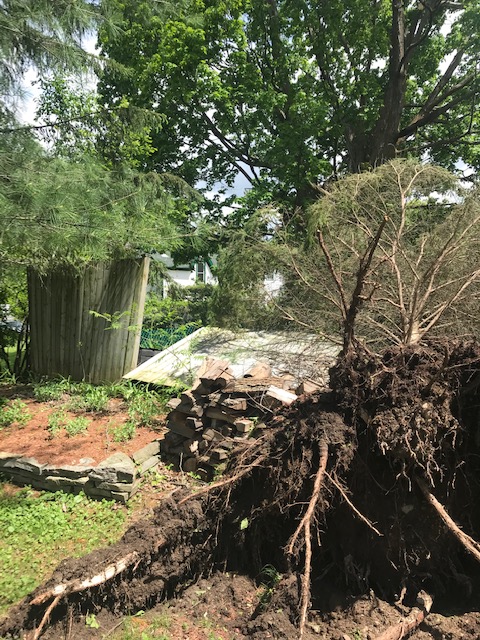
            It was over as quickly as it had begun. The sky was again blue. But the devastation was stunning. A derecho is unlike a tornado or hurricane as they move in circles. A derecho, on the other hand, is a fast-moving, severe storm that screams ahead in a straight-line inflicting destructive hurricane-force winds and damaging rain to an area 5-10 km wide and hundreds of km long. Nature’s 138 km per hour pile driver left hundreds of towering trees broken and uprooted with dozens of hydro poles snapped like match sticks.

            The drive home had us weaving around downed trees, poles, and lines. Our Village had been hammered. Power was out. Streets were blocked. Huge trees lay atop smashed cars, boats, and homes. There were reports of injuries and deaths. The emergency room was filled with people having had bones broken by falling trees and others bleeding from tree shrapnel wounds.

            Upon our arrival home we saw that a large Maple in our yard had lost a branch that smashed part of our fence. A 20-meter tall spruce had been uprooted and taken down more. Blown shingles revealed a scar of sodden plywood on our roof. We felt lucky. We were safe. Our daughter and grandchildren were safe.

            Love and community sometimes hide themselves. They hide behind the waste-land of social media, disillusioned protesters, and those who exploit fears, lies, and hatred to divide us for personal and political gain. Love and community hide behind our frantic activity, the sad urge of material consumption, and the vagaries of ego and ambition. But on that day, looking at the trees and fence, we heard love and community emerge from their hiding places. They announced their arrival with the roar of chain saws and generators.

A neighbour arrived with an extension cord and we tapped into his generator for several hours a day to keep our refrigerator cold for the four days it took to restore power. A neighbour knocked the next morning; she was going door to door with a pot of hot coffee. A friend arrived and helped cut up the maple. A brother arrived and helped me cut up the spruce. Another friend arrived and helped me rebuild the fence. A neighbour and I donned work gloves and over and over again we loaded his trailer with brush that others had piled on their lawns and took it to all to the landfill’s growing mountain of brush.

            The storm was horrible. Many still grieve those who died. Many are still recovering from injuries. But the derecho reminded me of something that I need to recall more often. Through the noise of our every-day lives and the cacophony of all that is wrong we must more often pause to reflect upon the peace in quiet and all that’s right.

Recapturing Our Flag

Last weekend I drove four hours to Ottawa and passed several farms with large Canadian flags at the ends of their long driveways. With each flag, I cringed. The red-and-white pennant used to afford me a sense of communal pride. There, I used to think, was someone who, like me, is proud to live in one of the world’s most peaceful, democratic, egalitarian countries.

But instead, over and over, I felt repulsion. Each time I passed a maple-leaf pennant, blowing in the wind, I wondered if the owner believed in a free and democratic Canada, or in the vitriolic vision of our country on display at the Trucker Convoy last month.

I am saddened by this newfound uncertainty, and frustrated that our flag has been captured, in a sense, by the small minority who support the convoy and its negative messages of anti-government, anti-science, anti-democracy, and anti-God-knows-what-else that few among them seem able to clearly articulate. But this isn’t the first time that a symbol has been stolen for nefarious purposes.

(Photo: Canadian Press)

Some of those who attended the Ottawa Occupation and border blockades were waving Nazi flags. The swastika, though, is an old symbol. In the ancient Indian Sanskrit language, it signified good health and by the early 20th century, it had become a universal symbol of well-being and good luck. Prior to the Second World War, Finnish pilots sewed swastikas on their flight suits; it was carved onto the new Federal Reserve building in Washington in the 1930s; it was even used by Coca Cola and was a popular symbol for the Boy Scouts

Adolf Hitler, of course, wrecked all that. Nazi scholars convinced him that links between the German and Sanskrit languages represented a shared Aryan heritage. He swiped the swastika and made it the symbol of his Nazi party, which in turn associated the swastika with the horrors advocated by Hitler’s twisted tactics and evil goals.

The capture of the English flag was at one point so pernicious that it was banned in England. Many will recognize that one of the symbols within the United Kingdom’s Union Jack flag is England’s own St. George’s flag, with its white background and red cross. In the 1970s, the flag was adopted by the racist Nationalist Front; for decades it was waved at football matches and protest rallies with the chant: “There ain’t no Black in the Union Jack / Send the bastards back.” The white supremacist English Defence League then took the St. George’s flag as its own. Despite efforts to reclaim it, the English flag still makes many an Englander’s skin crawl.

And now it’s happened to Canada. As the trucker rallies and border blockades dragged on for weeks, hundreds of Canadian flags fluttered in the wind among banners with swastikas, anti-vaccine symbols, and expletive-laden slogans.

We need to steal our flag back. We need to fly the flag on our homes and wear it on our lapels not because Canada is perfect or has a spotless history but because we are patriotic. That is, we are not nationalists who claim superiority and embrace aggression against anyone deemed “the other,” but patriots who are proud of the values and aspirations that form the foundation of our country. Those values are democracy and the rule of law, a celebration of diversity, and a fundamental decency that inspires us to do better, informed by our desire for peace, order, and good government.

We must reject the tremendous power of algorithms that trap us within echo chambers, reverberating with confirmational bias and conspiracy theories. We must embrace humility and accept that there is always more to learn and that, sometimes, we might be wrong. We must somehow rebuild a foundation of agreed-upon facts, starting with a basic knowledge of how our federal system of government works. We must also accept that freedom has essential limits and is accompanied by responsibilities.

It has taken a long time for Canada to fall into the trap that was sprung in Washington on January 6, 2021, and again a few weeks ago in Ottawa. It will take a long time to disassemble that trap and leave it behind us, but we must make the effort. We can seek inspiration from the tenacious Ukrainians who are demonstrating what fighting for freedom really looks like. If we can summon the courage, we can do what is needed to recover from our moment of darkness.

Last Sunday, hundreds of jubilant soccer fans enthusiastically waved Canadian flags as Canada qualified for the World Cup. Perhaps that joyous display of shared happiness and patriotic pride may be the first step in recapturing our flag. Now comes the real work.

(This article appeared in the Globe and Mail on March 29, 2022)